Miyagi 宮城県
Miyagi 宮城県
Sendai 仙台市
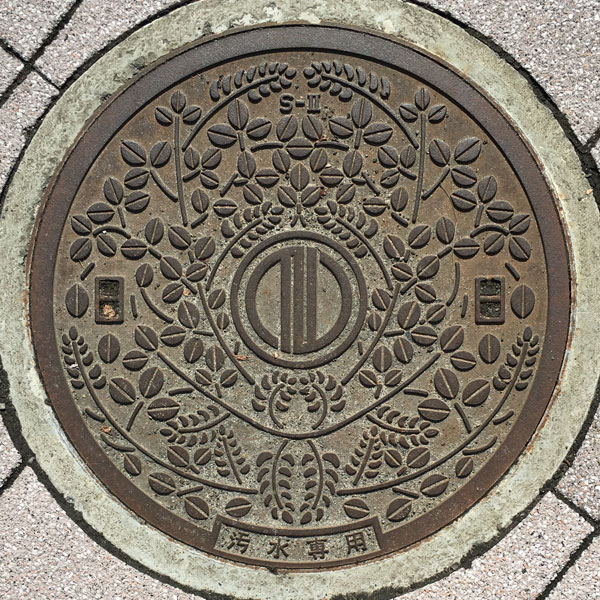
A sewage manhole cover featuring the city's flower, the bush clover.
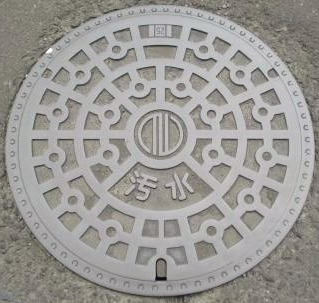
A manhole with the city emblem in the middle.
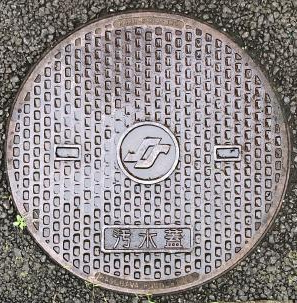
The Sendai City Subway logo is in the center, and the words "Sewage Manhole Cover" are at the bottom.
Izumi 泉市
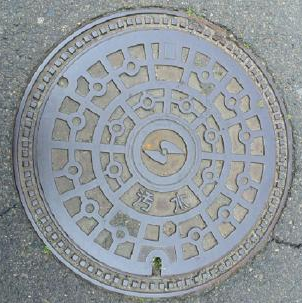
JIS standard manhole cover, with the former Izumi City emblem in the center, the word "sewage" below it, and a square pattern on the frame.
Miyagi 宮城町
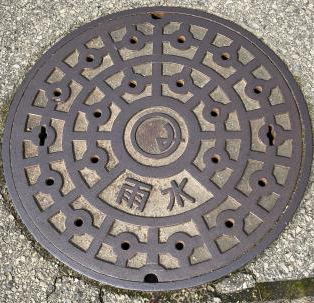
The perforated manhole cover shown above has the former Miyagi town emblem in the center and the word "Rainwater" below it.
Akiu 秋保町
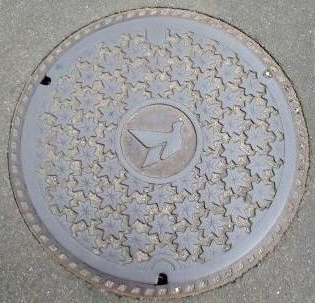
The town emblem and the former town tree, the maple (leaf), are depicted in concentric circles. The town flower is the Japanese rhododendron.
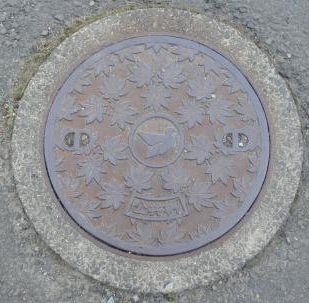
Similar to the above, this manhole cover features the old city emblem and the town's tree, the maple, with the words "Public Manhole" at the bottom. It is a medium-sized manhole cover.
Kesennuma 気仙沼市
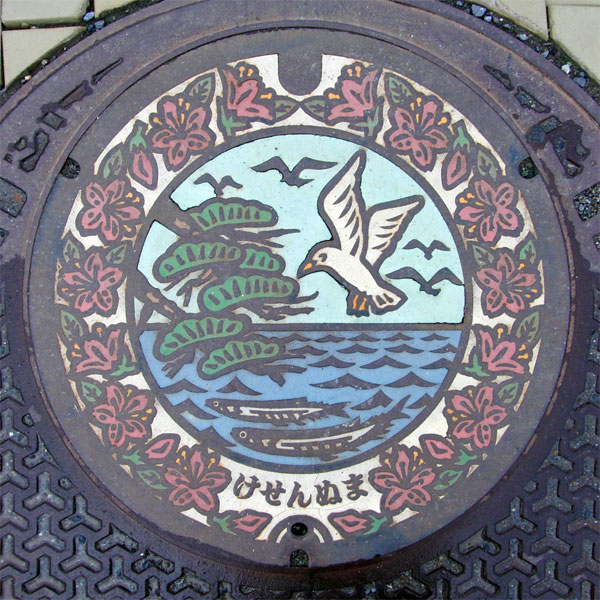
The city's tree, the black pine, the city's flower, the mountain azalea, the city's bird, the black-tailed gull, and the city's fish, not the bonito but the saury, are depicted on the cover.
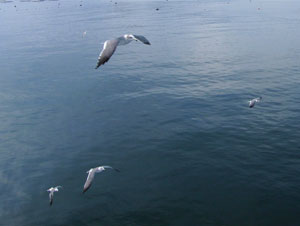
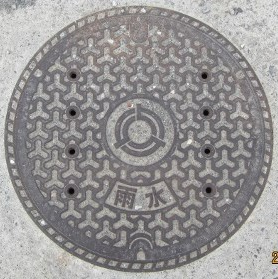
City emblem in the center.
Karakuwa 唐桑町
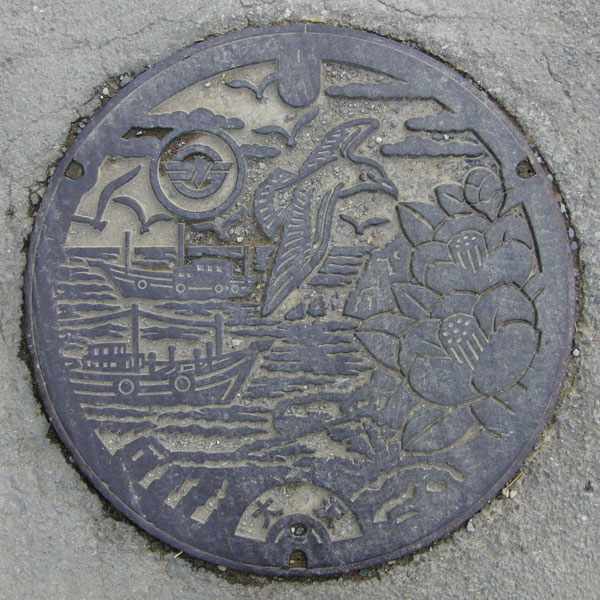
The town's tree is the pine, its flower is the camellia, its bird is the seagull, and its fish is the rockfish. However, the lid depicts a fishing boat, a seagull, and a camellia floating on the sea.
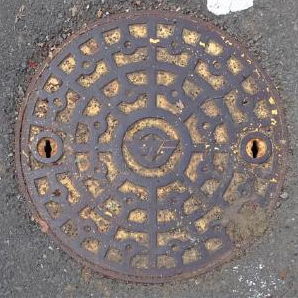
Former town emblem in the center.
Motoyoshi 本吉町
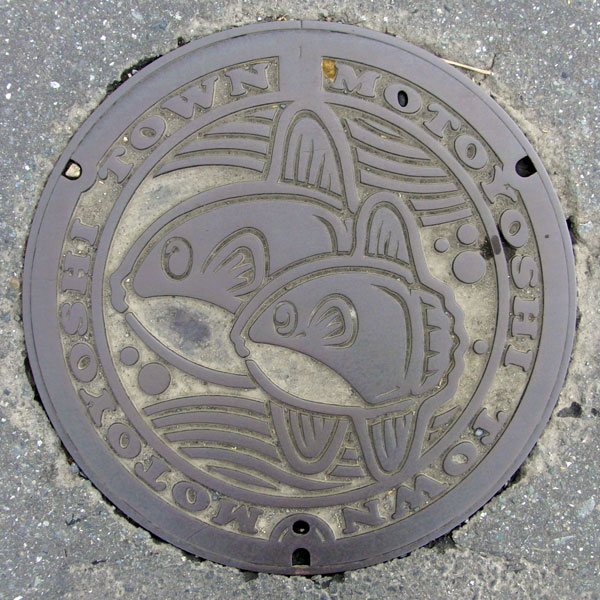
The town's tree is the pine, its flower is the rosehip, its bird is the Japanese bush warbler, and its fish is the ocean sunfish. Of these, the ocean sunfish is depicted here.
Kurihara 栗原市
Tsukidate 築館町
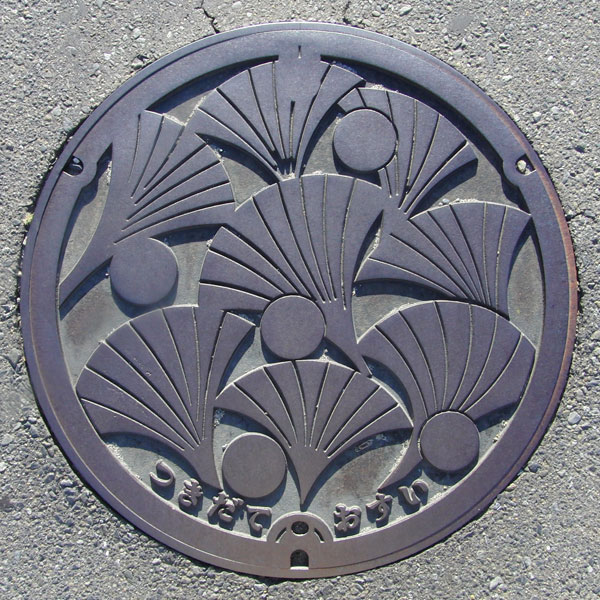
For sewage. The leaves and ginkgo nuts of the town's tree, the ginkgo, are depicted.
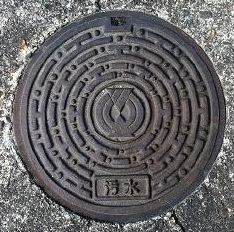
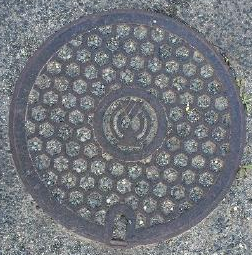
Former town emblem in the center.
Wakayanagi 若柳町
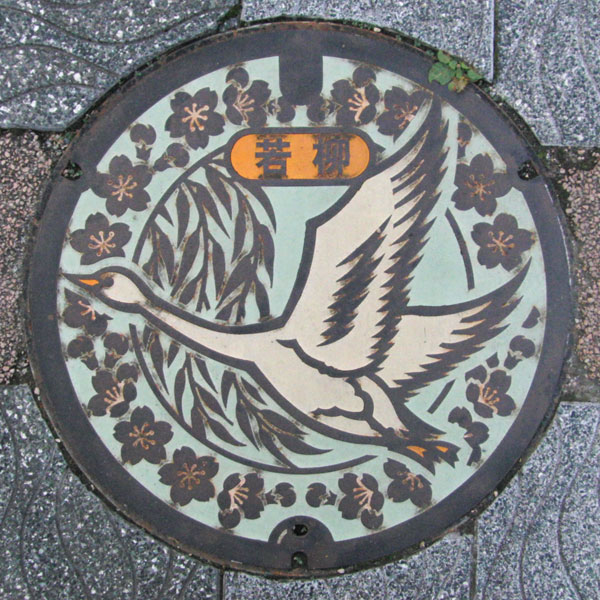
A manhole featuring the town's flowers, the cherry blossom, the swan, and the willow.
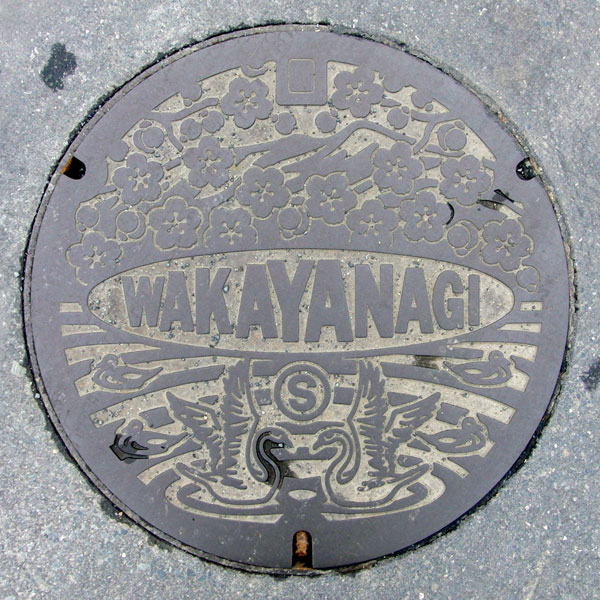
This one also features cherry blossoms and swans, but what's quite distinctive is that the word "WAKAYANAGI" is written large in the center.
Kurikoma 栗駒町
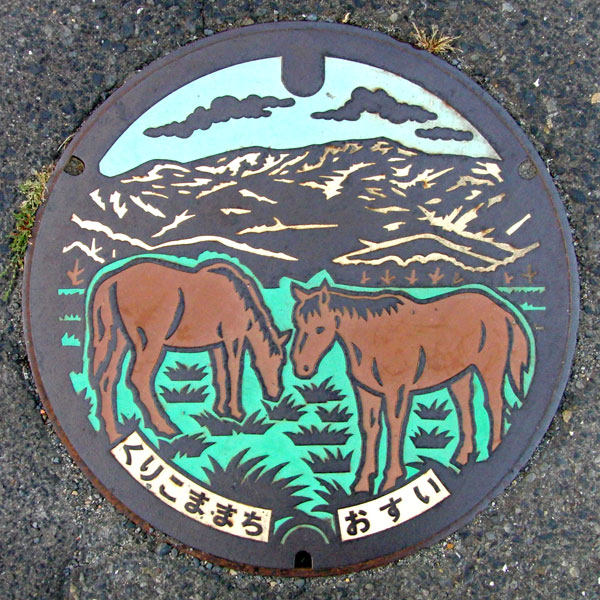
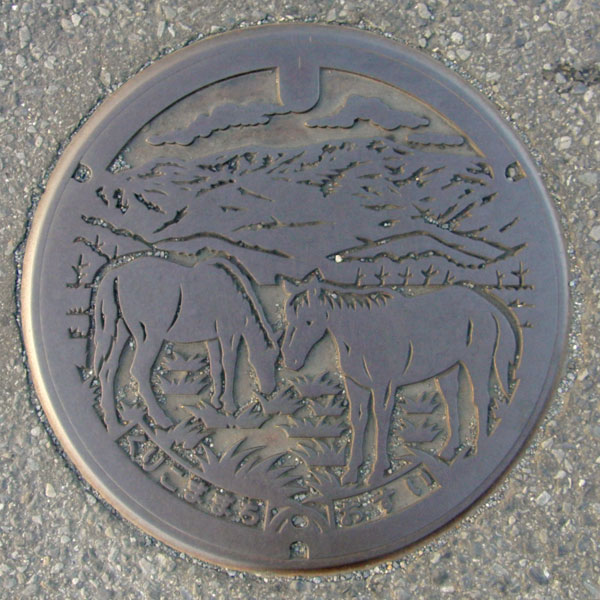
Horses grazing with Mount Kurikoma in the background.
Takashimizu 高清水町 & Semine 瀬峰町
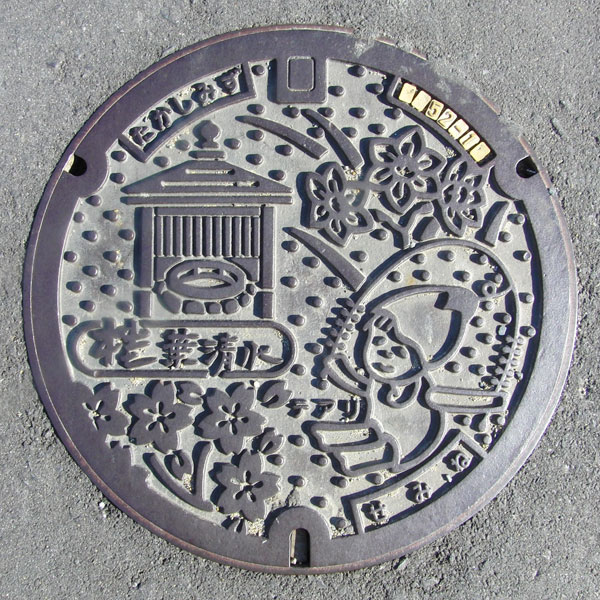
This manhole is a collaboration between the two former towns. The upper half of the poster features the former Takashimizu Town symbol, "Katsuraba Shimizu," and the town flower, "Daffodil," while the lower half features the former Semine Town character, "Teaari," a fairy of the town flower, "Wisteria," and the town tree, "Sakura."
Ichisama 一迫町
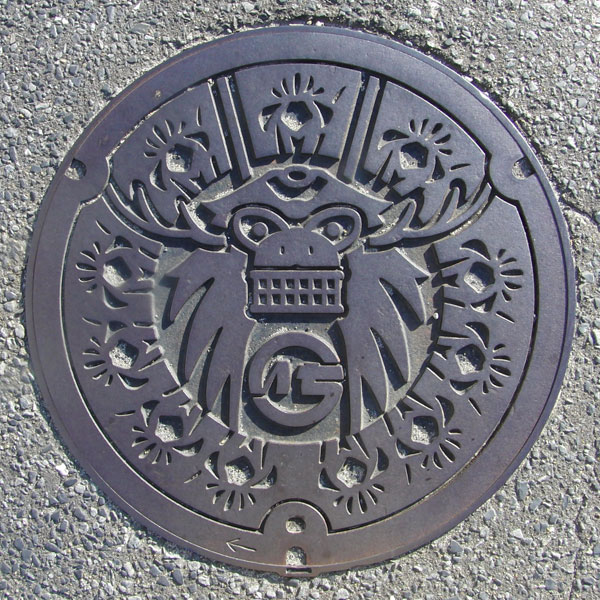
The design depicts the traditional performing art of "Deer Dance" and the town's flower, the iris.
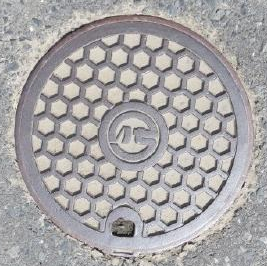
Former town emblem in the center.
Uguizusawa 鴬沢町
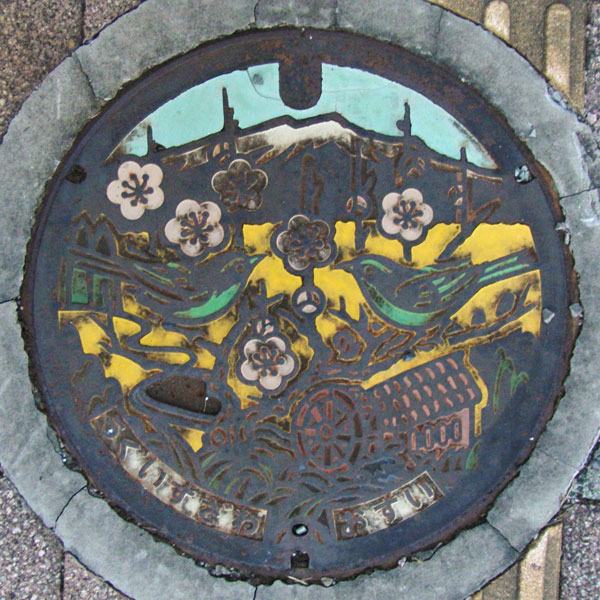
With Mount Kurikoma in the background, the image depicts the plum tree of Uguisuzawa Town, the Japanese bush warbler (uguisu), the town's bird from which the town is named, and a watermill.
Kannari 金成町
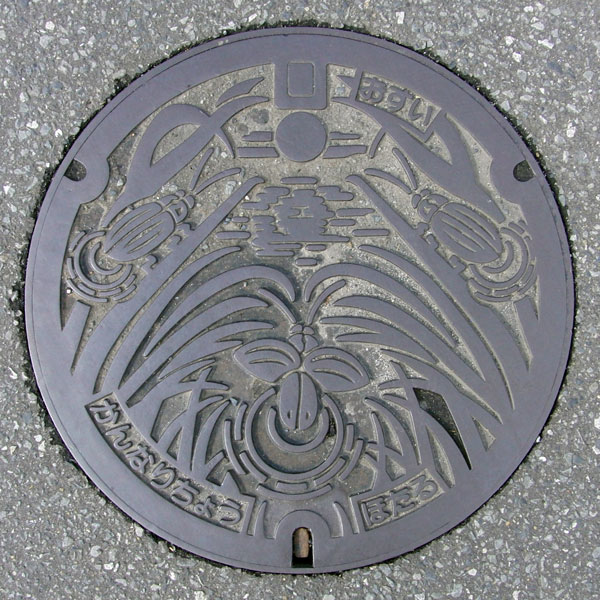
The lid for the "Kananarizawabe District" features a picture of the town's insect, the firefly.
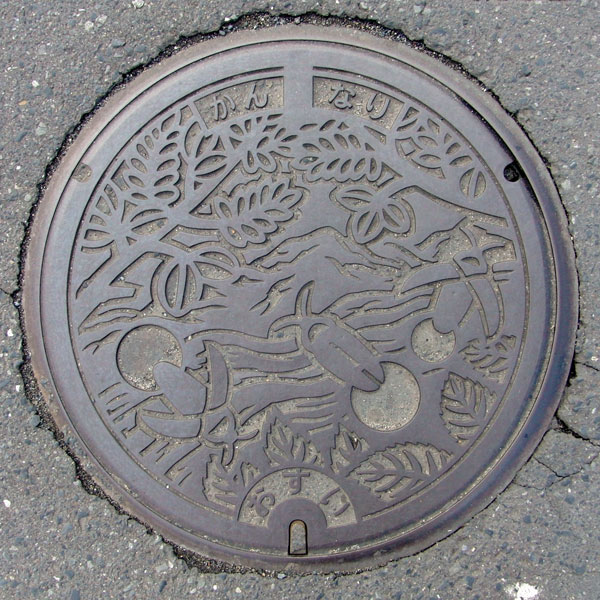
The lid of the "Kinnari Treatment Area" features the town's insect, the firefly, the town's tree, the zelkova, and the town's flower, the bush clover.
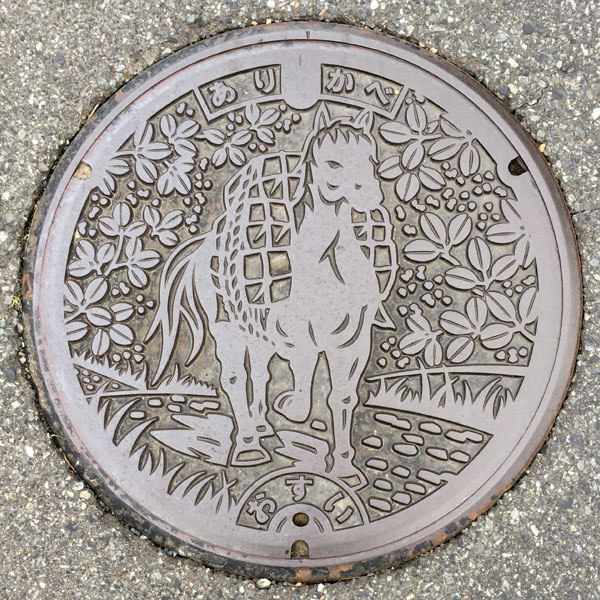
This agricultural drain cover in the Kannari Arikabe area depicts the town's flower, the bush clover, and a horse. Arikabe was a post town on the Oshu Kaido road during the Edo period, and is home to the nationally designated historic site, the "Former Arikabe Inn Honjin."
Shiwahime 志和姫町
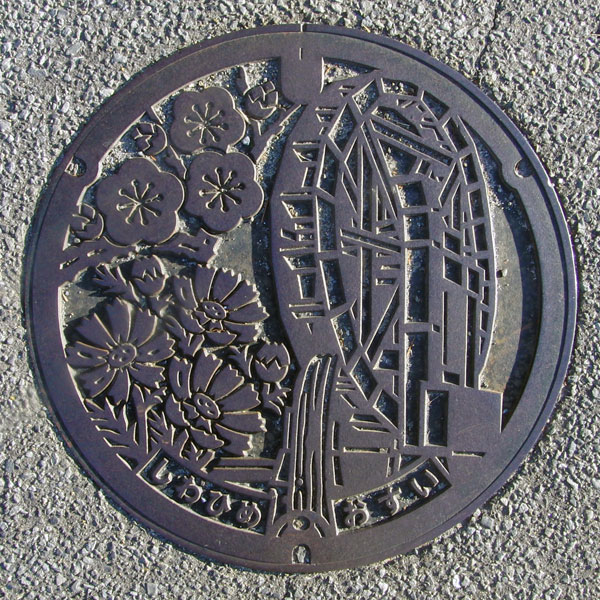
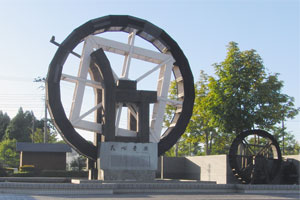
It depicts the waterwheel, the symbol of the former Shibahime town, the town tree, the plum tree, and the town flower, the cosmos.
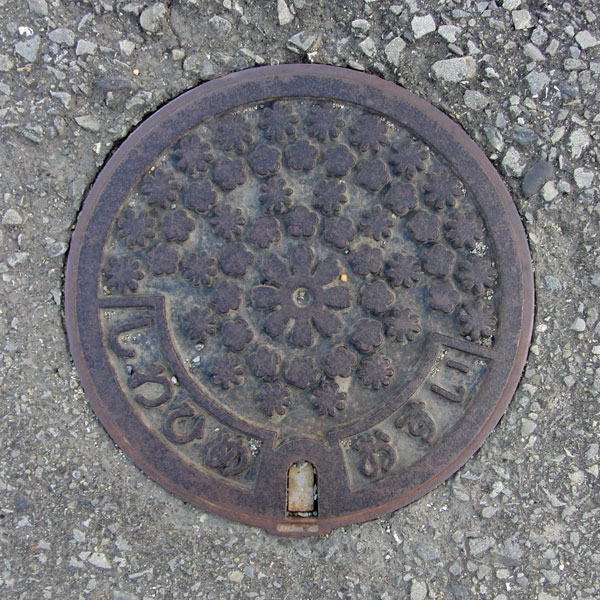
The sewage manhole cover is decorated with the town's tree, the plum, and the town's flower, the cosmos.
Hanayama 花山村
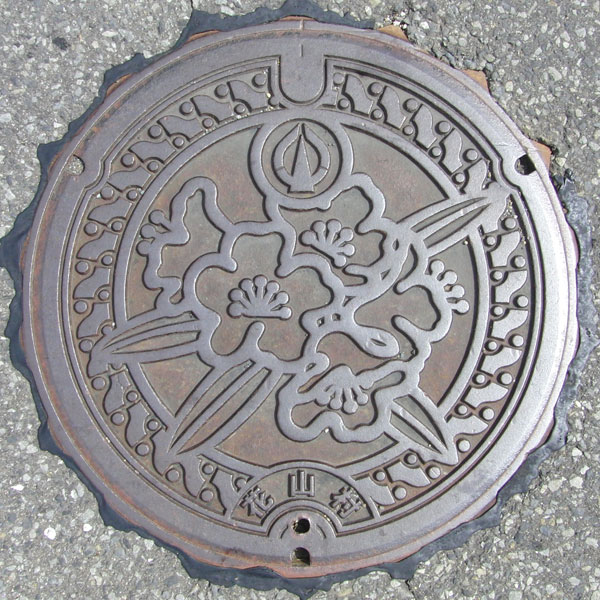
It depicts the Azuma rhododendron, the village flower of the former Hanayama village.
Tome 登米市
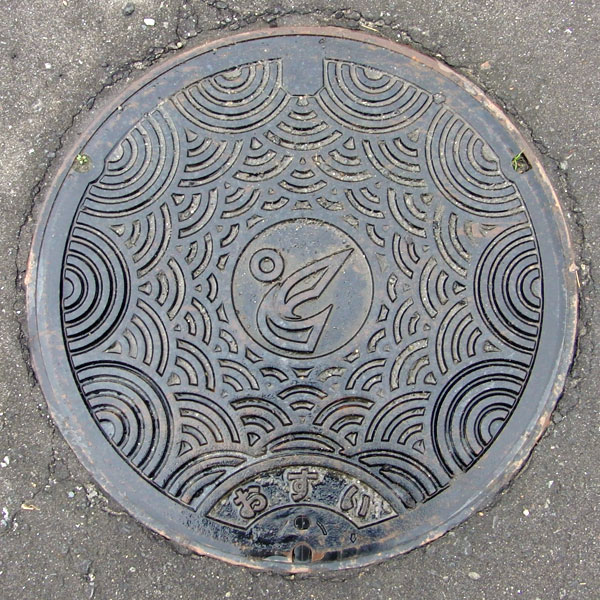
This lid was made after Tome City was established. It features a Seigaiha (wave pattern) design with the city emblem in the center.
Hasama 迫町
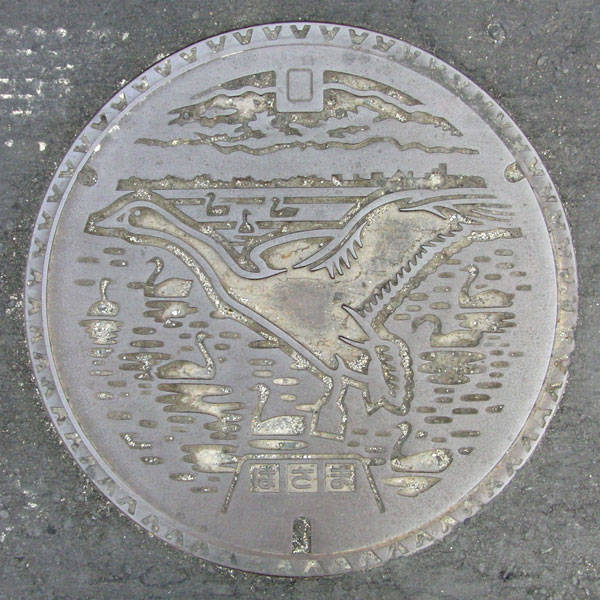
The southern half of Izunuma, a famous wintering spot for swans and geese, belongs to the former town of Sako.
Toyoma 登米町
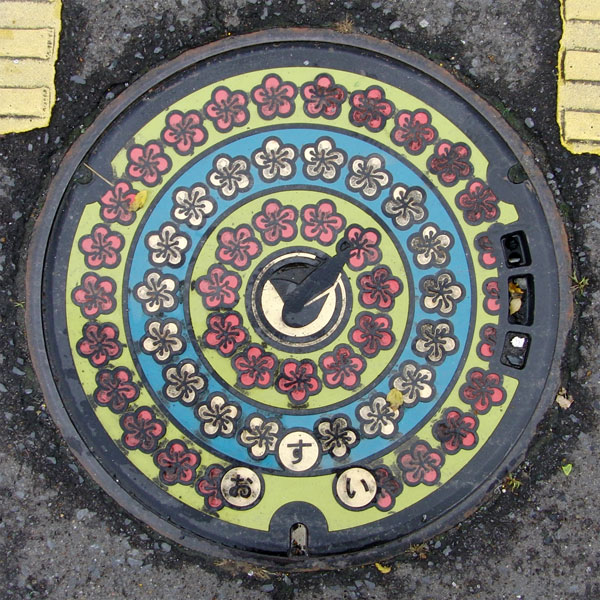
This manhole cover features a triple-layered design of the town's tree, the plum tree, with the old town emblem in the center.
Minamikata 南方町
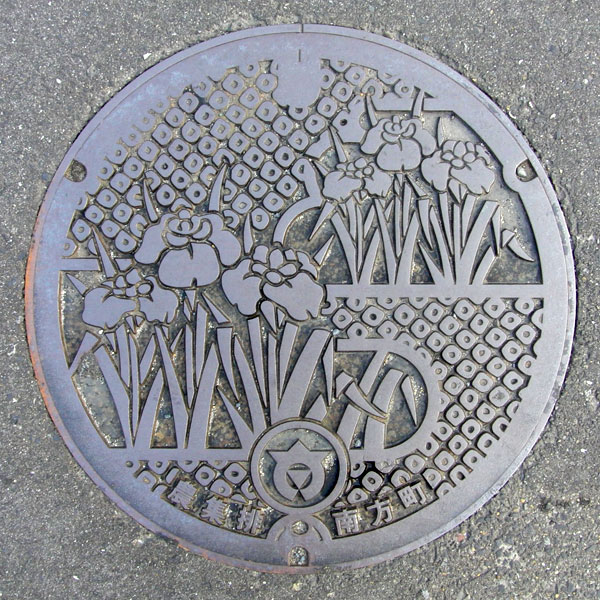
The town flower is apparently the Japanese iris. The arrangement is interesting. The words "Public Sewer" are written at the bottom.
Towa 東和町
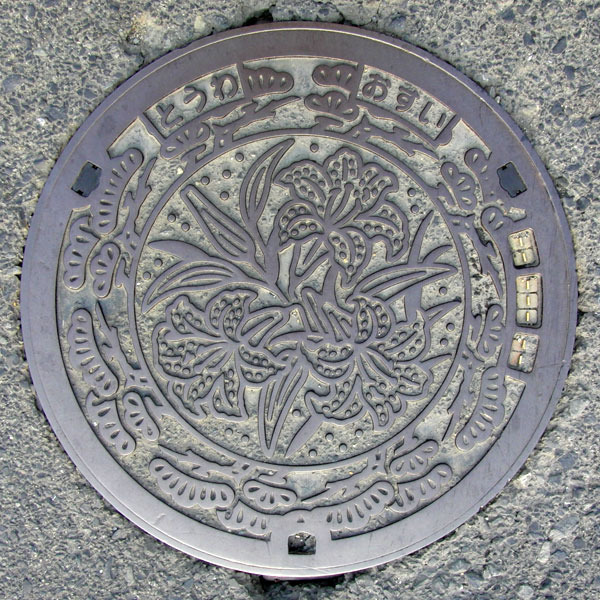
The town's flower, the mountain lily, and the town's tree, the red pine, are depicted.
Nakada 中田町
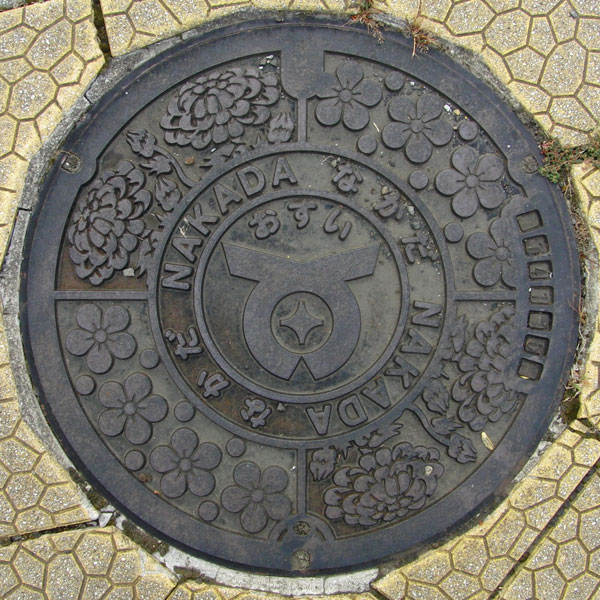
The town emblem is surrounded by the town tree, the plum tree, and the town flower, the chrysanthemum.
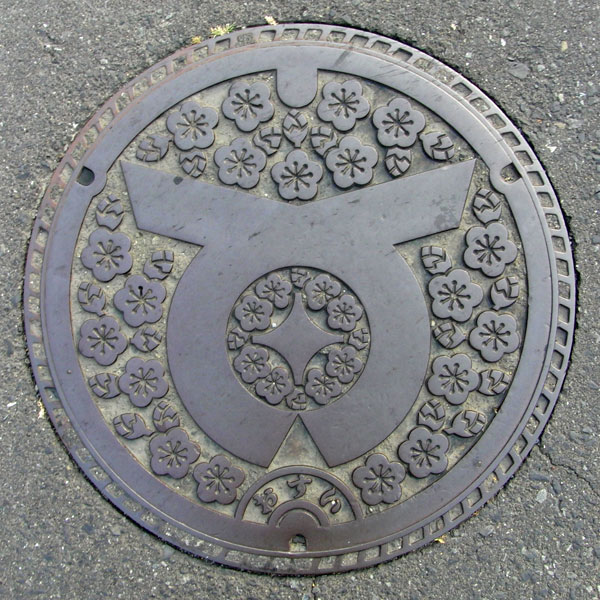
A sewage manhole cover with the gaps between the large town emblem filled with flowers from the town's tree, the plum tree.
Toyosato 豊里町
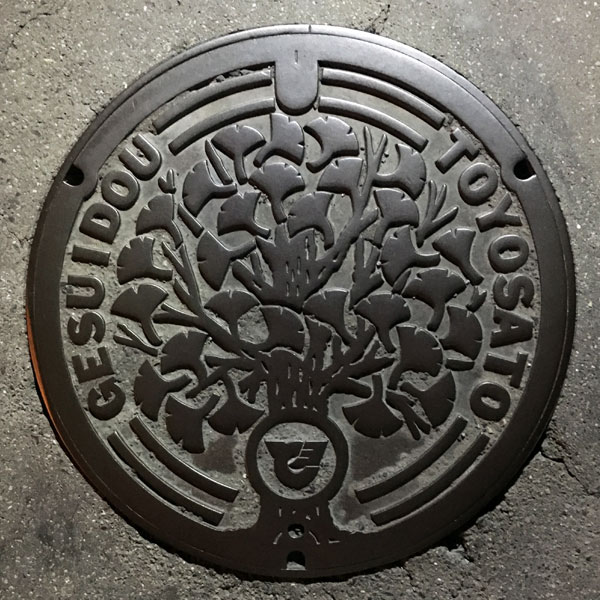
The town's tree, the ginkgo, is depicted.
Yoneyama 米山町
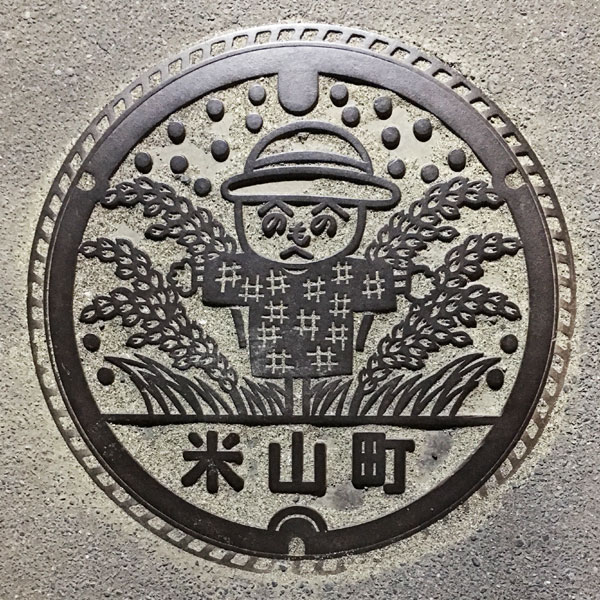
It depicts a scarecrow and ears of rice.
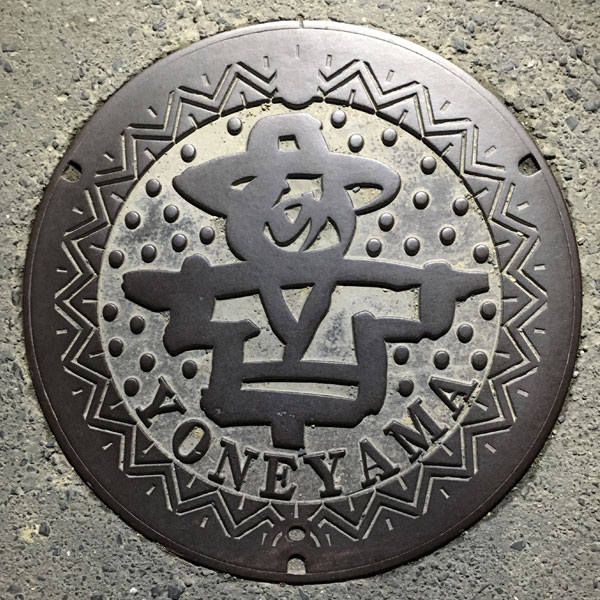
The cover of a farm waste collection can in Zennoji district features a roughly designed scarecrow.
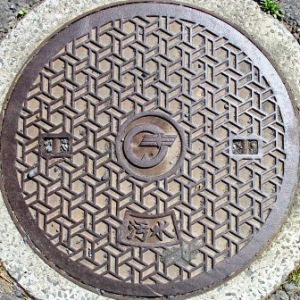
Former town emblem in the center.
Ishikoshi 石越町
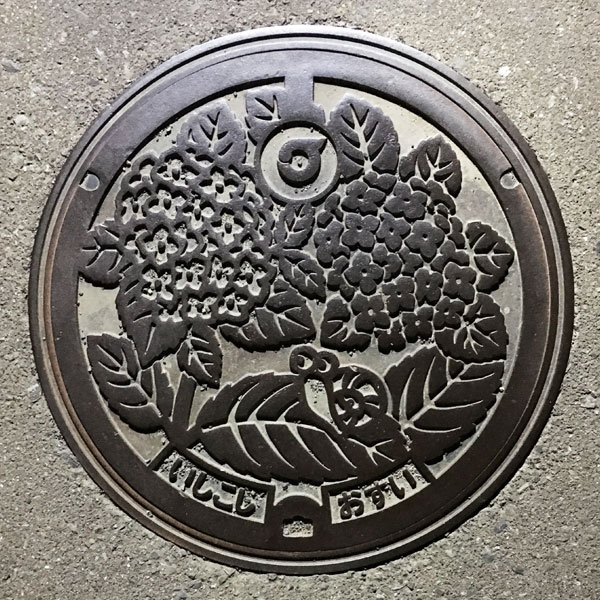
The town's flower, the hydrangea, is depicted, along with the usual snail on the leaf.
Tsuyama 津山町
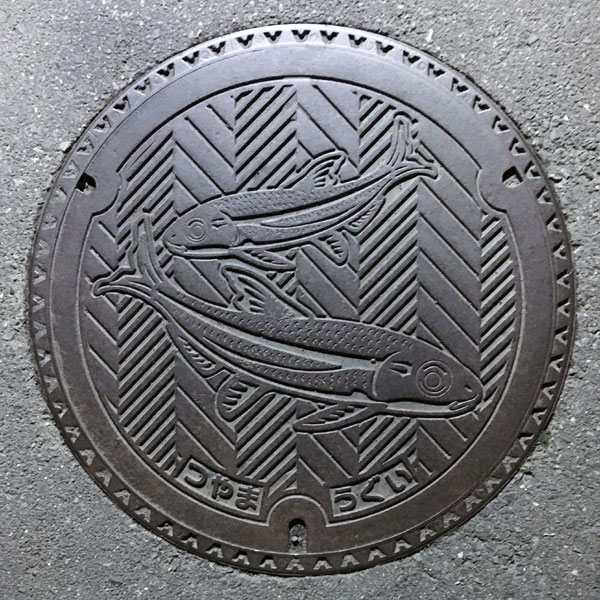
The manhole features the Japanese dace.
Osaki 大崎市
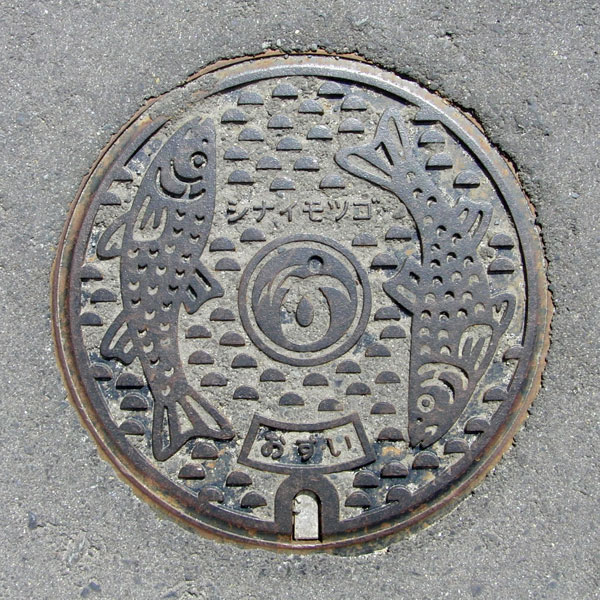
The Osaki City emblem is in the center. This small wastewater sewage basin features the "Shinai Motsugo," a fish discovered in the nearby Shinai Marsh.
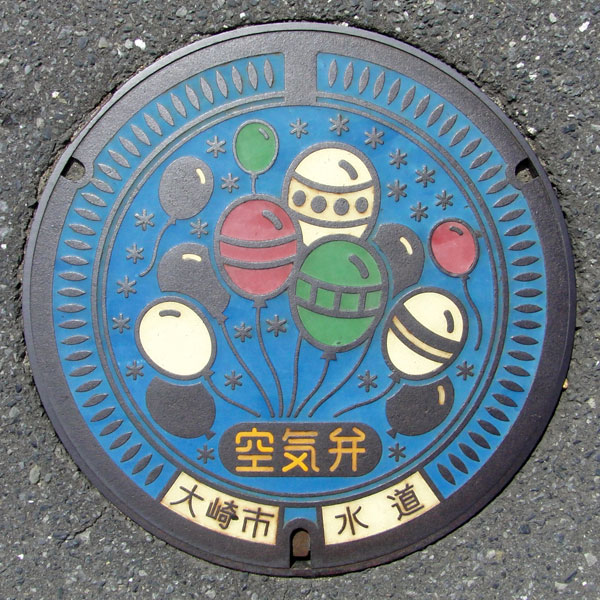
A manhole cover with a balloon design.
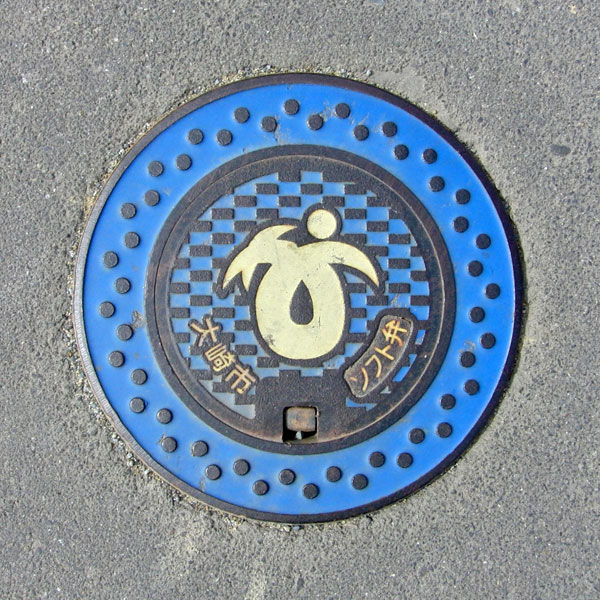
A lid featuring the Osaki city emblem.
Furukawa 古川市
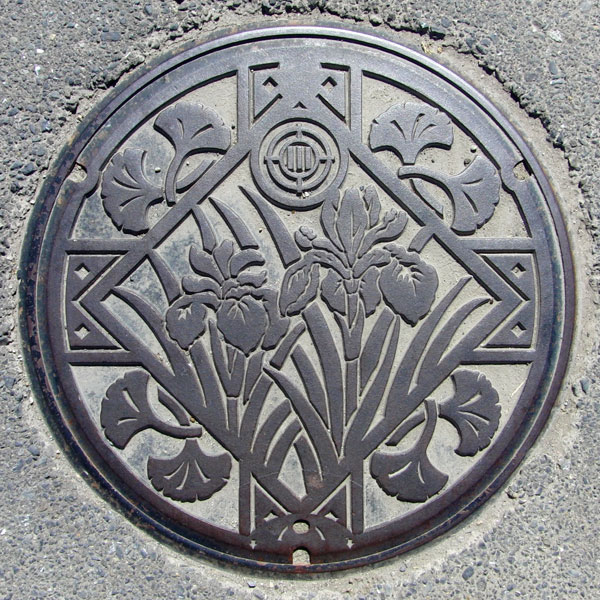
For sewage. The city's flower, the iris, and the city's tree, the ginkgo, are depicted.
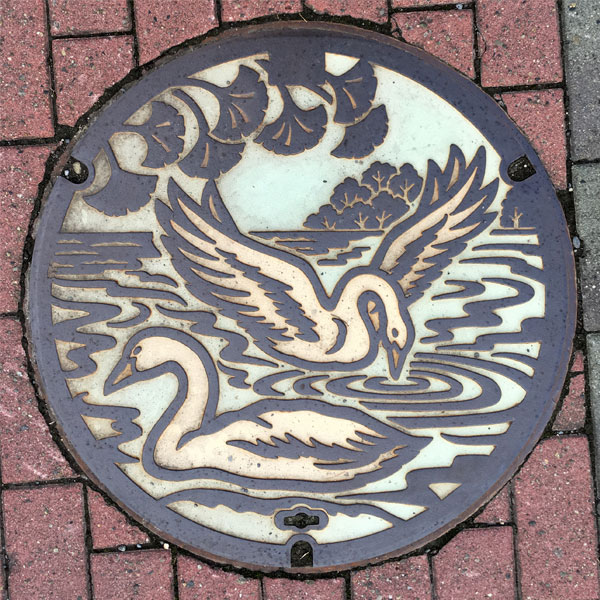
A manhole cover with a picture of two swans and a ginkgo tree.
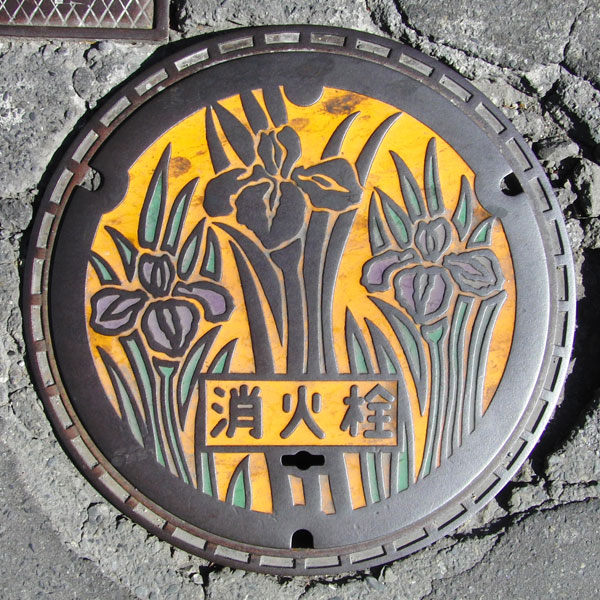
A fire hydrant cover decorated with the city's flower, the iris.
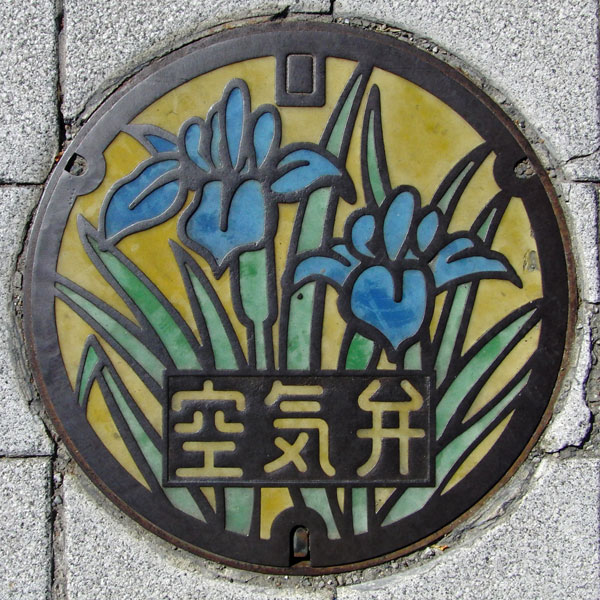
The air valve cover features the city's flower, the iris.
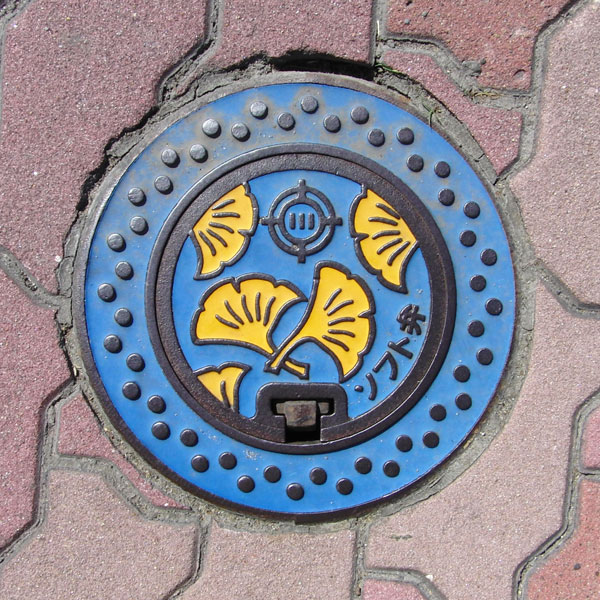
The soft valve lid features a picture of the city's tree, the ginkgo.
Tajiri 田尻町
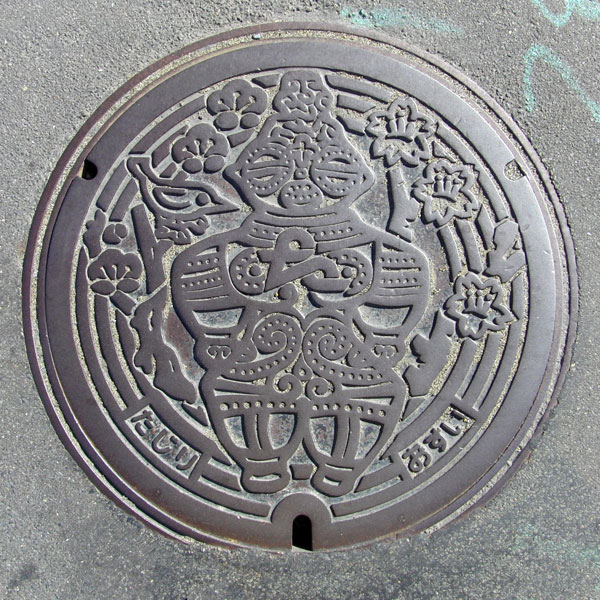
The design centers around a Shade-Shaped Clay Figurine (a National Important Cultural Property) unearthed at the Ebisuda Ruins, and depicts the town's tree, the plum tree, its bird, the Japanese bush warbler, and its flower, the cherry blossom.
Sanbongi 三本木町
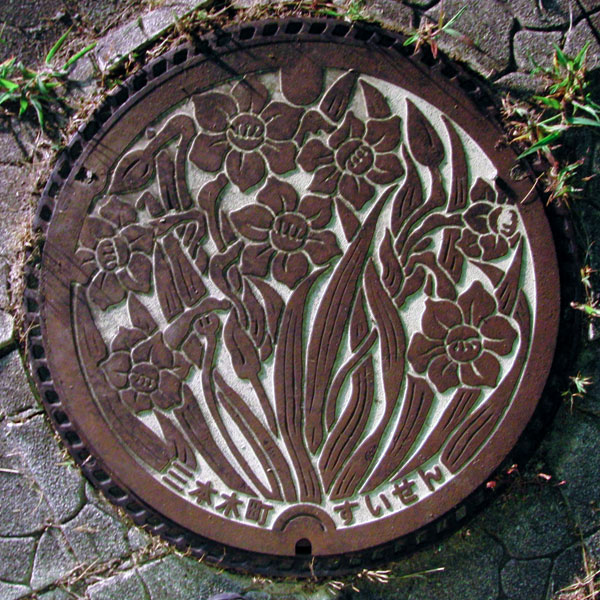
For sewage. The town flower, the daffodil, is depicted.
Matsuyama 松山町
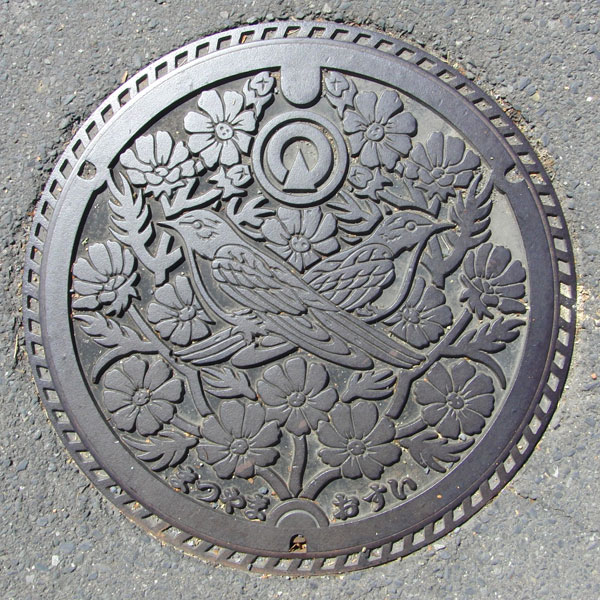
The town's flower is the cosmos and its bird is the cuckoo.
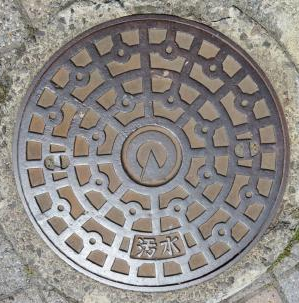
Former Matsuyama Town emblem in the center.
Kashimadai 鹿島台町
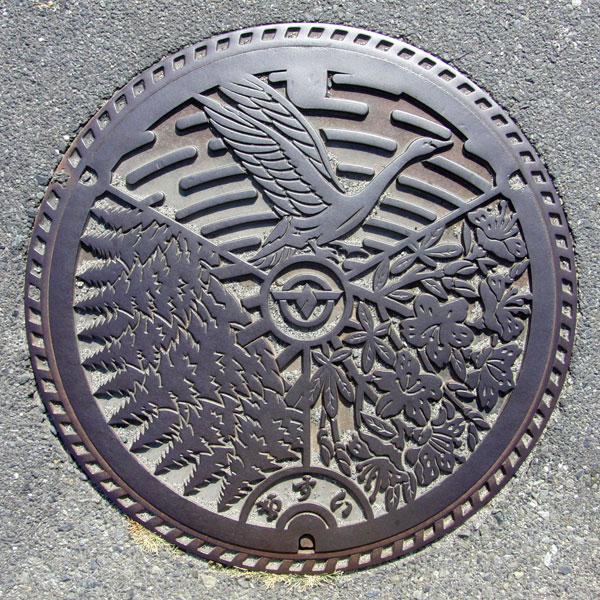
It depicts the town's bird, the swan, the town's tree, the cedar, and the town's flower, the Japanese laurel.
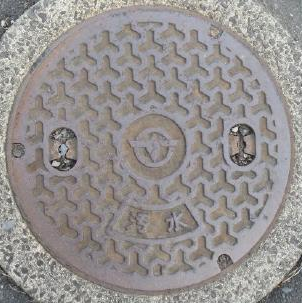
Former town emblem in the center.
Iwadeyama 岩出山町
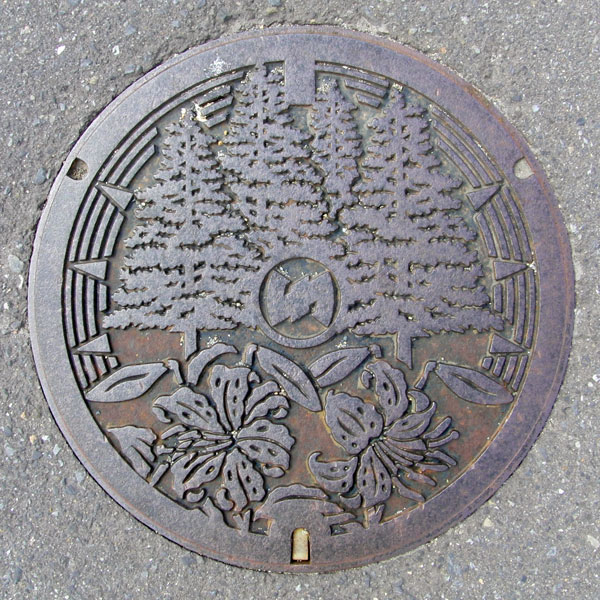
The manhole covers depict the town's tree, the fir, and its flower, the mountain lily.
Naruko 鳴子町
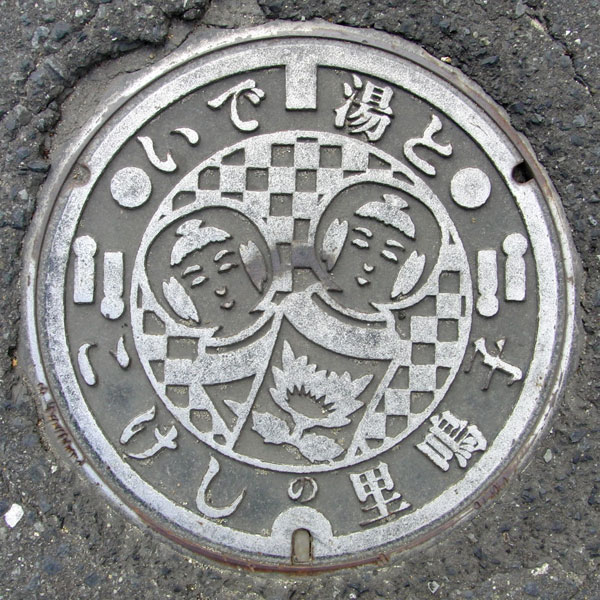
This is for wastewater. A kokeshi doll is painted in the center, with the words "Naruko, Home of Hot Springs and Kokeshi Dolls" written around it.
Ishinomaki 石巻市
Ishinomaki 石巻市
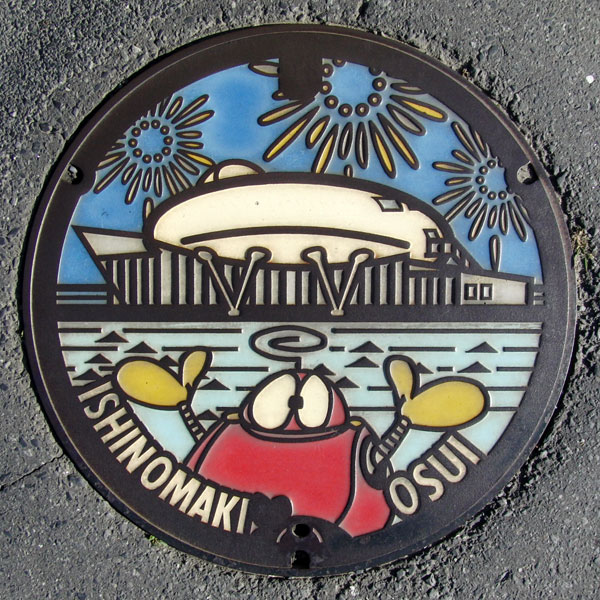
A manhole cover for sewage, featuring the Ishinomori Manga Museum and Robocon, located on an island in the former Kitakami River.
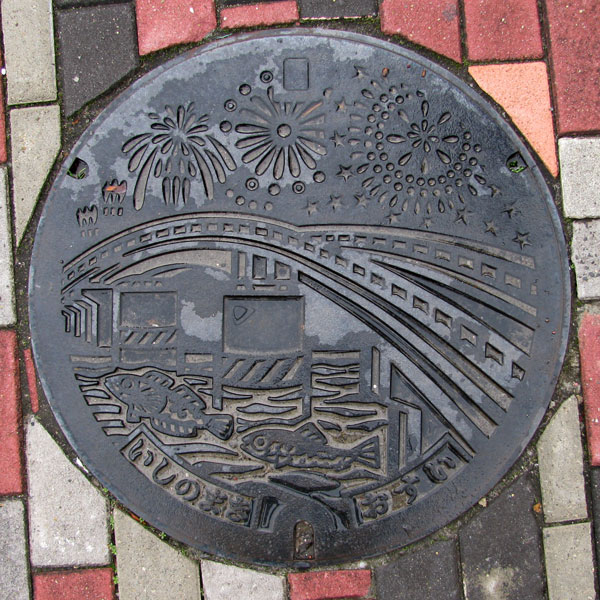
A sewage manhole cover featuring the "Ishinomaki River Opening Festival Fireworks Display" design.
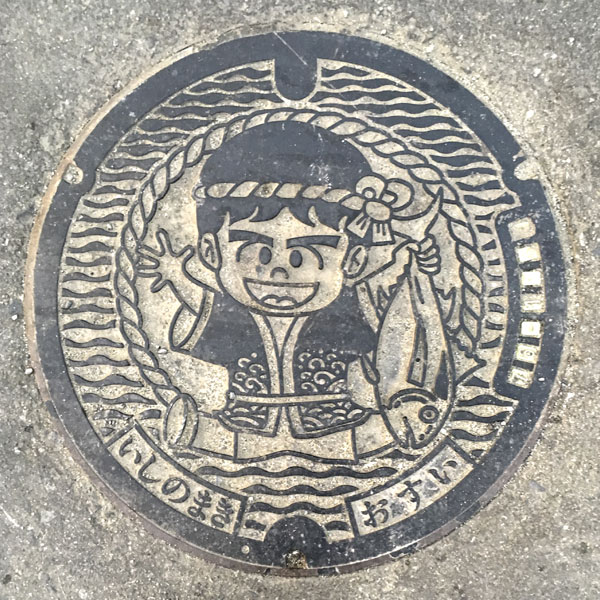
The town is home to Ishinomaki Fishing Port (Ishinomaki New Fishing Port), one of Japan's largest fishing ports in terms of both catch volume and value, and the sewage manhole cover features a design of a man wearing a haori coat and twisted headband holding a tuna-like fish.
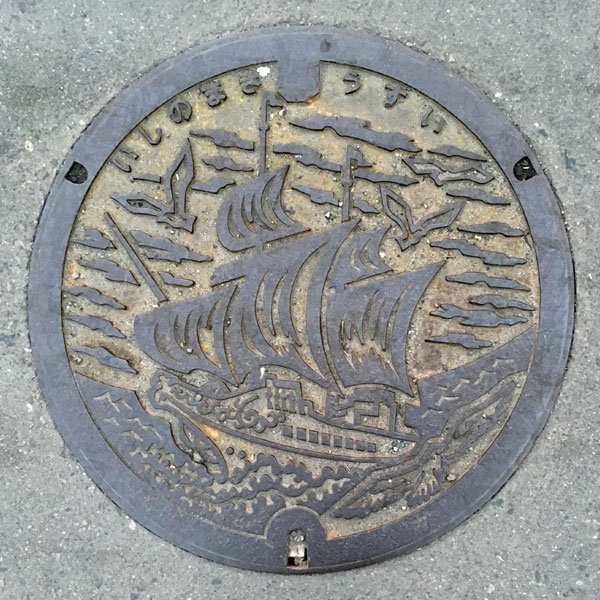
A rainwater manhole cover with a picture of the San Juan Bautista, a galleon built by Date Masamune, the first lord of the Sendai domain. The words "Ishi no Maki" and "Usui" are written on the top.
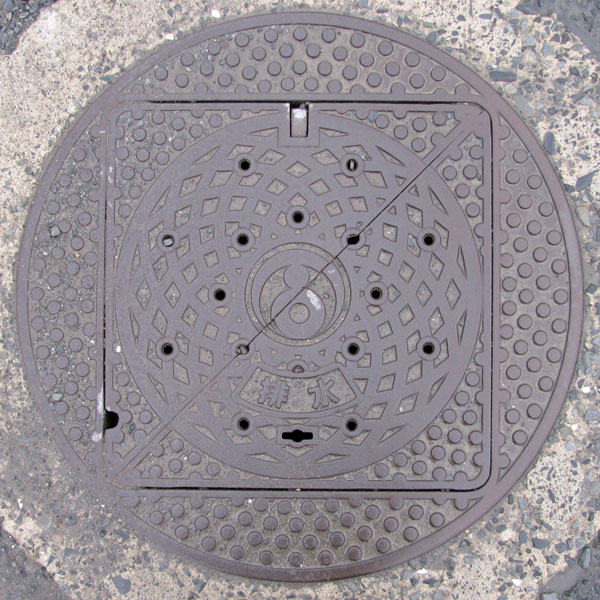
A manhole cover with a rectangular two-piece sub-lid inside the main lid. The word "drainage" is written on it.
Monou 桃生町
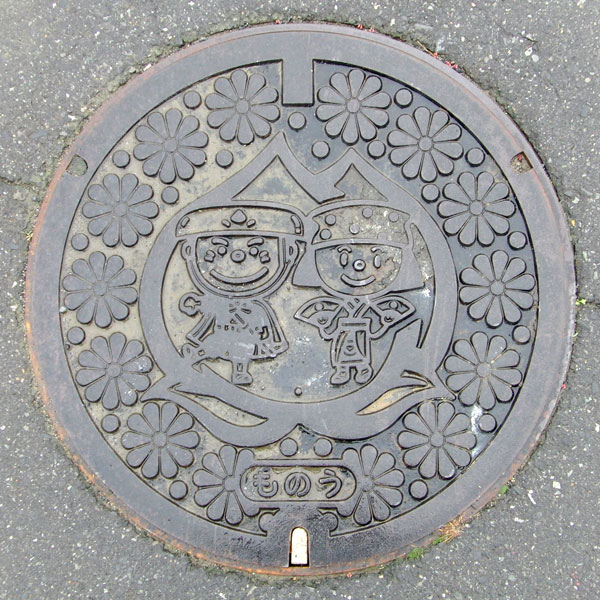
Enclosed within the central peach are the town's mascots, Momojiro-kun and Momoe-chan.
Kanan 河南町
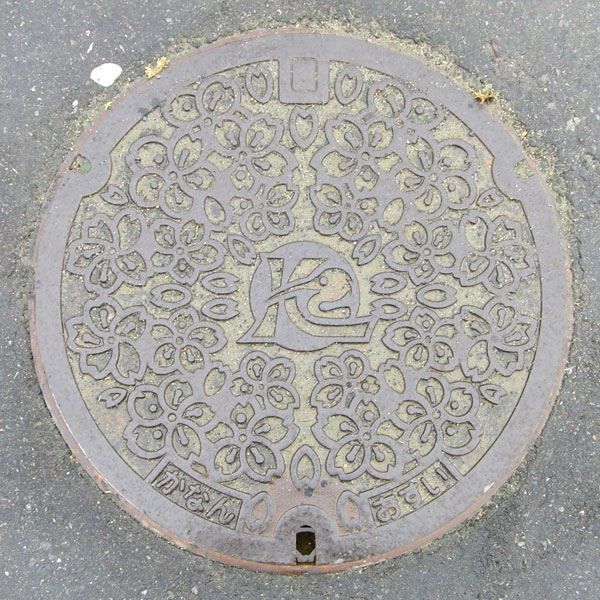
The town flower is the cherry blossom, and the town symbol, the egret, is depicted in the center.
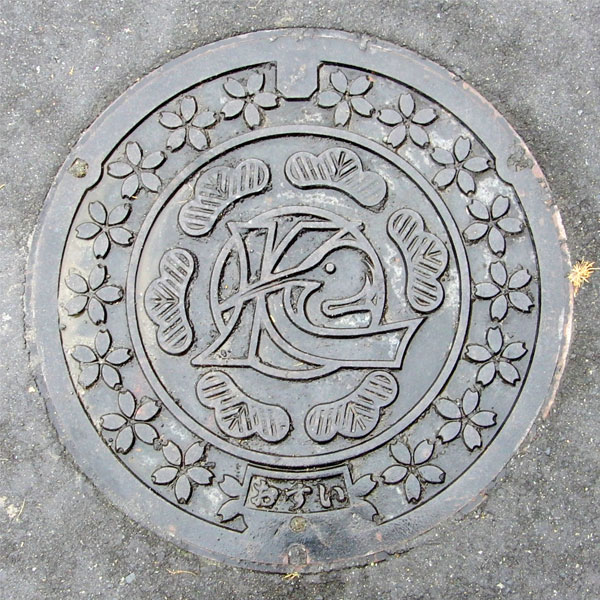
There is also a white egret here. Outside of that is the town tree, the pine tree, and outside of that is the town flower, the cherry blossom.
Kahoku 河北町
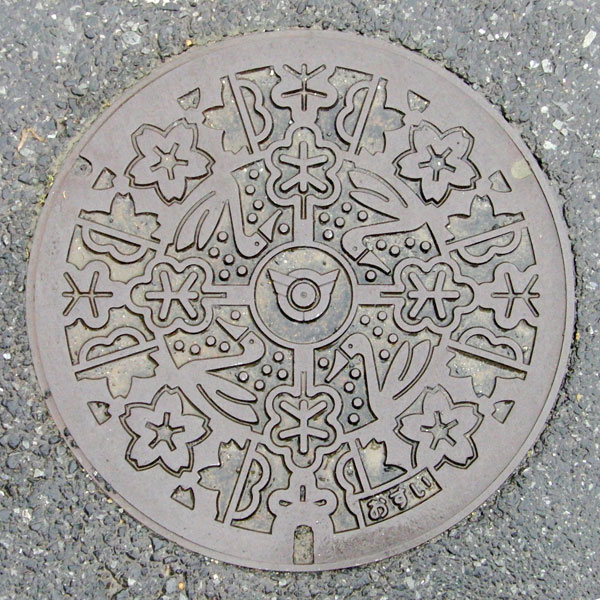
It depicts the town's tree, the oak, the town's flower, the cherry blossom, and the town's bird, the swan.
Kitakami 北上町
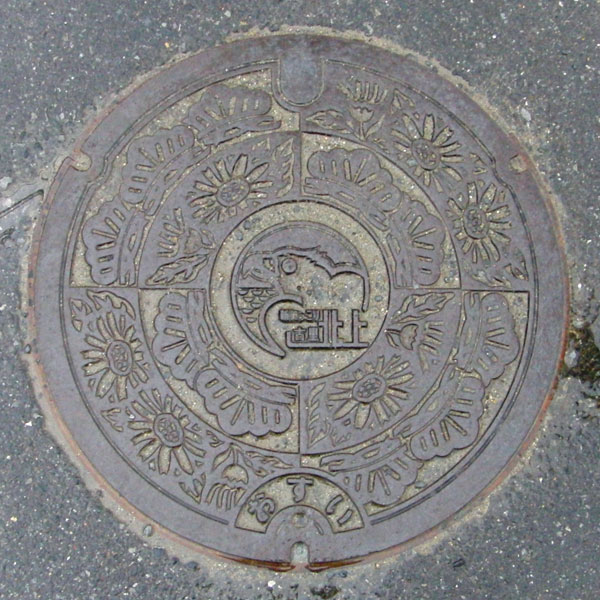
The manhole cover depicts the former Kitakami Town bird, the golden eagle, the Japanese dwarf pine, and the beach daisy.
Ogatsu 雄勝町
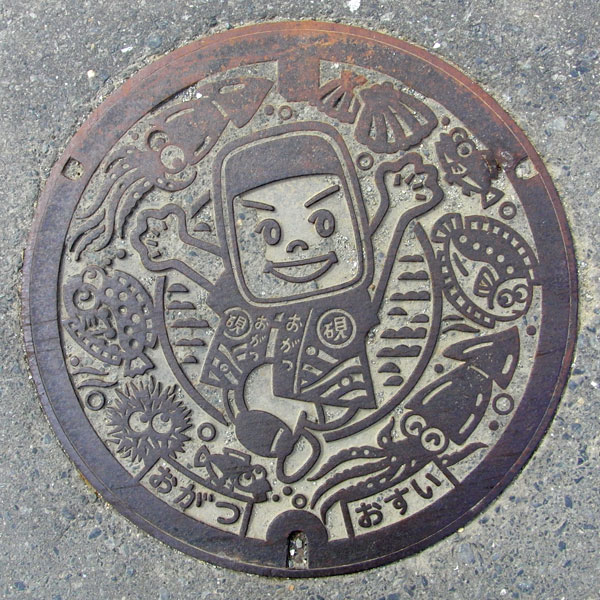
It features a character from Ogatsu Town's specialty product, the inkstone.
Oshika 牡鹿町
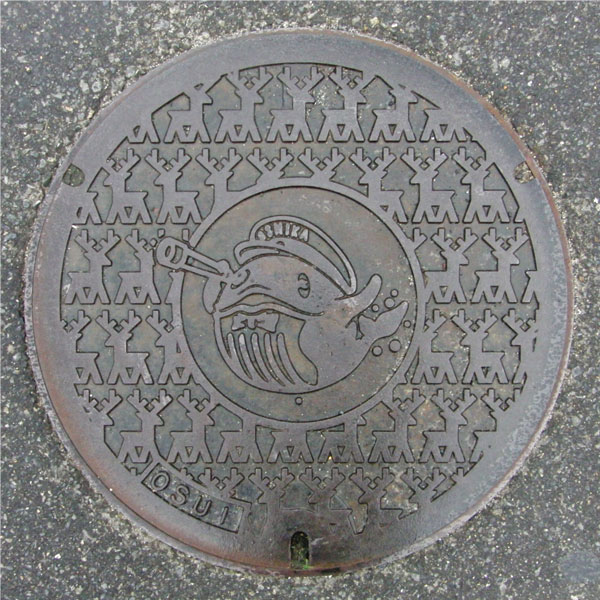
It features the former Oshika Town mascot, Minky the Whale. If you look closely, you'll see that the base is a deer (male, no less). Just as you'd expect from Oshika Town.
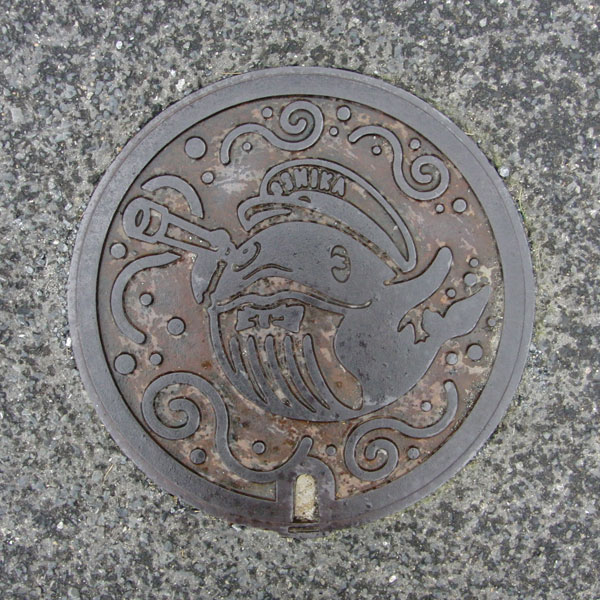
A sewage manhole with the center part cut out at the top.
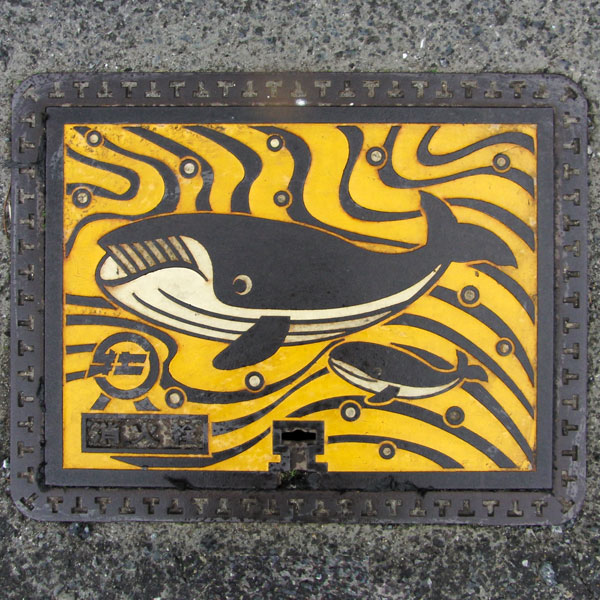
Minky the Whale as a whale.
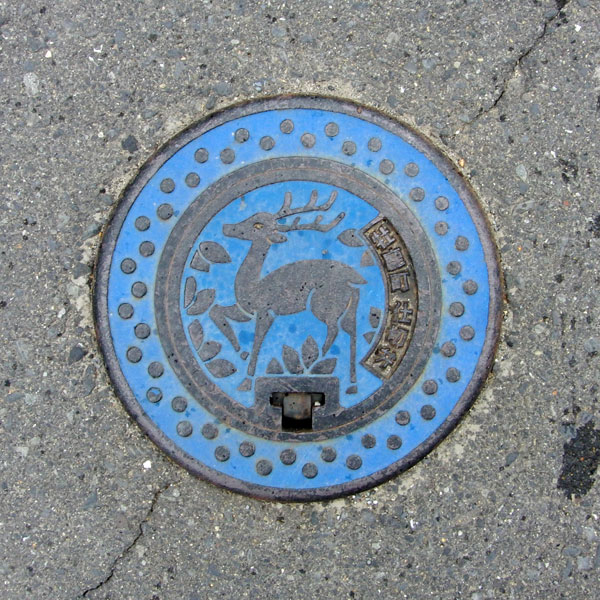
The town animal of the former Oshika Town was a deer, and the gate valve depicts a deer instead of a whale.
Higashimatsushima 東松島市
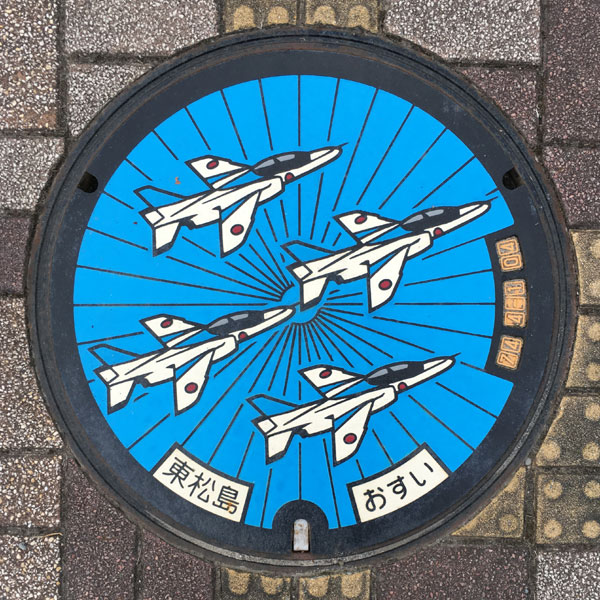
A manhole cover featuring the Blue Impulse.
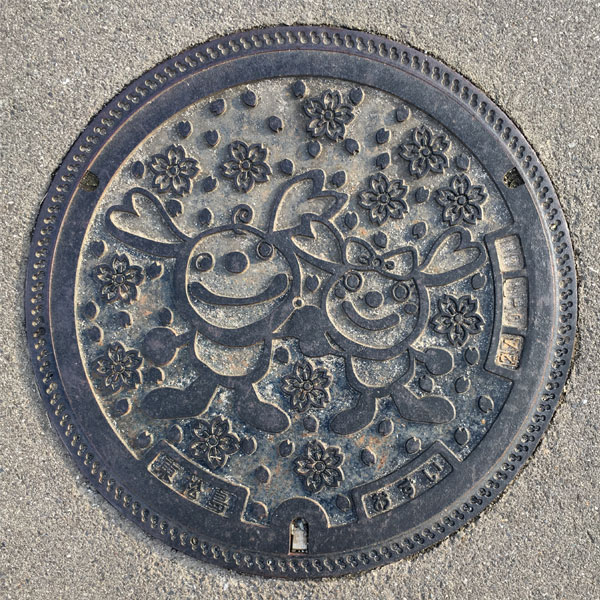
A manhole cover for sewage treatment features Higashimatsushima City's official mascots, "Iito-kun" and "Iina-chan," and the city's flower, the cherry blossom.
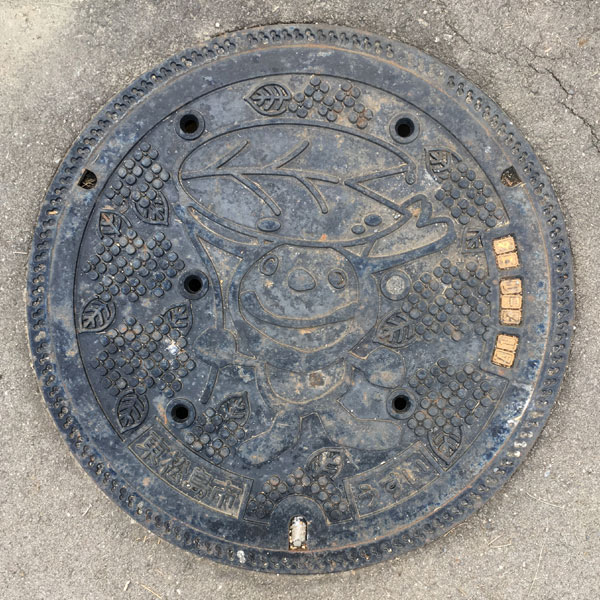
A rainwater manhole cover featuring Higashimatsushima City's official mascot, "Iito-kun," and a hydrangea.
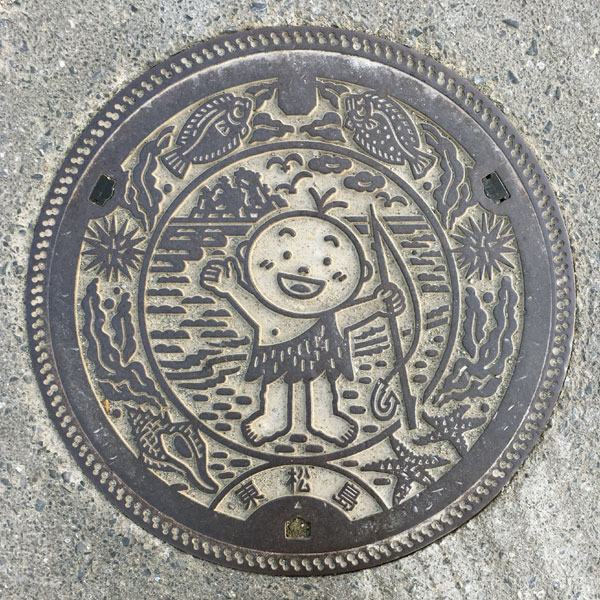
This post-merger cover features the former Naruse Town design and features "Gen-chan" (real name "Jomon Gen"), the mascot of the Oku Matsushima Jomon Village Historical Museum. The word "Higashimatsushima" is written at the bottom.

The Blue Impulse (officially the 11th Squadron of the 4th Air Wing) is based at Matsushima Air Base, an air base of the Japan Air Self-Defense Force (JASDF), located in Yamoto, Higashimatsushima City.
Yamoto 矢本町
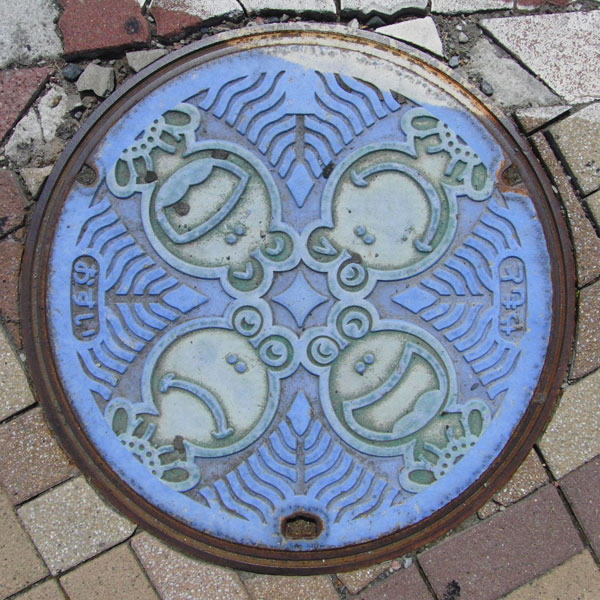
Frog and water.
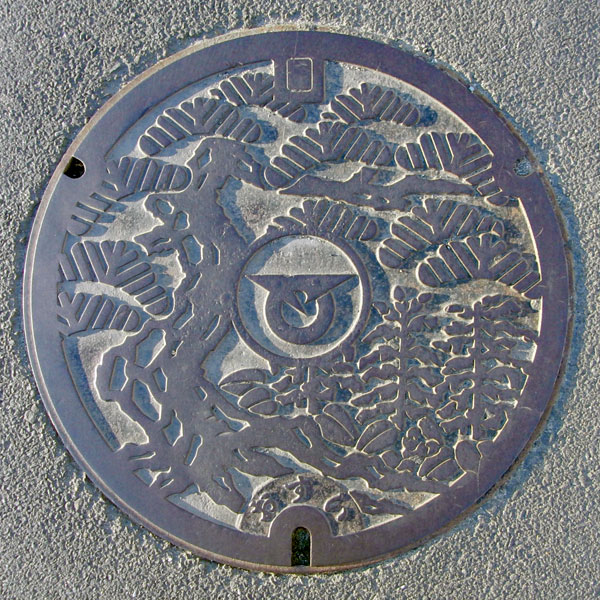
The town's tree, the black pine, and its flower, the salvia, are depicted. The town emblem is in the center.
Naruse 鳴瀬町
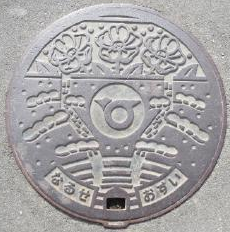
The town's tree, the pine, and its flower, the rosehip, are depicted with the emblem in the center.
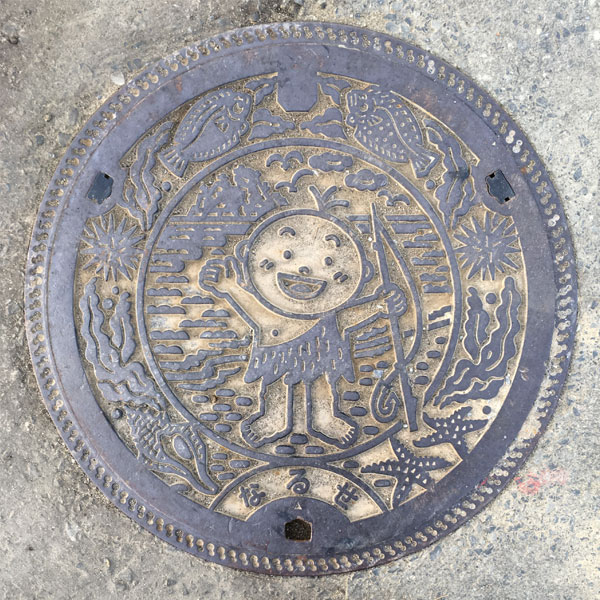
The figure features "Gen-chan" (real name "Jomon Gen"), the mascot of the Oku Matsushima Jomon Village Historical Museum. The word "Naruse" is written at the bottom.
Tomiya 富谷市
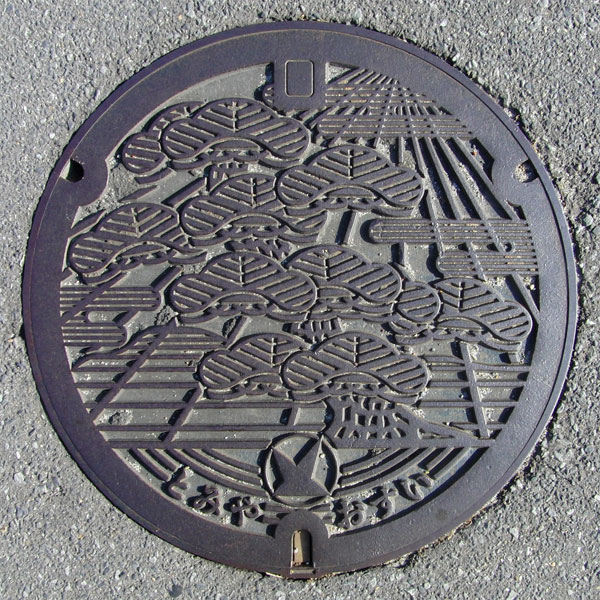
Rice fields and the city's tree, the pine.
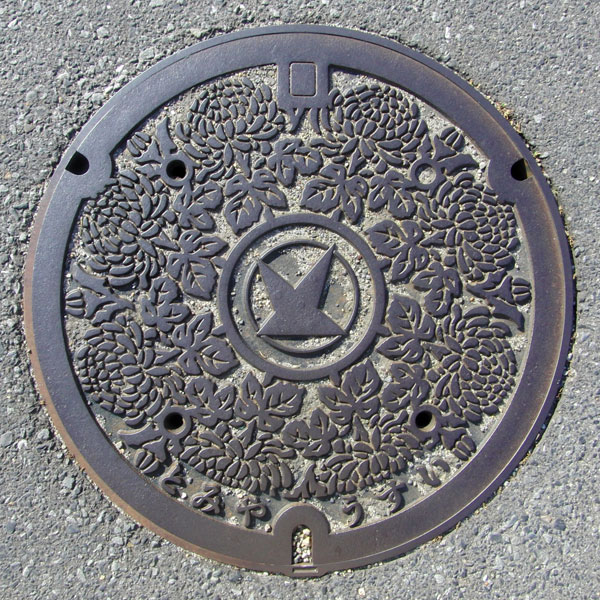
The city's flower, the chrysanthemum, is depicted.
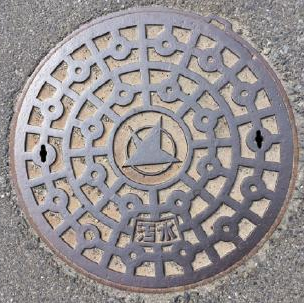
City emblem in the center.
Shiogama 塩竈市
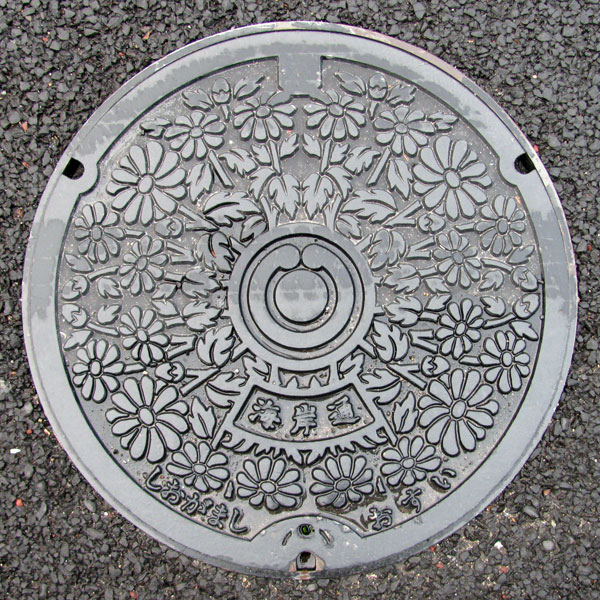
For sewage. The Shiogama City flower is the white daisy. The city emblem features a stylized image of the Kuroshio Current and the sun in the center. This manhole cover for sewage water has the words "Kaigan-dori" (Coast Road) written on it.
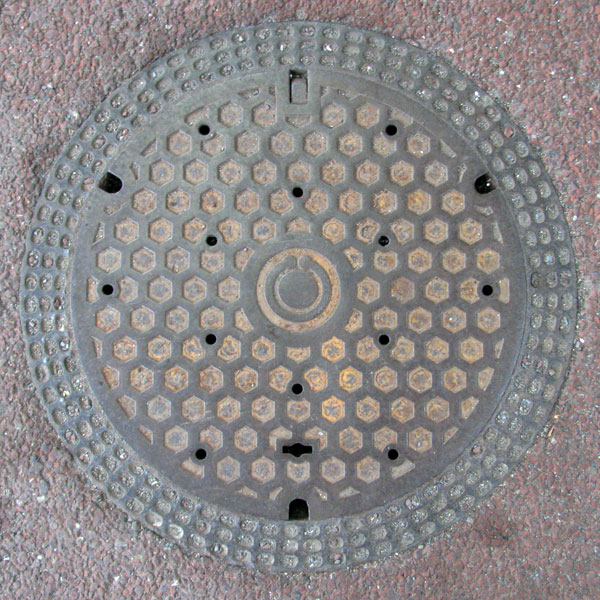
A hexagonal patterned wastewater canister with the city emblem and the word "sewage."
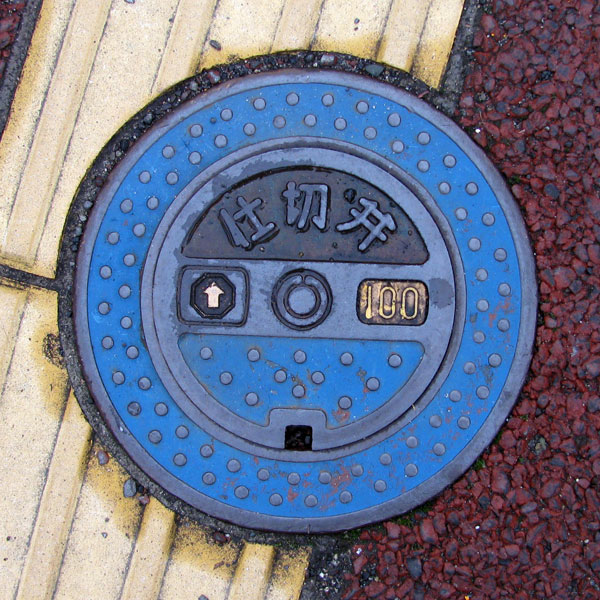
Gate valve with a pipe diameter of 100 mm.
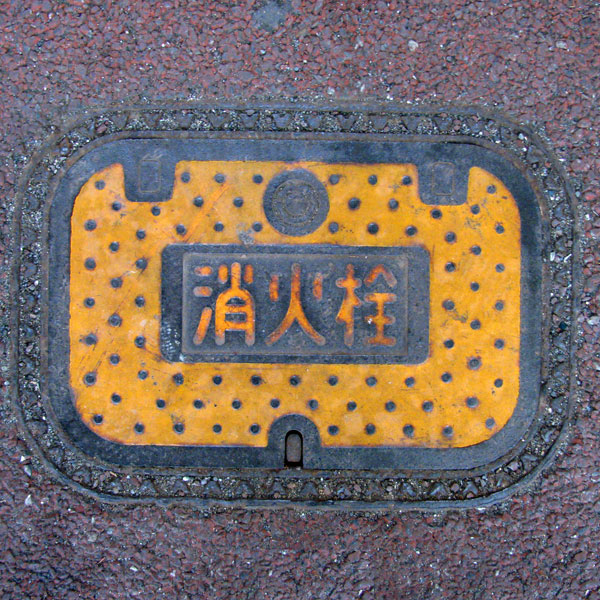
A small fire hydrant with rounded corners.
Tagajo 多賀城市
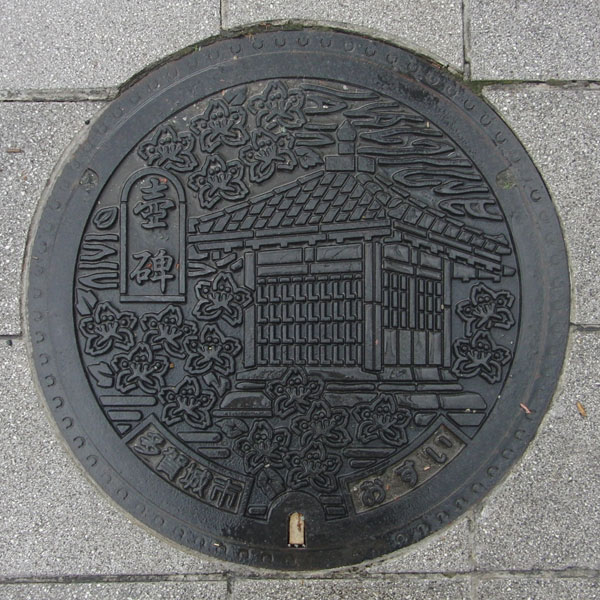
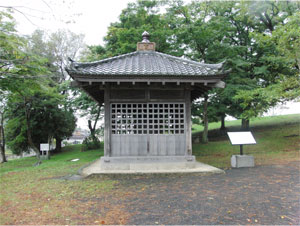
This manhole cover for sewage features the Tsubo no Ishibumi (Tagajo Monument), a monument that appears in Matsuo Basho's "Oku no Hosomichi."
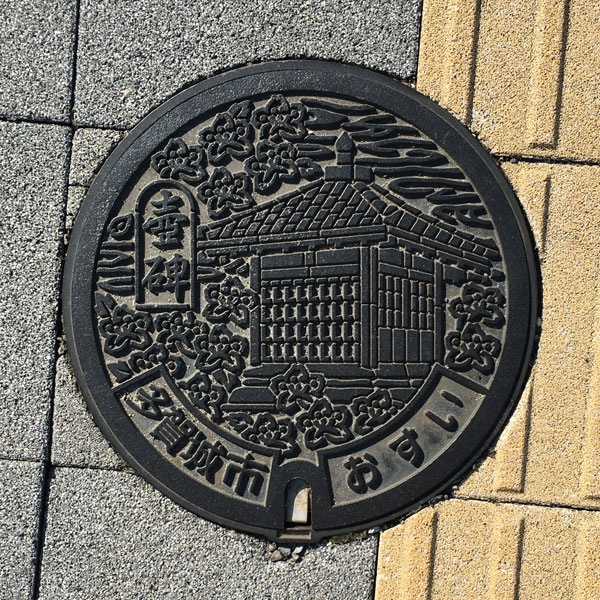
A small manhole with the same design as above.
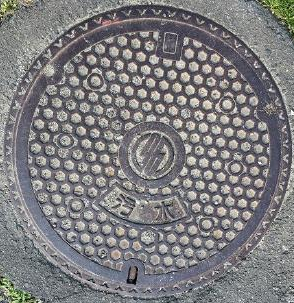
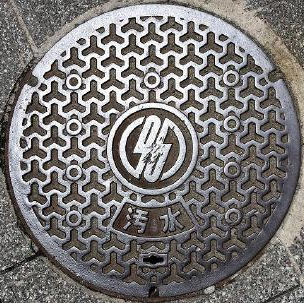
City emblem in the center
Natori 名取市
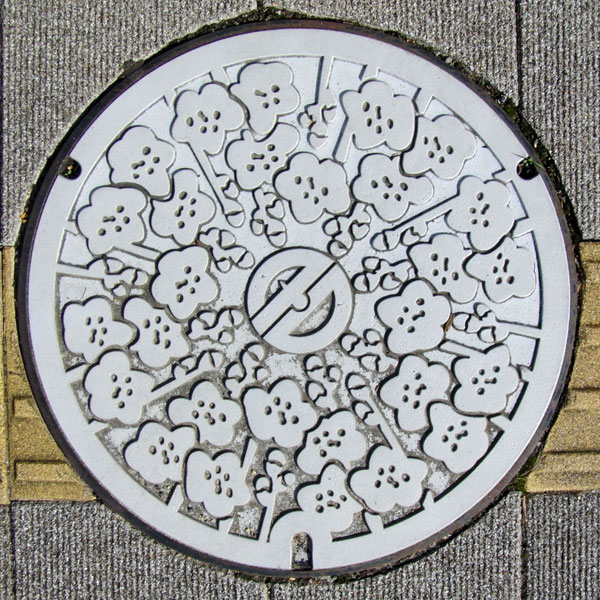
The lid depicts the city's tree, the flowering peach, with the city emblem in the center.
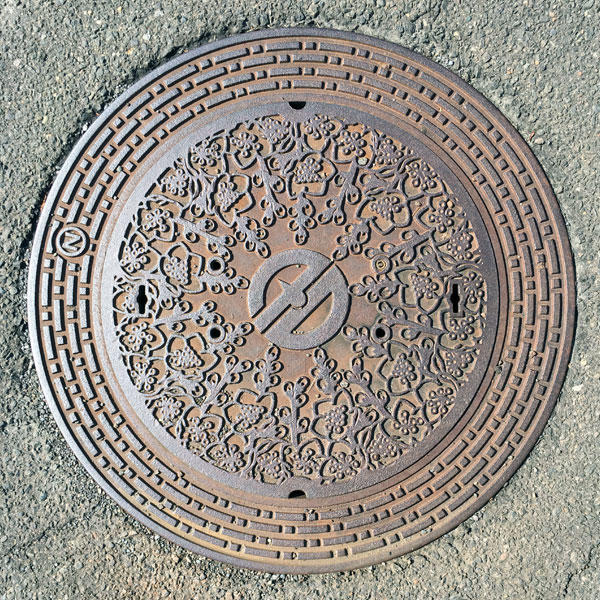
This is a different design featuring a wide, framed peach blossom, but with a convex outline.
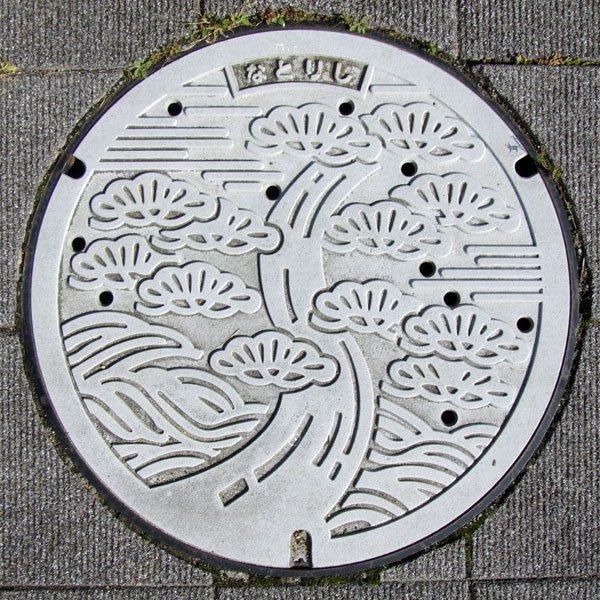
This manhole cover is made to be black pine.
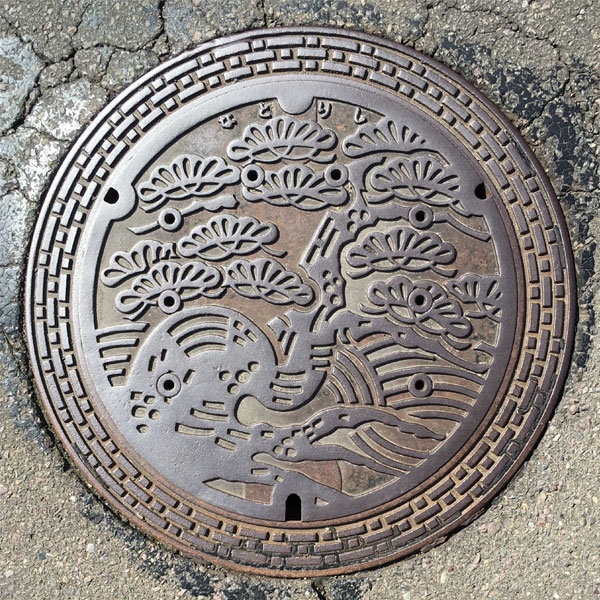
It is a black pine design with a wide frame, but the design of the trunk and branches is slightly different.
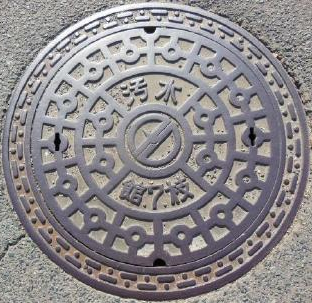
City emblem in the center.
Iwanuma 岩沼市
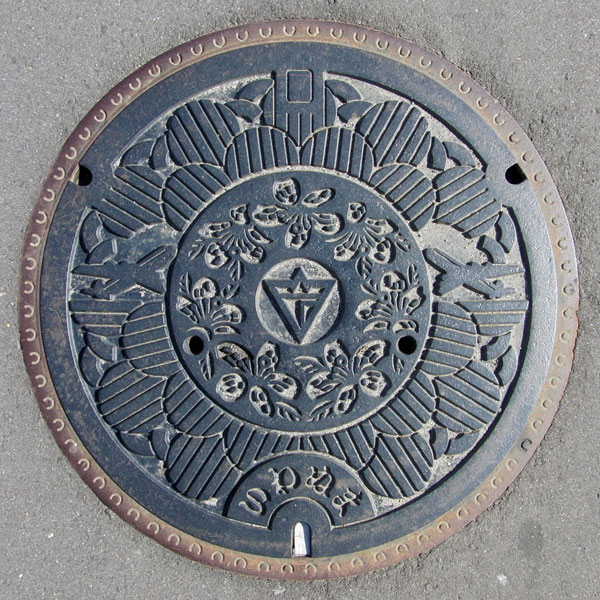
It depicts the city's tree, the black pine, the city's flower, the azalea, and a passenger plane taking off from Sendai Airport.
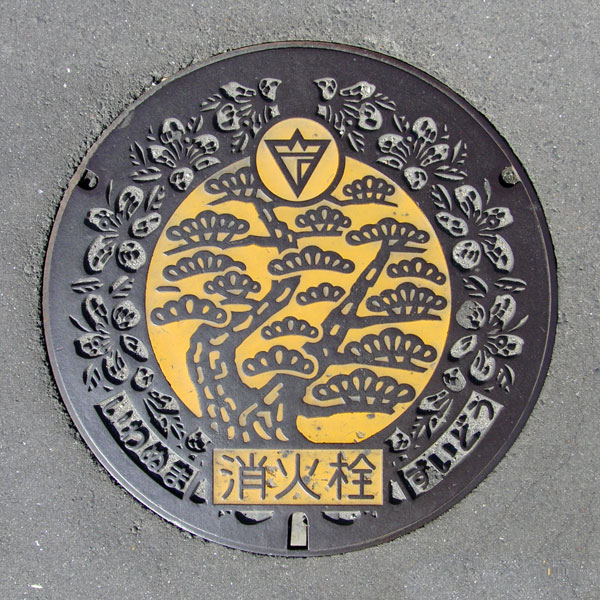
A fire hydrant decorated with the city's tree, the black pine, and the city's flower, the azalea.
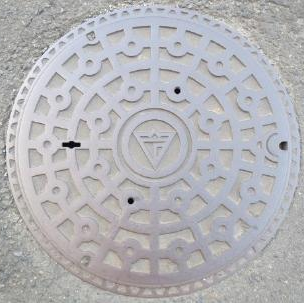
City emblem in the center.
Shiroishi 白石市
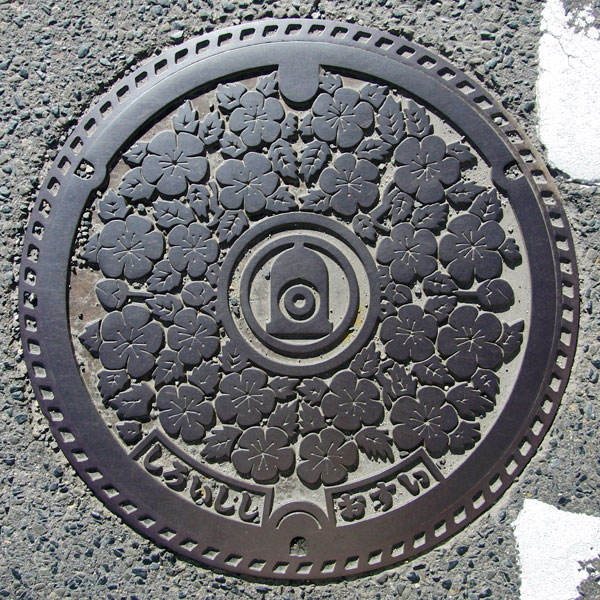
The lid features the city's flower, the Yamabuki. The city emblem is in the center.
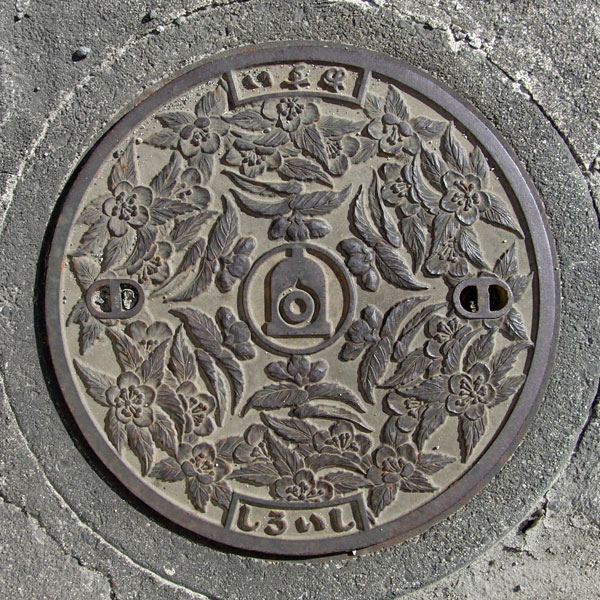
The lid features a three-dimensional depiction of a mountain bush clover.
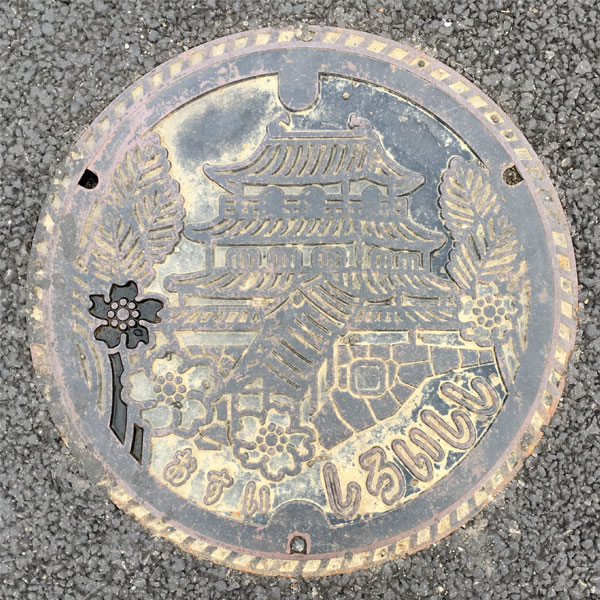
A neutral sewage manhole cover featuring Shiroishi Castle and the city's flower, the kerria.
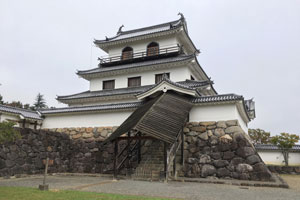
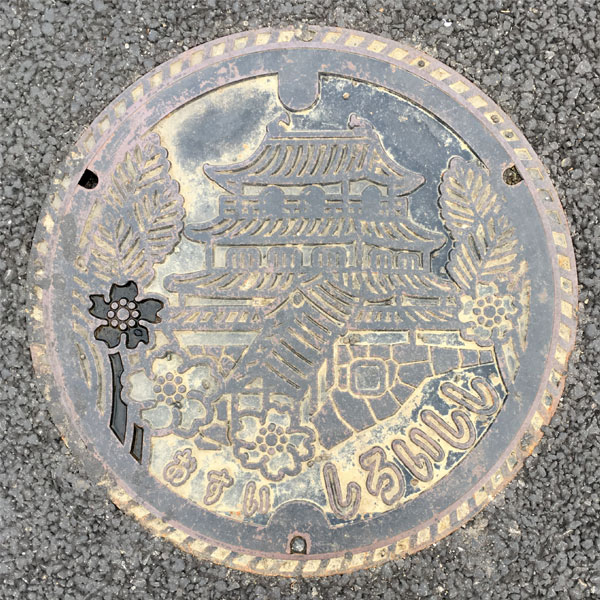
A lid from a farm collection and distribution center in the Saigawa area features a painting of Shiroishi Castle.
Kakuda 角田市
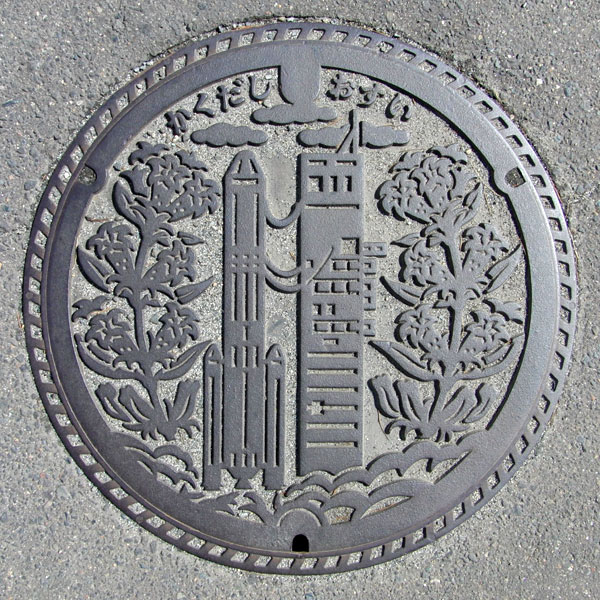
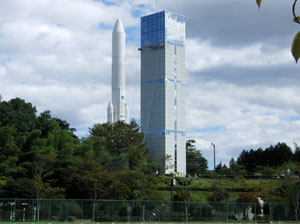
The design features the city's flower, the gentian, and a model of the H-II rocket in Taiyama Park.
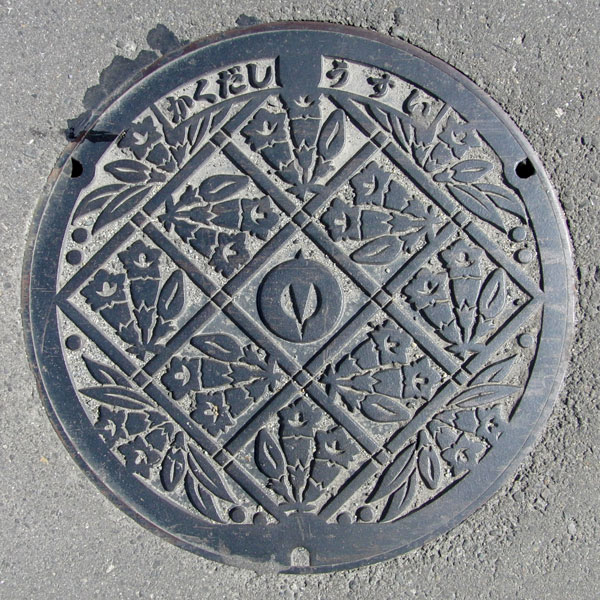
A rainwater cover decorated with the city's flower, the gentian.
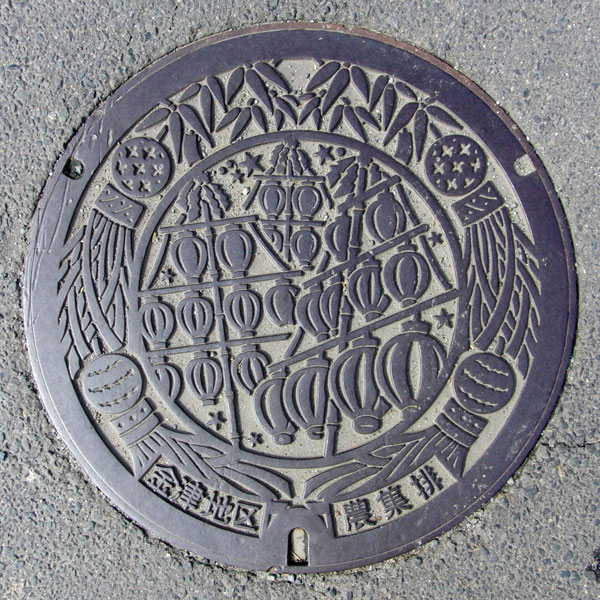
This is a manhole cover for agricultural collection and disposal in the Kanazu district of Kakuda City.
The illustration depicts the Kanazu Tanabata festival, a traditional event that has been held in the Kanazu district since the feudal era, a period that dates back to the feudal domain era.
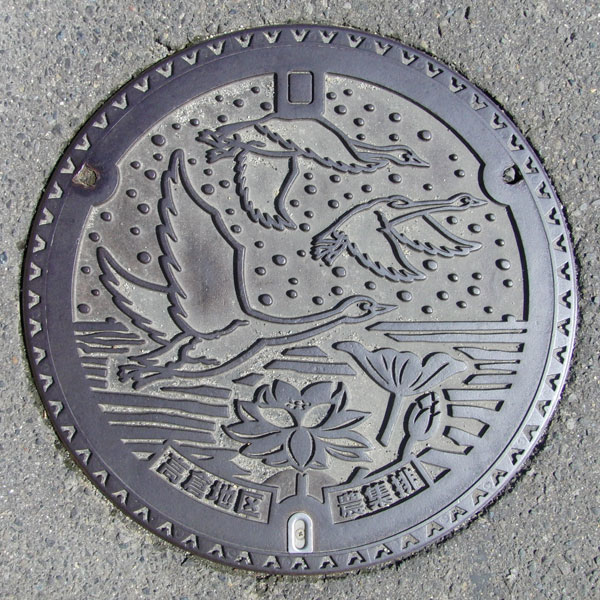
Agricultural waste collection and disposal lid in the Takakura district of Kakuda City.
Minamisanriku 南三陸町
Shizugawa 志津川町
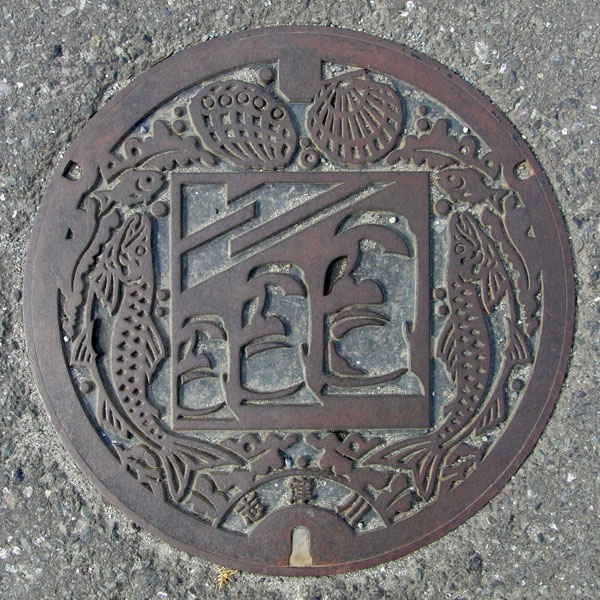
Salmon, abalone, and scallops are depicted around the moai statue, a gift from Chile.
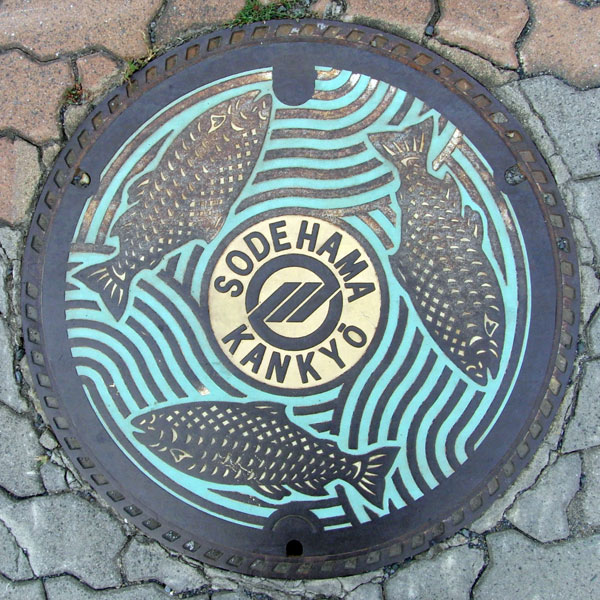
The word "KANKYO" suggests this is a lid for the Special Environmental Conservation Public Sewerage System (Tokukan). The fish is a slightly overweight salmon.
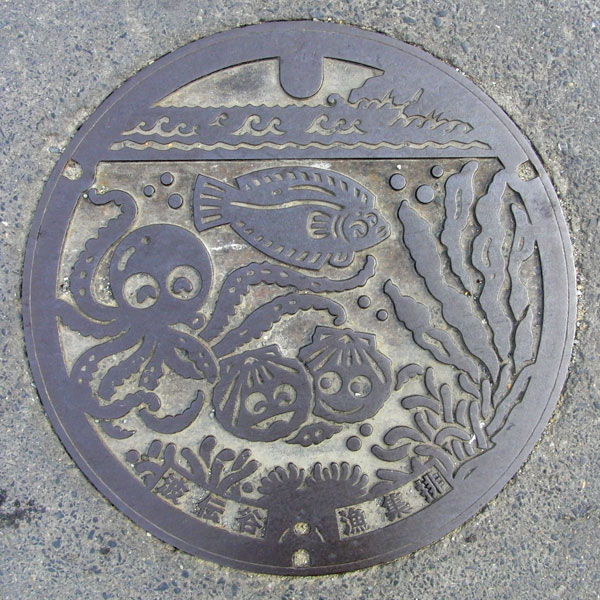
This is the cover of a fishing port in the Haden-ya area. Various seafood, including octopus and flounder, are depicted beneath the calm waters.
Utatsu 歌津町
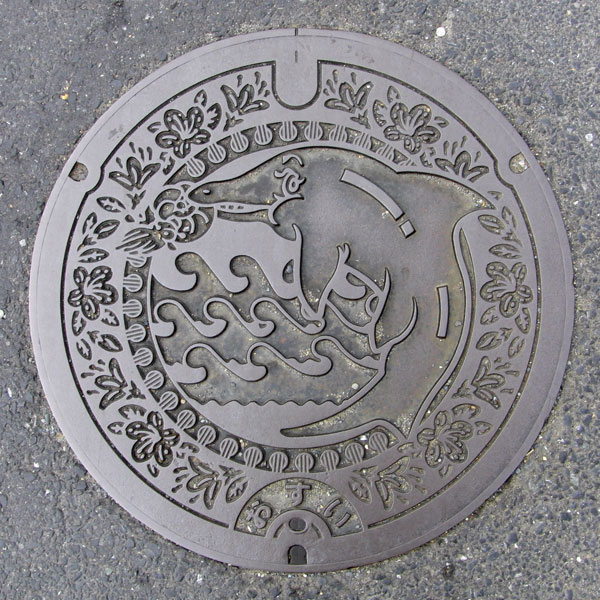
The cover depicts the Utatsuryu (Utatsusaurus), a fossil discovered in this area. It's believed that in reality, it was much more elongated... The surrounding area is decorated with the town's flower, azalea, but the color is barely visible on this cover due to the dirt. This is the cover for the fishing catch culvert in Minamisanriku. Various seafood, including octopus and flounder, are depicted beneath the calm waters.
Kami 加美町
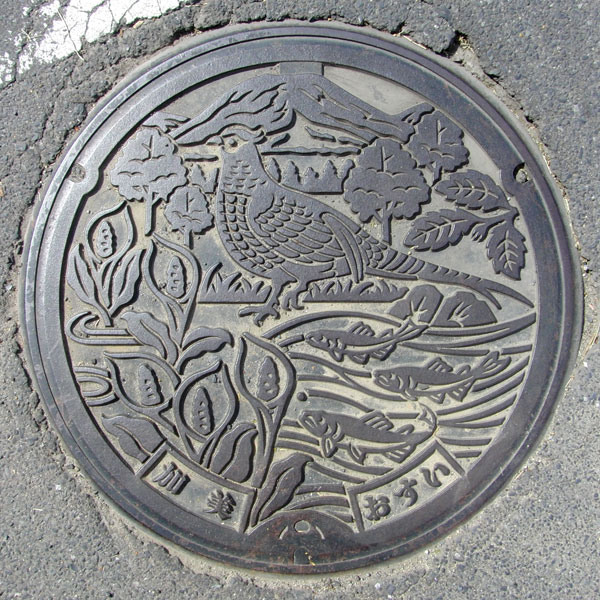
From top to bottom, the lid depicts the town's symbols: Mt. Yakurai, the town tree (beech), the town bird (pheasant), the town flower (skunk cabbage), and the town fish (sweetfish).
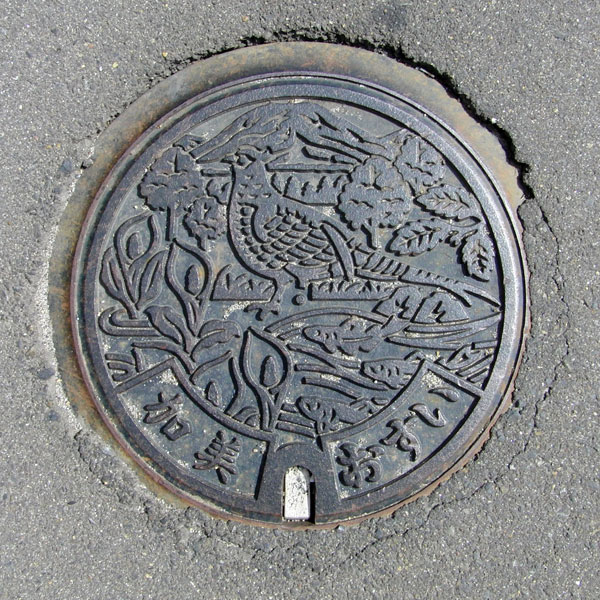
A small sewage cover with the same design as above.
Nakaniida 中新田町
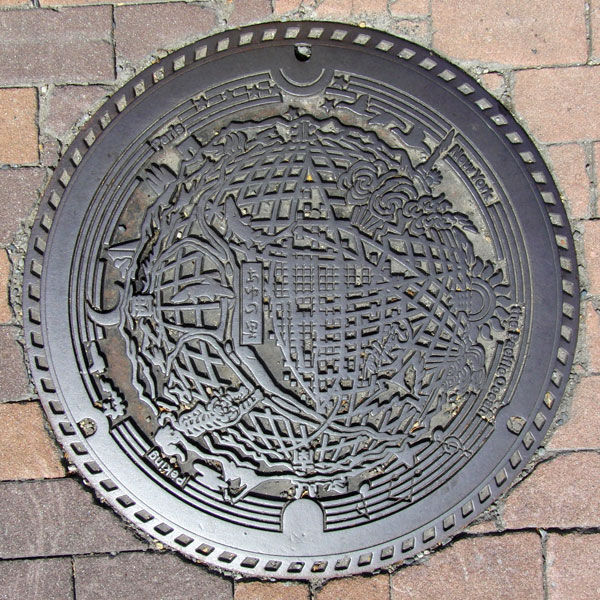
In the center is a map of the former Nakaniida Town, with the words "Ayu no Sato" (Sweetfish Village) and "Bach Hall" visible. The mesh-like area around it appears to be rice paddies. The four sides feature the letters "East, West, North, and South," the Statue of Liberty with "New York," the words "the Pacific Ocean" and rough waves, the Christ the Redeemer statue in Rio de Janeiro, Mount Fuji in the lower left, "Peking" and an elephant, the pyramids and the Sphinx, the Sagrada Familia, "Paris" and the Arc de Triomphe, the Big Dipper to the north, the sun to the east, the moon and space shuttle to the west, penguins to the south.
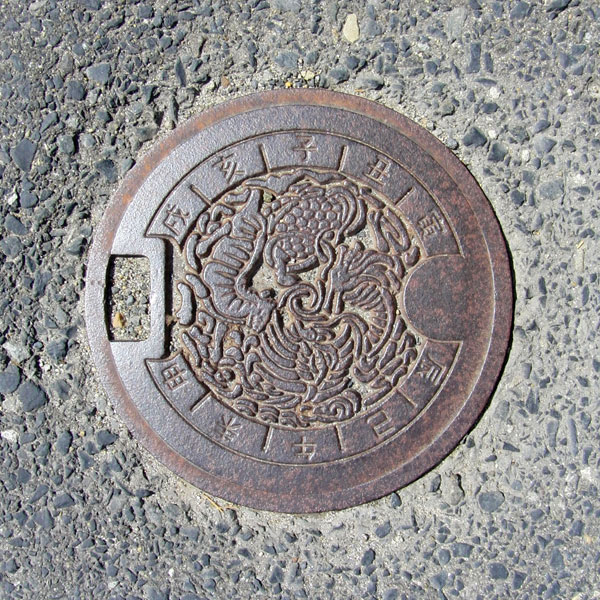
A small cover depicting the four gods and the twelve zodiac animals. Black Tortoise faces the Rat, Azure Dragon faces the hidden Rabbit, Vermilion Bird faces the Horse, and White Tiger faces the hidden Rooster. Perhaps this means the town is protected by the four gods.
Onoda 小野田町
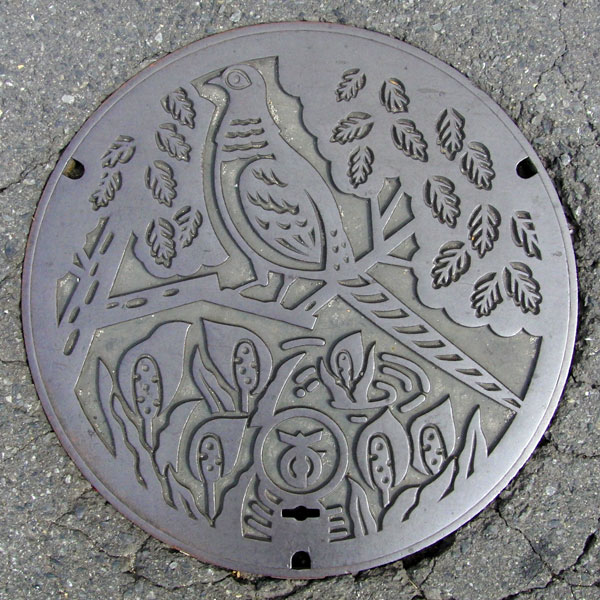
The town's tree, the beech, its bird, the pheasant, and its flower, the skunk cabbage, are depicted. The town emblem is at the bottom.
Miyazaki 宮崎町
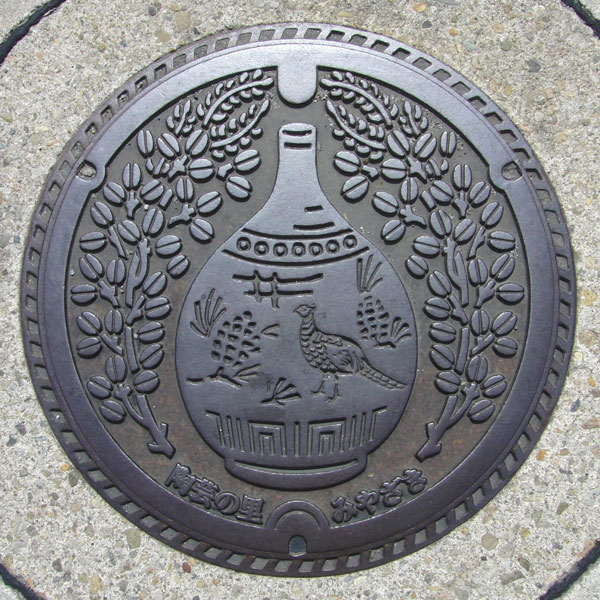
The design features a vase representing the "Home of Pottery" and the former Miyazaki Town flower, the bush clover.
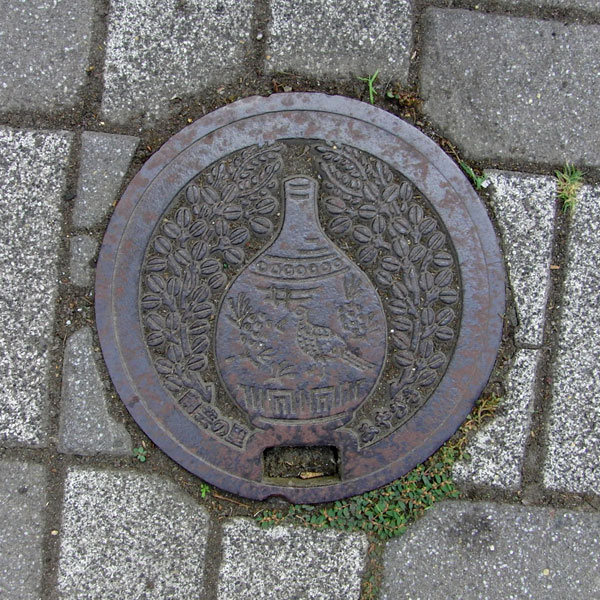
A smaller version with the same design as above.
Wakuya 涌谷町
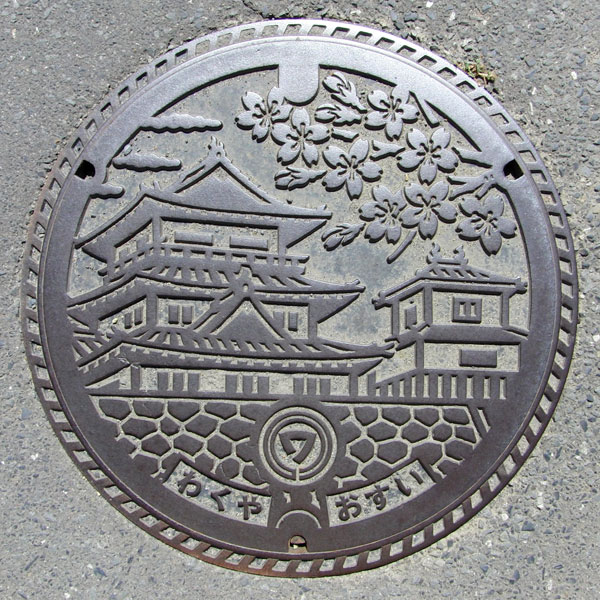
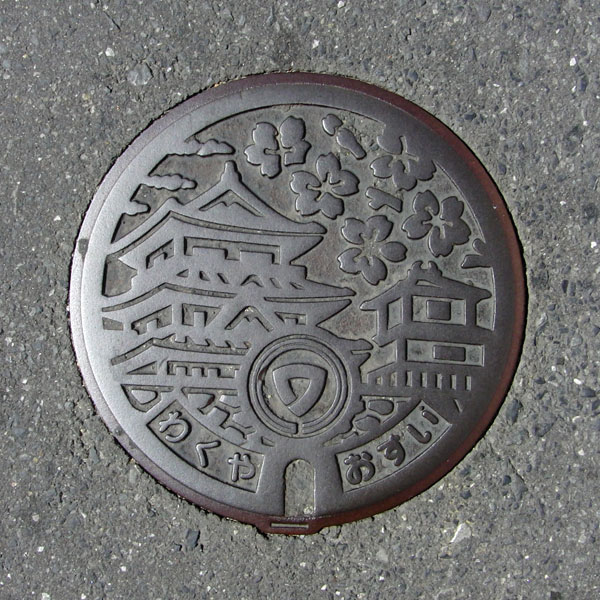
A sewage manhole cover at Shiroyama Park (Wakuya Castle ruins) featuring the words "Museum" and "Cherry Blossoms."
A smaller version of the design above.
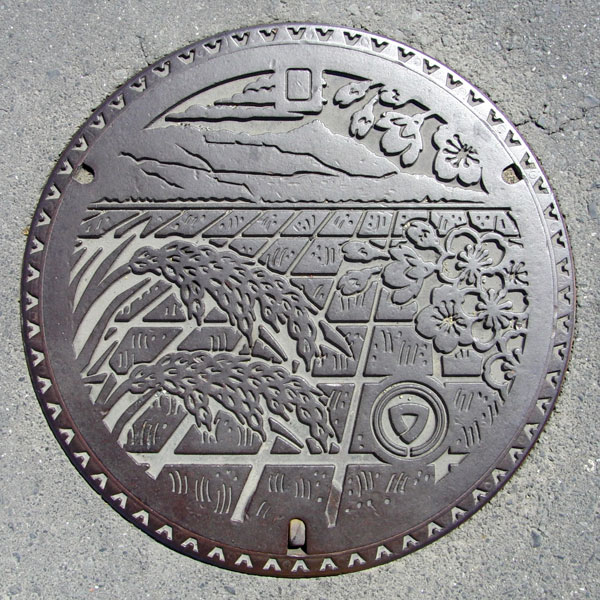
This agricultural collection and drainage canal cover in the Nonodake Central District depicts Mount Nonodake, rice fields, ears of rice, and cherry blossoms. The Kamigori and Hanakatsuyama districts appear to have the same design.
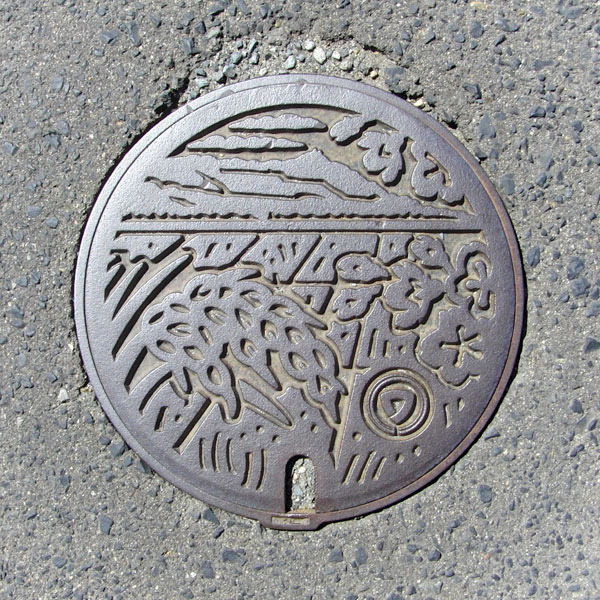
A smaller version of the above design.
Shikama 色麻町
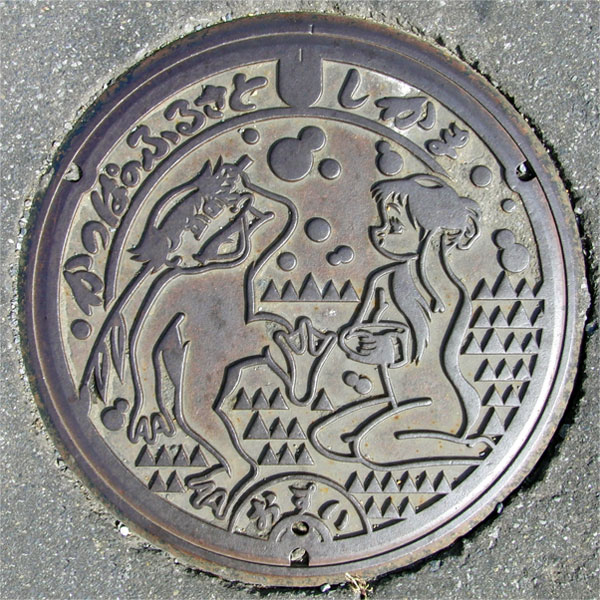
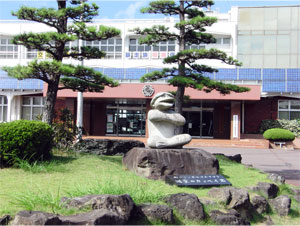
The town's mascot character, Kappei-kun, and his girlfriend.
The kappa legend of Shikama Town.
Long ago, a kappa fell in love with a princess at first sight and began showering her with gifts of fish and cucumbers, but a young samurai, creeped out by his stalker-like behavior, disguised himself as the princess and ambushed the kappa, cutting off one of his arms. The kappa wanted his arm back, so he traded it for a medicine called kappa plaster, which has the ability to stick anything together. It's said that if two people apply it to each other, it will also make a man and a woman stick together.
Over time, the kappa was given the name "Kappei-kun" and is now enshrined like a guardian deity on the town hall rotary.
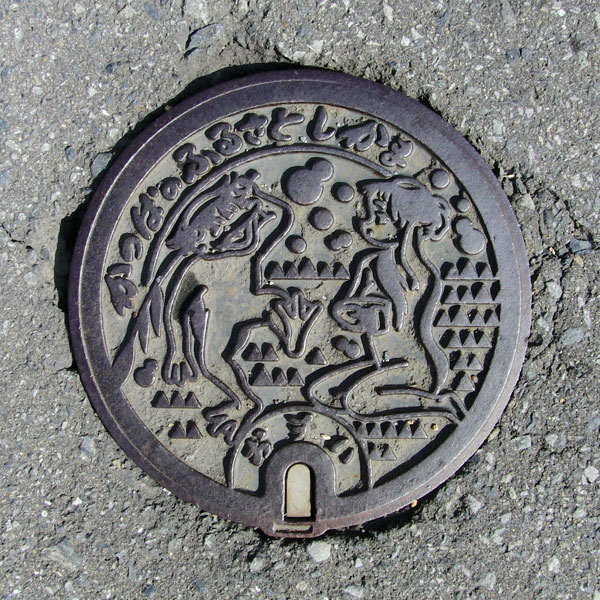
A smaller version with the same design as above.
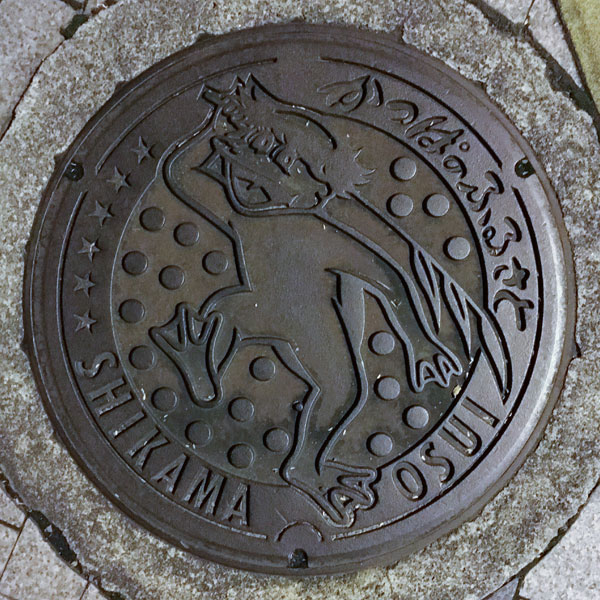
A manhole cover for sewage with only one "Kappei-kun" drawn on it. The words "Kappa's Hometown" are written on the top right, and "SHIKAMA" and "OSUI" are written on the bottom.
Misato 美里町
Kogota 小牛田町
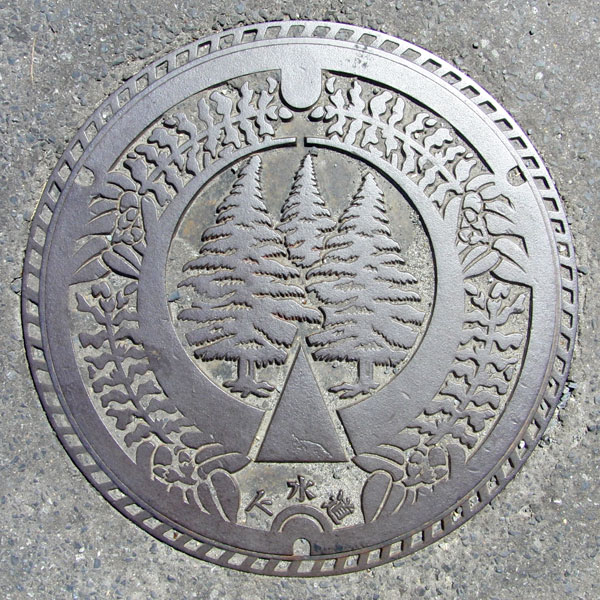
The town's tree, the Himalayan cedar (Deodar Cedar), is depicted within the town emblem, surrounded by the town's flower, the salvia.
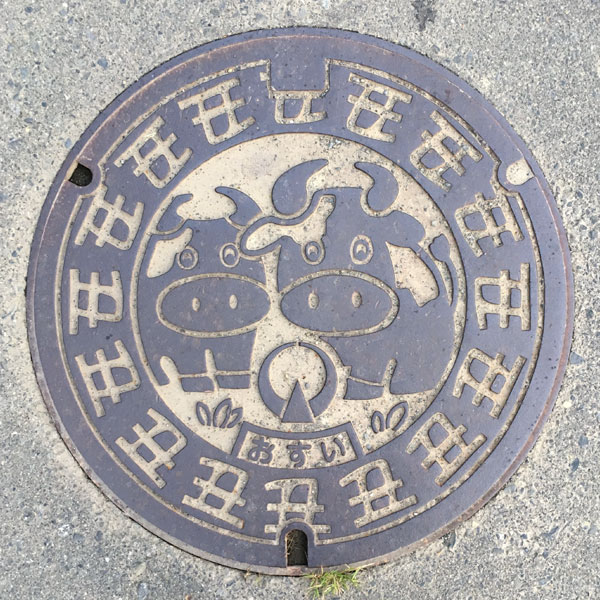
Two cows gaze intently at this agricultural waste disposal lid in the Nakazone district. The character "Ushi" (ox) is written around the lid, and the Ogota town emblem is between the cows.
Nango 南郷町
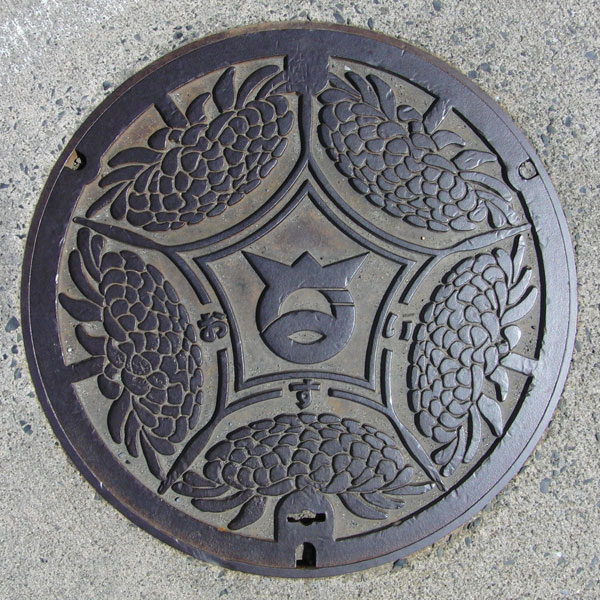
The town's flower, the chrysanthemum, is depicted
Taiwa 大和町
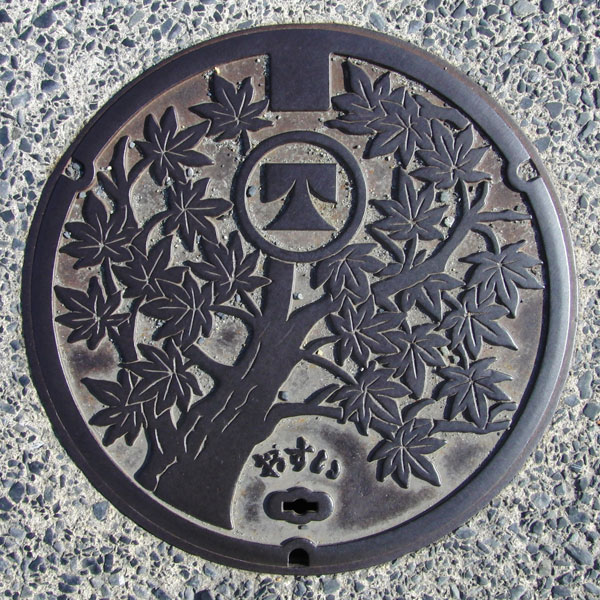
A sewage manhole cover featuring the town's tree, the maple, and the town emblem.
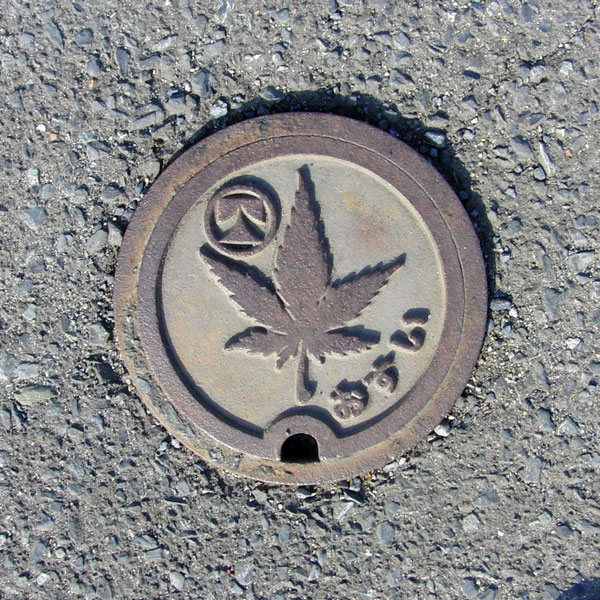
A tiny handhole cover with a single leaf of the town's tree, the maple.
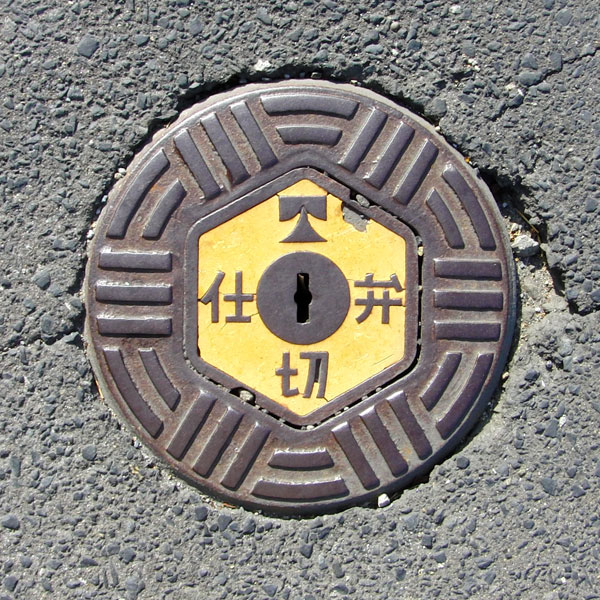
Valve covers with the town emblem.
Osato 大郷町
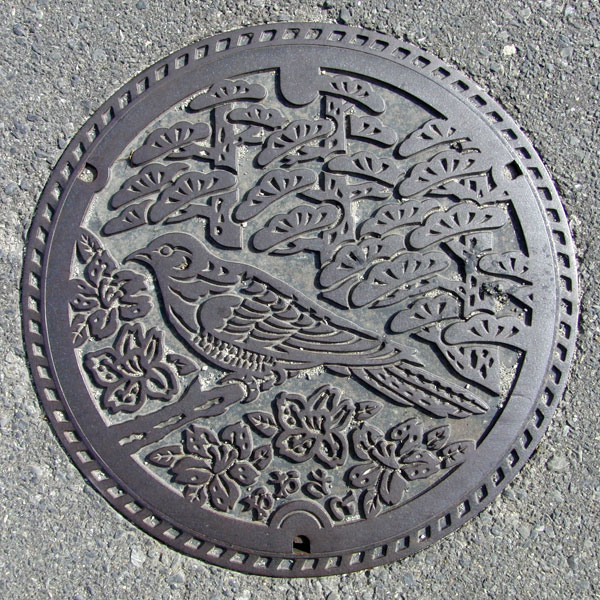
A manhole cover for sewage depicting the town's tree, the pine, town flower, the azalea, and town bird, the cuckoo.
Onagawa 女川町
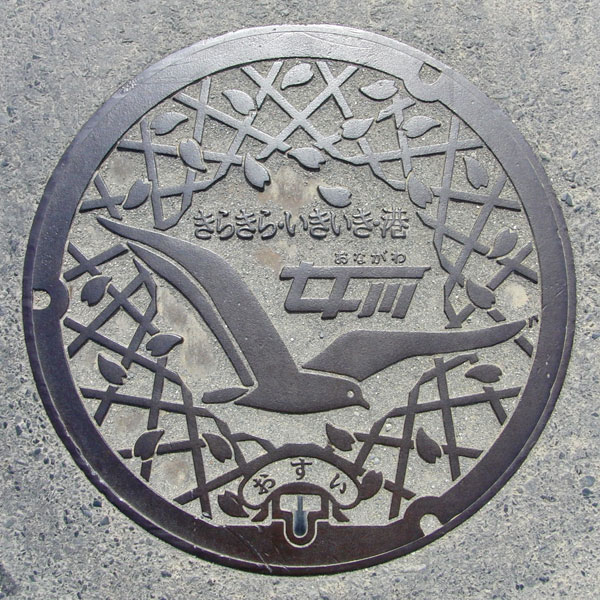
This sewage manhole cover features the words "Sparkling, Lively, Port" and "Onagawa," as well as the town's bird, the black-tailed gull, and petals of the town's flower, the cherry blossom.
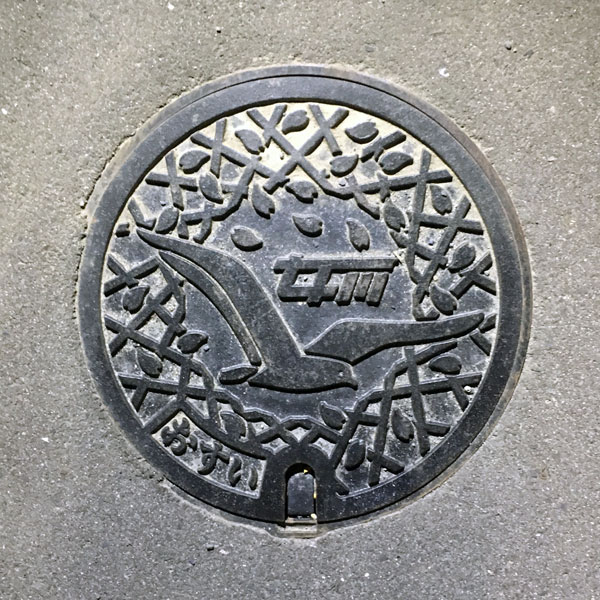
A smaller version with the same design as above.
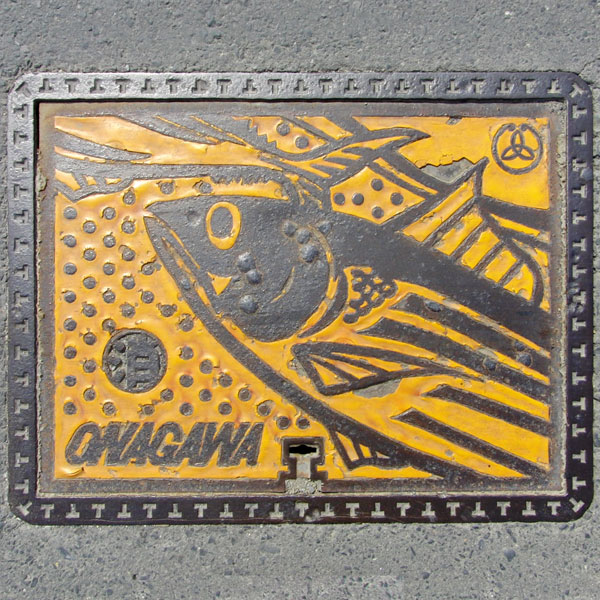
Two bonito, the town's fish, are depicted here. I like the fact that they're not depicted whole and are angled. There may have been a multicolored version, but it may have been buried in the tsunami.
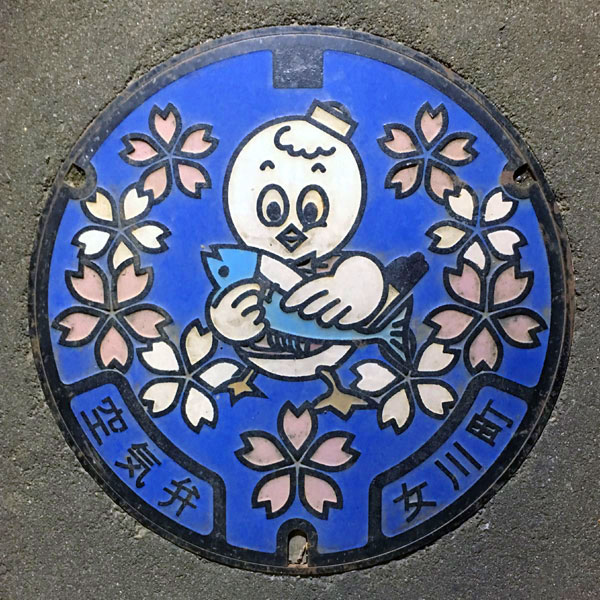
The air valve cover features the town's official mascot, "Seapal-chan," holding a fish and the town's flower, the cherry blossom.
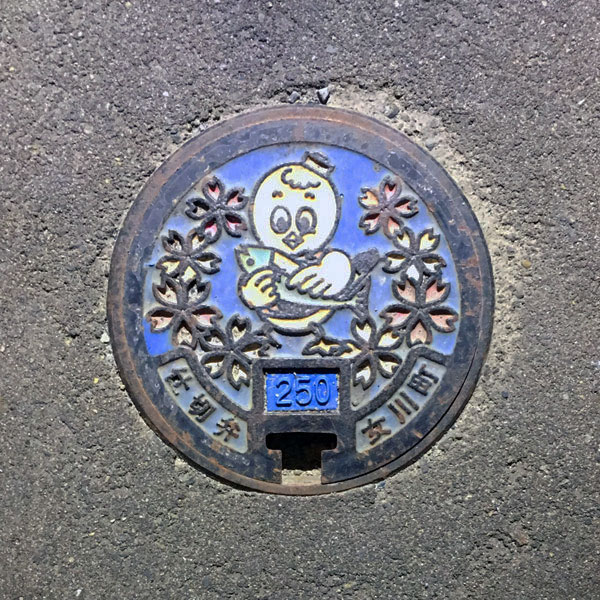
The valve lid features the town's official mascot, "Seapal-chan," holding a fish and the town's flower, the cherry blossom.
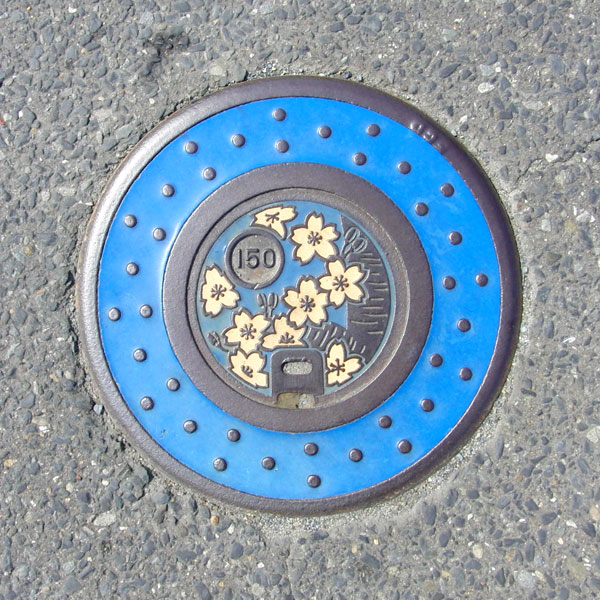
The cover of the waterworks handhole is decorated with the town flower, the cherry blossom.
Matsushima 松島町
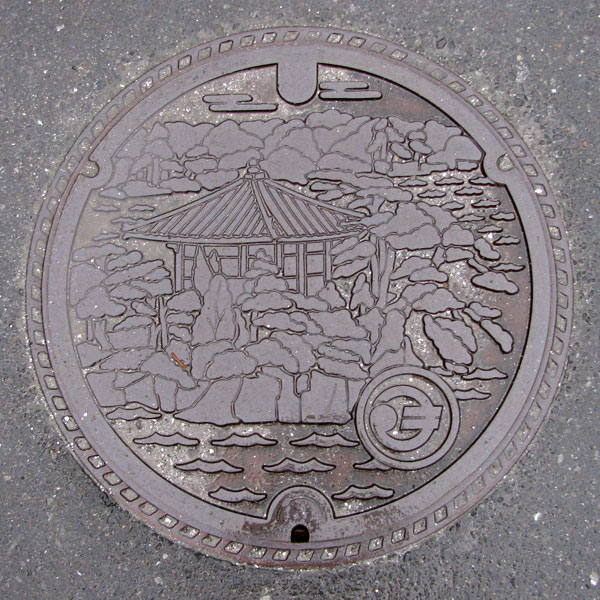
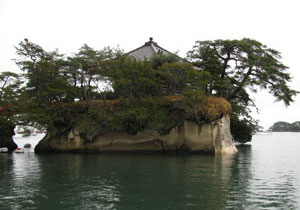
The design features Matsushima's symbol, Godaido, and the town emblem in the lower right corner is a stylized hiragana version of "Matsushima."
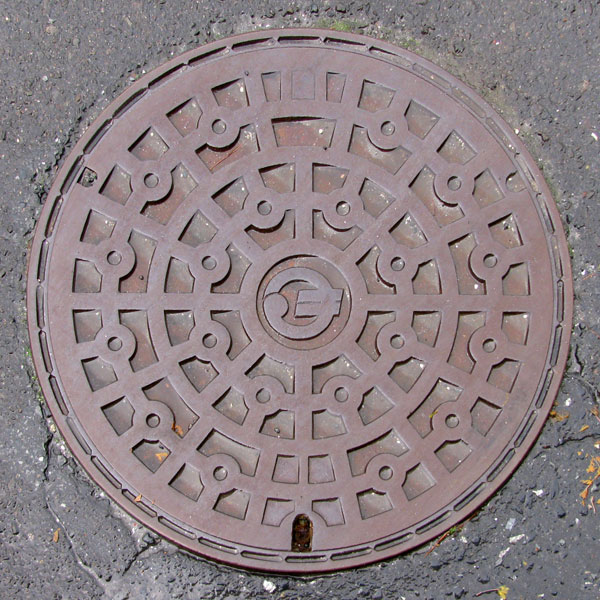
This is a JIS standard pattern for sewage.
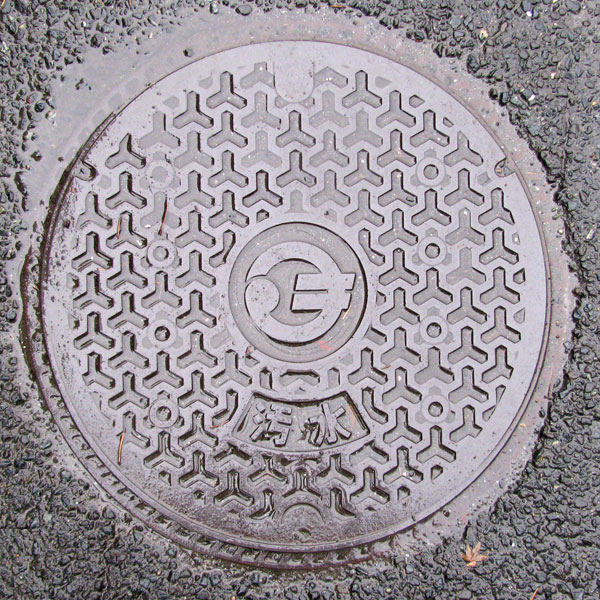
This one also has a tetra pattern and is for sewage.
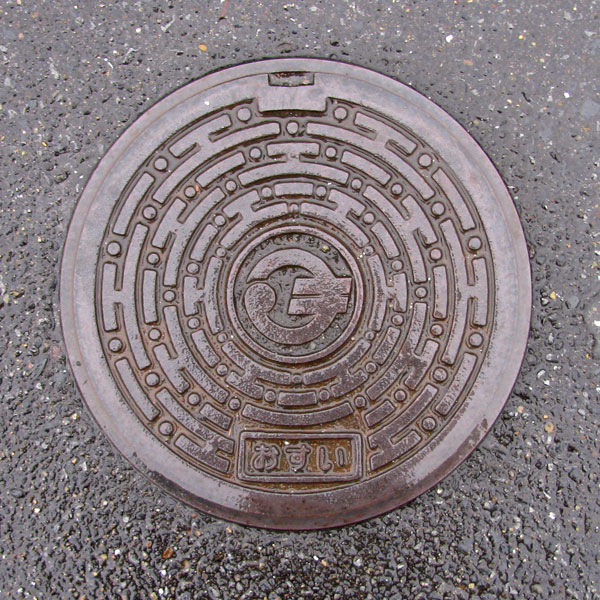
This is a mini size for wastewater.
Rifu 利府町
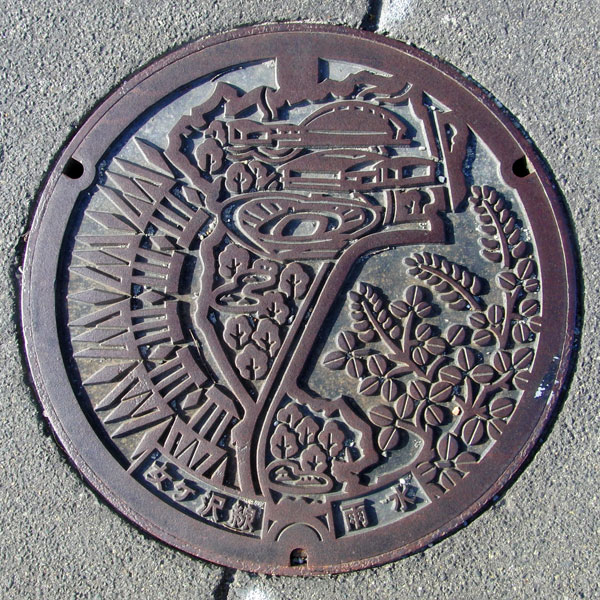
The lid features a picture of Miyagi Prefectural General Athletic Park facilities, such as Miyagi Stadium and Sekisui Heim Super Arena, as well as the surrounding forest scenery. The words "Megasawa Line" and "Rainwater" can be seen at the bottom.
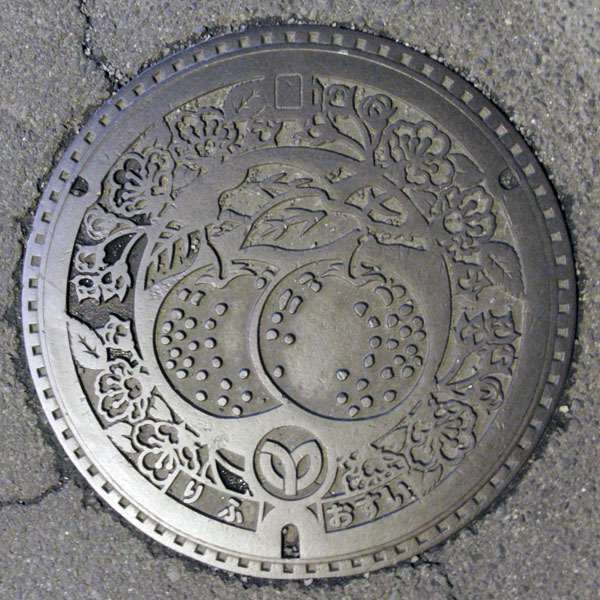
It depicts the town's flower, the pear, and its fruit.
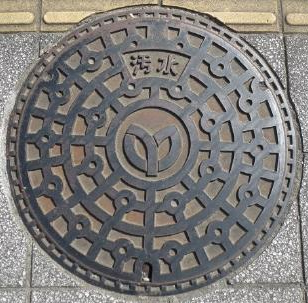
Town emblem in the center.
Shichigahama 七ヶ浜町
A manhole cover for sewage treatment featuring the town flower, the beach daisy. The town emblem is surrounded by a large beach daisy in the center.
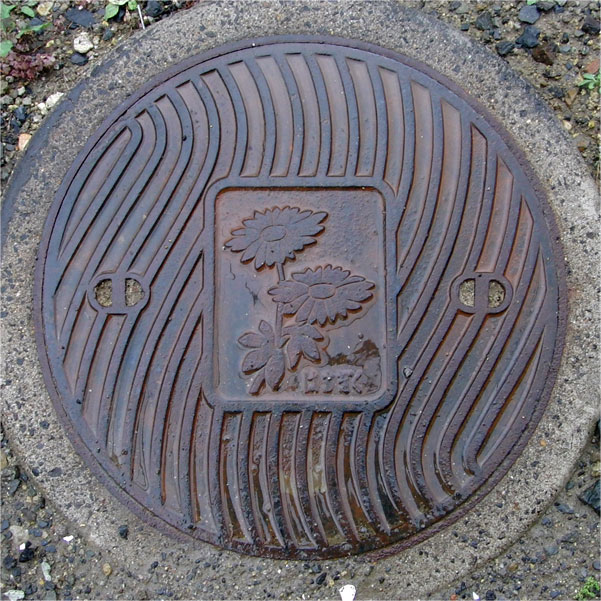
A sewage manhole decorated with the town flower, the beach daisy.
Town emblem in the center.
Kawasaki 川崎町
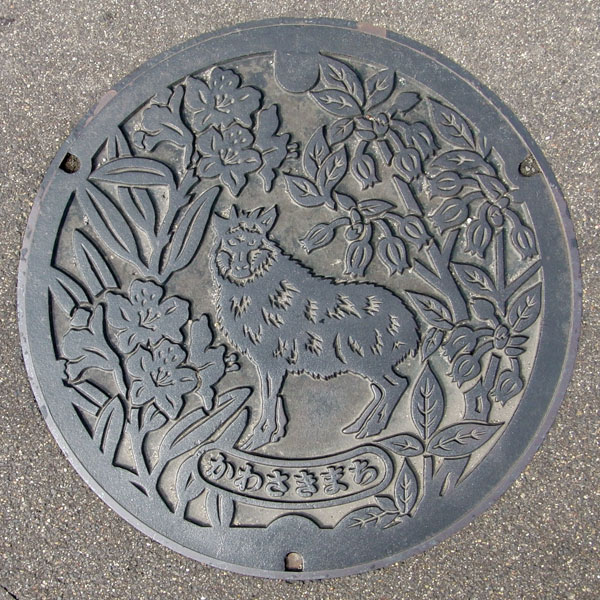
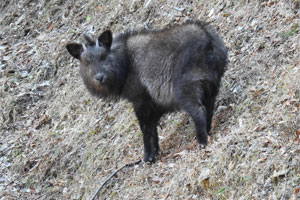
The town's tree is listed as the "Enkianthus campanulatus," the town's animal as the "Japanese serow," and the town's flower as the "rhododendron," but the flower on the left doesn't look like a rhododendron.
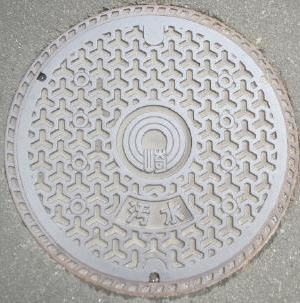
A manhole cover with the town emblem, and the word "sewage."
Murata 村田町
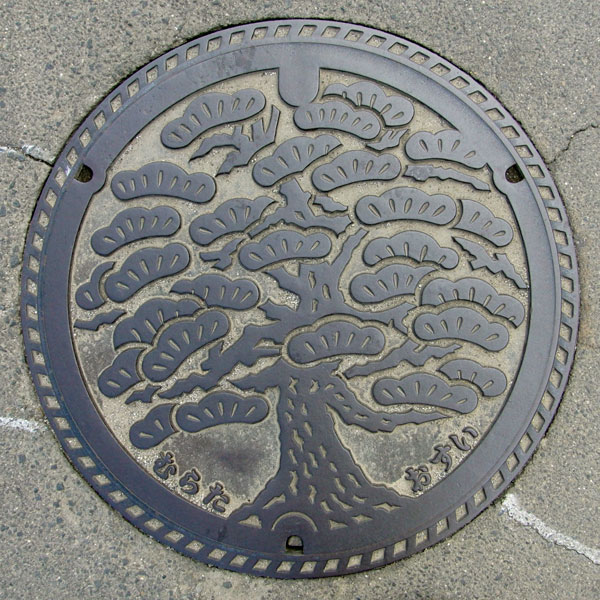
The manhole cover in Murata Town features a picture of the town's tree, a pine tree.
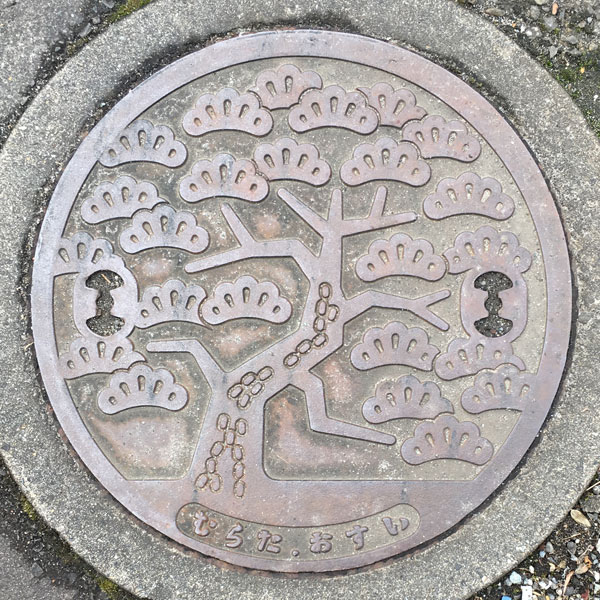
A sewage manhole cover featuring the town's tree, the pine.
If it weren't for the inscription at the bottom, this lid would be identical to the one in Yurihonjo City (formerly Honjo City), Akita Prefecture.
Zao 蔵王町
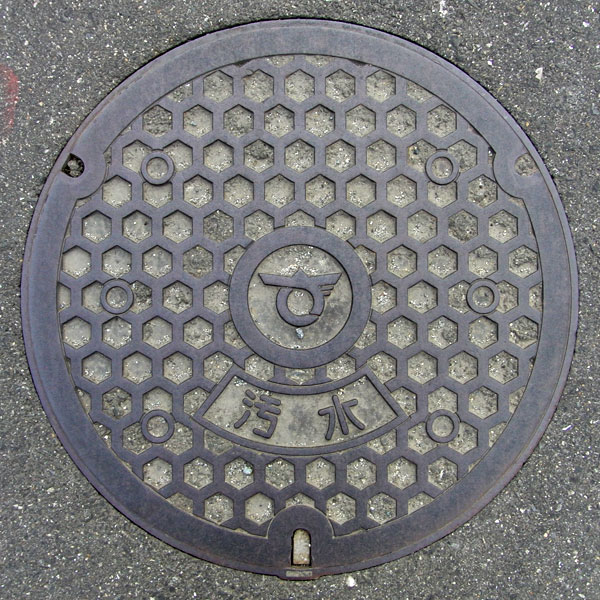
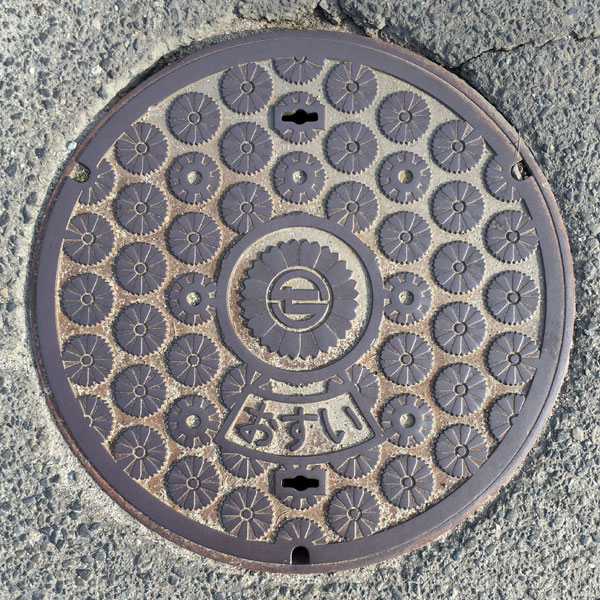
Zao Town's manhole cover has this hexagonal pattern. The town emblem, a stylized "za" ("ざ"), is in the center.
Shibata 柴田町
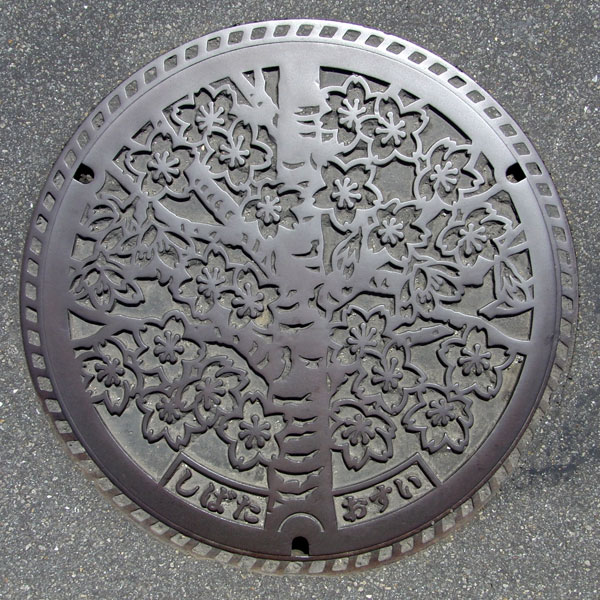
The manhole cover in Shibata Town features the town's cherry tree, a cherry blossom.
The design of this cover is identical to that of a manhole cover in Yugawara Town, Kanagawa Prefecture. It's not just similar; apart from the character "Shibata," the two covers are practically identical.
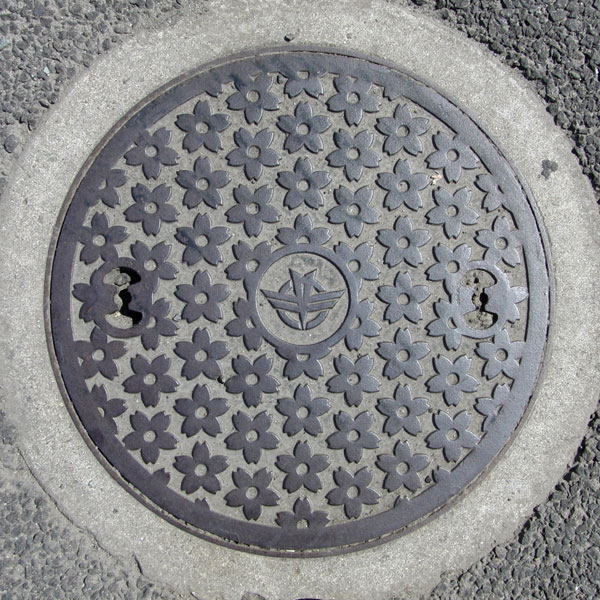
This is a small "Sakura" pattern board.
This one is very similar to the cover in Shinshiro City, Aichi Prefecture. The major difference is the town emblem in the center.
Town emblem in the middle and the word "Rainwater" (雨水) enclosed in a circle just below it.
Ogawara 大河原町
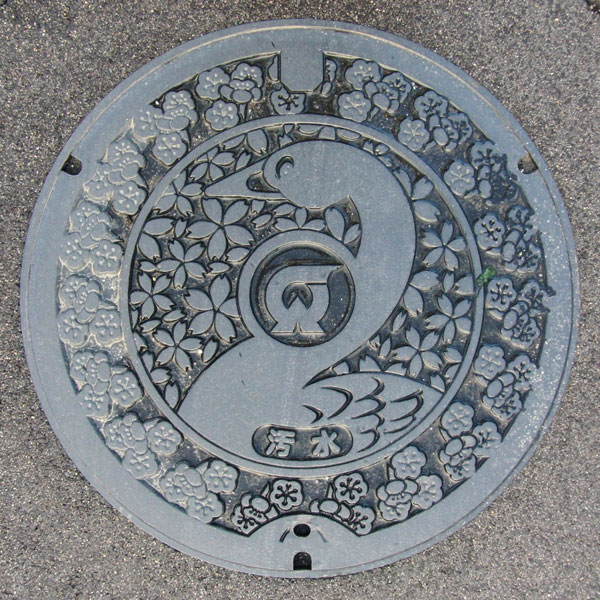
This manhole cover features the town's bird, the swan, the town's flower, the cherry blossom, and the town's tree, the plum blossom.
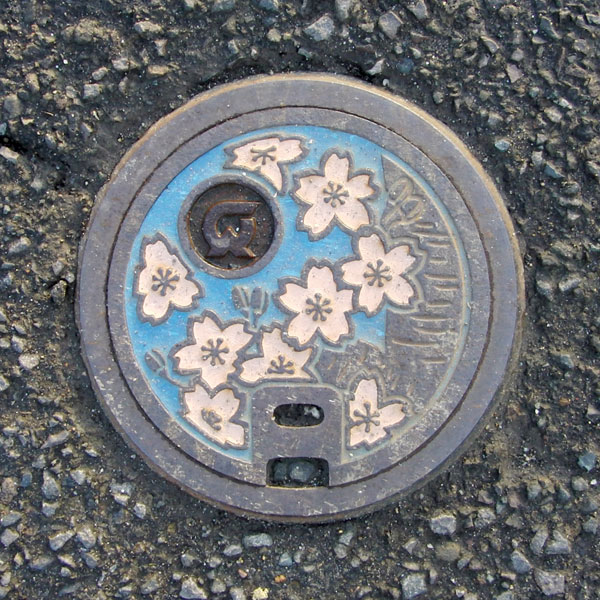
This is a small cover with a cherry blossom painted on it with the trunk on the right side.
Watari 亘理町
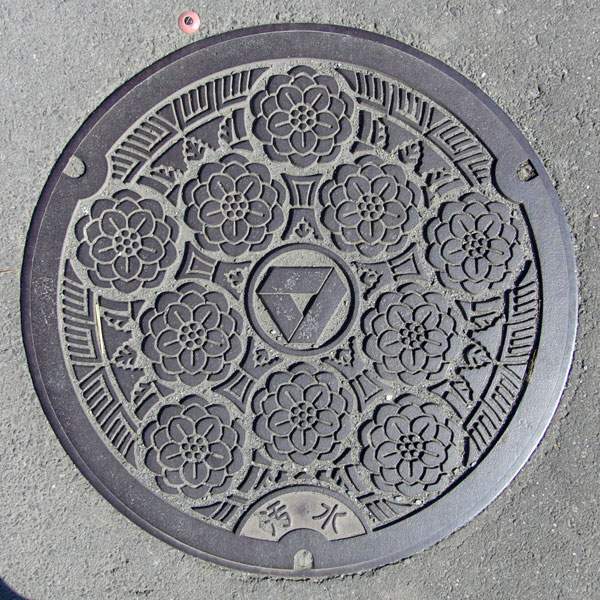
A sewage manhole cover featuring the town's flower, the camellia, and the town's tree, the black pine. The town emblem is in the center.
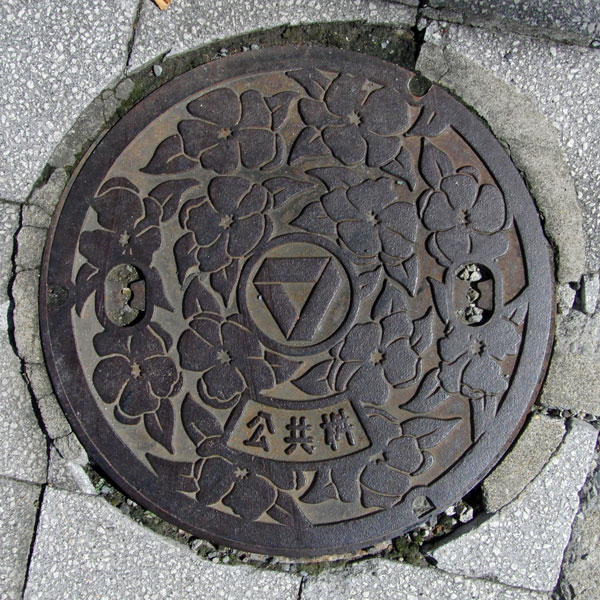
A sewage manhole cover features the town's flower, the camellia.
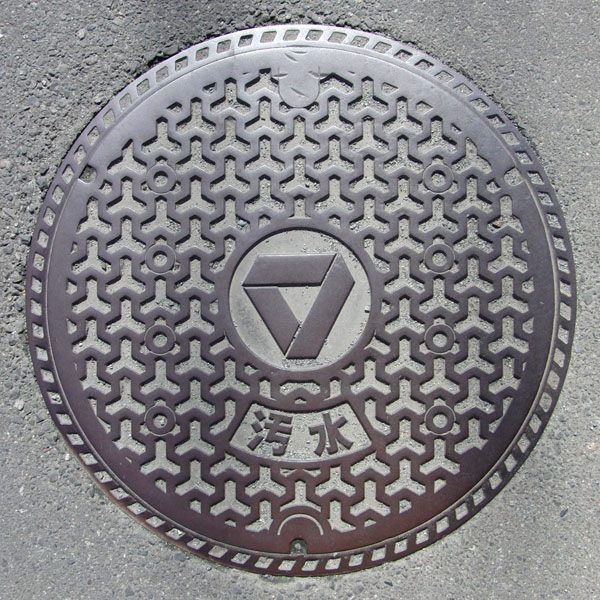
A sewage manhole cover with a Bishamon tortoiseshell pattern. The town emblem is in the center.
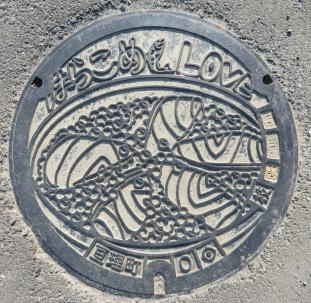
This new manhole cover was created to commemorate the enforcement of the "Harako-meshi Promotion Ordinance" on the 8th, which was enacted by Watari Town's Arahama district to promote harako-meshi, a local dish originating in the town. It depicts harako-meshi generously topped with salmon and salmon roe, and the words "Harako-meshi LOVE" are at the top, with the "shi" character replaced by a salmon illustration.
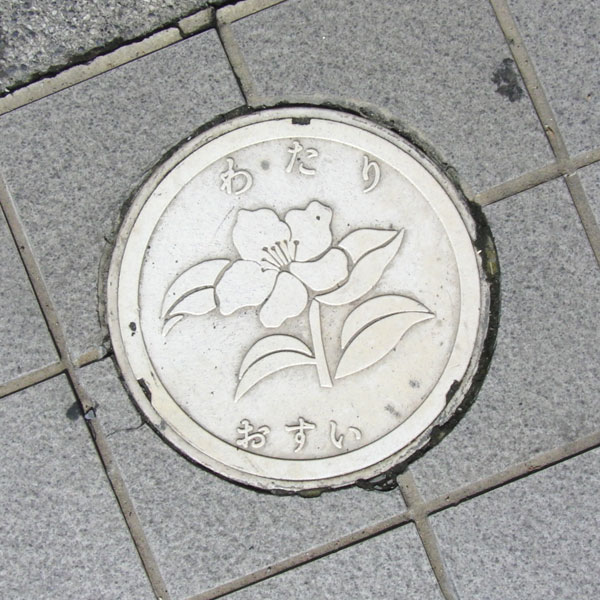
A resin handhole featuring the town's flower, the camellia.
Shichikashuku 七ヶ宿町
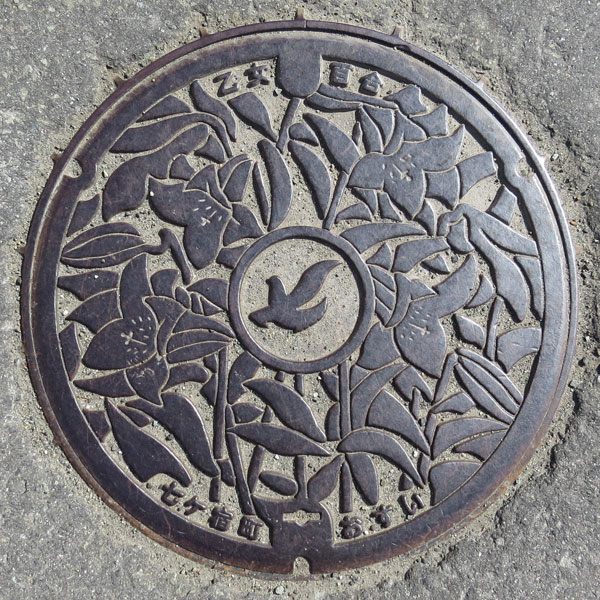
The town's flower, the "maiden lily," and the town emblem are depicted. The town emblem is shaped like a dove, representing the kanji character for "seven," likely because the town's bird is the "mountain pigeon" (Japanese name: キジバト). Maiden lilies are also known as "ヒメサユリ."
Yamamoto 山元町
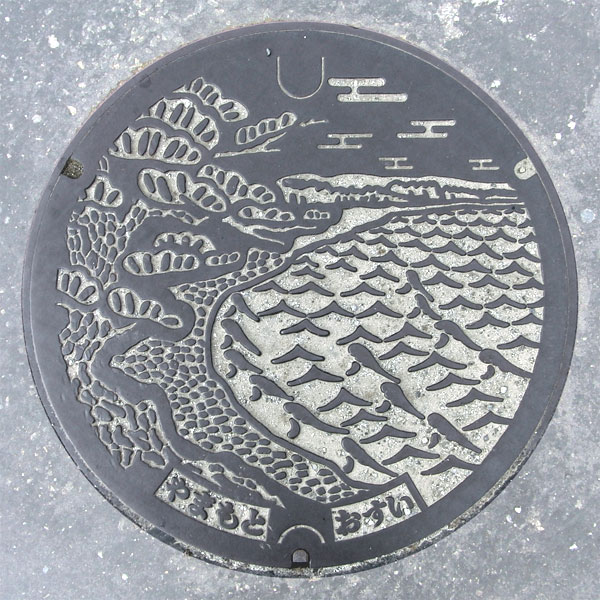
The town's tree, the pine, and the coastline.
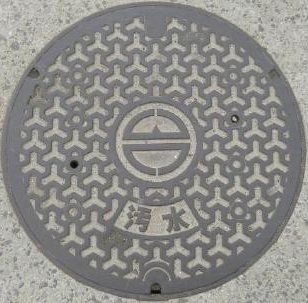
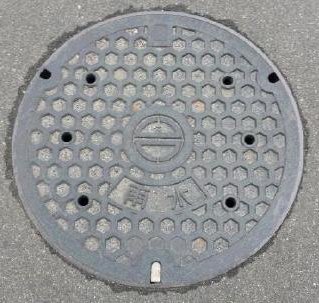
Town emblem in the center.
Marumori 丸森町
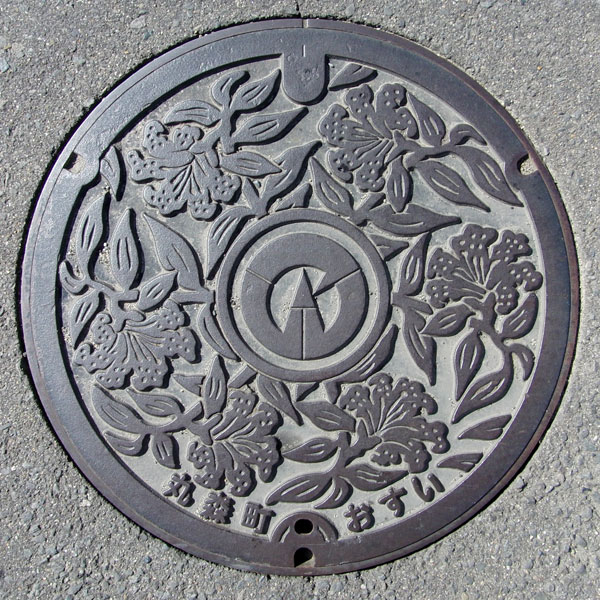
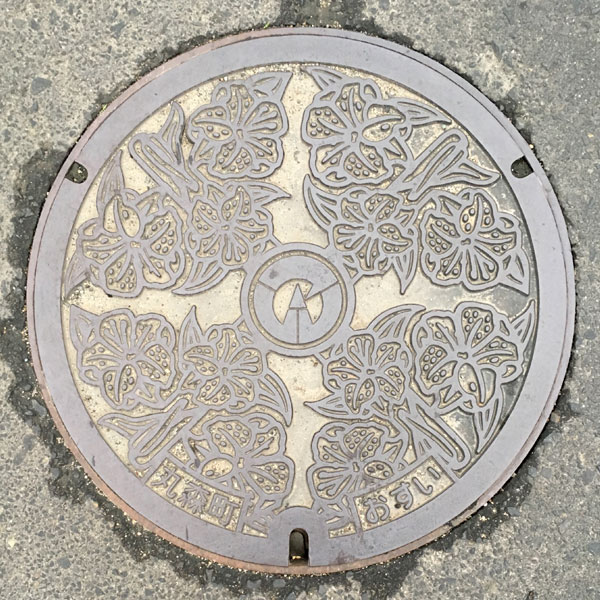
Marumori Town's manhole cover features a depiction of the town's tree, the mountain lily.
Like the one above, this sewage manhole cover is based on the town's tree, the mountain lily, but the mountain lily is depicted in outline.
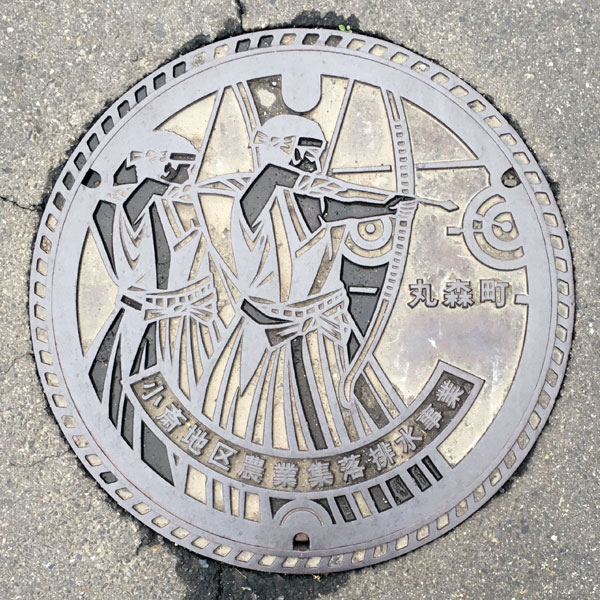
The cover of the agricultural collection and disposal bin in the Kosai district depicts an archer from the Yabusame Festival, which was revived in 1991 (Heisei 3).
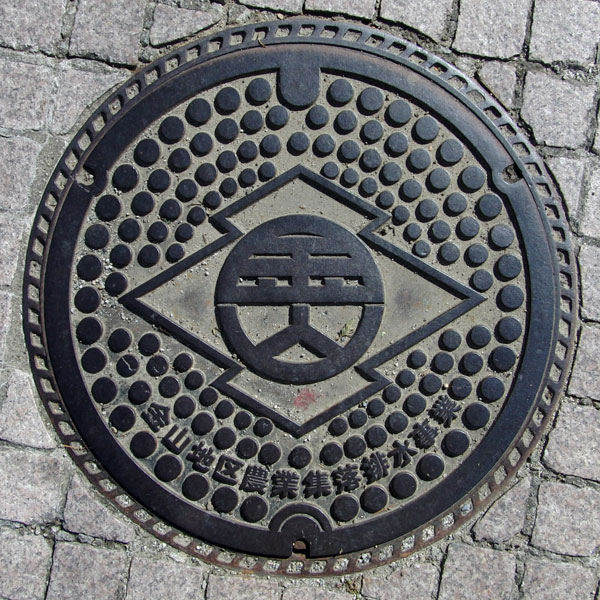
Farmers' markets in the Jinshan area.
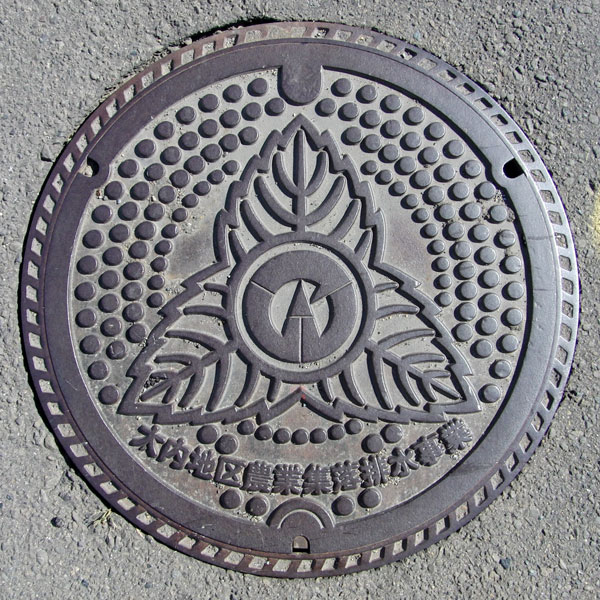
Agricultural wastewater treatment plant in the Ouchi area.
Ohira 大衡村
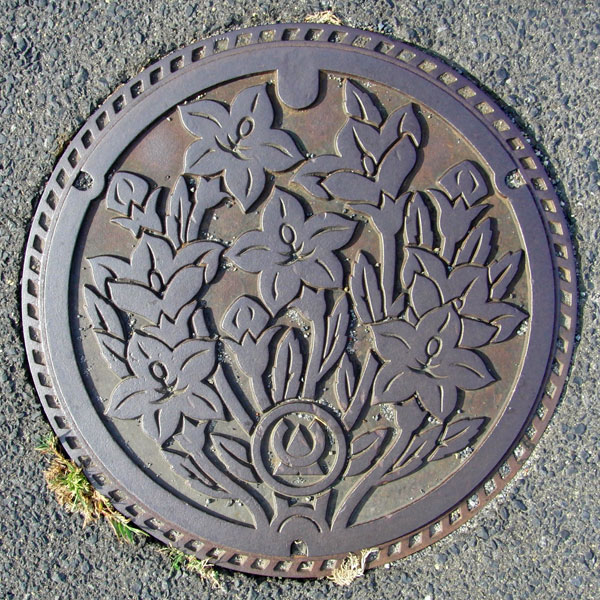
The village flower, the bellflower, and the village emblem are depicted.
Miyagi Prefecture 宮城県
Hasama River Basin Sewage System 迫川流域下水道
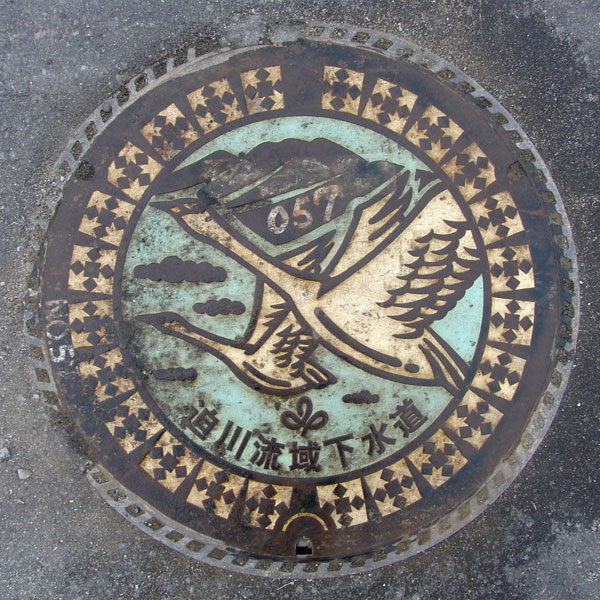
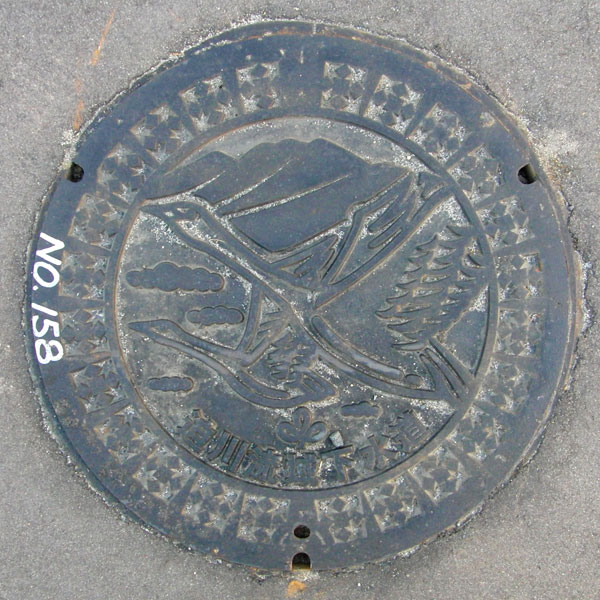
A swan flies with Mount Kurikoma in the background.
Kitakami River Lower Basin Sewerage 北上川下流流域下水道
The relevant municipalities for the Kitakami River Lower Basin Sewerage System are Ishinomaki City and Higashimatsushima City.
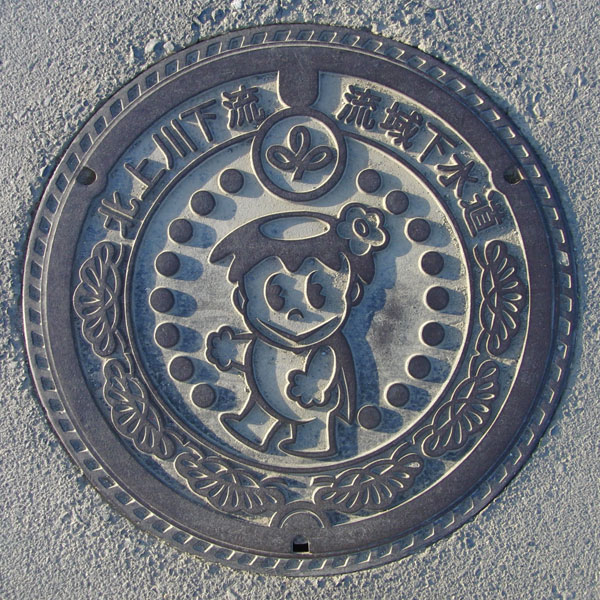
This character is a kappa named "Kaupa." His hobby is "playing in clean rivers and oceans."
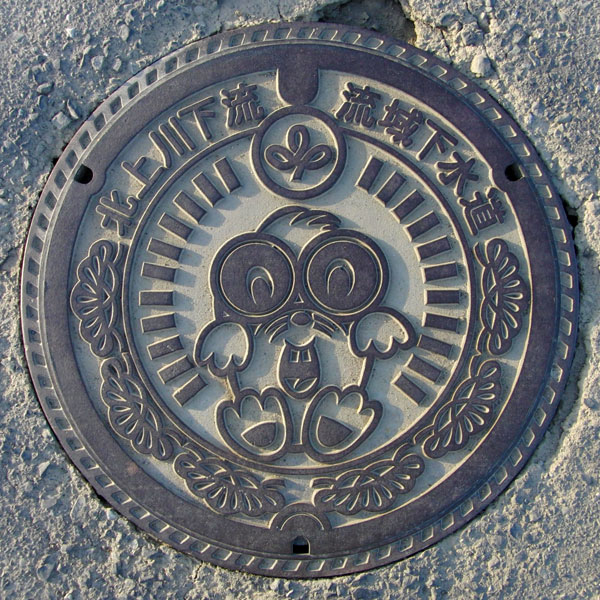
According to the Miyagi Prefecture Civil Engineering Department's Sewerage Division website, this character is a mole named "Mogubee." It even lists his hobby as "protecting clean rivers and oceans."
Kitakami River Lower East Basin Sewerage 北上川下流東部流域下水道
The Kitakami River Lower East Basin Sewerage System is associated with Ishinomaki City and Onagawa Town. The system includes the Kahoku-Monoo Main Line, the Onagawa Main Line, and the Kahoku-Monoo Second Main Line.
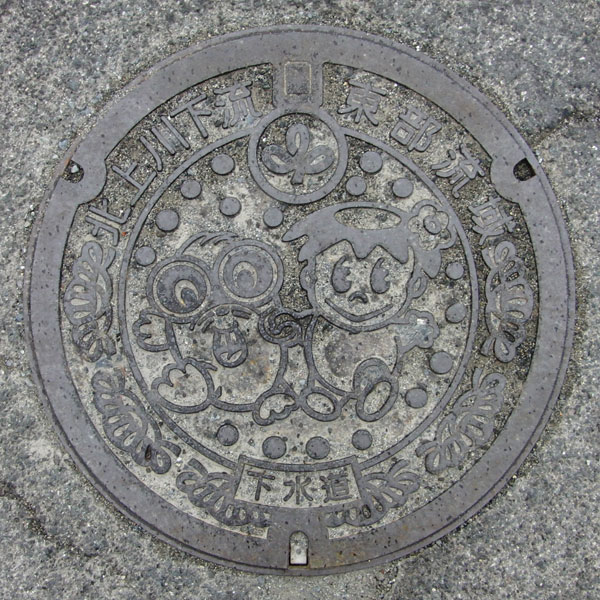
"Mogbee" and "Kaupa," which are usually depicted separately on the covers of the Kitakami River Lower Basin Sewerage System, are depicted together here.