X Tottori 鳥取県
Tottori 鳥取県
Tottori 鳥取市
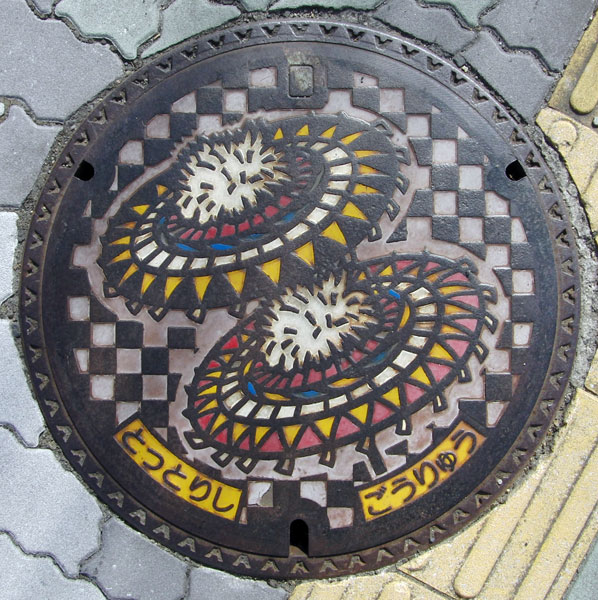
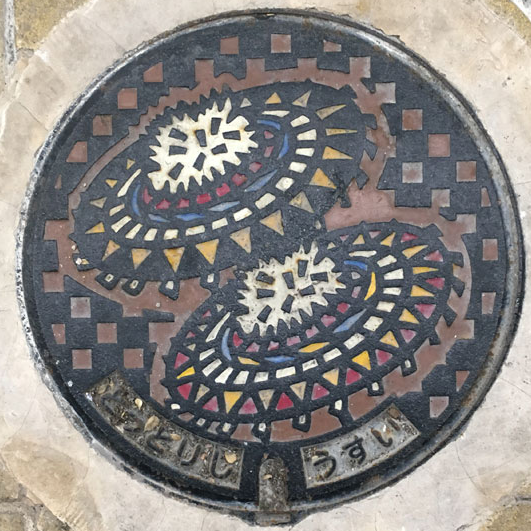
A color manhole cover for sewage featuring an umbrella from the "Inaba Umbrella Dance" of the "Tottori Shanshan Festival." The diameter is about 60 cm.
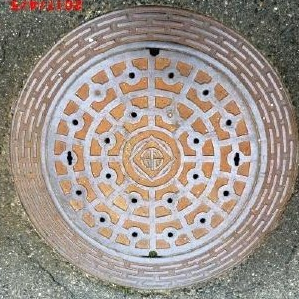
Perforated JIS standard cover, with the word 'sewage' inside the city emblem in the center, and the receiving frame has four dashed lines around it.
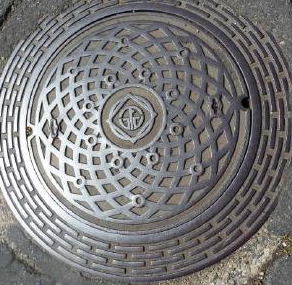
The above mark is included in a temari-style ground pattern. The receiving frame has a quadruple dashed line pattern.
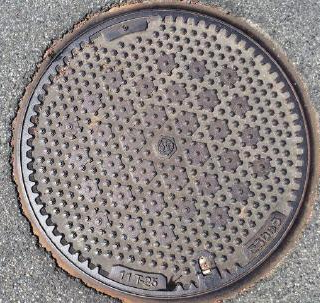
Anti-slip with the city emblem. At the bottom, the characters '11T-25' and 'Gōryū'.
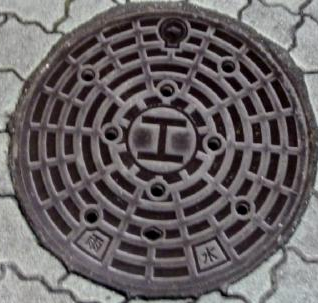
A lid from the Meiji era Ministry of Engineering with the 'Ko' (from the former National Railways, now JR) mark, featuring many holes for collecting rainwater and preventing the cover from scattering.
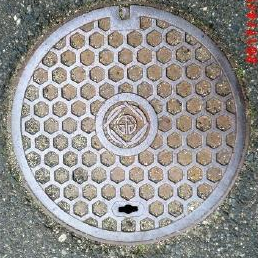
A small cover with a tortoiseshell pattern, the characters for 'sewer' inside the city emblem in the center, and a keyhole at the bottom.
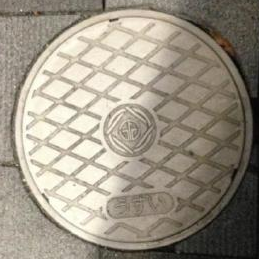
A small plastic lid featuring a mark that combines the city emblem and 'sewage,' with the word 'usui' on it.

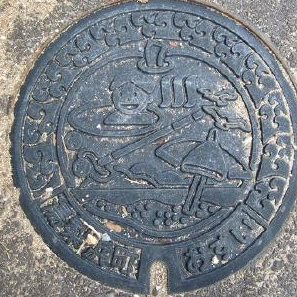
Like the one above, it depicts the umbrella of the 'Inaba Umbrella Dance,' but with three umbrellas and a background of sand dunes, it is a manhole cover for a sluice valve. There are manhole covers with the same design but with different words, 'sluice valve' and 'water control valve.'
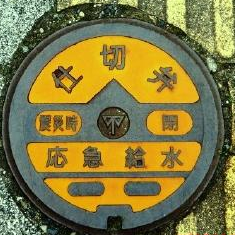
From the top, 'shikiri-valve,' 'in case of earthquake' with Tottori (T) and Water (W) designed, the Tottori City Waterworks Bureau logo mark has the characters 'closed' and 'emergency water supply,' and it is made yellow to stand out.
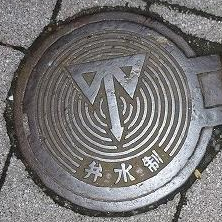
Featuring a concentric circle pattern with T for Tottori and W for Water, designed with the water bureau logo. The right notation reads 'Water Control Valve'.
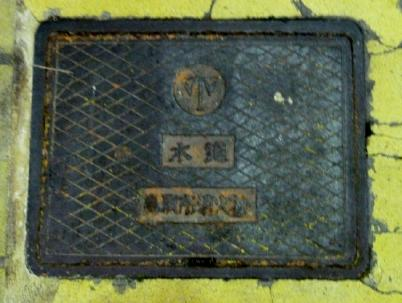
Diamond mesh pattern, with the Waterworks Bureau logo on top, the words 'Waterworks', and 'Tottori City Fire Hydrant'.
Former Ketaka 旧気高町
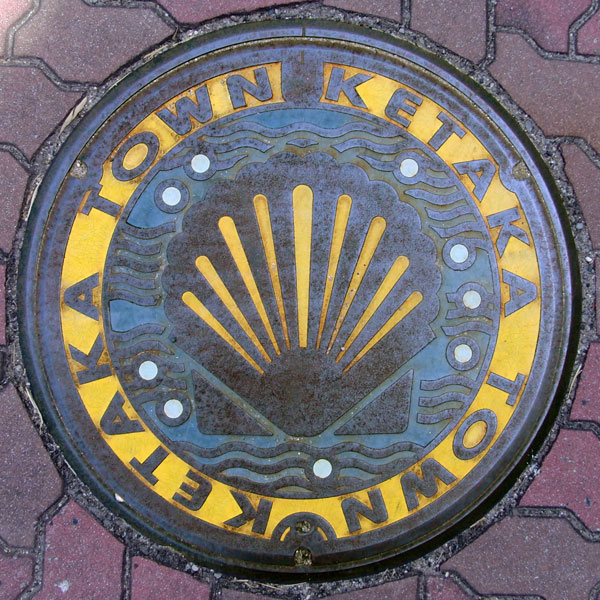
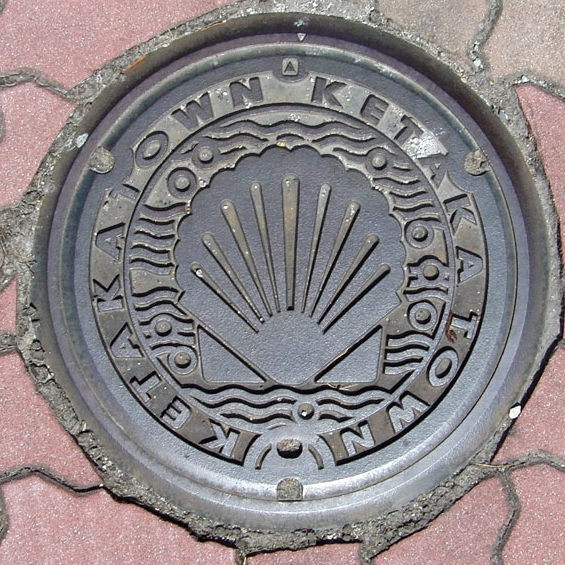
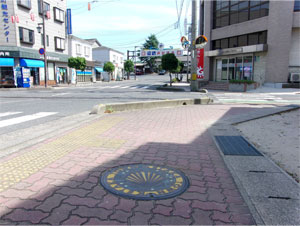
The shell in the middle is an Itayagai. It seems to be a specialty of Hamamura Onsen.
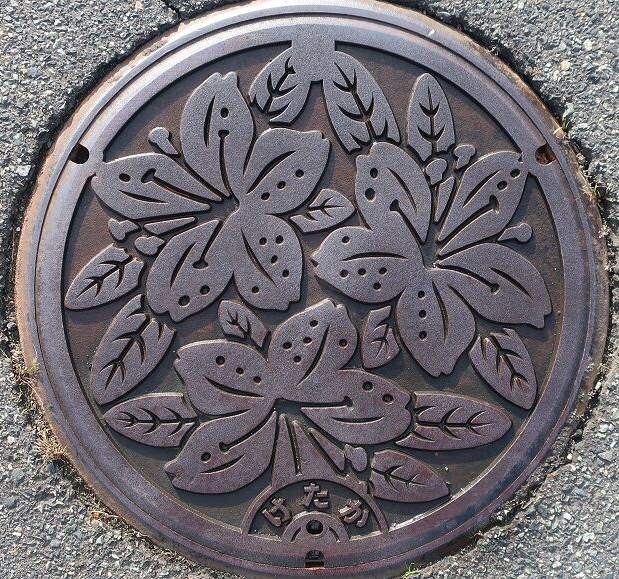
Three blooms of the town's flower, Satsuki, are depicted. It includes the characters 'Ketaka'.
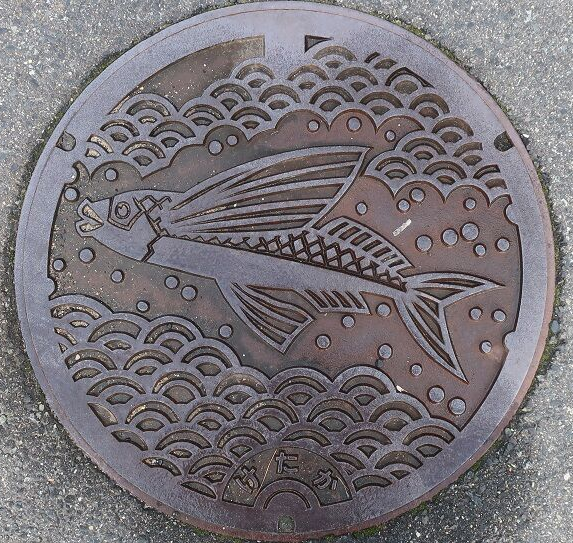
Flying fish are depicted in a seigaiha wave pattern. The characters 'Ketaka' are included.

A flounder is drawn in the center, and waves are drawn around it.
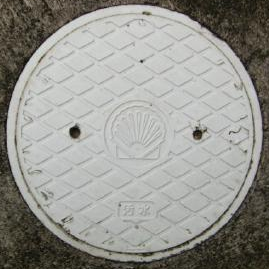
A plastic masu lid with a scallop shell symbol in the center.

A white plastic lid with a scallop in the center, the words 'Wastewater' and 'S↔O' below, and a quadruple concentric geometric pattern around it.
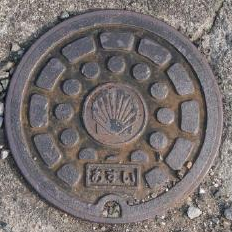
A scallop in the center, with ● and elongated rectangles around it in one complete circle.
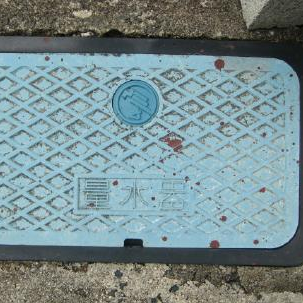
A water meter with the old town emblem of Kedaka Town. The town emblem could only be found on this water meter.
Former Aoya 旧青谷町
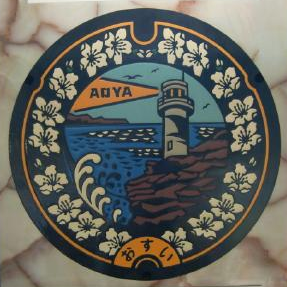
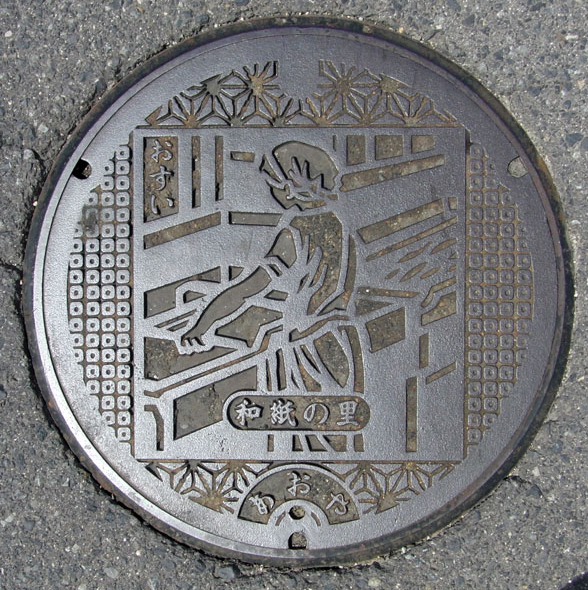
The Nagao Nose Lighthouse and the town's flower, the 'pear,' are depicted.
Former Mochigase 旧用瀬町
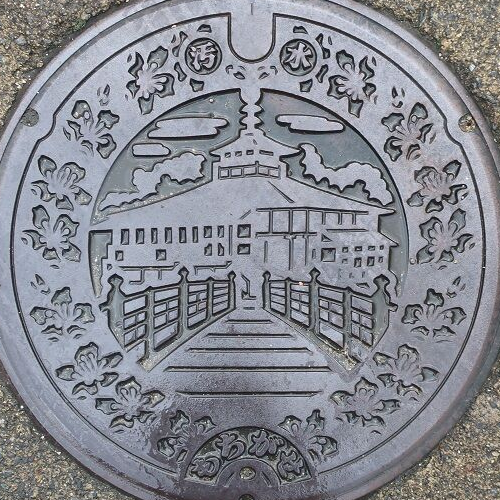
The 'Nagashi-bina Museum' and the Hiina Bridge spanning the Chiyogawa River, with the town's flower, the peach blossom, depicted on the outer perimeter. 'Sewage' is written at the top and 'Mochigase' at the bottom.
Former Kawahara 旧河原町
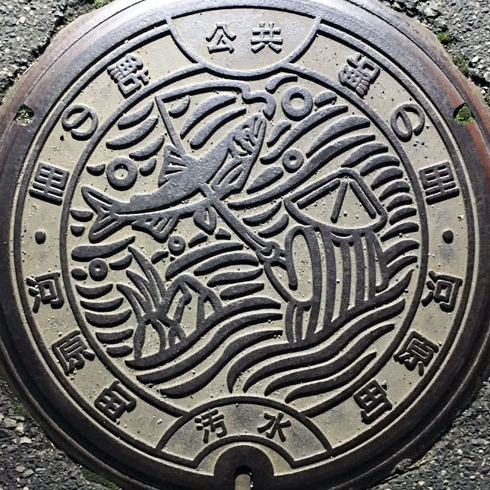
On both sides are the words 'Ayu no Sato · Kawaramachi,' above is 'Public,' and below is 'Sewage.' Inside the inner circle, the scene of ayu fishing in the Chiyogawa River is depicted.

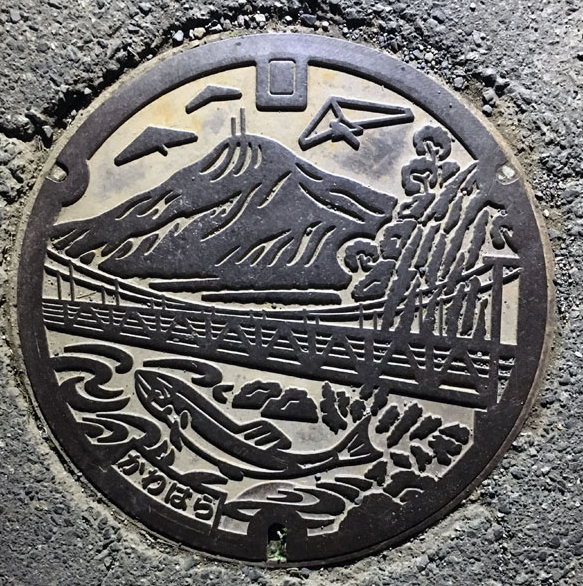
A cover for agricultural drainage.
In the upper reaches of the Chiyokawa tributary, Hiketagawa, there are three large waterfalls called Senjotaki, Meotodaki, and Nijigataki, which together form one of the prefecture's most famous scenic spots, known as "Santaki Gorge." The illustration depicts a suspension bridge located downstream of Senjotaki, the innermost waterfall with a drop of 80 meters. The mountain in the distance is Reishosan (elevation 334 m), which has a flight area; it probably can't be seen from the deep mountain suspension bridge, and the fish below appear to be Ayu, so this scene seems to gather the highlights of Kawaramachi.
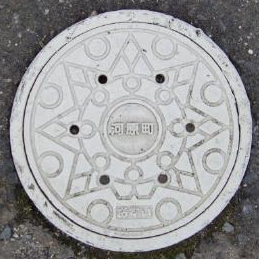
A plastic water meter cover with 'Kawaramachi' written in the center.
Former Kokufu 旧国府町
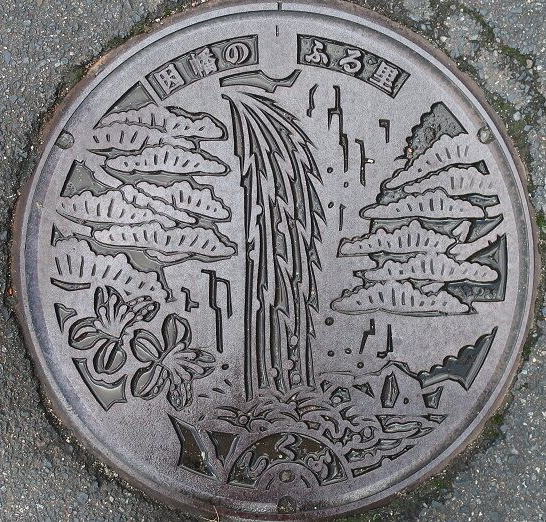
The manhole cover of Old Kofu Town features the town's flower, the azalea, the town's tree, the pine, and 'Amadaki' in its design.
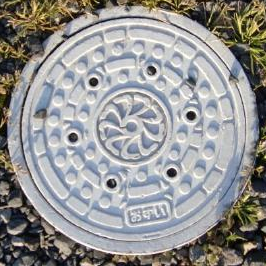
A plastic masu lid with alternating stacked circles and rectangles, with the Kokufu Town emblem in the center.
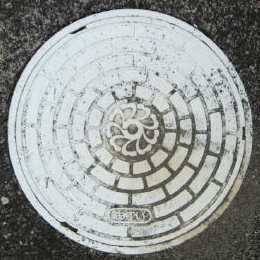
A plastic masu lid with rectangles stacked alternately, featuring the Kōfu town emblem in the center.
Former Shikano 旧鹿野町
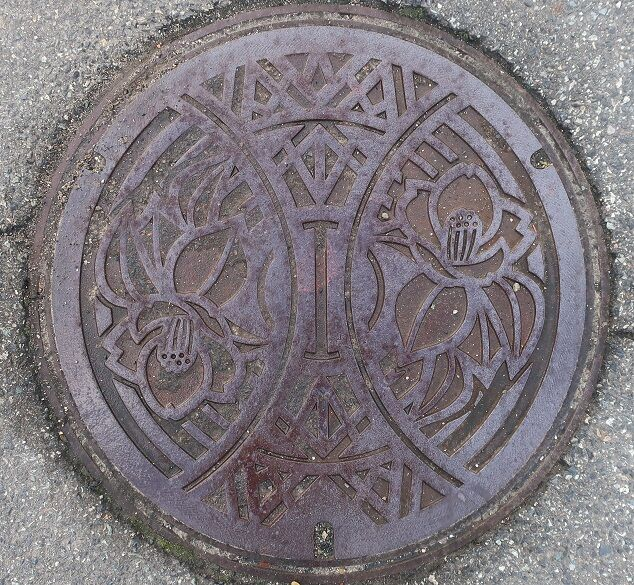
A design of the town's camellia tree.
Former Fukube 旧福部村
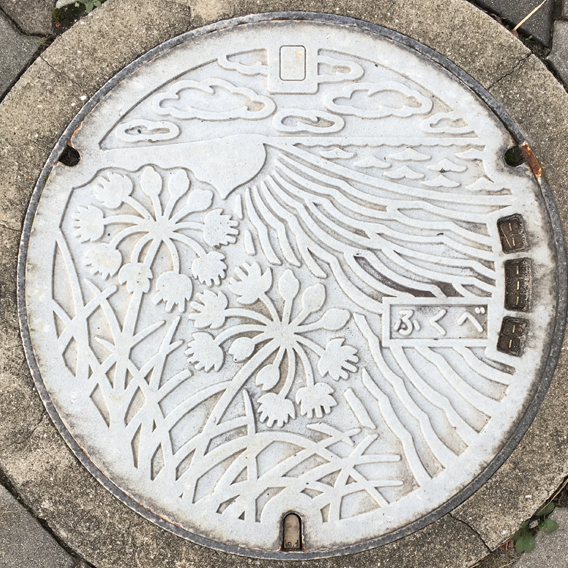
A single-color sand-painted record featuring flowers of the local specialty, rakkyo, depicted against the Tottori Sand Dunes with wind patterns. The color is matched to the sand dunes.
A small plastic square lid with alternating circles and rectangles stacked, featuring the Fukube Village emblem in the center.
Former Saji 旧佐治村
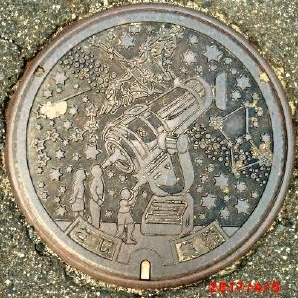
A parent and child looking at a 103cm reflecting telescope at Saji Astro Park, with a design of a star-filled sky, the Cygnus constellation, and the Milky Way. The words 'Saji' and 'Assou' are included at the bottom.
Kurayoshi 倉吉市
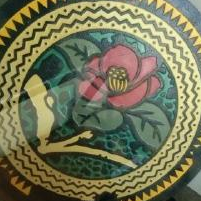
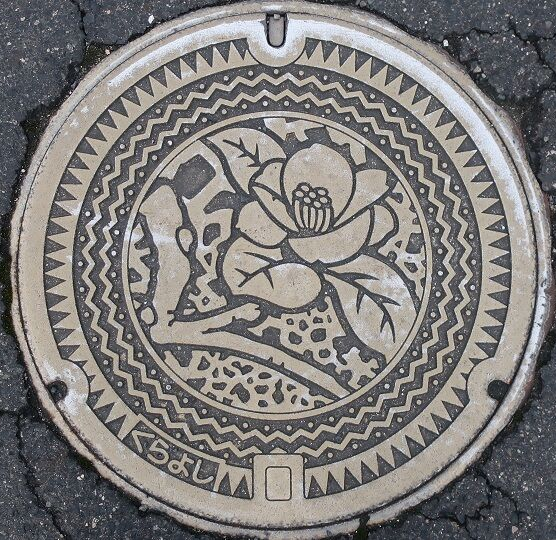
A sand-painted manhole cover depicting the city's flower, the camellia.
Kurayoshi has the tourist attraction 'Shirakabe Dozo-gun' (White-walled storehouses). Many municipalities depict historic buildings that can attract tourists on their manhole covers, but unfortunately, this has not been adopted in Kurayoshi.
The lower right photo supposedly shows the scenery that is most characteristic of Kurayoshi. The lower left photo shows the part that extends further back. Next to the storehouses flows the Tamagawa River, but it is shallow, so carp are not visible; instead, there are fish such as dace, pale chub, crucian carp, and stone loach swimming. That is natural and gives a nice feeling in its own way.
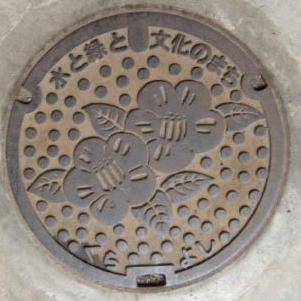
On a polka dot patterned background, there are two camellia flowers, the city's tree, along with the words 'A town full of energy, shining people and greenery' and 'Kurayoshi'.
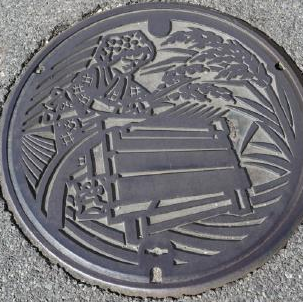
It is a design of a woman wearing a headscarf threshing rice with a flail. No text such as place names is included.
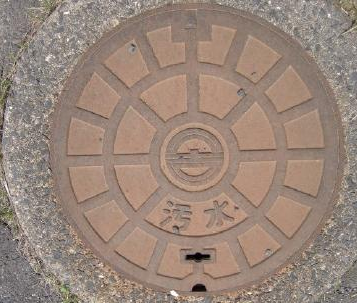
Standard cover, city emblem in the center, and the characters 'Sewage' just below it.
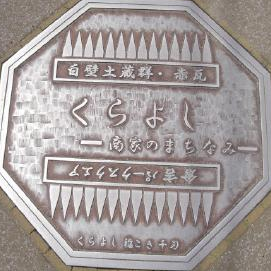
On the design of the Inakoki Senba, the words 'White-Walled Earthen Storehouse District · Red Tiles,' 'Kurayoshi,' 'Merchant Streetscape,' 'Kurayoshi Park Square,' and 'Kurayoshi Inakoki Senba' are included. It is not a manhole cover but a guide plate. Below, the words 'City Hall · Utsubuki Park' were given to us by Missheru.
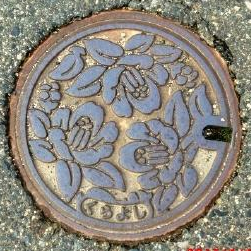
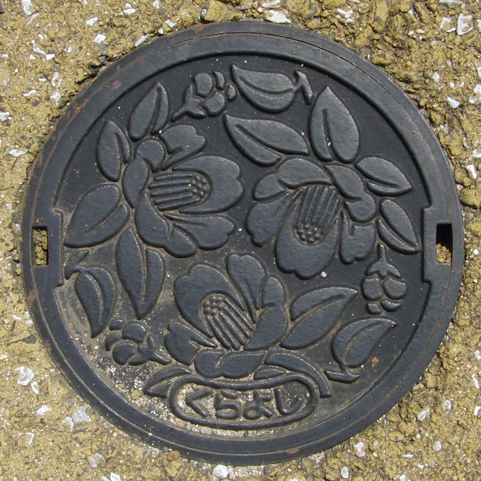
Probably a sewage manhole painted with camellias. Miniature size. I’m also trying to photograph what’s painted on the lid, but it’s difficult with flowers since they are seasonal. I visited Kurayoshi in the height of summer, so naturally there were no camellia flowers. At this point, I feel that designs featuring landscapes might be better for promotional purposes.
It is a small lid with an external hinge, featuring the city emblem in the center and the words "Water Control Valve" above and "Kurayoshi City" below, connected by five concentric circles, and it comes with a wide receiving frame. There are lids with the same design but with different words, such as "Water Control Valve" and "Gate Valve".
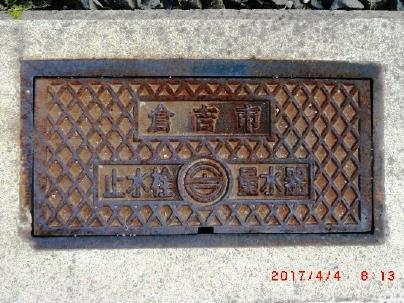
"Shut-off valve" City emblem The characters "Water meter" with the text "Kurayoshi City" above. Square cover with a diamond-patterned background.
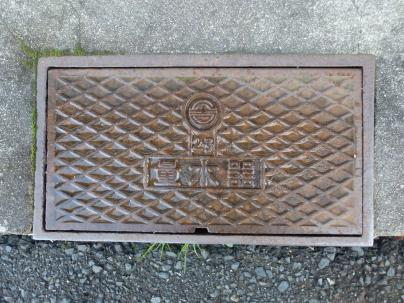
A square cover with a diamond-patterned background, with the city emblem below, 'No. 2' beneath it, and the words 'Water Meter' further below.
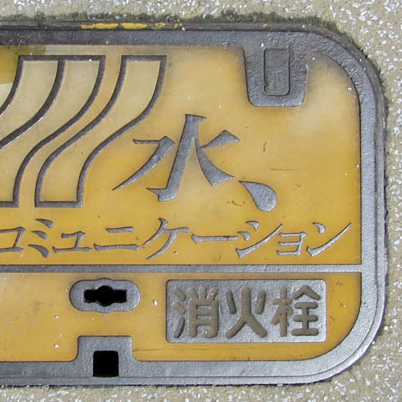
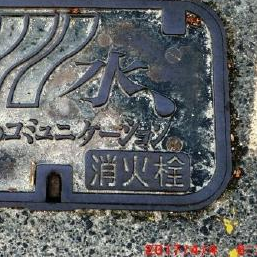
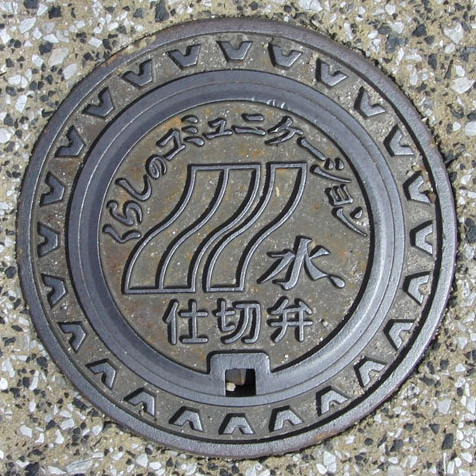
A slightly smaller fire hydrant cover with 'Kurashi no Communication' written on it.
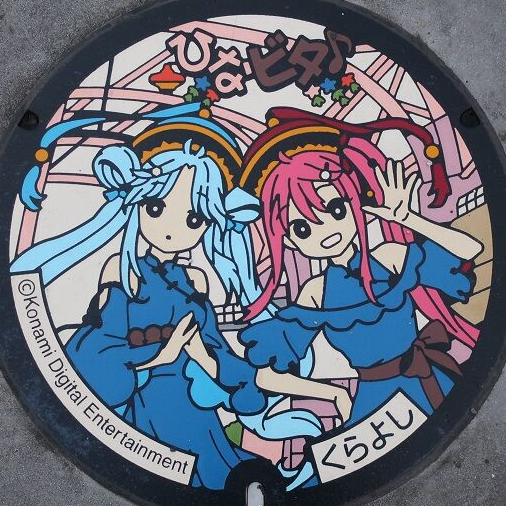
This is the design of the twin idol unit 'Coconatsu' for Manhole Card Series 14.
Former Sekigane 旧関金町
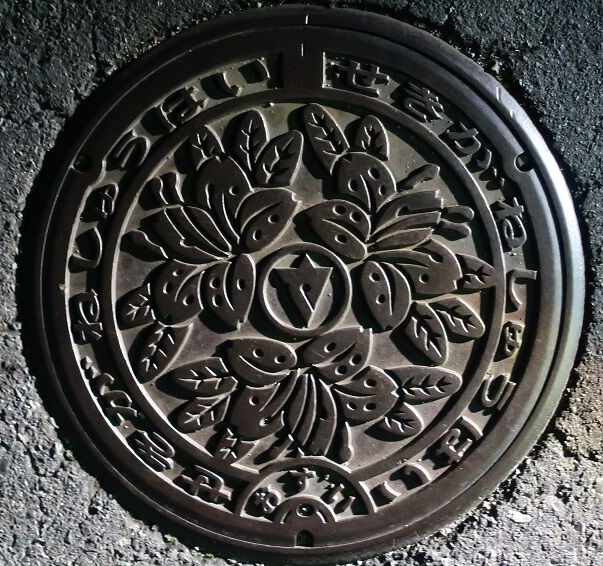
Around the town emblem, there is a design of the town's flower, azalea. On the outer edge are the characters 'Sekigane Shuhai,' and at the bottom is the character 'Osui.'
Sakaiminato 境港市
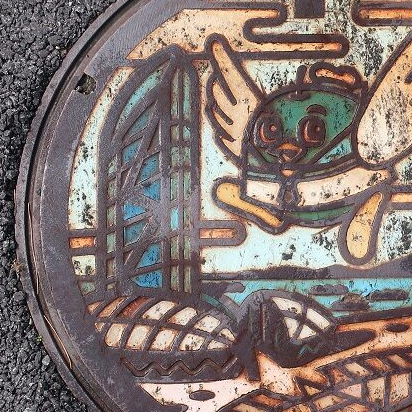
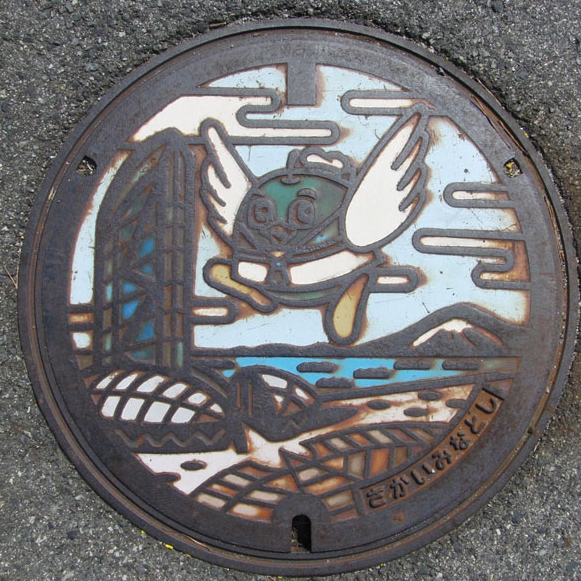
"Yumeminato Tower", "Mount Daisen", and the mascot character of the "San'in Yumeminato Expo" held in the summer of 1997, "Torippy-kun", are depicted.
This lid was lined up in multiple places from in front of "Yumeminato Tower" to the "Sakaiminato Fish Center", but all of them had rust and none of them looked very clean. It seems likely that it was made to coincide with the 1997 "San'in Yumeminato Expo", but after being exposed to the sea breeze in a port town for more than ten years, I guess it’s inevitable.
The mascot "Torippy-kun" still seems to be active at the entrance of the tower, but right next to him is a firmly placed cat girl, which seems to symbolize the passage of time and the rise and fall of fortune.
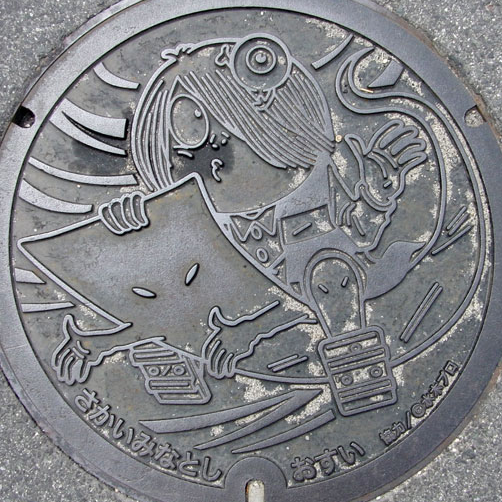
It was more crowded than expected. Kitaro and Medama Oyaji, riding on a Ittan-momen, are depicted.
Issun-bōshi
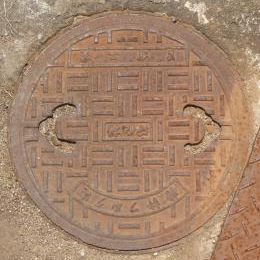
It is a two-part patterned lid with the words "Patent Furuta Style" at the top, "Septic Tank" in the center, and "Soga Industry" at the bottom, with handles on both sides. Soga Industry Co., Ltd. has its headquarters in Tomiemocho, Yonago City, Tottori Prefecture. It was established in March 1957 and currently deals with water supply and drainage, sanitary equipment, air conditioning equipment, and water and sewage facilities. There is also a sales office in Sakaiminato.
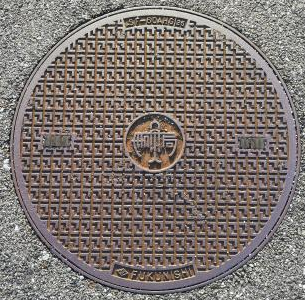
On this lid with a character-patterned design, there is an aviation bureau mark. At the bottom, it says '◇SF FUKUNISHI', and at the top, 'SF-60AHG 25'. Please look at the lids of other aviation bureaus.

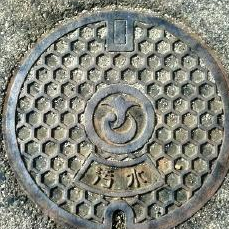
It is a small item with a tortoiseshell pattern and the characters for 'sewage'.
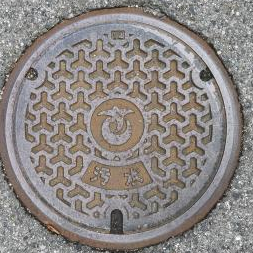
Small lid with Bishamon tortoiseshell pattern, city crest in the center, 'Sewage' below it, and the number '14' at the top.
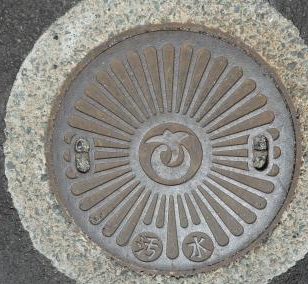
A small cover with the city emblem in the center and the characters 'sewage' at the bottom. Radial chrysanthemum pattern. There are horizontal hooks at the 3 o'clock and 9 o'clock positions.
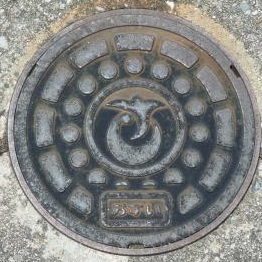
A small lid with the city emblem in the center and the characters 'おすい' at the bottom. A background pattern of circles and trapezoids arranged side by side. There are prying holes in three places.
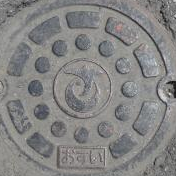
A small lid with the city emblem in the center and the characters 'おすい' at the bottom. The background pattern features circles and trapezoids arranged side by side. There are two pry holes at the 3 o'clock and 9 o'clock positions.
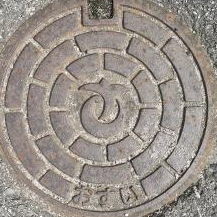
A small lid with three trapezoids arranged around it, the city emblem in the center, 'Osui' at the bottom, and a pry hole at the top.
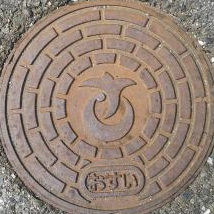
A small lid with trapezoids arranged around it four times differs from the one mentioned above in that the characters for 'おすい' are enclosed in an oval and there are pry holes, among other differences.
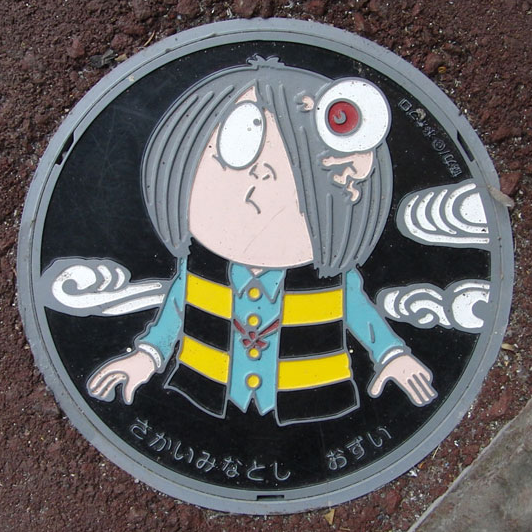
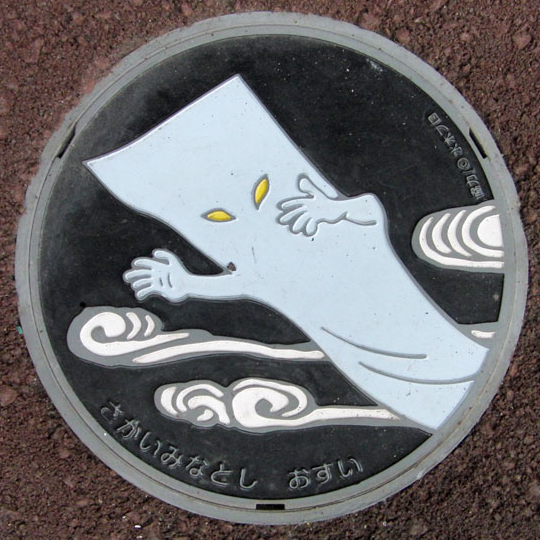
A mini-mini-sized sewage manhole cover featuring the main characters of 'GeGeGe no Kitaro.' It depicts Kitaro, Medama-Oyaji, Nezumi-Otoko, Neko-Musume, Ittan-Momen, Nurikabe, Sunakake-Baba, and Konaki-Jiji – the members of the 'Kitaro Family.'
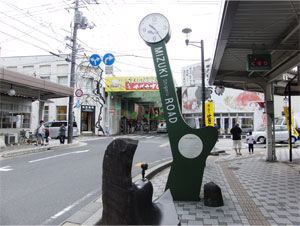
If you want to photograph this cover, the morning seems to be the best time. This is because once shops open, benches for tourists to sit on might be placed, or it could end up being under display shelves. In the case of Ittan-Momen, there were no customers sitting there, so I was able to take the photo after having them move a beer crate that was being used as a bench leg.
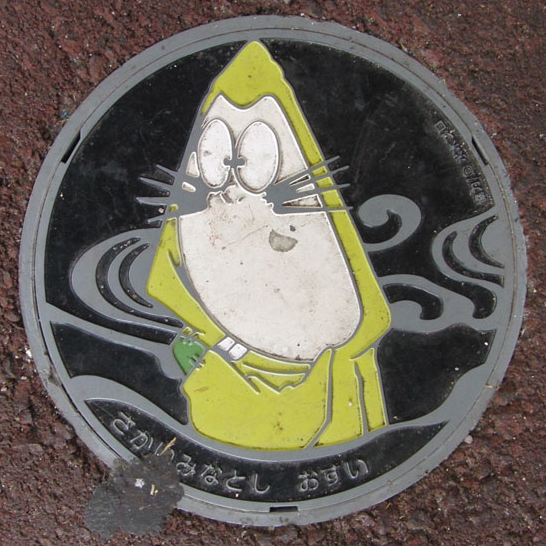
Nezumi Otoko
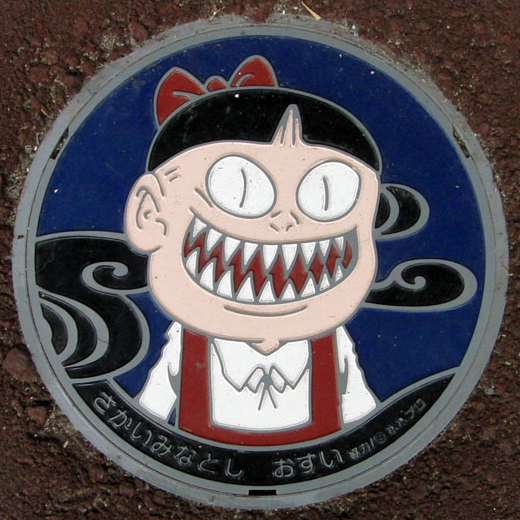
It's a Pokéfuta.
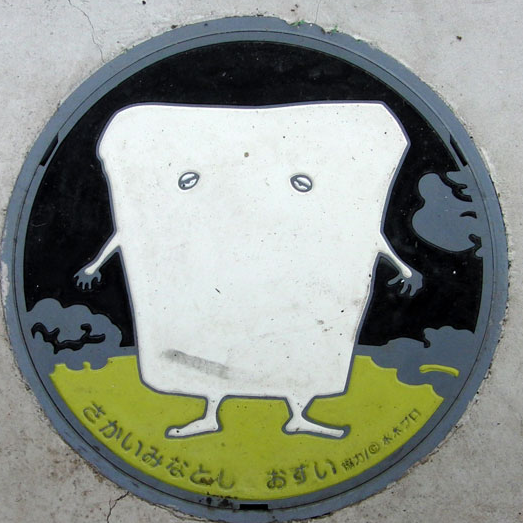
Nurikabe
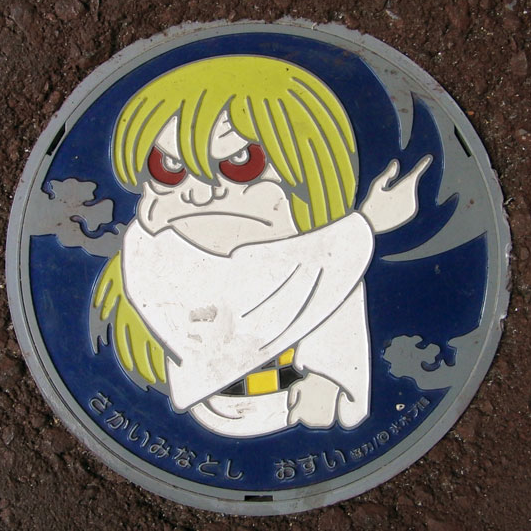
Sand-scraping hag
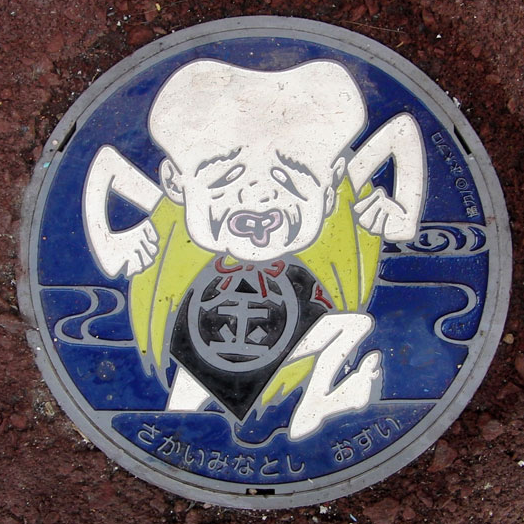
Koneko Jiji (Old Man Who Cries Like a Child)
Related: Yonago 米子市
Yonago 米子市
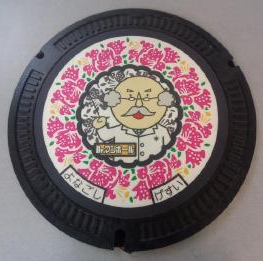
This is a printed sticker-type cover displayed at the Yonago City Sewerage Department Central Pump Station. It features the Yonago City Sewerage Department character 'Dr. Manhole' in the center, with the city’s flower, azalea, depicted around it. At the bottom, there are the words 'Yonago City' and 'sewerage'.
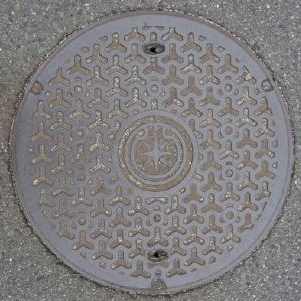
Tortoiseshell pattern, city emblem in the center, one keyhole at the bottom. Φ700.
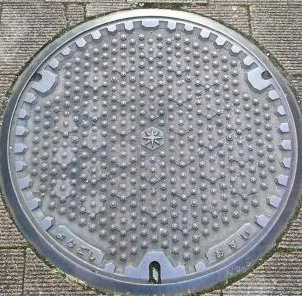
Non-slip design, small city emblem in the center, with the words 'Yonagoshi' and 'Osui' below.
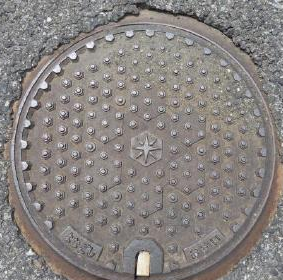
Slip-resistant surface structure, the emblem of Yonago City in the center, and the characters 'よなご' and 'おすい' at the bottom. The above has holes in three places, but this one has only one at the 6 o'clock position.
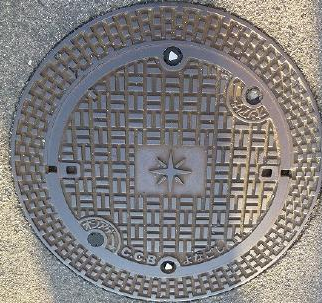
The background pattern is created by combining two lines vertically and horizontally, with a display for the opening and closing 'Oshiage arrow,' and the wide receiving frame has a triple □ pattern.
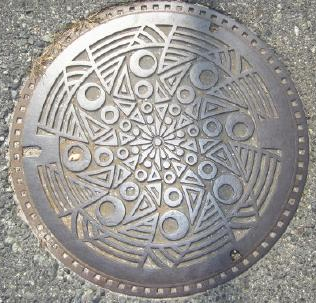
A lid with a geometric pattern like a pinwheel of circles and triangles. I received a photo of the same lid taken in Yayoi Town, Sakaiminato City, from donguri188.
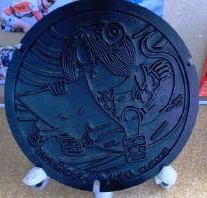
This is a manhole cover from Sakaiminato City. I was told that the above-mentioned cover and this cover are lent to the Yonago City Tourist Center when I visited the Sakaiminato City Purification Center.
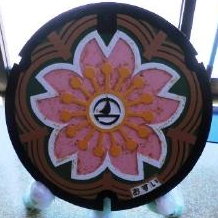
This is the manhole cover of Ōyama Town, formerly called Nawa Town.
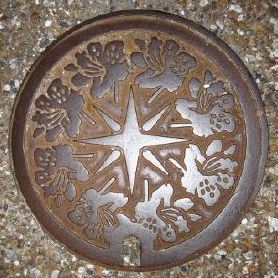
A small lid with a design of the city's flower, azalea, circling around the city emblem.

A water control valve cover with a diamond pattern, the city emblem, and the notation of the water control valve, equipped with hinges. There are covers with the same design but with different text such as 'Water Control Valve,' 'Mud Discharge Valve,' 'Drain Valve,' 'Valve Cover,' and 'Valve.'
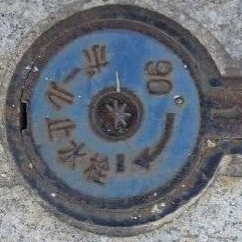
Hinged with a blue background featuring the city emblem and the inscriptions '90°' and 'Pole Water Stop Valve'.
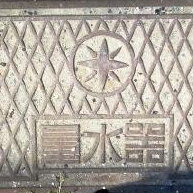
Diamond-shaped ground pattern, the characters 'Water Meter' at the bottom, with the city emblem above it.
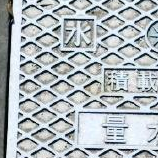
Made of light blue plastic, it bears the city emblem and the words 'Waterworks,' 'Water Meter,' and 'Do Not Load.'
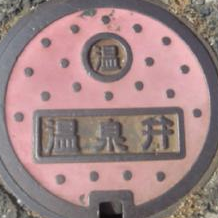
Red background with polka dot pattern, featuring the characters '温' and '温泉弁'.
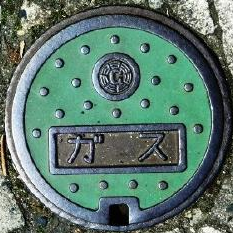
Polka dot pattern on a green background, the old Yonago Gas logo, and the word 'Gas'.
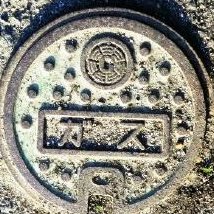
Polka dot pattern on a green background, the old Yonago Gas logo, and the word 'Gas'. The above differs from the keyhole and others.

A square fire hydrant cover with a yellow background and polka dot pattern featuring a 'water' mark, and prominently labeled 'Fire Hydrant' in the center.

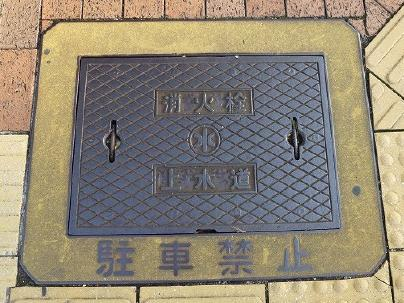
A square fire hydrant cover with a diagonal lattice pattern, 'fire hydrant' and 'water' marks, 'water supply' notation, and two handles.

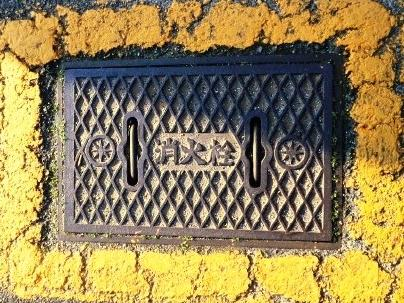
Diamond-shaped ground pattern, with the words 'Fire Hydrant' in the center, handles on both sides of it, and the city emblem on each side of the handles.
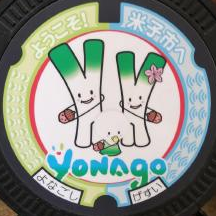
Motifing the white green onions, a specialty of Yonago, the image characters of Yonago City are 'Negita' and 'Negiko,' designed with the initial 'Y' of Yonago, along with their two children, 'Negipo.' The three together are called 'Yonegees'! 'Mr. Kashiwagi' from Donguri 4 is also drawn. It is a printed sticker type with 'Welcome to Yonago City!' on the upper outer edge and the words 'YoNAgo,' 'Yonagoshi,' and 'Gesui' on the lower part.
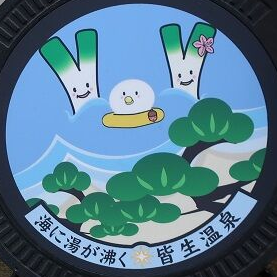
It is a print sticker type with a design of the Yonegīzu in the sea, which is said to have boiling water, with the words 'Kaike Onsen where water boils in the sea' at the bottom.
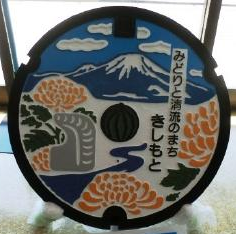
This is a manhole cover from the former Kishimoto Town in Hōki Town.
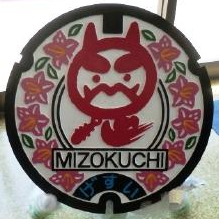
This is a manhole cover from the former Mizoguchi Town in Hōki Town. The above-mentioned cover from the former Kishimoto Town and this cover from the former Mizoguchi Town originally belonged to the Hōki Town Ōtono Purification Center, and I was also planning to visit there that afternoon – but it seems there is now just a sign saying it is currently on loan.
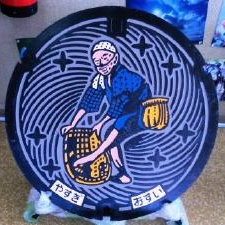
This is a lid from Yasugi City, Shimane Prefecture.
Former Yonago 旧米子市
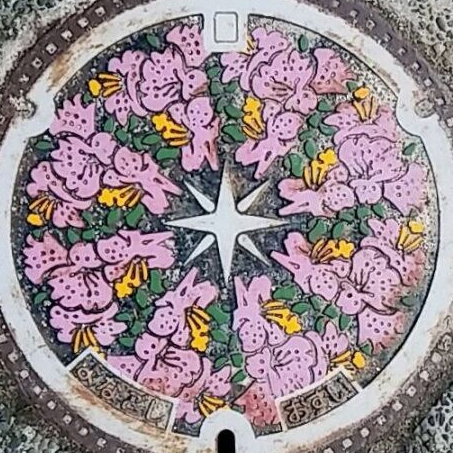
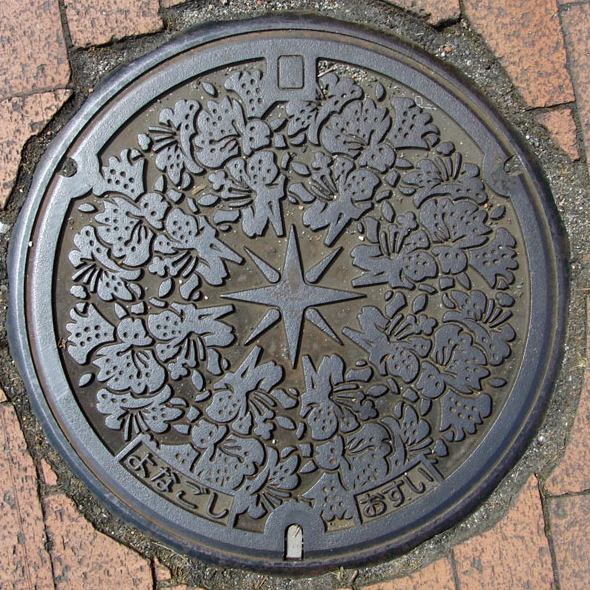
The flower of Yonago City, 'azalea,' is depicted.

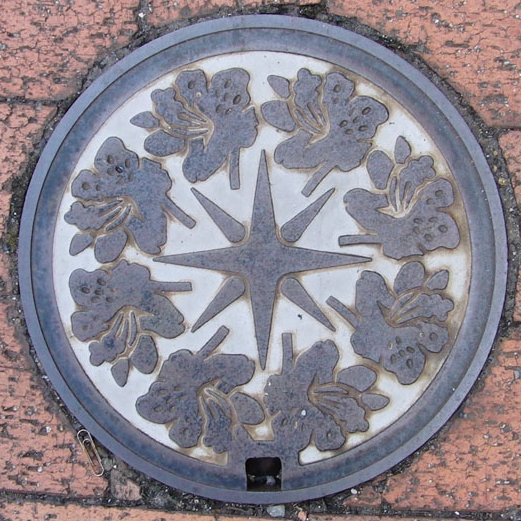
A small colored edition with the same motif as above.
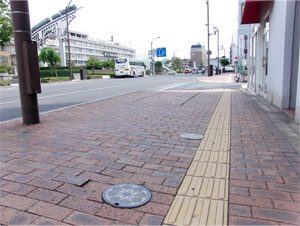

A small plate with the same design as above.
Former Yodoe 旧淀江町
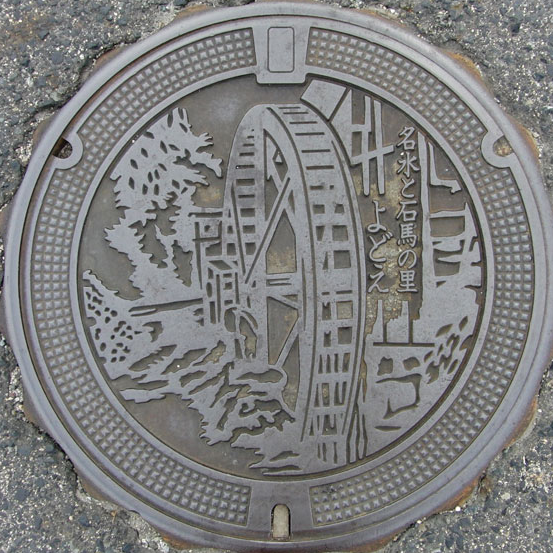
A waterwheel scene of 'Amanomana-i,' one of the 100 famous waters selected by the Environment Agency, boasting 2,500 tons of spring water per day.
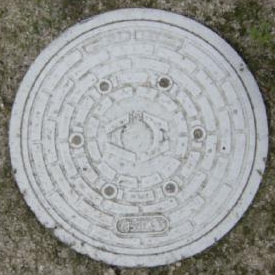
A town emblem in the center, with the characters 'おすい' below. A perforated plastic manhole cover with overlapping rectangles.
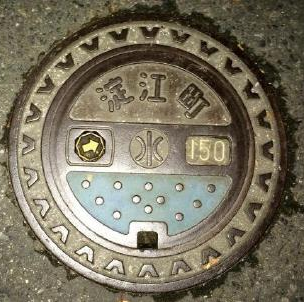
At the top, 'Yodoe Town'; in the middle, a water mark '150'; at the bottom, blue background with polka dots; a small valve cover with a V-shaped pattern in the receiving frame.
Related: Sakaiminato 境港市, Daisen 大山町, Hoki 伯耆町
Iwami 岩美町

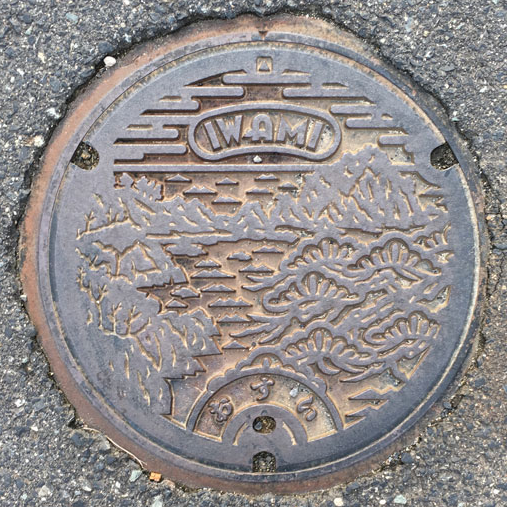
A colored manhole cover for sewage depicting the scenery of 'Johara Coast' and the town's tree, the 'Pine.' It includes the words 'IWAMI' and 'Osui'.
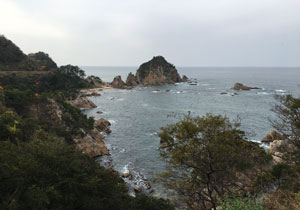
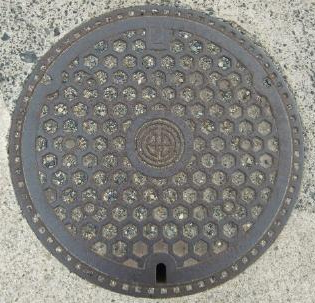
A hexagonal type with the Iwami Town emblem in the center, and small ■ patterns on the receiving frame.
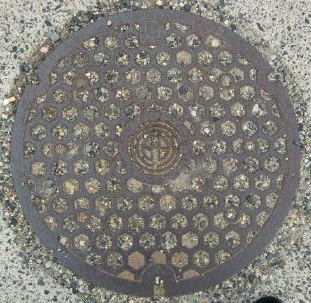
A hexagonal type with the Iwami town emblem in the center, and a type without patterns on the receiving frame.
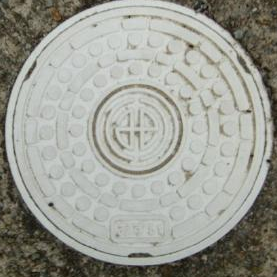
A plastic masu lid with alternating stacked circles and rectangles, featuring the Iwami Town emblem in the center
Kofu 江府町
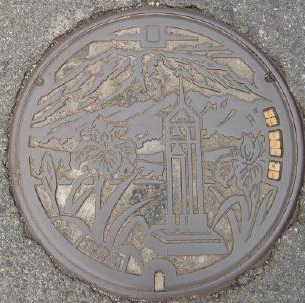
It features 'Daisen', called Hōki Fuji, and the 'bell' in Uenodan Park, with the town's flower 'iris' designed on both sides. 'Kōfu Town' is at the bottom left, with a frame for the management number to the right.
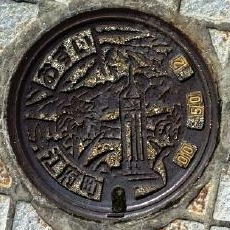
This is a small lid with the above design, without the word 'おすい' in the upper left and with a management number frame on the right side.
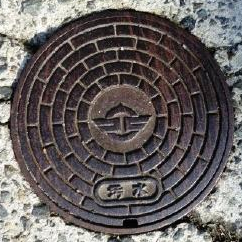
Concentric circle ground pattern, town emblem in the center, the characters 'sewage' at the bottom.
Kotora 琴浦町
Former Akasaki 旧赤碕町
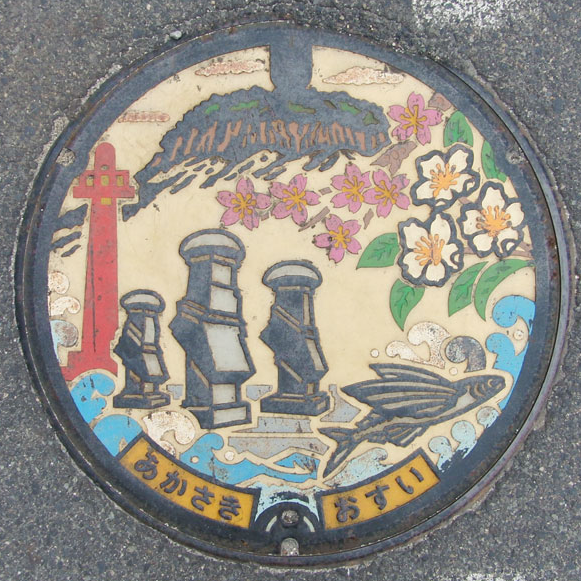
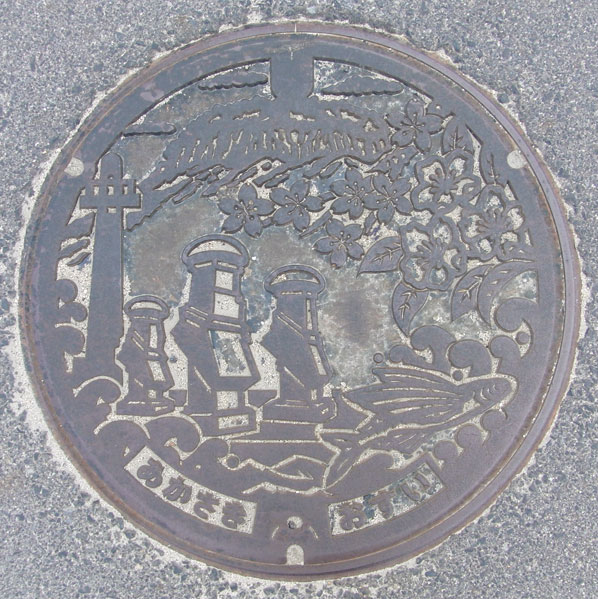
Byōbu Rock on Senjōzan, the cherry trees at 'Senjōzan Manbon Cherry Blossom Park,' the town flower 'Nashi,' the red lighthouse of Akasaki Port, 'Nami Shigure Sandogasa' at Kiku Port with flying fish, a lively manhole cover.
Bottom left shows where the cover was located. In the back is Akasaki Station. Several covers were lined up along this street.
Bottom right is 'Nami Shigure Sandogasa' at Kiku Port. No matter where you looked from, it never aligned in the same way as the manhole cover.
Former Tohaku 旧東伯町
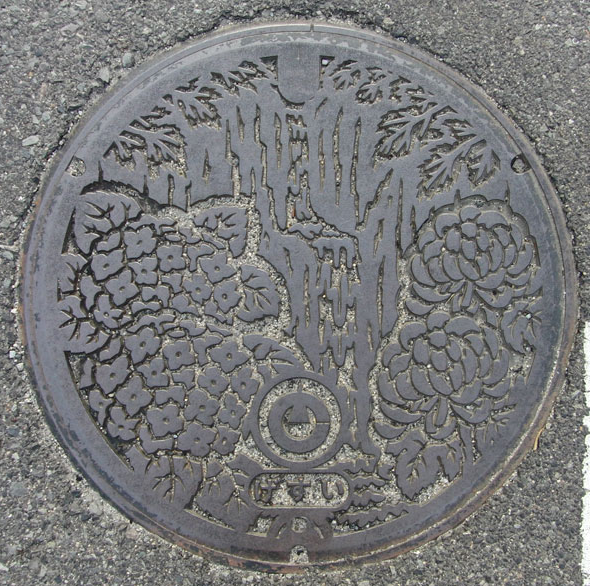
It depicts Oyama Falls, a two-tiered waterfall with a drop of 42 meters located in Jigokudani in the upper reaches of the Kasesae River, along with the old Tobu Town's flowers, 'chrysanthemum' and 'hydrangea.' The design is very detailed, so it is unfortunate that it is hard to see without paint.
Chizu 智頭町

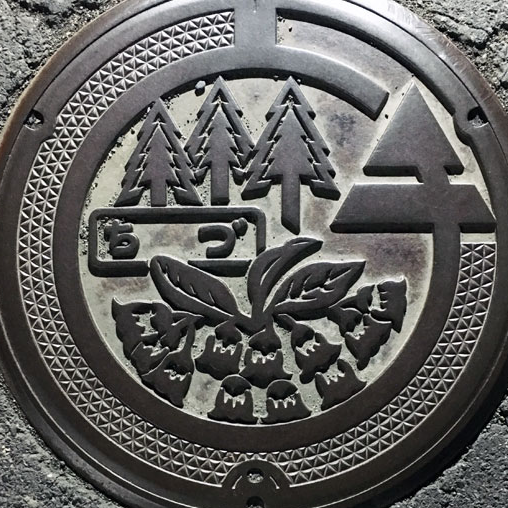
A manhole cover depicting Chizu Town's tree, 'cedar,' and the town's flower, 'Enkianthus perulatus,' inside the Chizu Town emblem.
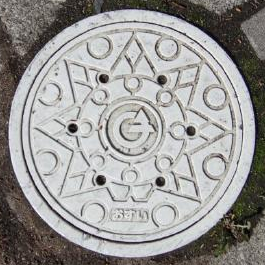
Featuring the town emblem and the characters 'おすい', made of white plastic.
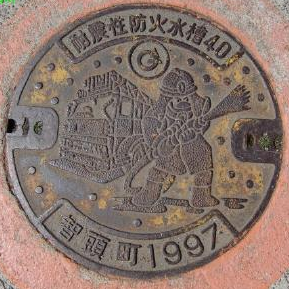
On a yellow background with a polka dot patterned lid, a ladder truck and a firefighter spraying water are depicted in slip-resistant relief. It includes the town emblem and the text 'Seismic-resistant Fire Water Tank 40' and 'Chizu Town 1997'.
Daisen 大山町
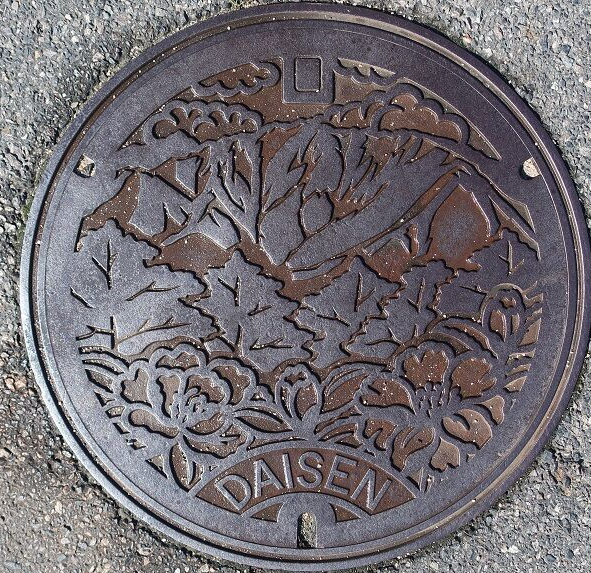
From the top, Ōyama, the town tree Daisen cherry laurel, and the town flower sasanqua camellia design, it is the type with a groove in the receiving frame. The inscription 'DAISEN'.
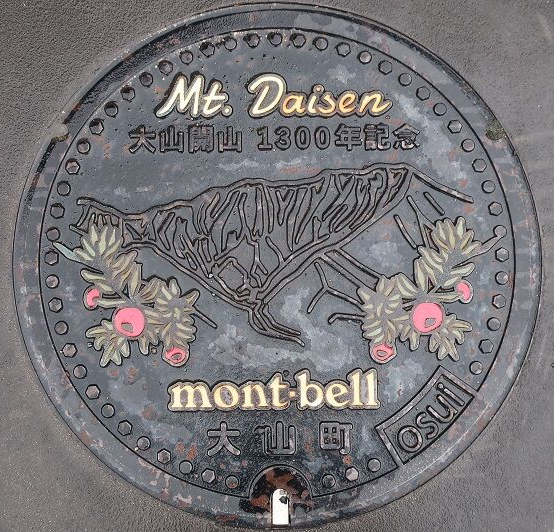
It seems that this year marks the 1300th anniversary of the opening of Mount Daisen, and to commemorate this, Montbell donated a lid to Daisen Town, which was installed on May 18. The design features the north face of Mount Daisen and the fruit of the Daisen character pine, a natural monument, with the Montbell logo. The fruit and logo parts are colored. It is installed on the road in front of the Montbell Daisen store.
Former Daisen 旧大山町
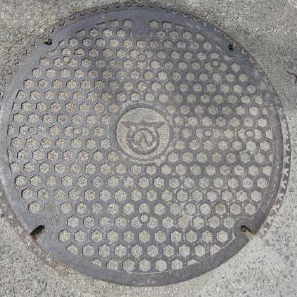
In a tortoiseshell pattern with the old town emblem, parent size for parent and child.
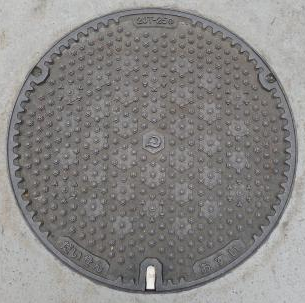
Slip-resistant surface structure, the new Daisen Town emblem in the center, 'Daisen' and 'Sewage' at the bottom, and '20T-25' at the top.
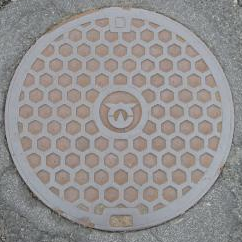
Small lid with a hexagonal pattern featuring the old Ōyama Town emblem.
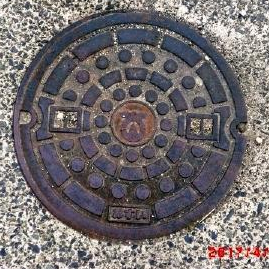
A ground pattern with circles and elongated rectangles alternating around the old town emblem. The characters 'おすい' are at the bottom.
Former Nawa 旧名和町
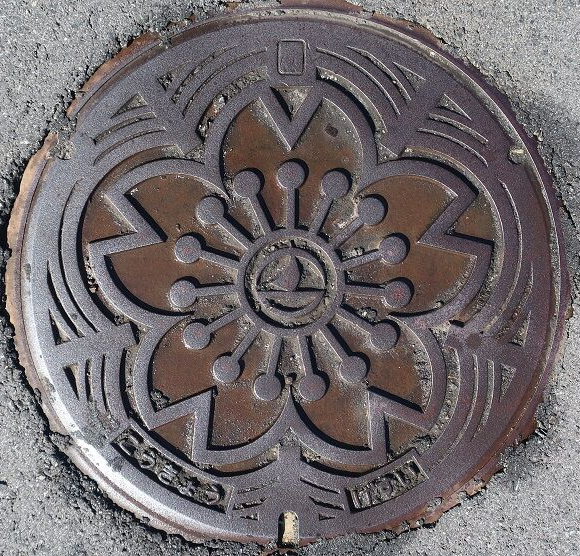
The town's flower, the cherry blossom, is drawn large, with the town emblem depicted in the center of the flower. Around it, the town's tree, the pine, is drawn. It is the type with a groove in the receiving frame and includes the characters 'こうきょう' and 'げすい'.
Former Nakayama 旧中山町
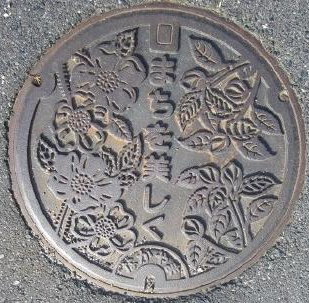
In the center, the phrase 'Make the town beautiful' is displayed, with the town's flower, Rugosa rose (southernmost natural habitat), on the left, and the town's tree, Sasanqua, on the right. At the bottom, 'Nakayama' is displayed.
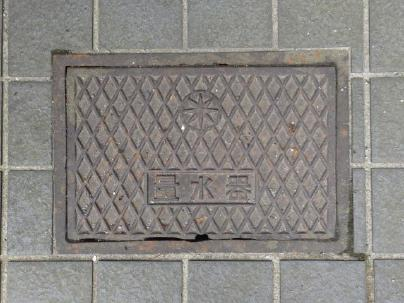
A water meter cover in Yonago City, Tottori Prefecture. It is a square cover with a diagonal lattice pattern, with the words 'Water Meter' under the Yonago City emblem. It has five vertical diamonds.
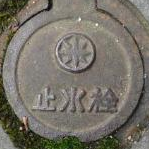
A water shutoff valve cover in Yonago City, Tottori Prefecture. It is a cover with external hinges, featuring the words '止水栓' (water shutoff valve) below the Yonago City emblem.
Related: Yonago 米子市
Nanbu 南部町
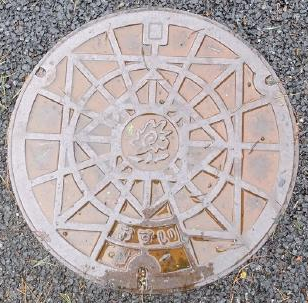
In the center, there is the Tottori Hanakairo logo (the image on the top right was borrowed from the website) and the characters 'Osui'. Tottori Hanakairo is one of the largest flower parks in Japan. It rained, so the lid ended up getting wet.
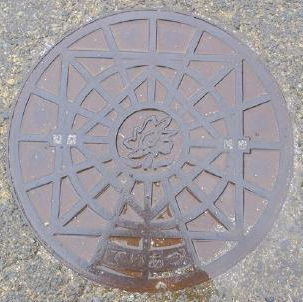
In the center, there is the Tottori Hanakairo logo and the characters 'Teiatsu'.
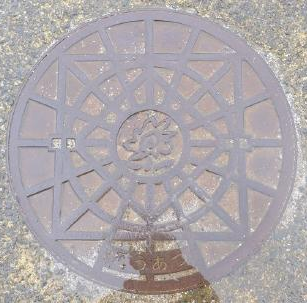
In the center, there is the Tottori Hanakairo logo and the characters 'Kōatsu'.
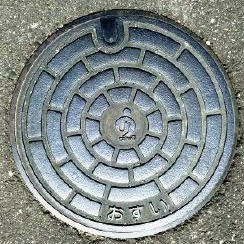
Concentric circle ground pattern, with the town emblem in the center and the characters 'Osui' at the bottom.
Former Saihaku 旧西伯町
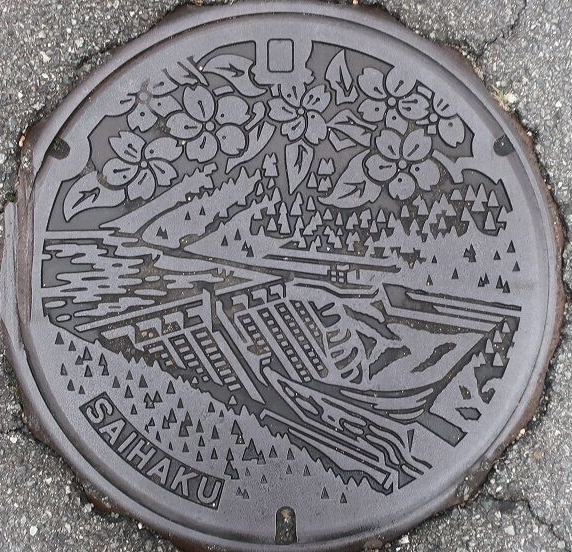
It features the town's flower, cherry blossoms, and the Gashō Dam, with the word 'NANNBU' included in the design of the former Saihaku Town.
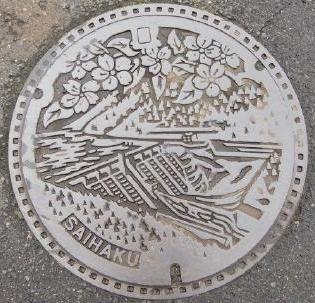
The town's flower, 'cherry blossom,' and 'Gasho Dam' are depicted. The letters 'SAIHAKU'.
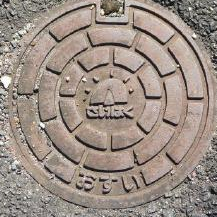
The mark resembling a sunrise in the center and the characters 'さいはく' are not the town emblem. What could it be? If anyone knows, please tell me. It is a small lid with the characters 'おすい' at the bottom.
Former Aimi 旧会見町

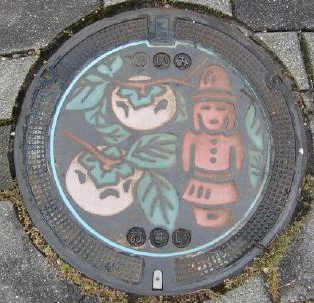
The town's specialties, 'Fuyu Persimmons' and 'Haniwa,' are depicted in color. There are many ancient burial mounds in Nambu Town. The characters 'Aimi' and 'Osui.'
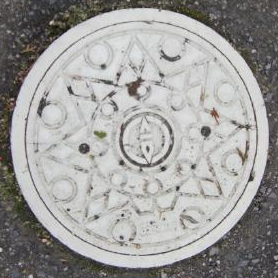
Small white plastic sewage pit cover with the old town emblem.
Nichinan 日南町
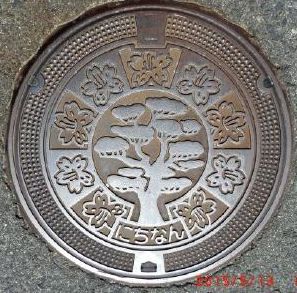
Around the town tree pine, the town flower cherry blossoms, with a raised pattern of four circles on the outer perimeter. The characters 'nichinan'.
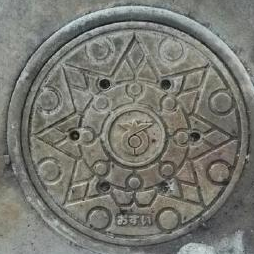
A small plastic lid with the town emblem and the word 'おすい', featuring a sun-like background pattern.
Hino 日野町
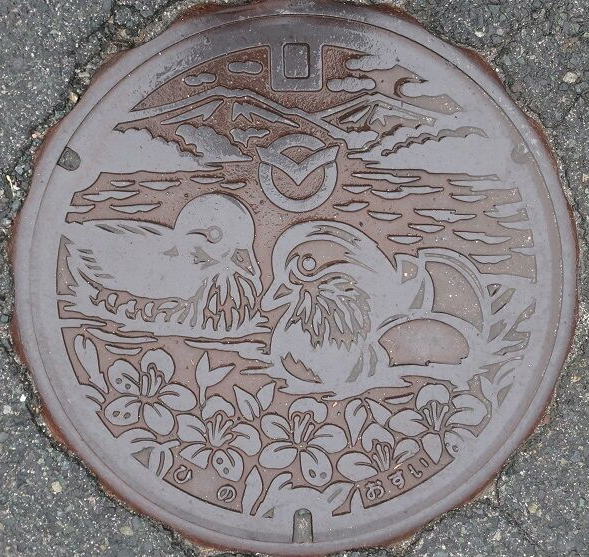
The mountains, the town's flower 'azalea,' and the town's bird 'mandarin duck' are depicted. The town emblem and the characters 'Hino' and 'Osui'.
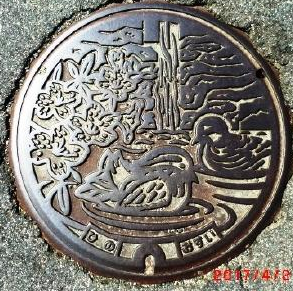
Designs of 'Mandarin ducks,' 'Ryuo Falls,' and the town flower 'azalea.' The characters 'Hino' and 'Osui'.
Hoki 伯耆町
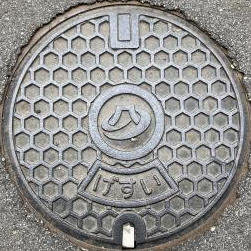
Hexagonal pattern, town emblem in the center, small lid with the word 'gesui' underneath.
Former Kishimoto 旧岸本町

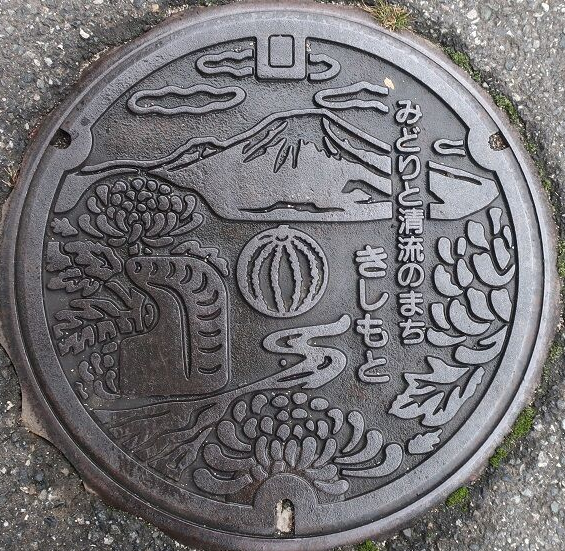
This is a color manhole cover displayed in the lobby of the Hōki Town Hall. A description was attached stating, 'It features the flower of the former Kishimoto Town, the chrysanthemum, and the specialty product, watermelon, as well as Daisen and the Hino River, and a shibi (ornamental roof tile) (Important Cultural Property of Japan).' The words 'Town of Greenery and Clear Streams, Kishimoto' are written on it.
Former Mizokuchi 旧溝口町
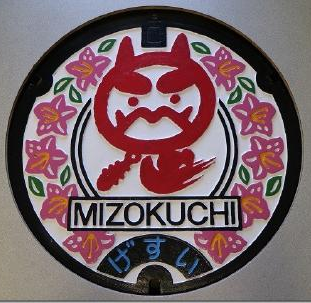
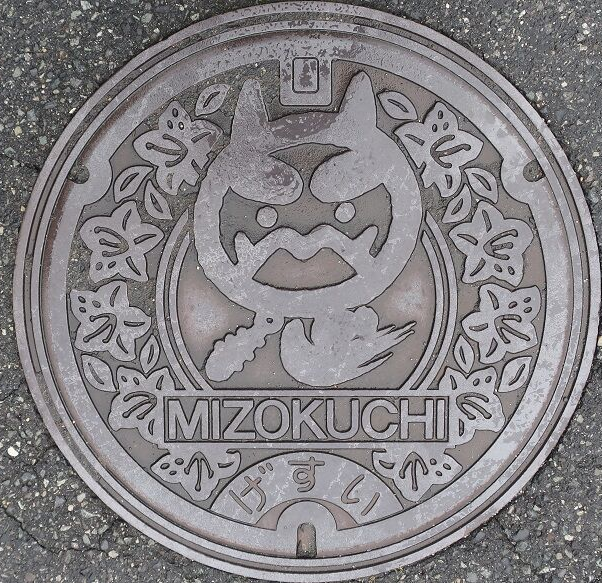
This is a colored manhole cover on display in the lobby of Hōki Town Hall. At first glance, it is a symbol mark designed to clearly evoke the character "Oni" and features the design of the flower of the former Mizoguchi Town, the "azalea."
A JIS standard water meter cover featuring the emblem of Mizoguchi Town.
Related: Yonago 米子市
Hokuei 北栄町
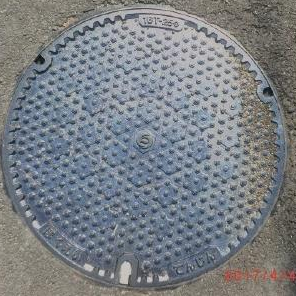
This is an ASD cover with the Kitakami Town emblem. It has 'Hokuei' and 'Tenjin' on the lower part, and '16T-25 Hinode Waterworks Equipment' mark on the upper part.
Former Daiei 旧大栄町

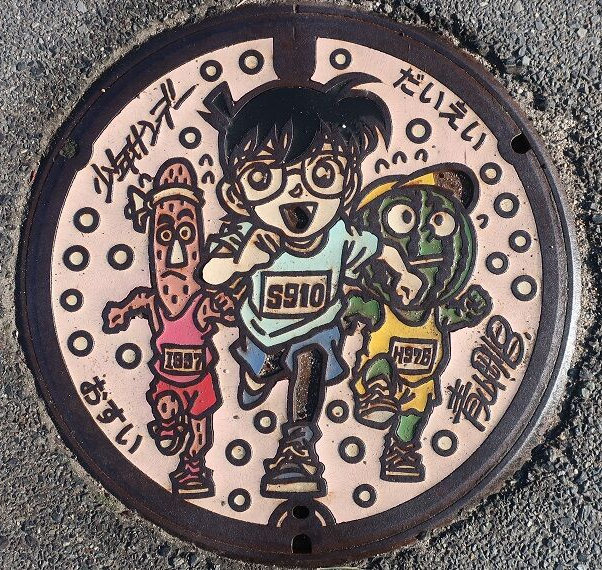
Conan and the local specialties, nagaimo (long yam) and watermelon, are running. I wondered what it was, and it seems that a tournament called the 'Watermelon & Nagaimo Health Marathon' is held every July. Participants are served all-you-can-eat watermelon and nagaimo soup, and as a participation prize, they receive T-shirts designed by Gosho Aoyama. The bib numbers also seem to have some kind of significance, but it is unclear. The bottom left shows the place where the lid was. In the background, you can see the Conan Bridge. On the bridge railings, plates with the same design as the lid (bottom right) are installed.
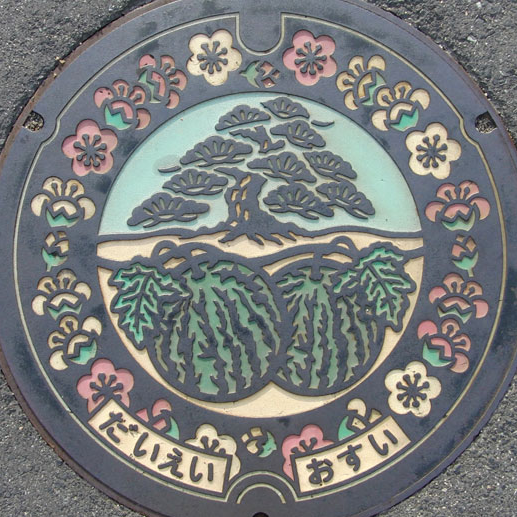
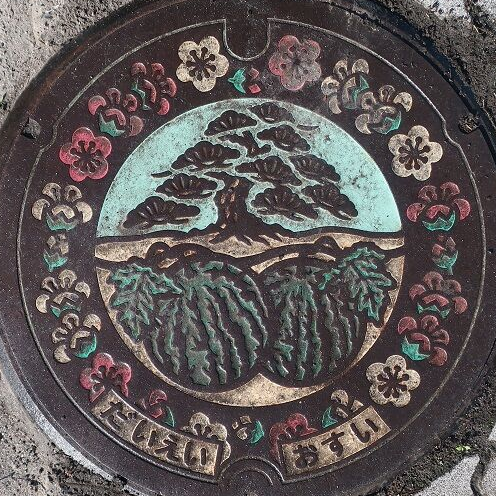
The town flower 'Plum' is depicted around the edge, the town tree 'Pine' in the center, and the local specialty 'Watermelon'.
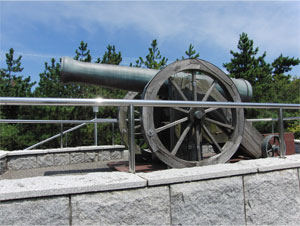
Cannons and specialty watermelons displayed at Daiba Park.
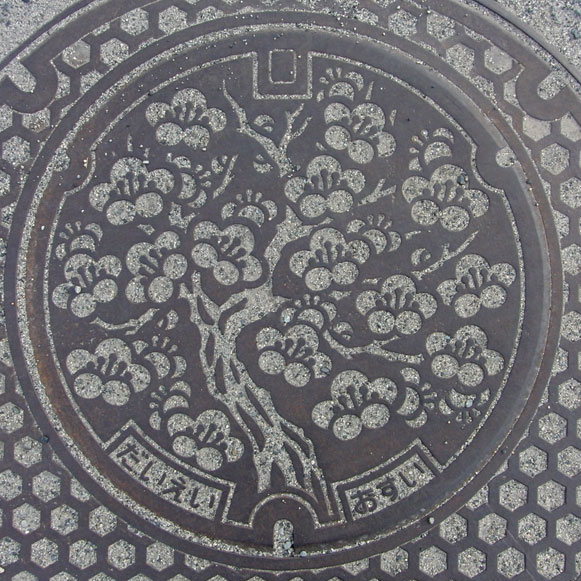
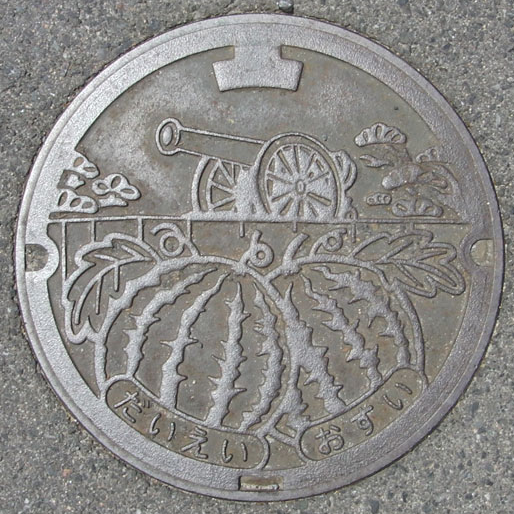
The town's flower, 'plum,' is depicted.
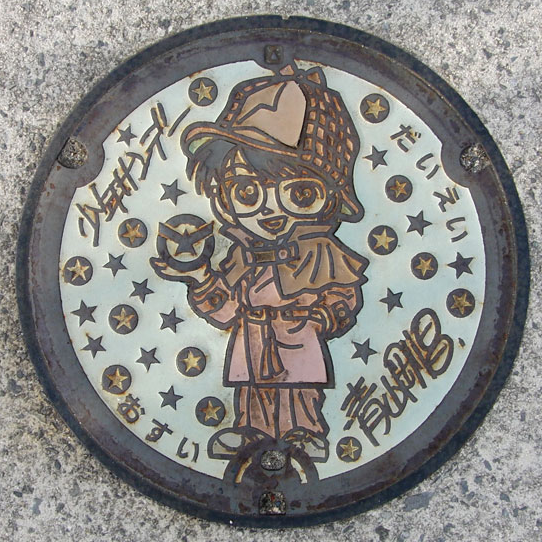
This is a small-sized edition depicting Conan dressed in a Sherlock Holmes style. Conan is holding the town emblem. The lower left shows where the cover was. On the opposite side of the road, there is a large free parking lot, where monuments of Conan and Ran Mouri dressed the same as on the cover, as well as a statue evoking a scene of Shinichi Kudo and Ran commuting to school (lower right), have been erected.
In the center, the town's specialty watermelon and the town tree, pine. The labels 'Daiei' and 'Osui'. Small cover for a sewage manhole.
Former Hojo 旧北条町
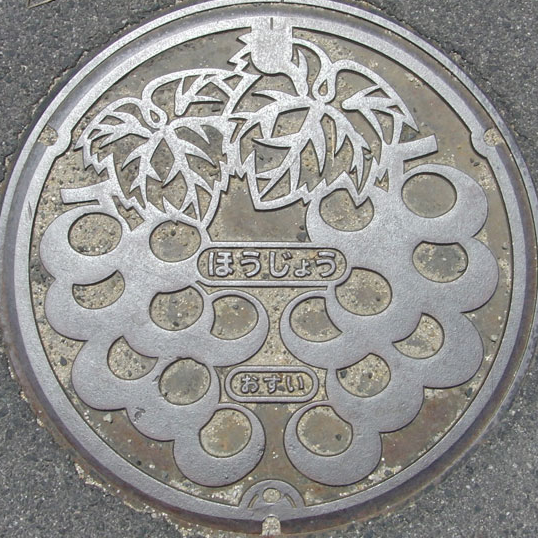
Grapes, a specialty product, are depicted.
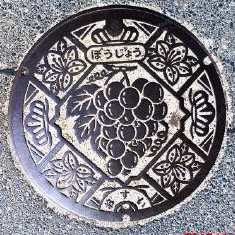
Around the large grapes, the town tree, black pine, and the town flower, Satsuki azalea, are depicted alternately. The words 'Houjou' are at the top and 'Osui' at the bottom. According to the town office staff, 'This is the town's third grape design, 'Nouhai,' which is not listed on the manhole cover internet...'
Misasa 三朝町
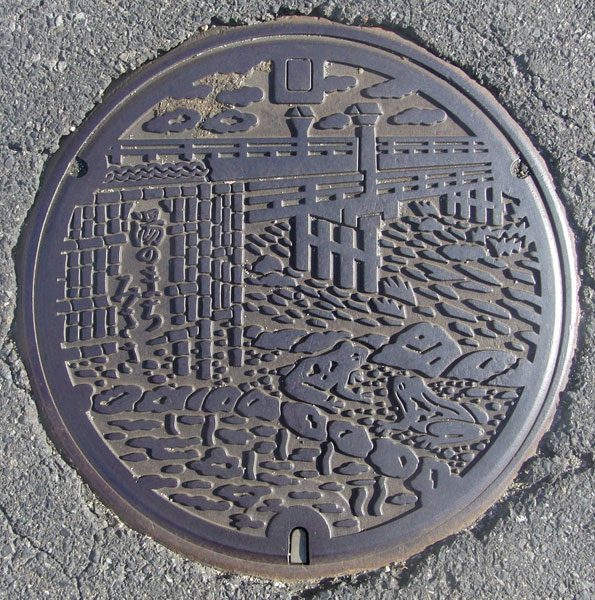
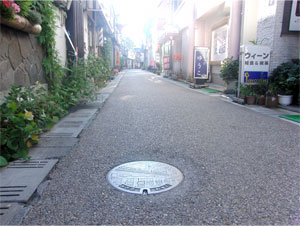
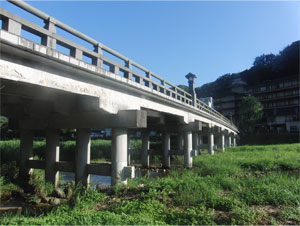
The Misasa Ohashi Bridge, which can be said to be the center of Misasa Onsen, is depicted.
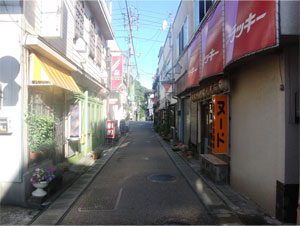
Yazu 八頭町
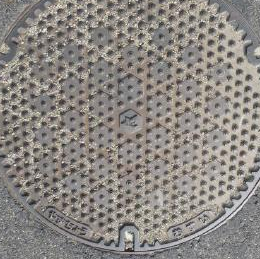
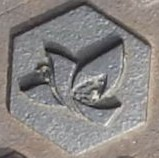
An ASD (anti-slip surface structure) manhole with the Yazu Town emblem in the center, '20T-25' above, and the characters 'やずちょう' and 'おすい' below.
Former Koge 旧郡家町

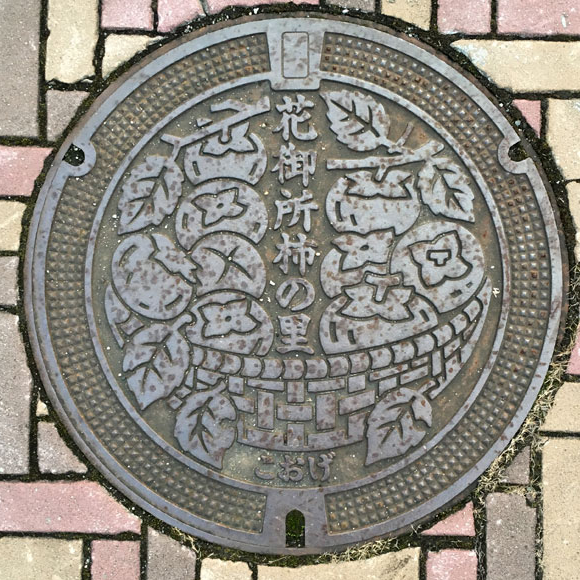
The Hanagosho persimmons piled in the basket are said to be a phantom persimmon grown only in the Inaba region of Tottori Prefecture, with a history of 200 years. Hanagosho persimmons are known for their high sugar content and a melt-in-your-mouth texture.
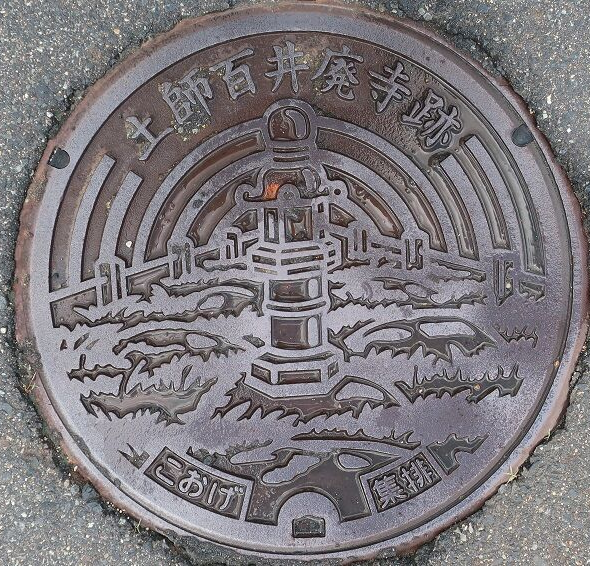
Design of the Haji Momoi Haiji Ruins, a nationally designated historic site. At the bottom are the characters 'Kooge' and 'Shuuhai'. It is considered to be the remains of a temple built from the mid-7th century to the early 8th century during the Hakuhō period.
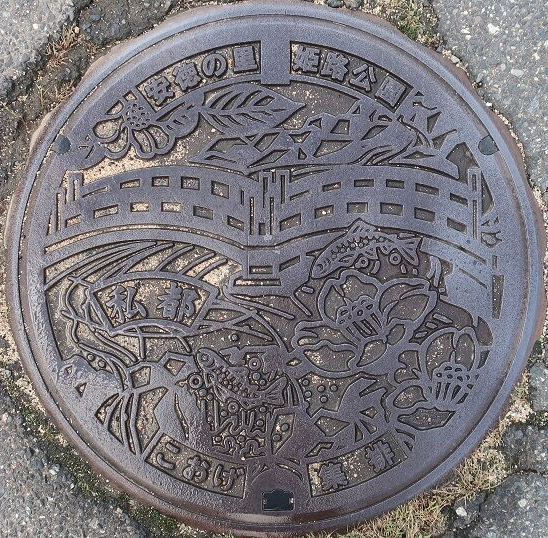
Antei no Sato: The double-arched bridge within Himeji Park and the tree of the former Koge Town, 'Kinmokusei,' as well as the flower of the former Koge Town, 'Satsuki,' and 'Yamame' fish swimming. The upper part has the characters 'Antei no Sato Himeji Park,' the lower part has 'Koge' and 'Shuhai,' and the left side has 'Shito.' According to the guide brochure, 'Shito' is read as 'Kisaichi' and seems to be the name of the management building of Himeji Park.
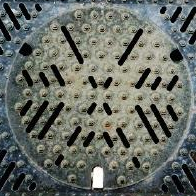
A lid with a long hole for ASD, found near Yazu Town Gunge Purification Center, with no markings.
Water supply air valve cover.
Former Hatto 旧八東町
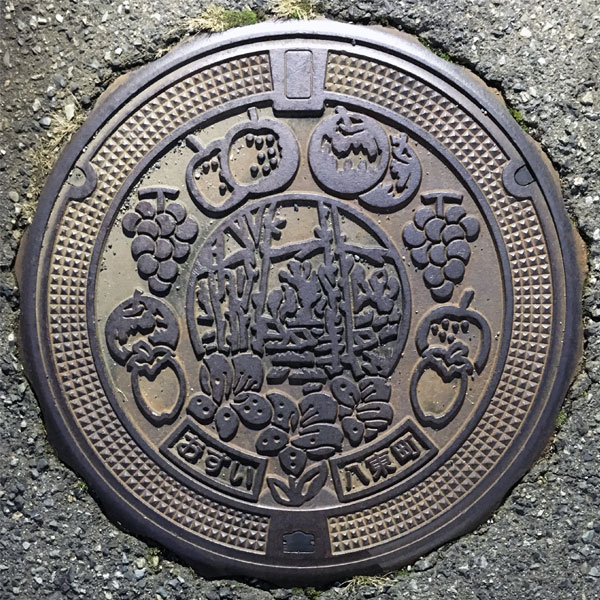
It is difficult to see, but the central circle is a beech forest. Around it are fruits such as pears, apples, grapes, and persimmons.
Former Funaoka 旧船岡町
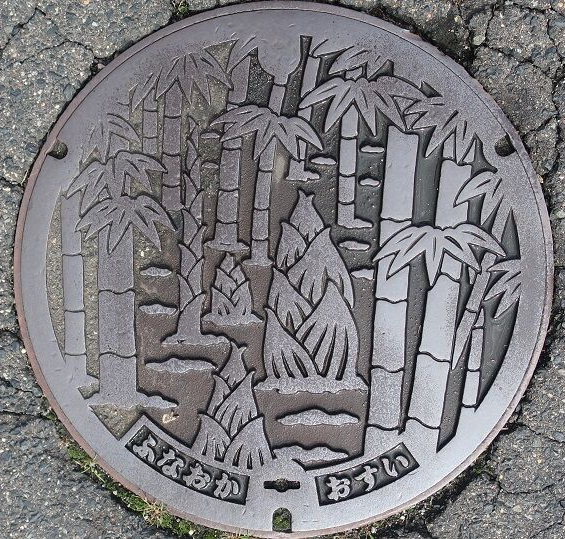
Design of bamboo and bamboo shoots. In Funaoka Town, there is said to be a bamboo forest park where 200 rare domestic and foreign varieties of bamboo and sasa grow thickly. The characters 'Funaoka' and 'Osui'.
Yurihama 湯梨浜町
Yurihama Town, which has famous hot springs such as Hattai Onsen and Togo Onsen, features hot springs inside a large pear, the town's tree and specialty, and depicts ground golf, originating in Yurihama Town (formerly Tomari Village), and a beach, with waves designed around the outer edge. The inscriptions 'Yurihama Town' and 'Sewage' are included.
Former Togo 旧東郷町
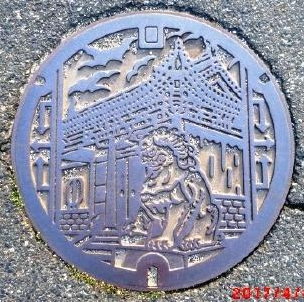
A lid depicting the gate of one of Japan's largest Chinese gardens.
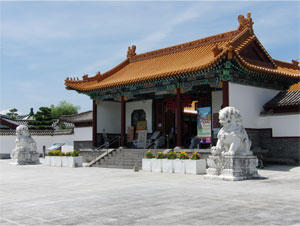
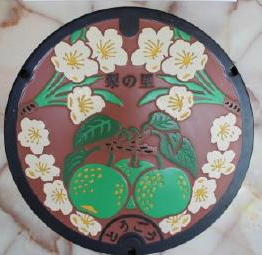
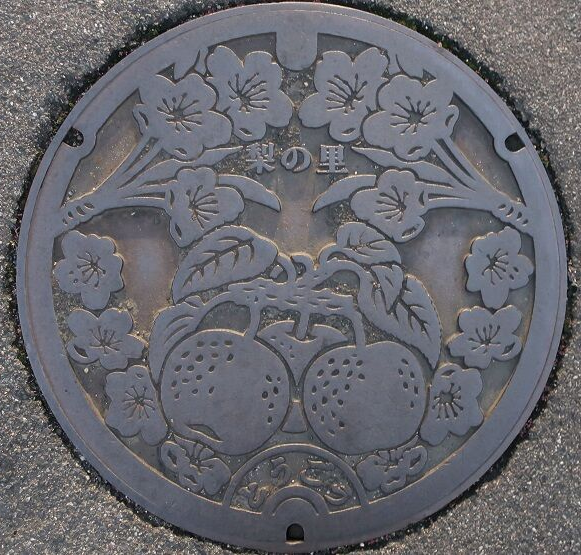
A lid with the same motif as above.
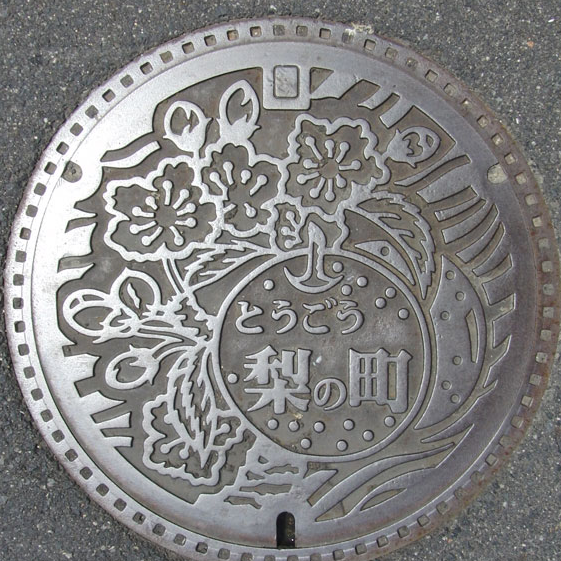
A lid depicting the 20th-century pear, a tree and flower of the town.
Former Hawai 旧羽合町
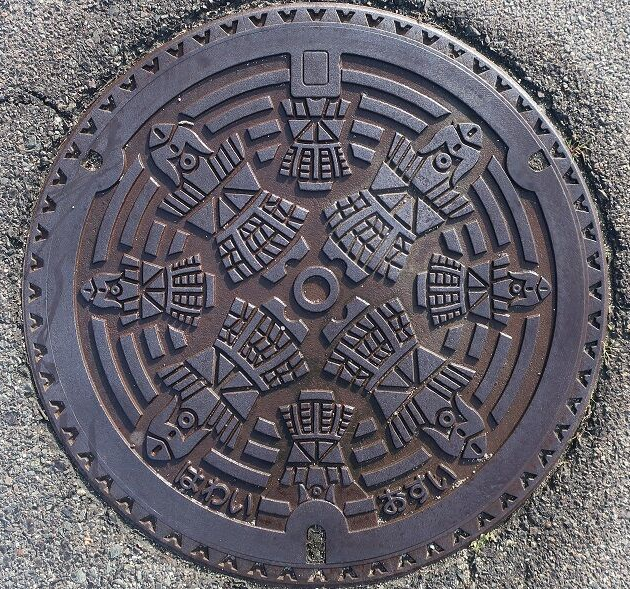
Color lid on display at the Tenjin Purification Center.
Design of armor-shaped haniwa excavated from the Nagase-Takahama site. The characters 'Hawai Osui.'
The former Hawai Town became famous from a certain mobile phone commercial: 'It's the Hawaii of Tottori.'
Former Tomari 旧泊村
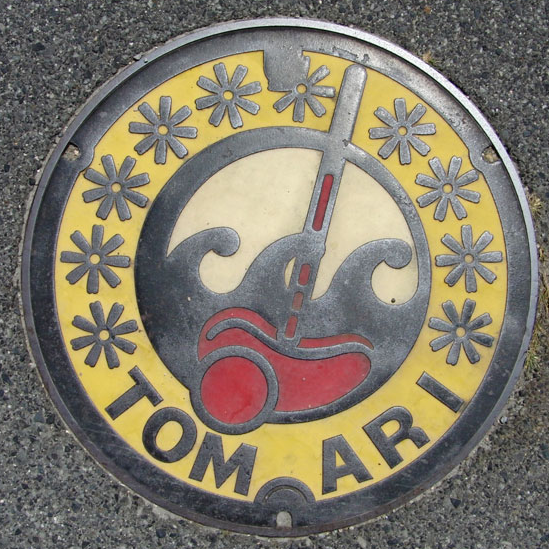
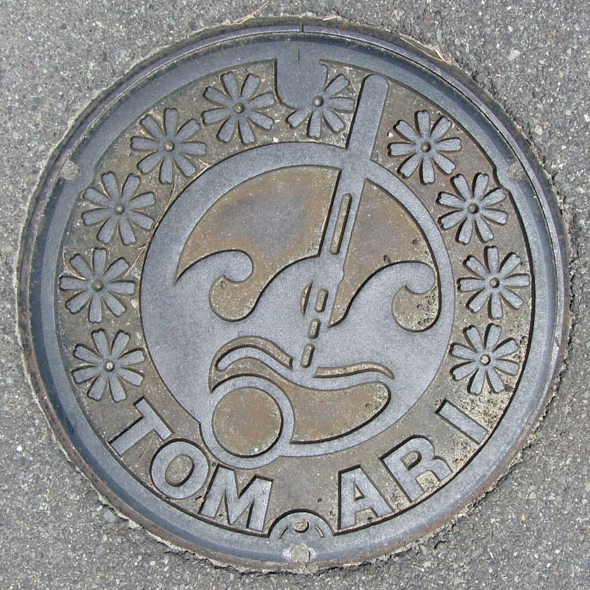
A ground golf club and ball, a manhole cover depicting the village flowers tsuwabuki and the rough waves of the Sea of Japan.
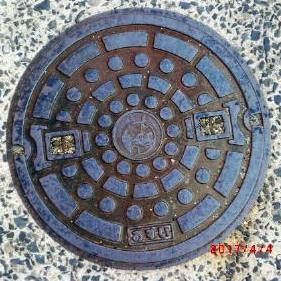
In the center, a design of a ground golf club and ball similar to the above, and at the bottom, the characters 'おすい'. A small lid with a background pattern of circles and trapezoids alternately repeated twice.
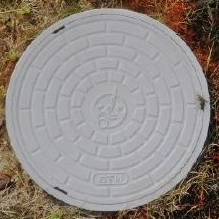
In the center, there is the same illustration of a ground golf club and ball as above, with the word 'おすい' at the bottom. A small plastic lid with a concentric circle pattern.
Wakasa 若桜町
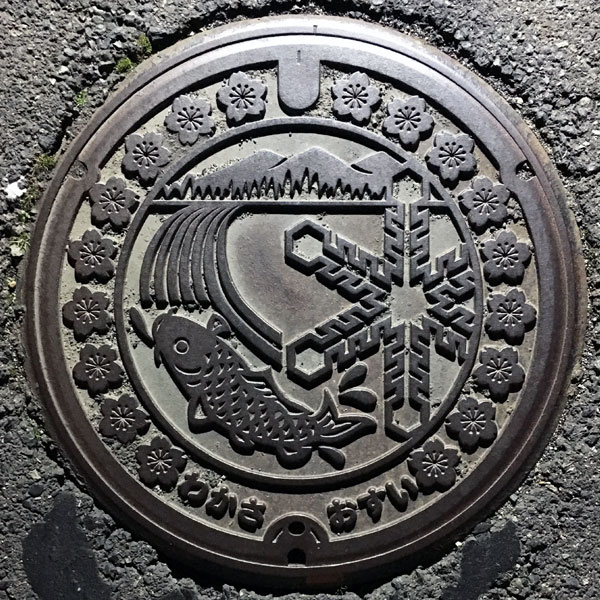
Around are the town's trees, cherry blossoms. The distant mountains are Hyonosen, located on the border with Hyogo Prefecture. The river is the Hattō River, which flows through the urban area of Wakasa Town. Because it is a heavy snowfall area, there is a 'snowflake.' The fish is a 'carp.' A manhole cover for sewage. In the song 'Wakasa Kouta,' for which Noguchi Ujo wrote the lyrics, there is a line that says, 'It doesn't live in mud, that is the carp of Wakasa,' and it is said that each household also raised carp in the clear streams of the small rivers. Nowadays, many carp swim in the ponds of the riverside park.
Hiezu 日吉津村
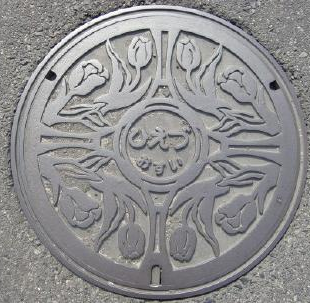
The village flower, 'tulip,' is depicted. In the center are the characters 'hiedzu' and 'osui'.
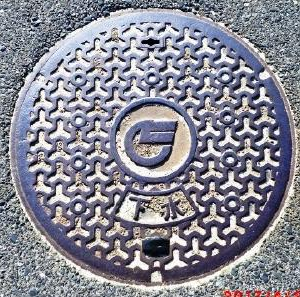
Bishamon tortoiseshell pattern, the village emblem and the characters for 'sewer', with keyholes at the top and bottom, but the bottom one is blocked.
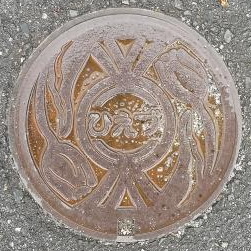
Due to the small lid, one 'tulip' is drawn on each side, surrounding the characters 'hiedzu' in the center.
Tottori Prefecture 鳥取県
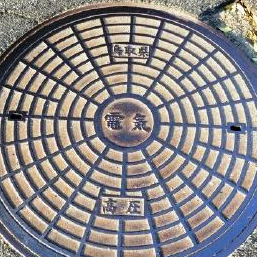
In a spiderweb-like pattern, 'Tottori Prefecture' is at the top, 'Electricity' in the center, and 'High Voltage' at the bottom.
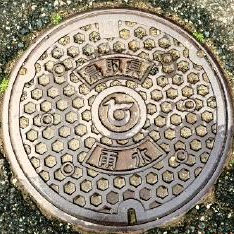
Hexagonal pattern, small lid with the characters 'Tottori Prefecture' above the prefectural emblem and 'Rainwater' below.
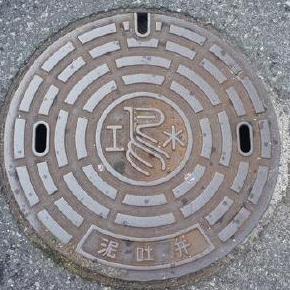
A square lid with a polka dot pattern, with the words 'Industrial Water Air Valve' in the center, and the prefectural emblem above it. There are lids with the same design but different words: 'Air Valve,' 'Water Control Valve,' and 'Mud Discharge Valve.'