Saga 佐賀県
Saga 佐賀県
Saga 佐賀市
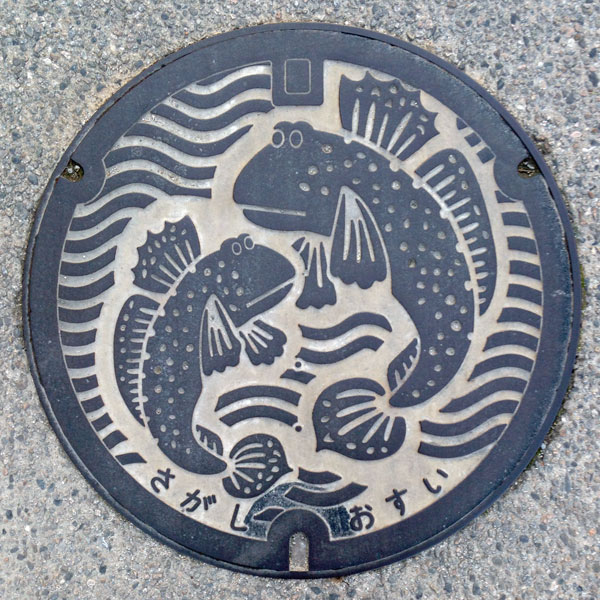
The design is based on the mudskipper.
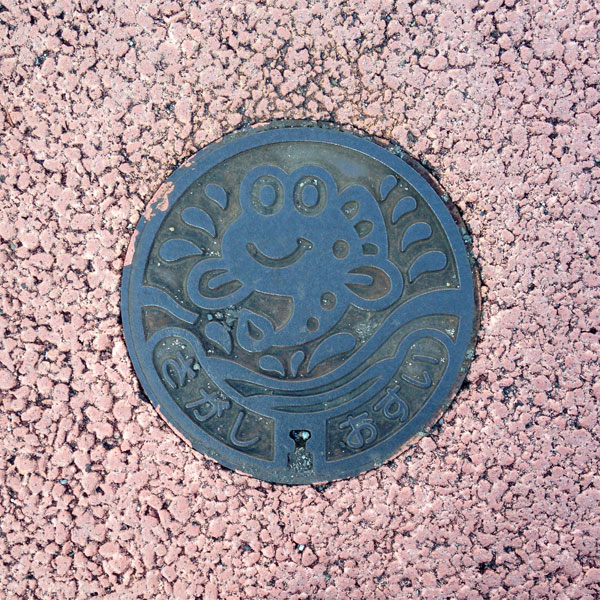
A small handhole cover. It features a charming design of a mudskipper.
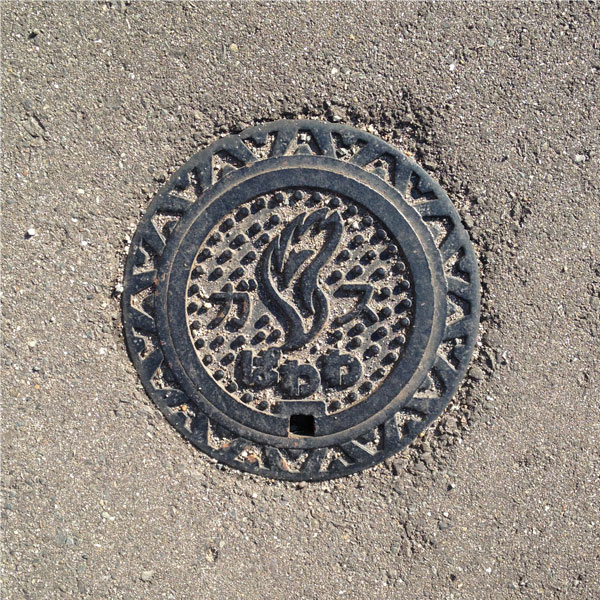
A gas valve cover bearing the word "Pawawa." It appears to be a nickname used by Saga Gas Co., Ltd.
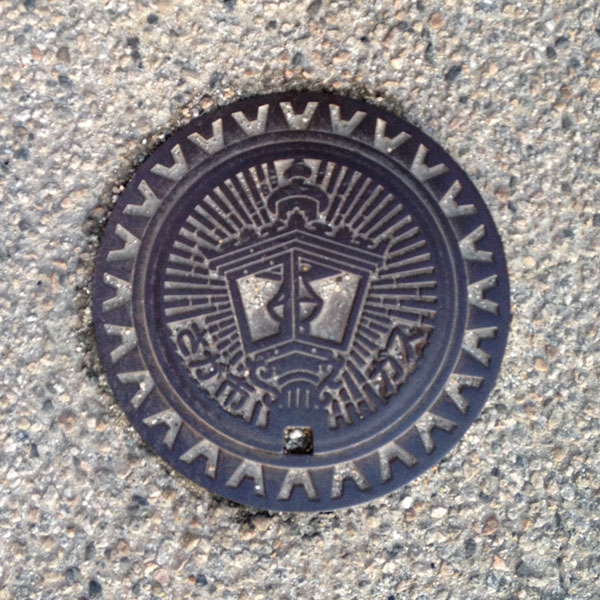
A handhole cover marked "Gas" located in front of the Museum of History and Folklore.
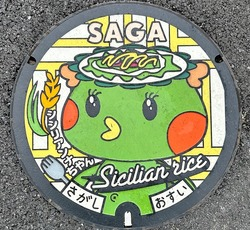
The manhole cover features designs of Mutsu-goro (mudskipper) and "Sicilian-chan," a PR mascot for the local gourmet specialty.
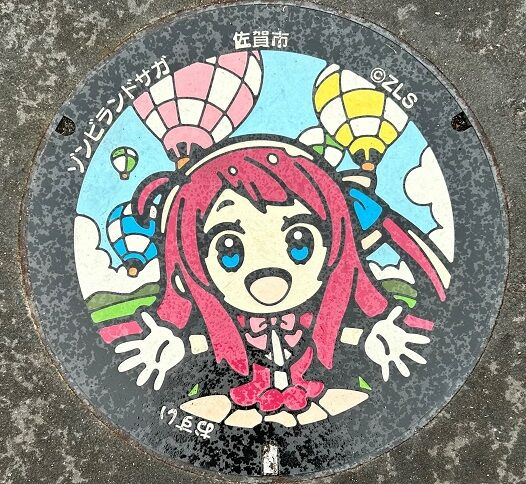
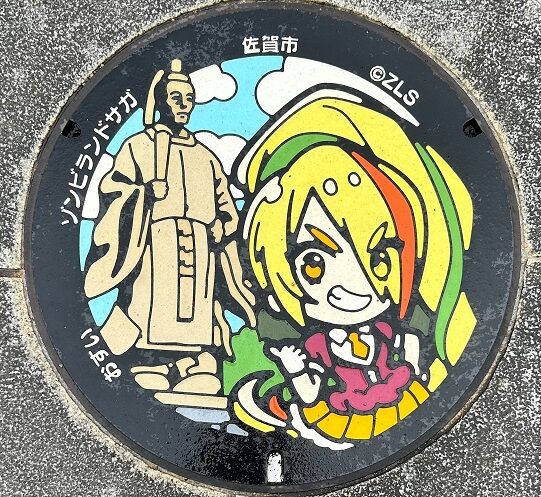
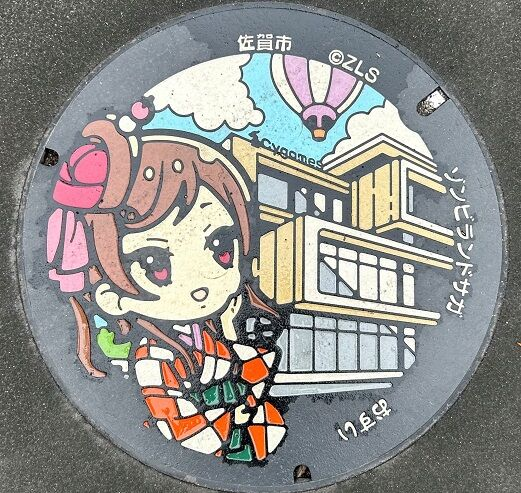
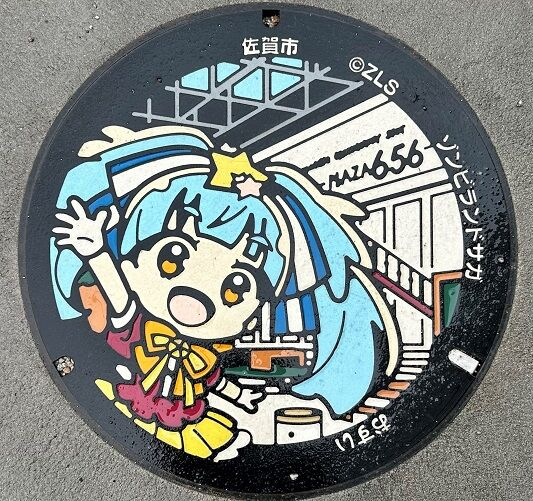
Collab manholes featuring characters from Zombie Land Saga.
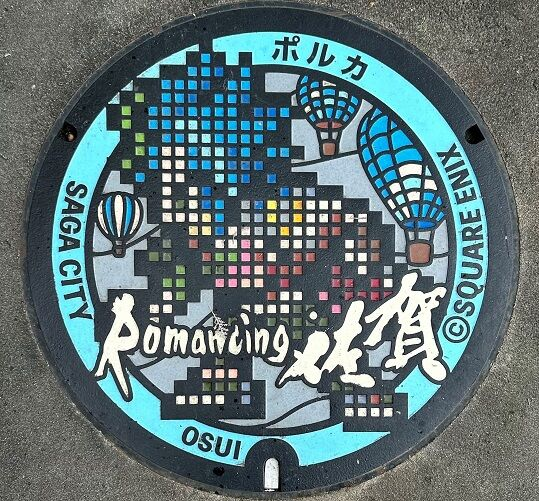
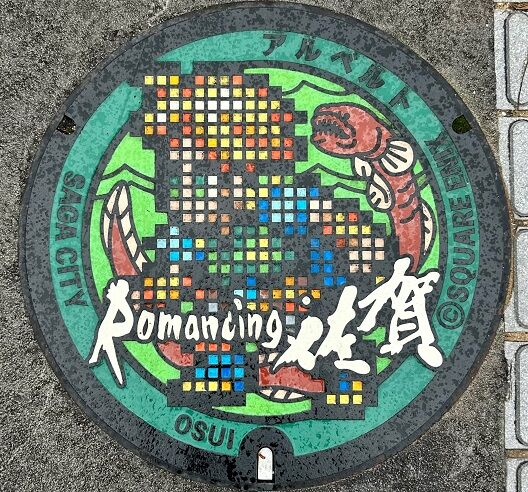
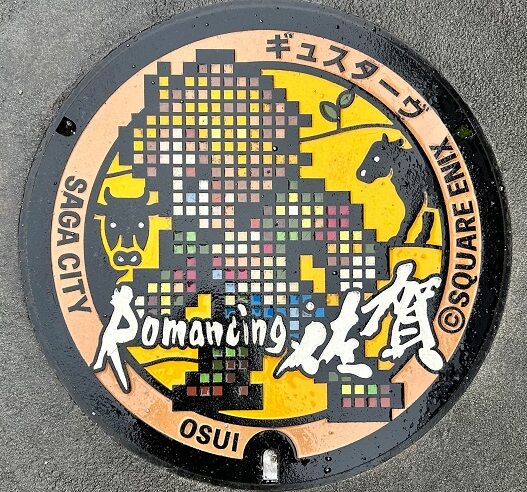
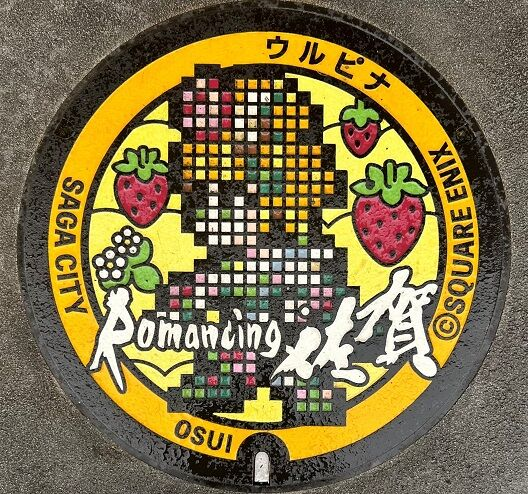
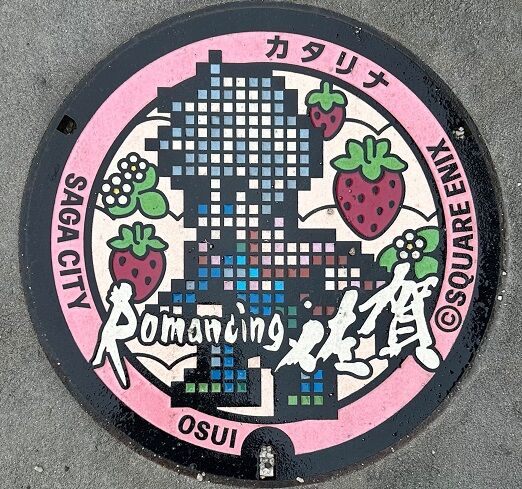
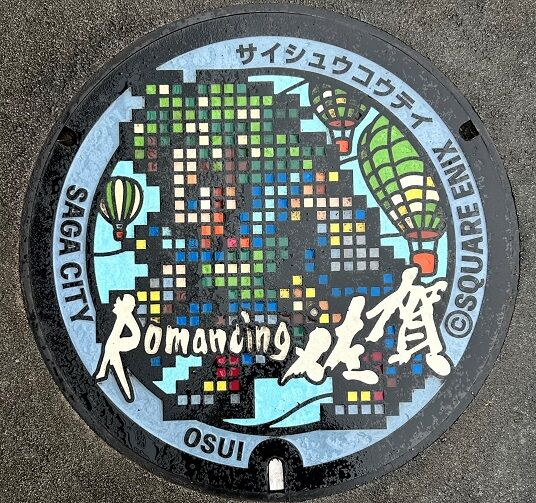
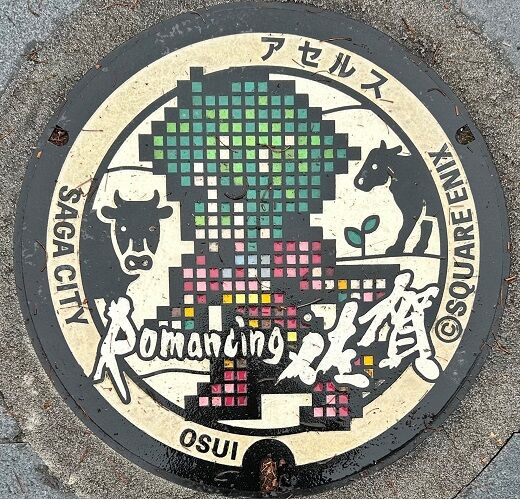
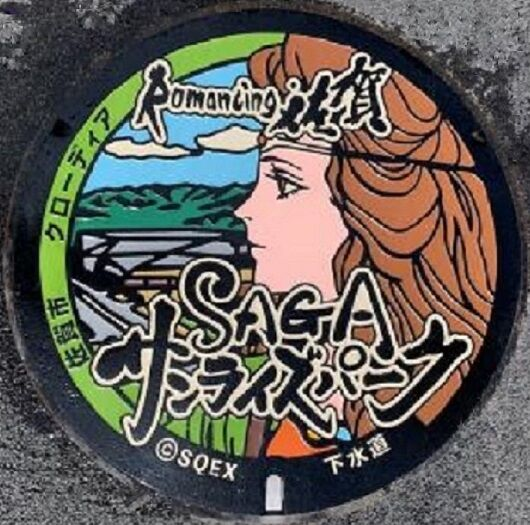
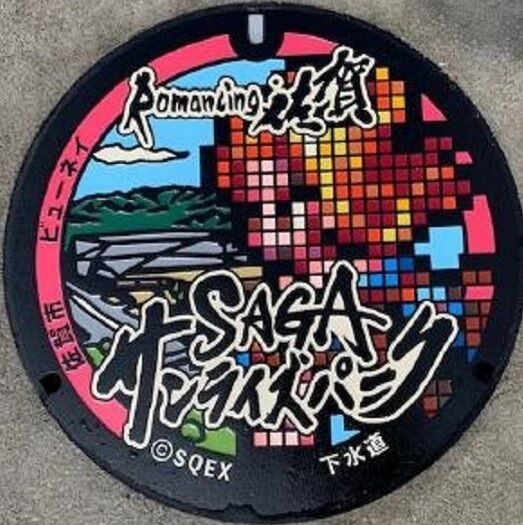
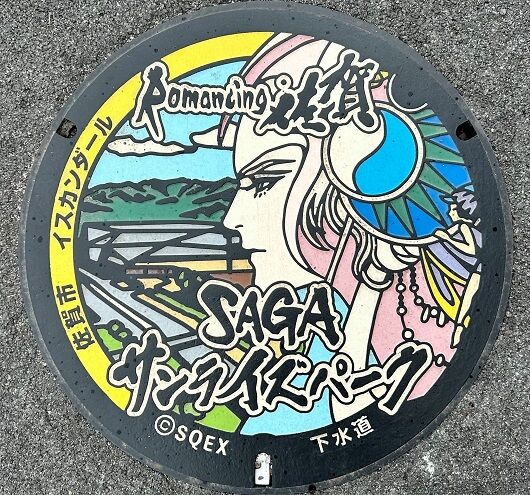
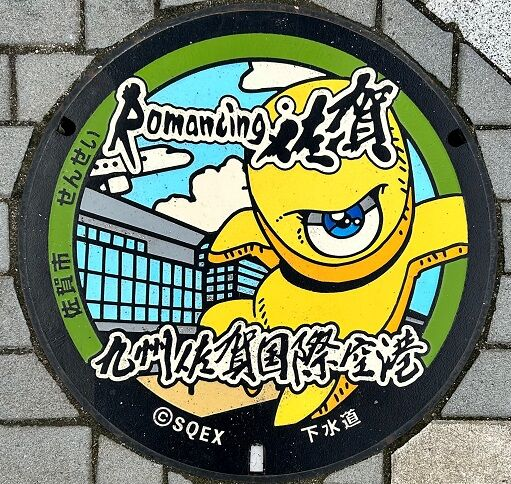
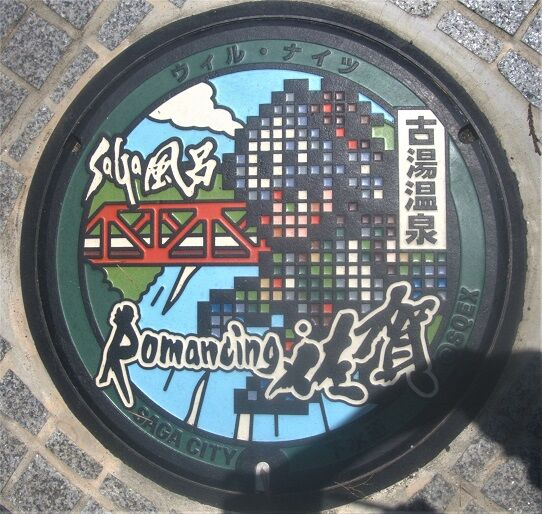
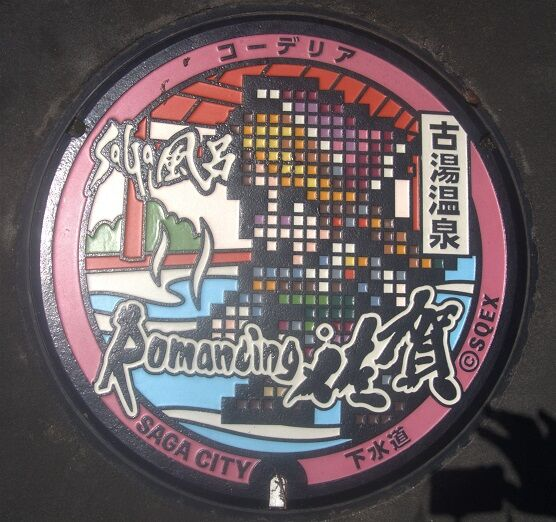
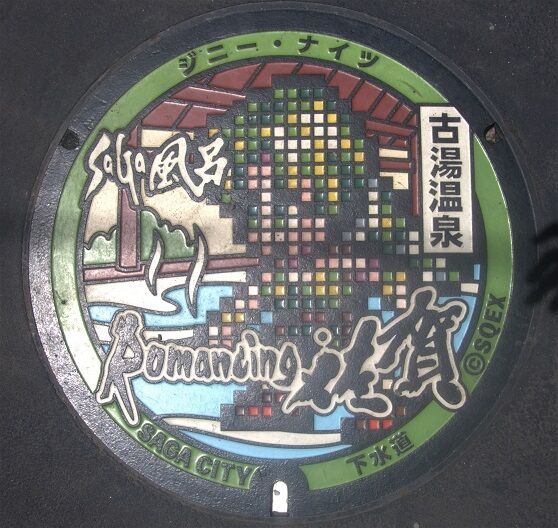
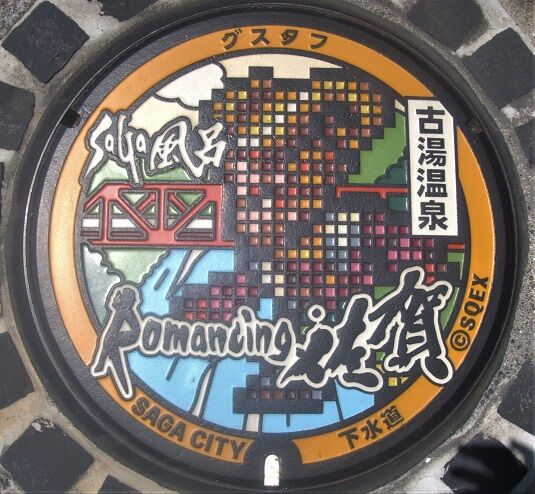
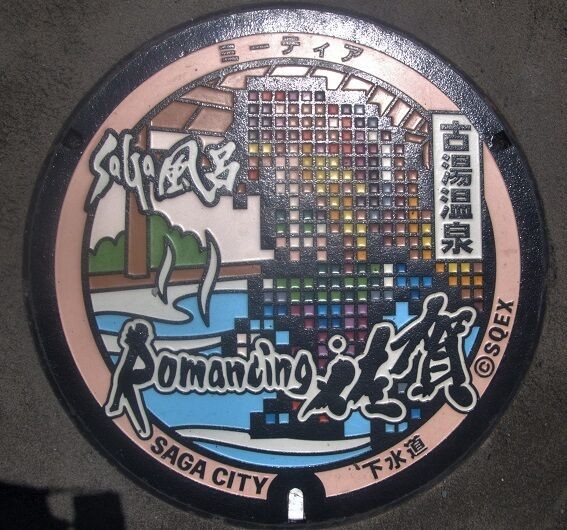
Romancing SaGa manhole series.
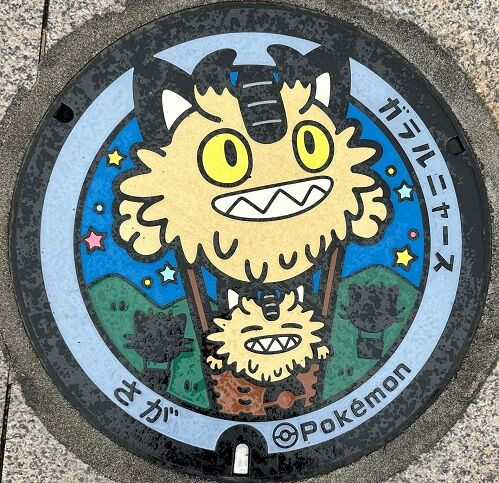
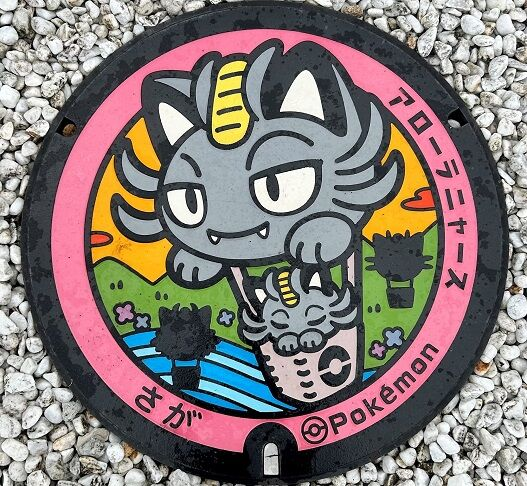
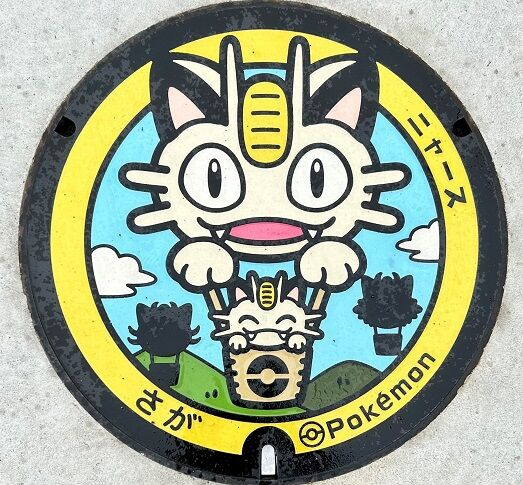
Meowth Pokemon manhole covers.
Yamato 大和町
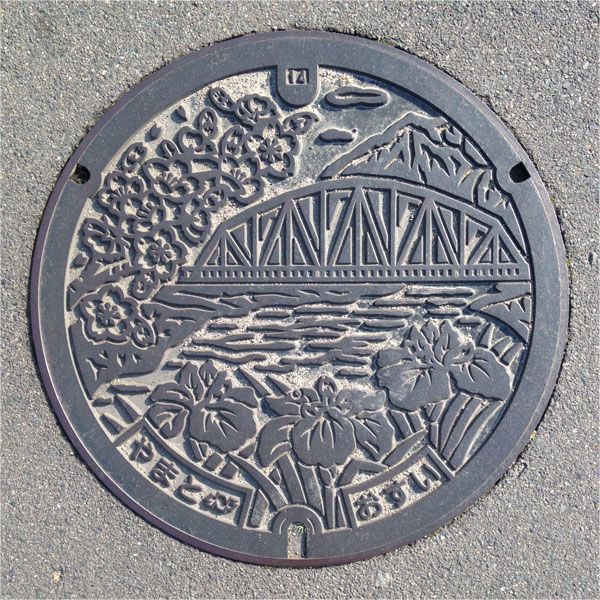
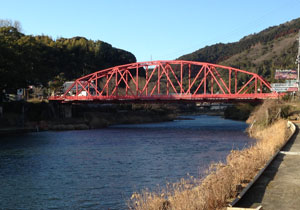
It depicts the "Kannin-bashi" Bridge spanning the Kawakami Gorge, along with cherry blossoms and Japanese irises.
Fuji 富士町
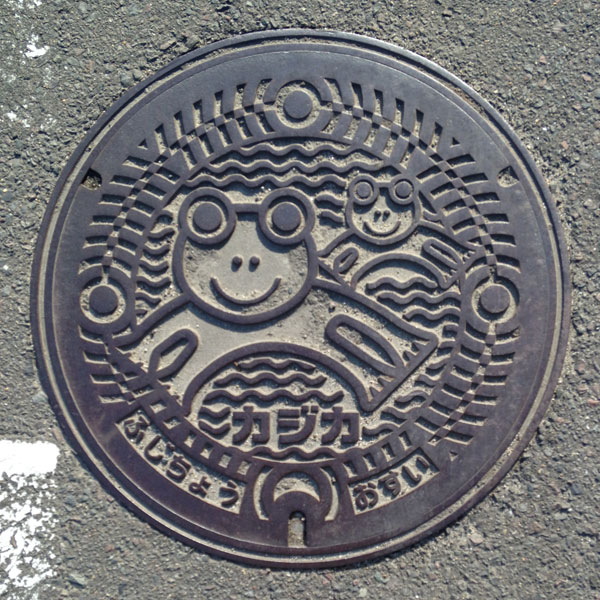
A sewage manhole cover featuring a Kajika frog.
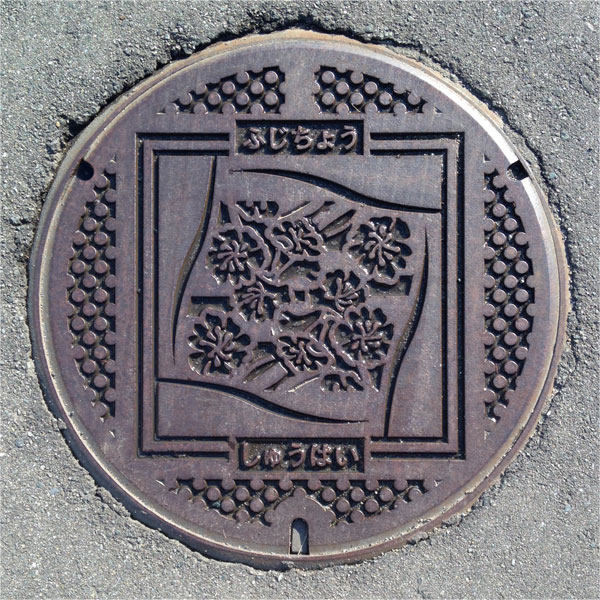
A manhole cover for the agricultural village wastewater system in the Mutsuro district, featuring a design of rapeseed blossoms.
Morodomi 諸富町
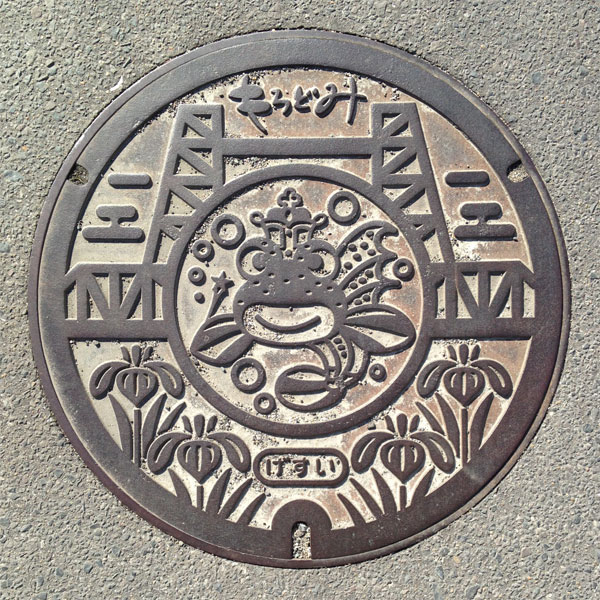
Around the time Saga Airport opened, four towns—Higashiyoka, Kawasoe, Kubota, and Morodomi—launched the "Doronpa Kingdom" in an effort to revitalize the area. The kingdom's monarch was "Gata-maru-kun," a mudskipper character. Consequently, Gata-maru-kun is depicted on the manhole covers of these four towns. In the case of Morodomi Town, the design features Gata-maru-kun alongside the "Shokaikyo" (a railway lift bridge spanning the Chikugo River) and the town's flower, the Japanese iris.
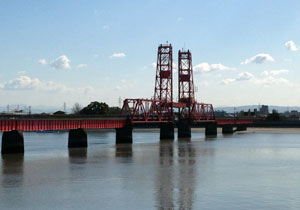
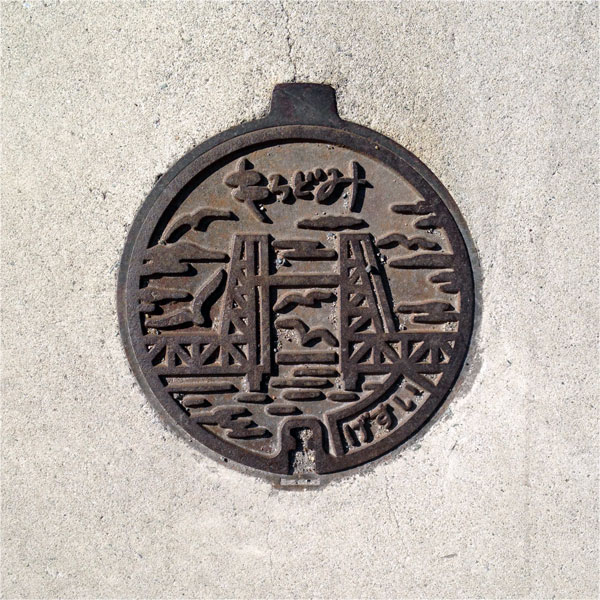
This is the lid of an even smaller residential sewage manhole. There didn't seem to be enough room to include Gata-maru-kun and the Japanese irises, so only the lifting bridge is depicted.
Kawasoe 川副町
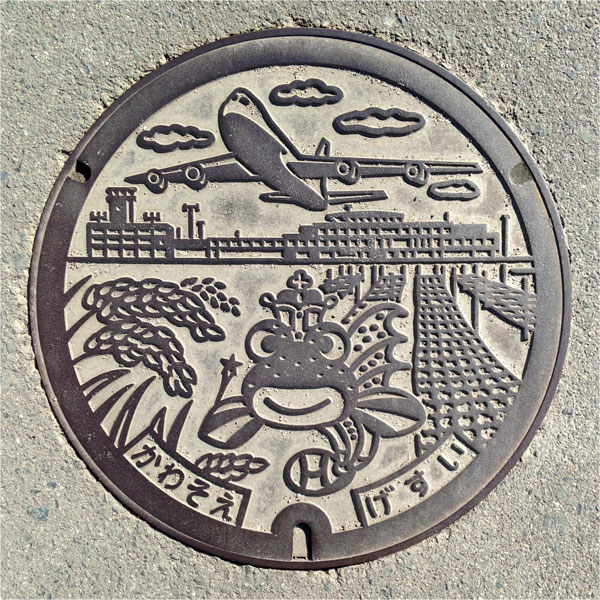
Even though the same "Gata-maru-kun" character is depicted, the manhole covers in Kawasoe Town—home to Saga Airport—feature an airplane taking off from the airport, ears of rice, and the nets of seaweed cultivation racks.
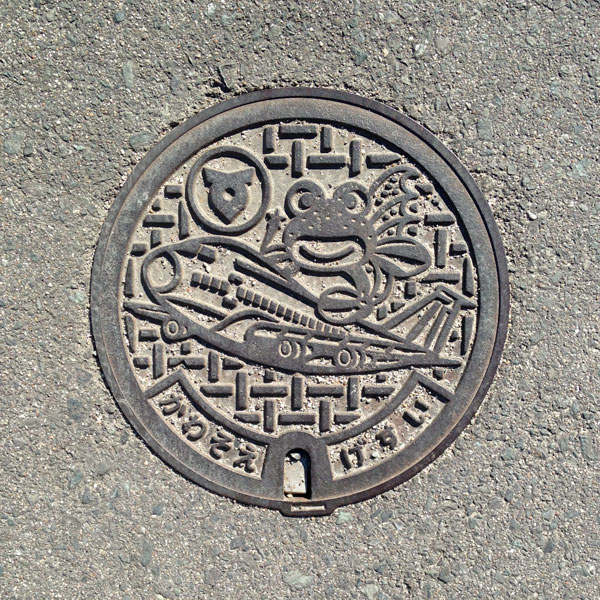
This is a small-sized version featuring a design of Gata-maru-kun riding an airplane.
Higashiyoka 東与賀町
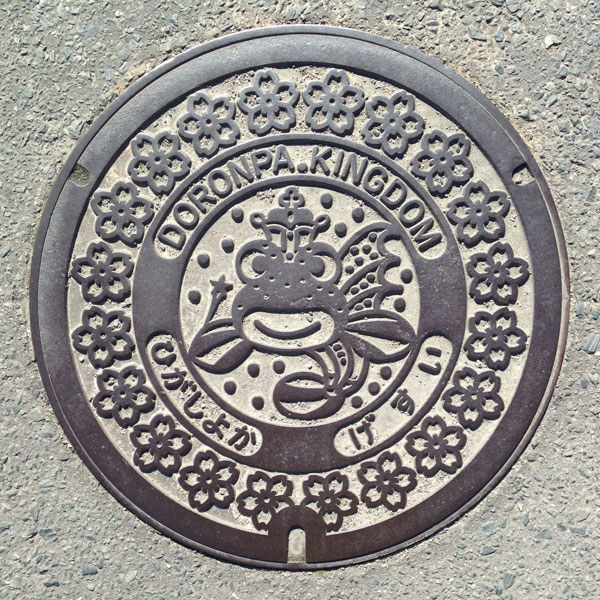
Gata-maru-kun and Sakura are depicted on it. The cover also bears the inscription "DORONPA.KINGDOM," indicating the "Doronpa Kingdom."
Kubota 久保田町
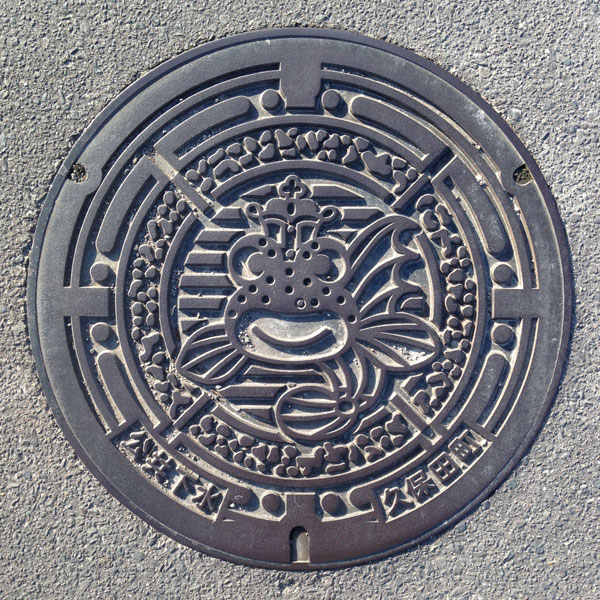
Gata-maru-kun is a mudskipper wearing a crown. He was apparently the king of the "Doronpa Kingdom"—a collection of tourist attractions spanning the four former towns of Saga District (Higashiyoka, Kawasoe, Kubota, and Morodomi).
Karatsu 唐津市
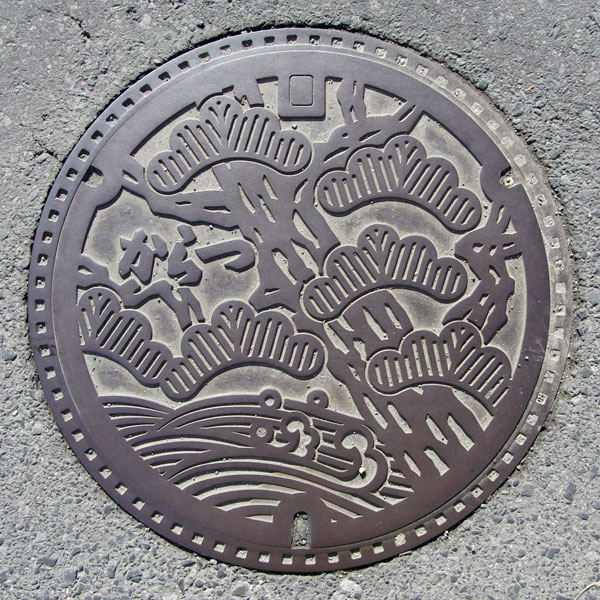
A cover depicting a Japanese Black Pine on the coast with waves. Karatsu is written in Hiragana on the left.
Hamatama 浜玉町
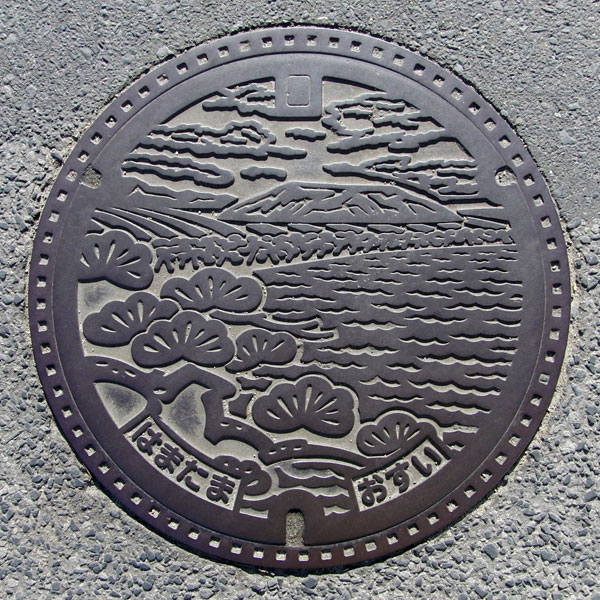
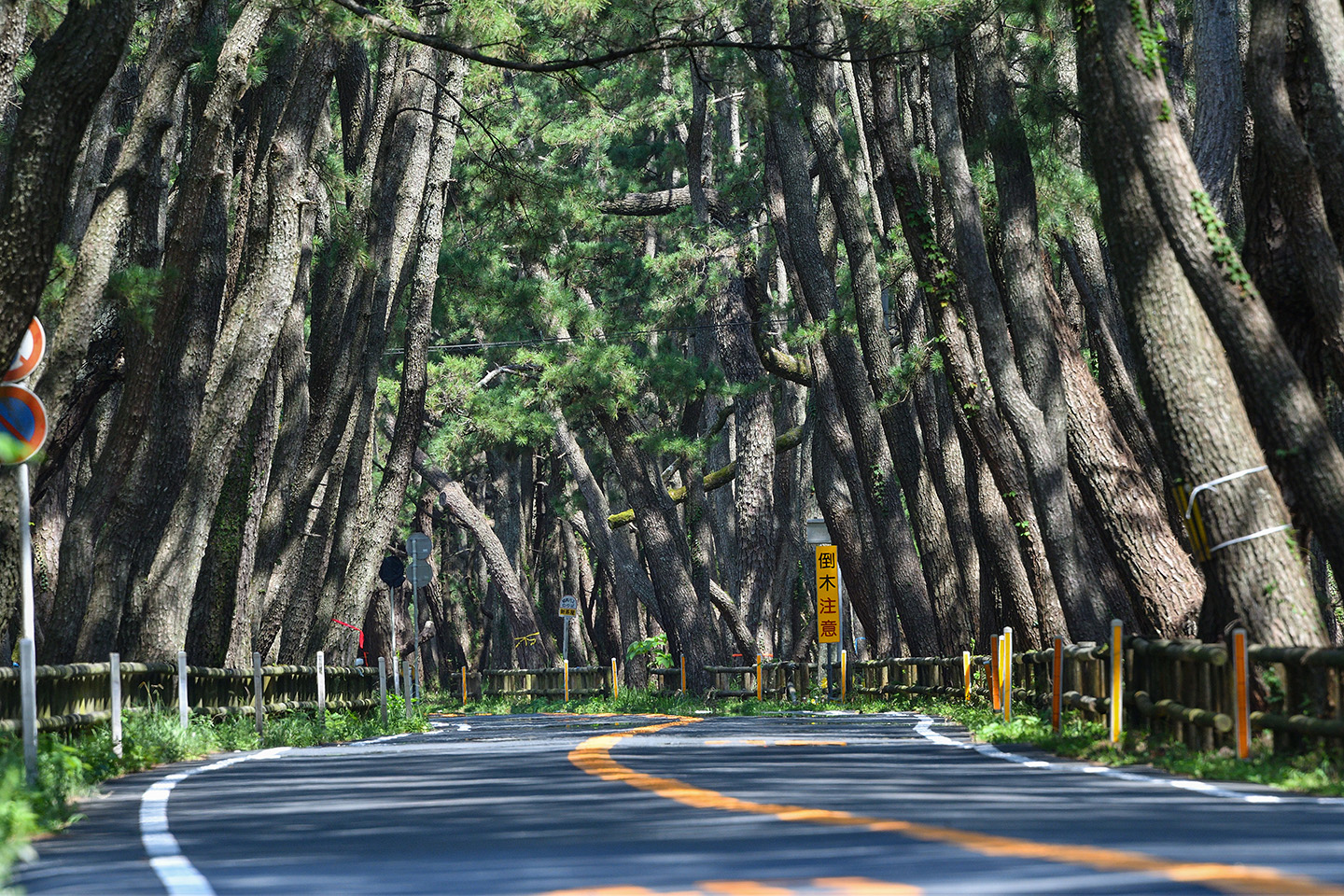
The design features "Niji no Matsubara" (Rainbow Pine Grove).
Chinzei 鎮西町
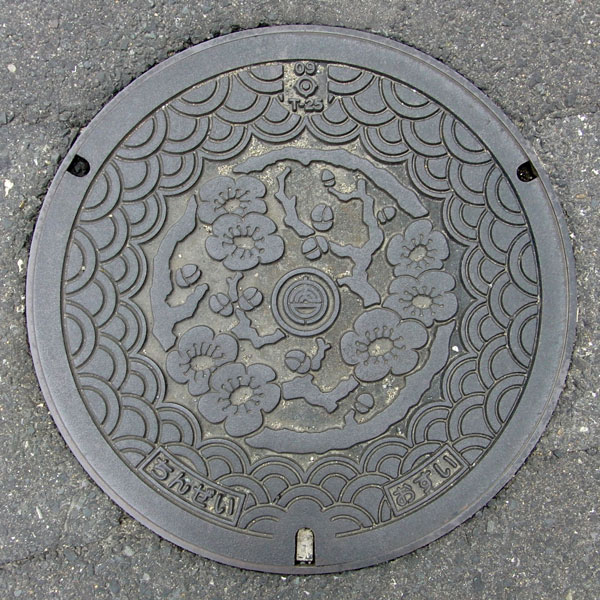
The design features the town flower, the plum blossom, surrounded by a *seigaiha* (stylized wave) pattern.
Yobuko 呼子町
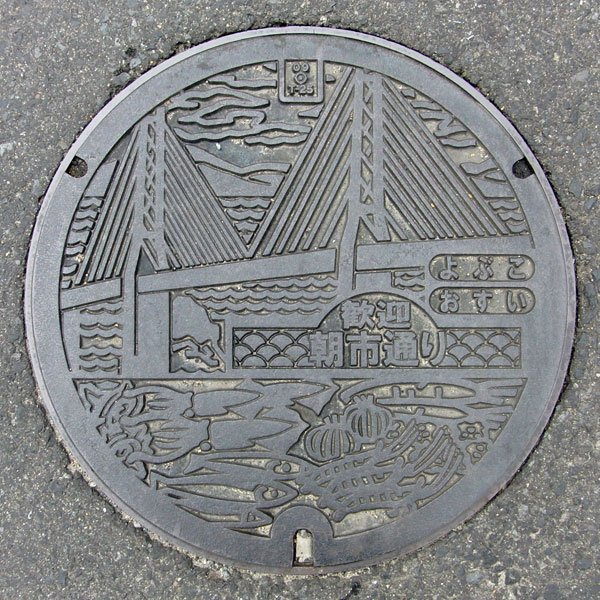
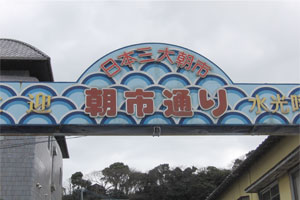
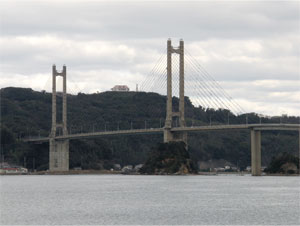
The design features the Yobuko Ohashi Bridge, the sign for Yobuko Morning Market Street, and various marine and agricultural products.
Kitahata 北波多村
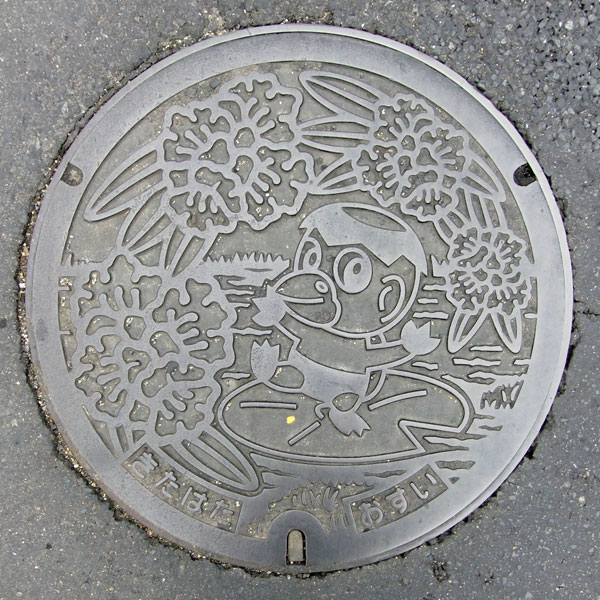
The design features the "Great Rhododendron of Shiki" and the "Kappa" (river spirit) associated with the legend of the Tokusue River.
Ouchi 相知町
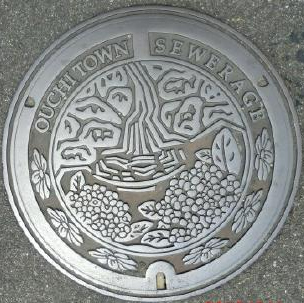
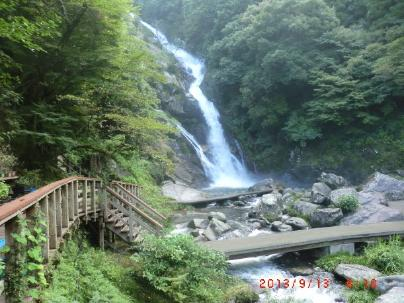
Mikairi Falls and the town’s official flower, the hydrangea. It is said that around 40,000 hydrangea plants—comprising 50 different varieties—are planted at the falls and along the stream below. The text "OUCHI TOWN SEWERAGE" is visible.
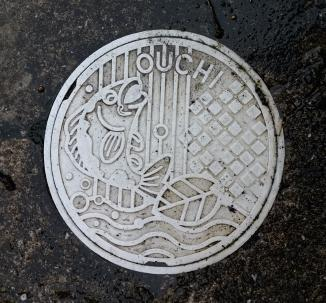
A small, white plastic cover featuring a design that includes Mikairi Falls, a carp, and hydrangeas (the town’s official flower), along with the word "OUCHI." It is said that many restaurants near Mikairi Falls serve carp dishes prepared using the area’s renowned spring water.
Imari 伊万里市
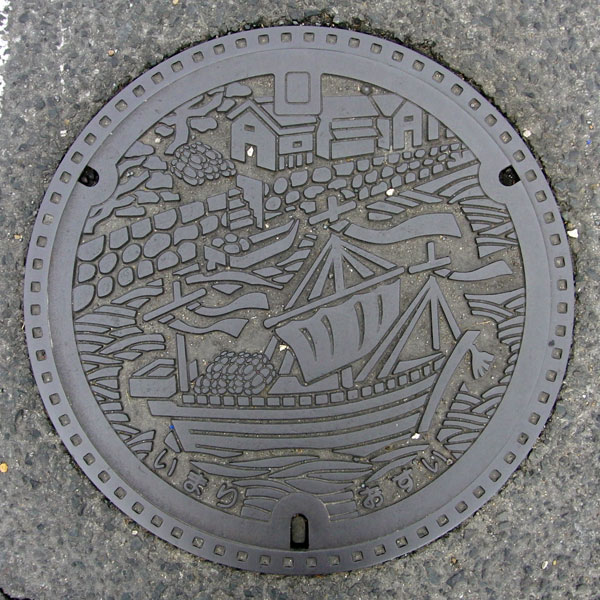
During the Edo period, this area flourished as a shipping port for ceramics—such as Arita ware and Imari ware—produced in the surrounding regions. This manhole cover depicts the scene of those goods being loaded for shipment.
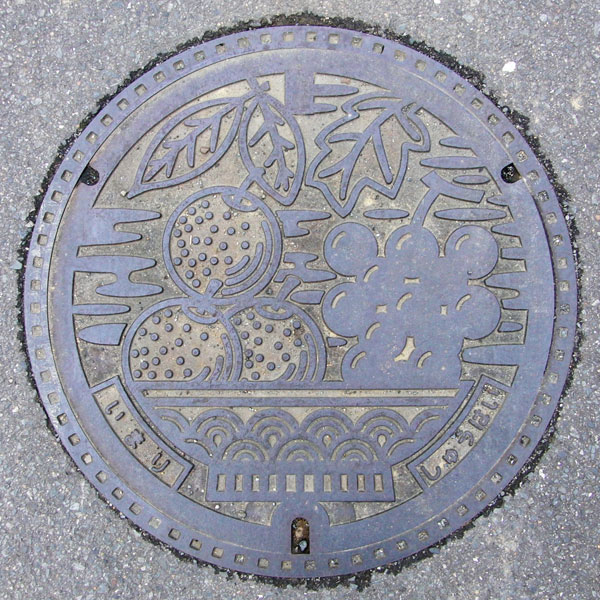
A manhole cover for the Minamihata district's sewage system. The porcelain dish holds pears and Kyoho grapes—specialties of the Minamihata area.
Kanzaki 神埼市
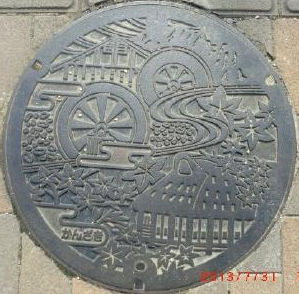
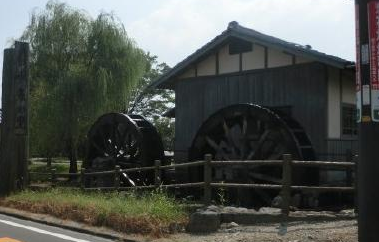
Features designs of Kunen-an and its maple trees, the Kanzaki waterwheel, the Jōbaru River, and Mount Sefuri. Kunen-an is a villa and garden renowned for its beautiful maple trees; it was built during the Meiji era by the Saga businessman Yataro Itami over a period of nine years. The maple tree is the designated tree of Kanzaki City.
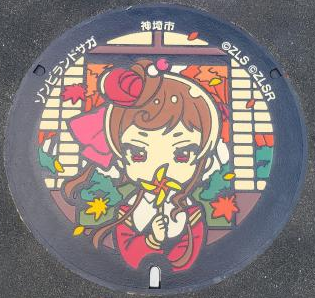
A manhole featuring Yugiri from Zombie Land Saga.
Tosu 鳥栖市
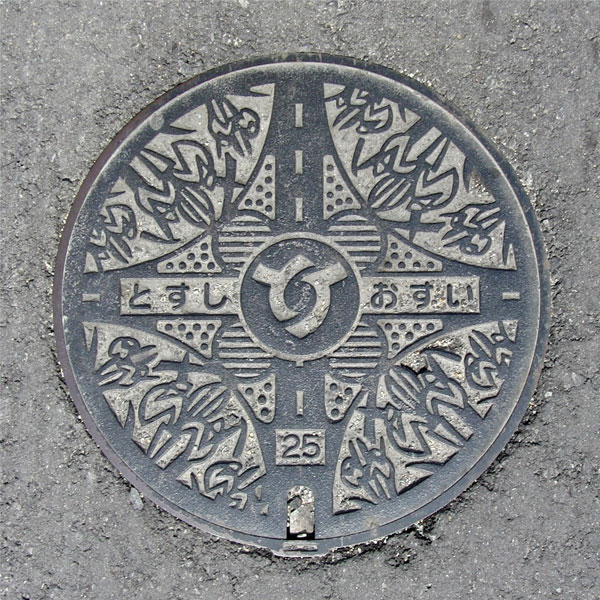
A sanitary sewer manhole cover featuring a design that incorporates the Tosu Junction and the city flower, the Japanese iris. The characters "Tosu-shi" (Tosu City) and "Osui" (Sanitary Sewer) appear on either side of the city emblem, while the characters at the bottom read "Kei" (Light).
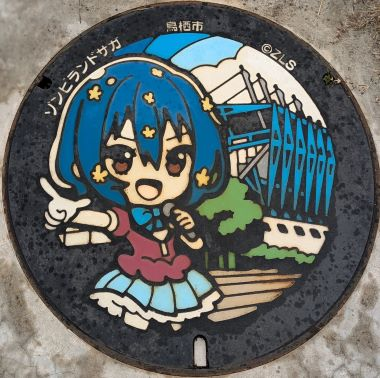
A manhole cover of Ai Mizuno from Zombie Land Saga which is set in Saga Prefecture.
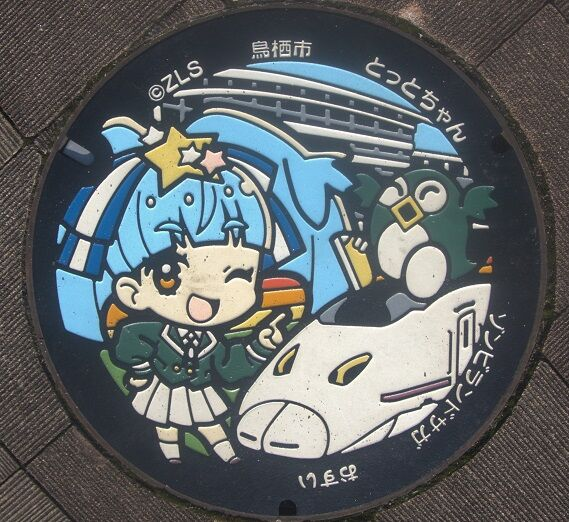
Lily Hoshikawa, the Nishi-Kyushu Shinkansen, Shin-Tosu Station, and the city's mascot character, "Totto-chan."
Ogi 小城市
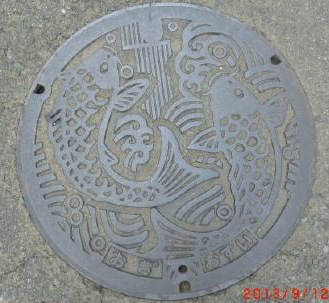
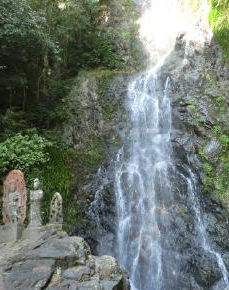
"In the Kiyomizu district of Ogi-machi, Ogi City, carp dishes—such as *koi no arai* (thinly sliced raw carp) and *koi-koku* (carp miso soup)—are famous local specialties. These dishes feature carp raised in the area's clear waters, which have been selected as one of Japan's '100 Remarkable Waters.'
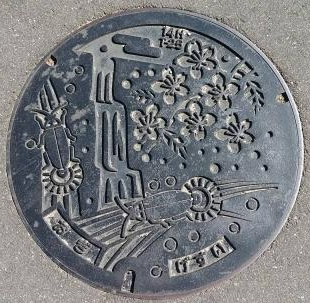
Features a design incorporating the Shimizu Waterfall, two fireflies, and cherry blossoms (the city's tree and flower). "Ogi" and "Gesui" (sewerage) are written at the bottom.
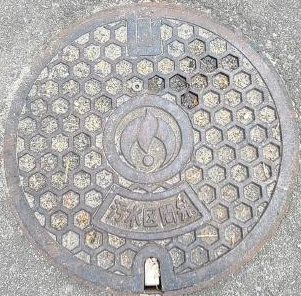
City emblem in the center.
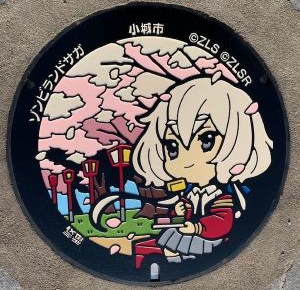
Junko Konno from Zombie Land Saga gazing at cherry blossoms in Ogi Park while eating Ogi-yokan.
Ashikari 芦刈町
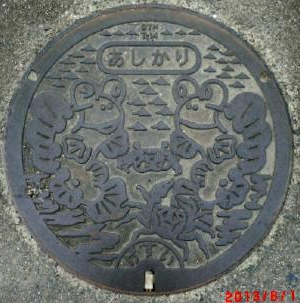
The design features two mudskippers frolicking with a fiddler crab. A 4.1 km stretch of the Ashikari coast is designated as a protected area where the catching of mudskippers and fiddler crabs is prohibited; during the mudskippers' courtship season (June through August), they can reportedly be seen hopping about. The mudskipper on the cover is even winking.
Ushizu 牛津町
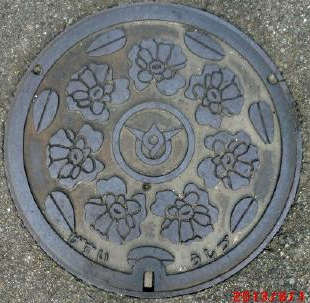
A manhole cover from the Ogi City Ushizu Wastewater Treatment Center. It features the town flower, the *Sansaqua* (camellia), depicted around the town emblem, along with the characters for "gesui" (sewage) and "Ushizu."
Mikazuki 三日月町
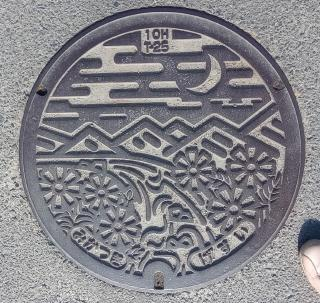
A manhole cover from the Ogi City Mikazuki Wastewater Treatment Center. It features the town flower (cosmos) and a crescent moon in the sky, along with depictions of mountains and rivers. The characters "Mikazuki" and "Shuhai" (referring to the rural community drainage system) appear at the bottom.
Taku 多久市
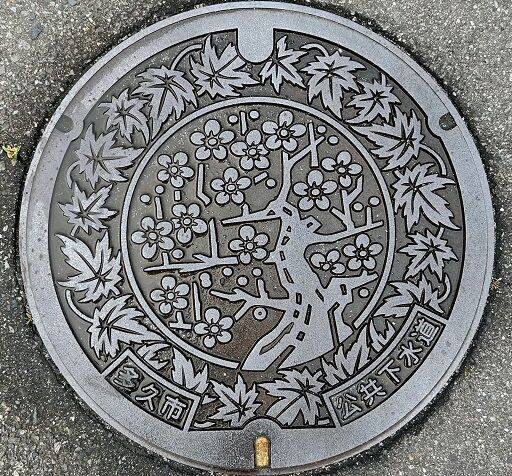
The design features the city's flower (the plum blossom) and the leaves of the city's tree (the maple).
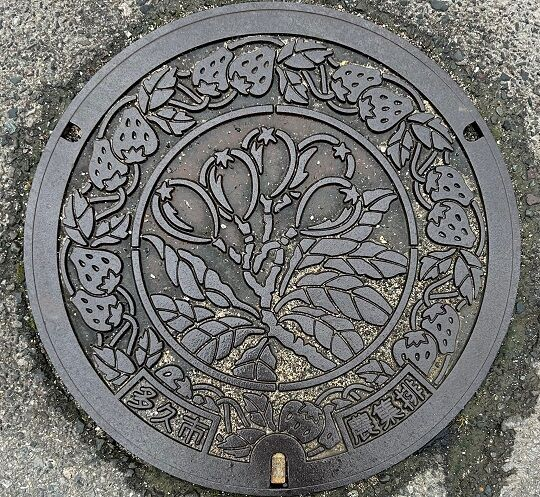
It features a design incorporating local specialties: loquats and strawberries.
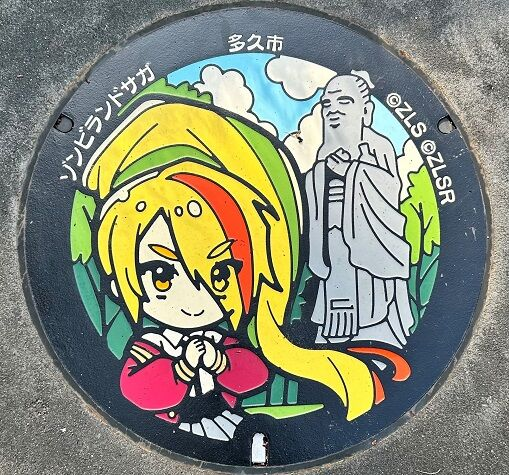
"Statue of Confucius at Taku Confucius Temple" and Saki Nikaido from Zombie Land Saga. It was located on the street near the "Statue of Confucius."
Takeo 武雄市
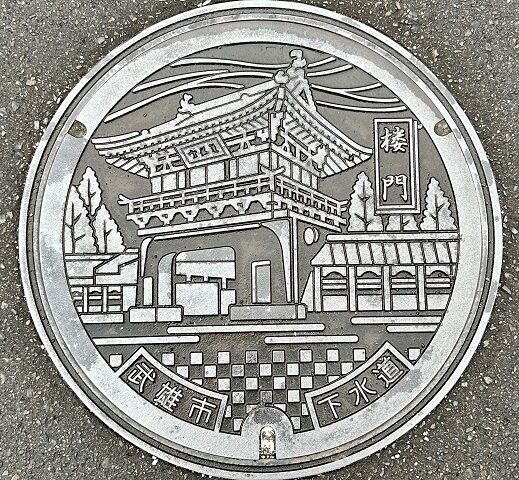
It features a design of the "Takeo Onsen Romon" (Tower Gate).
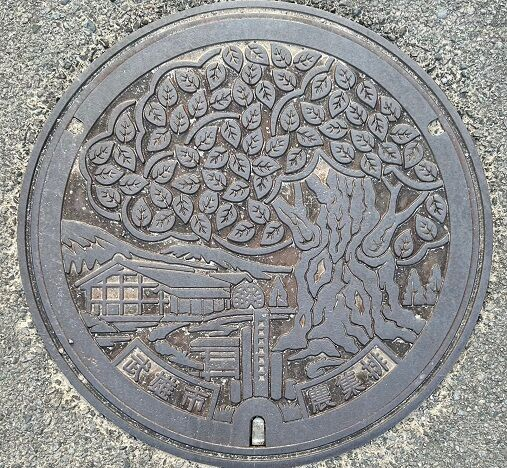
The design features the "Kawago Giant Camphor Tree" (a National Natural Monument), "Tametomo-kan," and a watermill.
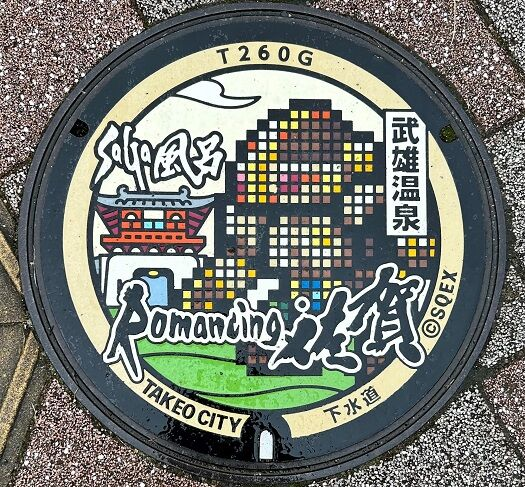
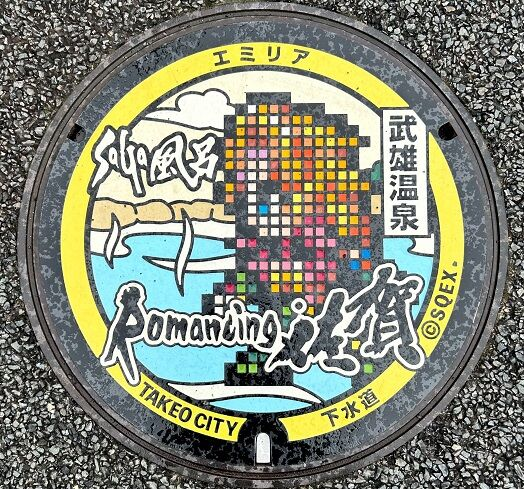
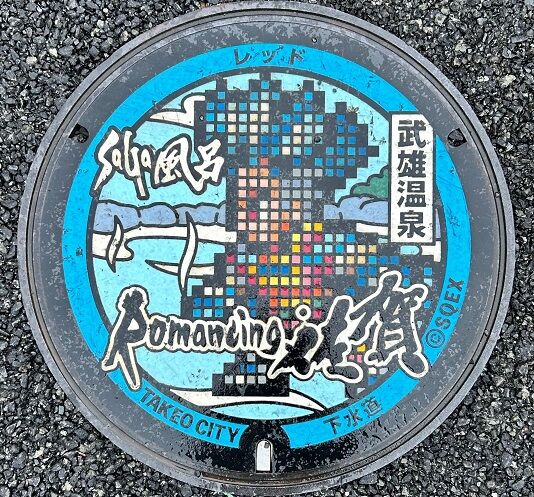
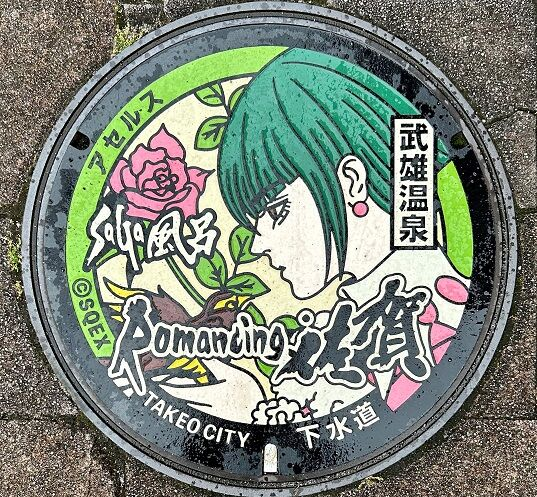
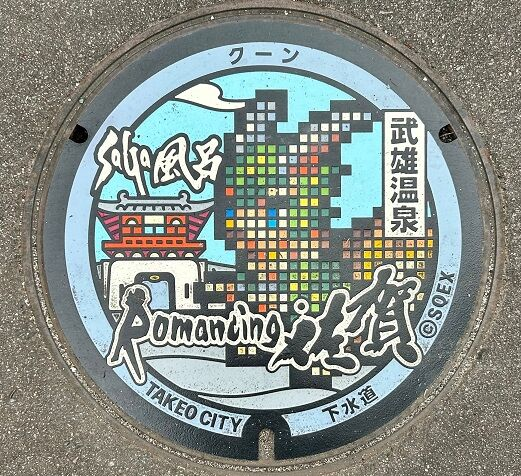
Romancing SaGa manhole series depicting Takeo Onsen. Romancing SaGa is a 1992 RPG video game.
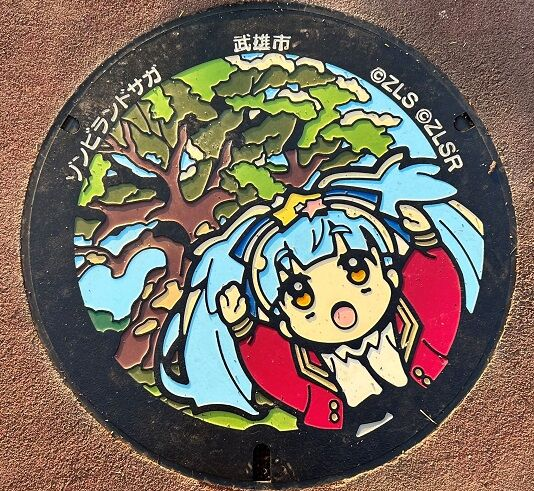
Lily Hoshikawa and the "Kawago no Okusu" (Great Camphor Tree of Kawago).
Nishikawanobori 西川澄町
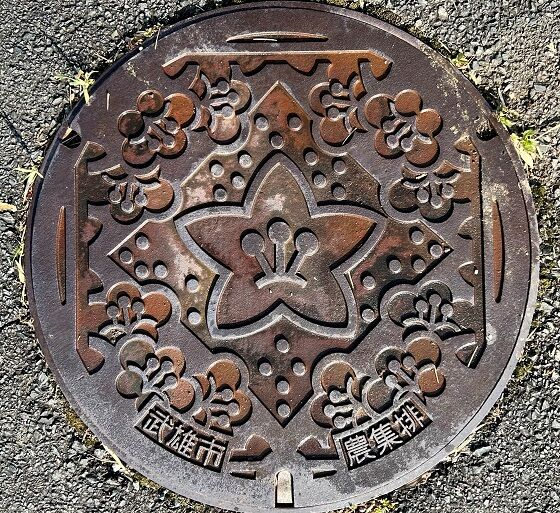
This is a manhole cover from the former city, featuring a design of the city flower, the cherry blossom.
Kitagata 北方町
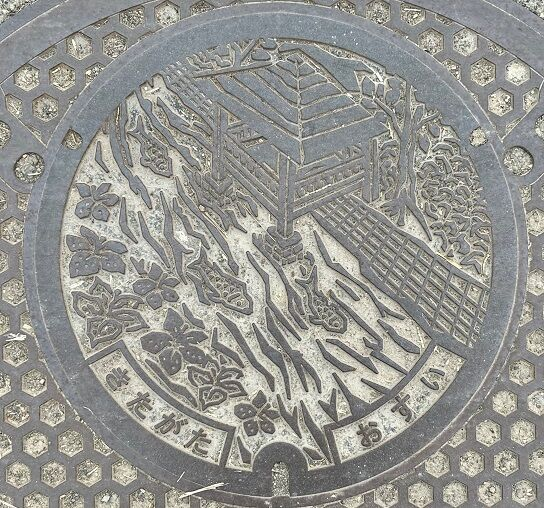
This manhole cover from the former town of Kitagata features a design incorporating the town flower—the azalea—and Owatari Rural Park.
Yamauchi 山内町
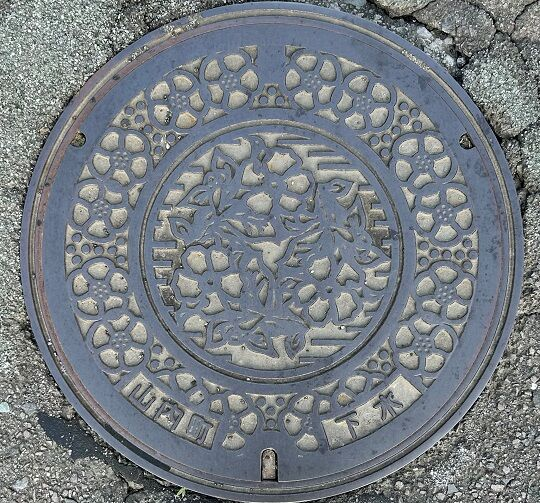
This is a manhole cover from the former town of Yamauchi, featuring a design of the town flower, the *Sasanqua* (camellia).
Ureshino 嬉野市
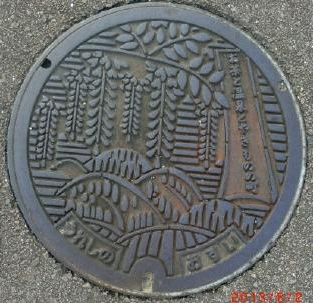
Features a design incorporating the city flower (wisteria) and a local specialty (Ureshino tea plantations), along with the text "A Town of Tea, Hot Springs, and Ceramics." Note that Ureshino City designates both the cherry blossom and wisteria as city flowers, while the tea plant is the city tree.
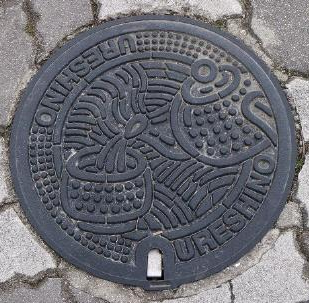
A manhole cover featuring a design of tea being poured from a teapot, with the Ureshino tea plantations in the background.
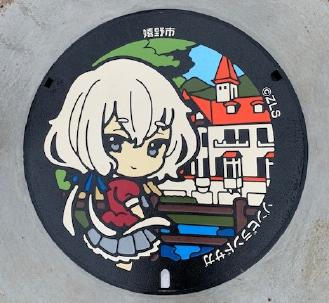
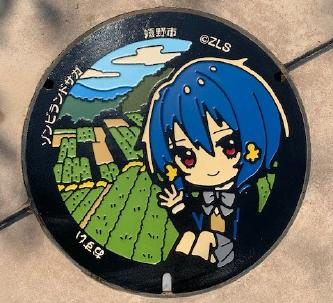
Zombie Land Saga manhole covers featuring Junko Konno and Ai Mizuno with the Siebold no Yu building and Ureshino Tea Plantations.
Shiota 塩田町
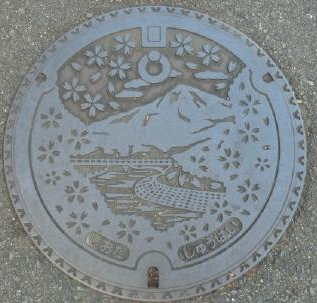
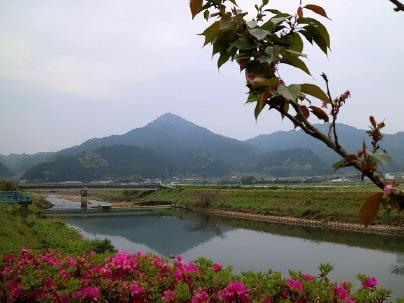
Features the town flower (cherry blossom), Mt. Tosen, and the Shiota River, with the town emblem at the top.
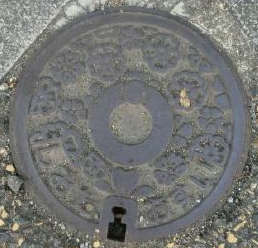
A manhole cover featuring the town emblem in the center, surrounded by the town flower, the cherry blossom.
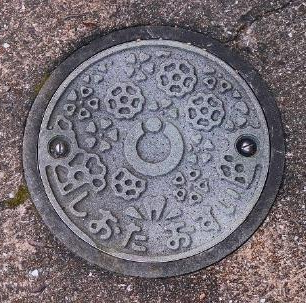
Same motif as above but the proportions are a little different.
Kashima 鹿島市
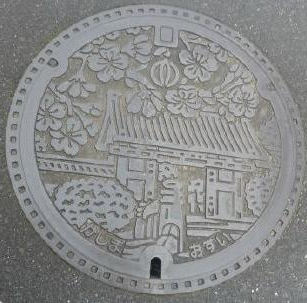
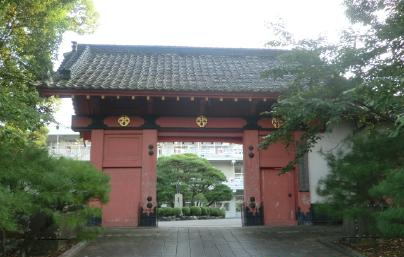
Features the Red Gate of the Kashima Castle ruins, the city's flower (cherry blossoms), and the city emblem; the frame bears a square pattern. Inscribed with the characters for "Kashima" and "Sewage" (osui).
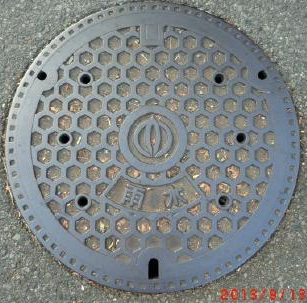
City emblem in the center.
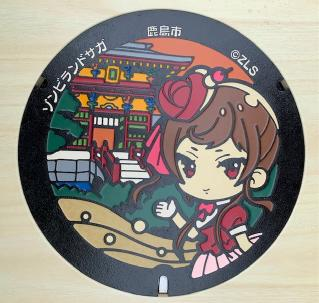
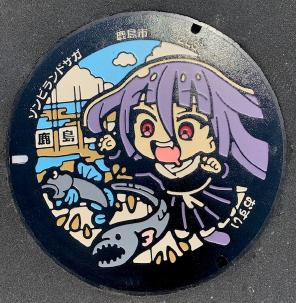
Zombie Land Saga collaboration manhole covers featuring Yugiri at Yutoku Inari Shrine and Tae Yamada at Kashima Gatalympic.
Genkai 玄海町
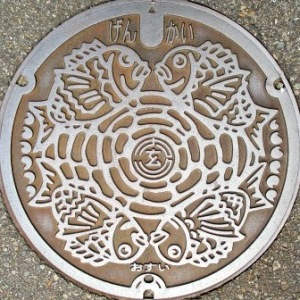
It features a design incorporating the town emblem and the sea bream, a local specialty.
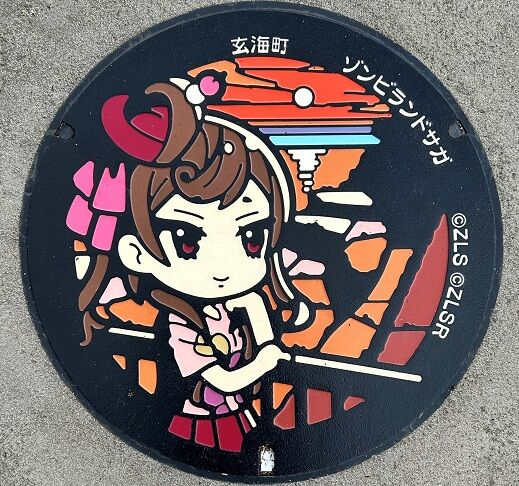
The sunset over the Yūgiri and Hamanoura rice terraces. I found this view from the seaside walkway next to the parking lot of "Genkai Kaijo Onsen Parea."
Kiyama 基山町
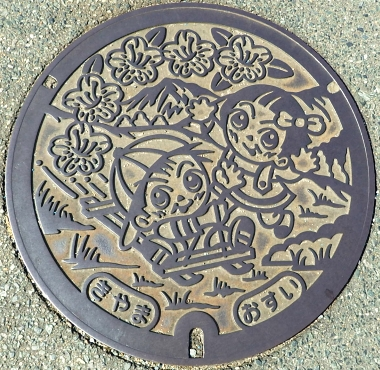
This is a designed manhole cover for the sanitary sewer system.
It bears the inscriptions "Kiyama" and "Osui" (sanitary sewage).
It depicts a boy and a girl playing on what looks like grass sleds; the surrounding flowers appear to be azaleas, which are the designated town flower and tree of Kiyama Town.
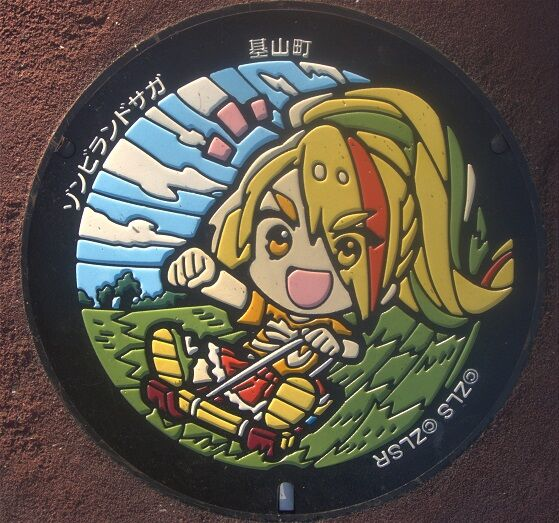
Saki Nikaido and Kiyama grass skiing.
Yoshinogari 吉野ヶ里町
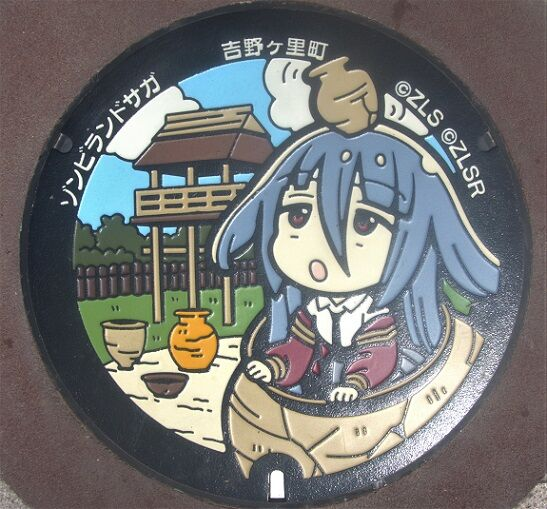
A cover featuring Tae Yamada from the anime, Zombie Land Saga which is set in Saga Prefecture.
Mitagawa 三田川町
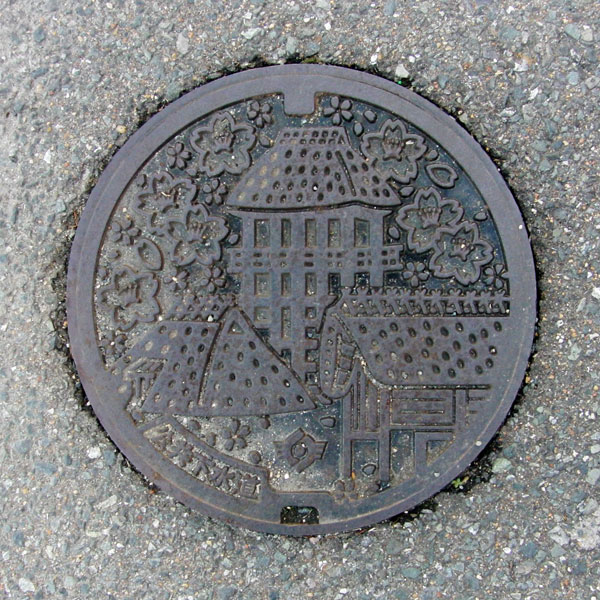
The Yoshinogari Site is famous for being the largest moated settlement from the Yayoi period. This color manhole cover depicts reconstructed watchtowers, raised-floor storehouses, and dwellings, alongside the town's flower, the cherry blossom.
Higashisefuri 東脊振村
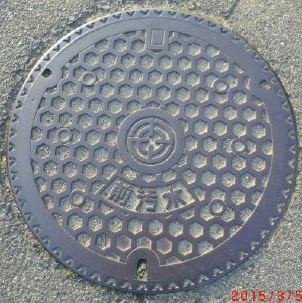
Former village emblem in the center.
Miyaki みやき町
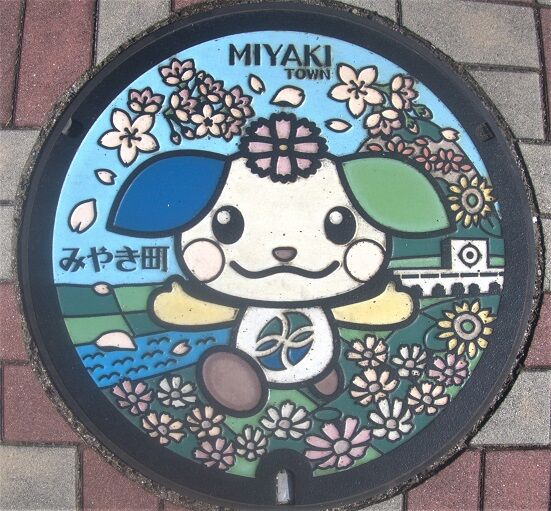
The design features the town's flower (cosmos) and tree (cherry blossom), the town's mascot character "Miyakky," Mt. Takatori and its wax tree foliage, sunflowers, and the factory of Hinode Waterworks Equipment Co., Ltd., a manufacturer of manhole covers.
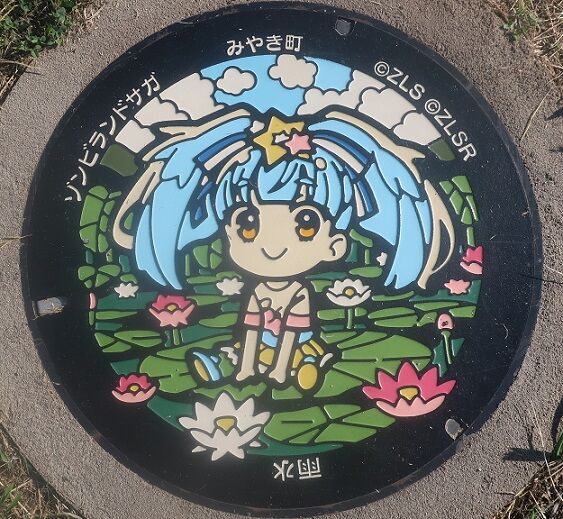
Lily Hoshikawa of Zombie Land Saga and the lotus pond in Chiri-doi Park.
Nakaharu 中原町
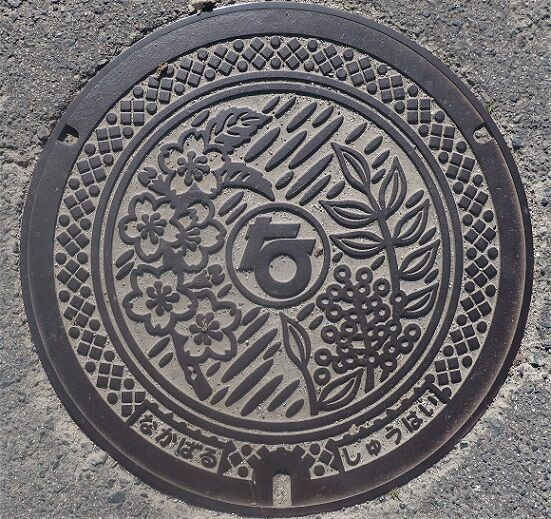
The following manhole cover is from the former town of Nakaharu; it features a design incorporating the town emblem, the town flower (cherry blossom), and the town tree (wax tree).
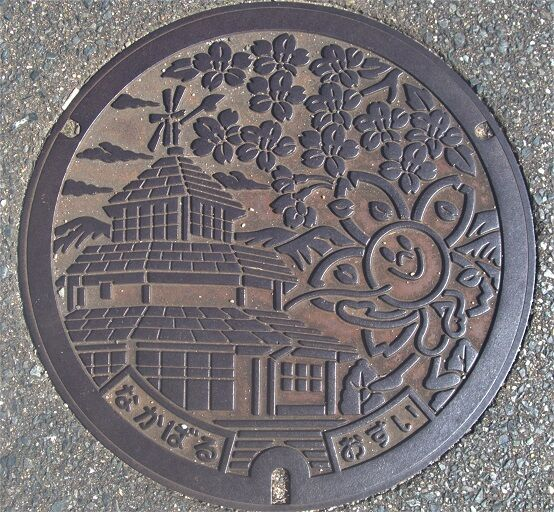
The design features cherry blossoms, the "Kaze no Yakata" (House of the Wind), and the town's mascot character, "Nami-chan."
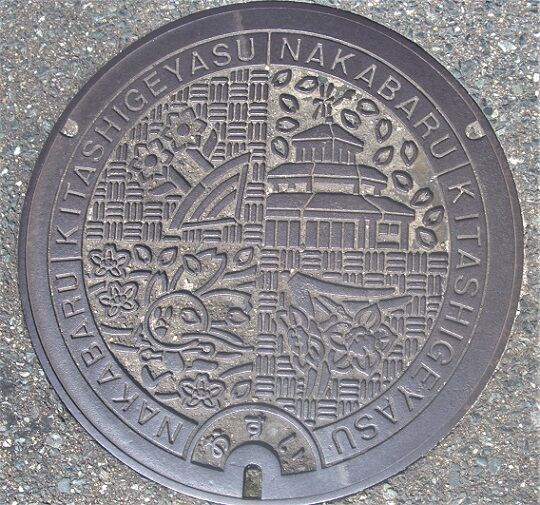
This is a shared manhole cover for the former towns of Nakahara and Kitashigeyasu, featuring designs of cherry blossoms, daffodils, the "Kaze no Yakata" (House of Wind), and the character "Mina-chan."
Kitashigeyasu 北茂安町
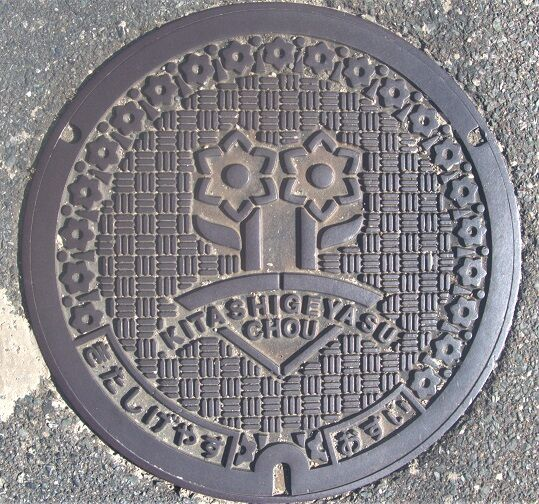
This is a manhole cover from the former town of Kitashigeyasu, featuring a design of the town flower, the narcissus.
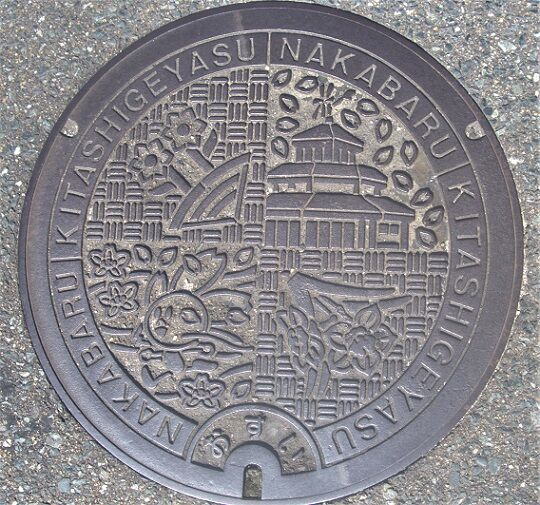
This is a shared manhole cover for the former towns of Nakahara and Kitashigeyasu, featuring designs of cherry blossoms, daffodils, the "Kaze no Yakata" (House of Wind), and the character "Mina-chan."
Kamimine 上峰町
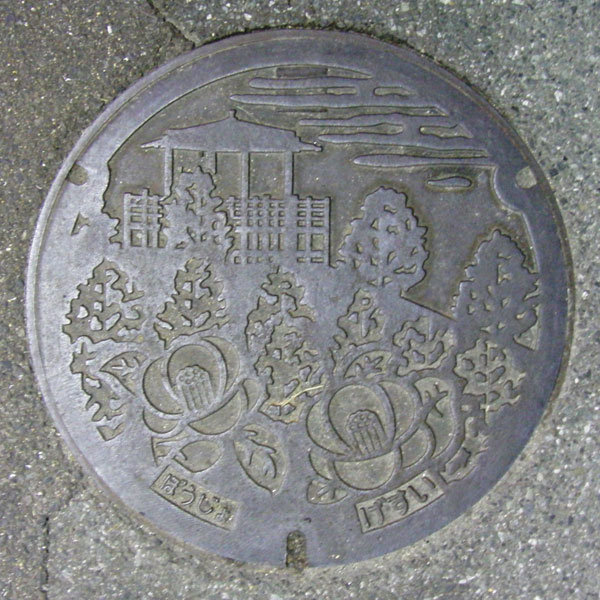
The cover features the town's tree, the *Yabutsubaki* (Japanese camellia), and its flower, the salvia. The background depicts a gazebo on Mt. Chinzei, located in the northernmost part of the town. Legend has it that the mountain was named "Chinzei-yama" because Minamoto no Tametomo (also known as Chinzei Hachiro) built a castle at its summit while pacifying Kyushu.
Kohoku 江北町
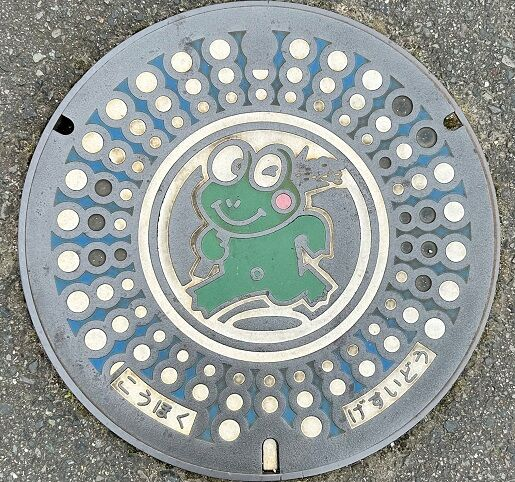
It features a design of "Vicky," the town's frog mascot. Apparently, "bikki" is the word for frog in the Saga dialect. Surprisingly, this frog has a navel, which is said to represent the town's location near the center of the prefecture.
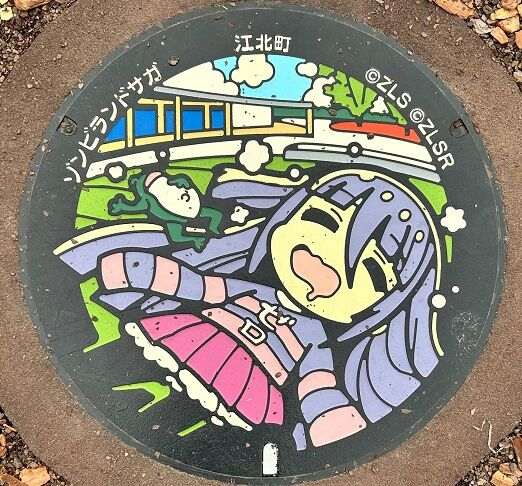
Tae Yamada and "Vicky"—at the community park.
Omachi 大町町
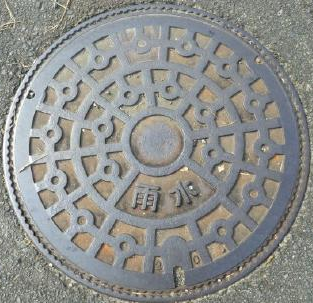
Although the town lacks a developed sewer system, this is a standard-pattern stormwater manhole cover—lacking the town emblem.
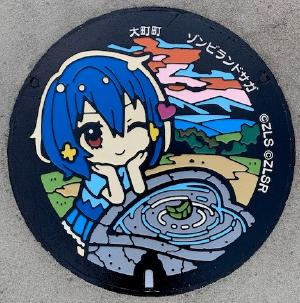
A Zombie Land Saga collaboration manhole featuring Ai Mizuno and the heart-shaped *chozu-bachi* (ritual water basin) at the Hijiri-dake Observation Point.
Shiroishi 白石町
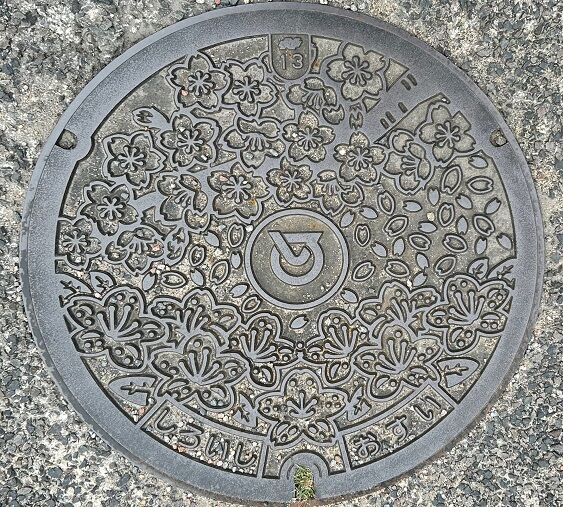
The design incorporates the town emblem, the town flower (azalea), and the town tree (cherry blossom).
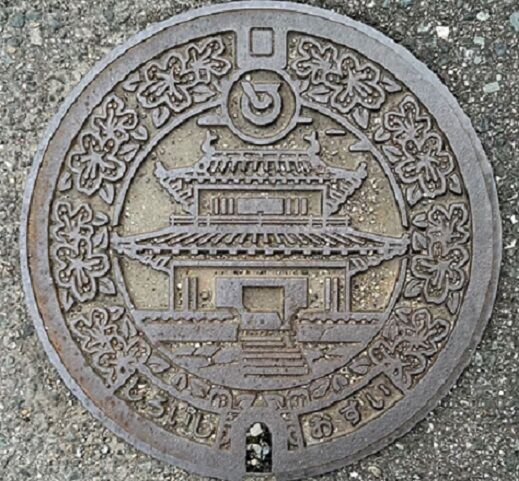
The design features the town emblem, azaleas, and the "Hizen Inuyama Castle Gate."
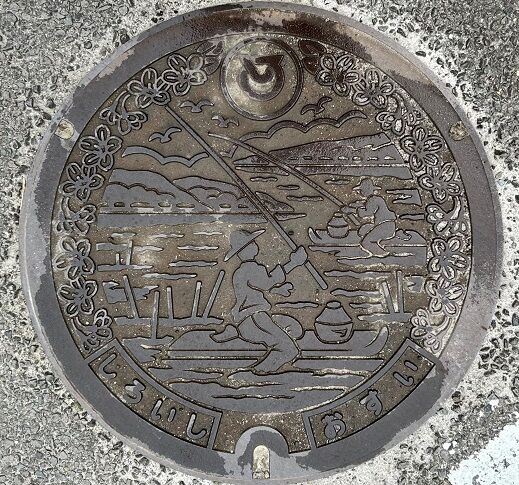
The design features the town emblem and a scene of mudskipper fishing on the Ariake tidal flats.
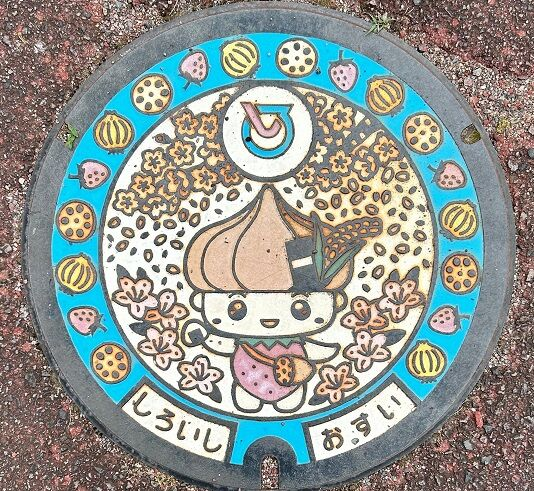
The design features the town emblem, azaleas, cherry blossoms, the local specialty mascot "Shiroishi Minori-chan," and the town's specialty products: lotus root, strawberries, and onions. It was located on the sidewalk along the road on the north side of the town hall.
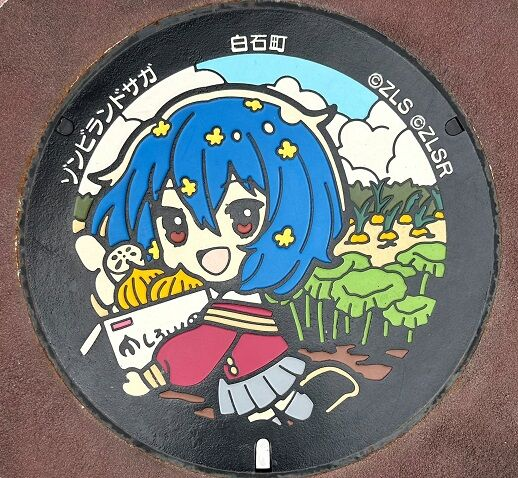
Ai Mizuno, holding local specialties. She was standing in front of the "Michi-no-Eki Shiroishi" building.
Ariake 有明町
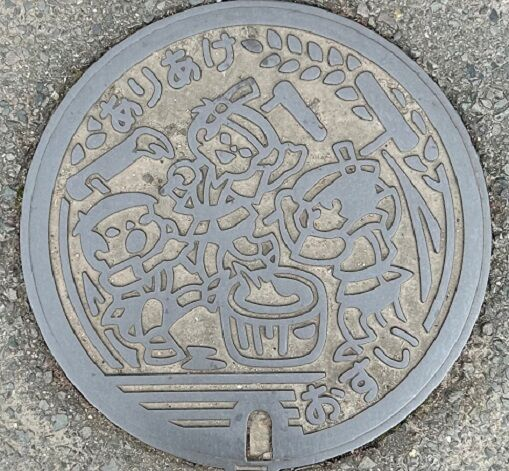
This manhole cover from the former Ariake Town features a design depicting rice ears and a scene of rice cake pounding.
Fukutomi 福富町
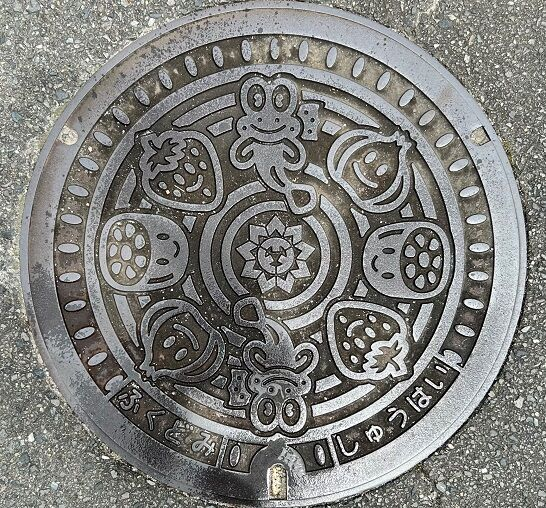
This is a manhole cover from the former town of Fukutomi; its design features the town emblem, a mudskipper, and local specialties—lotus root, strawberries, and onions.
Arita 有田町
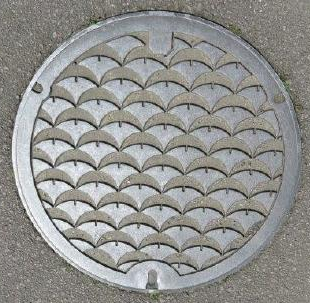
A design featuring the leaves of the town tree—the ginkgo—arranged in an orderly pattern across the entire surface of the cover.
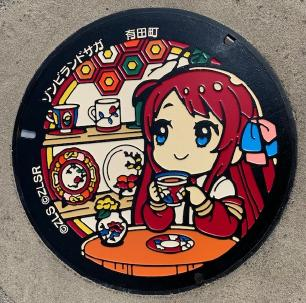
A collaboration manhole with Zombie Land Saga. It features Sakura Minamoto enjoying tea from a lovely vessel, surrounded by Arita ware.
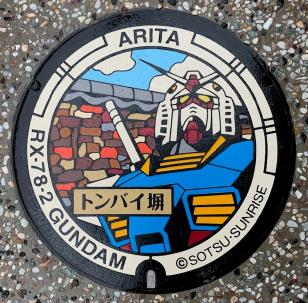
This is the first "Gundam manhole" to appear in Kyushu. It is located in the town of Arita, right in front of a *tonbai* wall. A *tonbai* wall is a type of wall constructed by binding together—using red clay—discarded firebricks (*tonbai*) and spent kiln tools that were originally used to build climbing kilns.
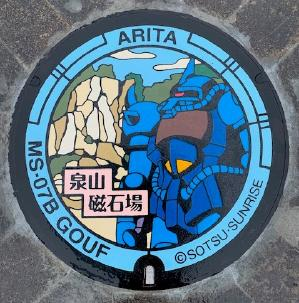
This is the second of the two units installed. It features a design incorporating the Gouf and the Izumiyama Magnetite Mine.
Nishiarita 西有田町
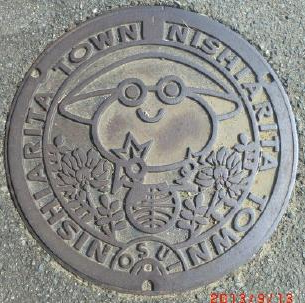
The former Nishi-Arita Town is said to be the birthplace of the "Saga Rice-Planting Song." The design features "Vicky the Frog"—the mascot of the "Rice-Planting Song Asia Festival"—wearing a traditional *karakasa* (oil-paper umbrella) and planting rice while standing atop the globe. Several design options deemed suitable for Nishi-Arita Town were proposed by the manufacturer, and the design shown here was selected after the mayor at the time took a strong liking to it. Additionally, the flowers depicted at the frog's feet are *renge* (Chinese milk vetch), which was the town's official flower.
Tara 太良町
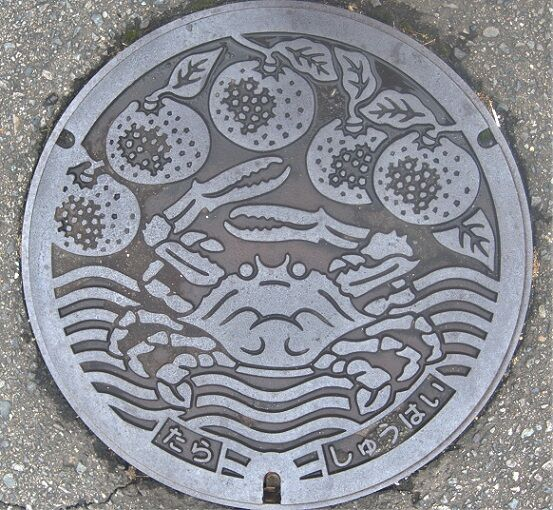
It features a design incorporating local specialties: "Takezaki crab" and "Tara mandarin oranges."
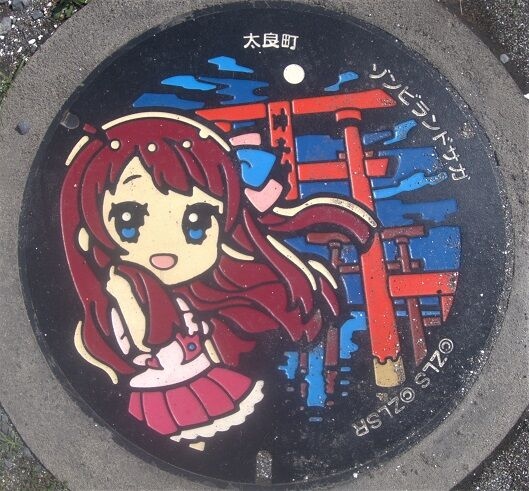
Sakura Minamoto from Zombie Land Saga and the "Ouo Shrine's Torii Gate in the Sea."
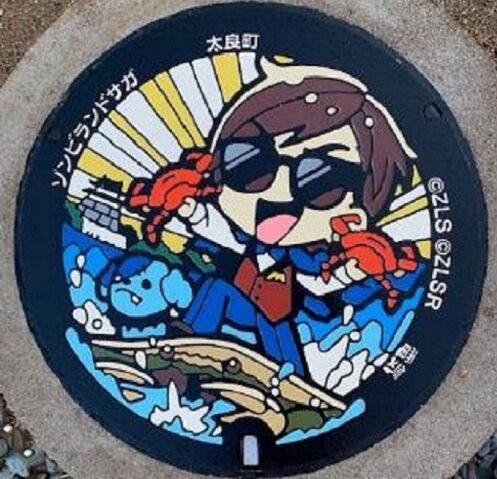
Kotaro Tatsumi from Zombie Land Saga, along with "Takezaki Castle," "Takezaki Crab," and "Romero."