Saitama 埼玉県
Saitama 埼玉県
Saitama さいたま市
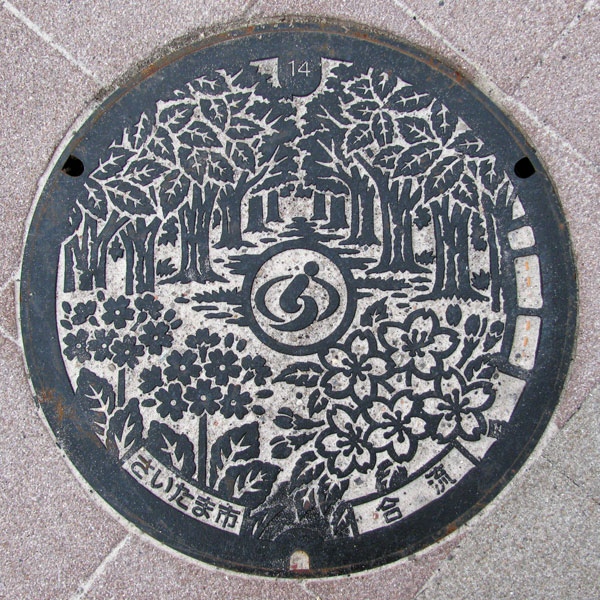
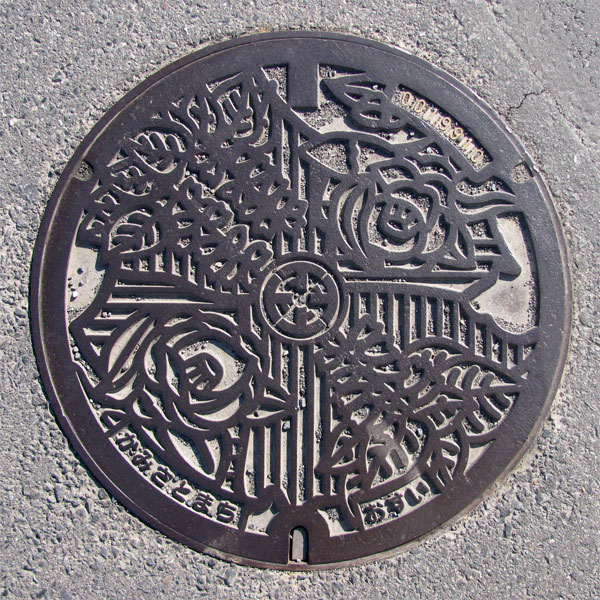
This manhole cover is for merging lanes and features a ceramic sand coating. The Saitama City emblem is in the center. The upper half depicts the city tree, the zelkova; the lower right shows the city flower, the cherry blossom; and the lower left shows the city flower, the primrose.
The struggles of the merger are reflected in the city's symbols: the zelkova was the former Omiya city tree, the primrose was the former Urawa city flower, and the cherry blossom was the former Yono (and former Omiya) city flower.
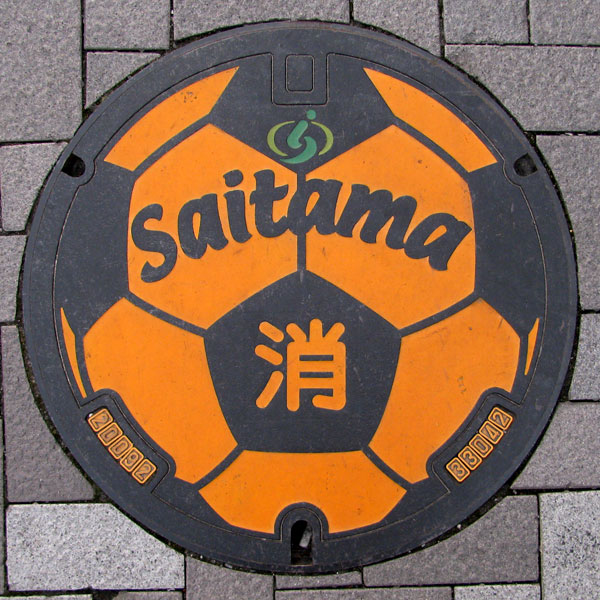
A fire hydrant was located on the sidewalk. Given that Saitama City is home to two J.League teams, Urawa Reds and Omiya Ardija, it features a unique soccer ball design. The curved lines that make the ball appear three-dimensional are a clever touch. However, it doesn't seem to offer much in the way of anti-slip properties.
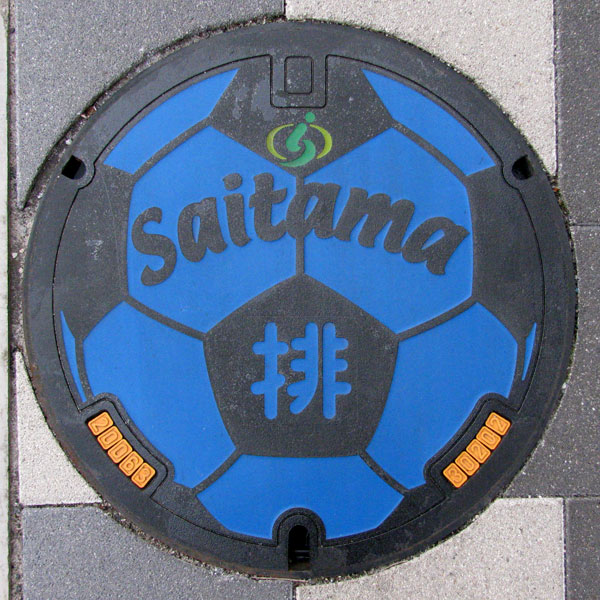
A drain valve cover designed like a soccer ball.
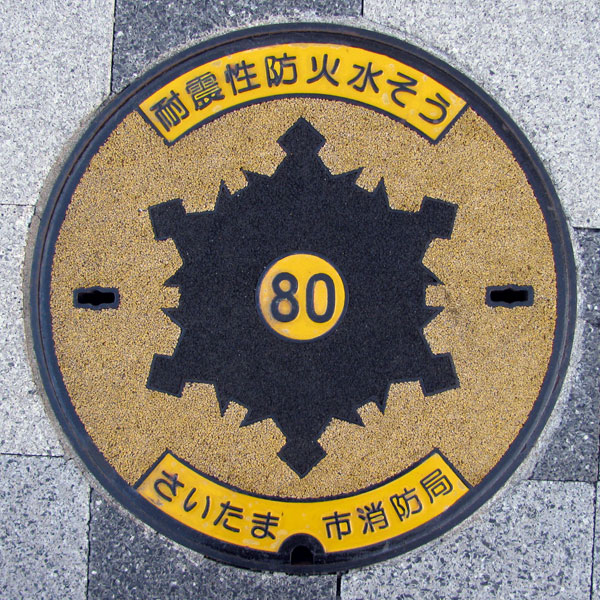
A simple yet striking fire-fighting water tank.
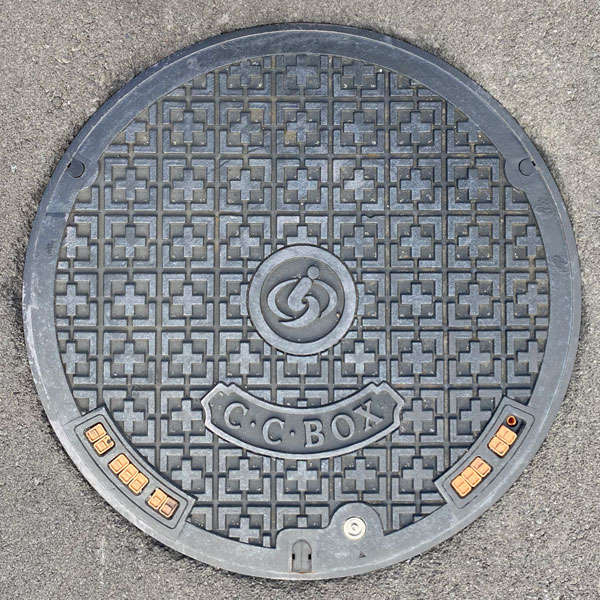
A cover for a C.C.BOX (combined utility conduit) with a pattern combining brackets and a cross.
See Arakawa Left Bank Southern Basin Sewerage System
See Nakagawa Basin Sewerage System
Urawa 浦和市
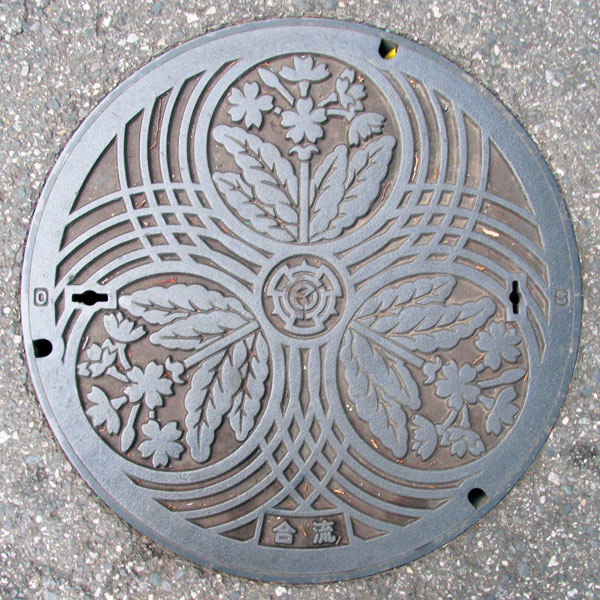
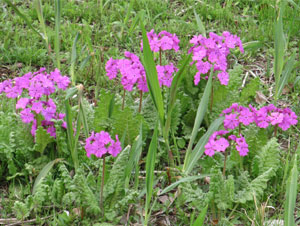
The flower is the primrose, the former city flower of Urawa. In the center is the former city emblem of Urawa, designed with the katakana characters for "Urawa". The text part says "merging".
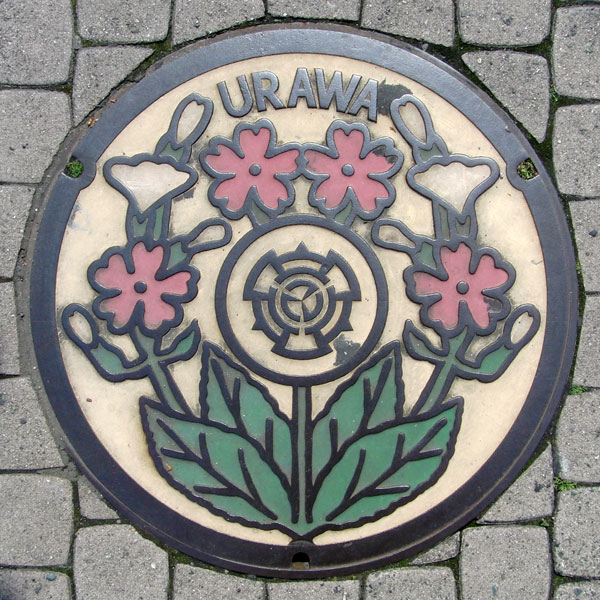
A manhole cover featuring a large primrose design. The word "URAWA" is at the top, and the former Urawa City emblem is in the center.
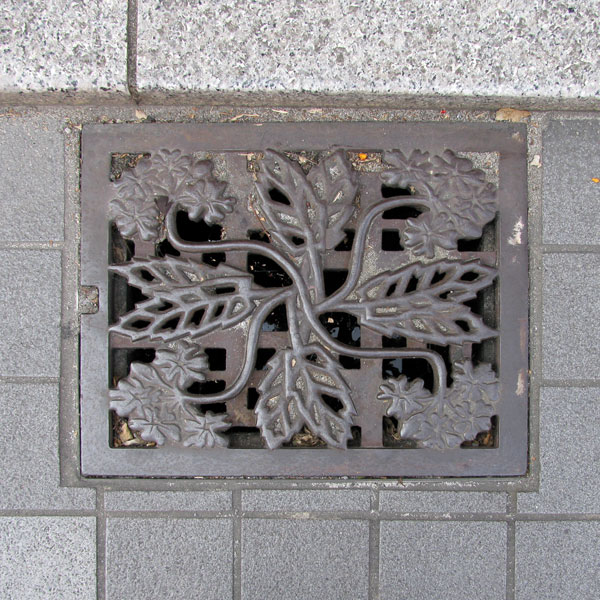
It's not a manhole cover, but a drain cover. The design is also of primroses.
Yono 与野市
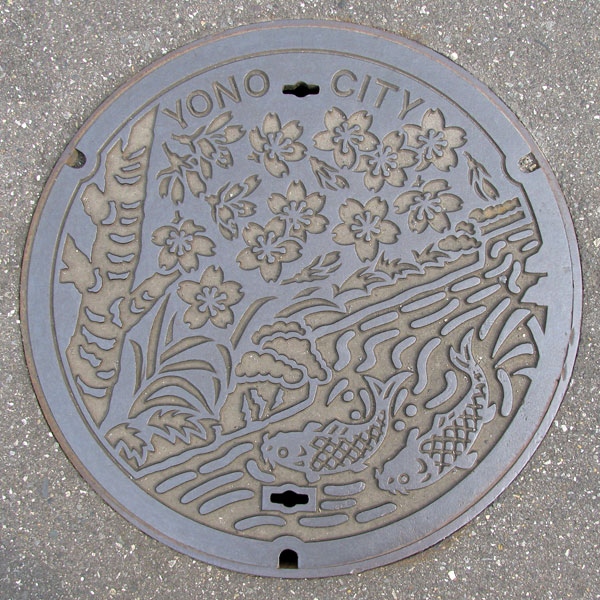
This manhole features the cherry blossom, the official flower of the former Yono City, and carp swimming in the Kounuma River that flows through the city.
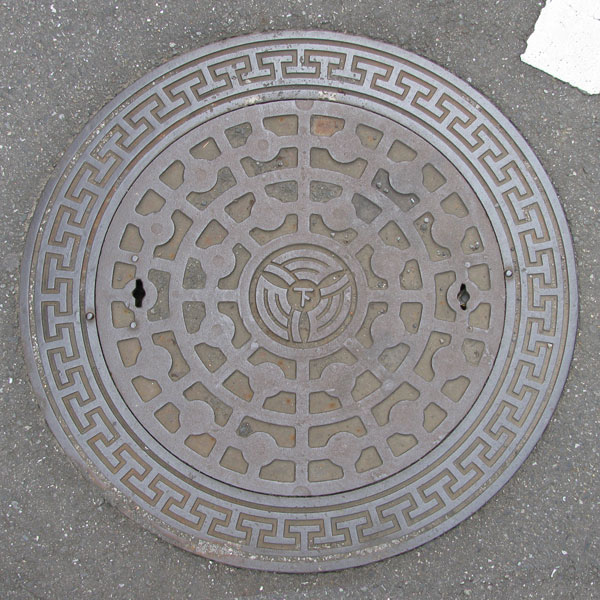
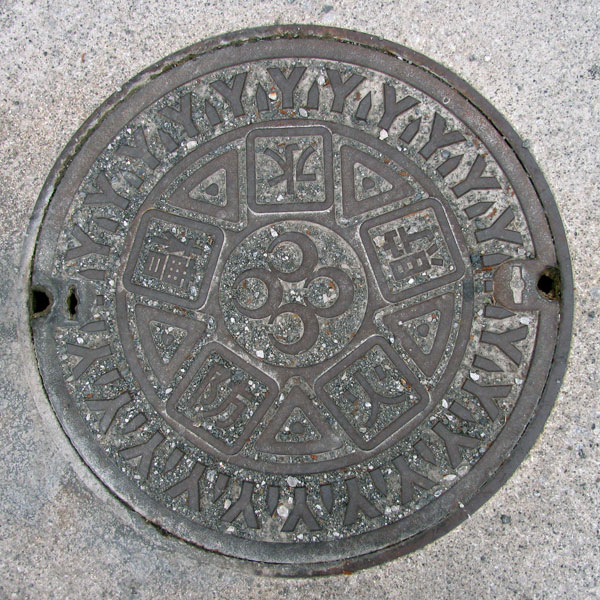
The former city emblem of Yono City features three sets of the katakana characters "Yono" arranged in a circle in the center.
Omiya 大宮市
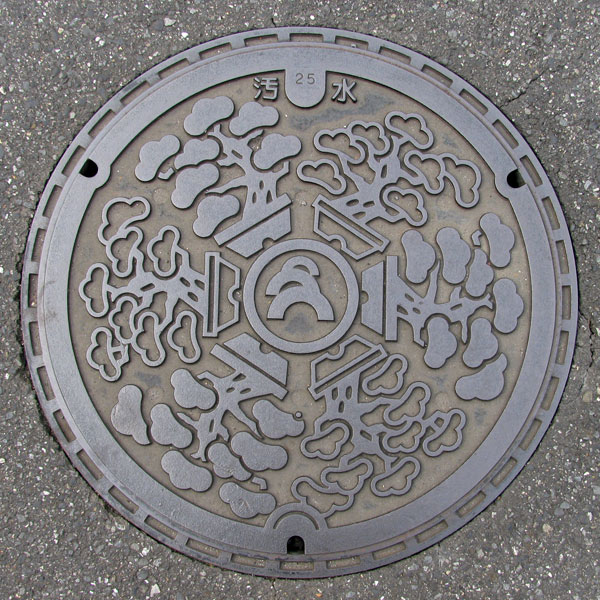
A bonsai tree is depicted on the sign indicating a merge point. A symbol mark is in the center.
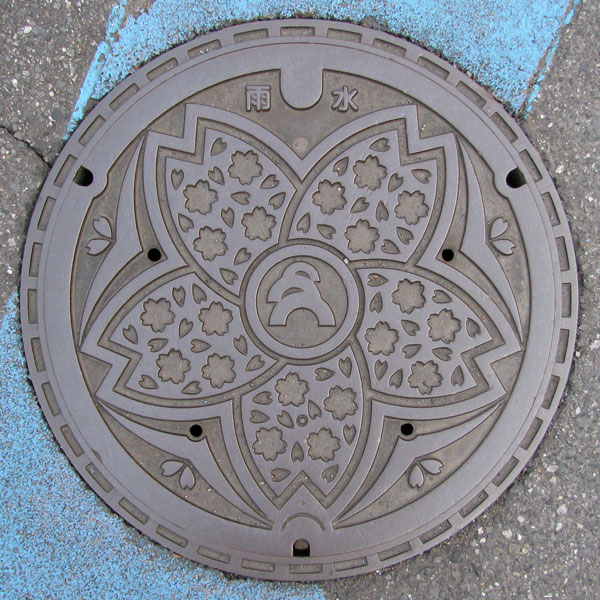
For rainwater harvesting. Features a design of the city flower, the cherry blossom.
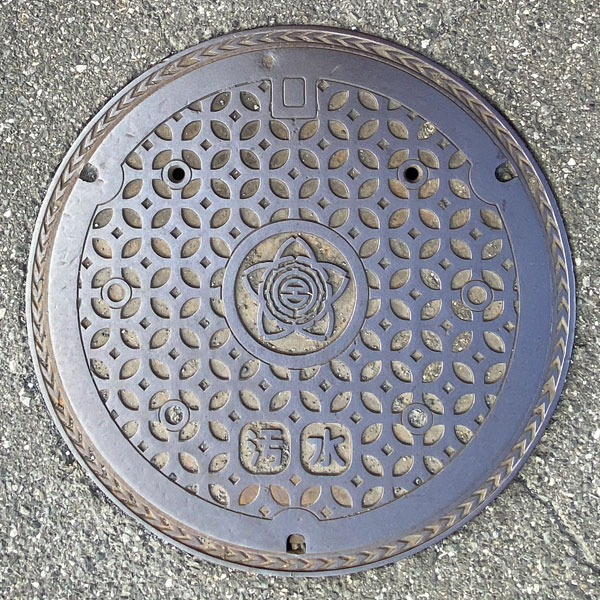
A wastewater faucet with a slightly unusual pattern. In the center is the former Omiya City emblem. Five "大" characters form the petals of the city flower, the cherry blossom. The character "宮" is in the center.
Iwatsuki 岩槻市
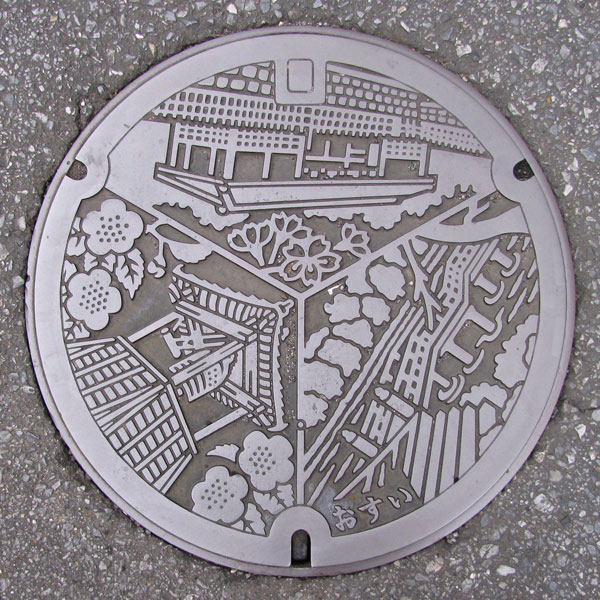
This sewage manhole cover features the "Kuromon" gate and "Yatsuhashi" bridge from Iwatsuki Castle Park, and the "Toki no Kane" (Time Bell) from the bell tower of Iwatsuki Castle, arranged on three sides. The flower on the "Toki no Kane" is likely the city flower from the city's era, the "Yamabuki" (Japanese kerria). The words "Iwatsuki, the town of dolls" are inscribed at the bottom.
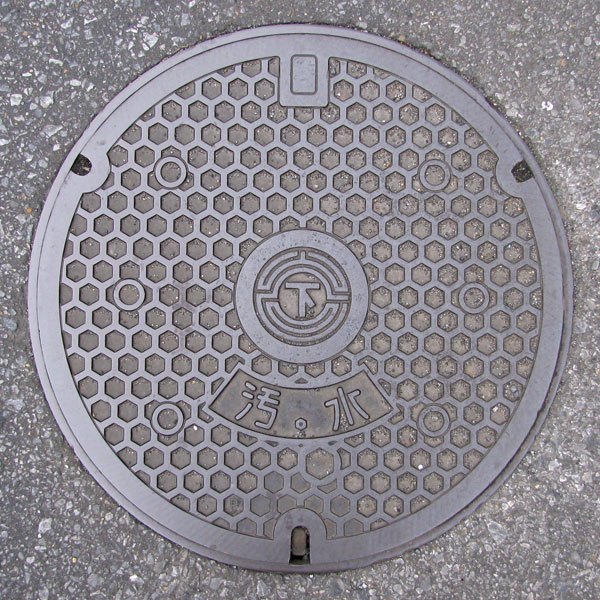
This drainpipe has a tortoiseshell pattern and is for sewage. In the center is the city emblem, which is a stylized "rock," and within that emblem is the character for "sewage" (下).
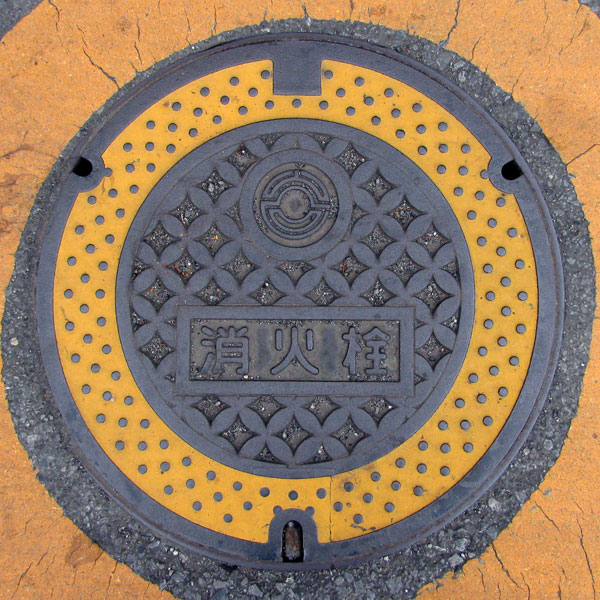
Fire hydrant. It has the city emblem and the words "Fire Hydrant" on it.
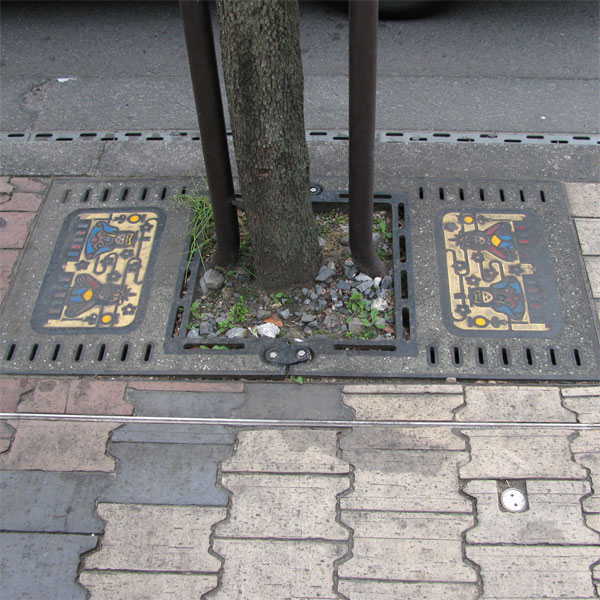
As befits Iwatsuki, a town known for its dolls, there are covers depicting hina dolls under the street trees.
Honjo 本庄市
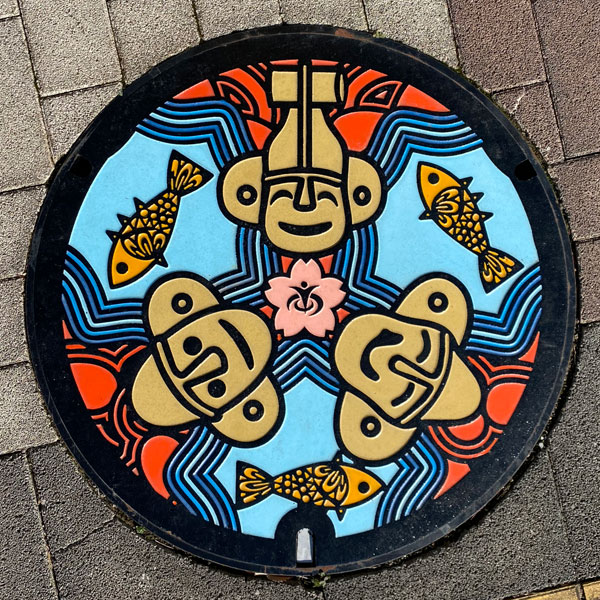
A new design manhole cover featuring the faces of three "shield-bearing figure haniwa" excavated from the Kojima-maeyama Kofun (ancient burial mound), and the "stickleback fish (Musashitomiyo)," a symbol of the wish for the restoration of clear streams. The city emblem is depicted within a cherry blossom in the center.
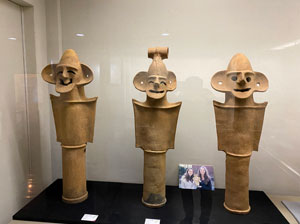
The "shield-bearing figure haniwa (late 6th century)" is a rare example of a smiling figure haniwa excavated nationwide and is designated as a cultural property of Honjo City. The figure at the 12 o'clock position is the model for Honjo City's mascot, "Hanipon."
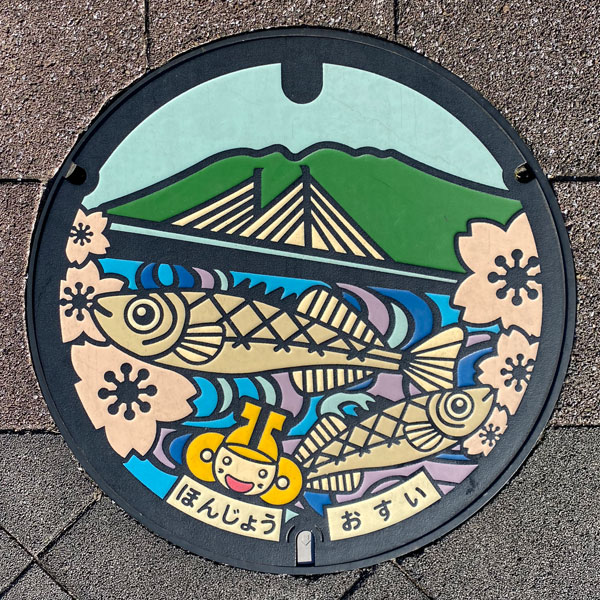
A new design of a colored manhole cover for wastewater, featuring a stickleback (Musashi-tomiyo), a symbol of the wish for the restoration of clear streams, against a backdrop of Mt. Akagi, Bando Ohashi Bridge, Wakazumi Park, and the thousand cherry trees along the Koyama River. Honjo City's mascot, "Hanipon," also makes an appearance. Featured on manhole cards.
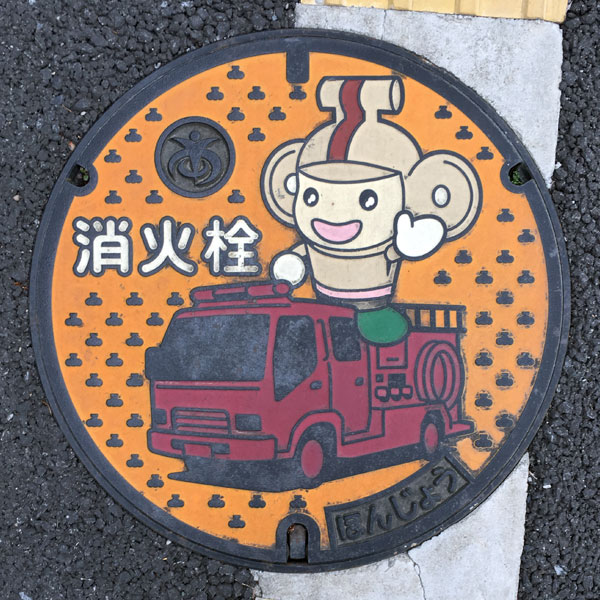
A fire hydrant manhole cover featuring Honjo City's mascot, "Hanipon," riding a fire truck.
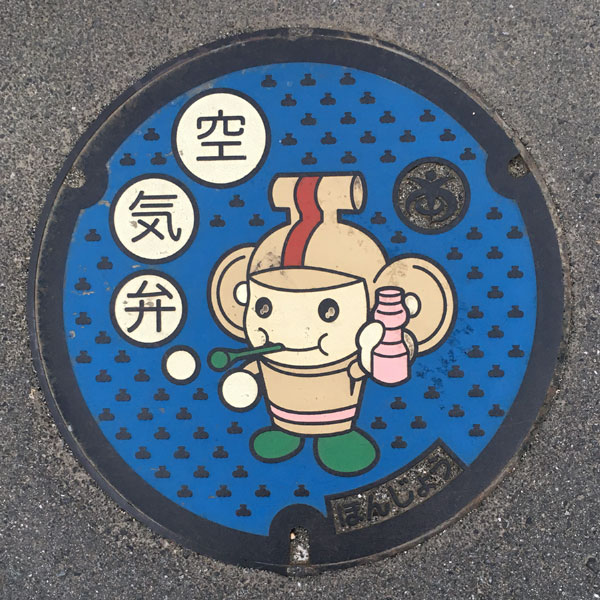
This is an air valve cover featuring Honjo City's mascot, "Hanipon." Hanipon is shown playing with soap bubbles.
See Tone River Right Bank Basin Sewerage System
Honjo 本庄市
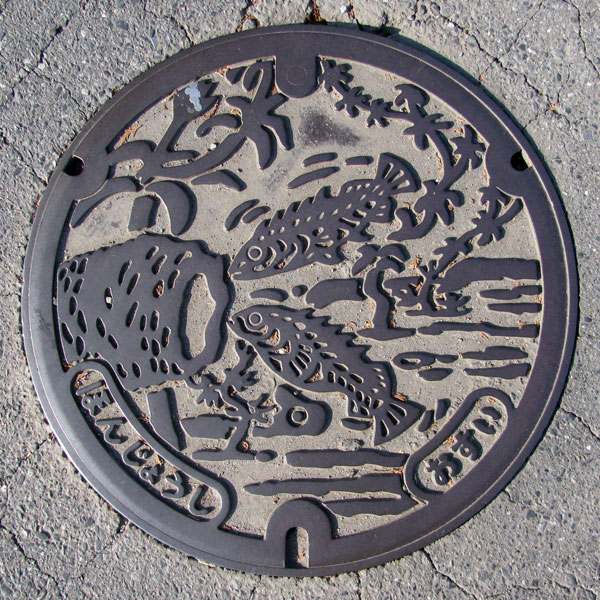
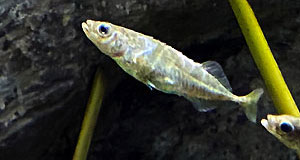
A manhole cover for sewage. The design features the stickleback (Musashi Tomiyo), a fish that once inhabited the former Koyama River, which flows through the northern part of the city.
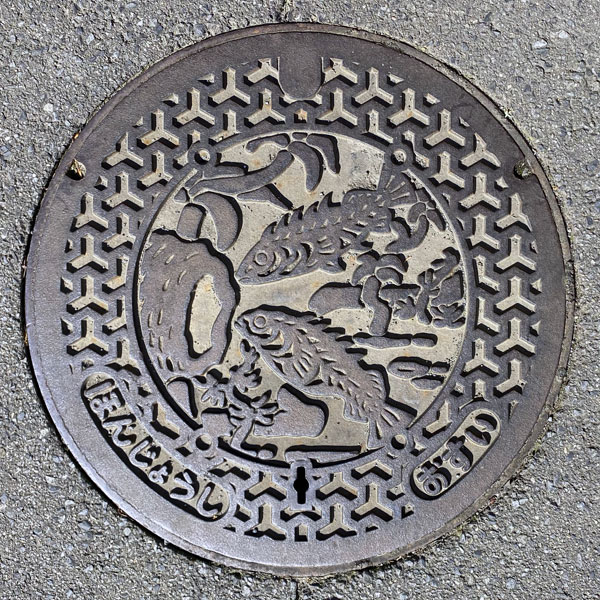
A manhole cover for sewage, featuring a Bishamon tortoise shell pattern on the outside, designed by Musashi Tomiyo.
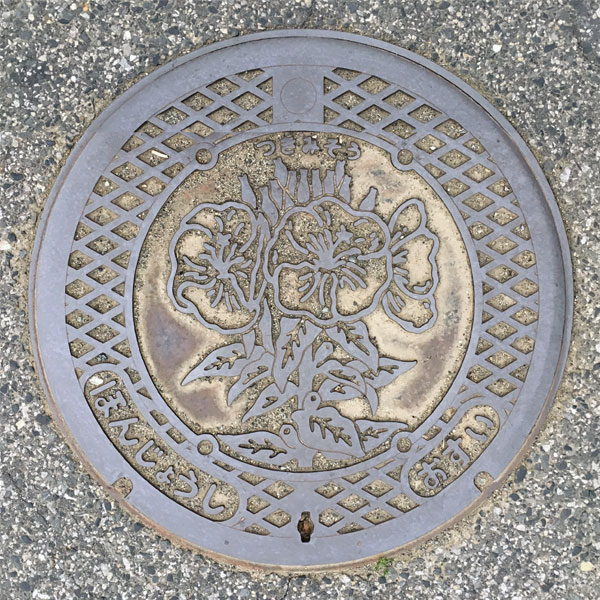
A manhole cover for agricultural community drainage in the Tanaka district, featuring the city flower, the evening primrose. The words "Honjo-shi" (main drainage) and "Osui" (sewage) are written on the left and right sides of the bottom.
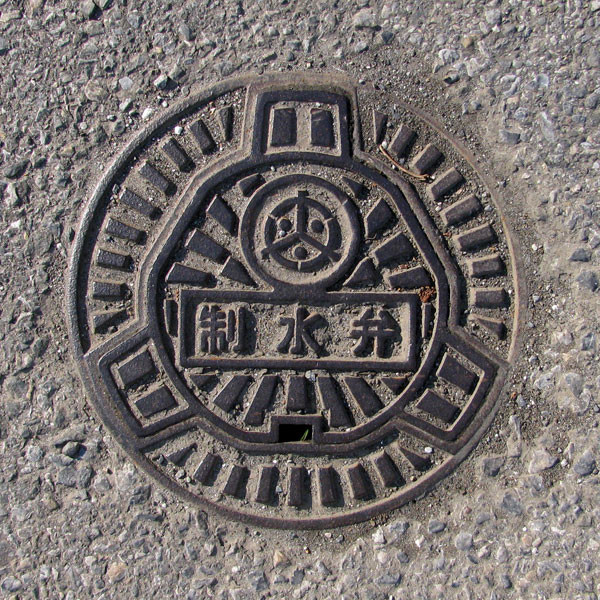
A water control valve bearing the city's original emblem. The emblem consists of three Katakana characters "Ho" arranged in a circle.
Kodama 児玉町
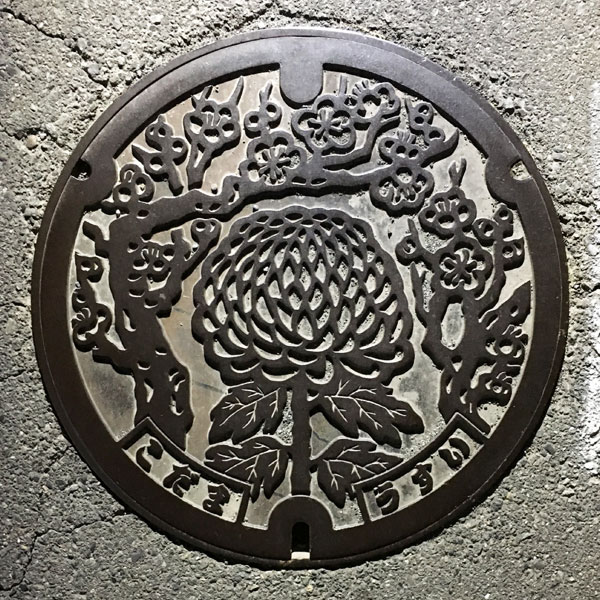
A manhole cover featuring the town's tree, the plum blossom, and its flower, the chrysanthemum. The words "Kodama" and "Yosui" are written at the bottom.
Fukaya 深谷市
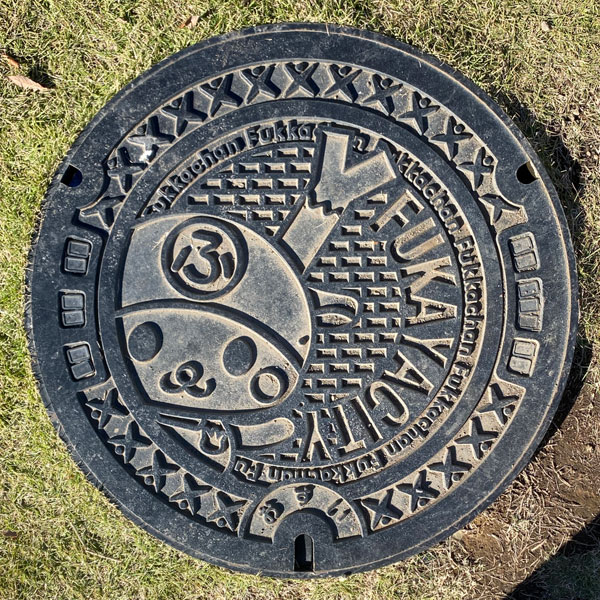
A manhole cover for sewage featuring "Fukka-chan," the mascot character of Fukaya City.
The object sticking out of "Fukka-chan's" head is a local specialty, "Fukaya leek." The background of "Fukka-chan" is the red brick of Fukaya Station, which was built to resemble the Marunouchi Exit station building of Tokyo Station, as Fukaya-produced red bricks were used in the latter. Around "Fukka-chan" are many figures with their arms and legs outstretched, similar to manhole covers made after the city was established.
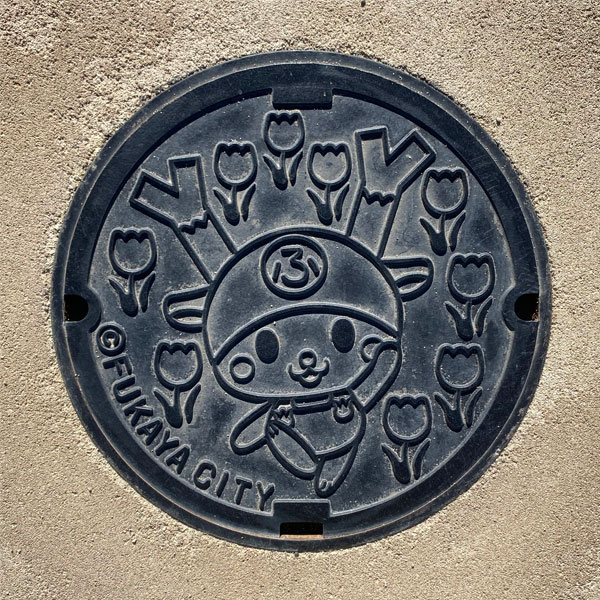
A manhole cover for a sewage basin, approximately 40 cm in diameter, featuring Fukka-chan and tulips.
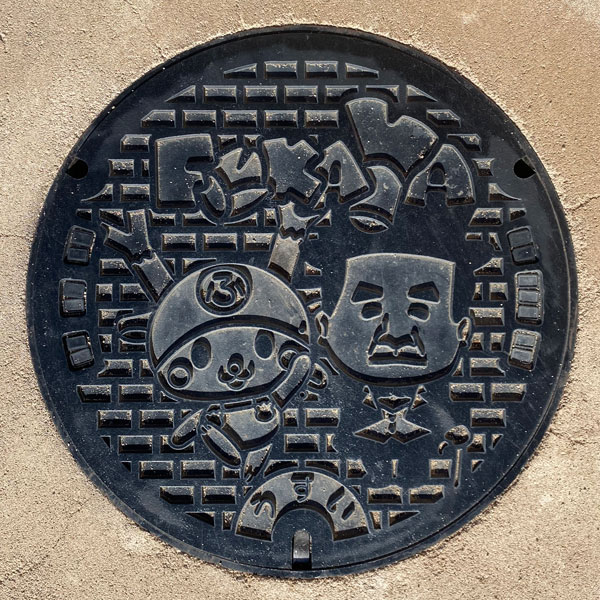
A rainwater manhole cover featuring Fukka-chan and Eiichi Shibusawa holding hands against a brick-patterned background. The word "FUKAYA" is written in a pop style.
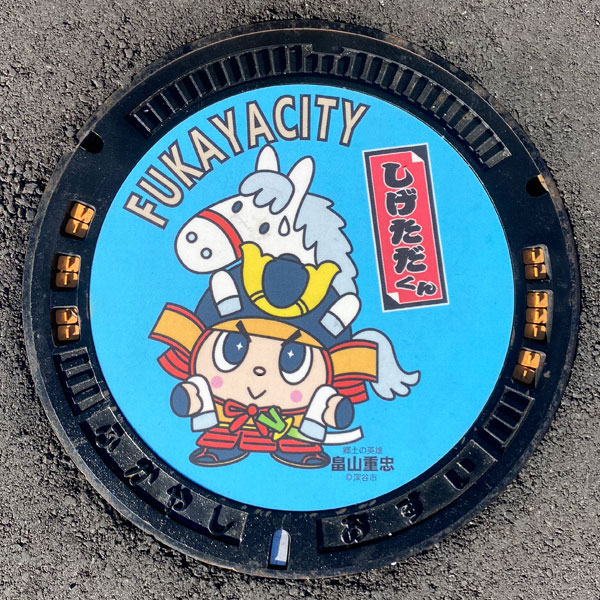
A manhole cover for sewage featuring Shigeta-kun, the official character of Fukaya City. The surrounding area is the same as the Fukka-chan cover shown above.
Hatakeyama Shigetada was a retainer of the Kamakura Shogunate, highly renowned for his bravery and upright character, earning him the title of "a model of Bando samurai." There's an anecdote from the Tale of the Heike about him carrying his beloved horse down a cliff in the "Hiyodorigoe no Sakasakaotoshi" (The Hiyodorigoe Reverse Drop).
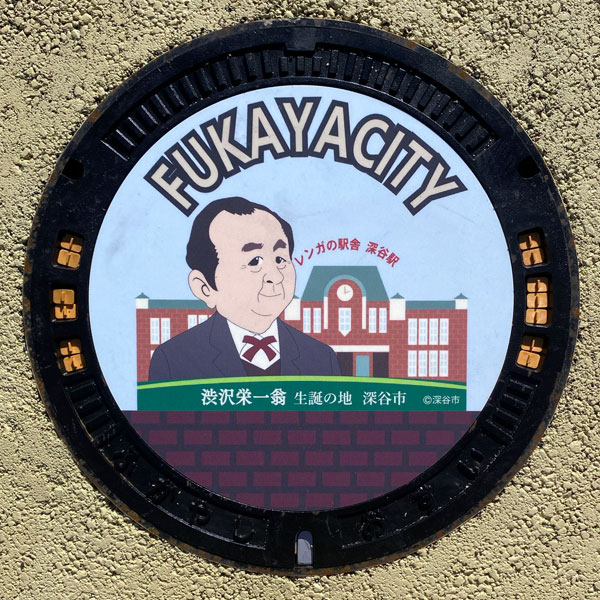
A manhole cover for sewage, depicting Eiichi Shibusawa, known as the "father of Japanese capitalism" and whose portrait will be featured on the 10,000 yen banknote from 2024, against the backdrop of the brick Fukaya Station.
Below the portrait is the inscription "Fukaya City, birthplace of Eiichi Shibusawa." He was born on February 13, 1840 (Tenpo 11) in Chiaraijima Village, Hanzawa District, Musashi Province (present-day Chiaraijima, Fukaya City, Saitama Prefecture).
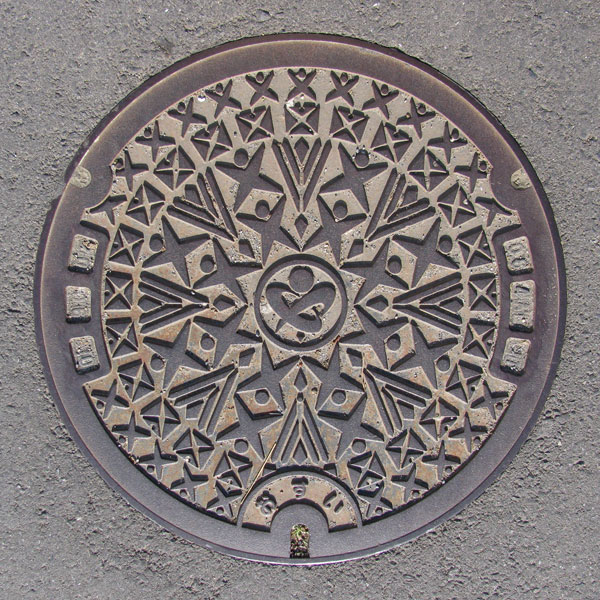
For wastewater. In the center is the new city emblem of Fukaya City. There are many people with their arms and legs outstretched.
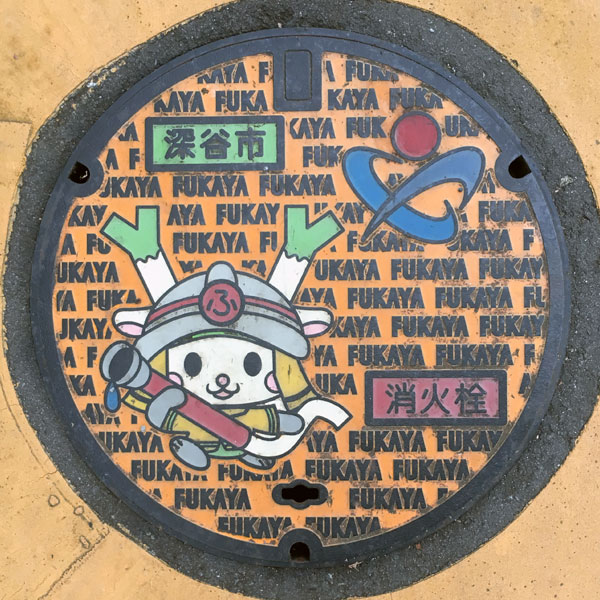
This is a fire hydrant cover featuring "Fukkachan" dressed as a firefighter. It depicts "Fukkachan" holding a hose, along with the city emblem, the words "Fukaya City," "Fire Hydrant," and the word "FUKAYA" in a row on the background, likely as an anti-slip feature.
Fukaya 深谷市
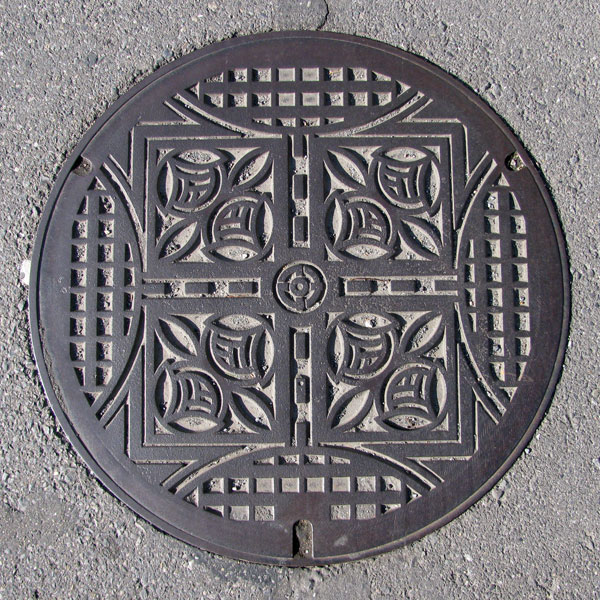
A sewage drainage meter from the former city of Fukaya. The flower depicted is the city tree, the camellia. The city emblem is a stylized representation of the katakana characters for "Fukaya".
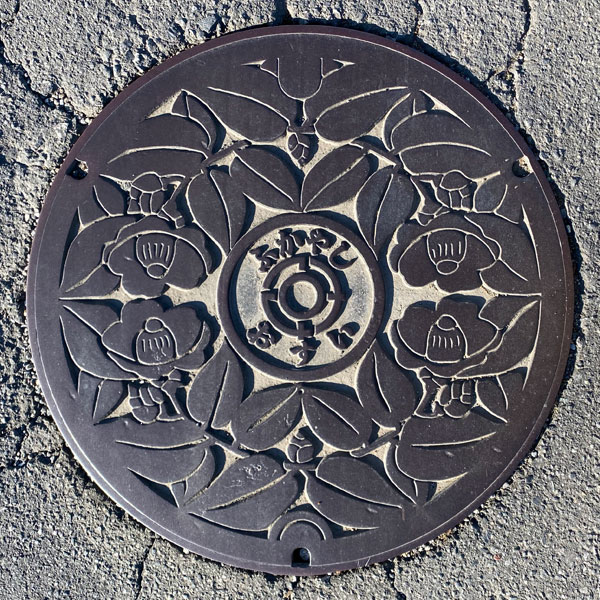
A manhole cover from the Hitomi West district of agricultural wastewater treatment plants, depicting a camellia flower. In the center are the former Fukaya City emblem and the words "Fukaya" and "Osui" (wastewater).
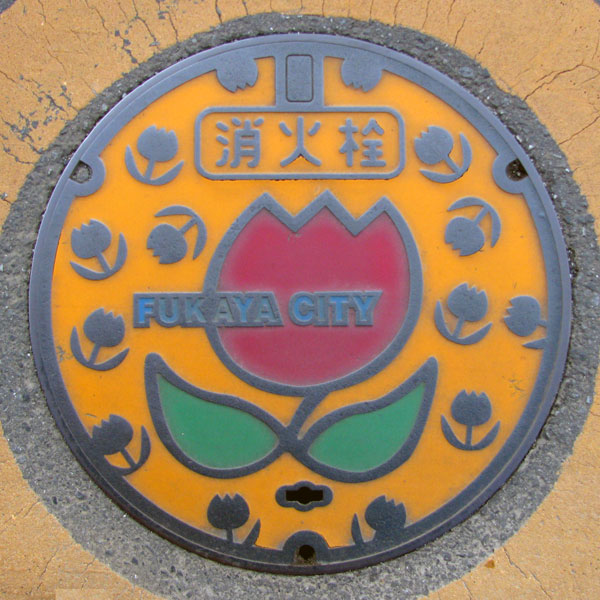
A cute fire hydrant decorated with the city flower, the tulip.
Okabe 岡部町
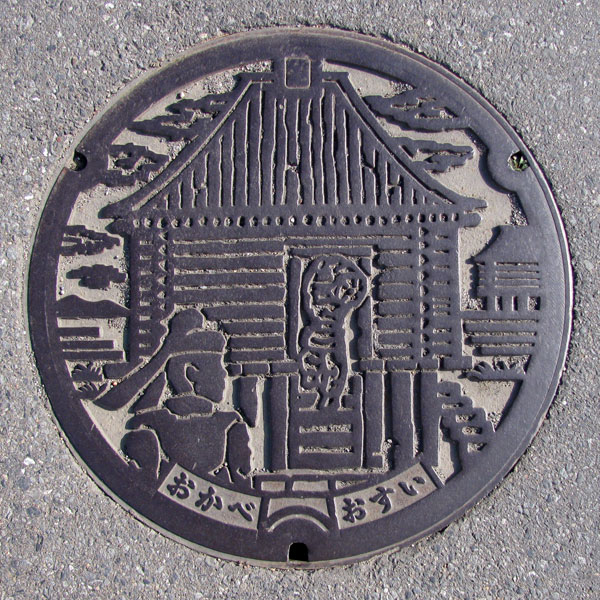
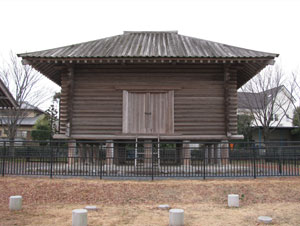
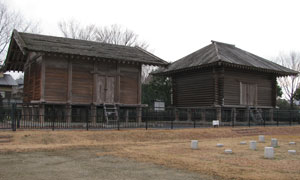
This is a sewage manhole cover from the former Okabe town. Because the town has the "Nakajuku Ancient Warehouse Site," which dates back to the 7th to 9th centuries, the design depicts people carrying rice bales and officials in an ancient warehouse. The "Nakajuku Ancient Warehouse Site" is adjacent to the "Michi-no-Eki Okabe" (roadside station).
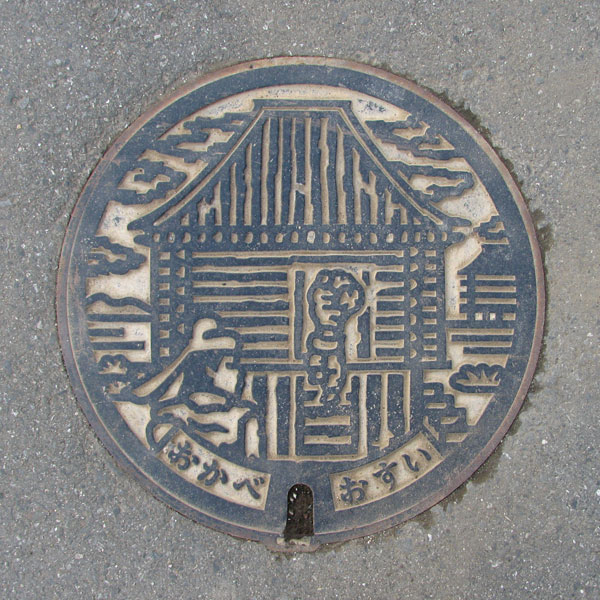
A smaller version of the cover above.
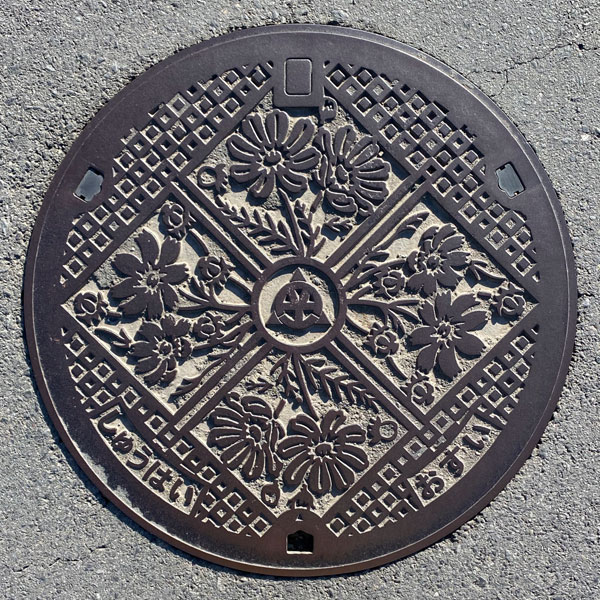
A manhole cover for agricultural wastewater in the Harigaya district, depicting the town flower, "cosmos." The town emblem is in the center. The words "wastewater" and "sewage" are at the bottom.
The flowers on the top/bottom and left/right sides have different appearances.
Kawamoto 川本町
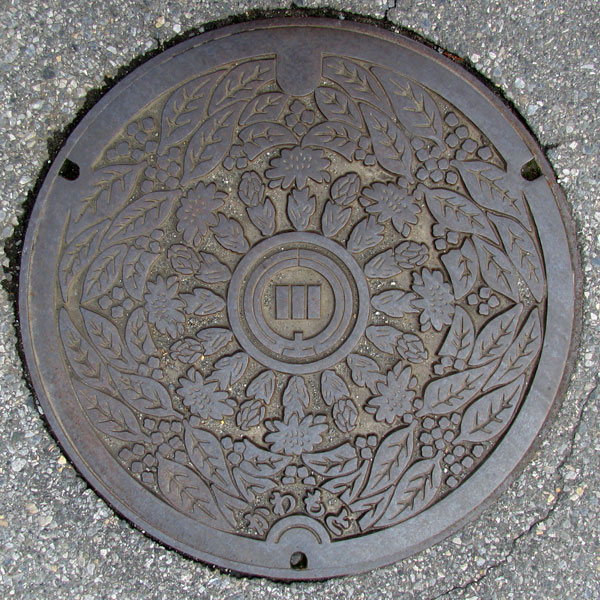
This is a manhole cover for wastewater in the former Kawamoto Town. The design features the town's tree, the Osmanthus fragrans, and its flower, the Adonis amurensis. It can be found at the entrance to the parking lot of the Kawamoto branch office and on the sidewalk.
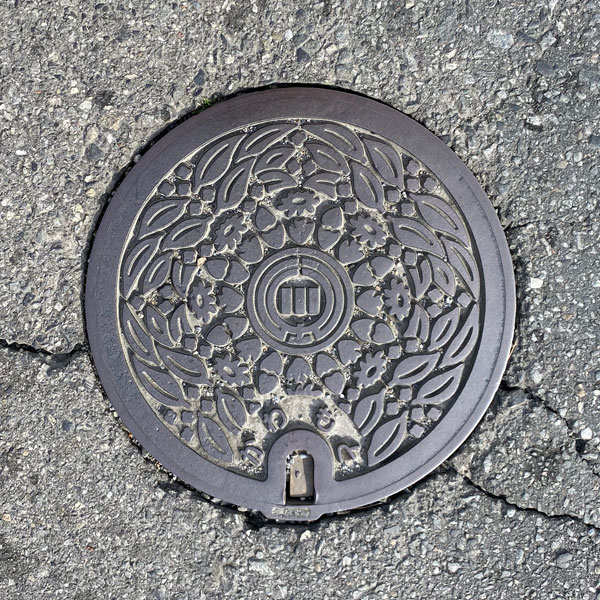
A smaller version of the design above.
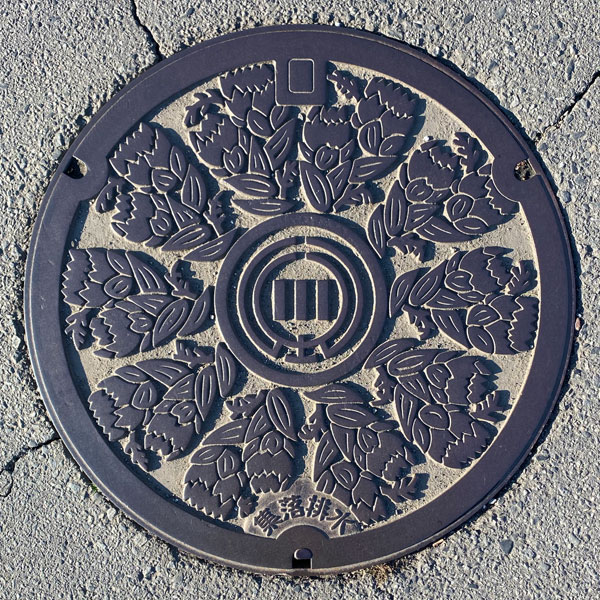
A manhole cover for agricultural drainage in the Nagazaike Higashi district, featuring the town flower, "Fukujusou" (Adonis amurensis). The Kawamoto town emblem is in the center, and the words "Community Drainage" are at the bottom.
See Arakawa Upper Basin Sewerage System
Hanazono 花園町
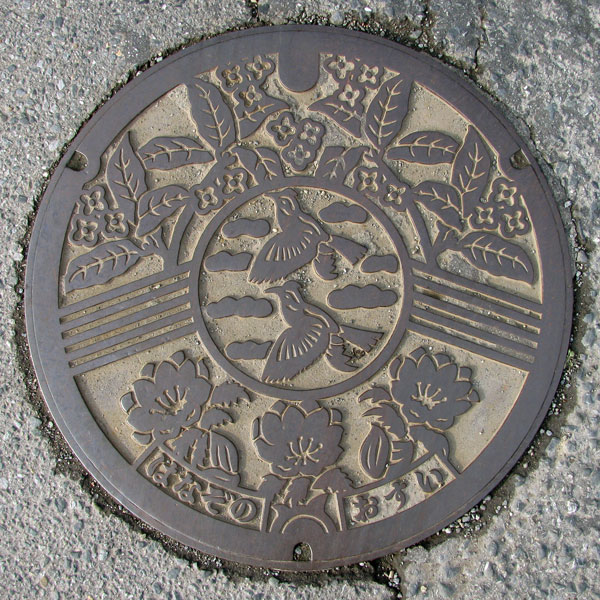
The design features the former Hanazono town tree, the osmanthus, the town flower, the Adonis amurensis, and the town bird, the skylark.
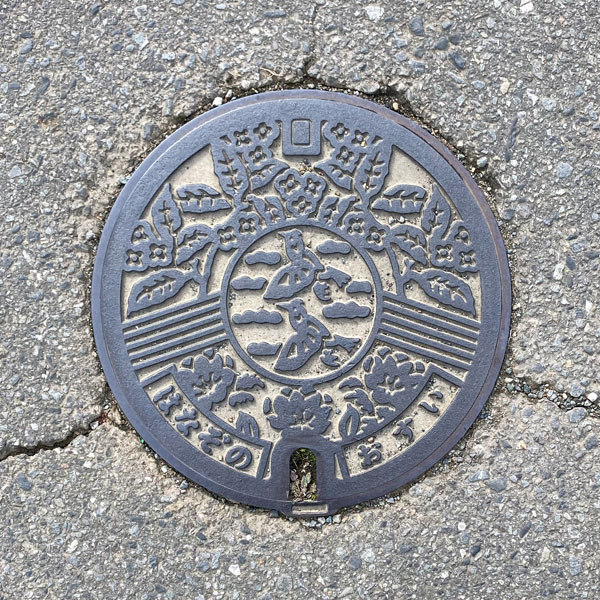
A smaller sewage drain, even smaller than the top cover.
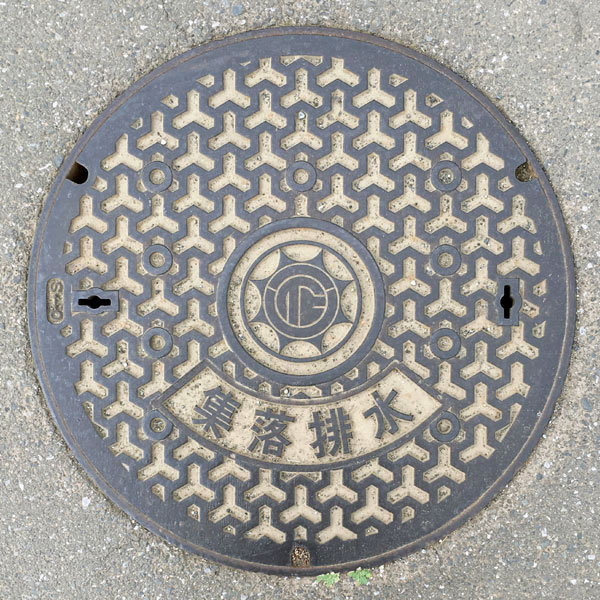
A manhole cover for agricultural wastewater in the Shimogo district. The Hanazono town emblem is in the center.
See Arakawa Upper Basin Sewerage System
Kumagaya 熊谷市
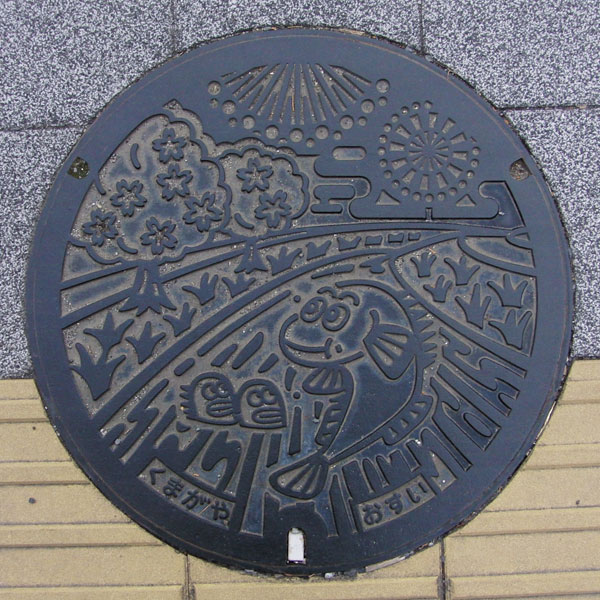
For sewage. Kumagaya City's official flower is the cherry blossom. The Arakawa River embankment was selected as one of Japan's "Top 100 Cherry Blossom Viewing Spots" in 1990. The fireworks likely represent the Kumagaya Fireworks Festival. The fish, though quite stylized and difficult to recognize at first glance, is a Musashi Tomiyo, a fish said to inhabit only the upper reaches of the Moto-Arakawa River in Kumagaya City.
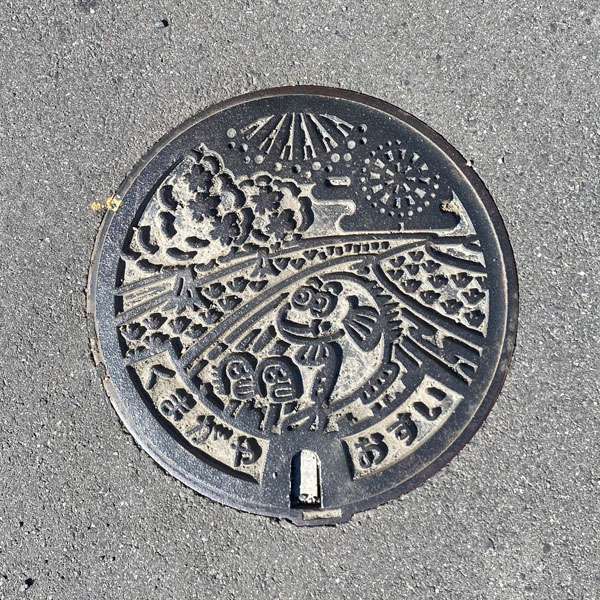
A smaller version of the design above.
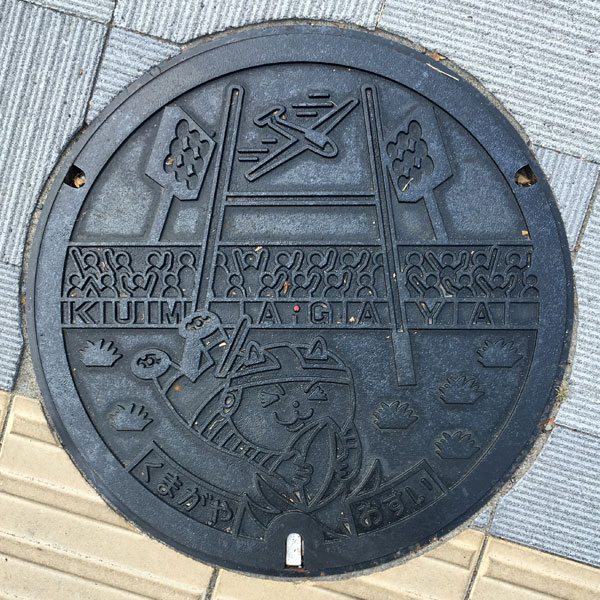
To build excitement for the Rugby World Cup, the manhole cover features "Nyaozane" as a rugby player, receiving cheers from a large crowd, and depicting a glider beyond the goalposts as he scores a try.
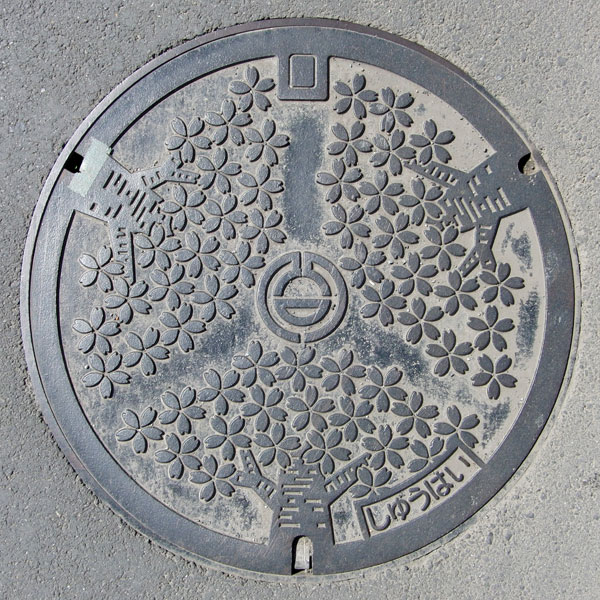
Manhole covers for agricultural wastewater in the Nohara-Tsuchishio district, featuring the city emblem. The design is based on the city flower, the cherry blossom.
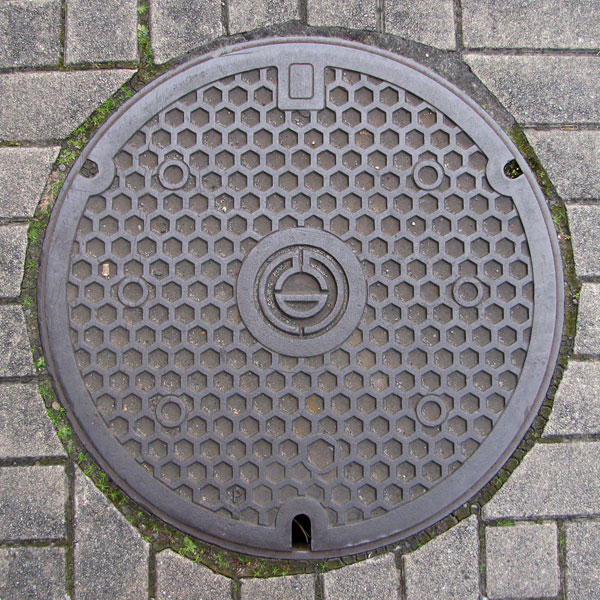
A tortoiseshell pattern featuring the city emblem. The city emblem, which was passed down from the old Kumagaya City to the new Kumagaya City, has "Ku" on the right, "Ma" on the left, and the whole thing represents "Tani" (valley).
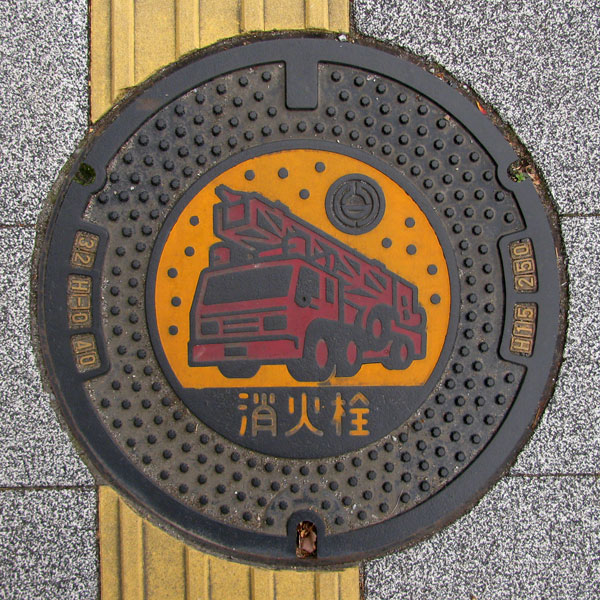
A fire hydrant with the city emblem inside.
See Arakawa Left Bank Northern Basin Sewerage System
Menuma 妻沼町
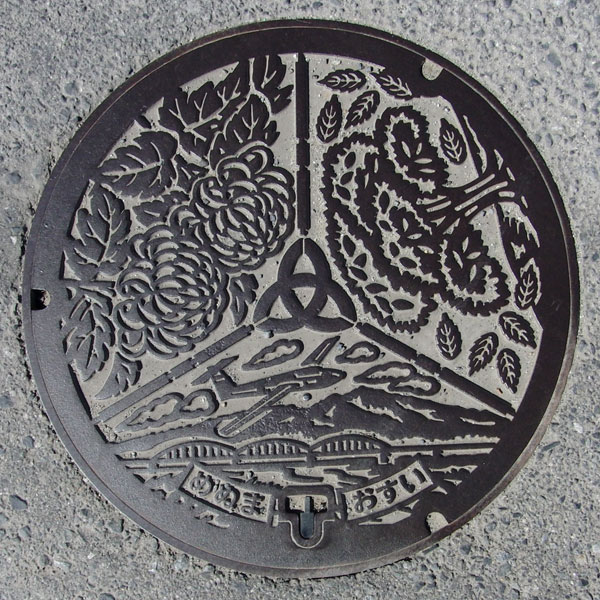
The town emblem, a stylized representation of the kanji character "女" (onna), which is the origin of the hiragana character "め" (me), is at the center. On three sides are the town flower "chrysanthemum," the town tree "zelkova," and the "Menuma Glider Airfield" located within the town. The mountain in the background of the glider is likely Mount Akagi in Gunma Prefecture, and the bridge is probably the Tōsui Bridge connecting to Ōta City in Gunma Prefecture.
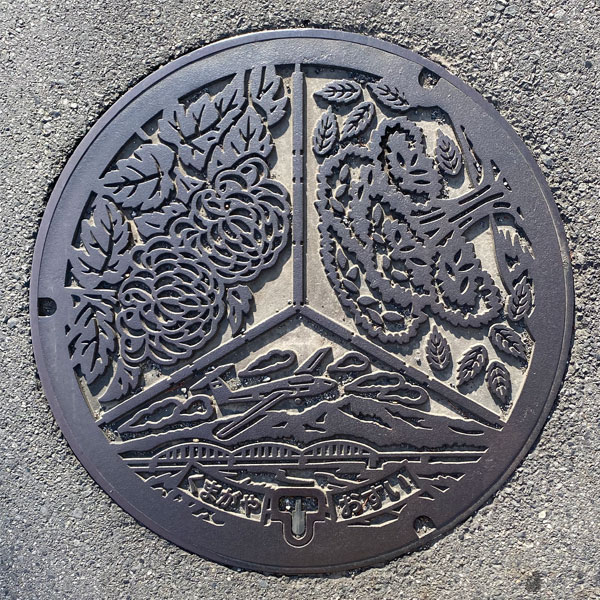
This manhole cover, originally designed for the former Menuma town, has the Menuma town emblem in the center removed and the text at the bottom reads "Kumagaya," reflecting the post-merger design.
Osato 大里町
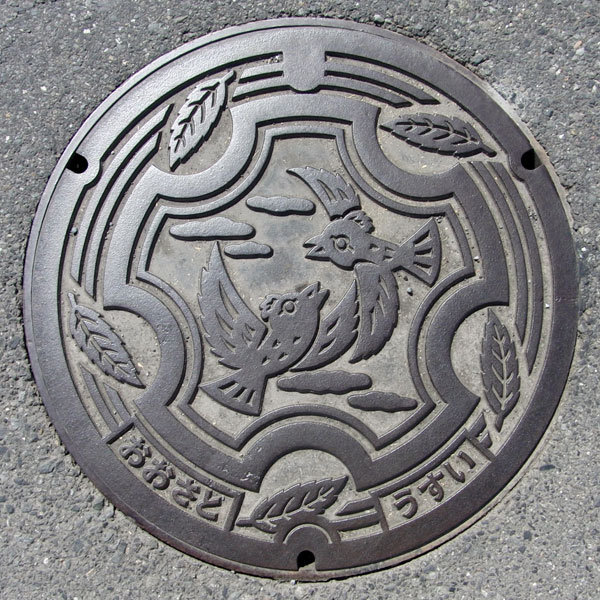
The design features the town's emblem, shaped like the character "大" (dai), (the original emblem contains the character "里" (sato)) with the town's bird, the skylark, inside, surrounded by five leaves of the town's tree, the zelkova.
Konan 江南町
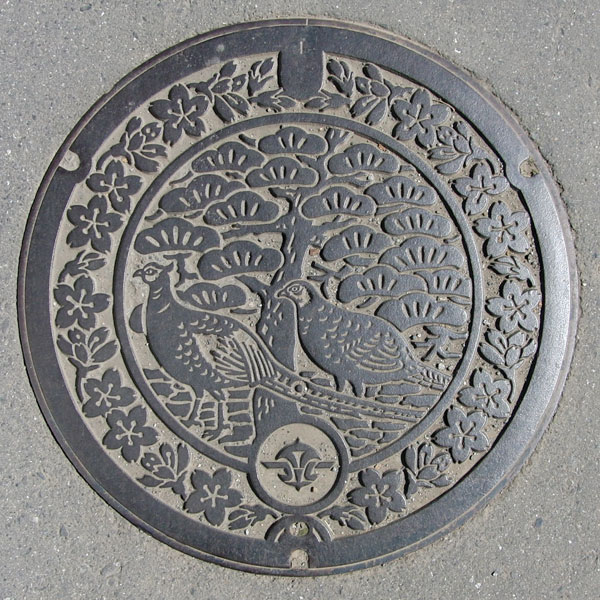
The design features the town's tree, the Japanese red pine, and the town's bird, the pheasant, in the center, surrounded by the town's flower, the cherry blossom. The lower circle contains the former Konan Town emblem, a stylized representation of the Japanese katakana characters "Ko" (left), "U" (top), "Na" (bottom), and "N" (right). This is an agricultural community drainage manhole cover.
Gyoda 行田市
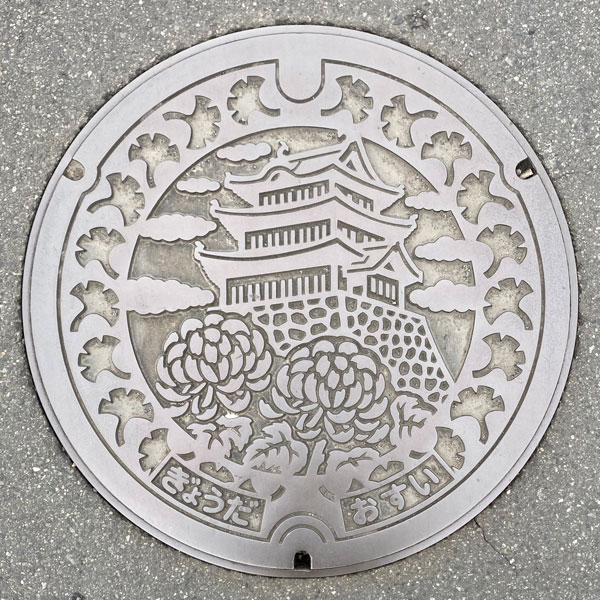
The design features the three-story turret of Oshi Castle and the city flower, the chrysanthemum, surrounded by the leaves of the city tree, the ginkgo.
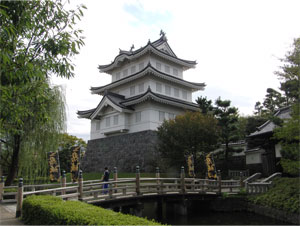
Oshi Castle is one of the seven famous castles of the Kanto region. During the siege of Odawara in 1590, while the lord, Narita Ujinaga, was besieged in Odawara Castle, 3,000 soldiers, including retainers and farmers, took refuge in Oshi Castle. The siege of Oshi Castle, known as the "Water Siege of Oshi Castle," repelled the Toyotomi forces led by Ishida Mitsunari, and is considered one of Japan's three greatest water sieges.
It is the setting for the novel and film "Nobou no Shiro" (The Floating Castle).
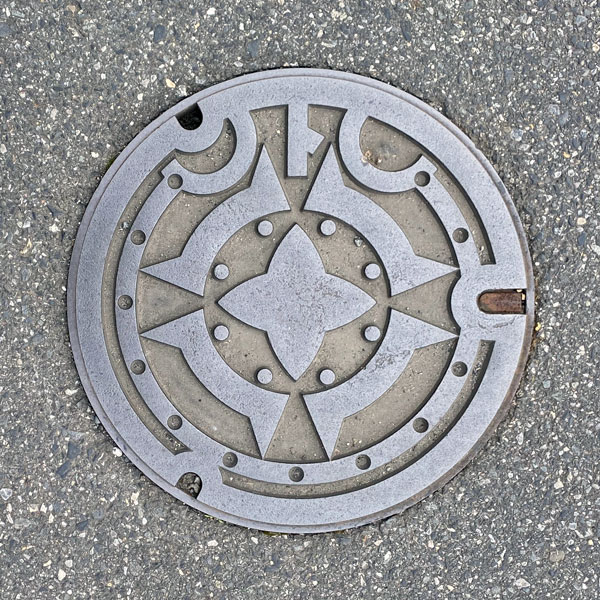
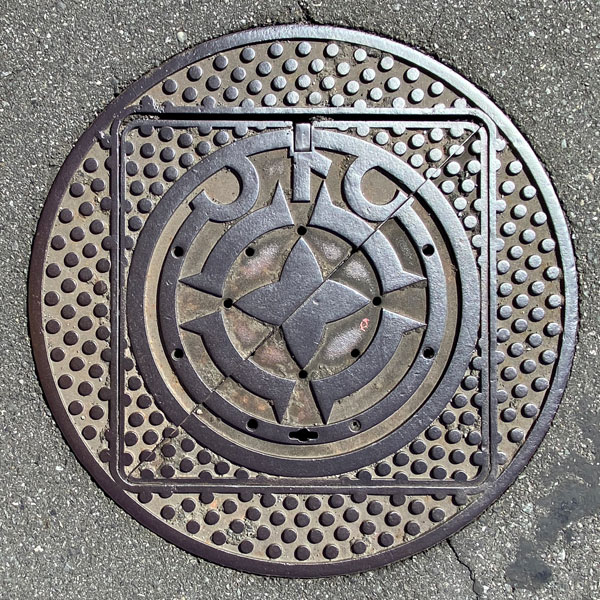
For wastewater. It boldly uses the city emblem, which is a stylized representation of the characters "行" (gyo) and "田" (da).
A manhole cover using the city emblem, similar to the one above.
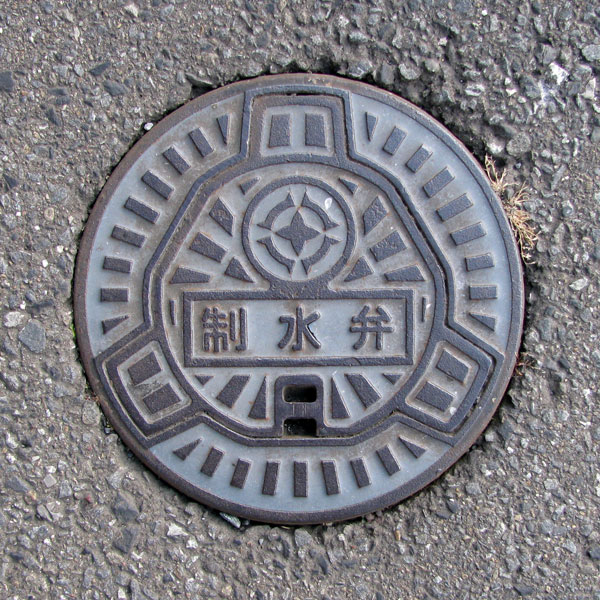
Water control valve.
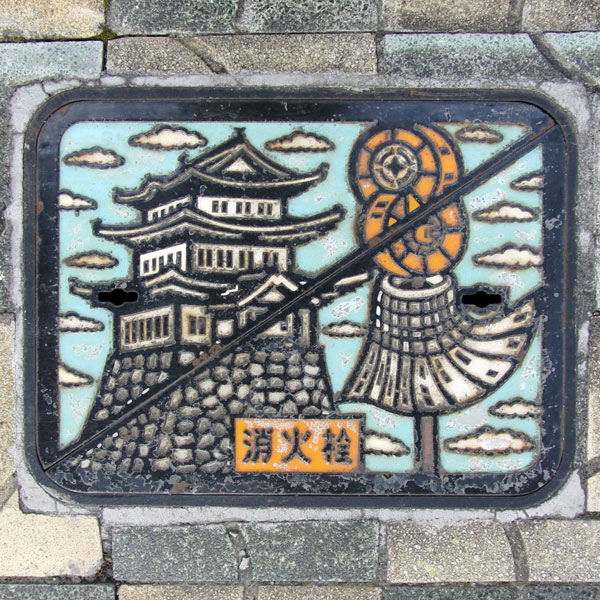
A fire hydrant cover depicting the three-story turret and banner of the Oshi Castle ruins.
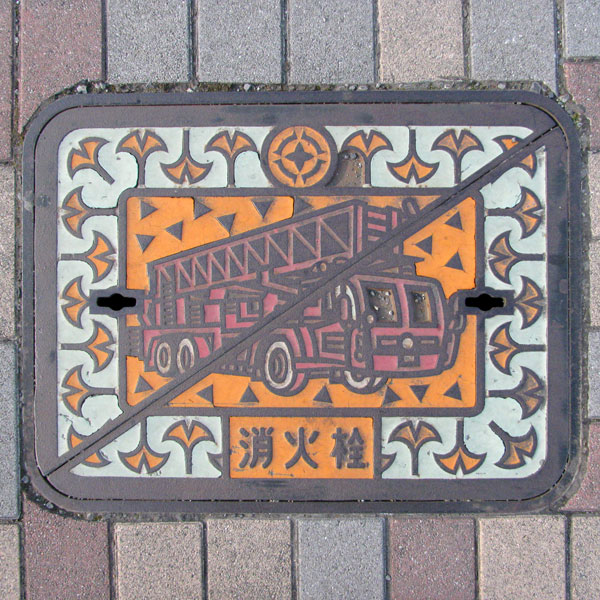
A fire hydrant cover adorned with ginkgo leaves, the city's official tree.
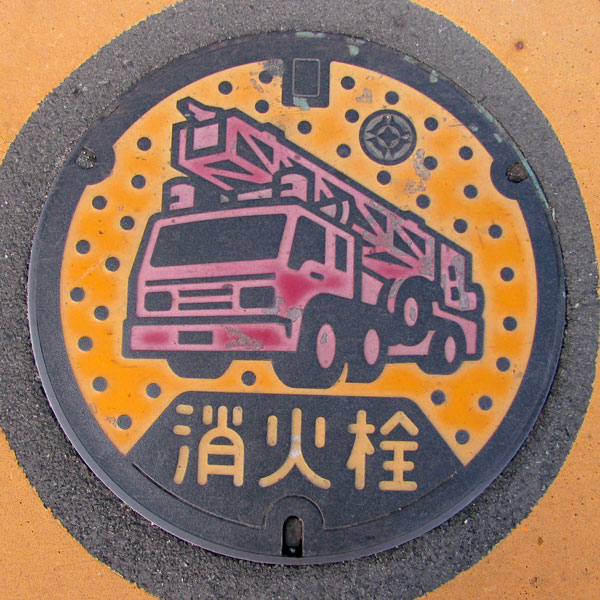
Fire hydrant.
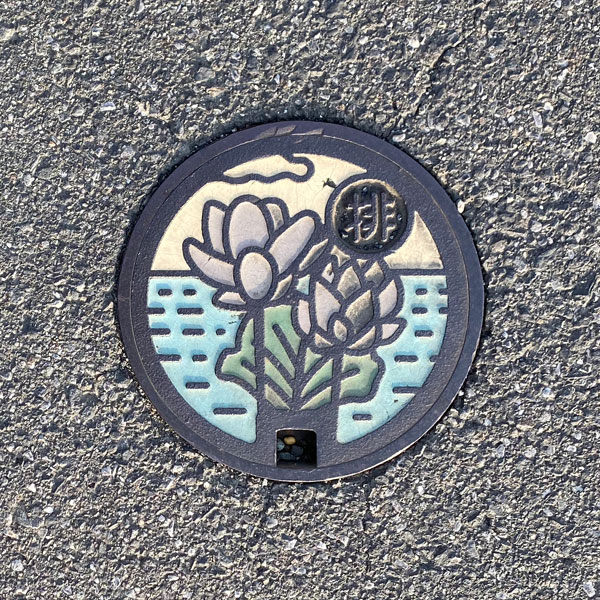
A manhole cover depicting the Gyoda lotus (ancient lotus), a natural monument designated by Gyoda City.
See Arakawa Left Bank Northern Basin Sewerage System
Hanyu 羽生市
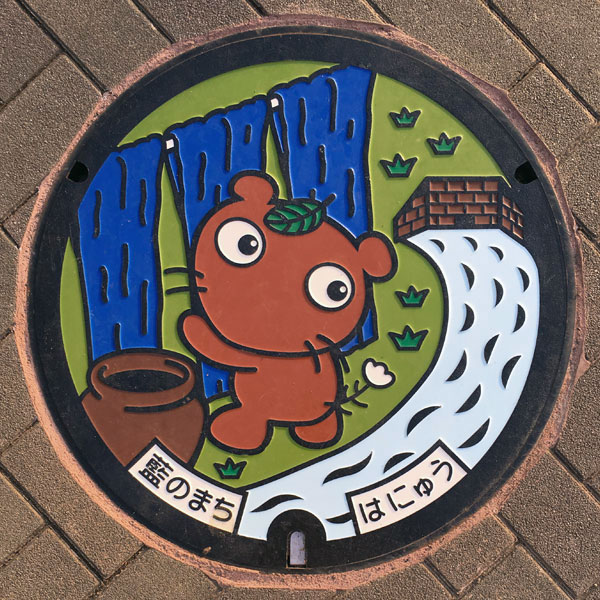
A manhole cover depicting Hanyu City's character, "Mujinamon," dyeing fabric with indigo on the banks of the Nakagawa River.
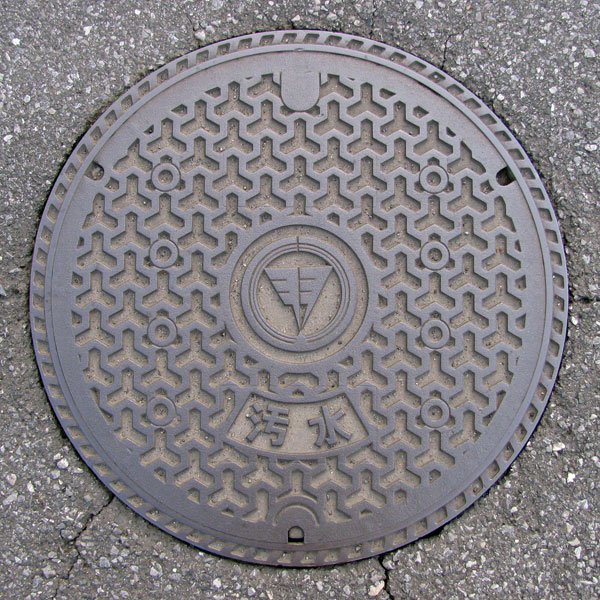
A tetrahedron-patterned drain for wastewater. The city emblem, featuring a stylized "wing," is located in the center.
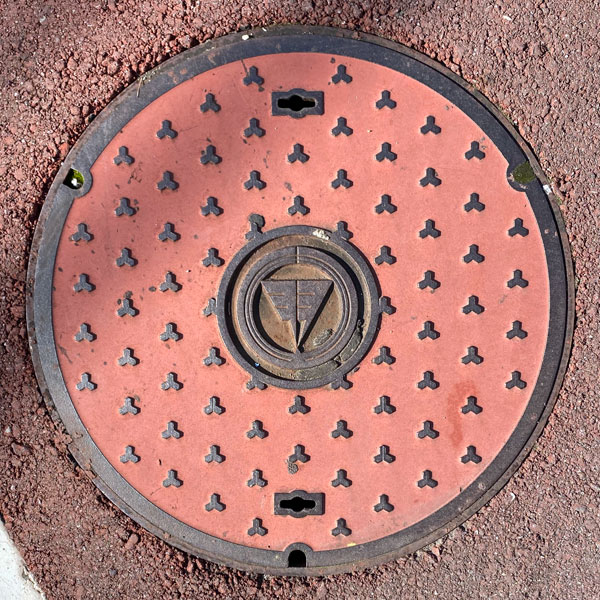
A red manhole cover with the city emblem in the center.
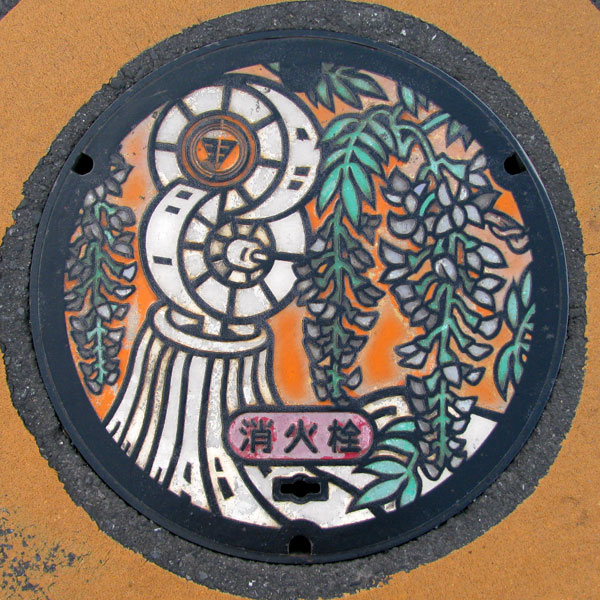
A fire hydrant featuring the city flower "wisteria" and a banner adorned with the city emblem.
Kazo 加須市
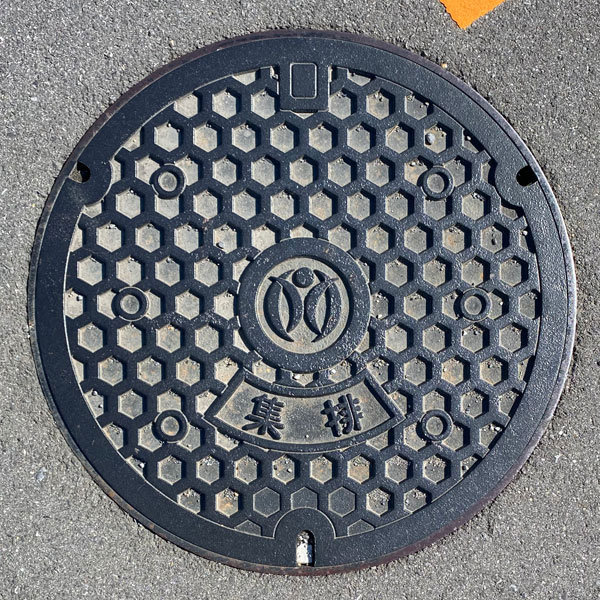
A manhole cover for agricultural wastewater treatment in the Kita-Okubo/Arai-Shinden district, featuring the new city emblem in the center.
See Furutonegawa River Basin Sewerage System
Kazo 加須市
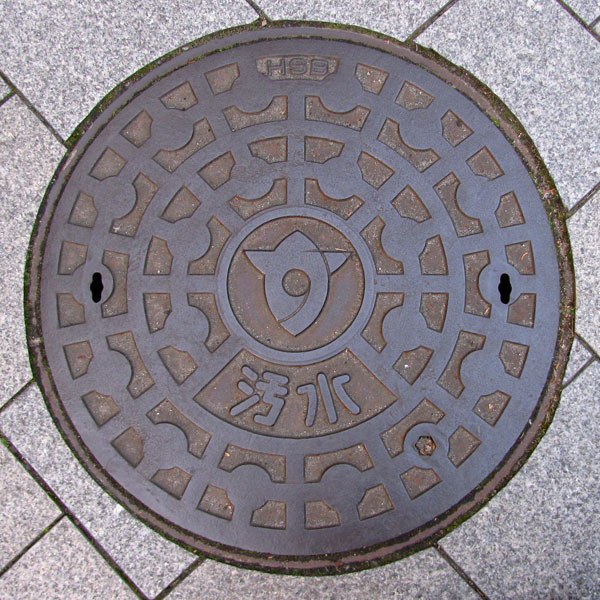
For wastewater use, conforming to JIS standard patterns. The city emblem is a stylized version of the Japanese hiragana character "ka".
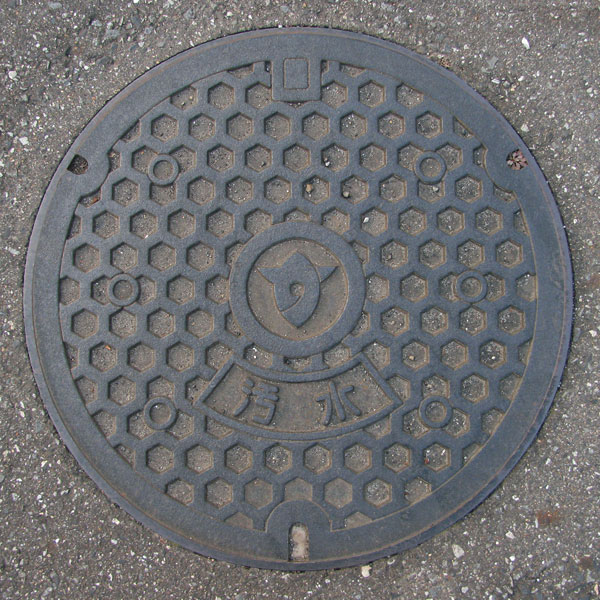
A tortoiseshell pattern design for wastewater.
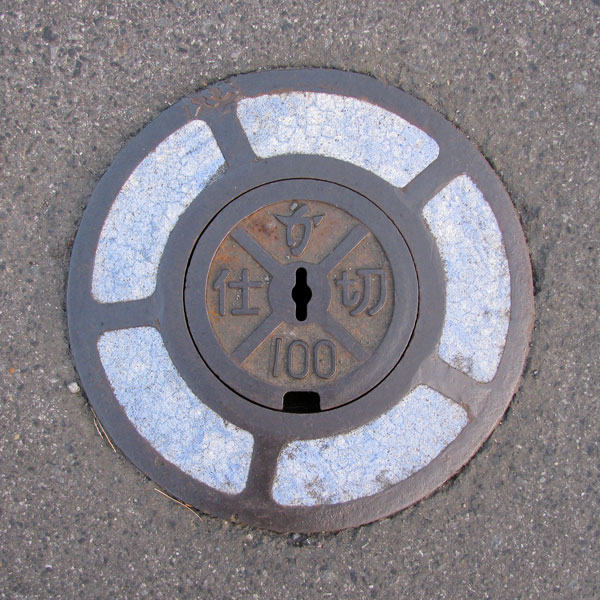
A gate valve bearing the city emblem in a rather old font.
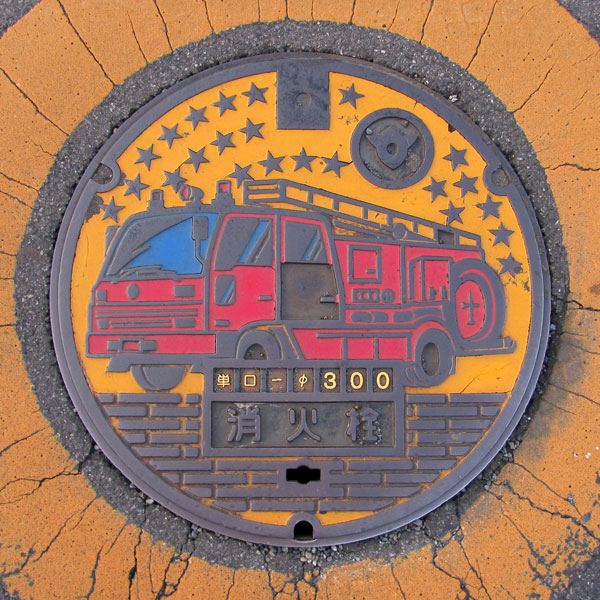
Fire extinguisher with city emblem.
Kisai 騎西町
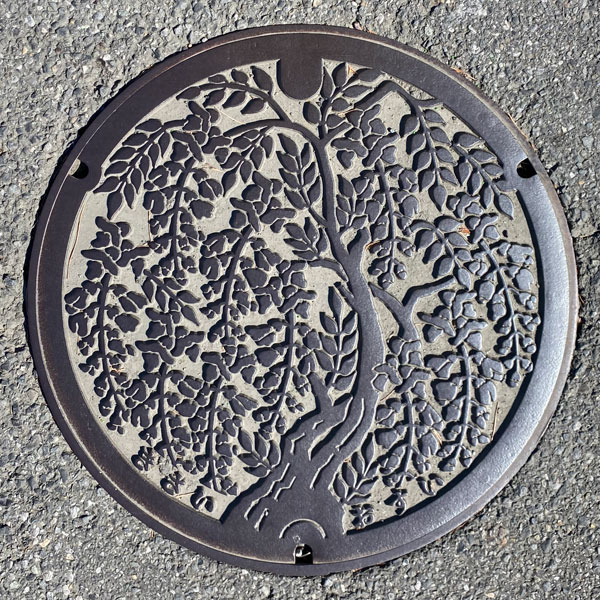
The design features the town flower, the wisteria.
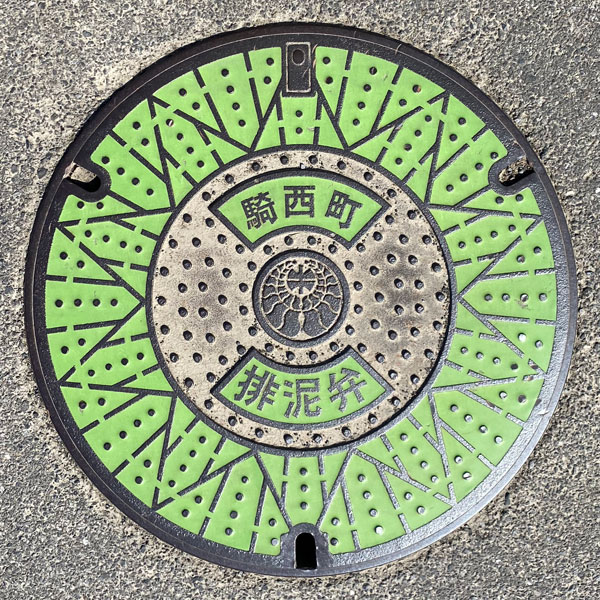
The Kisai town emblem is in the center.
Otone 大利根町
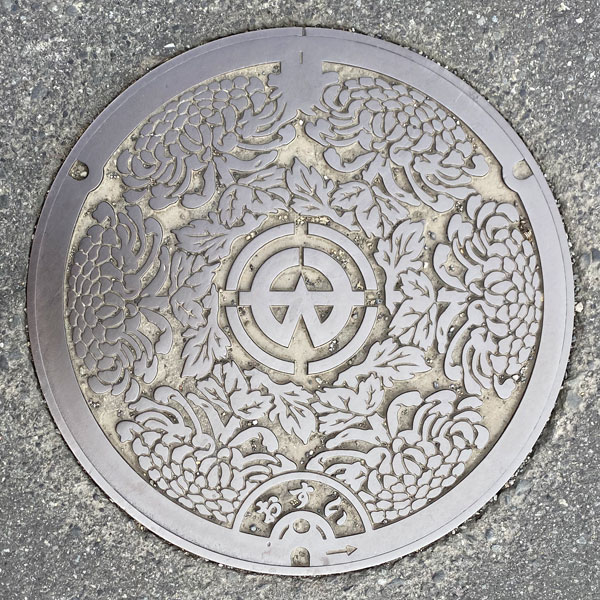
The design features the town flower, the chrysanthemum.
The town emblem consists of the character "大" (Ō) from Ōtone in the center and arcs representing the four villages that existed before Ōtone Town was formed (Higashi Village, Haramichi Village, Motowa Village, and Toyono Village, all in Kita-Saitama District). The characters for "osui" (sewage) are at the bottom.
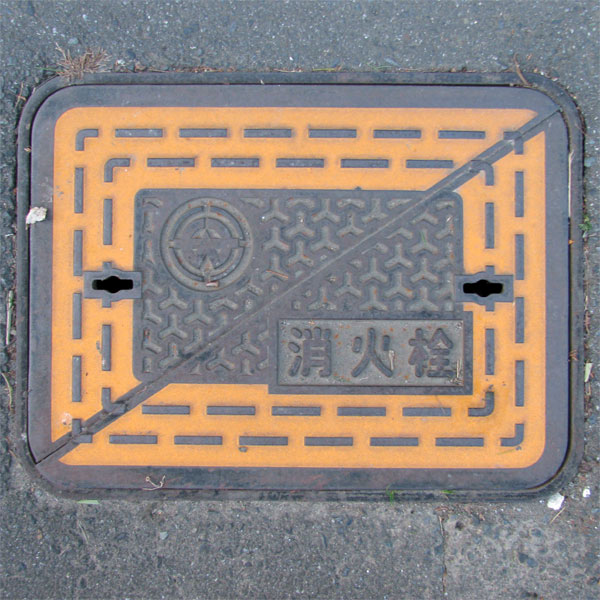
For wastewater with the town emblem on the top left.
Kitakawabe 北川辺町
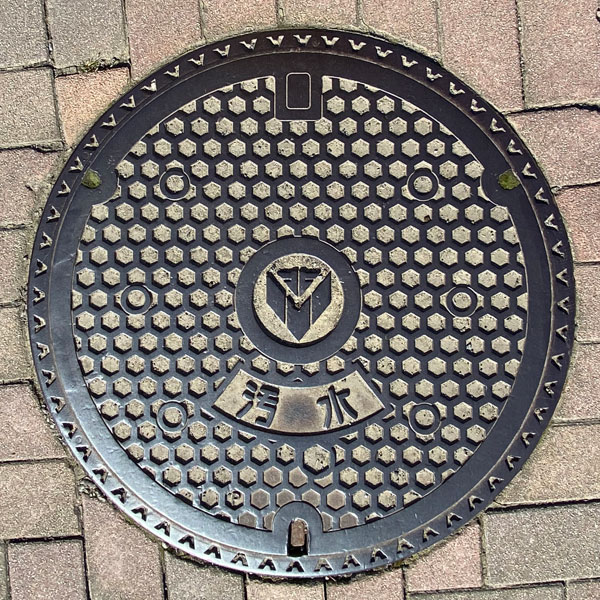
A manhole cover for agricultural wastewater treatment in the Igabukuro district, featuring the town emblem in the center.
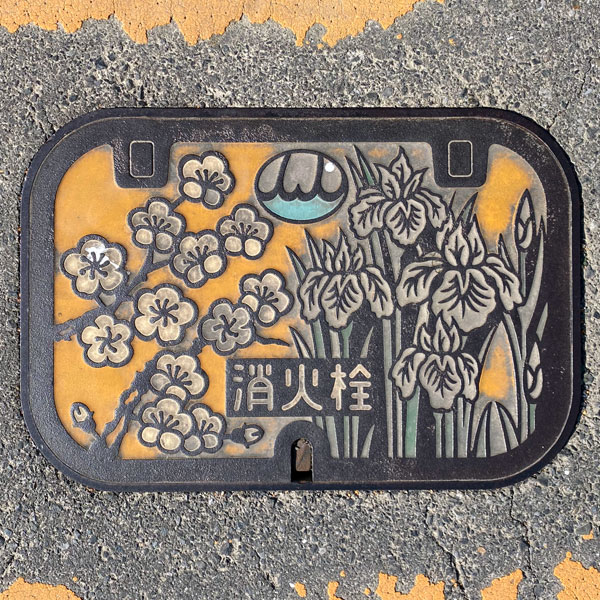
A square fire hydrant cover featuring the town's tree, the plum blossom, and the town's flower, the iris. The town's symbol is located at the top center.
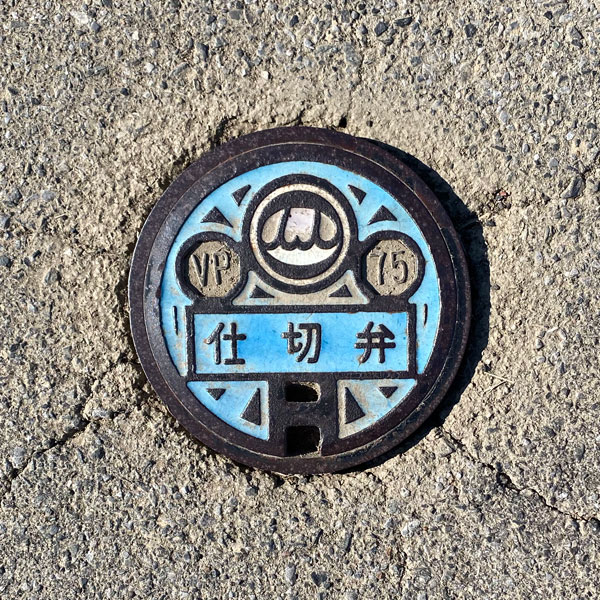
A small cover with the town symbol on the top.
Konosu 鴻巣市
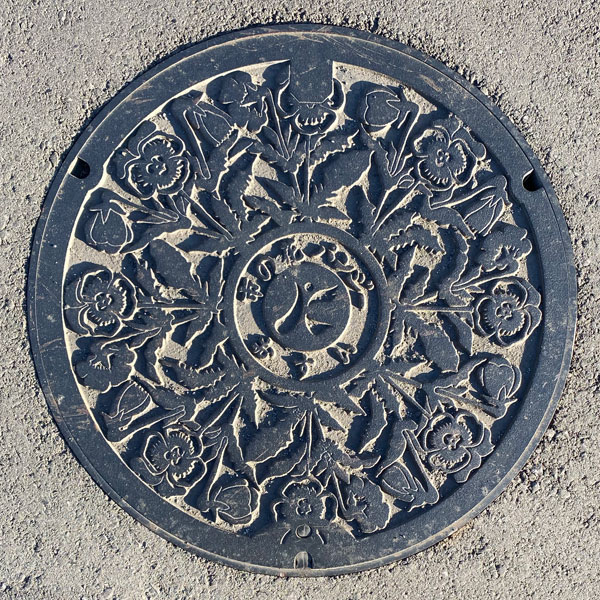
This is a manhole cover for sewage, but the central city emblem has been replaced with the second-generation city emblem established in 2021. It was on display at the "Manhole Summit in Tokorozawa."
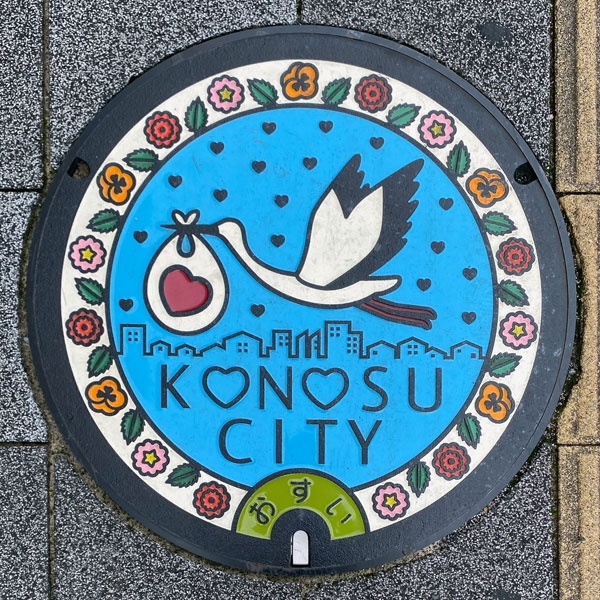
The "Konosu City Stork Brand Mark (within the blue circle)," selected through a public competition, is surrounded by Konosu City's official flower, the pansy, as well as primroses and marigolds, for which Konosu boasts the highest production volume in Japan.
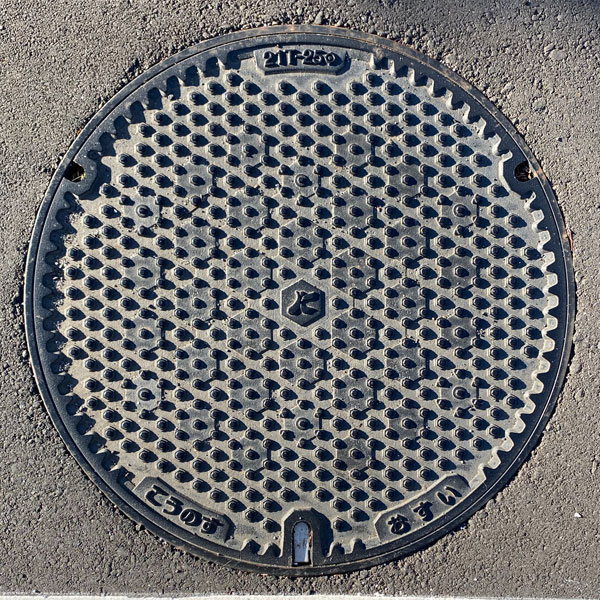
A manhole cover for sewage with a non-slip design. The second-generation city emblem is in the center.
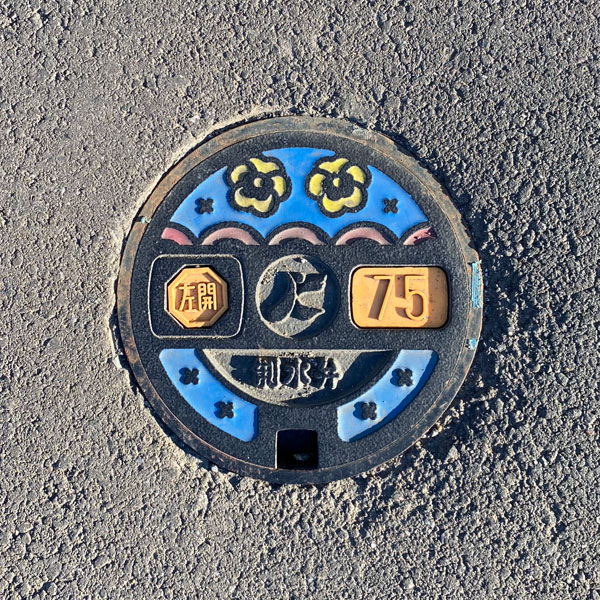
A water control valve cover, approximately 20 cm in diameter. The top features the city flower, the pansy, and what appears to be an aqueduct bridge. The central band has the words "Left Open," the second city emblem, and the number "75." The bottom has the words "Water Control Valve."
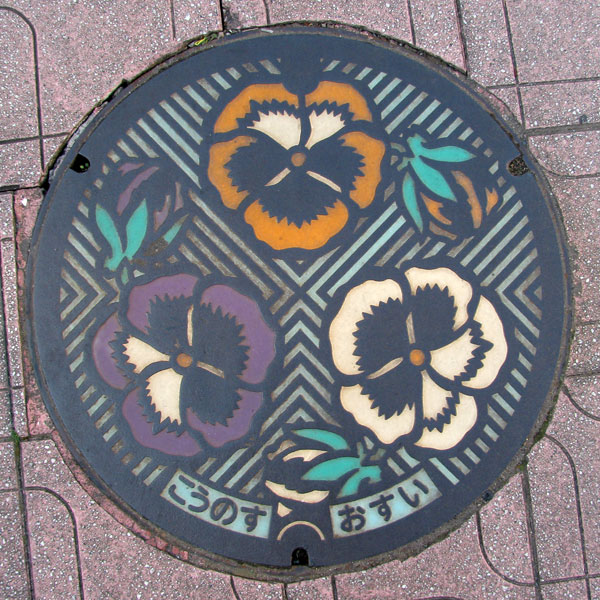
For wastewater. The design features the city flower, the pansy.
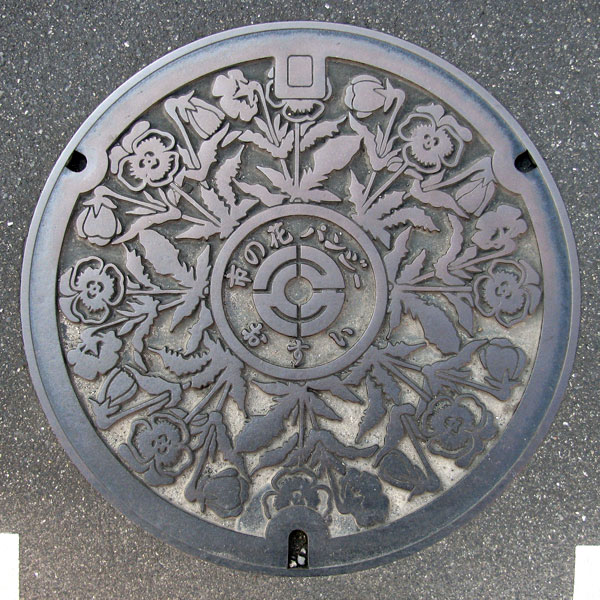
For wastewater. Features the city flower, the pansy, and the city emblem.
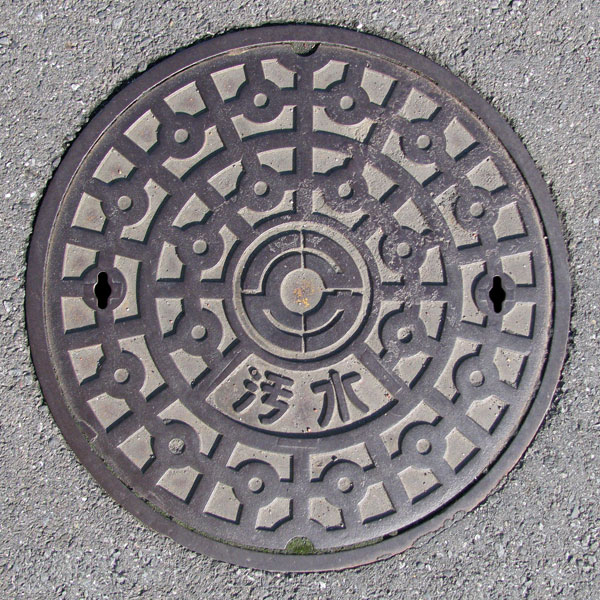
For wastewater use, conforming to JIS standard patterns. The city emblem, a stylized representation of "Kounosu" (a type of river), is located in the center.
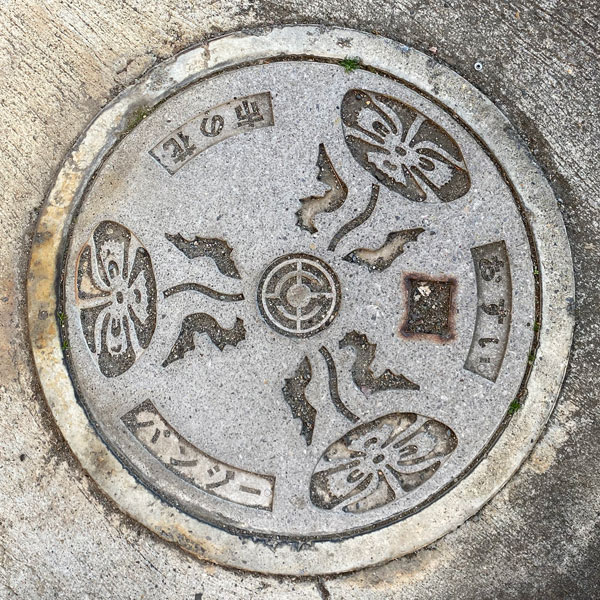
A mortar manhole cover depicting the city flower, the pansy. The words "sewage," "city flower," and "pansy" are inscribed on it. The orientation is unnatural, but it aligns with the old city emblem in the center.
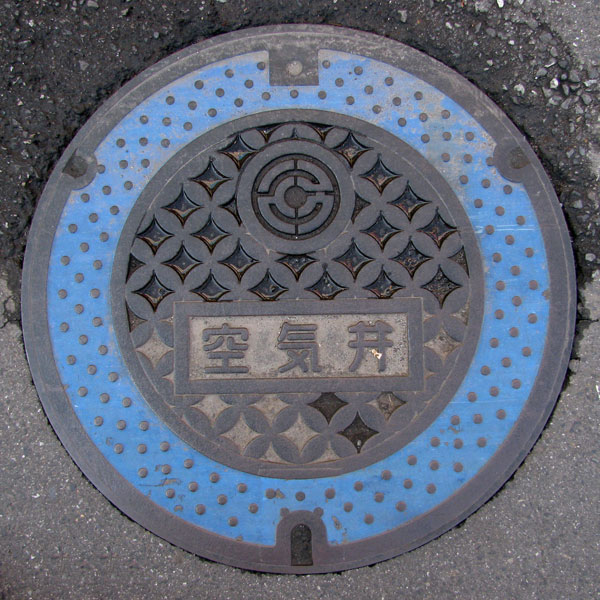
An air valve bearing the city emblem.
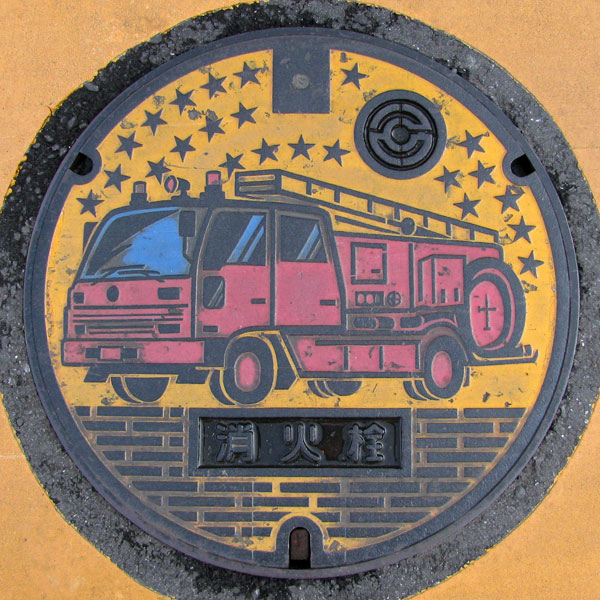
Fire extinguisher manhole with the city emblem.
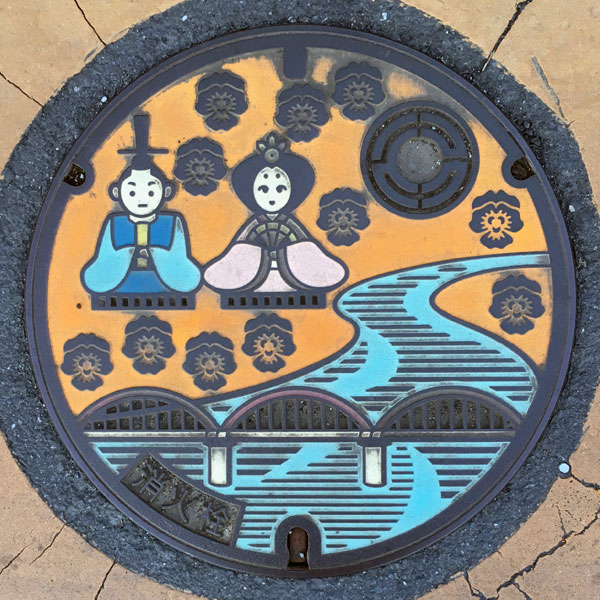
A fire hydrant cover depicting Hina dolls, the Arakawa Aqueduct Bridge, and the city flower, the pansy. The former Konosu City emblem is in the upper right corner.
The Arakawa Aqueduct Bridge is Japan's longest aqueduct bridge (approximately 1,100m), crossing the Arakawa and Wada-Yoshino Rivers to transport treated tap water from the Gyoda Water Treatment Plant to the western part of the prefecture (Yoshimi).
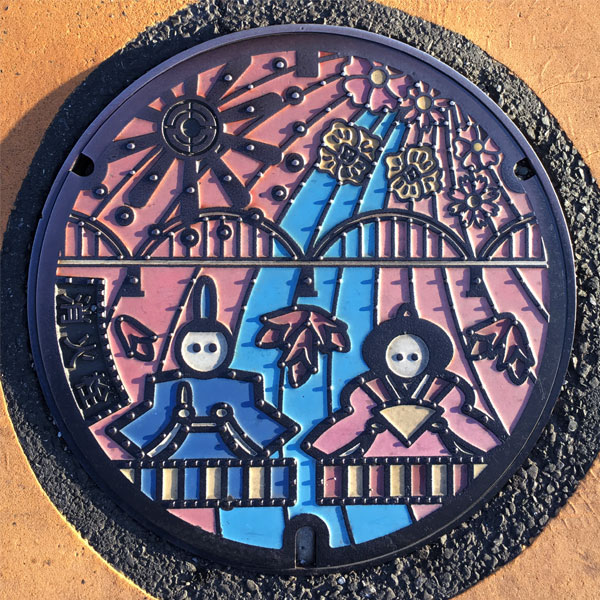
The fire hydrant cover features Hina dolls, the Arakawa River, a water pipe bridge, the city flower "pansy," and the former Fukiage town flower "cosmos" and fireworks. The former Konosu city emblem is depicted within the fireworks.
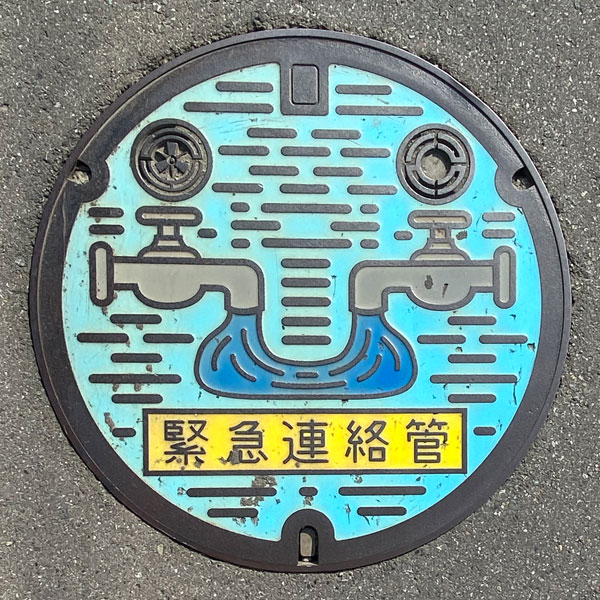
The cover of the emergency communication pipe has the "Okegawa Kitamoto Waterworks Enterprise Association" mark on the upper left and the "Konosu City Emblem" on the upper right, above two water taps connected by water.
See Arakawa Left Bank Northern Basin Sewerage System
Fukiage 吹上町
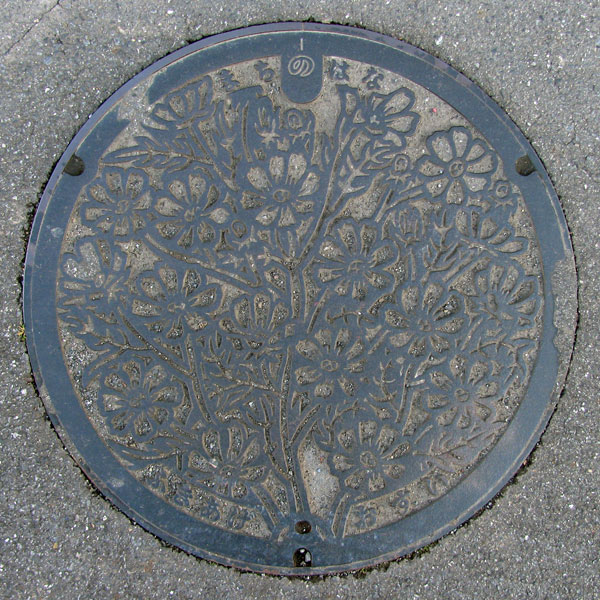
The design features the town flower, the cosmos. It is located on the left-hand sidewalk when facing from the "Fukiage Station" intersection towards the "Fukiage Station Entrance" intersection.
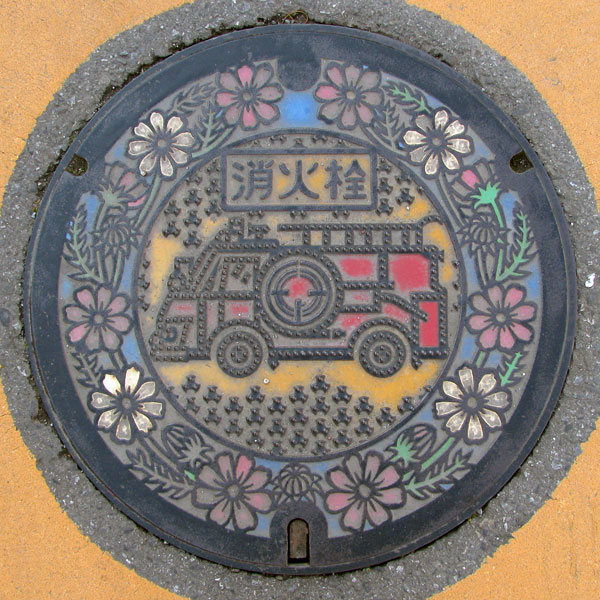
A fire hydrant surrounded by the town's flower, the cosmos. In the center is the town emblem, a design of two "Ki" characters and one "Kami" character.
Kawasaki 川里町
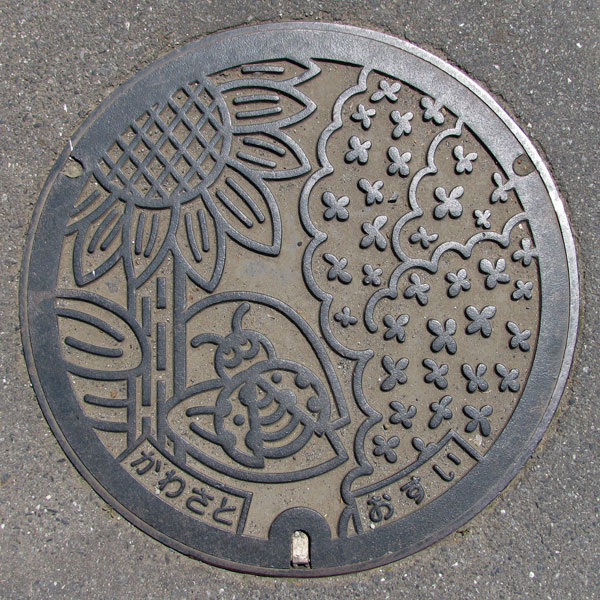
The design features the town flower, the sunflower, and a ladybug. On the right is the town tree, the osmanthus.
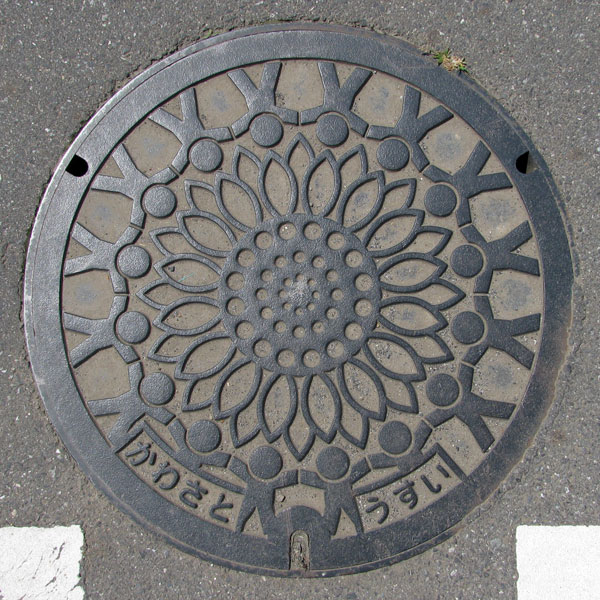
The pattern features the town's official flower, the sunflower, surrounded by a circle of people.
Kuki 久喜市
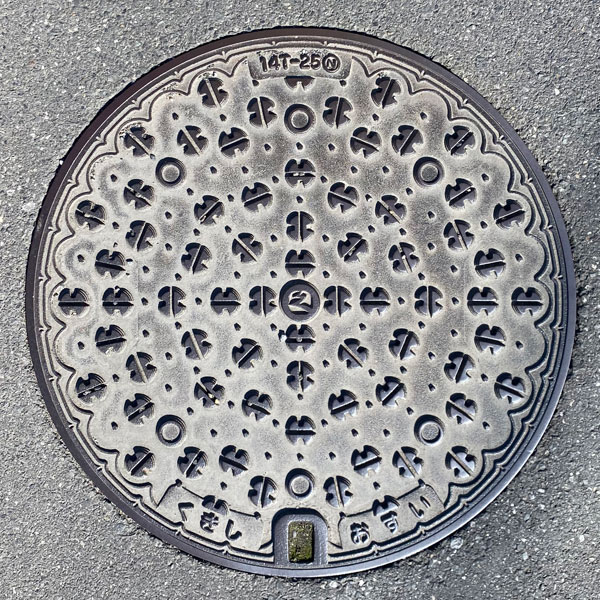
A manhole cover for sewage, designed with slip resistance. A small new city emblem is in the center.
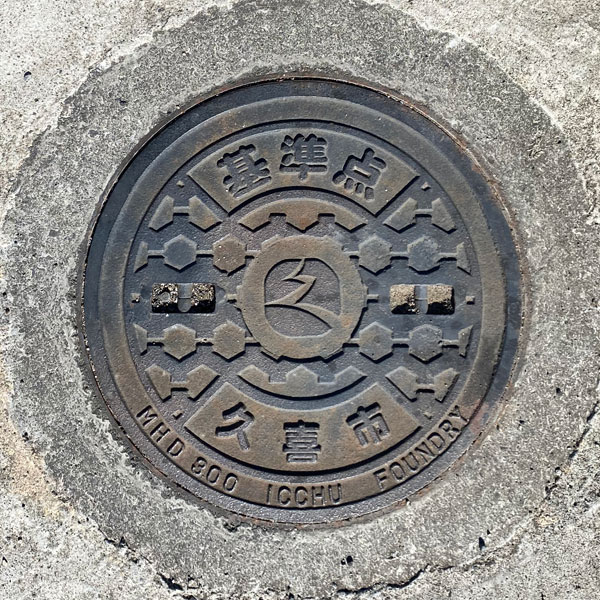
A manhole cover for a reference point, featuring the new city emblem in the center.
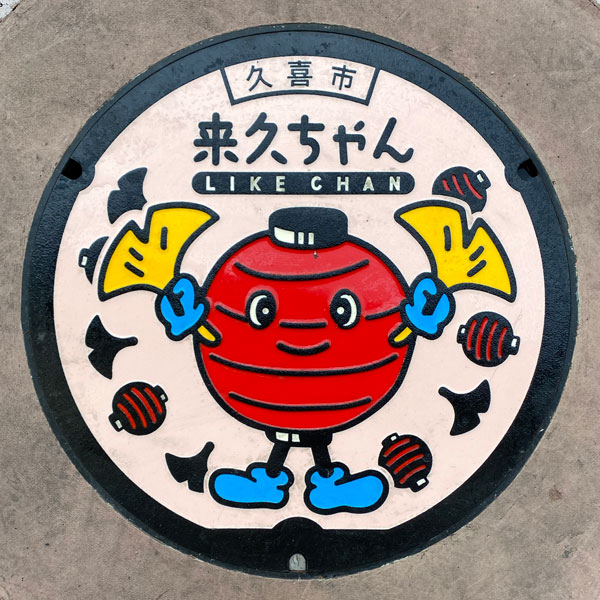
This is a sewer manhole cover produced to commemorate the 10th anniversary of the merger of Kuki City. It depicts "Raiku-chan," the mascot character of the Kuki City Chamber of Commerce and Industry.
"Raiku-chan" is based on Kuki's "lanterns," said to be the largest in the Kanto region, and the city's official tree, the "ginkgo." As indicated by "LIKE CHAN," it seems to be pronounced "Raiku-chan."
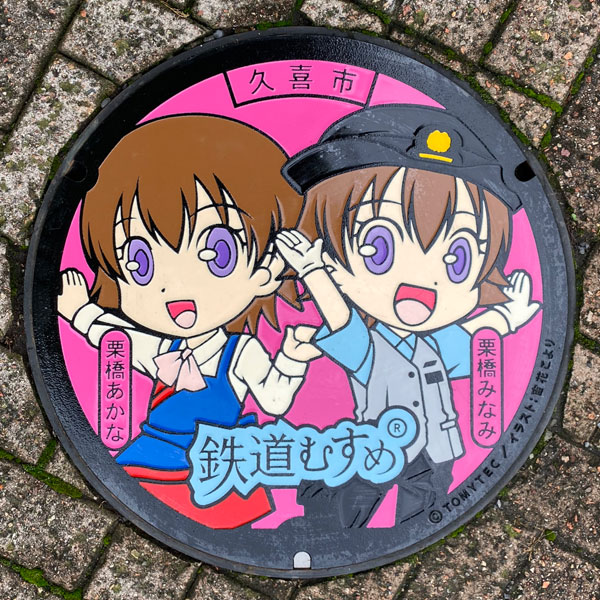
This sewer manhole cover was produced to commemorate the 10th anniversary of the merger of Kuki City. It depicts "Kurihashi Minami" and "Kurihashi Akana" from the "Railway Girls" series. The inscription in the lower right corner reads "©TOMYTEC / Illustration: Sora Hana Koyori".
"Railway Girls®" are characters developed by Tomytec Co., Ltd., a subsidiary of Takara Tomy Co., Ltd. They feature girls wearing the uniforms of various professions from real-life railway companies across Japan, and are featured in products such as figurines (this is the first I've heard of this...).
"Kurihashi Minami" is a station attendant for Tobu Railway, and her name comes from "Minami-Kurihashi Station." "Kurihashi Akana" is her cousin and is depicted as an in-train sales attendant on the Nikko Line's limited express "Spacia."
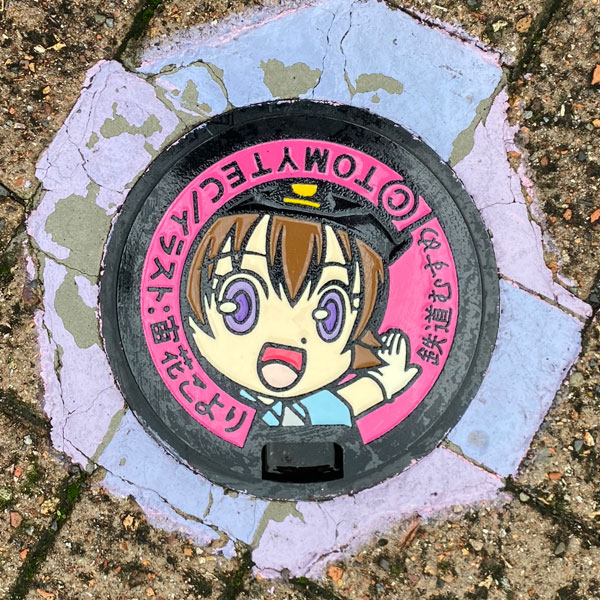
This is a handhole-sized cover for a water control valve, produced to commemorate the 10th anniversary of the merger of Kuki City. It was made as a pair with the manhole cover shown above, but only "Kurihashi Minami" is depicted, surrounded by the words "Railway Girl" and "©TOMYTEC/Illustration: Sora Hana Koyori".
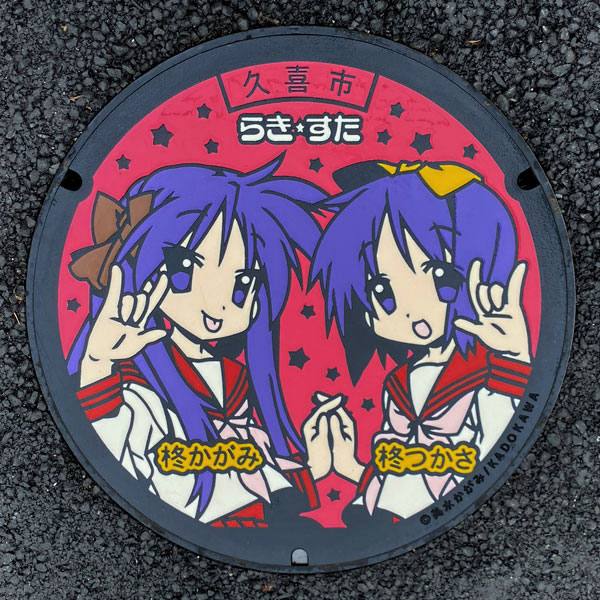
This sewer manhole cover was created to commemorate the 10th anniversary of the merger of Kuki City. It depicts Tsukasa Hiiragi and her twin sister Kagami Hiiragi, main characters from "Lucky Star." The inscription in the lower right corner reads "© Yoshimizu Kagami/KADOKAWA."
"Lucky Star" is a four-panel manga by Yoshimizu Kagami, and the games, anime, and novels based on it. It is said that Washinomiya Shrine is the model for Takamiya Shrine, where the Hiiragi sisters' father serves as the chief priest.

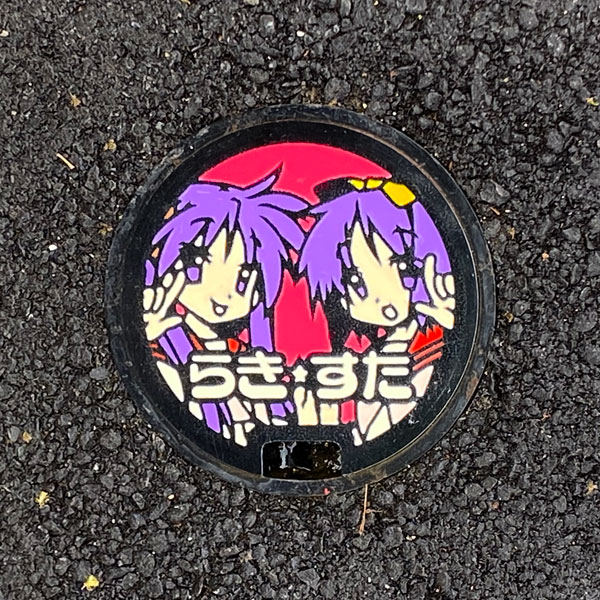
This is a handhole-sized cover for a water control valve, produced to commemorate the 10th anniversary of the merger of Kuki City. It was made as a pair with the manhole cover shown above. The cover depicts Tsukasa Hiiragi and her twin sister Kagami Hiiragi, main characters from "Lucky Star."
Unlike the manhole cover above, the words "Kuki City," the names of the characters, and the background star are absent, and the "Lucky Star" text is larger.
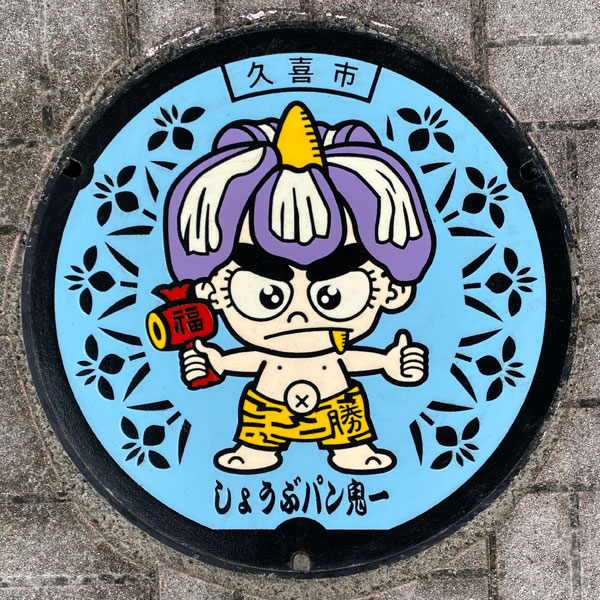
This sewer manhole cover was created to commemorate the 10th anniversary of the merger of Kuki City. It depicts "Shobu Pan Kiichi," the mascot character of the Kuki City Chamber of Commerce. Apparently, he's a character inspired by the iris flower, who supports people in life's challenges. He has an iris flower on his head, wears lucky underwear, and holds a small mallet with the character "福" (fuku, meaning good fortune) in his right hand. He was born at the Shobu Castle Ruins Iris Garden, and the background features iris flowers.
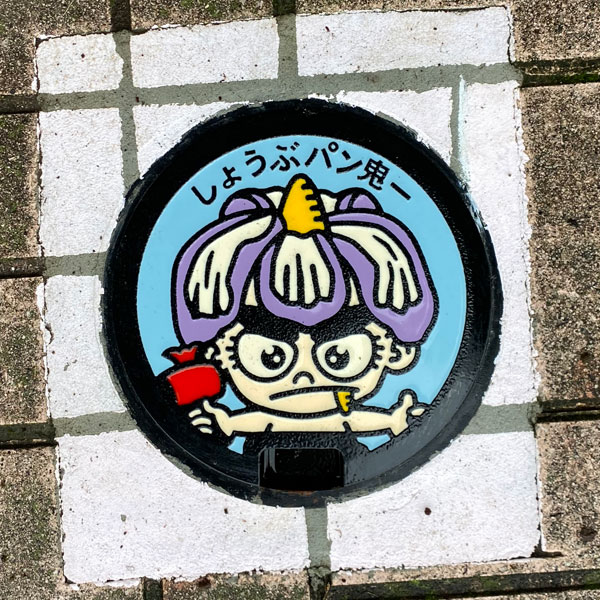
This is a handhole-sized cover for a water control valve, produced to commemorate the 10th anniversary of the merger of Kuki City. It was made as a pair with the manhole cover shown above. Only the upper body of "Shobu Pan Kiichi" is depicted.
See Furutonegawa River Basin Sewerage System
Kuki 久喜市
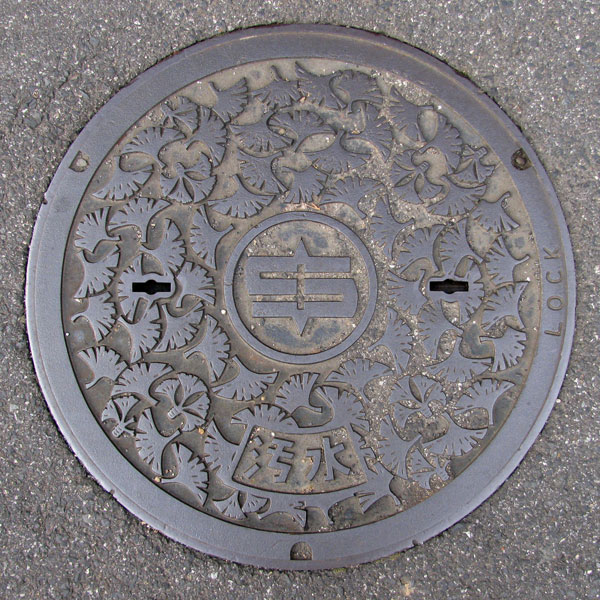
For wastewater. The design is based on the city tree, the ginkgo. The city emblem consists of two "久" characters combined in the center, with the resulting empty space being read as "Ki".
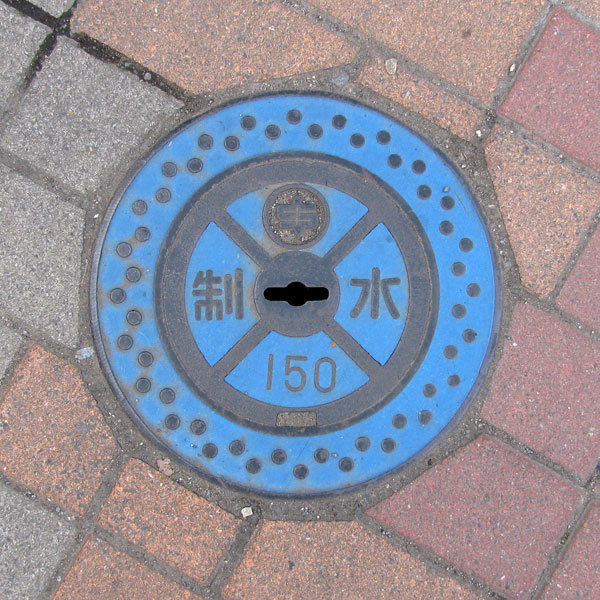
Water control valve.
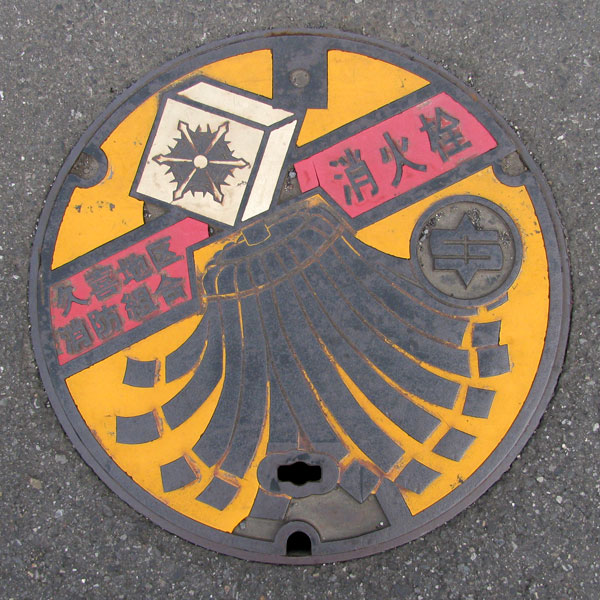
Fire hydrant of the "Kuki District Fire Department." The "Kuki District Fire Department" was a fire department formed by Kuki City, Washinomiya Town, Shobu Town (Minami-Saitama District), Kurihashi Town (Kita-Katsushika District), and Miyashiro Town (Minami-Saitama District). It was dissolved in April 2013 when the "Saitama Eastern Fire Department" (with jurisdiction over Kazo City, Satte City, Shiraoka City, Sugito Town, Kuki City, and Miyashiro Town) was established as part of a fire department consolidation.
Washimiya 鷲宮町
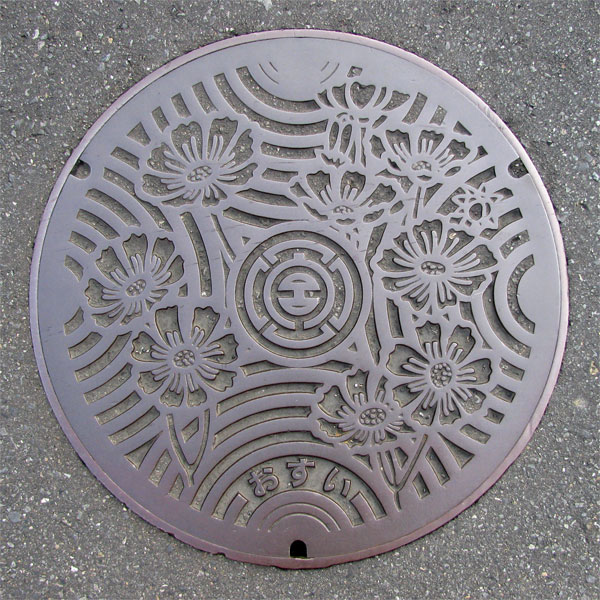
A manhole cover for sewage featuring the town flower, the cosmos. In the center is the town emblem, which consists of four "wa" characters surrounding the character "miya".
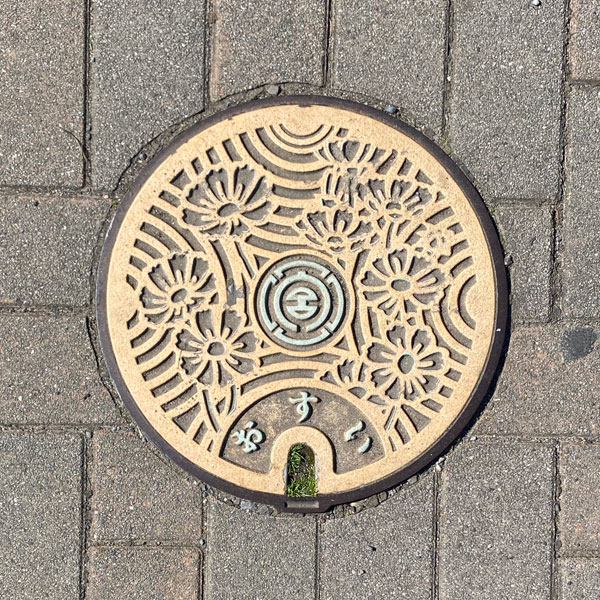
A small, colored panel for wastewater, with the same design as above.
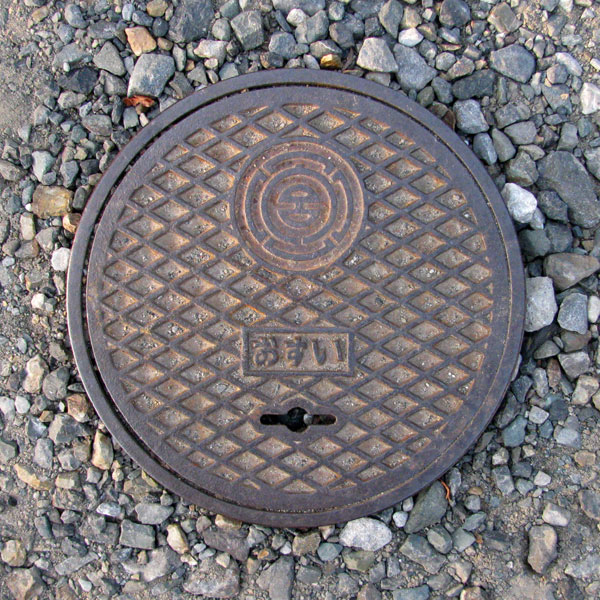
A mini-sized wastewater container with a diagonal grid pattern.
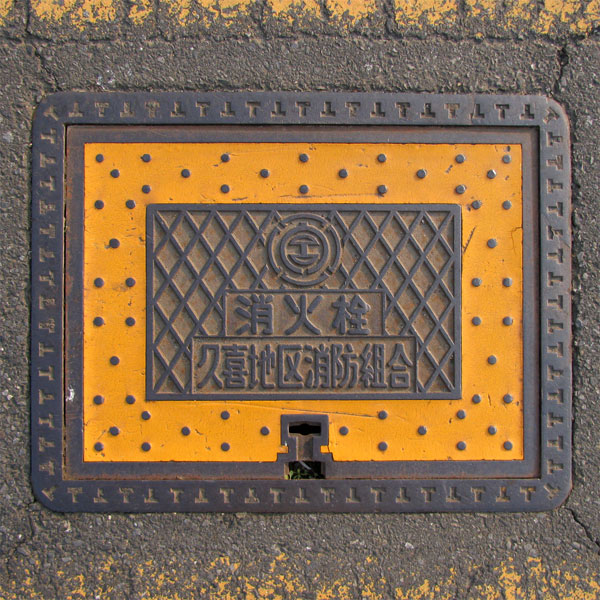
A fire hydrant bearing the town emblem. The "Kuki District Fire Department" is a fire department formed by Kuki City, Washinomiya Town, Shobu Town (South Saitama District), Kurihashi Town (North Katsushika District), and Miyashiro Town (South Saitama District).
Kurihashi 栗橋町
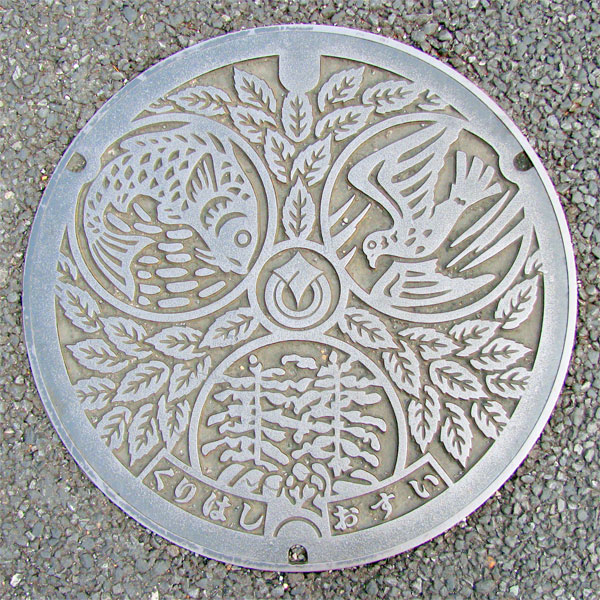
For rainwater drainage. The design seems to feature the town's flower, "salvia," along with a "carp" and a "white-winged dove." The center features the town emblem, a stylized representation of "Kuri" (栗).
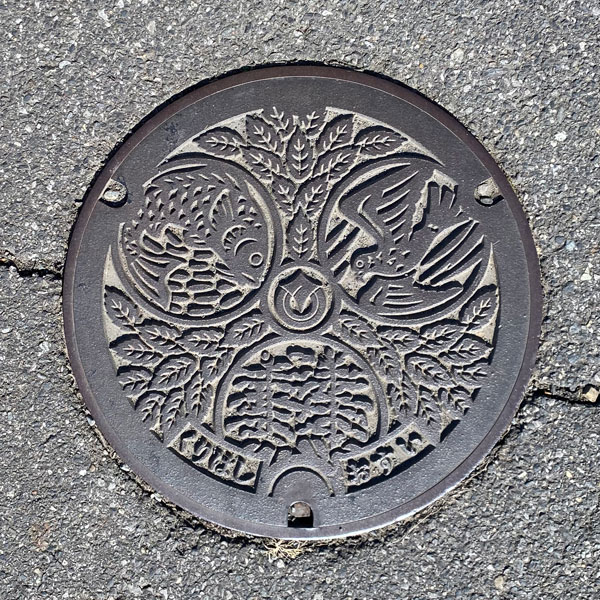
This is a mini-sized manhole cover for sewage.
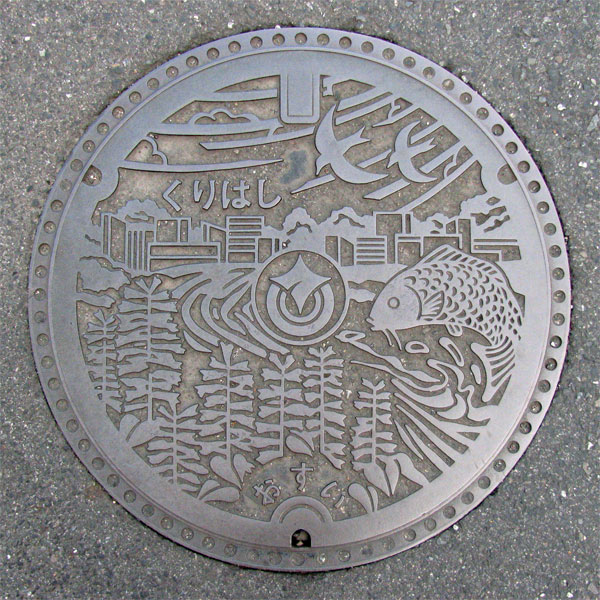
For wastewater. The design features the town flower, "salvia," a "carp" jumping from the water, and a "swallow" flying.
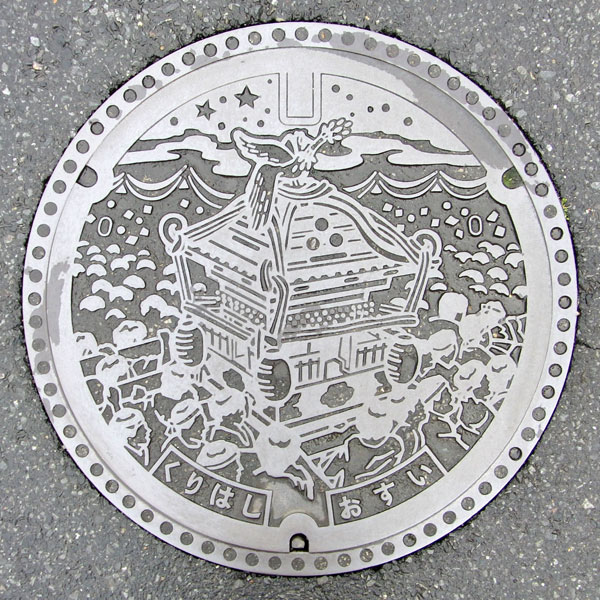
For wastewater. The design is based on the large portable shrine used in the "Tenno-sama" festival at Yasaka Shrine. It is said to be one of the three largest portable shrines in the Kanto region.
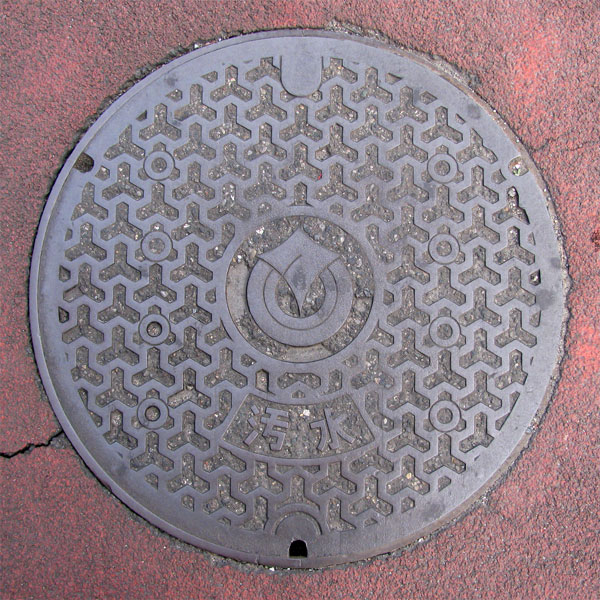
For wastewater with a tetrahedron pattern with the city emblem in the center.
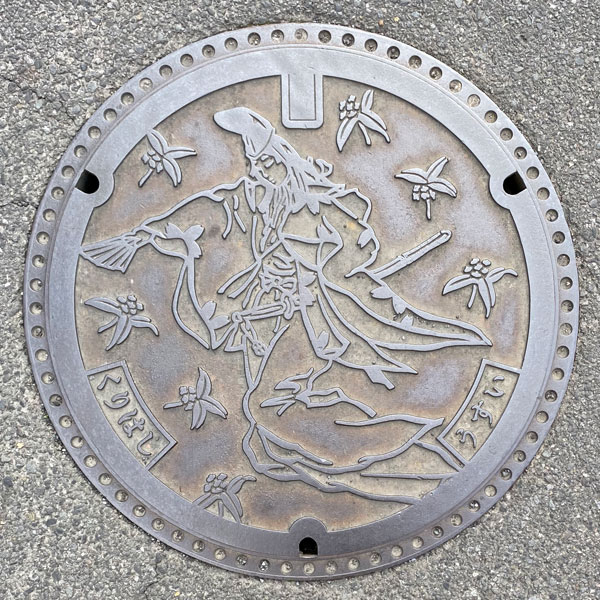
For sewage. The design features the town flower, the "Osmanthus fragrans," and "Shizuka Gozen," whose grave is located in the town.
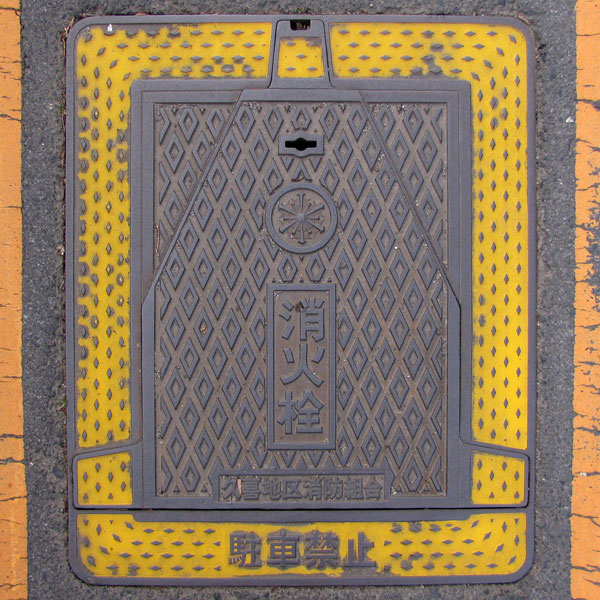
While fire hydrant covers are usually horizontally long, this one is vertically long. The way it opens is also interesting. The words "Kuki District Fire Department" are inscribed at the bottom.
The "Kuki District Fire Department" was a fire department organization formed by Kuki City and Miyashiro Town in Minami-Saitama District. It was dissolved in 2013 with the establishment of the "Saitama Eastern Fire Department (Kazo City, Satte City, Shiraoka City, Sugito Town, Kuki City, and Miyashiro Town)" as part of fire department consolidation.
Shoubu 菖蒲町
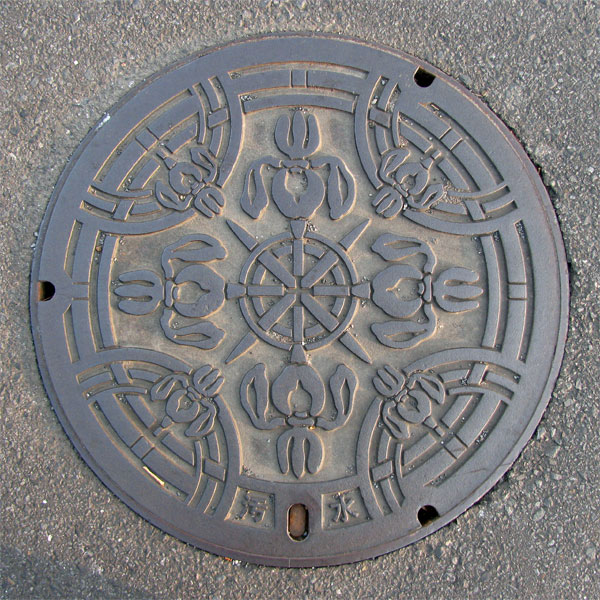
For sewage. The design features the town flower, the iris. Within the town, there is the "Castle Ruins Iris Garden" where irises bloom at the Shobu Castle ruins.
A smaller, handhole-sized panel with the same design as above.
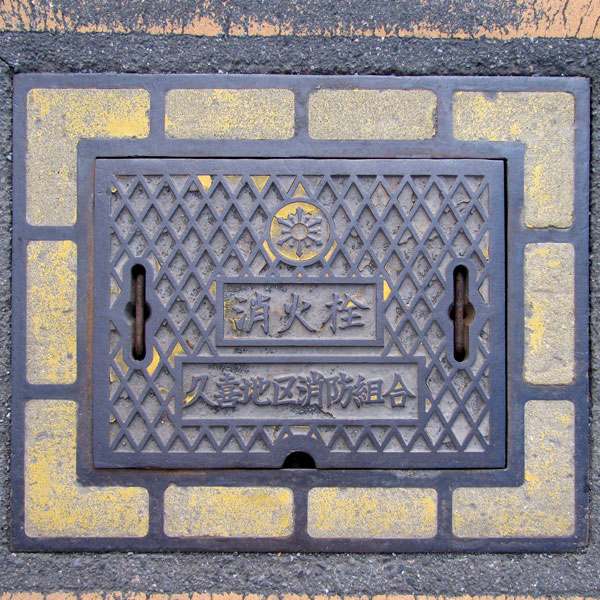
A fire hydrant belonging to the "Kuki District Fire Department."
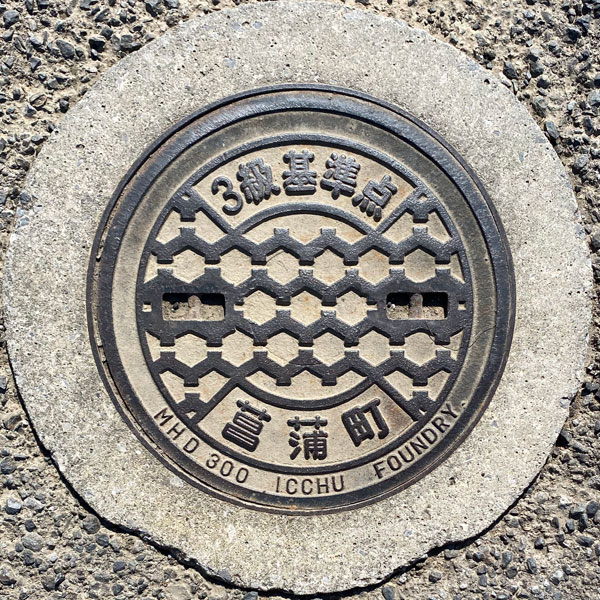
A manhole cover for a third-order benchmark with the words "Shobu-cho" (Ayame Town) on it.
Satte 幸手市
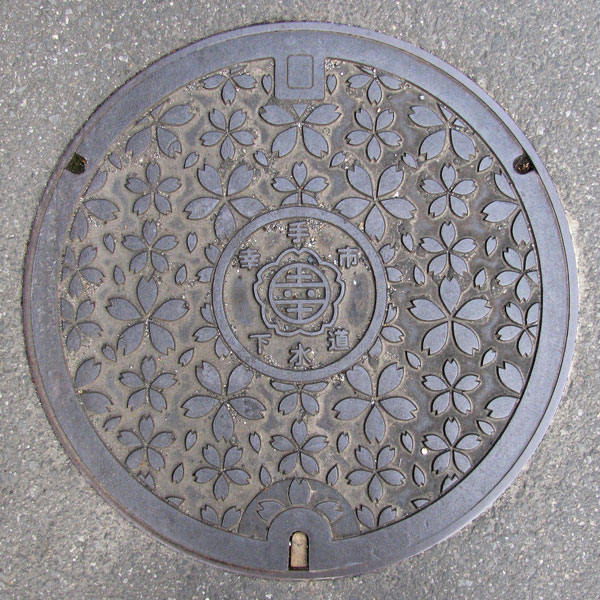
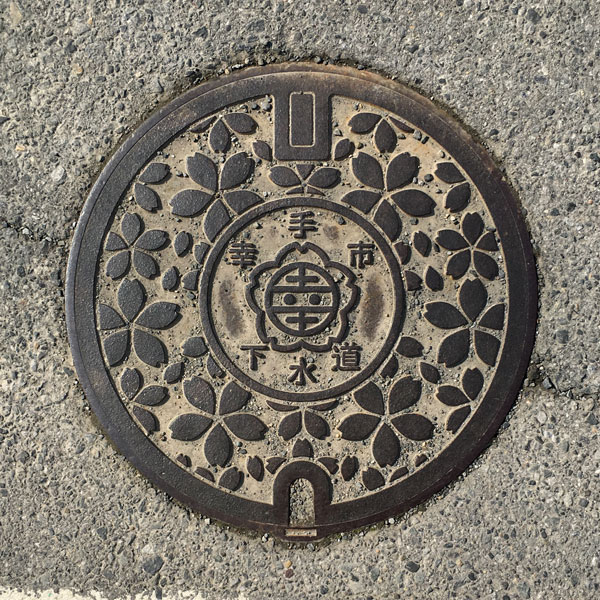
For wastewater. The design features the city flower, "Sakura" (cherry blossom). The city emblem, a combination of "Sakura" and "Sachi" (幸), is in the center.
A small wastewater drain with the same design as the one above. The top lid is cut out to fit the diameter.
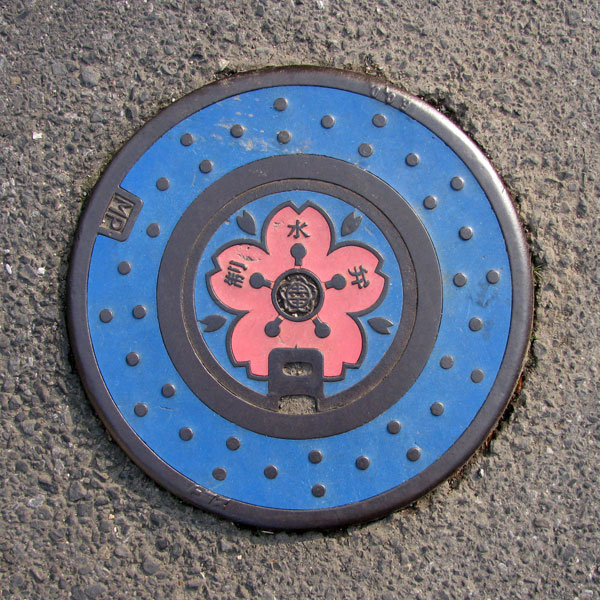
A water control valve with a beautiful cherry blossom pink color.
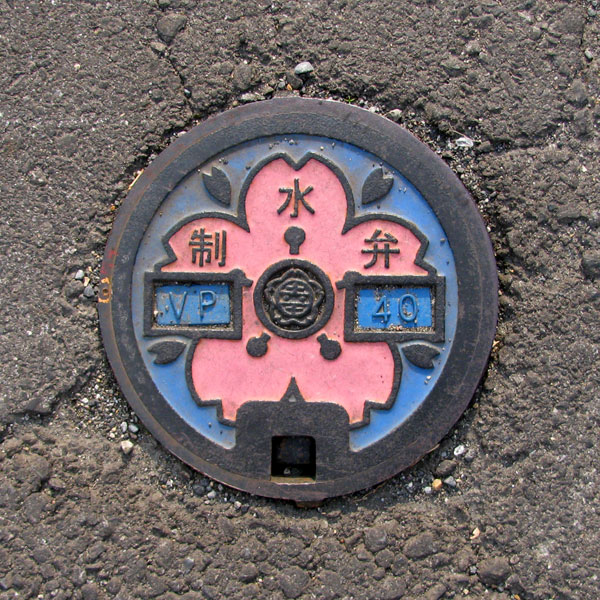
A miniature water control valve with the pipe diameter displayed.
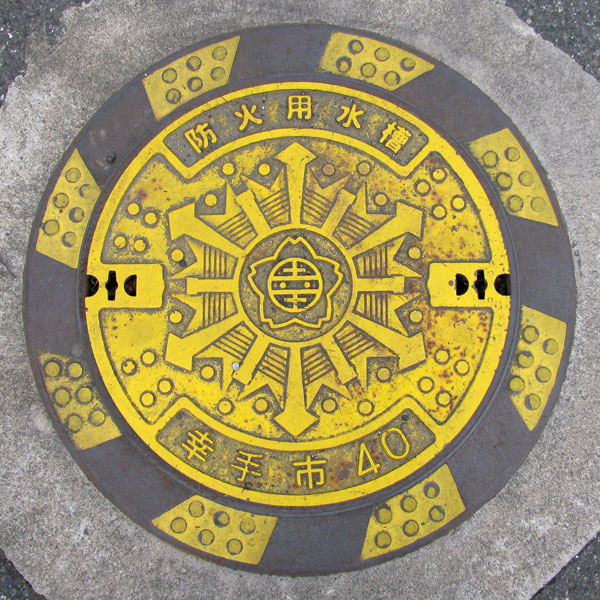
Lid for a fire-fighting water tank.
See Nakagawa Basin Sewerage System
Chichibu 秩父市
Chichibu 秩父市
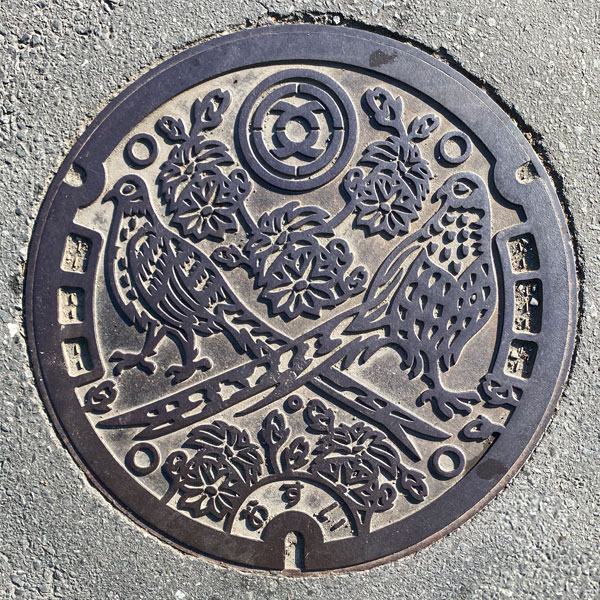
A Japanese pheasant is depicted, but the new Chichibu City bird is the "Blue-and-white Flycatcher," so this is likely from before the merger. The city emblem is the same as the old city's. The flower is the "Kibune-giku (Japanese anemone)," a symbol of the old Chichibu City, a plant said to have been introduced from China in ancient times.
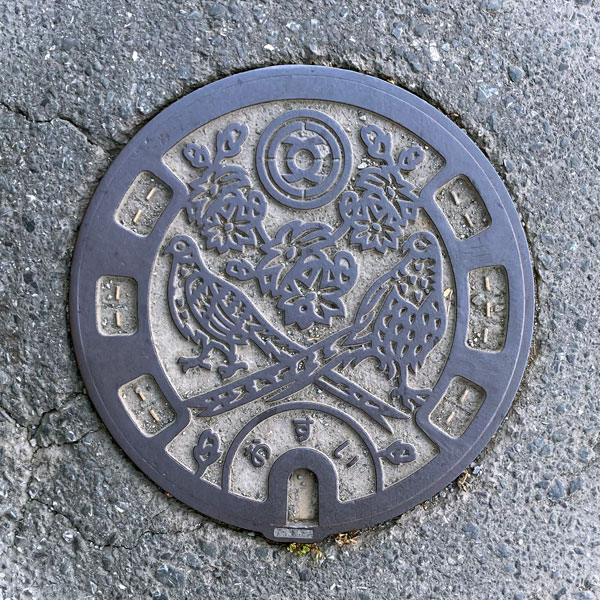
Small drain for wastewater. Fewer flowers at the bottom.
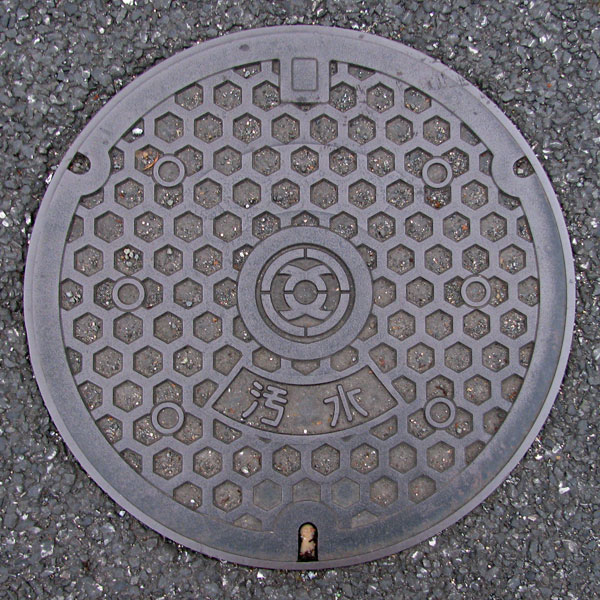
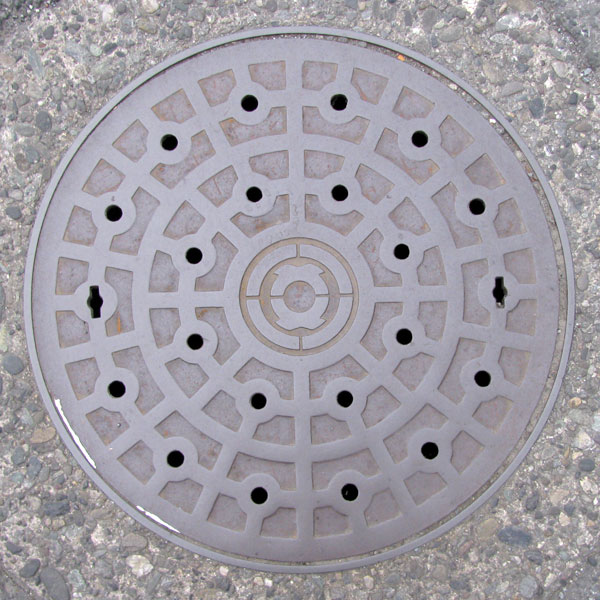
City emblem in the center. The city emblem, a stylized representation of the character for "father, 父," is located in the center.
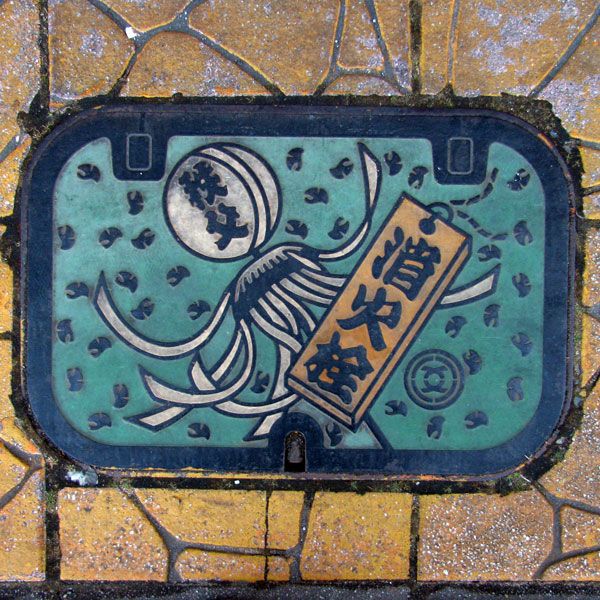
Fire hydrant.
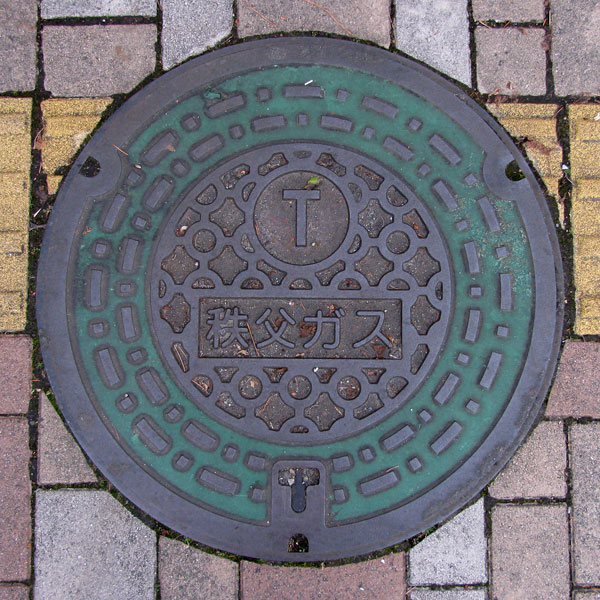
This is a manhole cover belonging to Chichibu Gas.
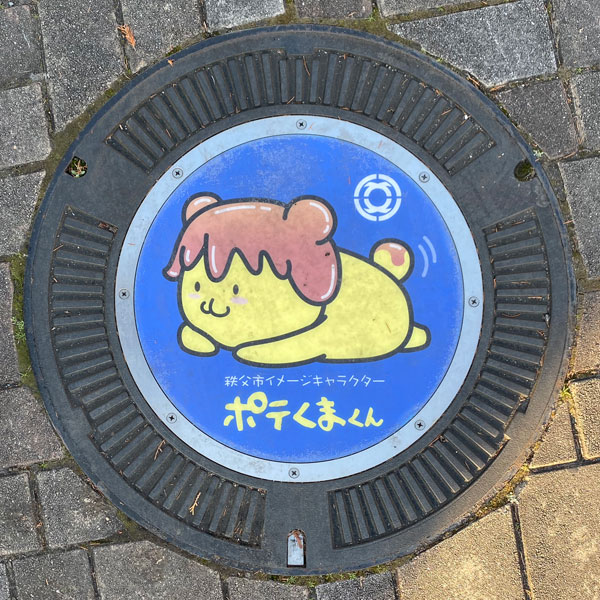
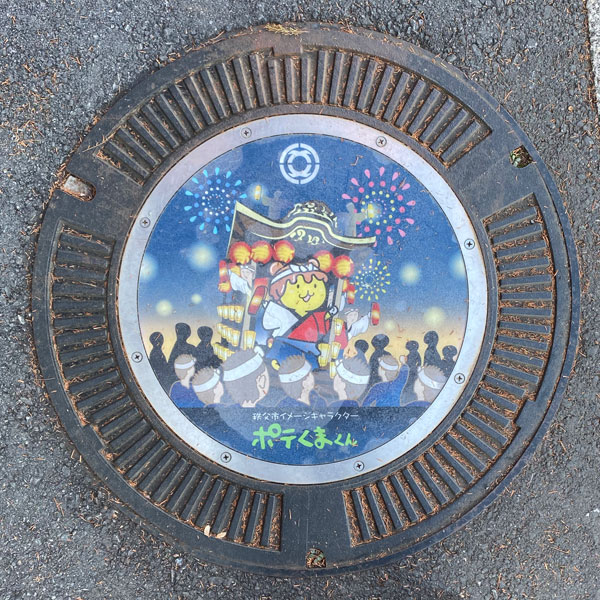
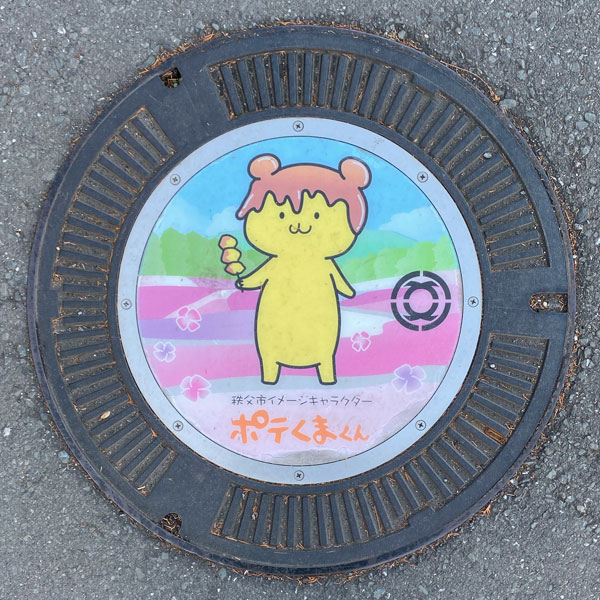
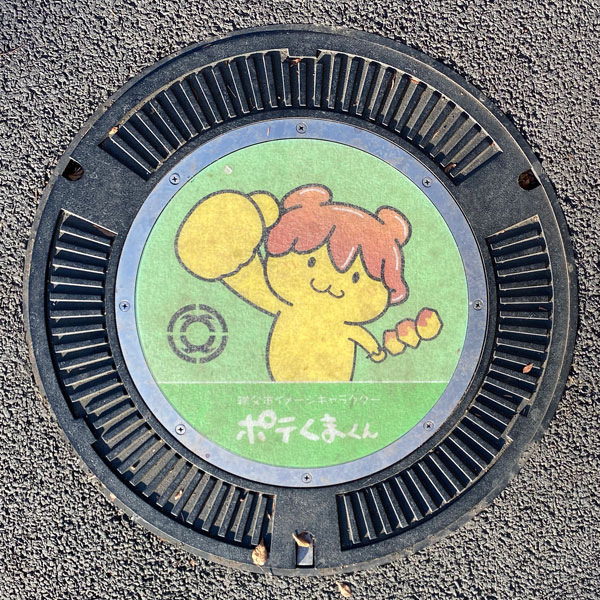
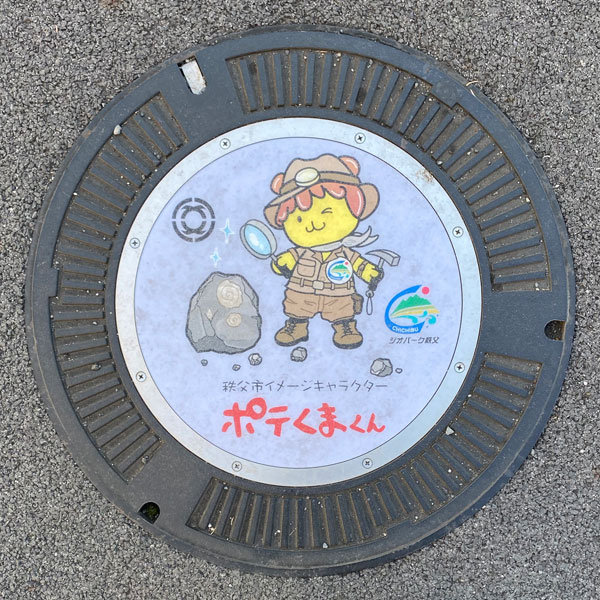
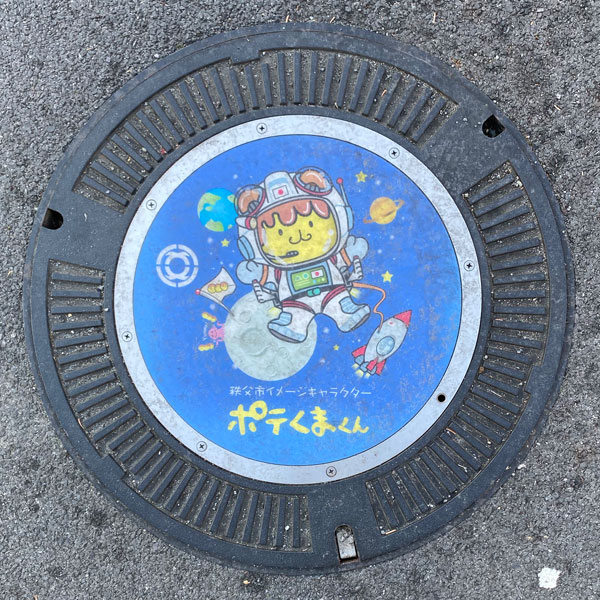
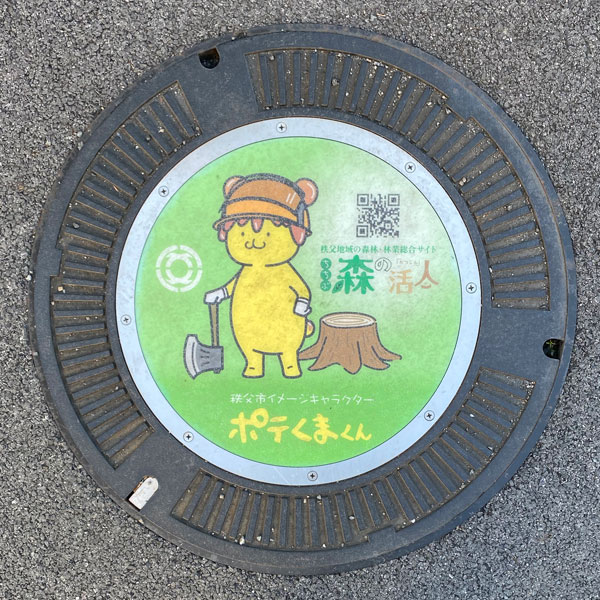
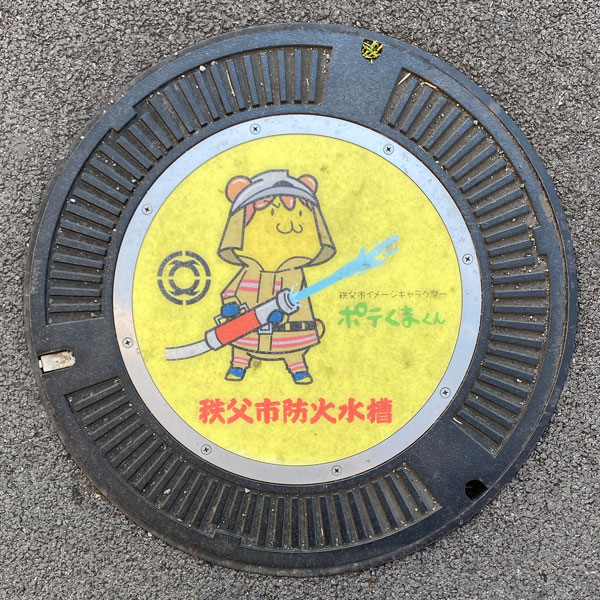
These are plate-shaped manhole covers featuring Potekuma-kun, the mascot character of Chichibu City. "Potekuma-kun," created in 2015, is the image character of Chichibu City, based on the local specialty "Miso Potato," and serves as the city's publicity ambassador. The reason his head is brown is apparently because he ate too much Miso Potato, causing the miso to ooze from his head.
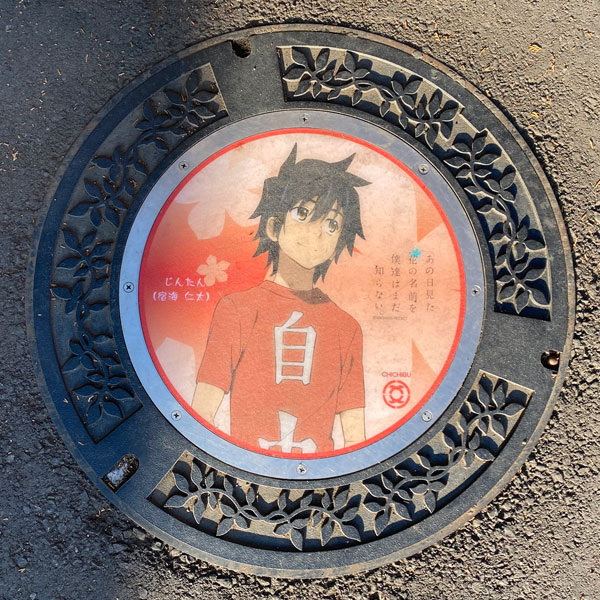
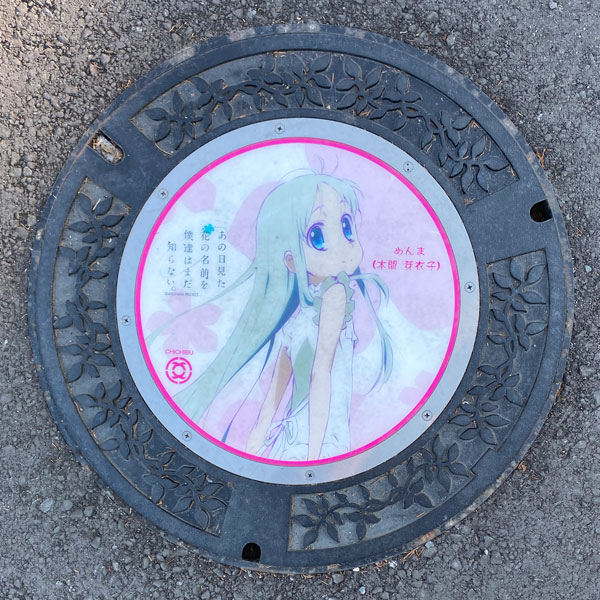
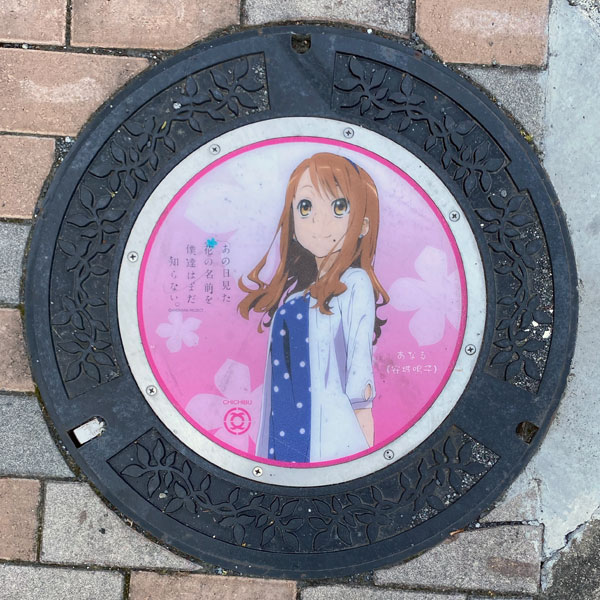
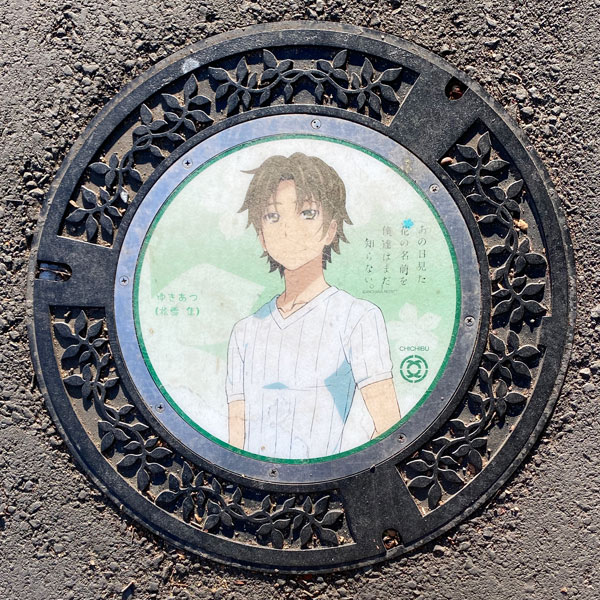
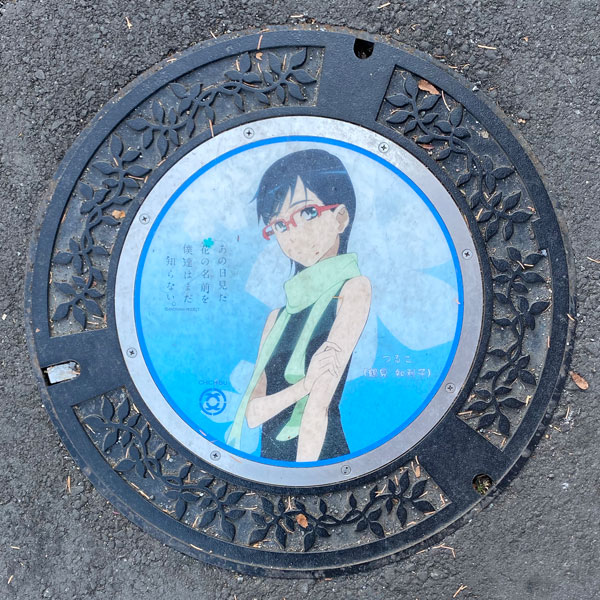
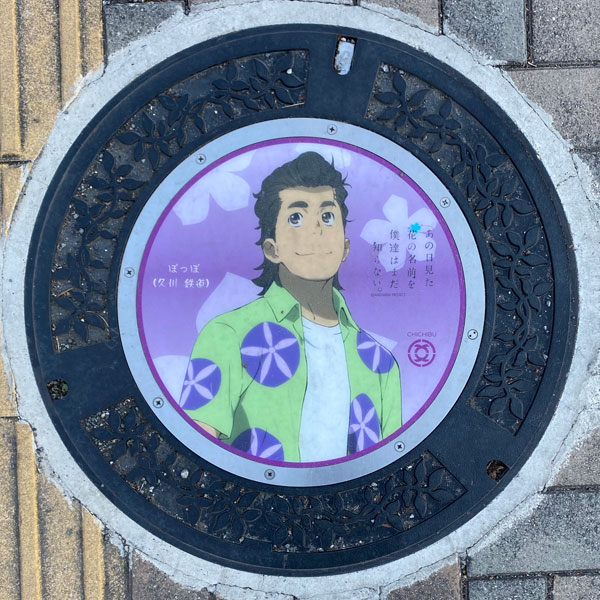
A plate-shaped manhole cover featuring the main characters from the TV anime series "Anohana: The Flower We Saw That Day." The setting of the anime was modeled after Chichibu City.
Yoshida 吉田町
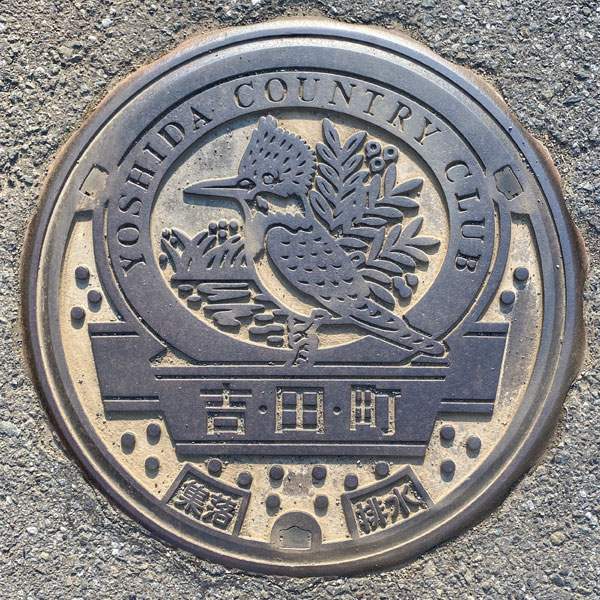
This is a manhole cover for agricultural wastewater treatment in the Akegahira/Ogawa area. The crested kingfisher is the town bird of the former Yoshida town. The words "YOSHIDA COUNTRY CLUB" are inscribed on it.
Higashimatsuyama 東松山市
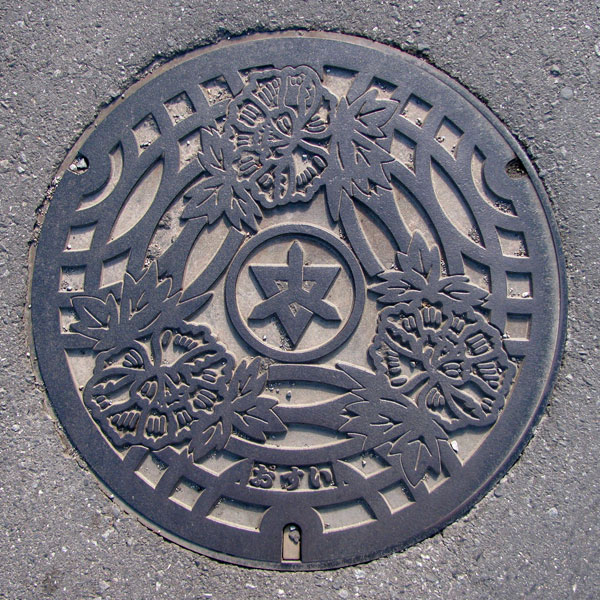
The city emblem features three "Ma" characters from "Matsuyama" combined in the center, with the overall shape representing "Higashi" (east), and three lines branching out from the center representing "Yama" (mountain). The flower is the city flower, the peony. Yagyu Inari Shrine, located west of Higashimatsuyama Station, is known as a famous spot for peonies.
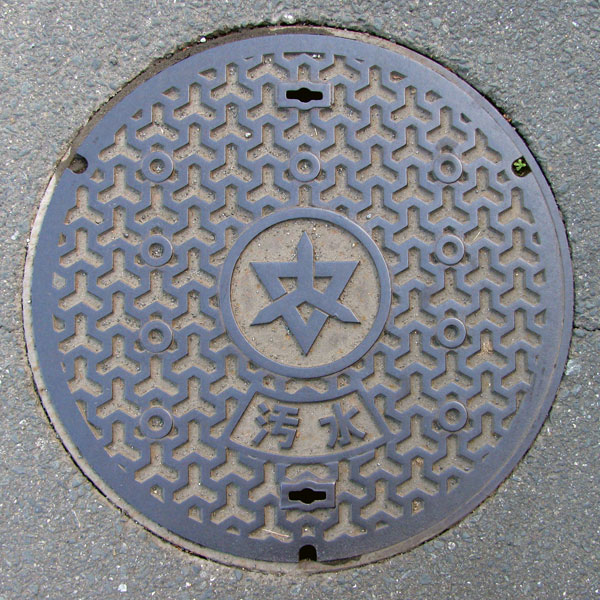
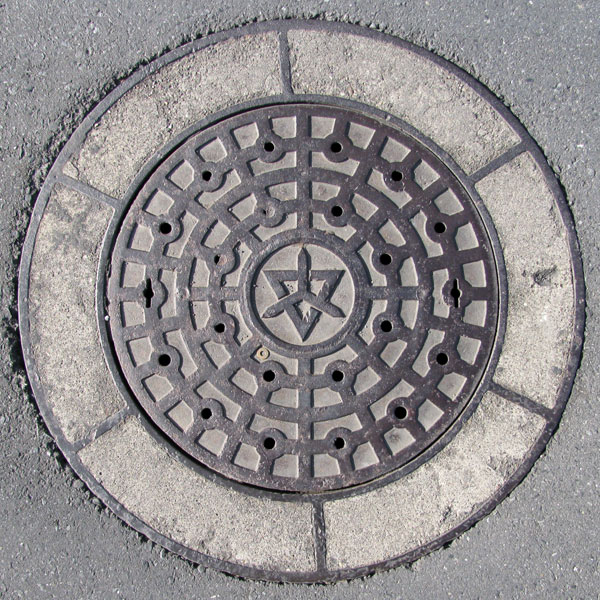
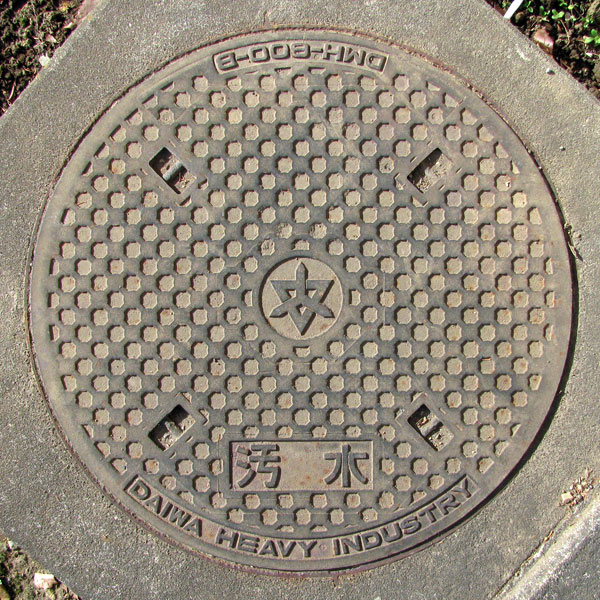
City emblem in the center.
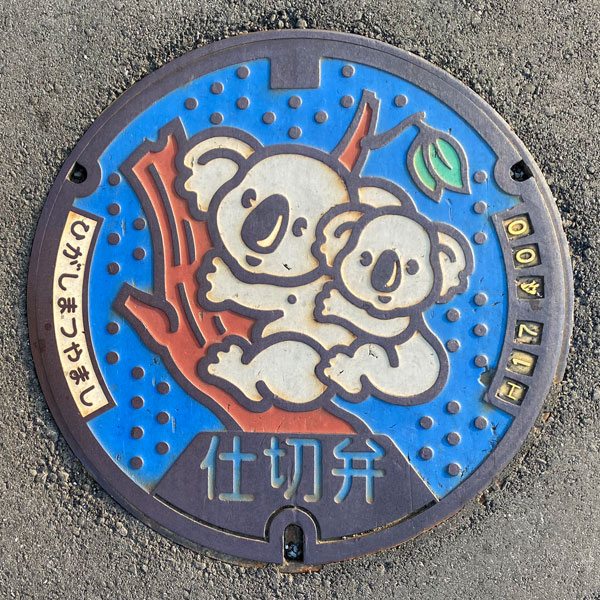
A manhole cover with a koala depicted on it. At the Children's Zoo in Iwadono, Higashimatsuyama City, koalas gifted as a symbol of friendship from Queensland, Saitama Prefecture, which has a sister-city relationship with the prefecture, are kept.
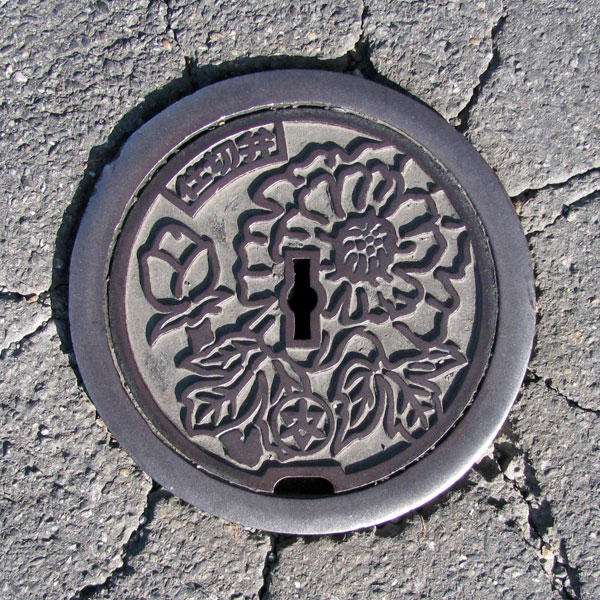
A gate valve decorated with the city flower, the peony.
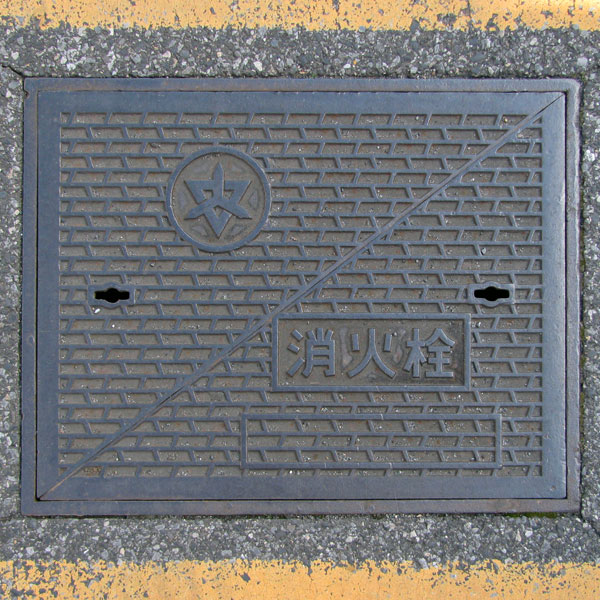
A fire hydrant with a bifurcated rectangular shape with the city emblem on the top left.
Kitamoto 北本市
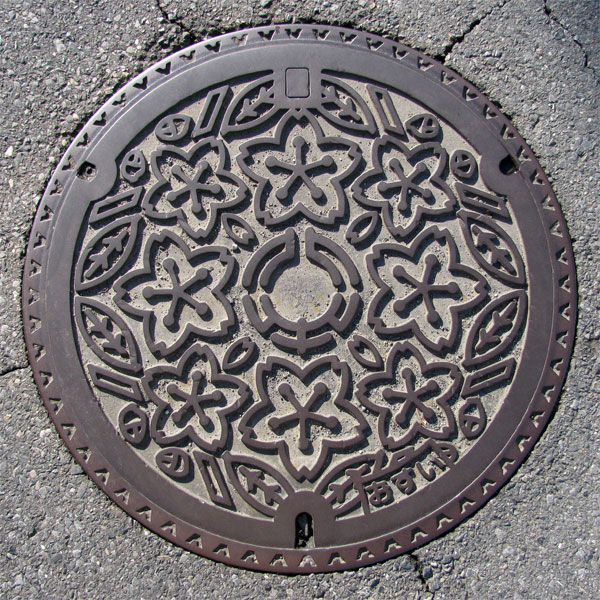
The design features the city's official tree, the cherry blossom. The city emblem, a stylized representation of the kanji characters for "Kitamoto," is in the center.
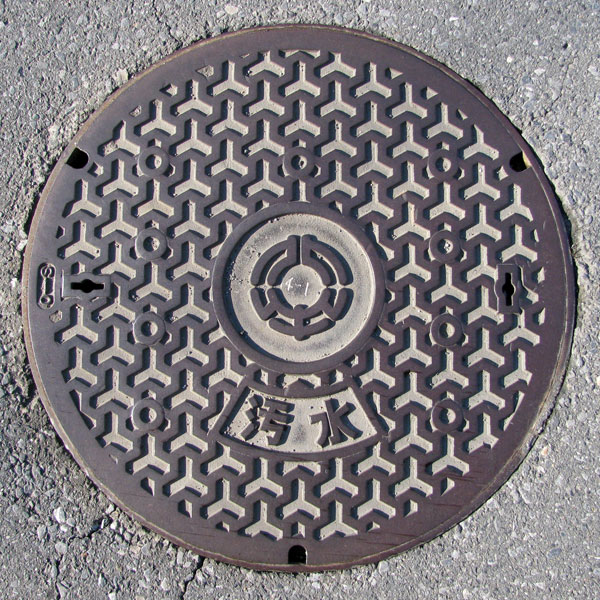
City emblem in the center.
See Arakawa Left Bank Northern Basin Sewerage System
See Okegawa Kitamoto Waterworks Association
Okegawa 桶川市
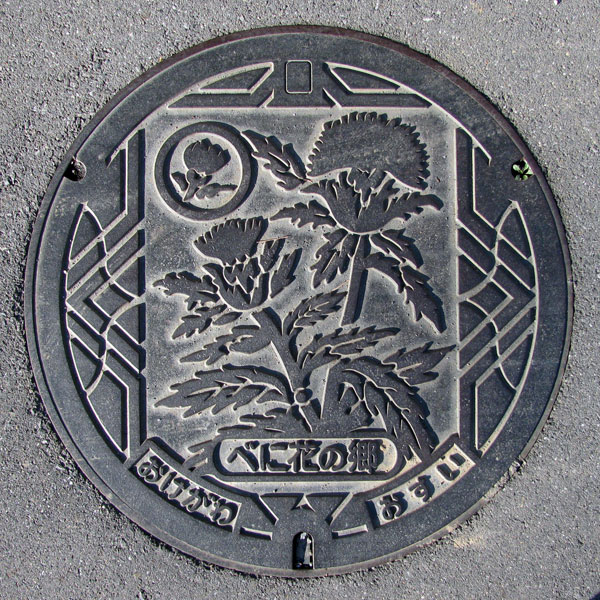
Okegawa City is promoting urban development under the slogan "Okegawa City, the Home of Safflower." Safflower production in Okegawa began during the Tenmei and Kansei eras when Edo merchants brought the seeds. It became known throughout Japan as "Okegawa crimson" and flourished to the point of being called a safflower town, bringing great wealth and culture. However, in the Meiji period, it gradually declined due to the introduction of chemical dyes. Safflower, which brought economic prosperity in the Edo period, now brings cultural maturity a hundred years later. With this wish in mind, the safflower was designated as the city's flower, and this manhole was designed as a symbol of urban development.
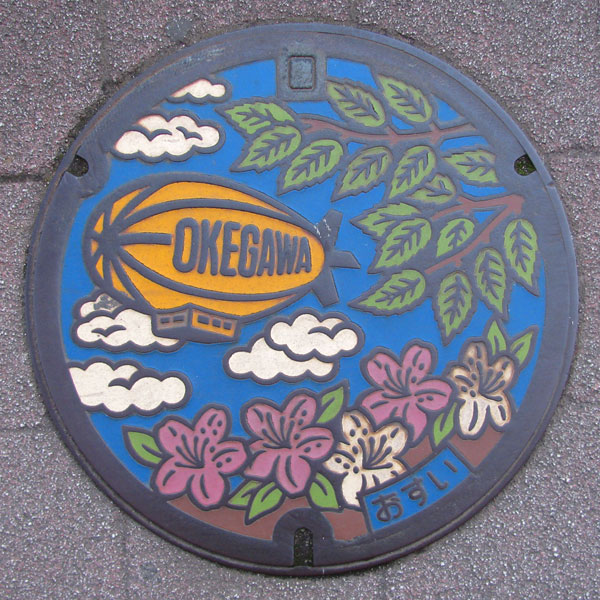
The manhole cover depicts an airship, the city tree ("Zelkova"), and the city flower ("Azalea"), as the runway of Honda Aviation (Honda Airport), where light aircraft and advertising airships take off and land, is located on the Arakawa riverbed.
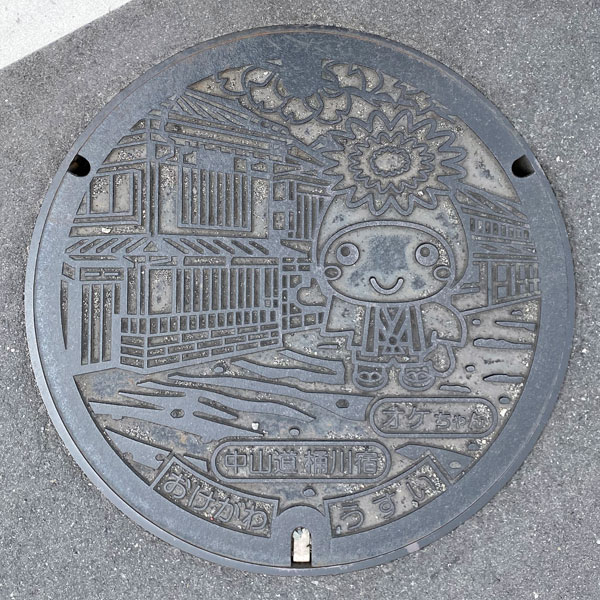
A manhole cover for sewage featuring Okegawa City's mascot character, "Oke-chan," against the backdrop of the Nakasendo Okegawa-juku townscape.
The city's official tree, the ginkgo, is also depicted above.
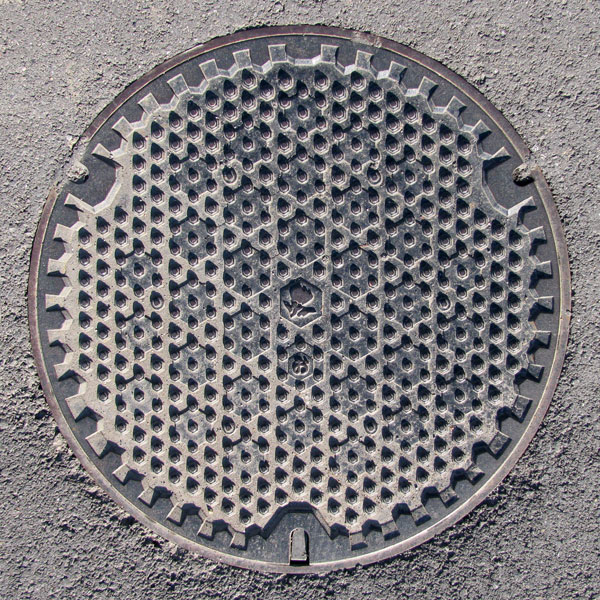
ASD (Anti-Slipping Design) type for wastewater. Features a small safflower in the center.
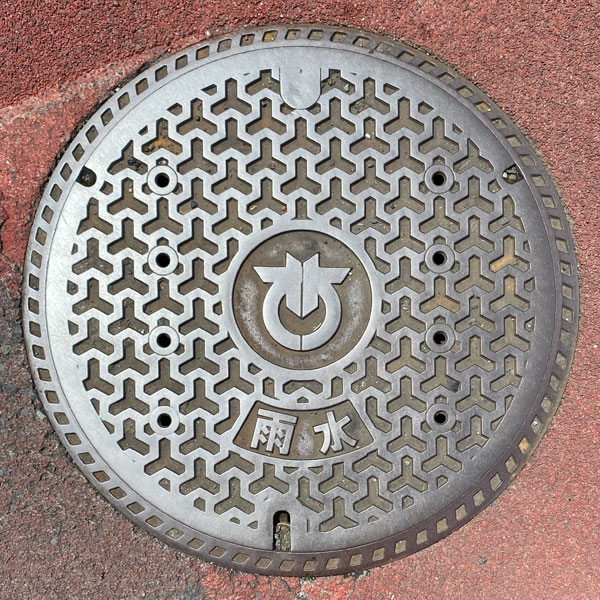
A manhole cover for rainwater with a Bishamon tortoise shell pattern. The city emblem is in the center. Below it, the word "Rainwater" is written in large letters.
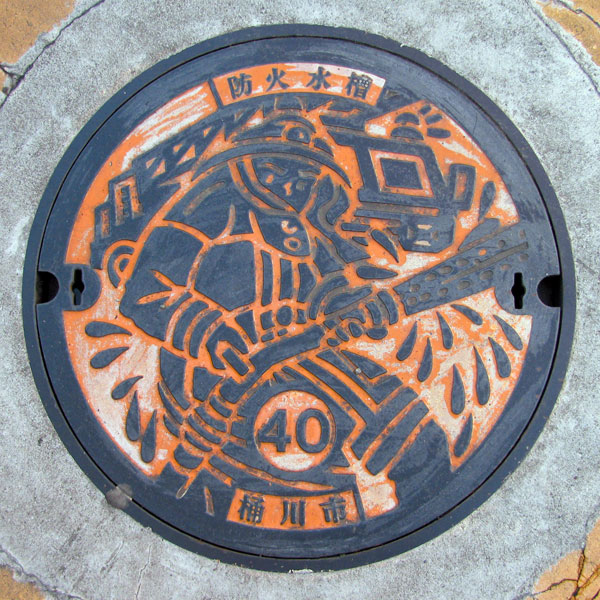
A fire hydrant cover featuring a bold illustration of firefighters and a fire truck.
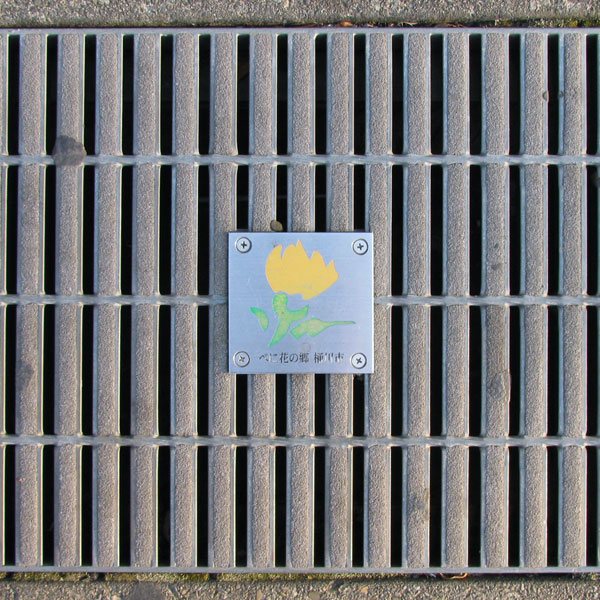
The drain covers also have safflower-shaped plates that read "Okegawa City, the Home of Safflowers."
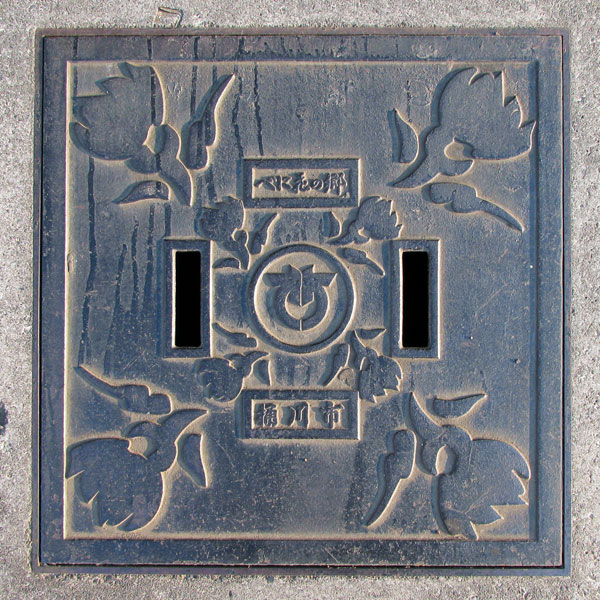
A manhole cover located at the joint of a drainage ditch.
See Arakawa Left Bank Northern Basin Sewerage System
See Okegawa Kitamoto Waterworks Association
Shiraoka 白岡市
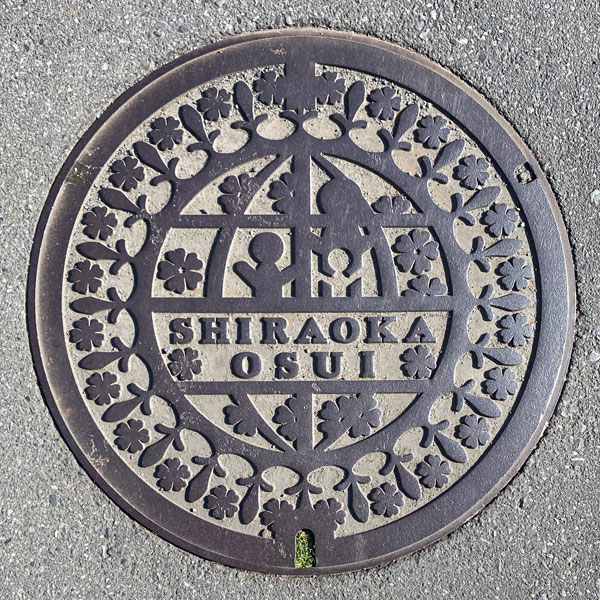
The design features a family surrounded by flowers and buds, conveying the message that the development of the city and its sewage system is shared with its citizens.
See Nakagawa Basin Sewerage System
Shiraoka 白岡市
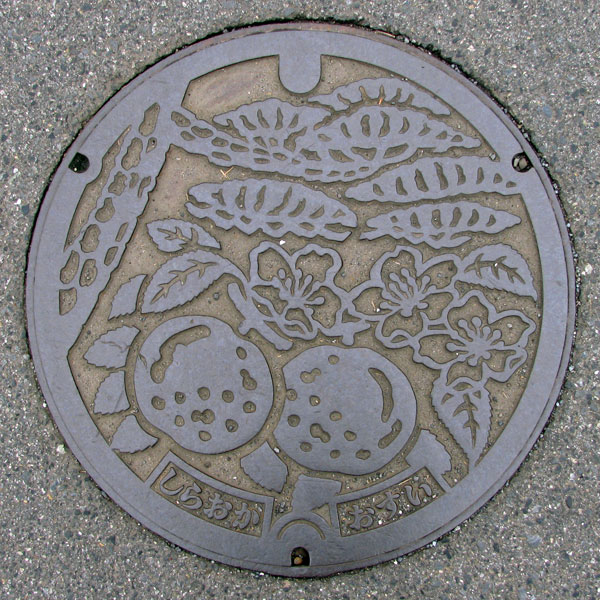
A manhole cover for sewage, featuring the town's tree (pine), town flower (pear blossom), and, incidentally, a pear fruit.
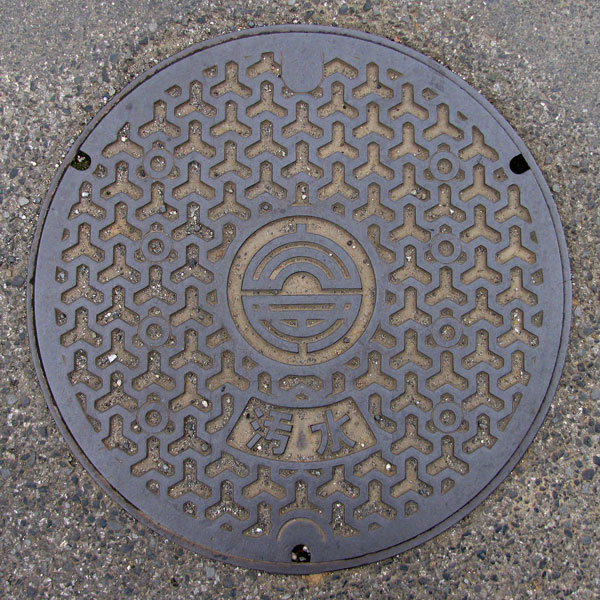
A tetrahedron-patterned drain for wastewater. The town emblem in the center is the easily recognizable kanji characters for "Shiraoka, 白岡".
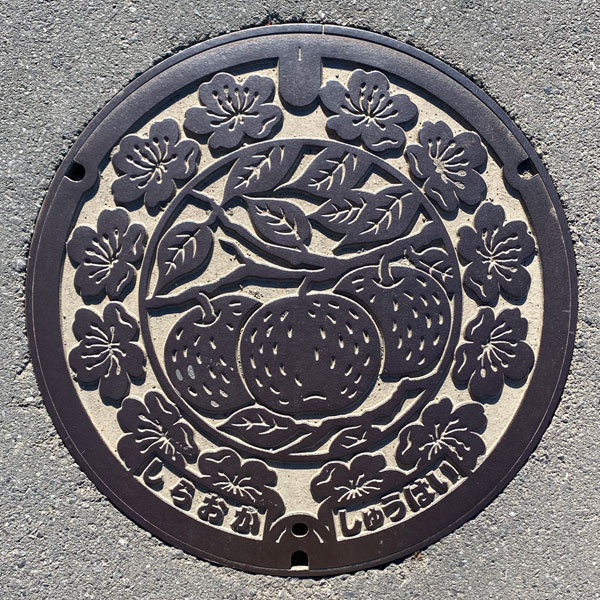
This is a manhole cover for agricultural community wastewater treatment in the Oyama district. Three pears are depicted within the inner circle, surrounded by pear blossoms. The words "Shiraoka" and "Shuhai" are inscribed at the bottom.
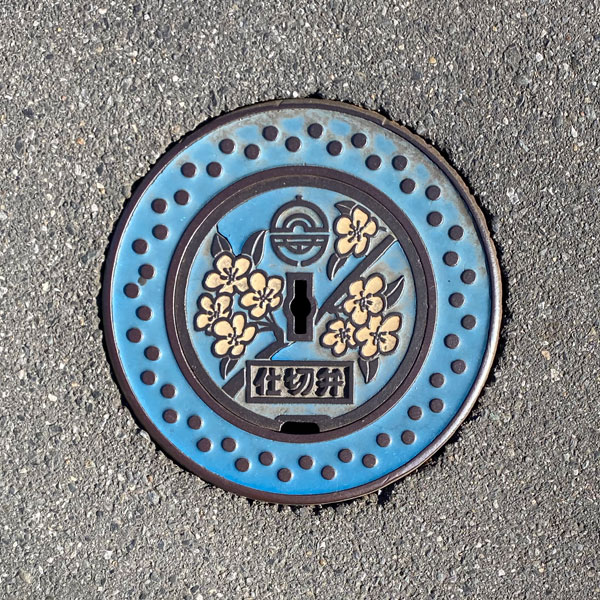
A valve cover with a pear blossom design.
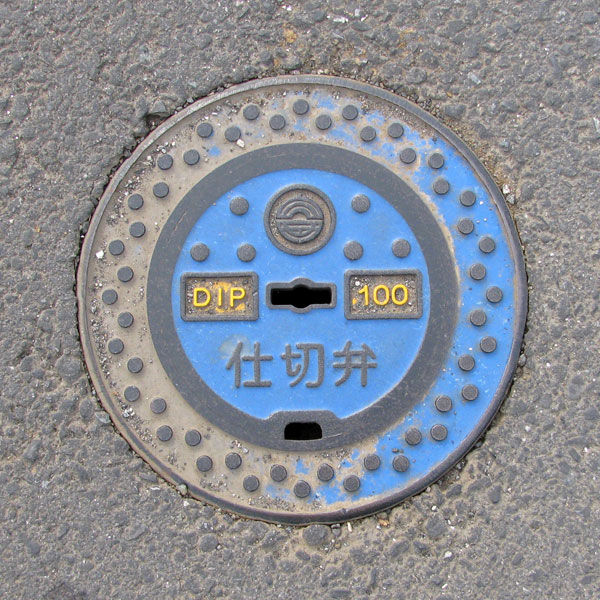
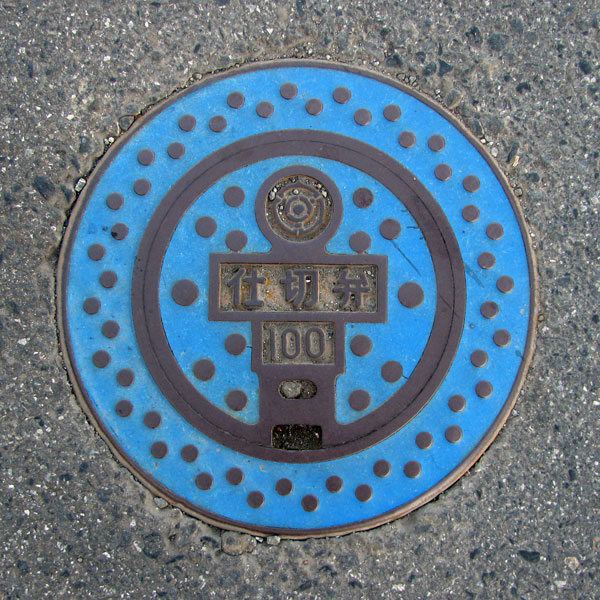
A gate valve with a pipe diameter of 100 mm.
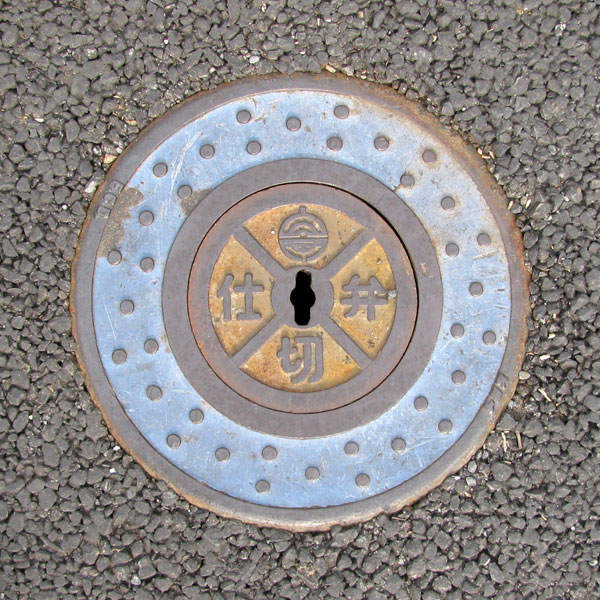
This is also a gate valve.
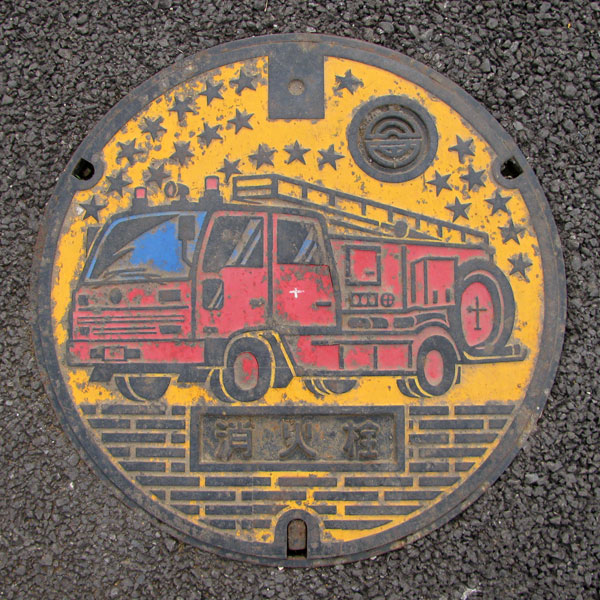
A fire hydrant bearing the town's emblem.
Hasuda 蓮田市
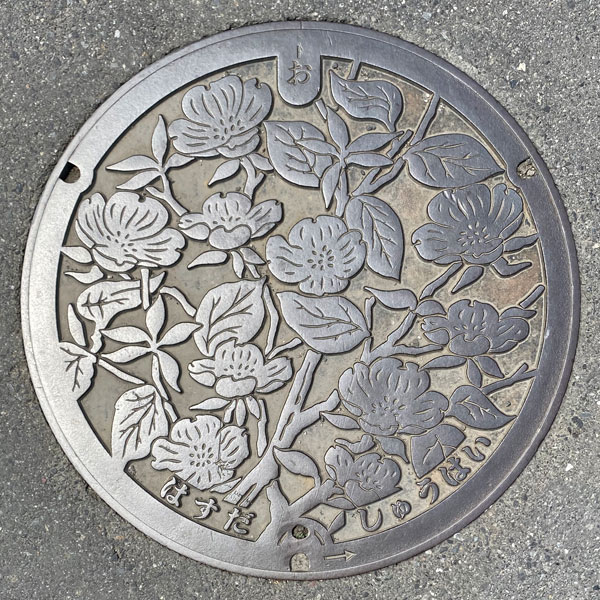
The design features the city's official tree, the dogwood.
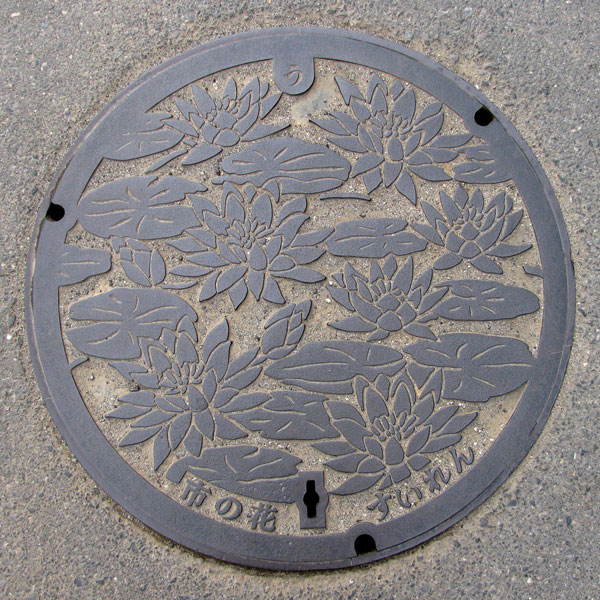
A rainwater drain manhole cover featuring the city flower, the water lily.
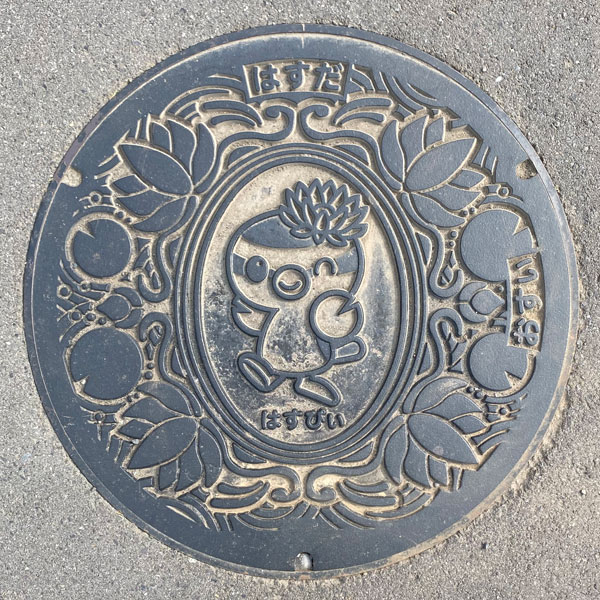
A manhole cover for sewage featuring Hasuda City's mascot character "Hasupi" and the city flower "water lily."
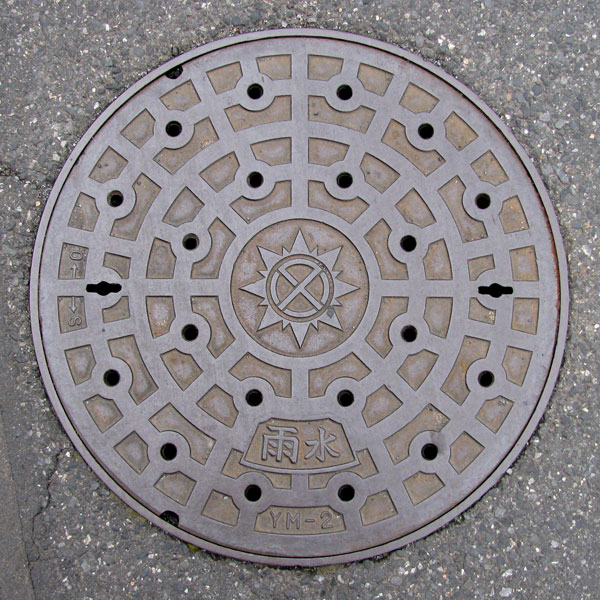
City emblem in the center.
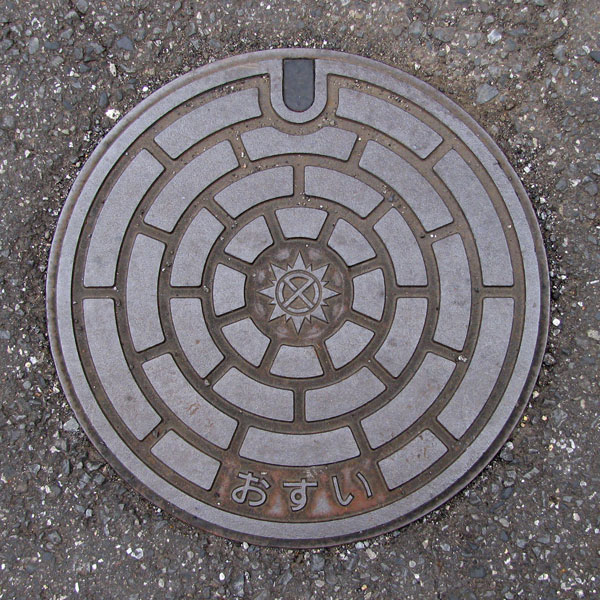
Miniature size for wastewater. The city emblem in the center is a stylized image of a lotus field.
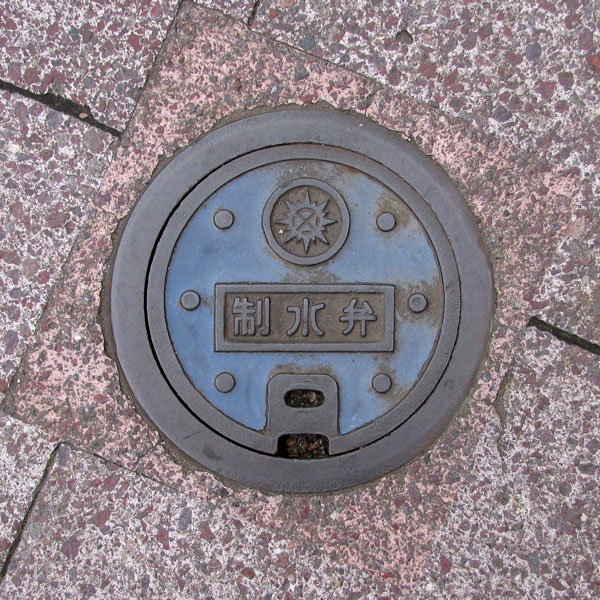
Water control valve.
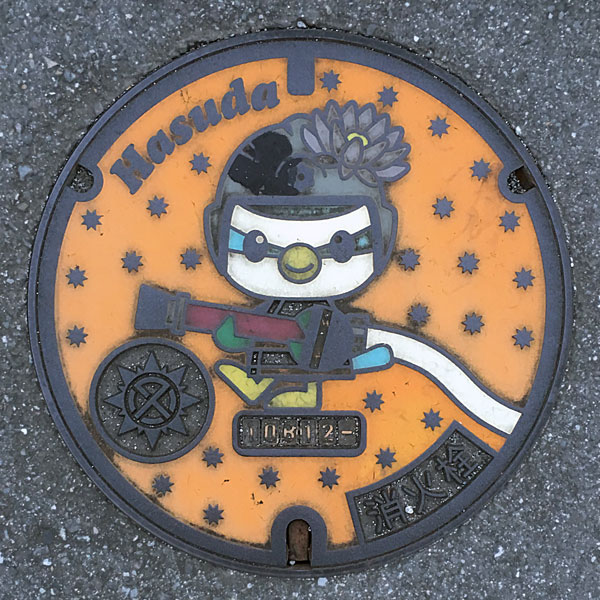
A fire hydrant cover featuring Hasupi, the mascot character of Hasuda City, dressed as a firefighter. The Hasuda City emblem is in the lower left corner.
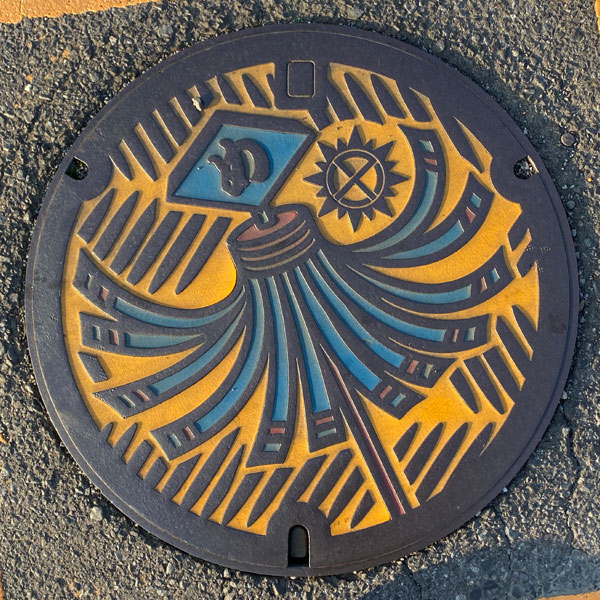
Fire Hydrant.
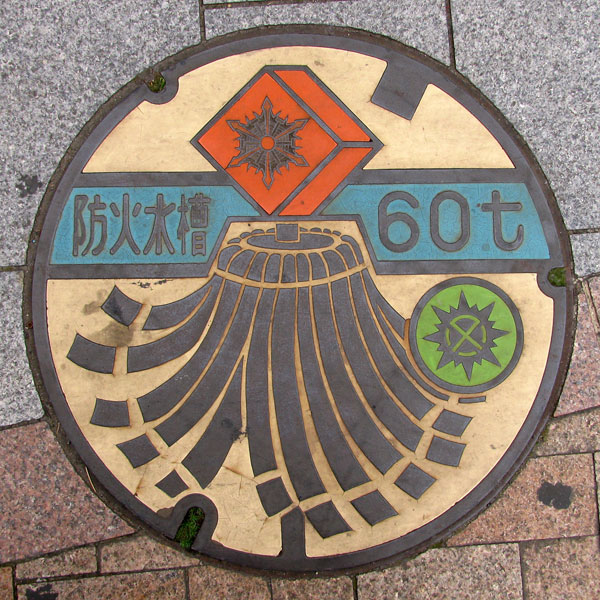
Firefighting water tank. The city emblem is located below the "60t" notation.
See Nakagawa Basin Sewerage System
Kasukabe 春日部市
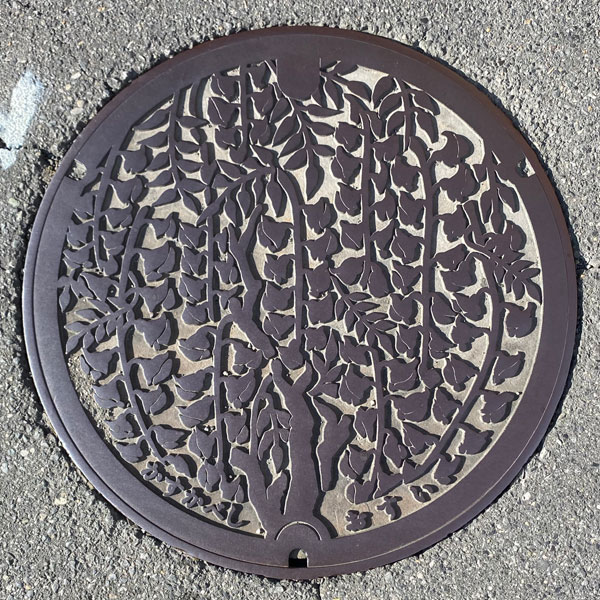
Manhole cover for sewage. The design features the city flower, the wisteria. Kasukabe is home to the "Ushijima Wisteria," a nationally designated special natural monument.
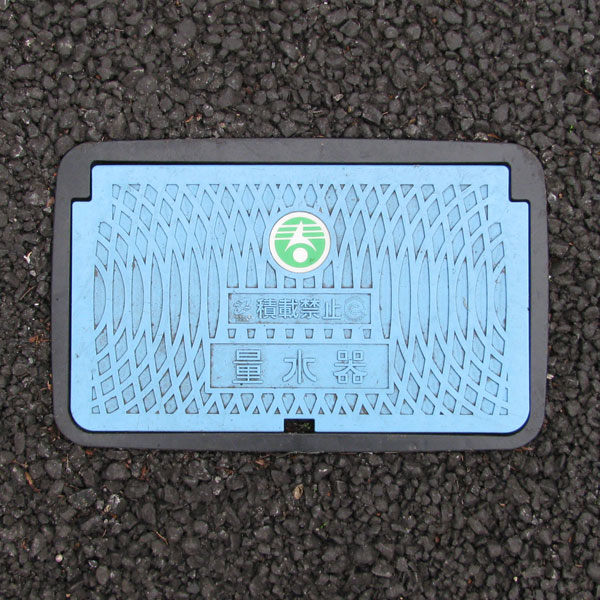
A water meter cover bearing the current city emblem of Kasukabe City.
See Nakagawa Basin Sewerage System
Kasukabe 春日部市
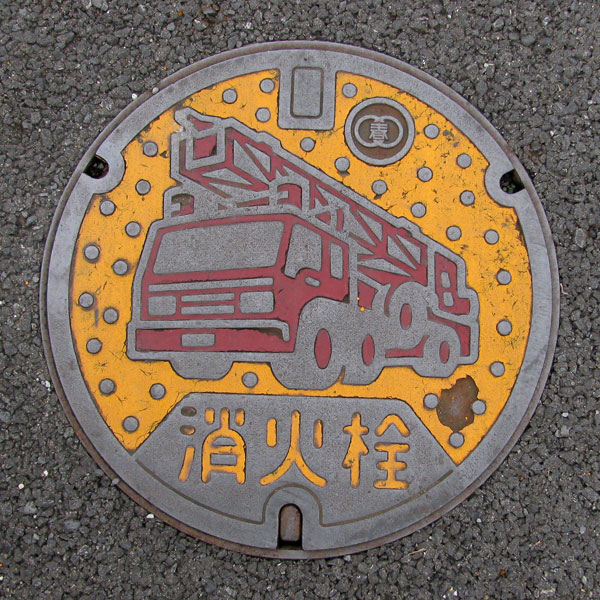
A fire hydrant bearing the old Kasukabe City emblem.
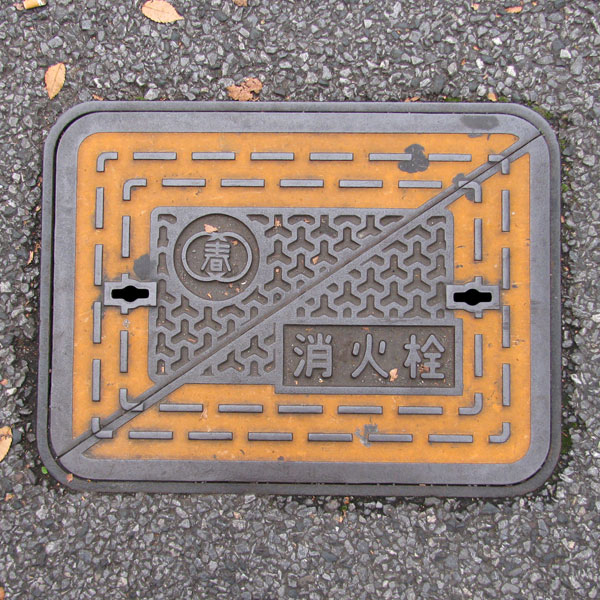
A square-shaped fire hydrant bearing the old city emblem of Kasukabe City.
Showa 庄和町
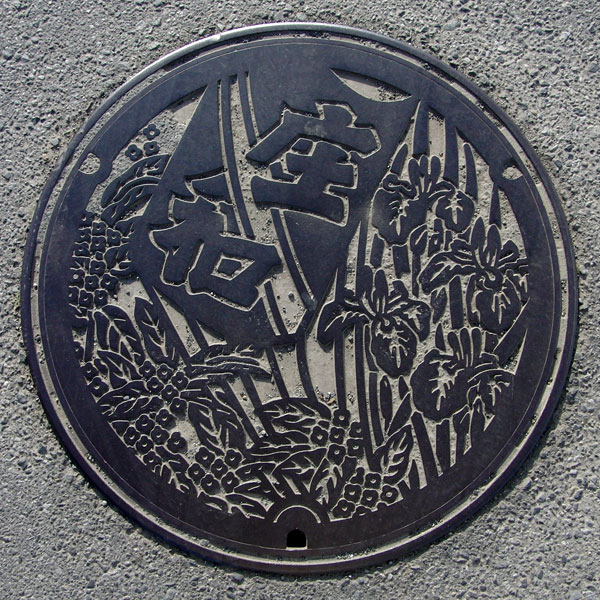
The design features the town's famous giant kite (Hyakujo Kite), the town's official tree "Osmanthus," and the town's official flower "Japanese iris."
The Giant Kite Festival is held annually on May 3rd and 5th on the Edogawa River embankment.
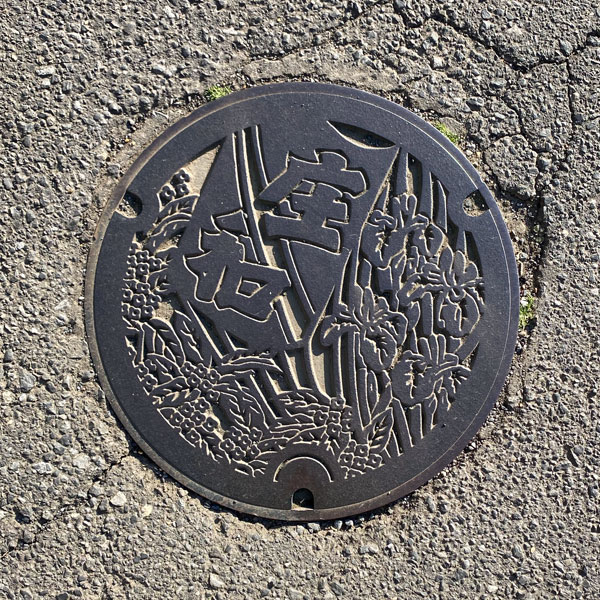
A smaller version with the same design as above.
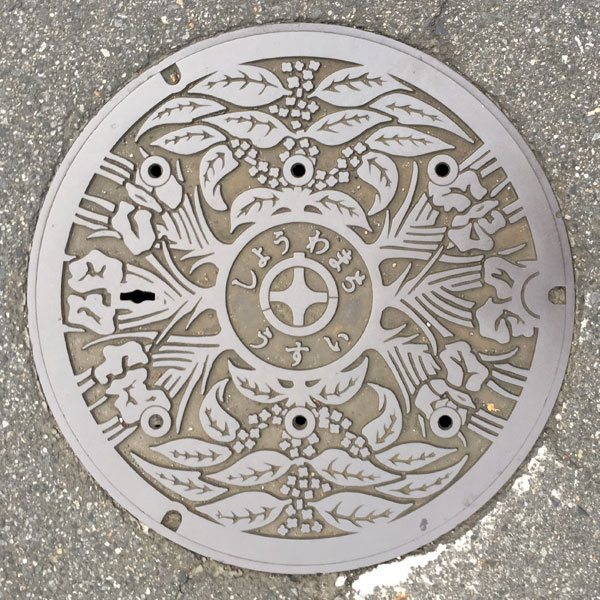
A rainwater manhole cover depicting the town's flower, the Japanese iris, and the town's tree, the osmanthus. The town emblem and the words "Shōwa-machi" and "Usui" are in the center.
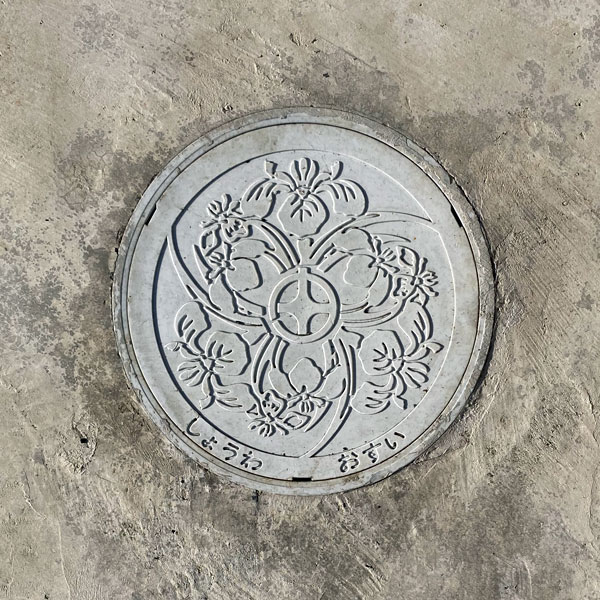
A resin manhole cover for sewage, featuring the town's official flower, the Japanese iris.
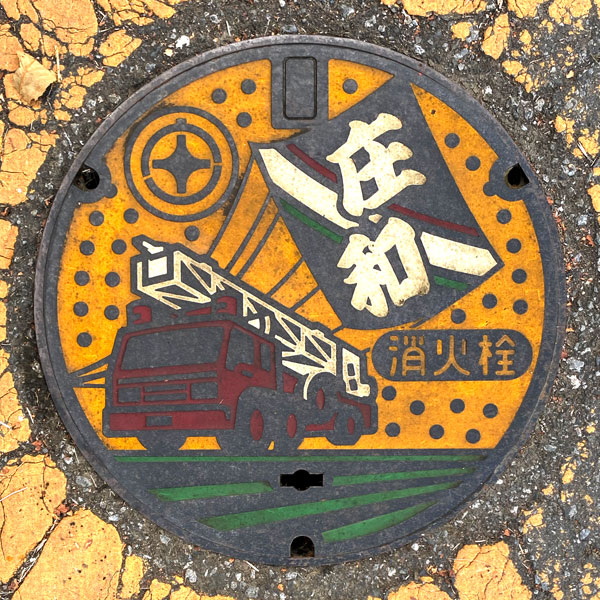
A fire hydrant cover depicting a ladder truck and a large kite. The town emblem is in the upper left corner.
Ageo 上尾市
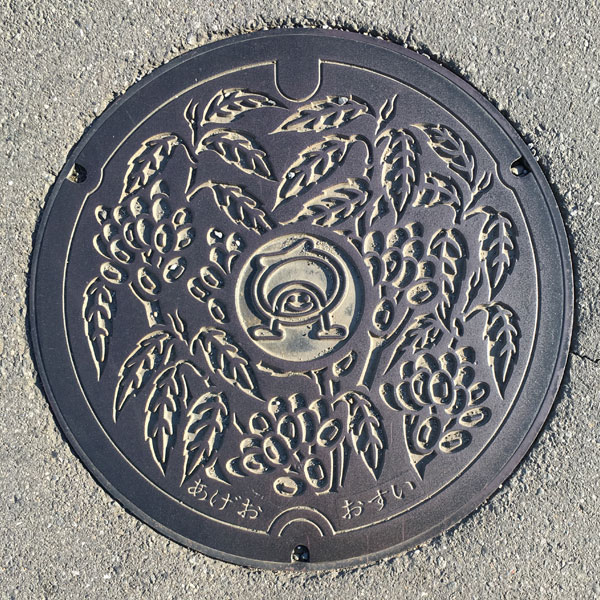
A new manhole cover for sewage, featuring a design of the city's official tree, the "Aoki" tree. The background is the same as the previous design, but the Ageo City mascot, "Appy," has been added to the center. The name "Appy" is said to be a combination of "A" from Ageo, "Up" meaning rising or improving, and "Happy."
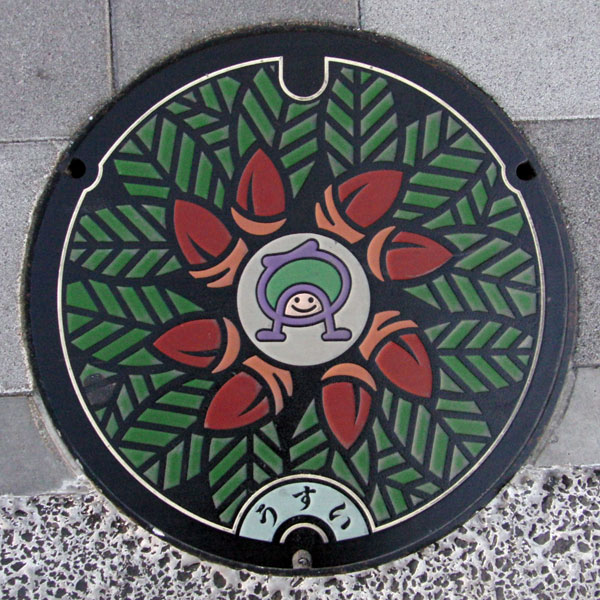
The design combines the city's official tree, the oak, with Appy's mascot.
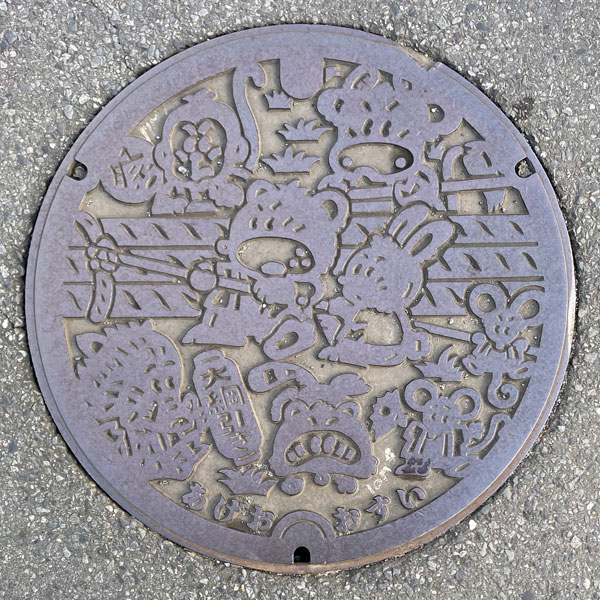
A manhole cover for sewage. The design depicts the "Ageo Nakasendo Great Tug-of-War Festival." It seems that the festival involved 3,000 people bravely pulling on six large ropes representing the six districts of the city, but it is no longer held.
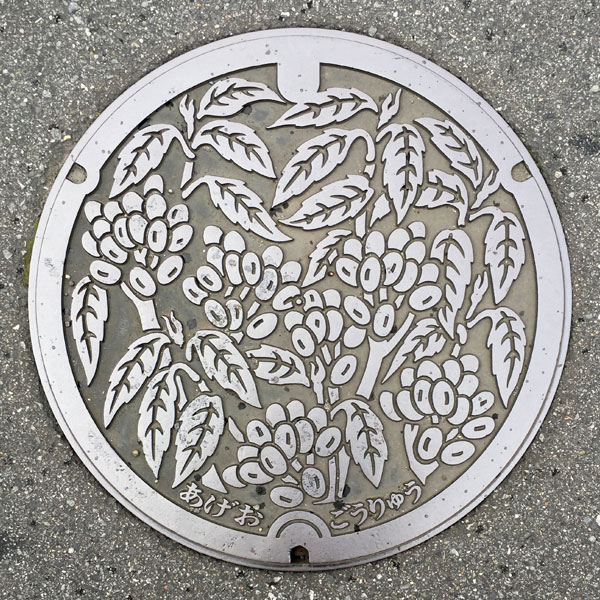
This manhole cover for sewage features a design of the city's official tree, the Japanese laurel (Aucuba japonica). It was located on a one-way street one block closer to National Route 17 than the road where the Ageo Station East Exit Intersection is located.
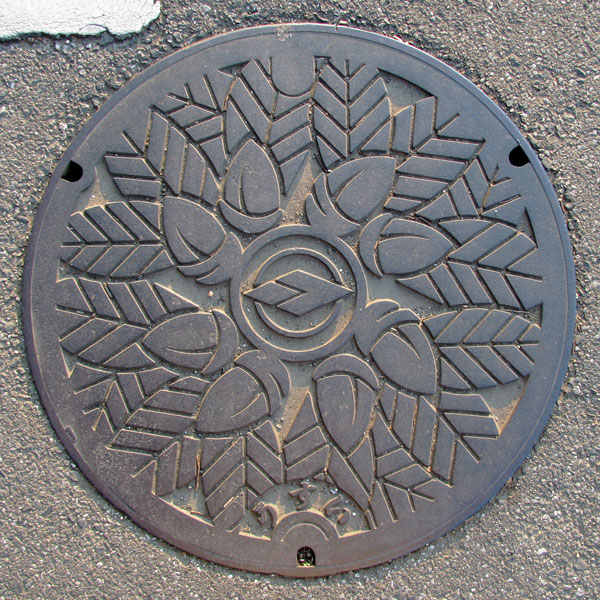
This rainwater drain cover features a design of the city's official tree, the oak. It was located on the same road as the manhole cover with the aucuba design.
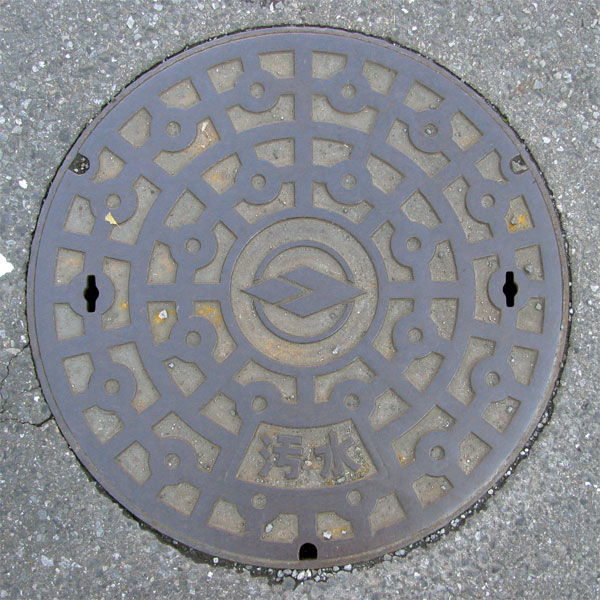
The city emblem, a stylized version of the Japanese katakana character "ア", is located in the center.
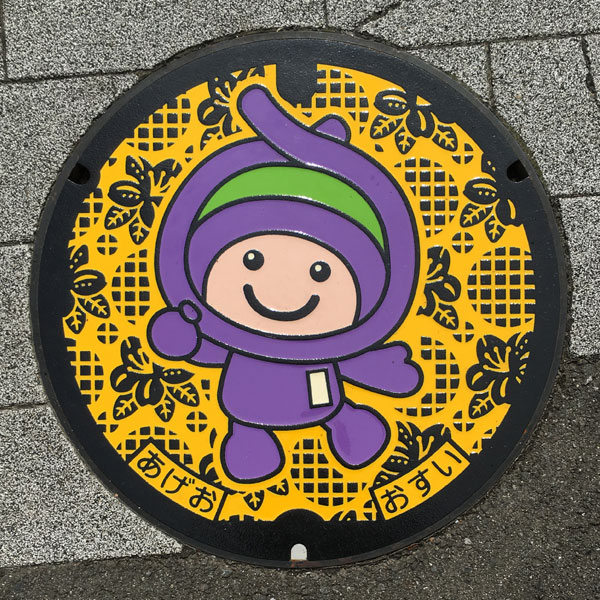
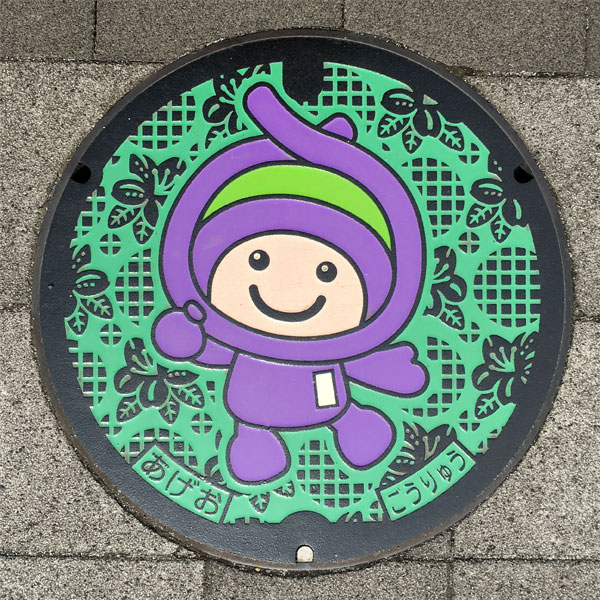
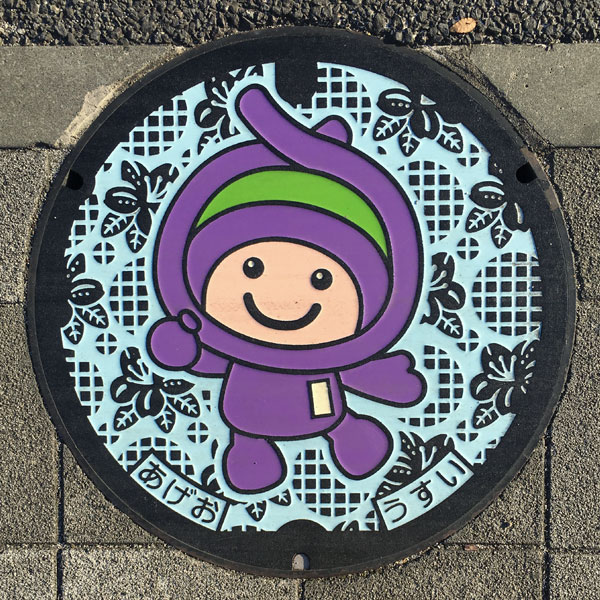
Appy is in the center of manhole covers made of oak and Aucuba leaves, truly felt like an image mascot, but at some point, he transformed into a more mascot-like character. Even so, he is still positioned as the "image mascot" on Ageo City's website.
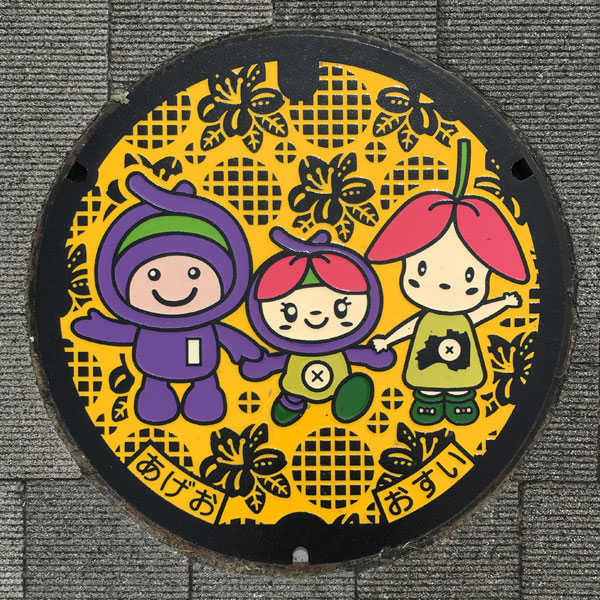
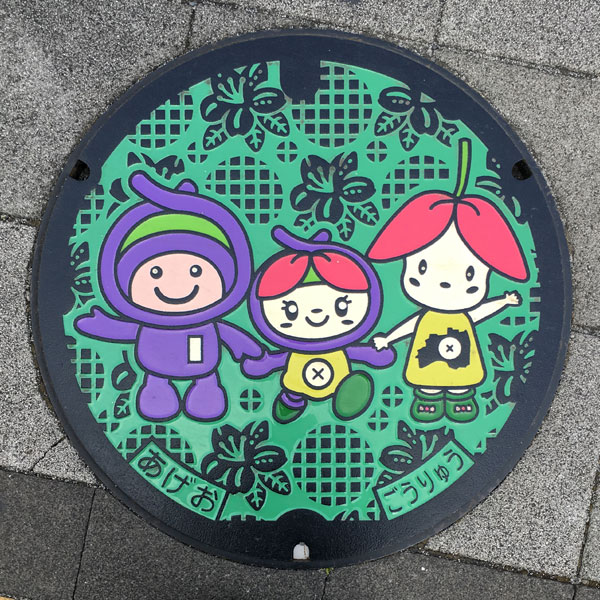
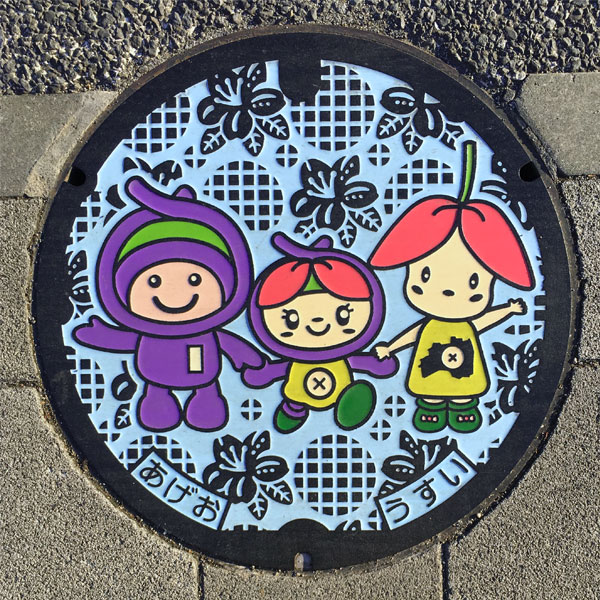
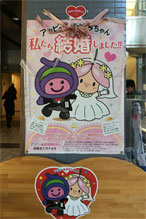
Apparently, "Appy" got married and even had a child. His partner is "Mayumi-chan" from Motomiya City, Fukushima Prefecture. This is reportedly the first time a mascot character has gotten married. Their child is named "Ayumi." While the name seems a little simplistic, she appears to have inherited characteristics from both parents.
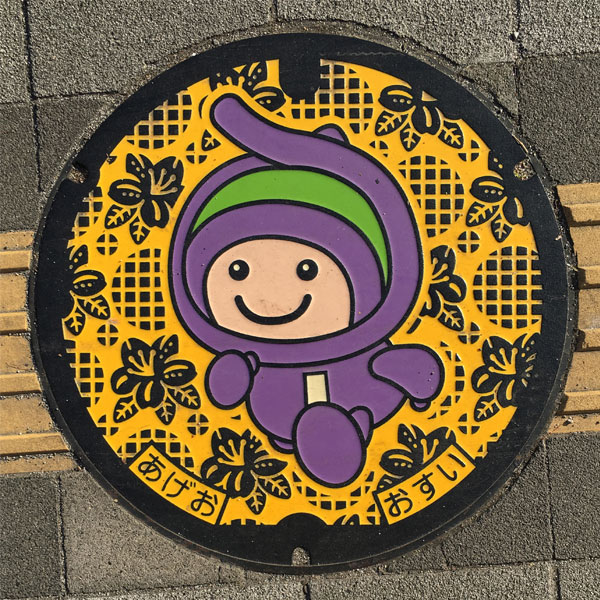
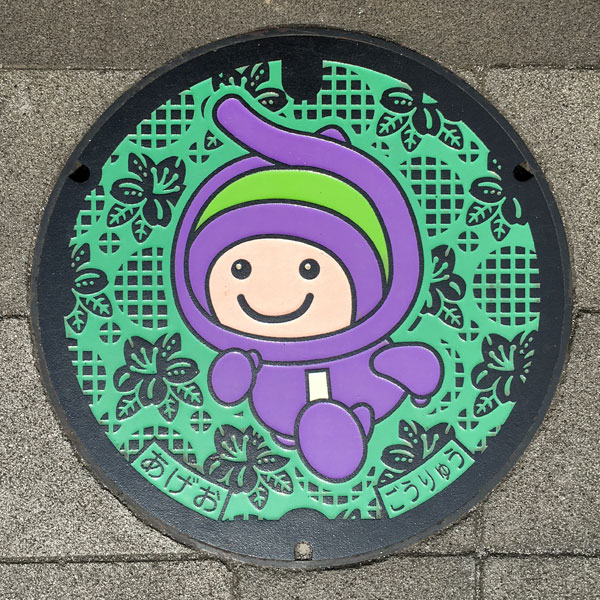
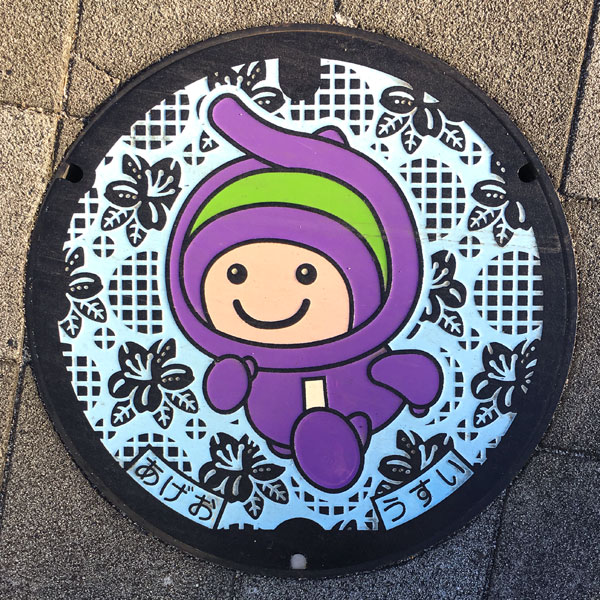
A running version of the "Appy" design for wastewater.
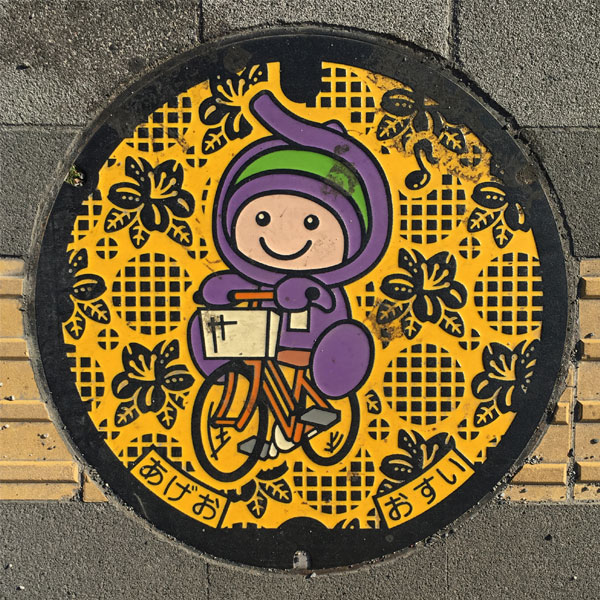
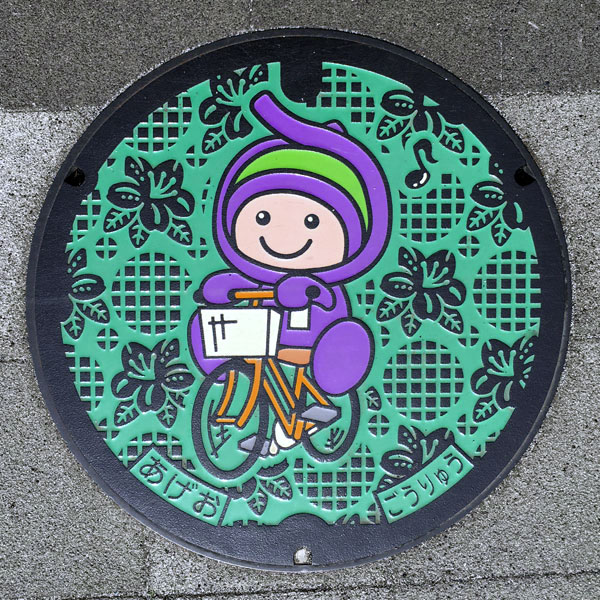
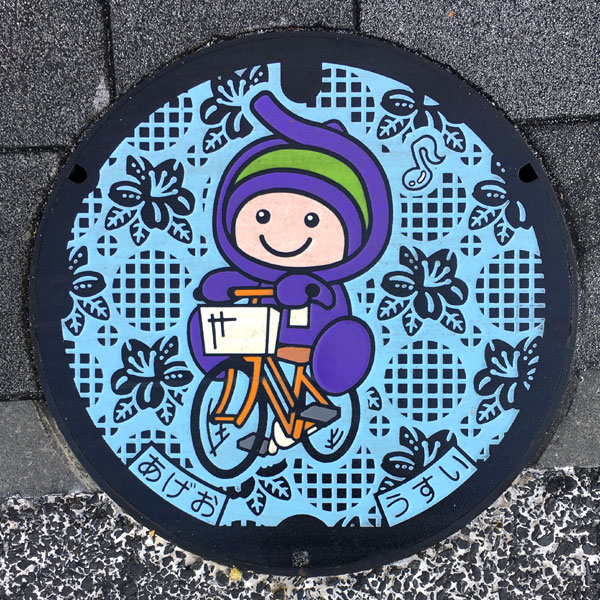
This is a sewage manhole cover featuring the "Appy" character on a bicycle. Because this cover is installed in an area with vehicle traffic, it has some oily stains.
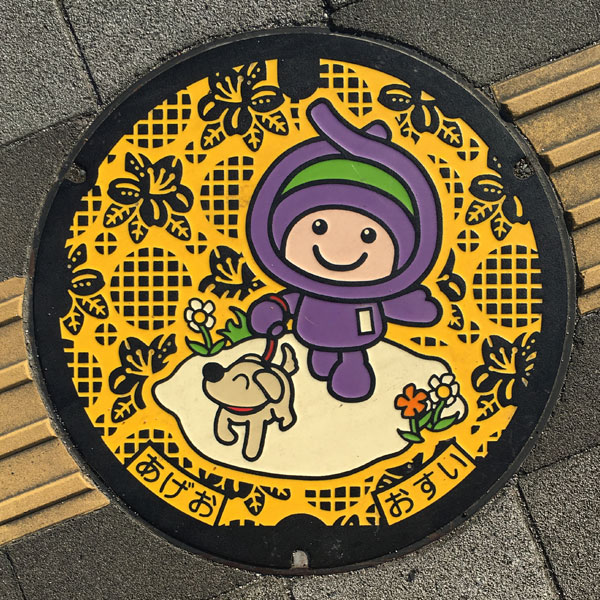
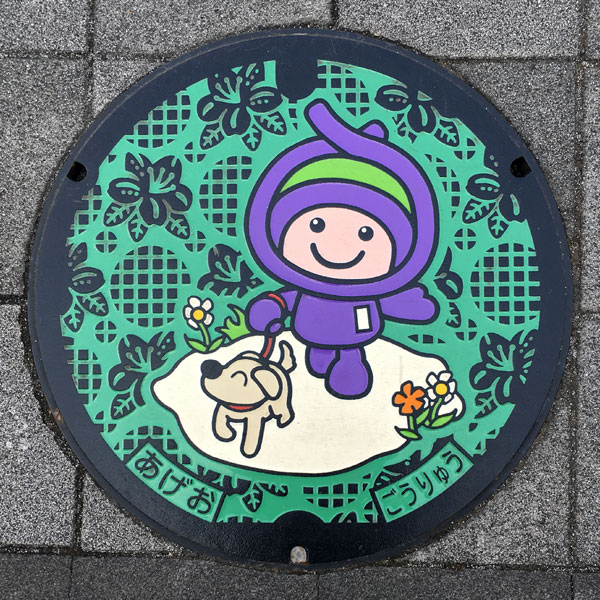
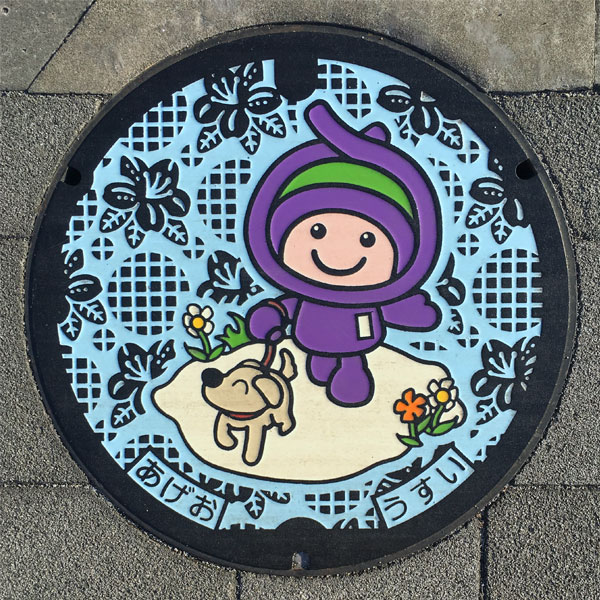
A dog-walking version featuring the "Appy" design, for use with wastewater.
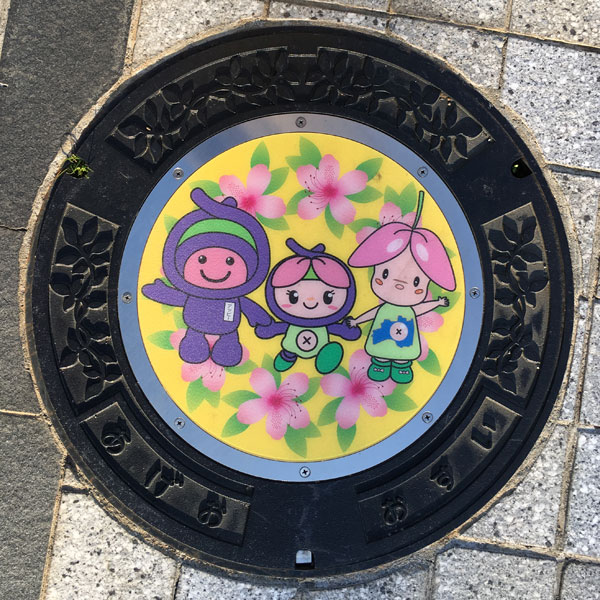
A sticker-type manhole cover featuring the "Appy Family" for sewage. The city flower, the azalea, is depicted in color.
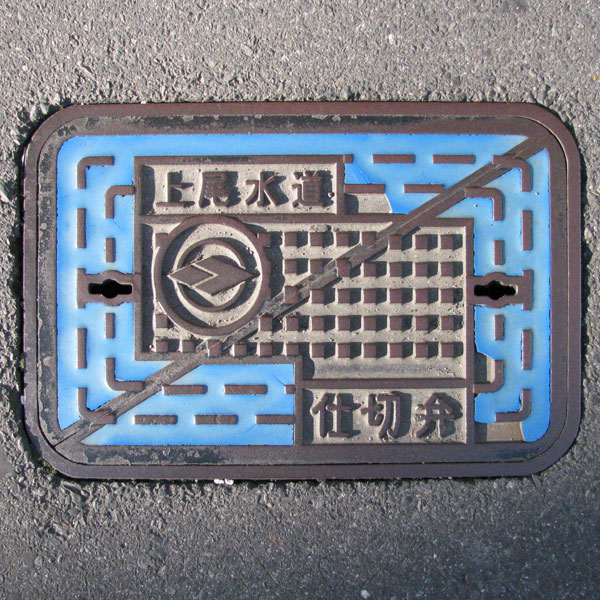
A rectangular gate valve bearing the city emblem.
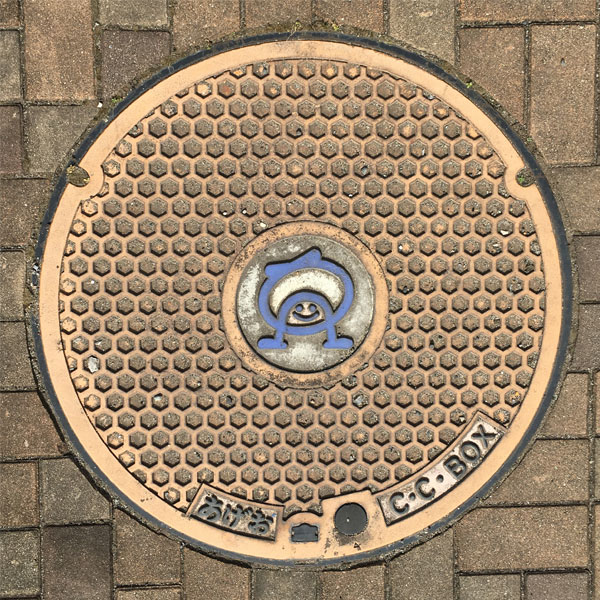
A C.C.BOX (combined utility conduit) cover painted with colored sand, featuring Appy in the center.
See Arakawa Left Bank Southern Basin Sewerage System
Sakado 坂戸市
See Sakado and Tsurugashima Association
Tsurugashima 鶴ヶ島市
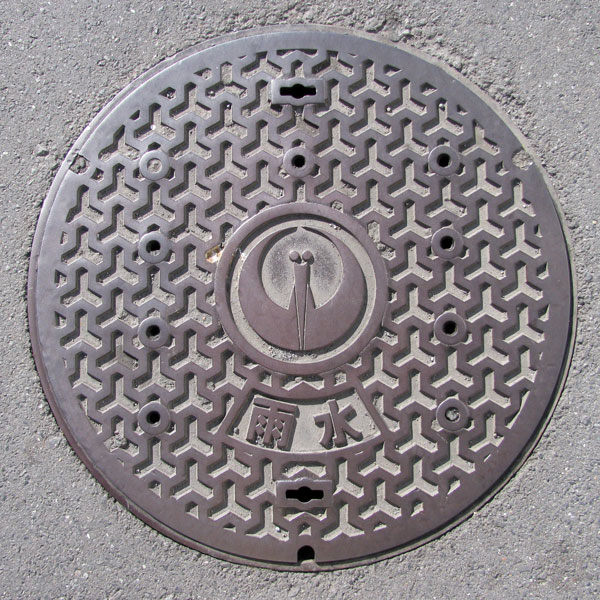
A tetrahedron-patterned drain for rainwater. The city emblem, featuring the Japanese katakana characters "ツ" and "ル" stylized into the shape of a crane, is located in the center.
See Sakado and Tsurugashima Association
Kawagoe 川越市
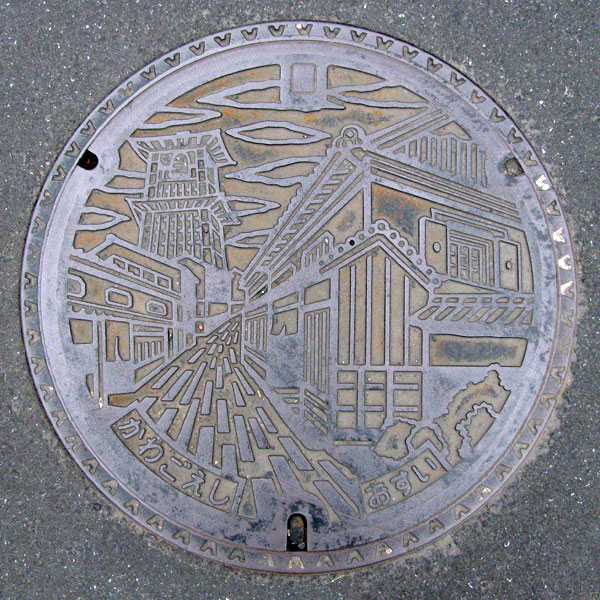
The design features the "Toki no Kane" (Time Bell), a symbol of Kawagoe, a popular tourist destination. The photo shows the view of "Kanetsuki-dori" (Bell-Ringing Street) from the "Toki no Kane Entrance" intersection.
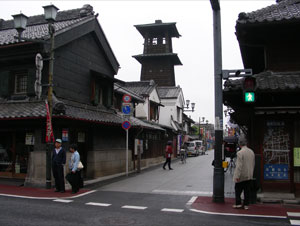
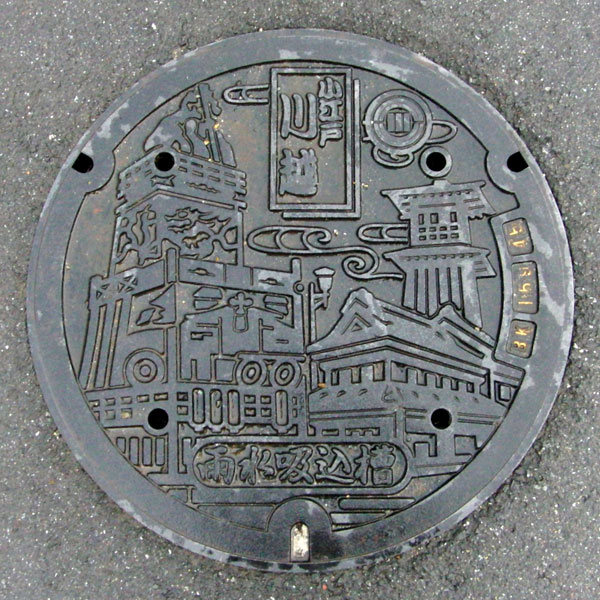
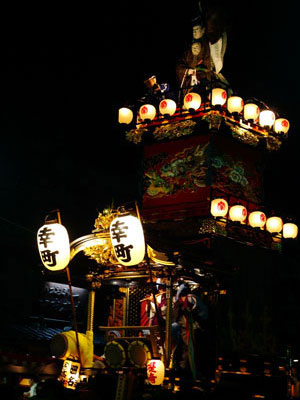
The manhole cover features the "Time Bell," a symbol of Kawagoe, along with traditional storehouse architecture (the shop in the photo above), a float from the Kawagoe Festival, and the words "Little Edo Kawagoe." It also says "Rainwater Intake Tank."
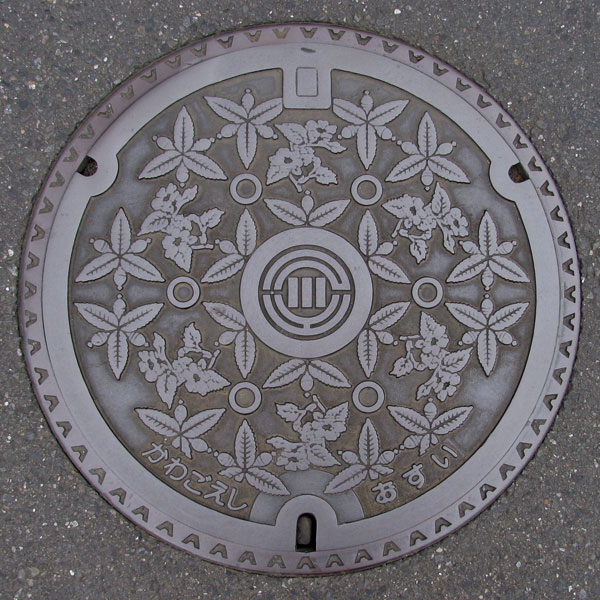
For wastewater. The design features the city flower, the Japanese kerria, and the city tree, the oak. The city emblem consists of the kanji character for "river" in the center, flanked by the katakana characters "ko" and "e" from above and below.
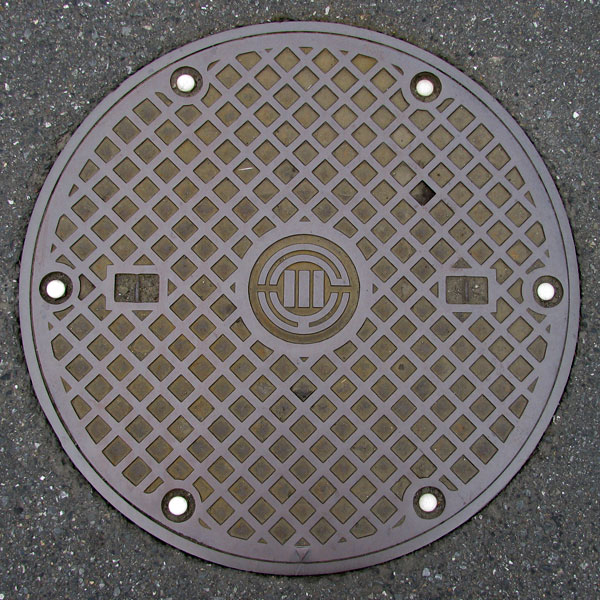
This one has a diagonal grid pattern.
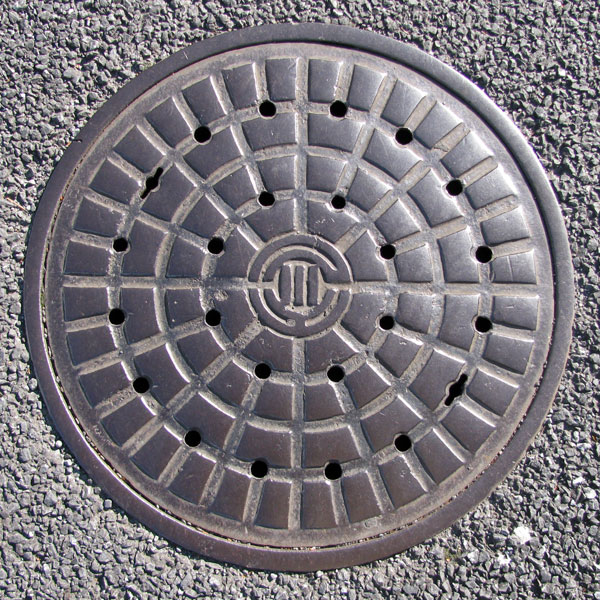
A manhole cover for rainwater, slightly raised in the center.
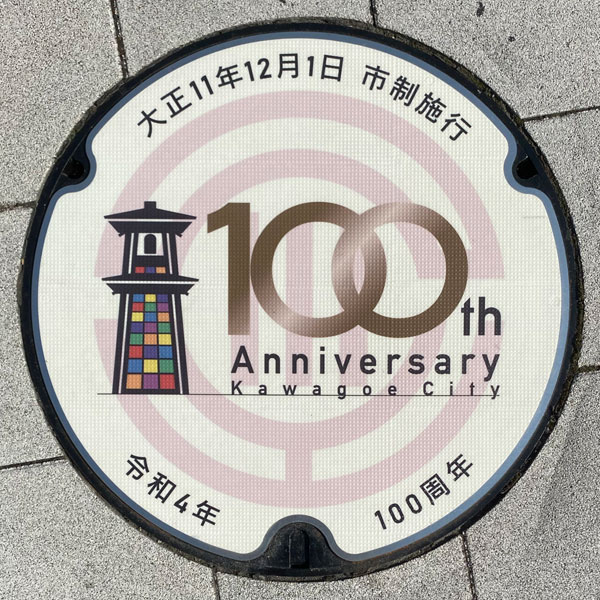
A manhole cover produced to commemorate the 100th anniversary of the city's incorporation. The city emblem is used as the background, with the bell stylized as a logo mark and the words "100th Anniversary." The words "December 1, 1922: City Incorporation" are at the top, and "Reiwa 4 (2022): 100th Anniversary" are at the bottom.
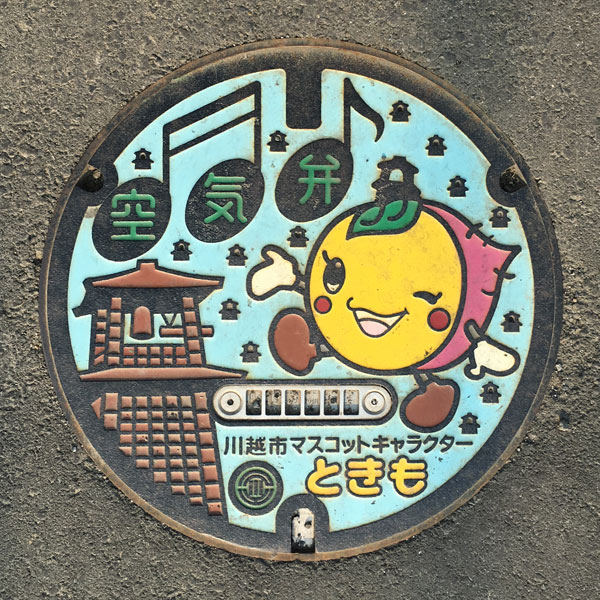
This is an air valve cover featuring Kawagoe City's mascot character "Tokimo" and the Kawagoe symbol "Toki no Kane" (Time Bell). Similar to fire hydrants, the anti-slip protrusions are shaped like the Toki no Kane.
"Tokimo" is said to have originated from the Toki no Kane (time bell) and sweet potato (imo). The sweet potato's roots lie in the "Beniaka" variety, also known as "Kintoki Imo." Kawagoe, known as a sweet potato producing area since the Edo period, was quick to cultivate this Beniaka variety, discovered in the late Meiji era.
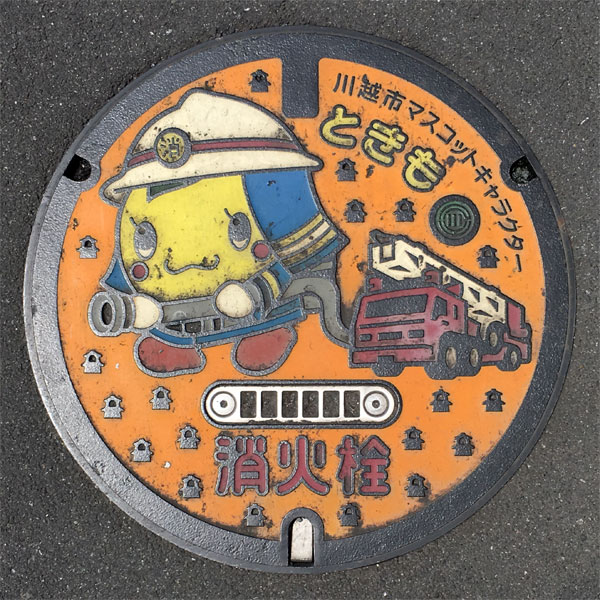
This is a fire hydrant featuring Tokimo, the mascot character of Kawagoe City, holding a hose. The non-slip bumps are shaped like the Toki no Kane (Time Bell), which is a unique touch for Kawagoe.
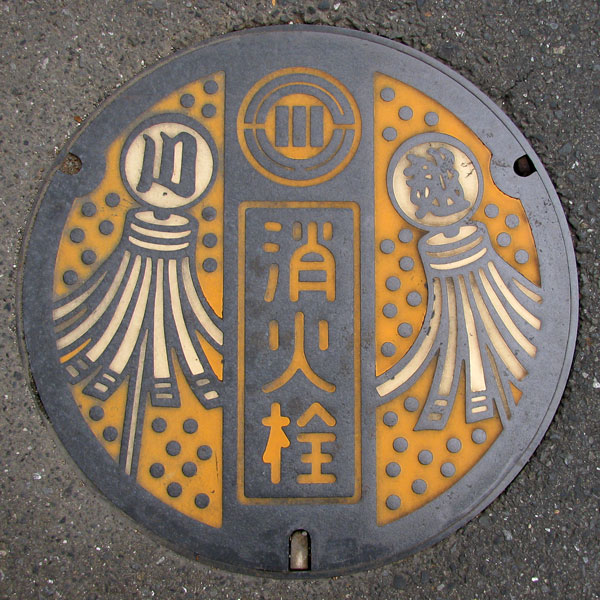
This is a fire hydrant cover. The design of the "matoi" (fire banner) is typical of Koedo Kawagoe. The top part of the "matoi" is apparently called a "dashi," and the characters for "Kawagoe" and "Kawagoe" are written separately there.
See Arakawa Right Bank Basin Sewerage System
Koshigaya 越谷市
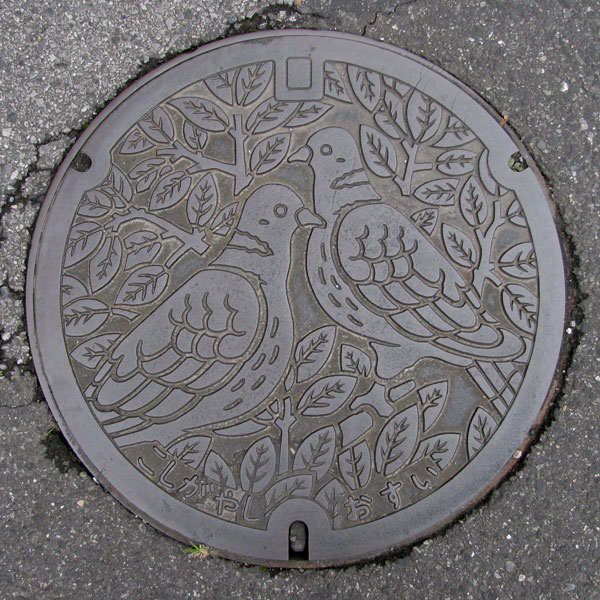
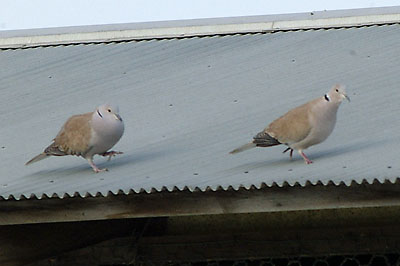
The bird depicted in the center is a "White-winged Dove." Designated as a national natural monument as the "White-winged Dove of Koshigaya," it is also designated as the "City Bird" as a representative wild bird of Koshigaya and a symbol of protecting its irreplaceable natural environment. The tree on which the White-winged Dove is perched is a "Zelkova." Many of these trees grow in the city, and its majestic appearance, with branches spreading from its large trunk, is considered fitting for the ever-developing city of Koshigaya, hence its designation as the "City Tree."
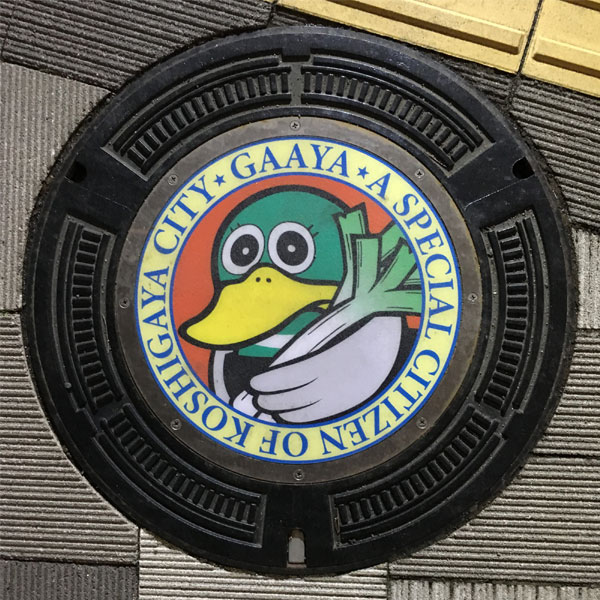
A panel depicting "Gaya-chan," a special citizen of Koshigaya, holding the local specialty "Koshigaya leeks." The words "GAAYA・A SPECIAL CITIZEN OF KOSHIGAYA CITY" are inscribed around Gaya-chan.
Gaya-chan's green head, yellow beak, and white stripe on her throat suggest she is based on a mallard duck. She was apparently created as the mascot character for "Koshigaya Duck and Leek Hot Pot," but her expression seems to convey a sense of melancholy, as if asking, "Are you really going to eat it?"
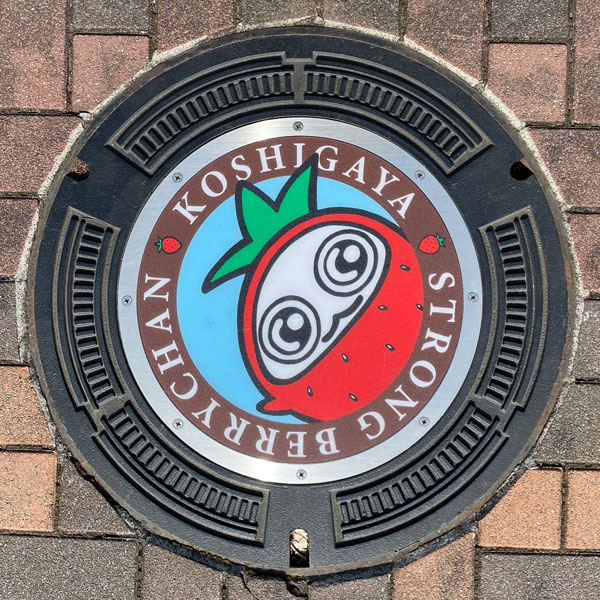
This panel depicts Strong Berry-chan, the PR character for "Koshigaya Ripe Strawberries," leaping out of the water of the Oosagami Reservoir, a symbol of Lake Town, to offer a welcoming greeting. The words "KOSHIGAYA" and "STRONG BERRYCHAN" are written around Strong Berry-chan.
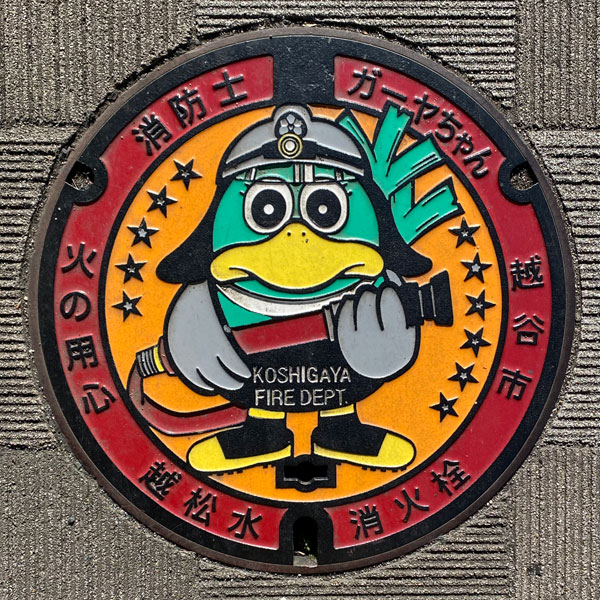
A fire hydrant cover depicting Koshigaya's mascot, "Gaya-chan."
See Nakagawa Basin Sewerage System
See Koshigaya-Matsubushi Waterworks Association
Yoshikawa 吉川市
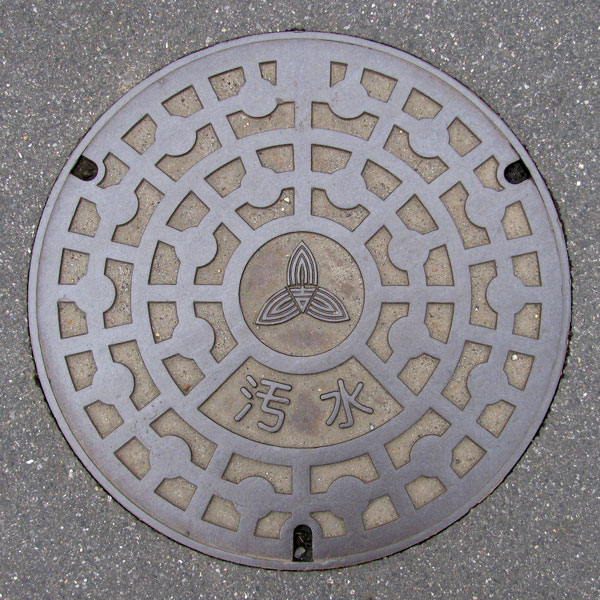
For wastewater use, conforming to JIS standard patterns. The circular section has no indentations. The city emblem, consisting of the characters "吉" and "川", is located in the center.
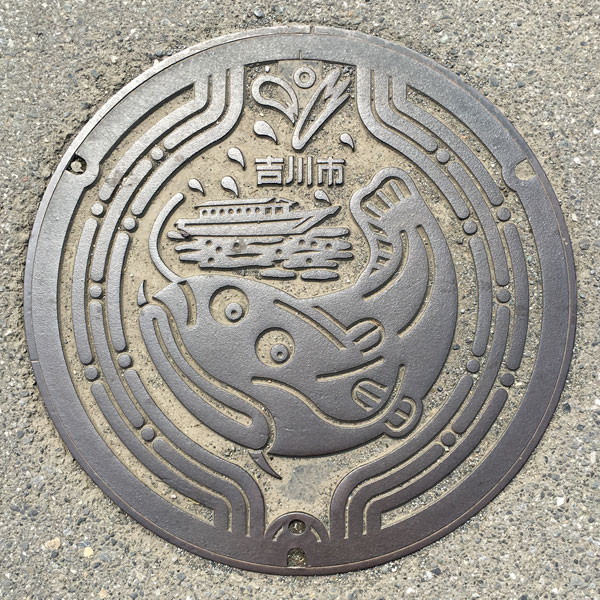
This is a manhole cover for agricultural community drainage in the Yagoshinden/Nabekoji district of Yoshikawa City.
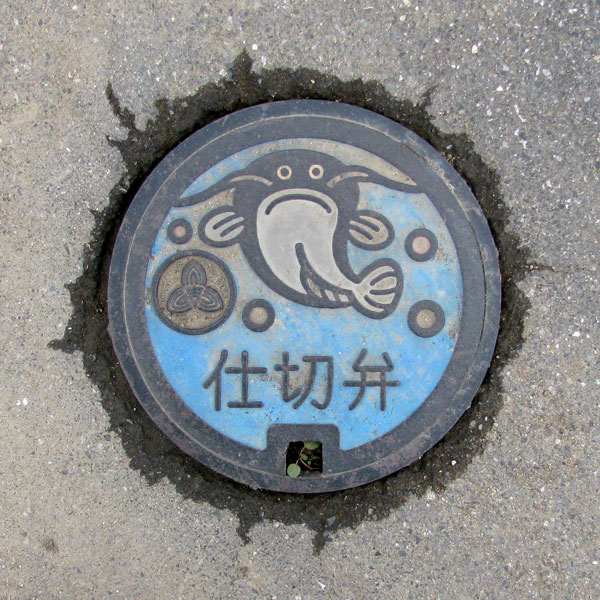
The central design is, of course, a catfish. A houseboat on the Nakagawa River is also depicted. The dotted lines on either side of the catfish are said to represent the Edogawa and Nakagawa rivers, which flow east and west through Yoshikawa City.
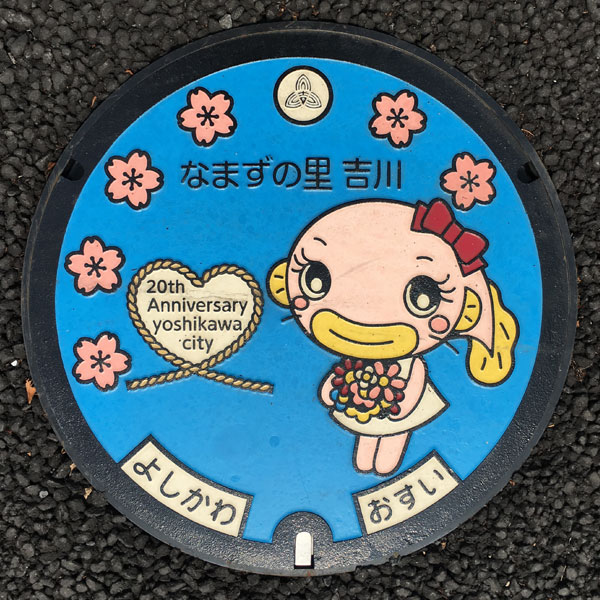
2016 marked 20 years since Yoshikawa City was incorporated on April 1, 1996. This manhole cover was created to commemorate the 20th anniversary of the city's incorporation. It was installed in January 2017, so this photo was taken at the end of June 2017. It's still only six months old, and the colors are vibrant and beautiful.
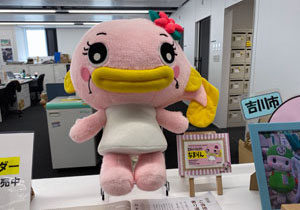
The manhole cover features the city emblem, cherry blossoms, the words "Yoshikawa City 20th Anniversary," the words "Yoshikawa" and "Osui" (sewage), and the city's mascot character, "Namarin," whose name was decided on November 21, 2010.
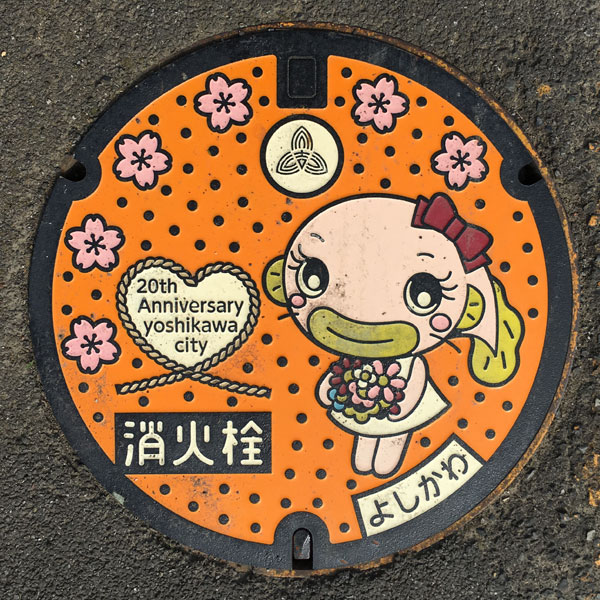
The design is the same as the sewage manhole cover, with the words "Fire Hydrant" written in large, clear letters. Also, black dots have been added to the orange background to create an anti-slip effect.
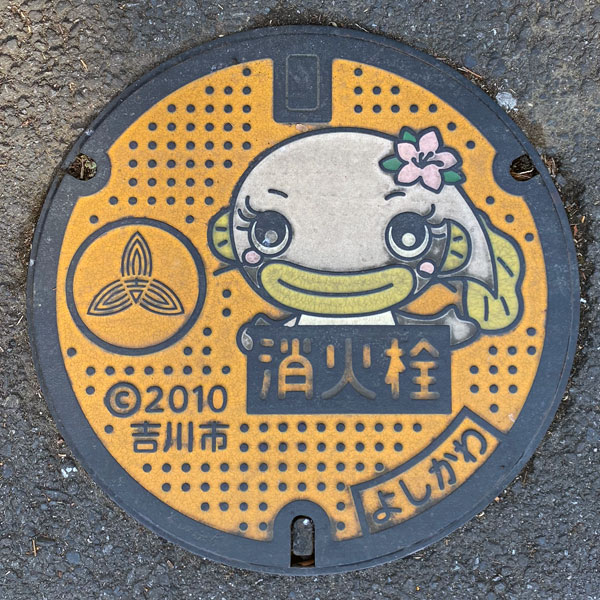
A fire hydrant cover with a different design featuring Yoshikawa City's mascot, "Namarin."
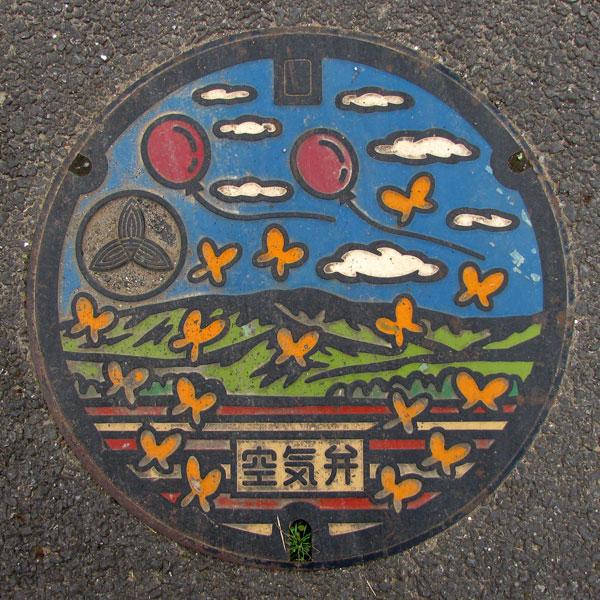
An "air valve" found on a road in a residential area.
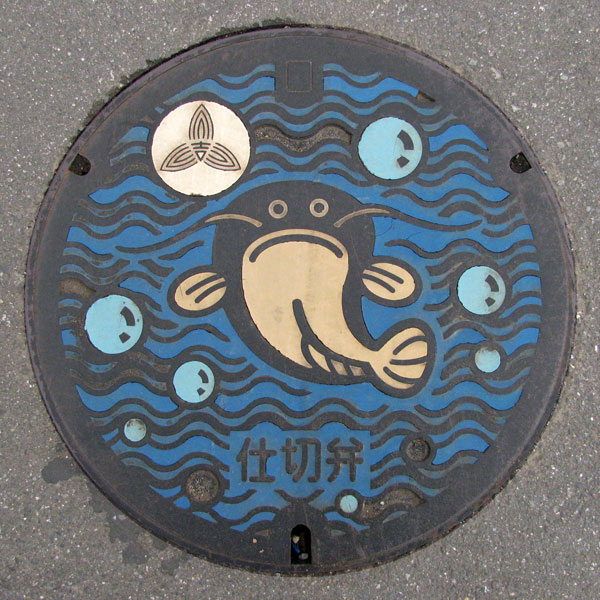
The gate valve was located in the same place as the air valve mentioned above. Because the area is known as "Yoshikawa, the Village of Catfish," this gate valve features an original design with a catfish illustration.
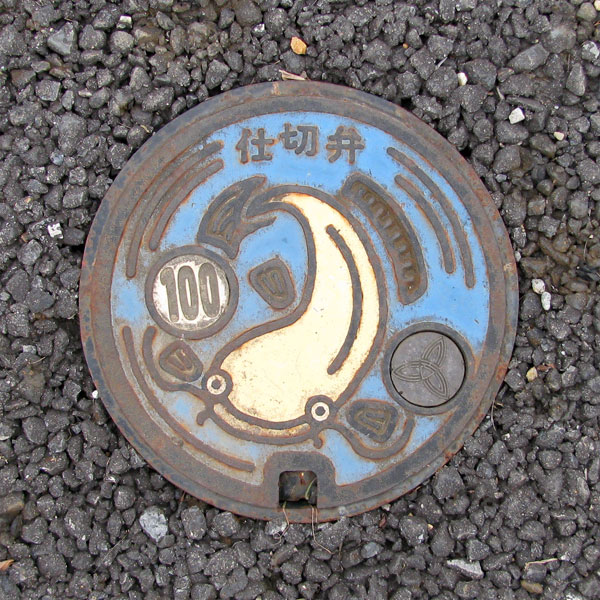
This is a miniature gate valve with a catfish design.
This is also a mini-sized gate valve, but it has a different design.
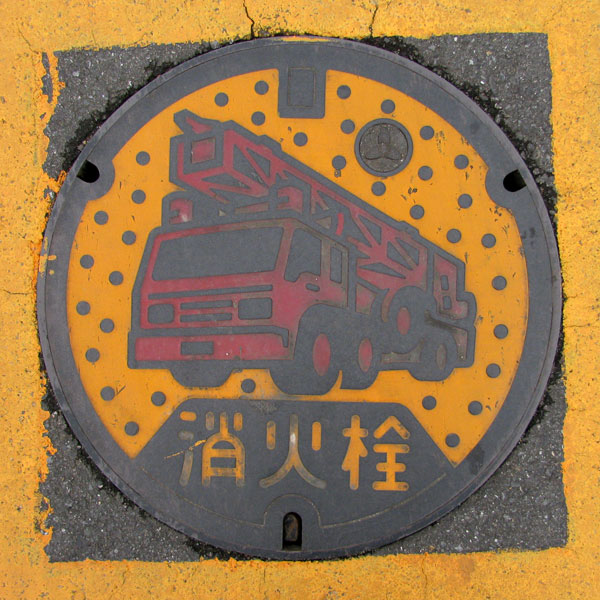
A common type of fire hydrant with the city emblem top right.
See Nakagawa Basin Sewerage System
Hanno 飯能市
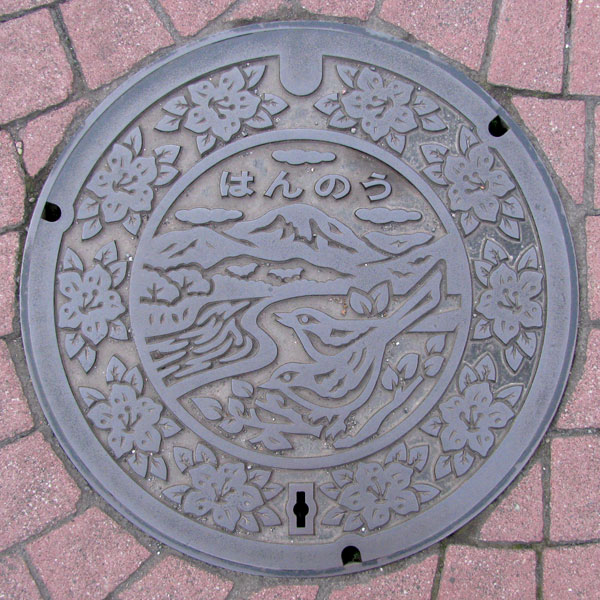
This manhole cover for sewage features the city's flower, the azalea, surrounded by a depiction of the Okumusashi landscape and the city's bird, the Japanese bush warbler.
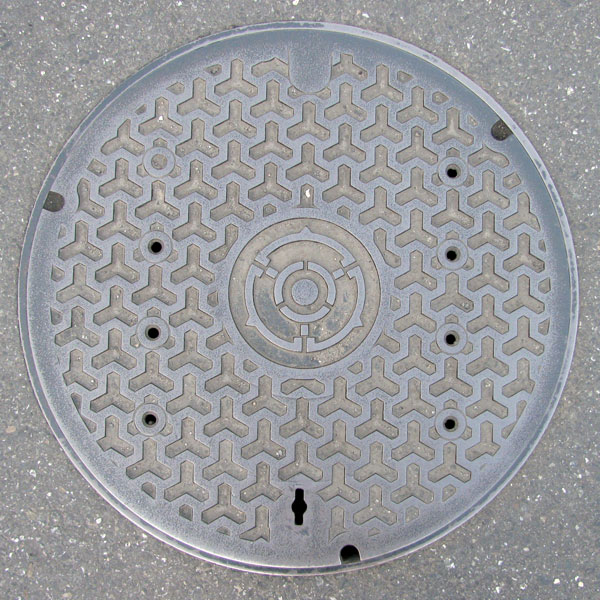
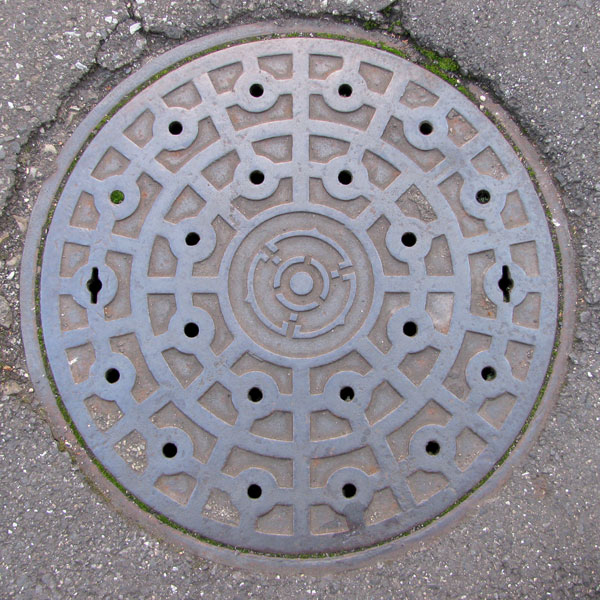
City emblem in the center.
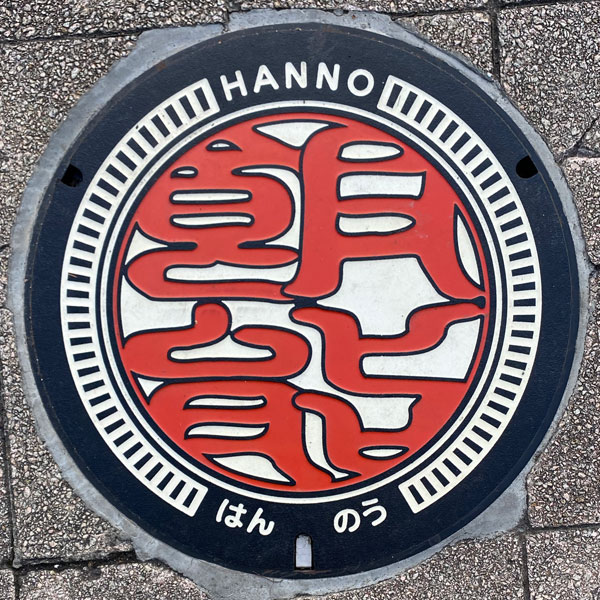
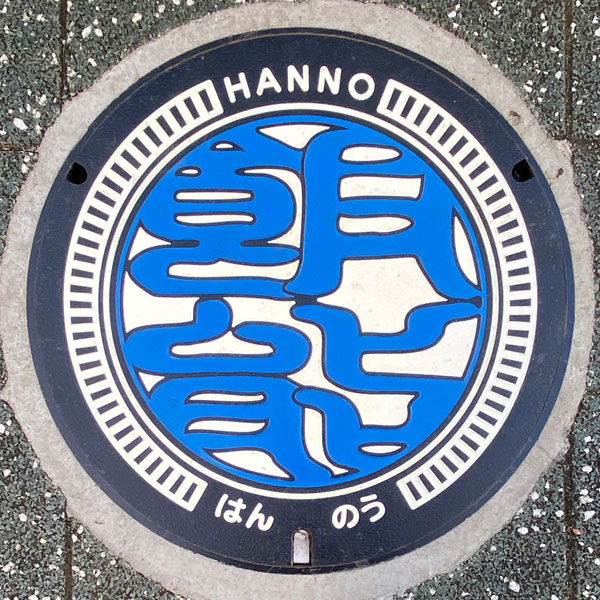
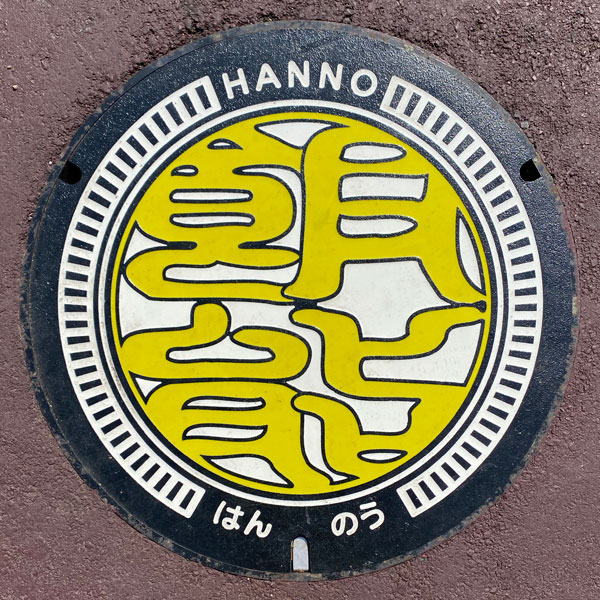
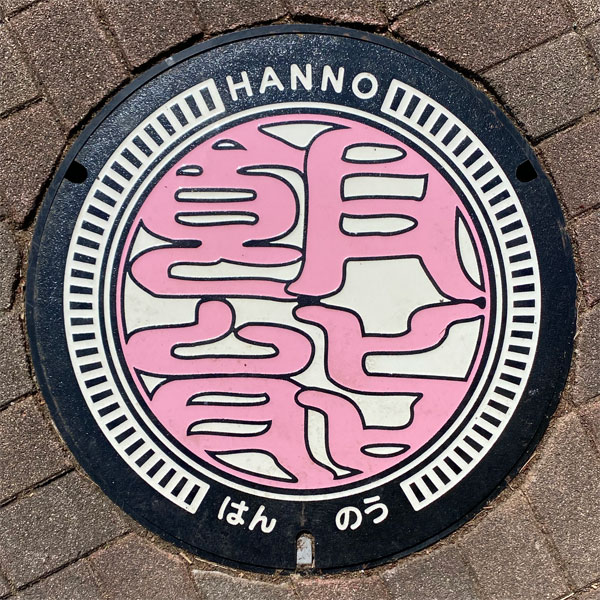
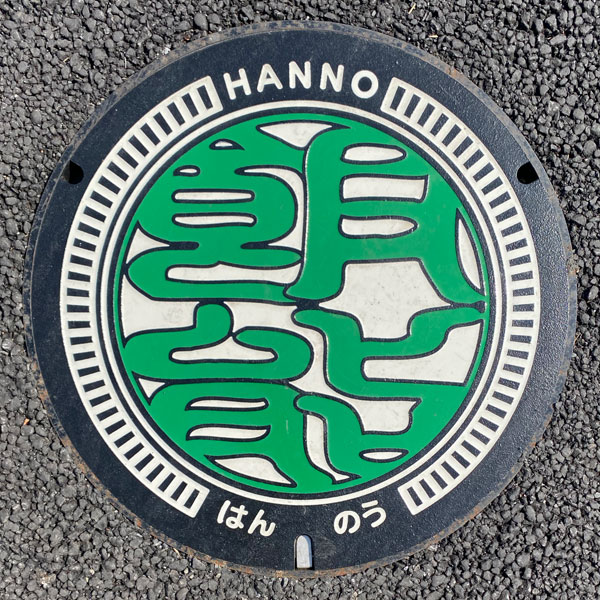
In Hannō City, as the public sewerage system project reaches its 70th anniversary, a sewerage-themed manhole cover has been created with the aim of deepening understanding and interest in the importance of sewerage systems that support daily life. The round shape of the manhole cover is likened to a familiar seal, and the word "Hannō" is vividly colored based on the colors of the symbol mark, resulting in a simple yet stylish "local seal-shaped manhole cover." Manhole covers with the same design but different colored "Hannō" characters are installed in various locations throughout the city, so please come to Hannō City and enjoy the color variations along with sightseeing.
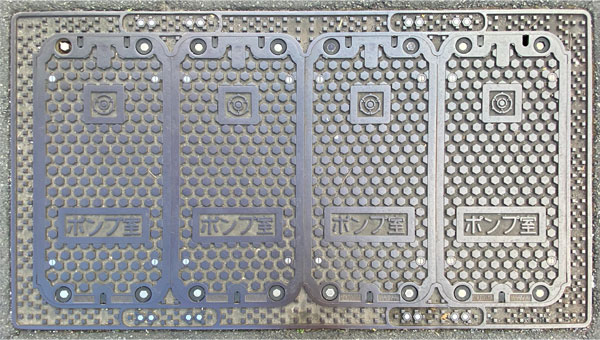
The manhole cover is enormous, measuring approximately 120cm vertically. It consists of four rectangular covers, each with hexagonal protrusions (a tortoiseshell pattern with varying indentations?) on a base of five regularly spaced square protrusions. Each cover bears the Hannō City emblem and the words "Pump Room".
Gate valve with the city emblem.
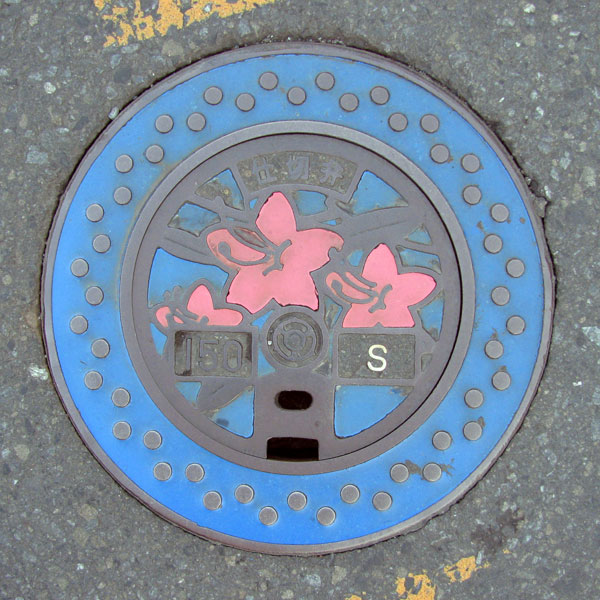
A valve featuring the city flower, the azalea.
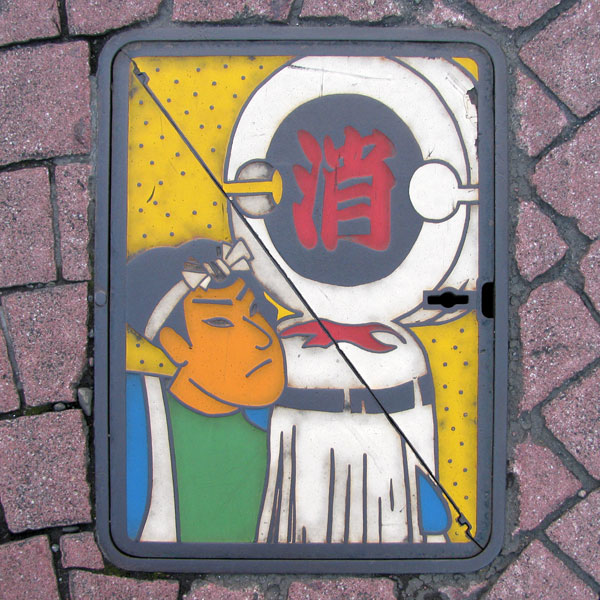
Colorful fire hydrants.
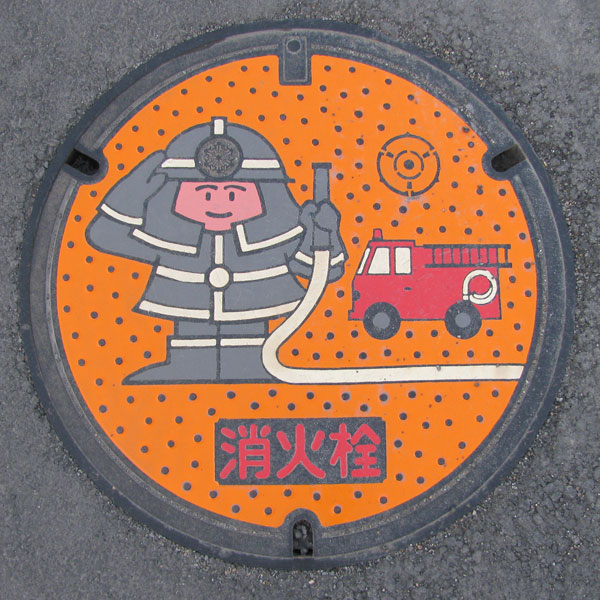
This is also a fire hydrant.
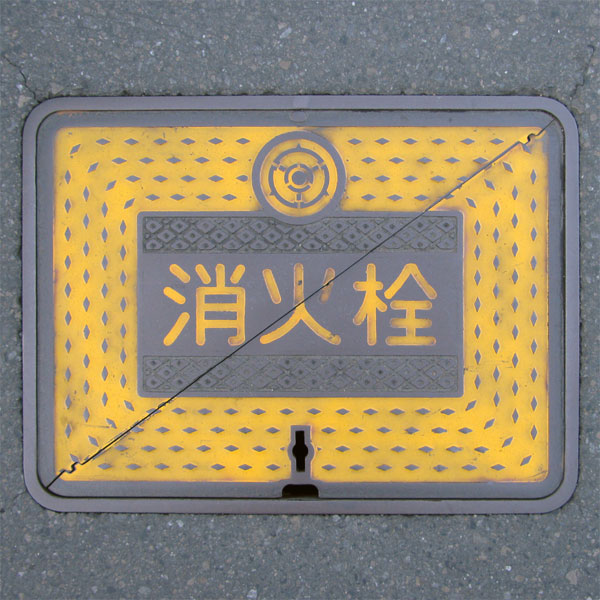
A square-shaped fire hydrant, divided into two sections. The embroidered-like pattern is interesting.
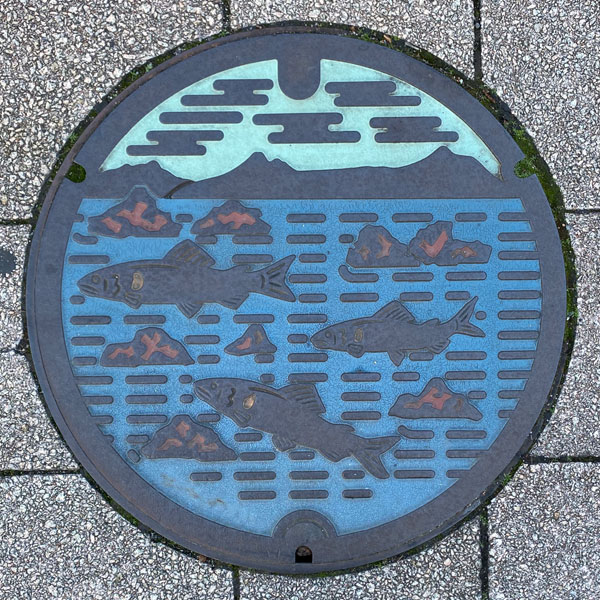
This manhole cover clearly resembles the design of Akiruno City, Tokyo, or the former Akigawa City before the merger, but it lacks the words "Akiruno" or "Akigawa-shi" at the bottom.
Hidaka 日高市
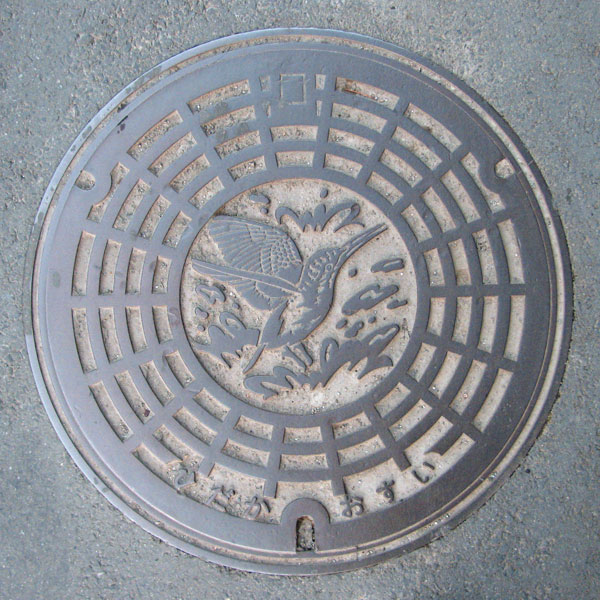
A manhole cover for sewage, depicting the city's bird, the kingfisher, leaping out of the water.
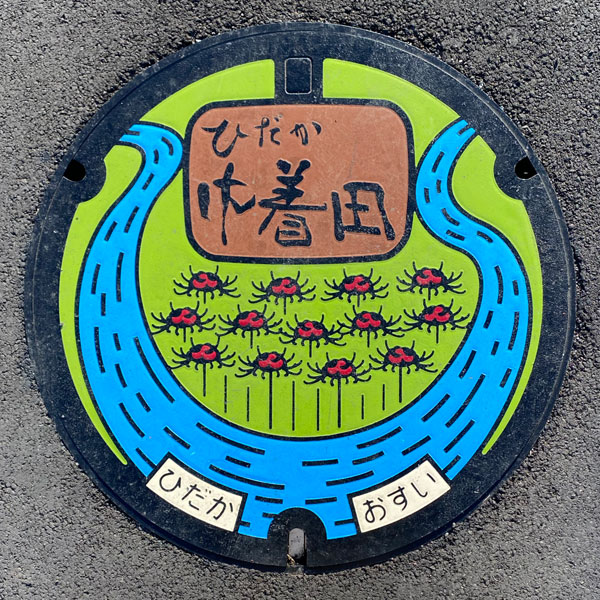
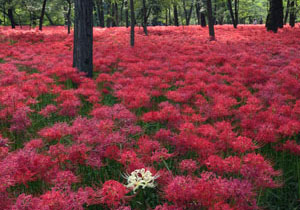
A manhole cover for sewage, depicting Kinchakuda, a place that has become a popular tourist destination due to its clusters of spider lilies.
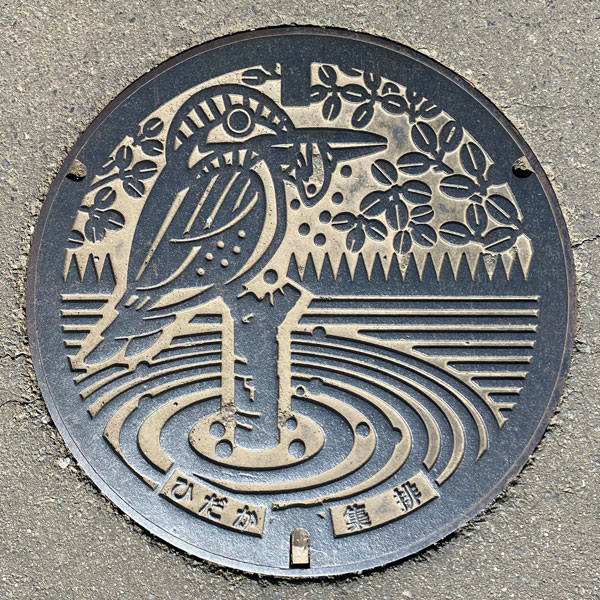
A manhole cover from the Nakazawa district of Hidaka City, depicting the city bird, the kingfisher, holding a fish, and the city flower, the bush clover.
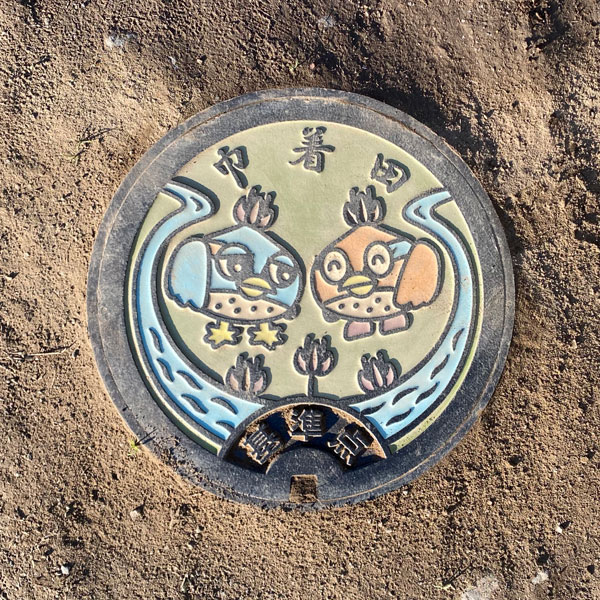
This is a manhole cover marking a surveying reference point in Kinchakuda Manjushage Park. Located in Kinchakuda, surrounded by the meandering Koma River, are Hidaka City's mascot characters, "Clicker" and "Clippy." Their design is based on the city bird, the kingfisher, with bodies shaped like chestnuts (a local specialty), and red spider lilies (Lycoris radiata) on their heads.
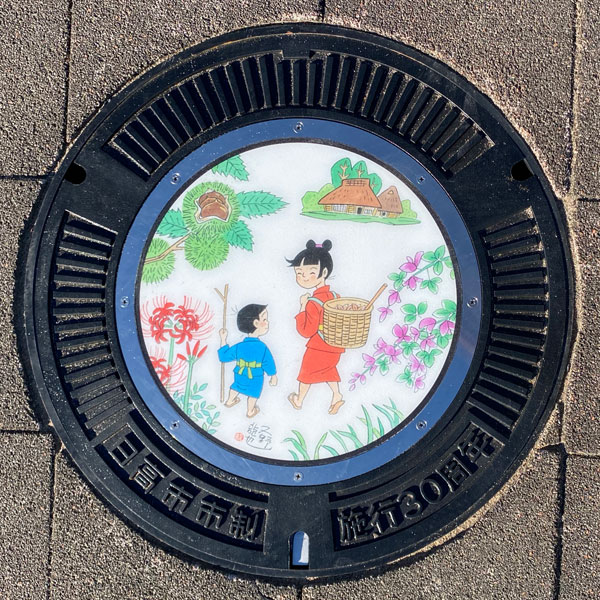
This manhole cover was installed to commemorate the 30th anniversary of the city's incorporation.
The design was created by Tatsuya Matano, a sumi-e (ink painting) artist residing in the city who worked on the anime series "Manga Nihon Mukashibanashi" (Japanese Folk Tales) for many years.
The design depicts a thatched-roof house reminiscent of a folktale, and a close-knit brother and sister. The city's flowers, the bush clover ("hagi") and red spider lilies ("manjushage"), and the local specialty, chestnuts ("kuri"), are also depicted.
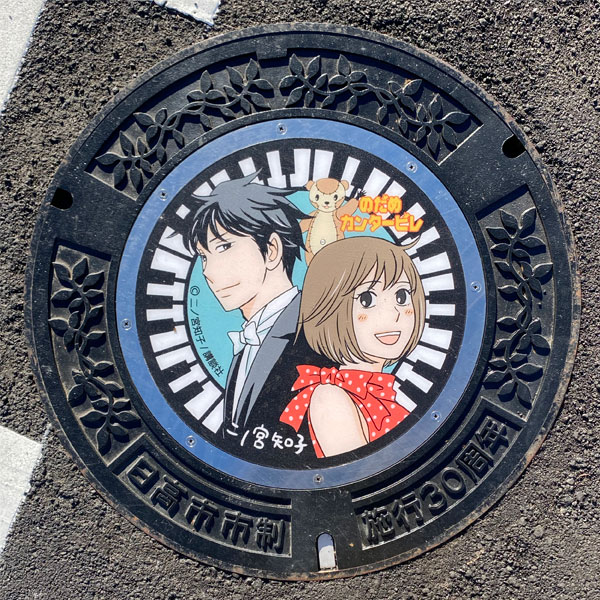
The design features a circular piano keyboard as the background, with the protagonist "Nodame (Megumi Noda)" and her love interest "Chiaki-senpai (Shinichi Chiaki)" standing side-by-side. The title "Nodame Cantabile" is also present, along with a mongoose costume that Nodame made herself. The plate portion bears Tomoko Ninomiya's signature and the text "© Tomoko Ninomiya/Kodansha." The words "30th Anniversary of Hidaka City's Incorporation" are inscribed on the lower outer edge.
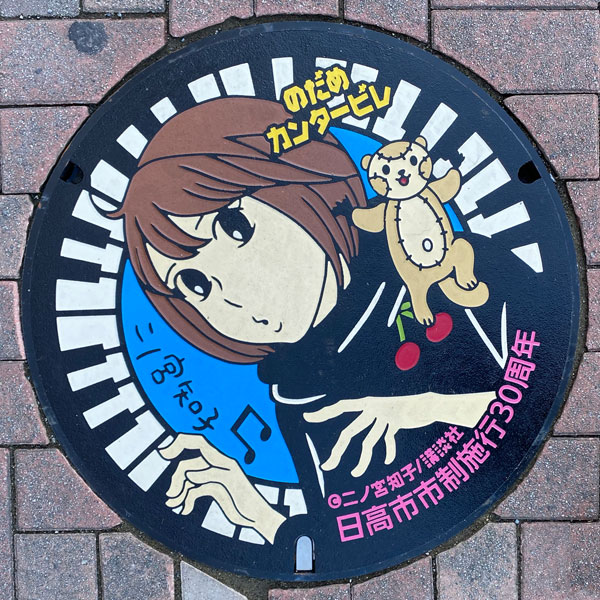
The design features a circular piano keyboard as the background, with the protagonist "Nodame (Megumi Noda)" in a "zone" expression, the words "Nodame Cantabile," and a mongoose costume that Nodame made herself.
Sayama 狭山市
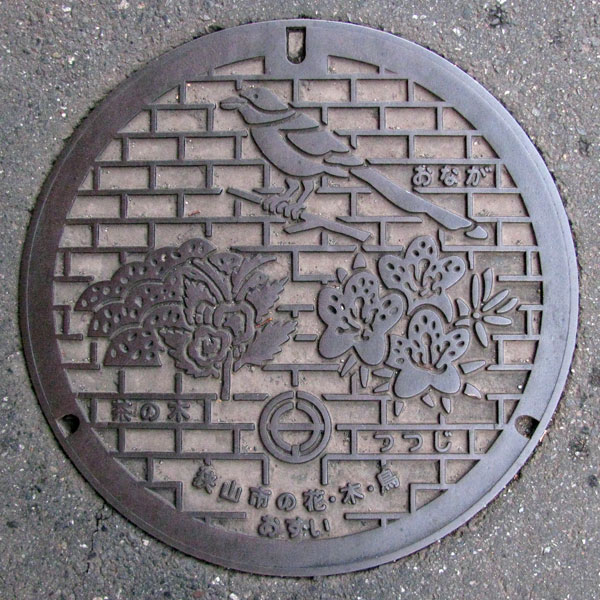
For wastewater. At the top is the city bird, the long-tailed tit; on the left is the city tree, the tea tree; and on the right is the city flower, the azalea. The city emblem is at the bottom center. Below that are the words "Sayama City's flower, tree, and bird."
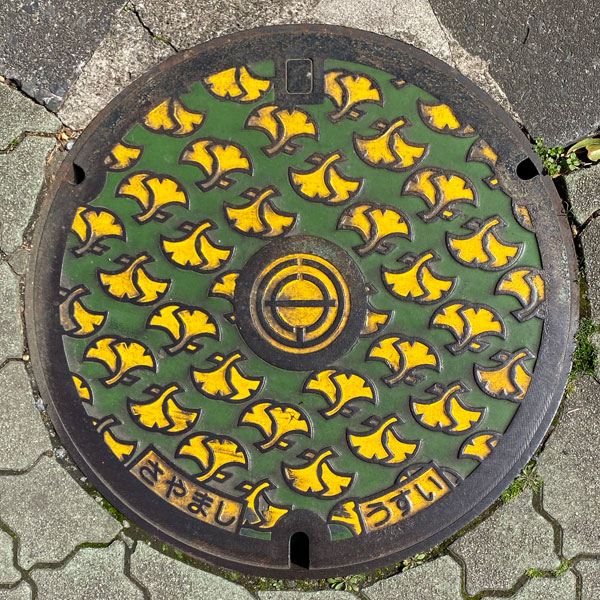
A rainwater manhole cover with two yellow ginkgo leaves side-by-side on a green background.
This design is very similar to the manhole covers in Inagi City, Tokyo.
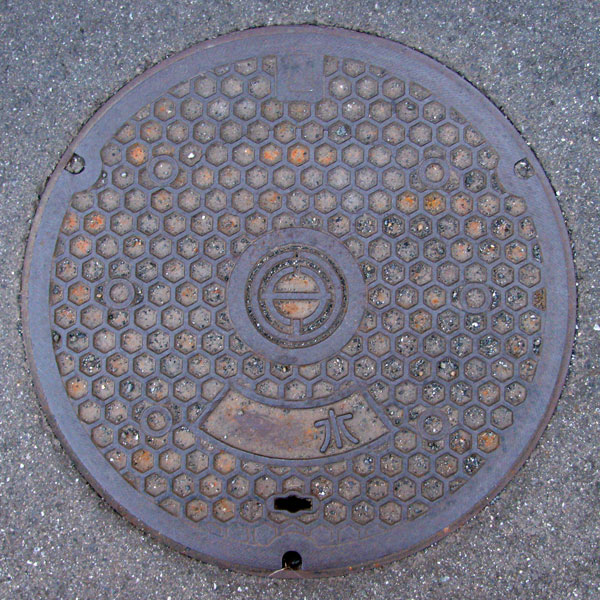
City emblem in the center.
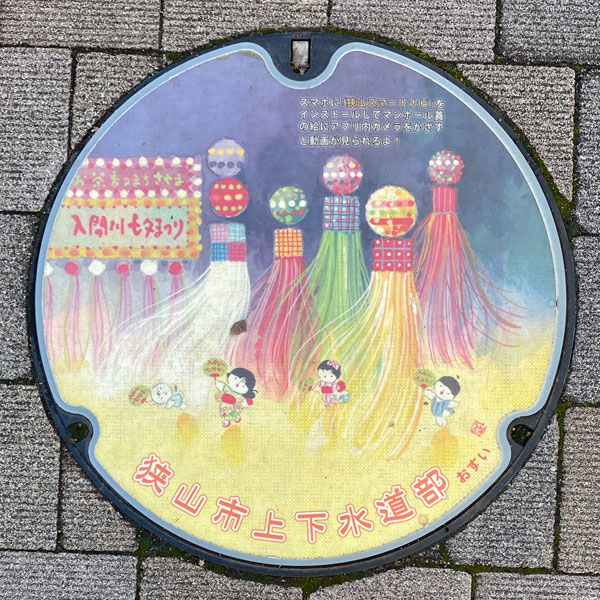
A manhole depicting the "Sayama City Irumagawa Tanabata Festival," one of the "Three Great Tanabata Festivals of the Kanto Region," along with the "Shonan Hiratsuka Tanabata Festival" and the "Mobara Tanabata Festival."
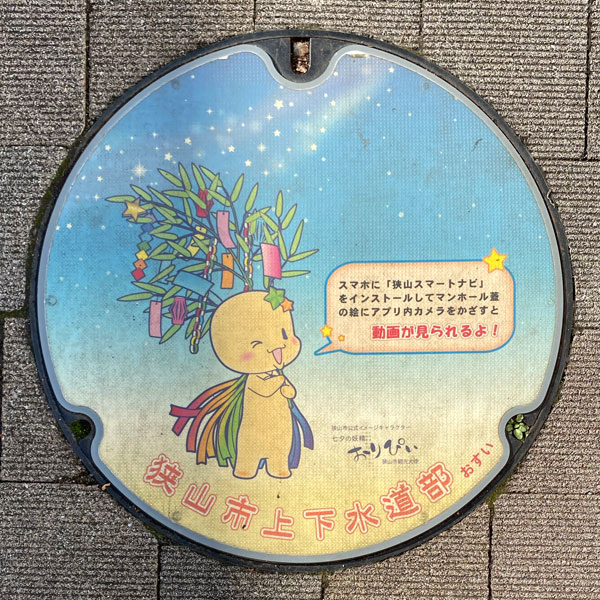
A manhole design featuring Sayama City's official mascot, "Tanabata Fairy Oripi," winking while holding a bamboo decoration. The Milky Way is visible in the sky.
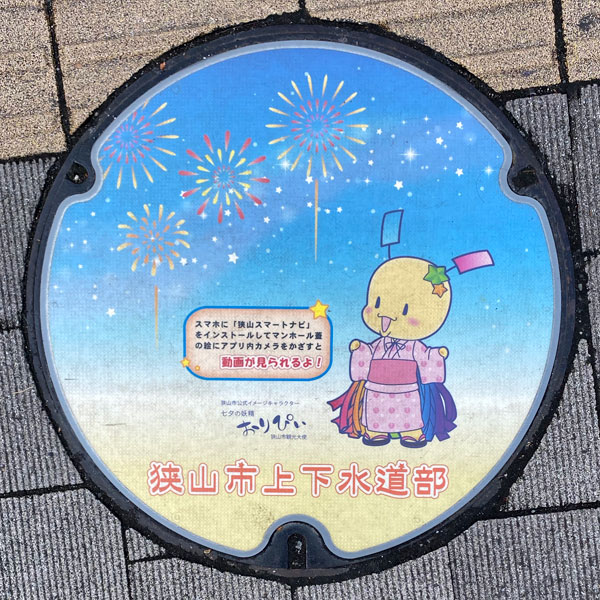
This manhole features a picture of "Oripii" wearing a yukata, with fireworks launched against the backdrop of the Milky Way, likely from the "Summer Fireworks Display," one of the popular events at the Irumagawa Tanabata Festival in Sayama City.
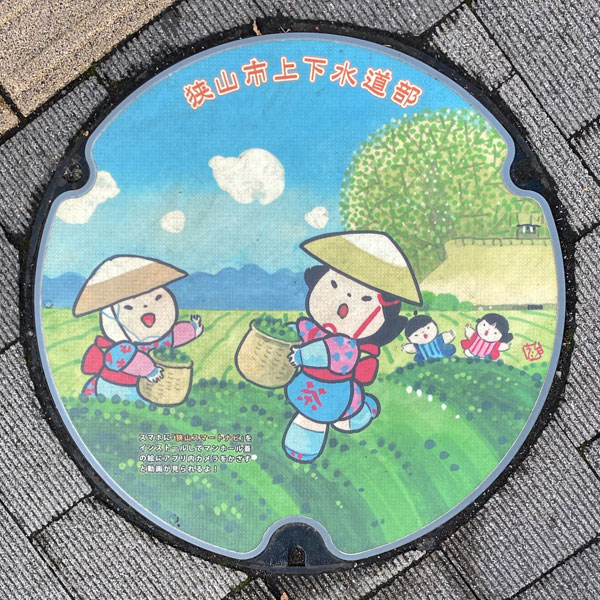
This manhole features a charming illustration of tea picking scenes for Sayama tea, which, along with Shizuoka tea and Uji tea, is considered one of Japan's three most famous teas.
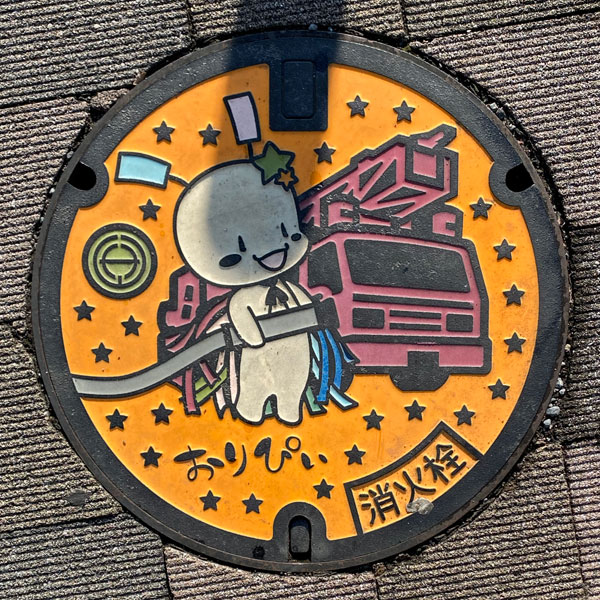
A fire hydrant cover featuring "Oripii" holding a fire hose. The Sayama City emblem is on the left, and the words "Fire Hydrant" are on the bottom right.
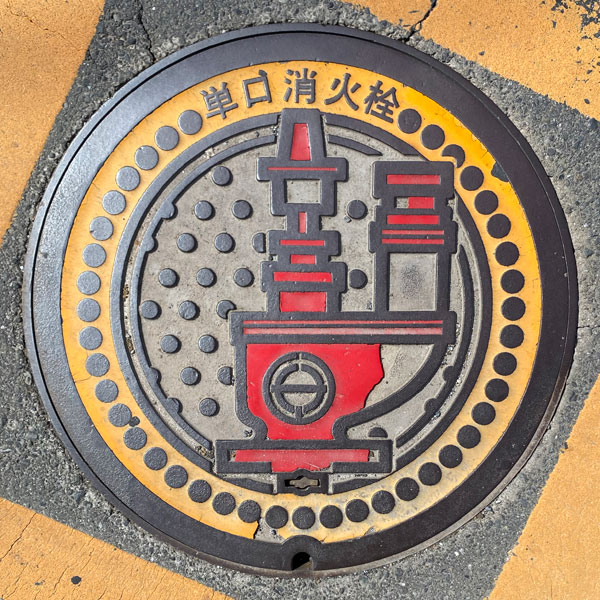
A fire hydrant cover with the words "Single-port Fire Hydrant" written on it.
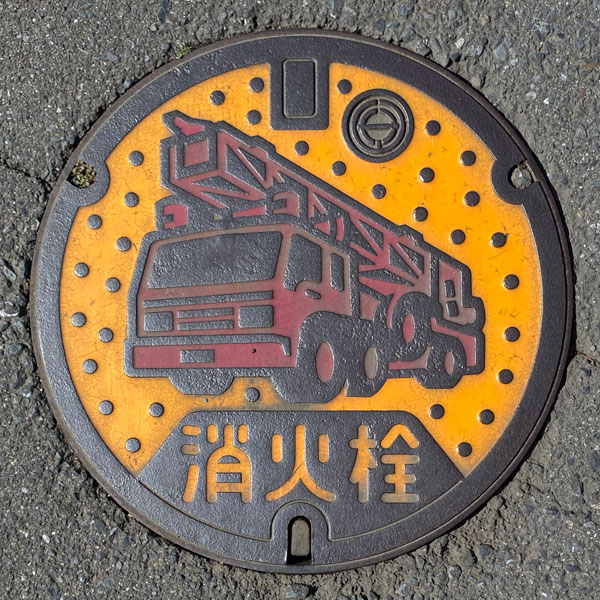
A fire hydrant cover with a fire truck depicted on it.
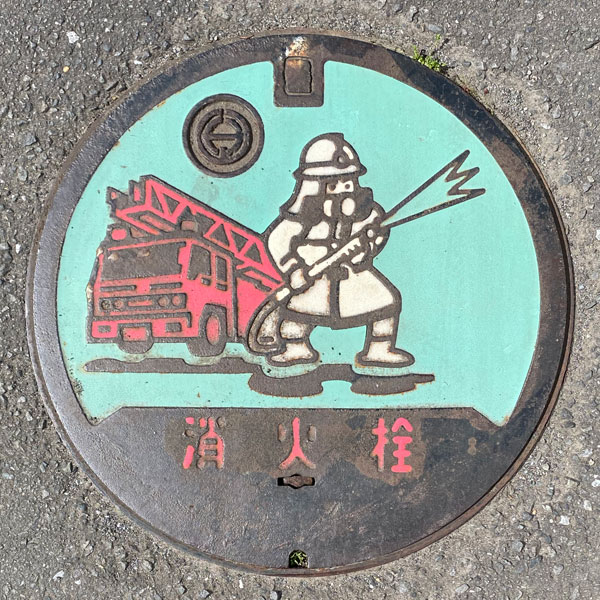
This fire hydrant cover is unusual in that it features a fire truck and a firefighter holding a hose on a light blue background.
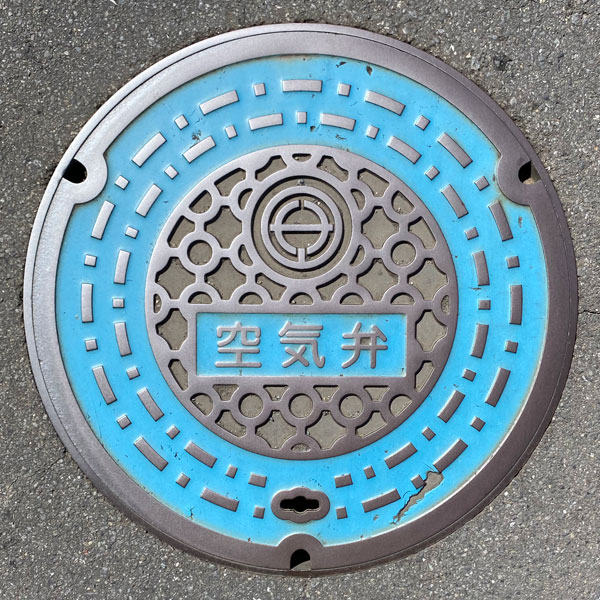
The air valve cover has a pattern of interconnected circles in a grid. The light blue outer edge is lined with a double dotted line.
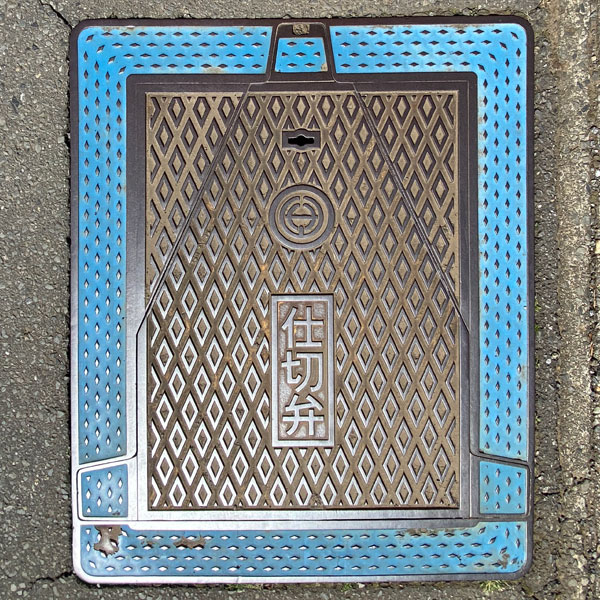
A rectangular gate valve cover with a pattern of vertically arranged diamonds.
See Arakawa Right Bank Basin Sewerage System
Fujimino ふじみ野市
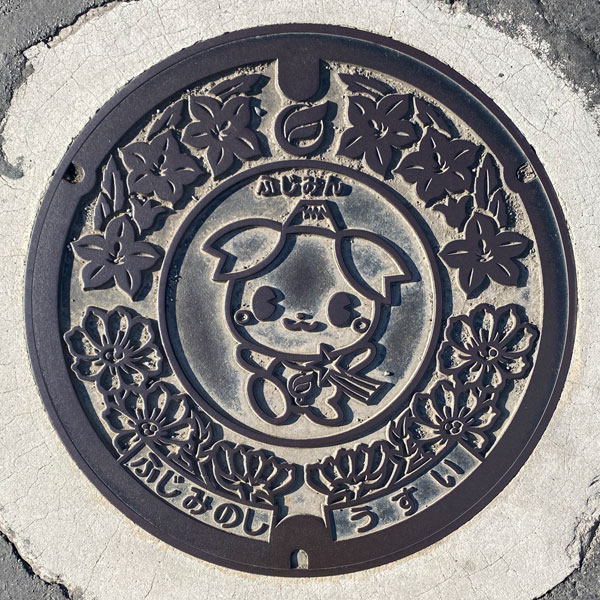
The manhole cover features "Fujimin," who was appointed Fujimino City's PR ambassador on March 17, 2011, in the center. The upper outer part depicts the city emblem and the bellflower (the former flower of Oi Town), while the lower part features the cosmos (the former flower of Kami-Fukuoka City).
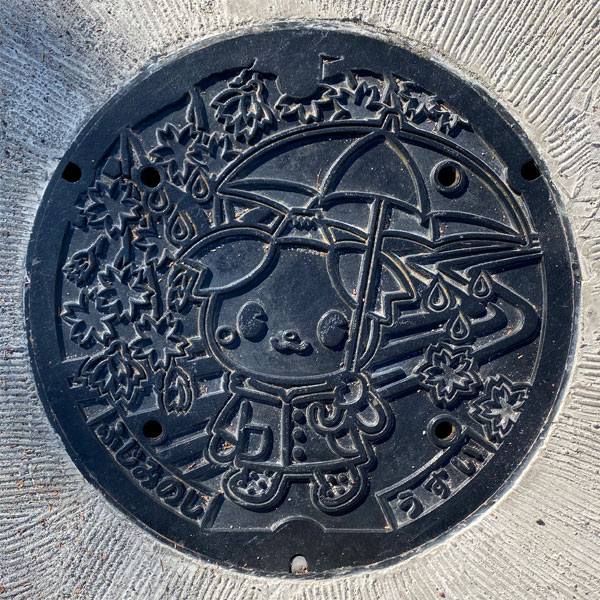
A manhole cover featuring Fujimin's design. While difficult to discern without color, it depicts Fujimin strolling along a cherry blossom-lined riverbank, wearing a raincoat and rain boots and holding an umbrella. The words "Fujimino City" and "Rainwater" are at the bottom.
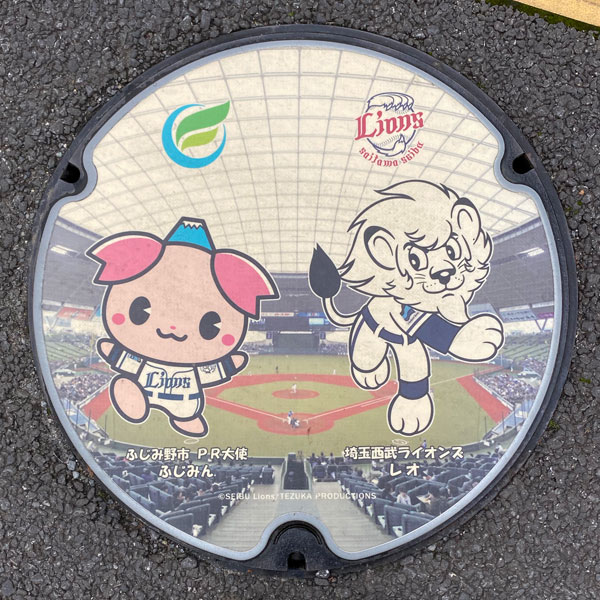
A manhole featuring Fujimino City's PR ambassador "Fujimin" and Saitama Seibu Lions' mascot "Leo," with the interior of Seibu Dome as the background. Above their heads are the Fujimino City emblem and the Saitama Seibu Lions logo.
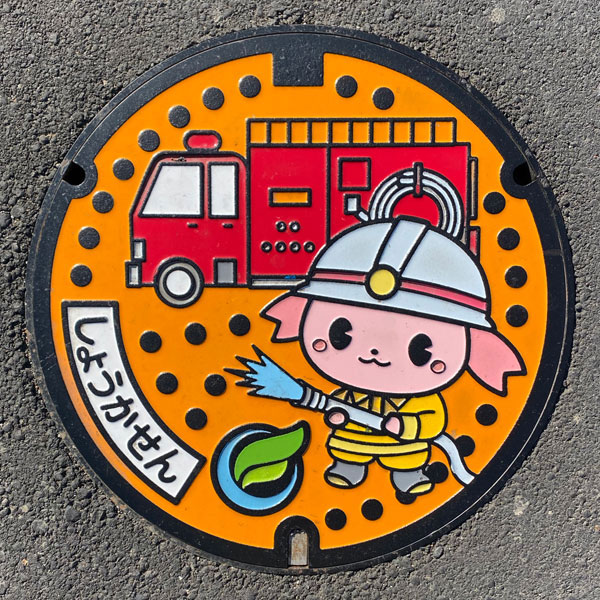
A fire hydrant cover featuring a fire truck and Fujimin wearing a helmet and holding a fire hose.
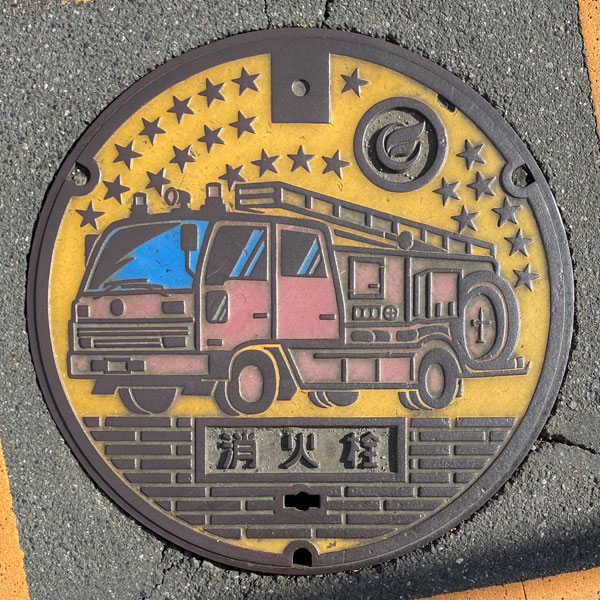
A fire hydrant cover with a fire truck depicted on it. The Fujimino City emblem is in the upper right corner.
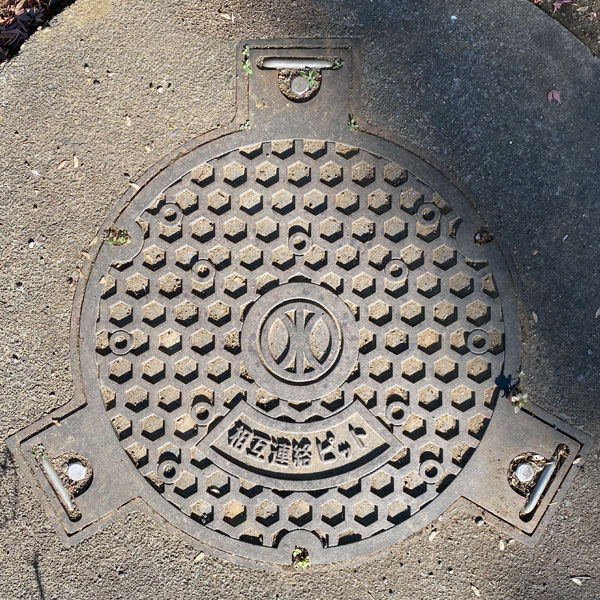
A manhole cover near the border with Fujimi City, labeled "Mutual Communication Pit." It appears to be the same as the "Emergency Communication Pipe," which connects areas for mutual water supply as a measure against disasters and other emergencies.
See Arakawa Right Bank Basin Sewerage System
Kamifukuoka 上福岡市
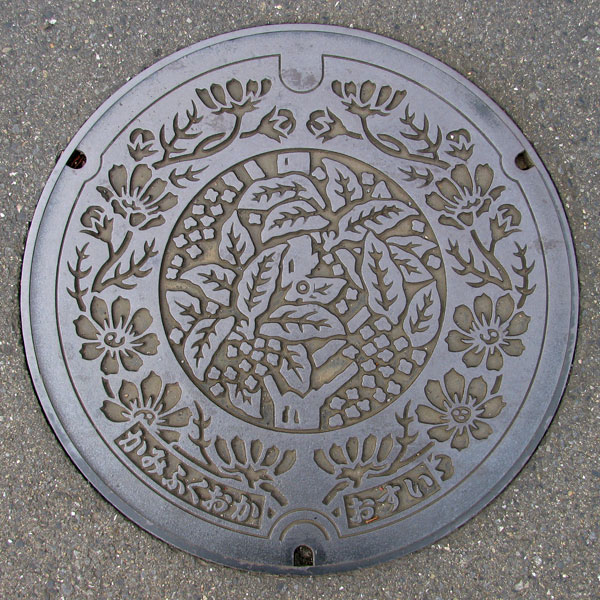
This manhole cover was used for sewage in the former Kami-Fukuoka City. It features the city's official tree, the Osmanthus fragrans, in the center, surrounded by the city's official flower, the cosmos.
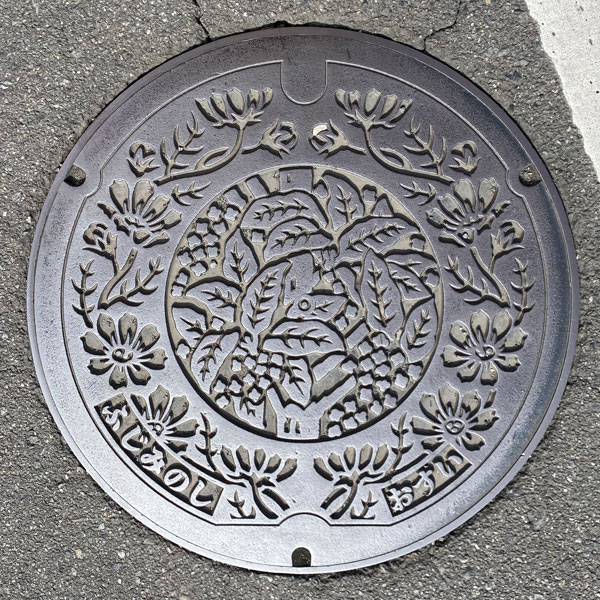
A manhole cover for sewage, featuring the former city tree "Osmanthus fragrans" and city flower "Cosmos," with the name changed to "Fujimino City."
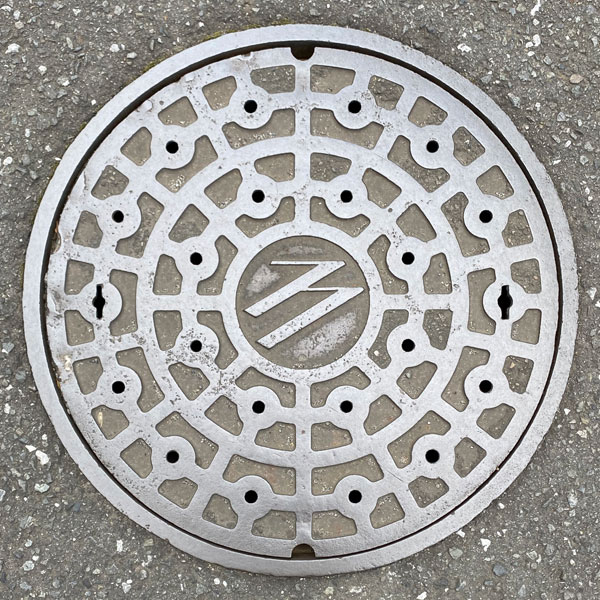
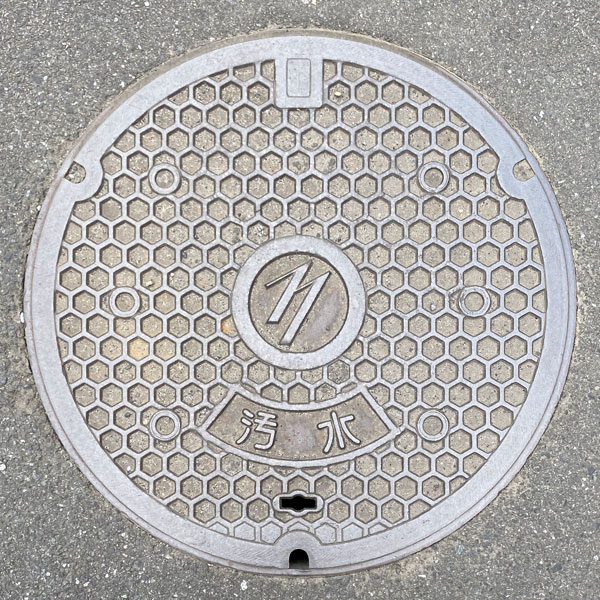
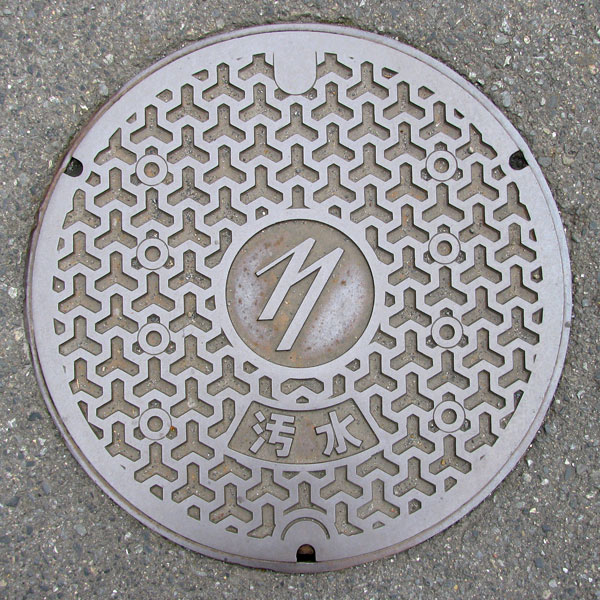
This manhole cover features the former Kamifukuoka City emblem in the center.
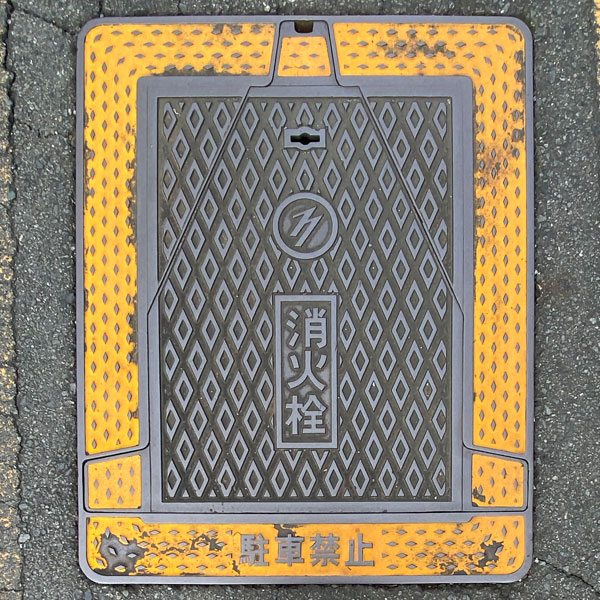
A vertical fire hydrant cover.
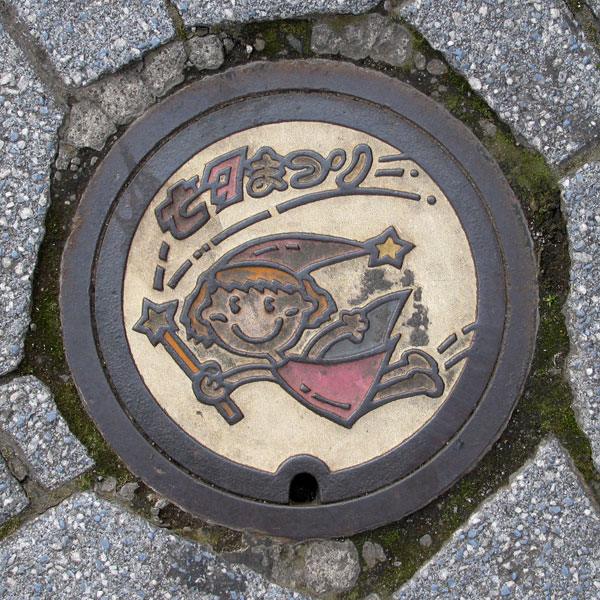
The mascot character for the "Kamifukuoka Tanabata Festival"?
Oi 大井町
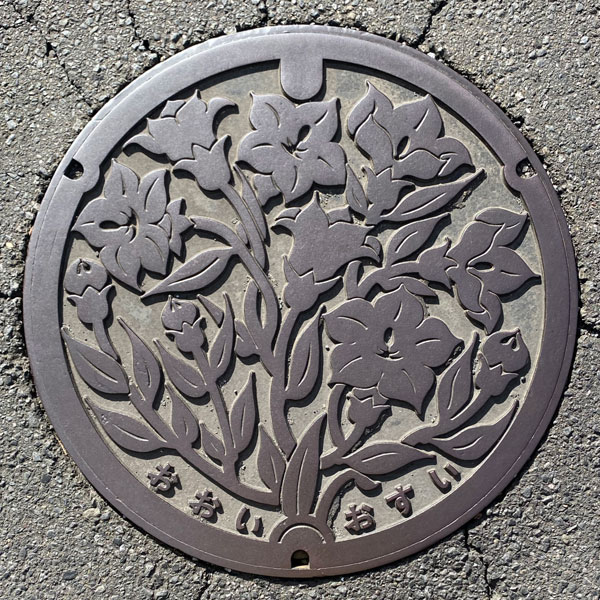
For wastewater in the former Oi Town. The design features the town's flower, the bellflower.
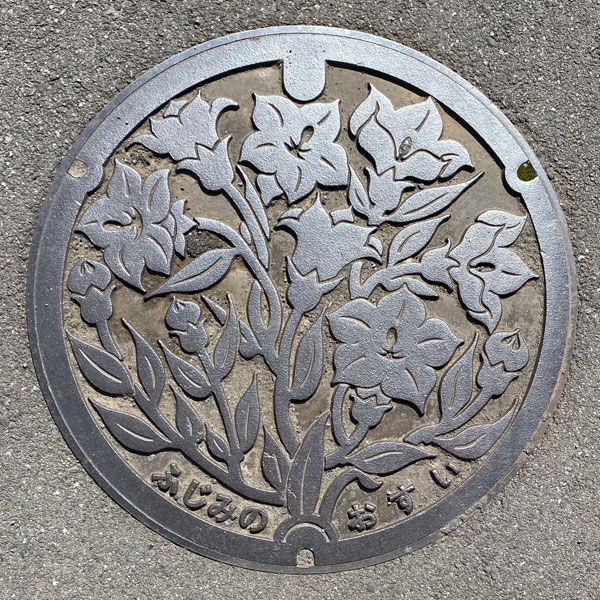
A manhole cover for sewage from the former Oi Town, featuring a "bellflower" design and the word "Fujimino" written on it.
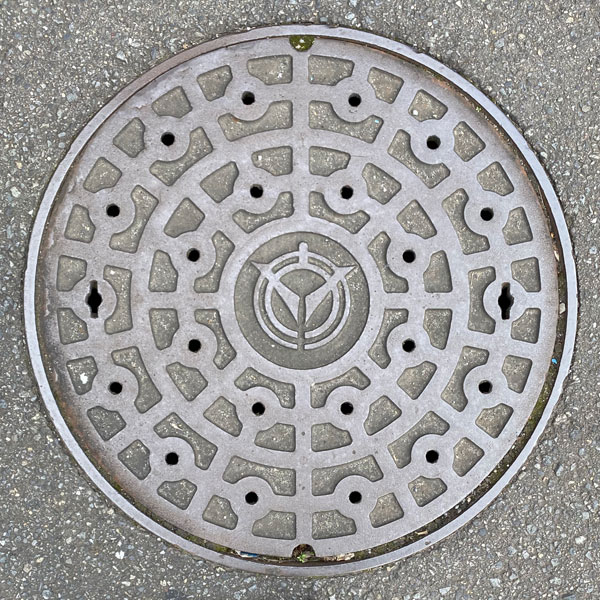
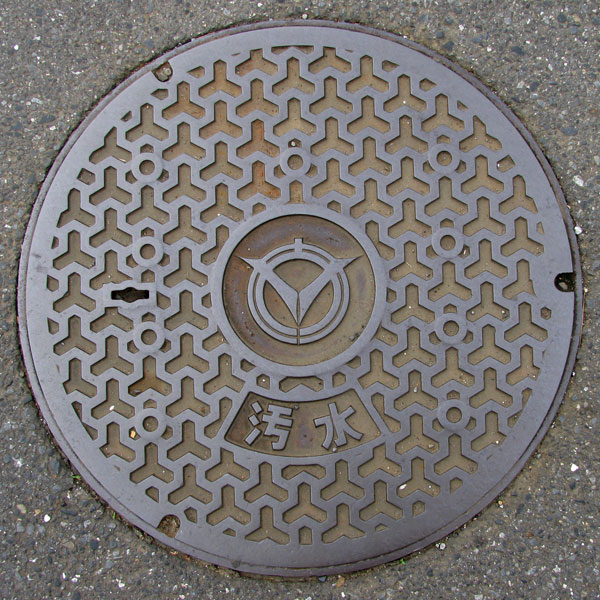
Former town emblem in the center.
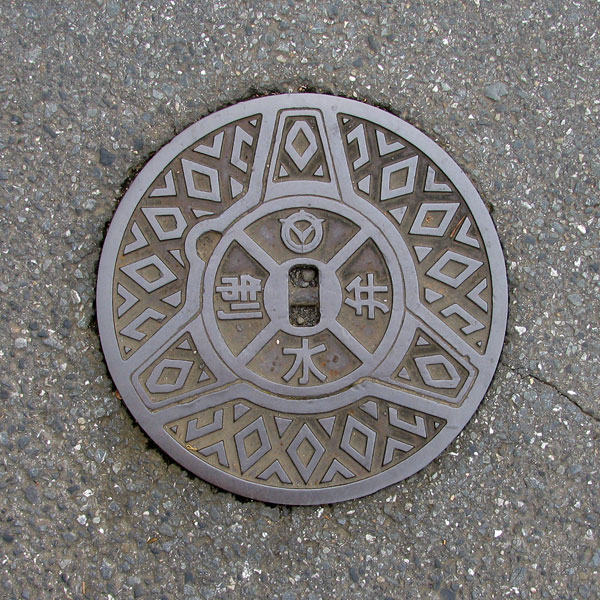
A water control valve bearing the town's emblem.
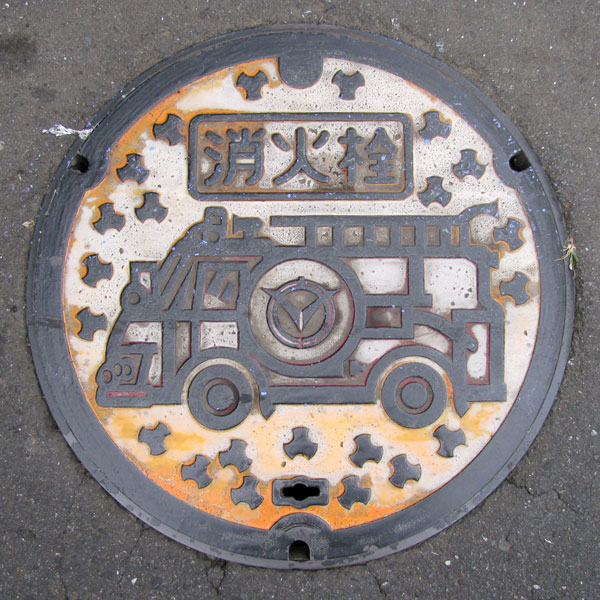
A fire hydrant bearing the former town emblem of Oi Town.
Fujimi 富士見市
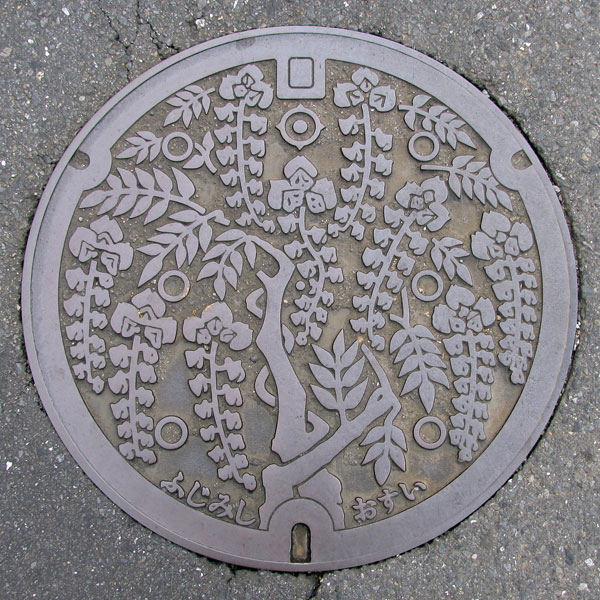
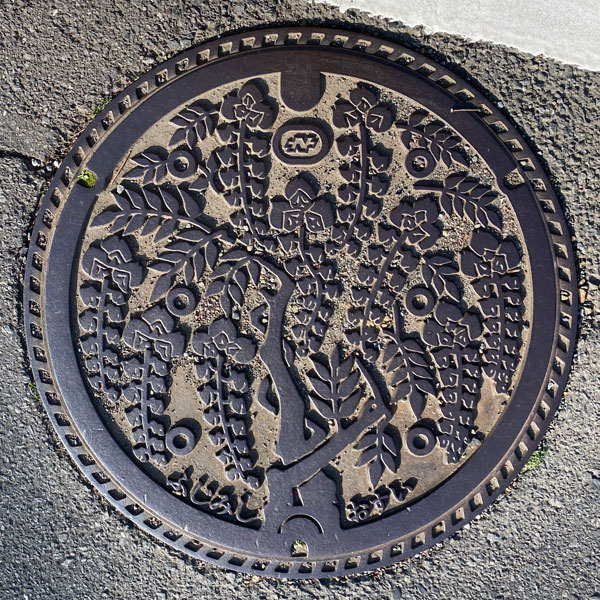
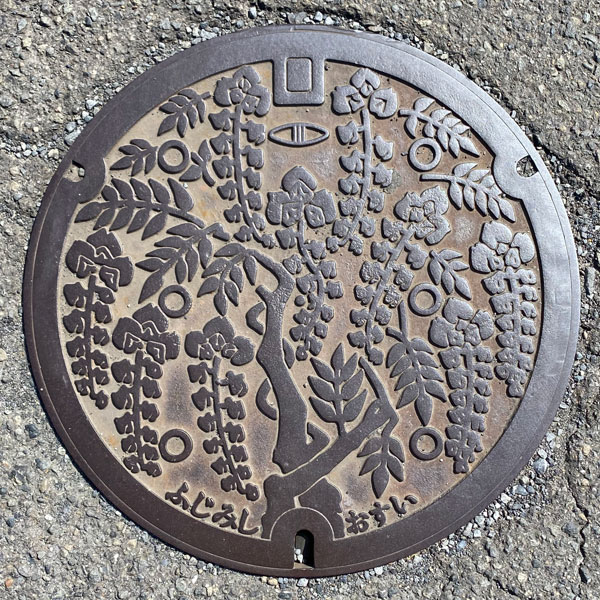
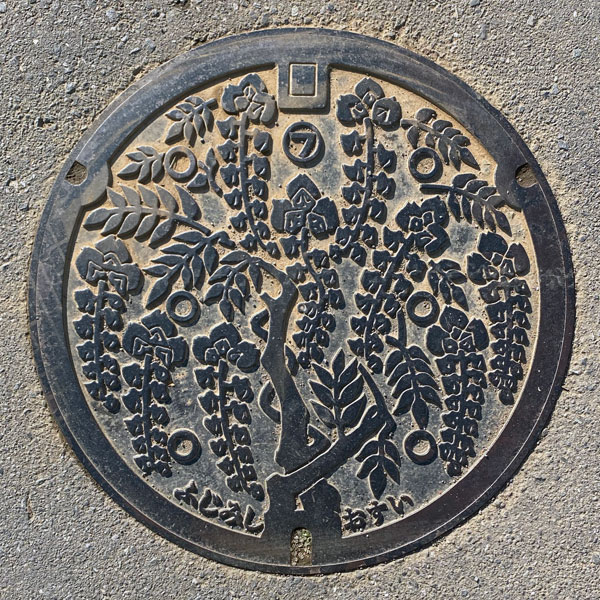
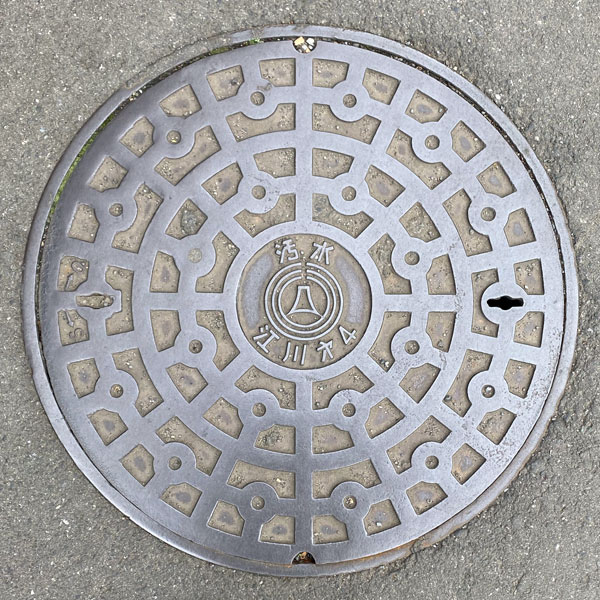
The design features the city flower, the wisteria. The pattern of raised and recessed areas is reversed compared to the achromatic cover. The frame has a pattern of alternating trapezoids and inverted trapezoids.
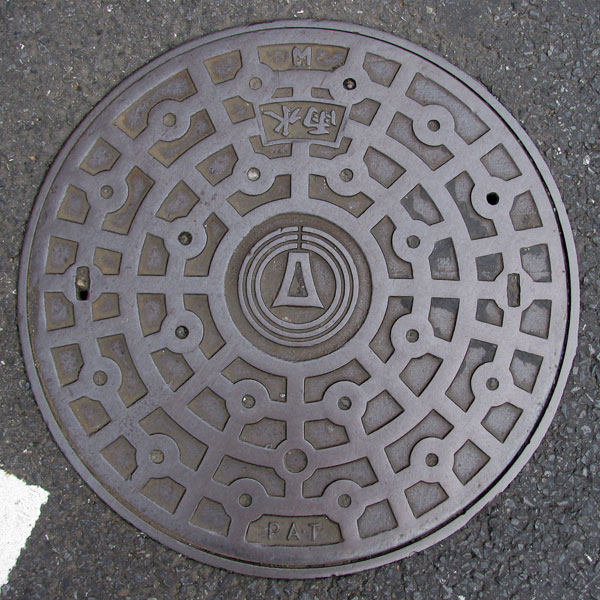
Fujimi City's wisteria-designed manhole covers bear the manufacturer's mark. Even just looking at the covers shown on this page, you can see the marks of five manufacturers: Nagashima Casting Co., Ltd., Hinode Waterworks Equipment Co., Ltd., Fukuhara Casting Works Co., Ltd., Kawaguchi Metal Industry Co., Ltd., and Arai Sangyo Co., Ltd.
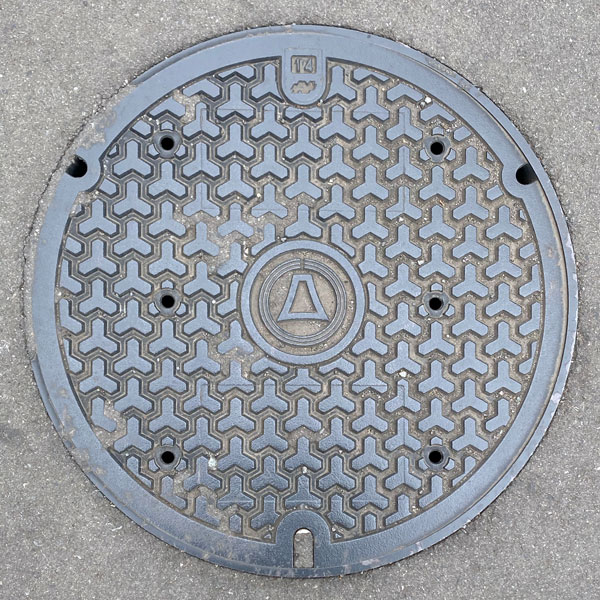
City emblem in the center.
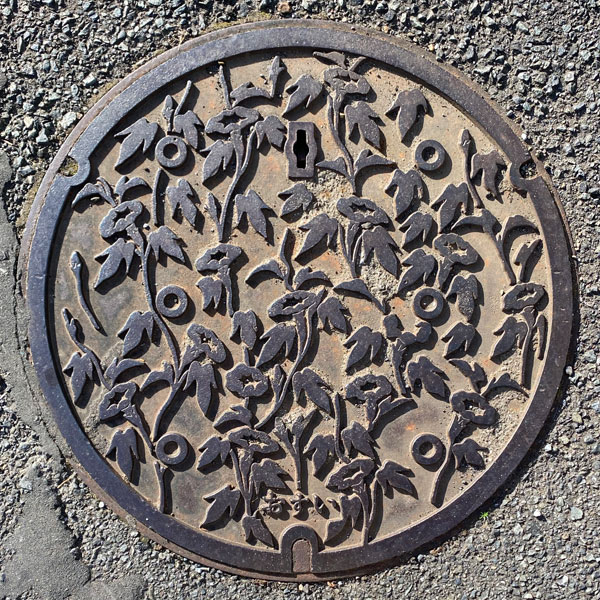
A manhole cover for sewage, decorated with morning glories.
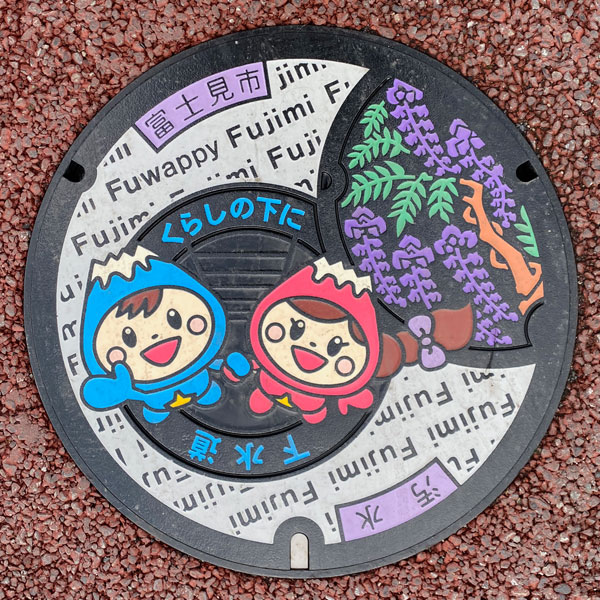
A newly installed colored manhole cover for sewage. Opening the traditional wisteria-patterned manhole cover reveals Fujimi City's mascot character, "Fuwappy," in a cheerful pose.
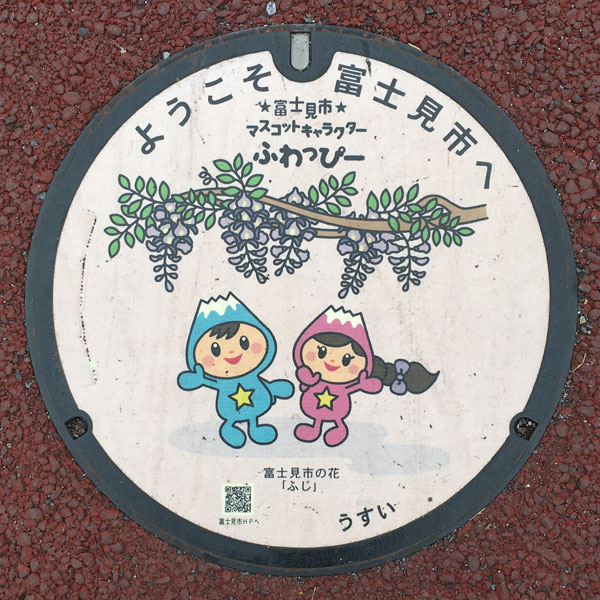
This is a rainwater drain cover located on the sidewalk opposite "Kirari☆Fujimi," near the Route 254 bypass. It has strong promotional elements, such as a mascot character and a QR code linking to the Fujimi City website.
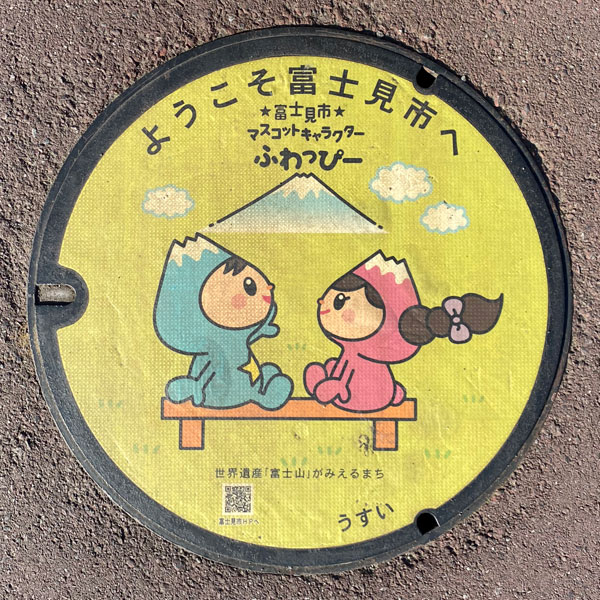
Under the title "Welcome to Fujimi City," this rainwater drainage sticker features a design of "Fuwappy" sitting on a bench and gazing at Mount Fuji. Below it, it says "A town where you can see the World Heritage Site, Mount Fuji."
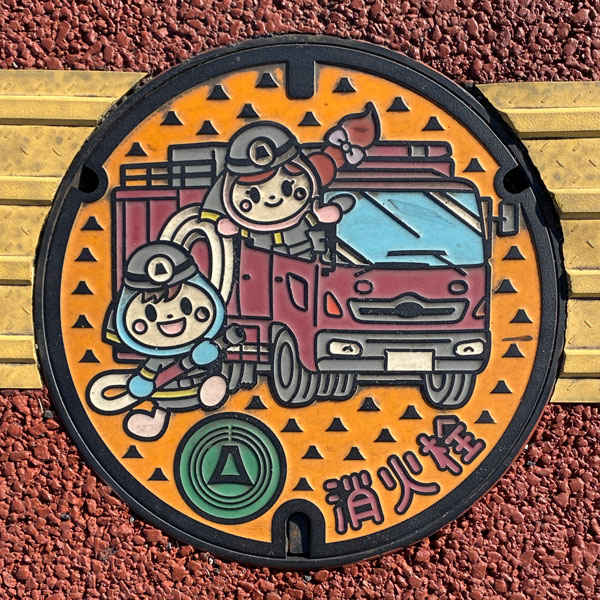
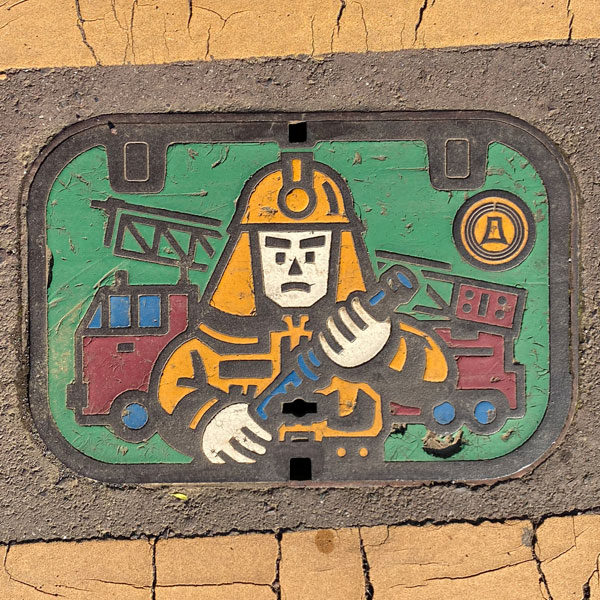
A fire hydrant cover featuring Fujimi City's mascot character, "Fuwappy," dressed as a firefighter.
A square fire hydrant cover bearing the city emblem.
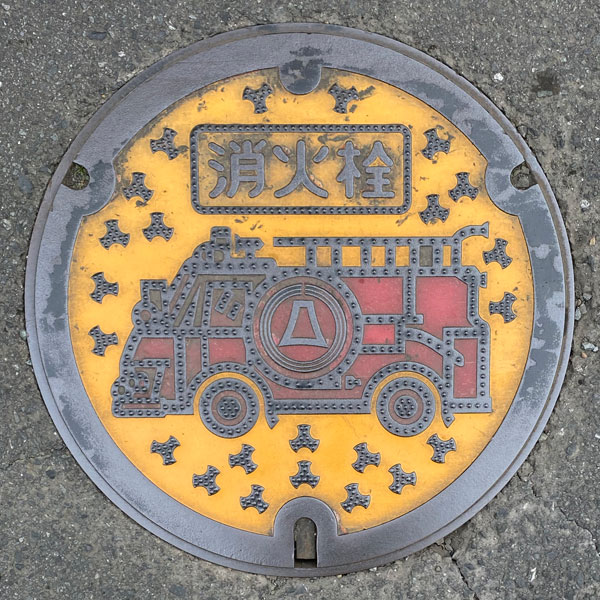
A fire hydrant cover featuring a fire truck. The edge of the fire truck is lined with small anti-slip bumps.
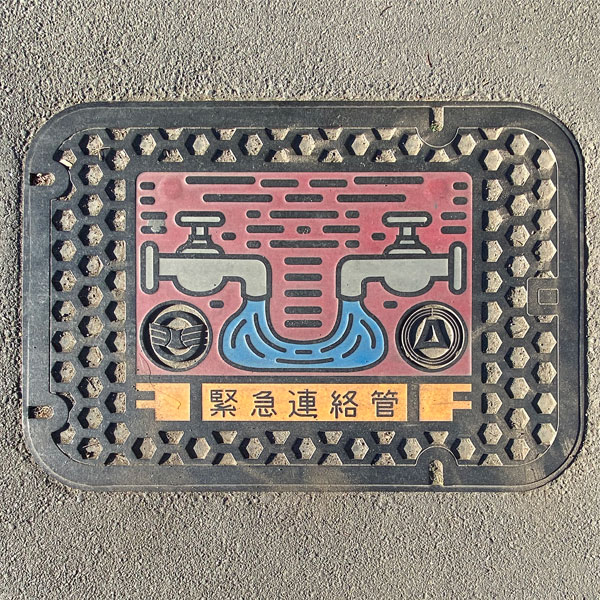
Two water taps connected by water. The Miyoshi Town emblem is on the left, and the Fujimi City emblem is on the right. Below them are the words "Emergency Contact Pipe."
This is a cover for a water pipe connected to allow for mutual water supply as a measure against emergencies such as disasters.
See Arakawa Right Bank Basin Sewerage System
Kawaguchi 川口市
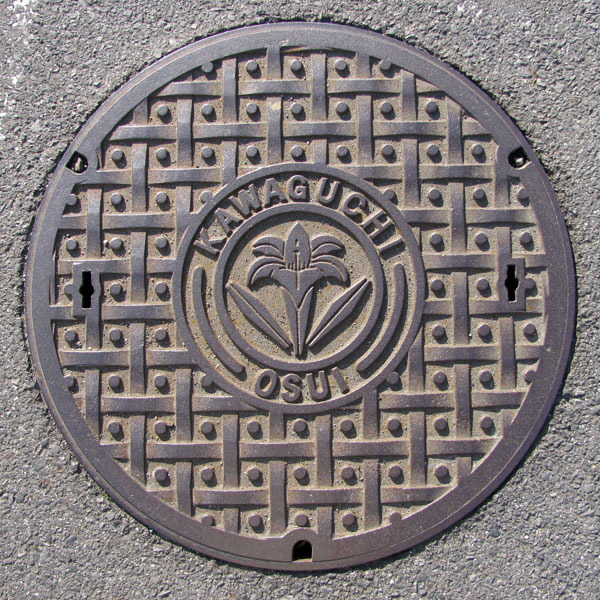
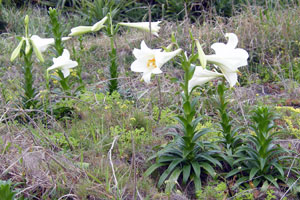
The words "KAWAGUCHI" and "OSUI" are written in Roman letters. In the center is the city flower, the trumpet lily.
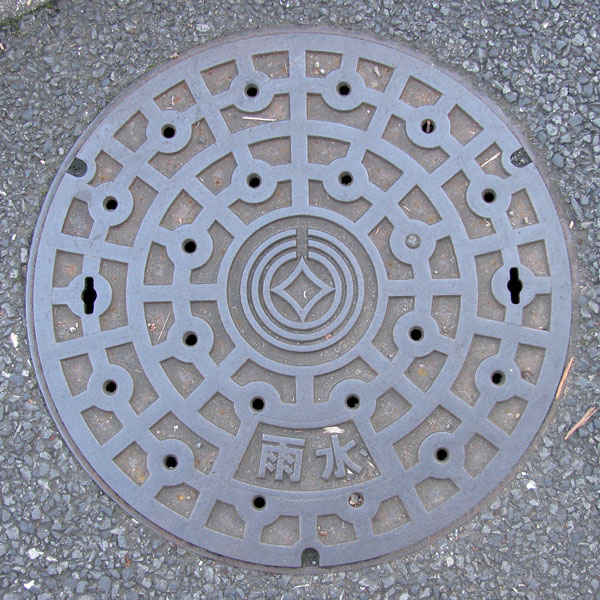
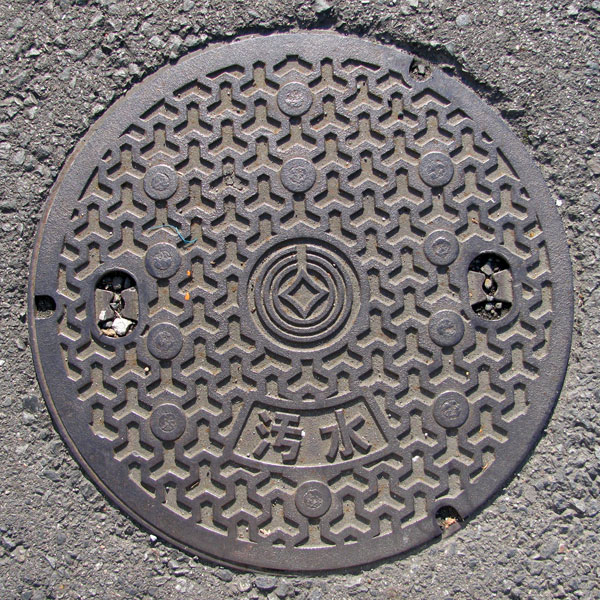
City emblem in the center.
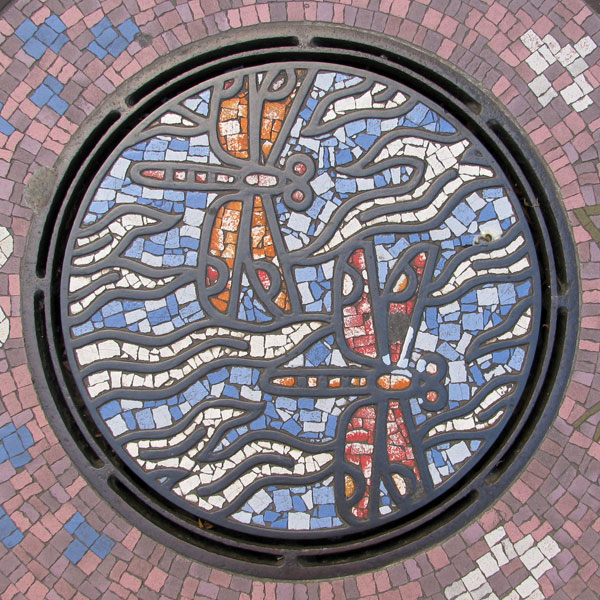
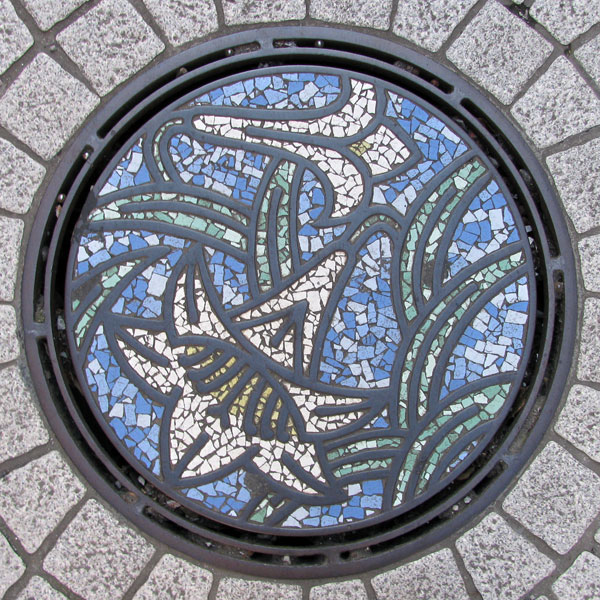
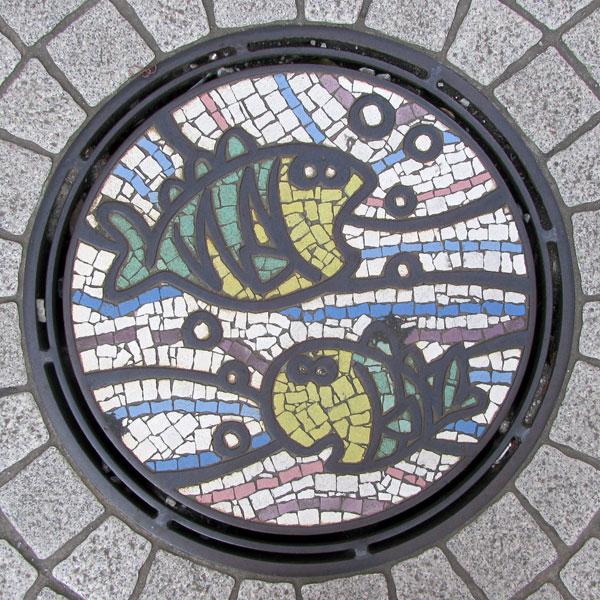
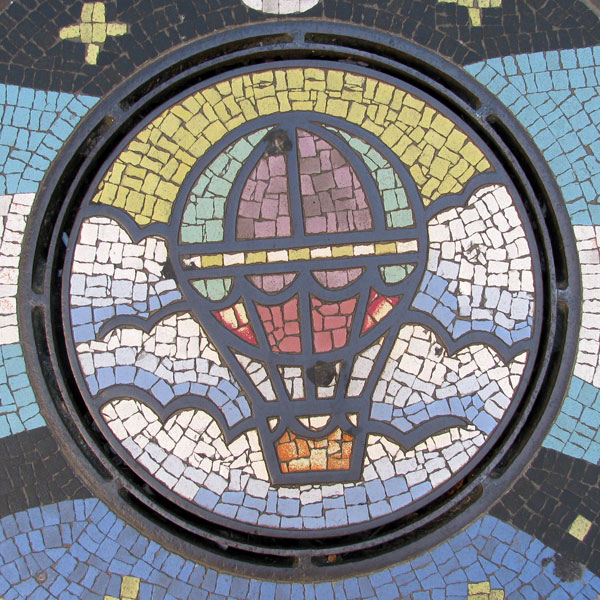
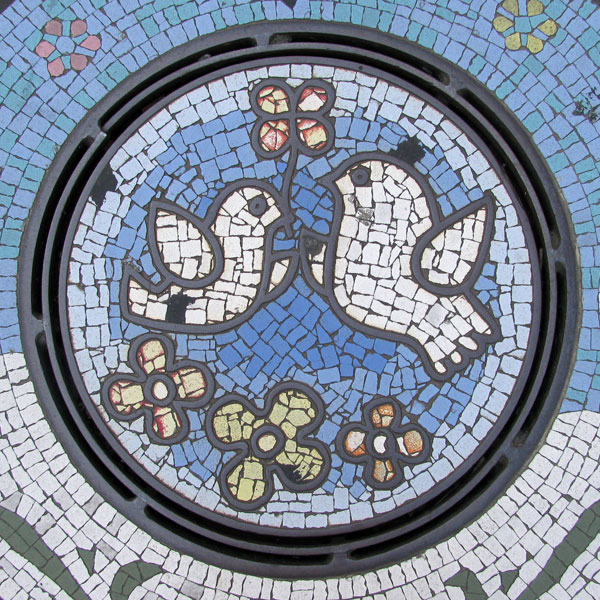
Colorful manhole covers in the shopping street near Kawaguchi Station.
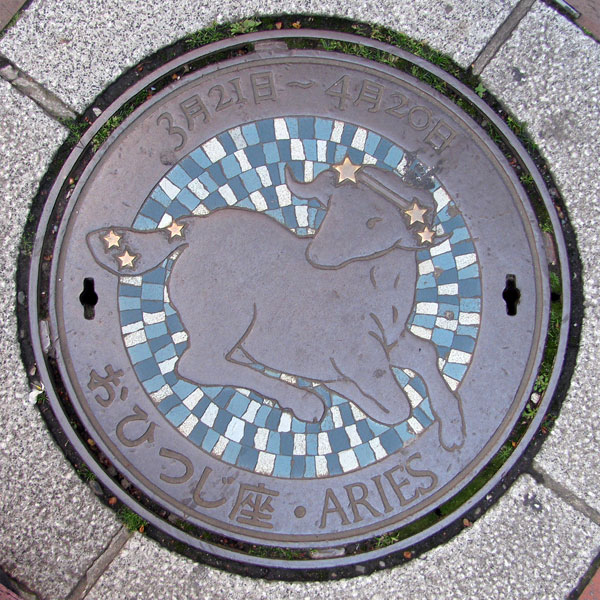
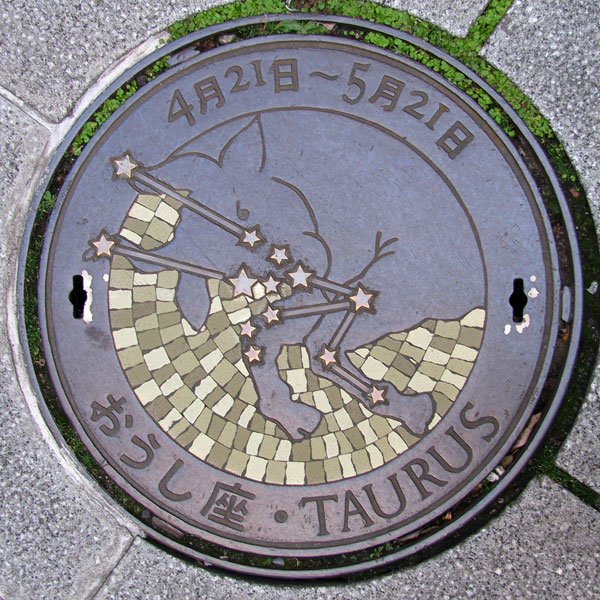
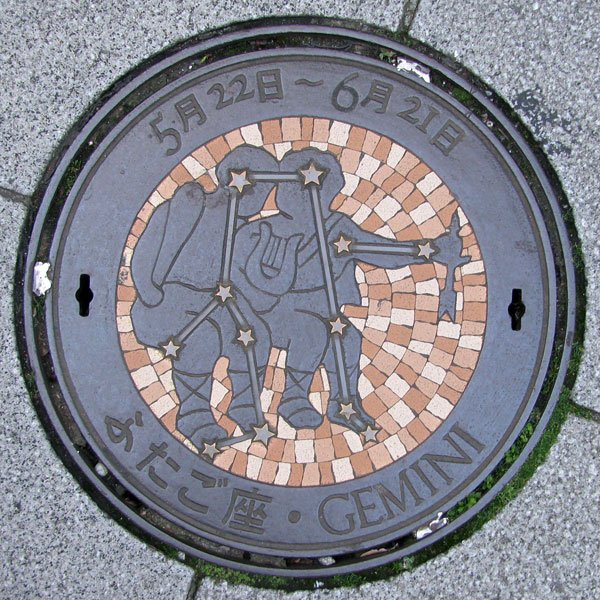
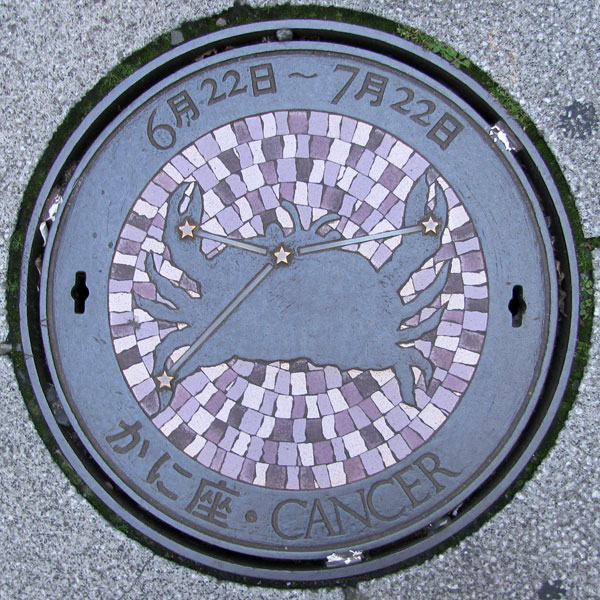
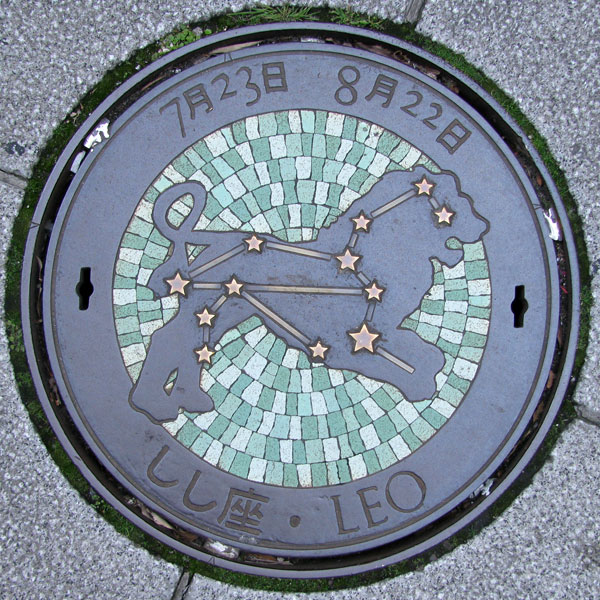
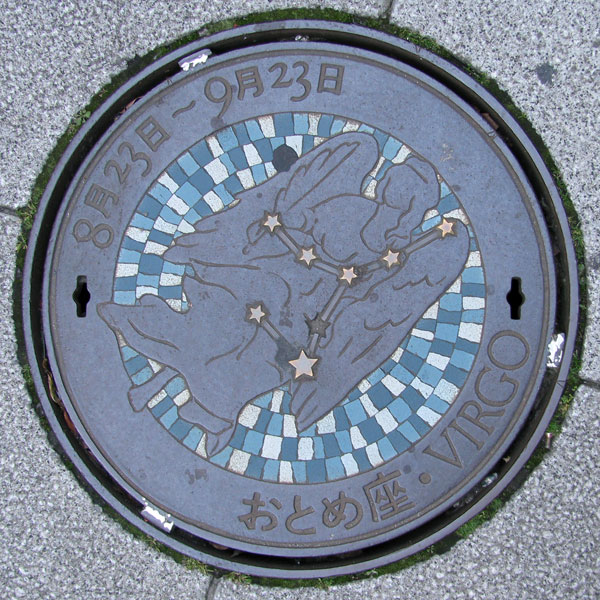
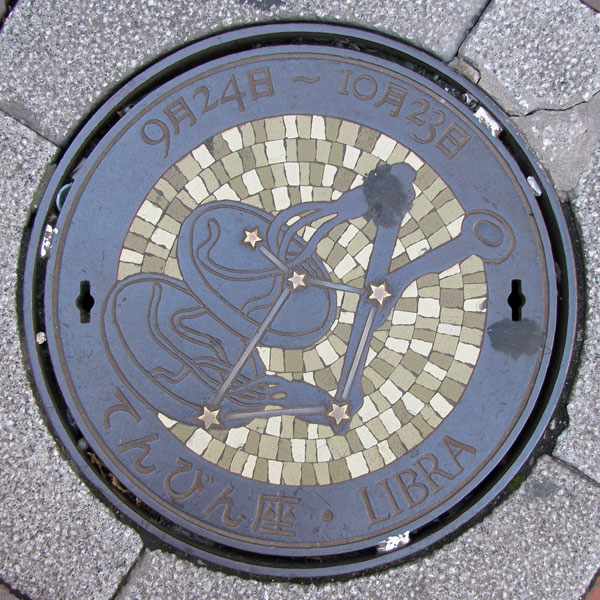
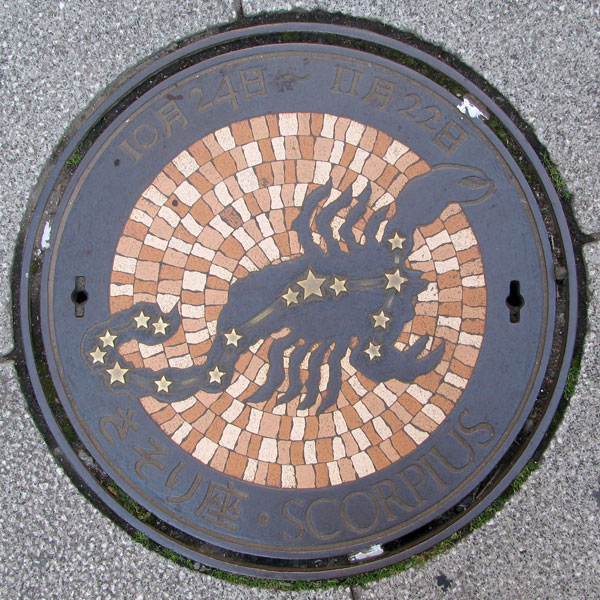
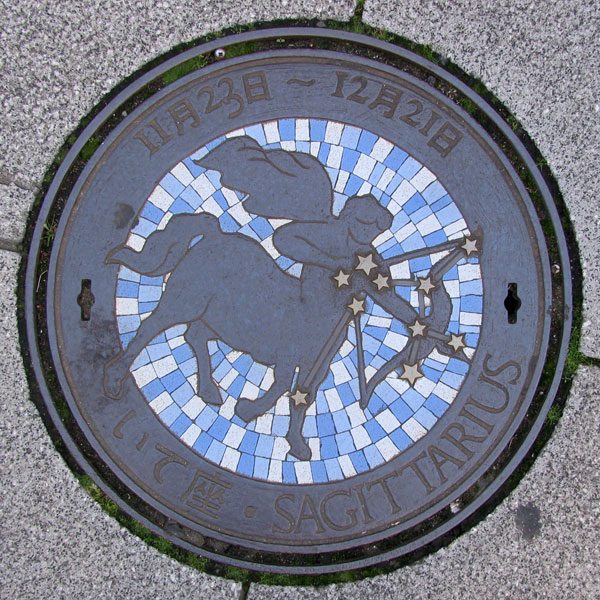
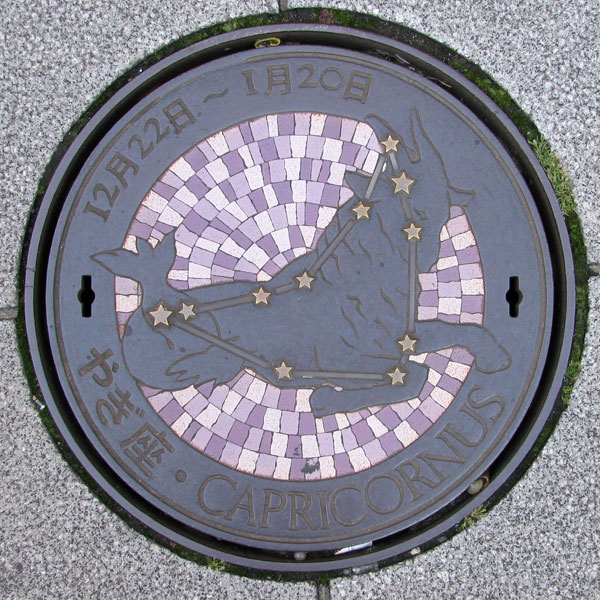
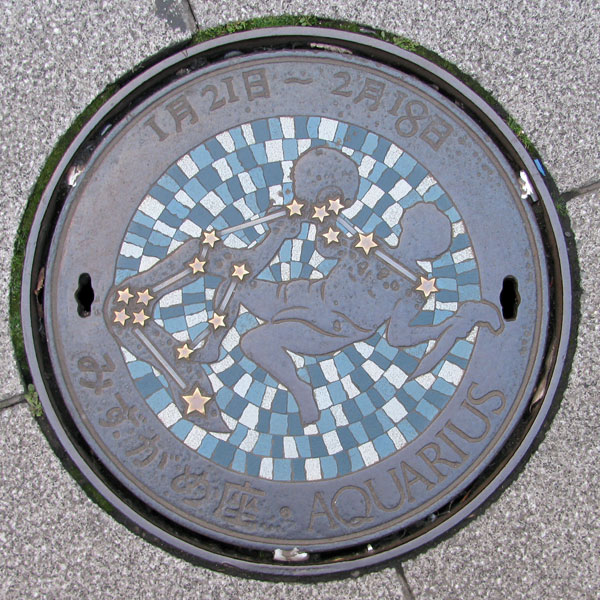
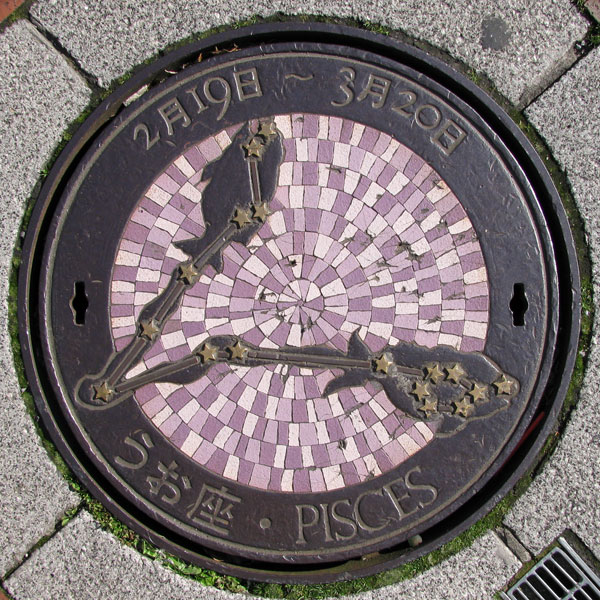
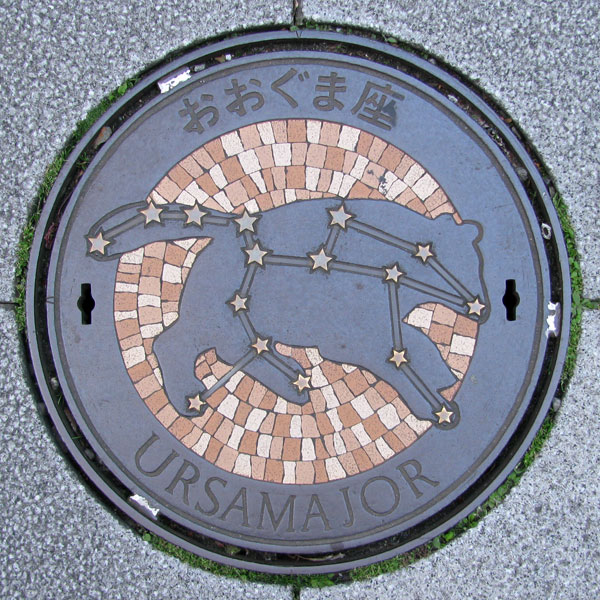
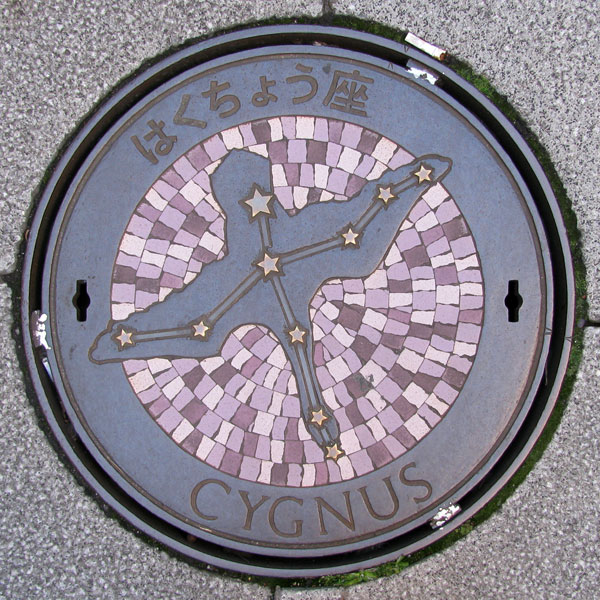
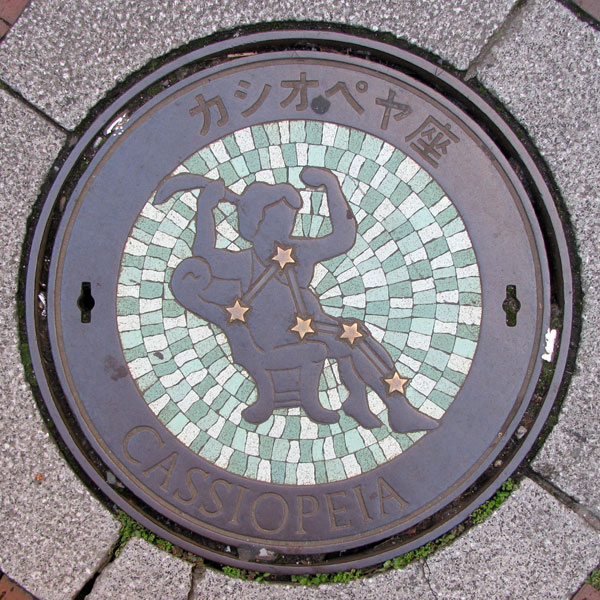
The manhole covers depict the twelve zodiac signs.
The covers represented Aries, Taurus, Gemini, Cancer, Leo, Virgo, Libra, Scorpio, Sagittarius, Capricorn, Aquarius, and Pisces, and there were also covers for Ursa Major, Cygnus, and Cassiopeia.
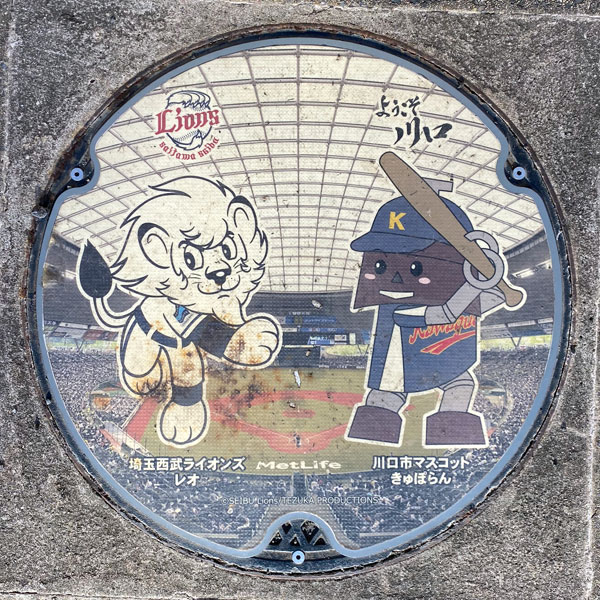
A collaborative manhole cover with the Saitama Seibu Lions, with whom Kawaguchi City has a friendly city agreement.
A color sticker design featuring Kawaguchi City's mascot "Kyuporan" and the Saitama Seibu Lions' mascot "Leo," with the interior of Seibu Dome as the background.
"Kyuporan" is a mascot created based on the "cupola," a melting furnace that symbolizes Kawaguchi, a city of foundries.
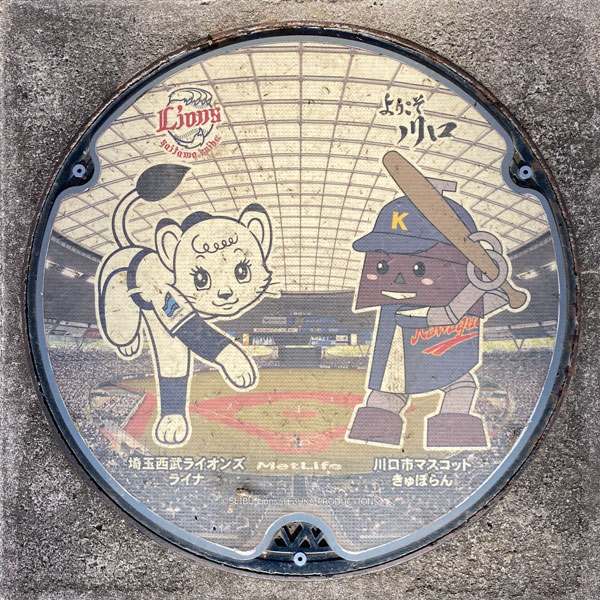
A color sticker design featuring Kawaguchi City's mascot "Kyuporan" and the Saitama Seibu Lions' mascot "Lina," with the interior of Seibu Dome as the background.
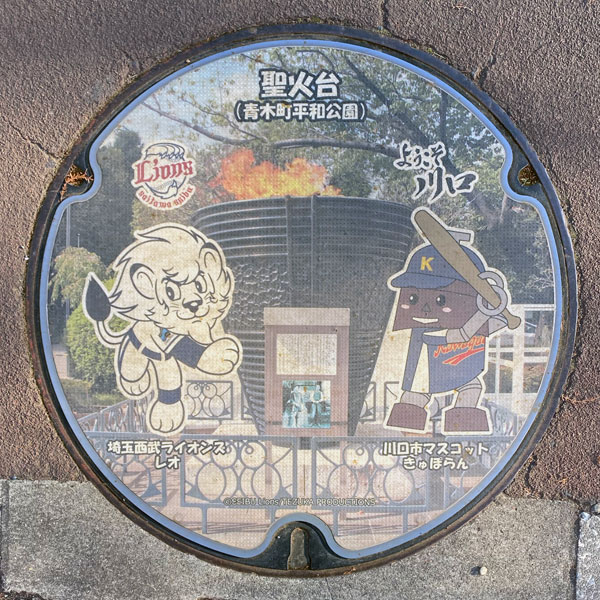
The design features a color sticker depicting Kawaguchi City's mascot "Kyuporan" and the Saitama Seibu Lions' mascot "Leo," with the Olympic torch in the background.
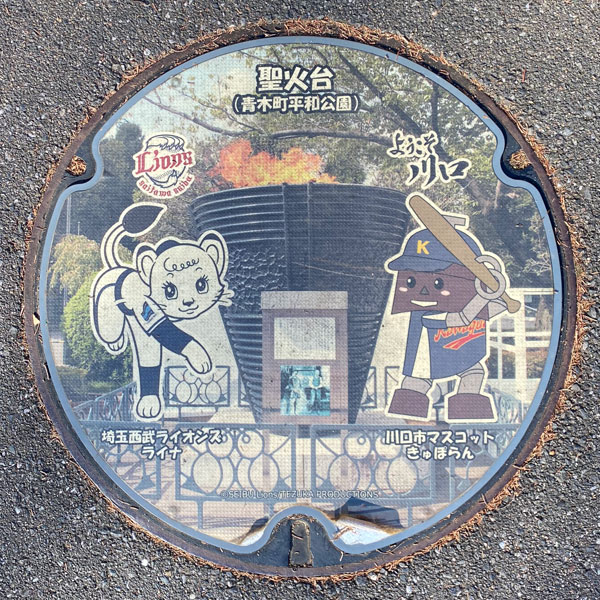
A color sticker design featuring Kawaguchi City's mascot "Kyuporan" and the Saitama Seibu Lions' mascot "Lina," with the Olympic torch in the background.
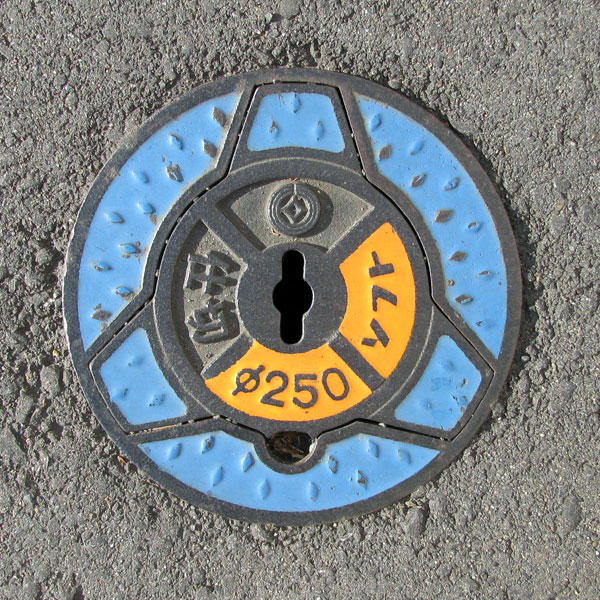
Cover for a gate valve.
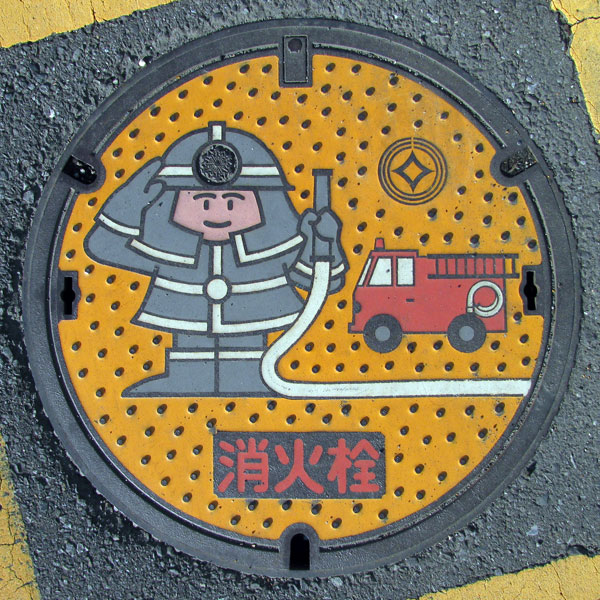
A fire hydrant cover designed to resemble a firefighter's helmet. It features the city emblem. The raised and recessed details of the firefighter's helmet are remarkably intricate.
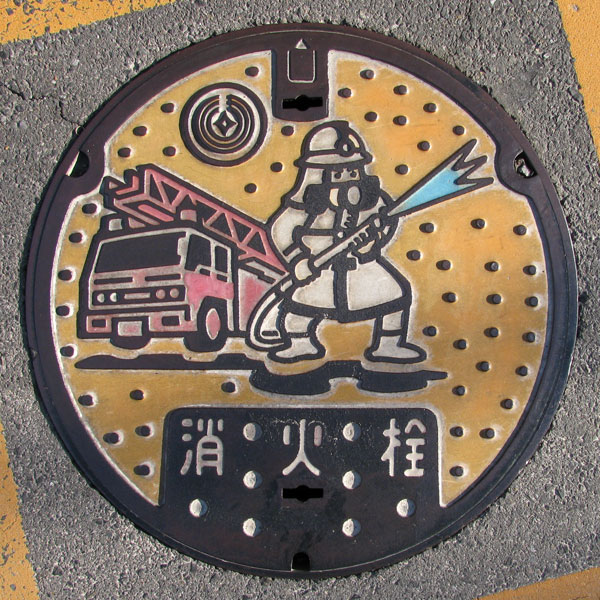
A fire hydrant cover with a different design. The city emblem is drawn rather crudely.
See Arakawa Left Bank Southern Basin Sewerage System
See Nakagawa Basin Sewerage System
Hatogaya 鳩ヶ谷市
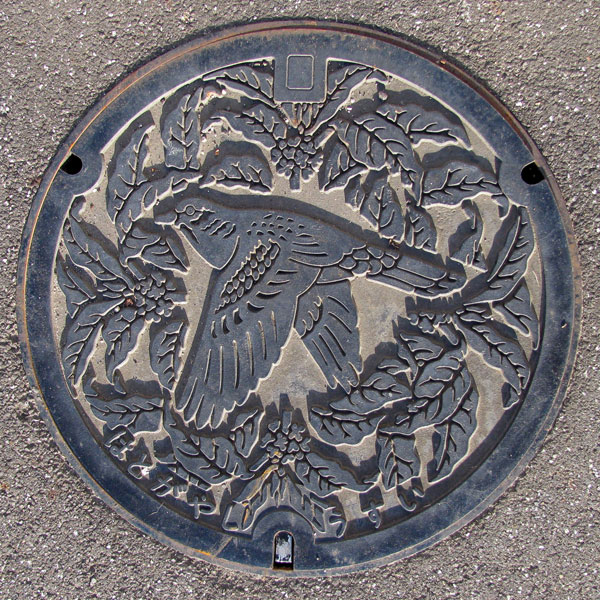
Rainwater version with the same design as the sewage version.
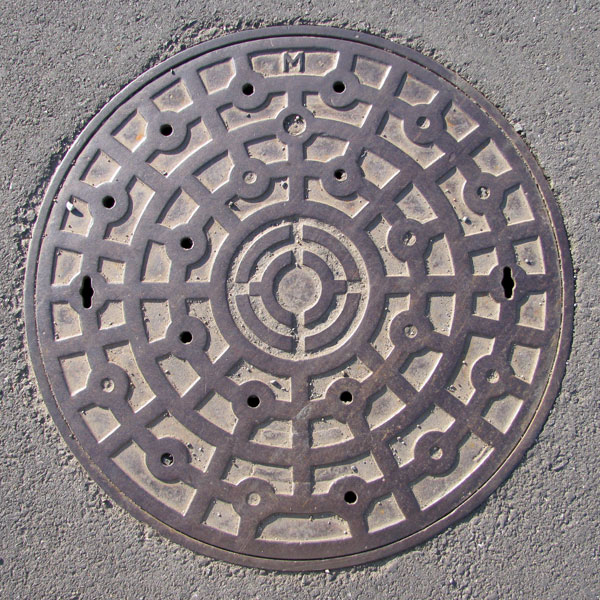
City emblem in the center.
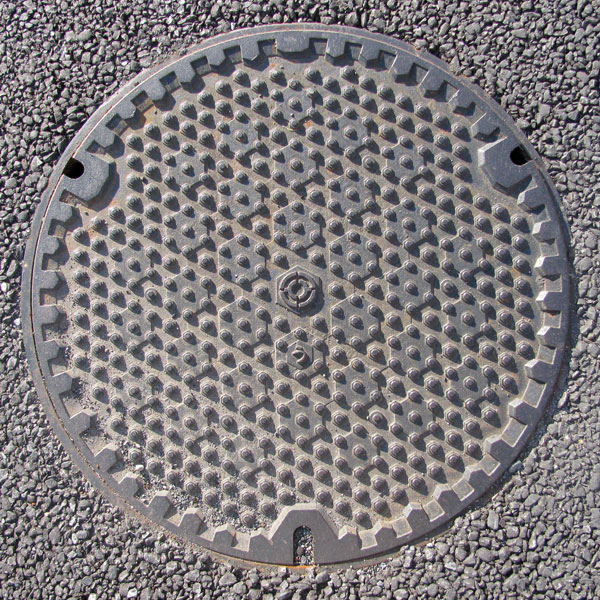
Small city emblem in the center.
See Arakawa Left Bank Southern Basin Sewerage System
Soka 草加市
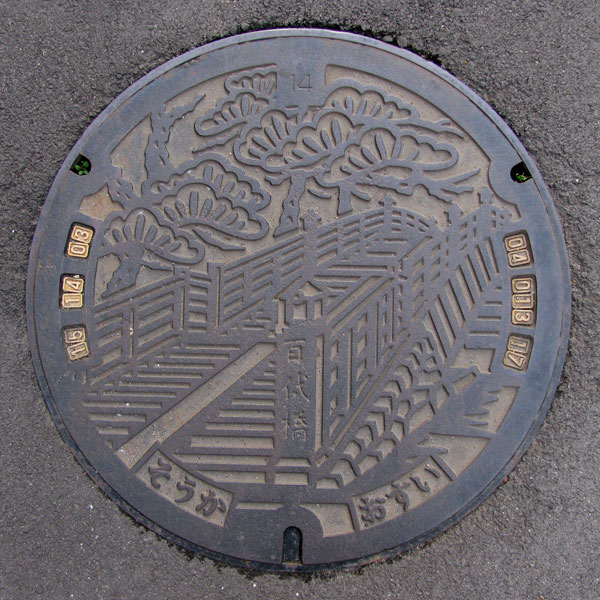
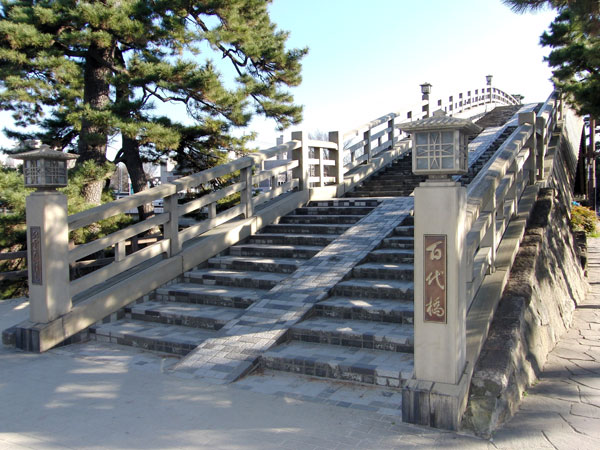
A manhole cover depicting the Hyakudai Bridge, a pedestrian bridge located on the 1.5km pine-lined promenade along the Ayase River, known as "Soka Matsubara."
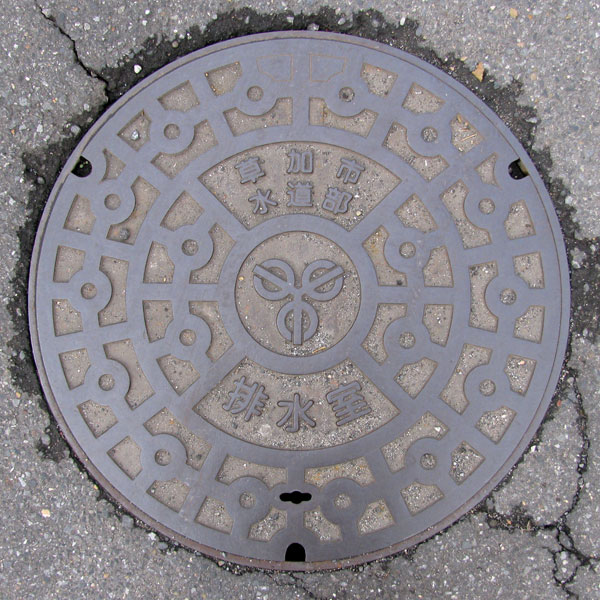
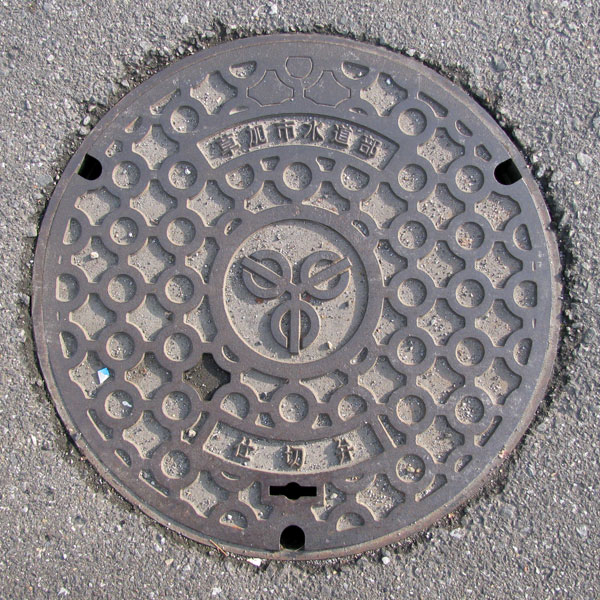
City emblem in the center.
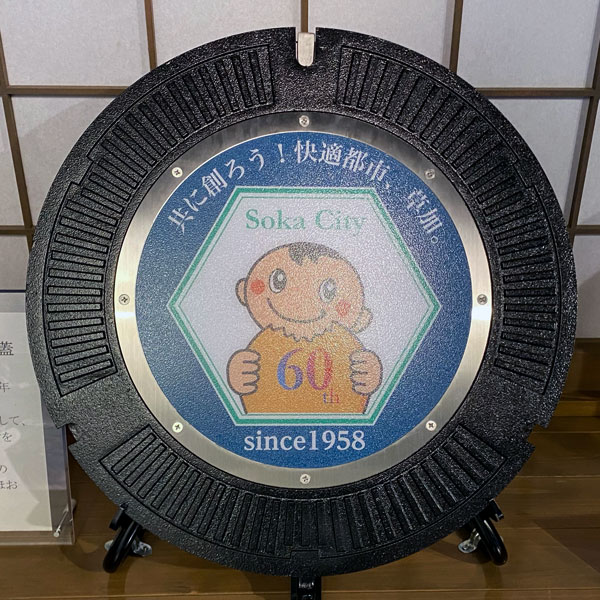
A color plate-shaped manhole cover featuring "Paripoli-kun," the mascot of Soka rice crackers. This is the manhole cover with the coordinates listed on the manhole card.
The words "Let's create together! A comfortable city, Soka." are inscribed at the top. "Soka City" is above Paripoli-kun, "60th" is on the rice cracker, and "since 1958" is below, indicating it was created to commemorate the 60th anniversary of the city's incorporation.
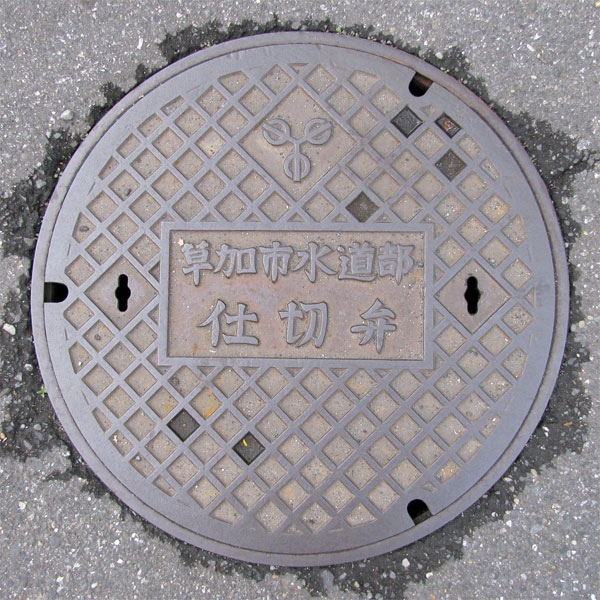
This is a gate valve with a diagonal grid pattern.
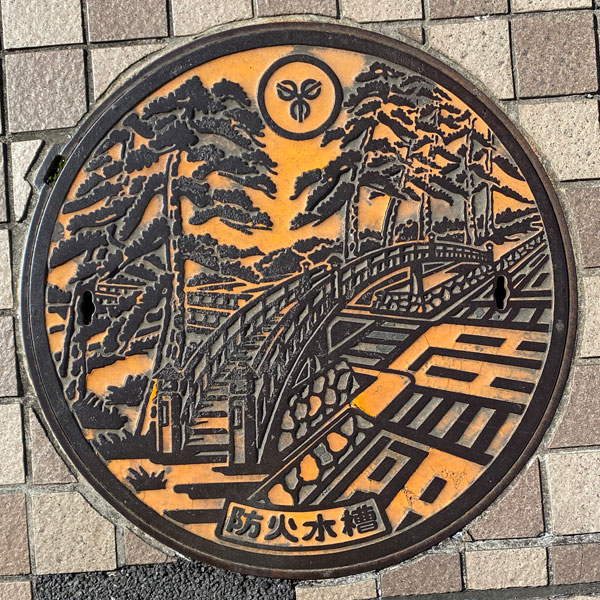
This is a design for a fire-fighting water tank depicting Hyakudai Bridge and Matsubara. Unlike the sewage tanks, the area beneath the bridge is a road. The Soka City emblem is at the top.
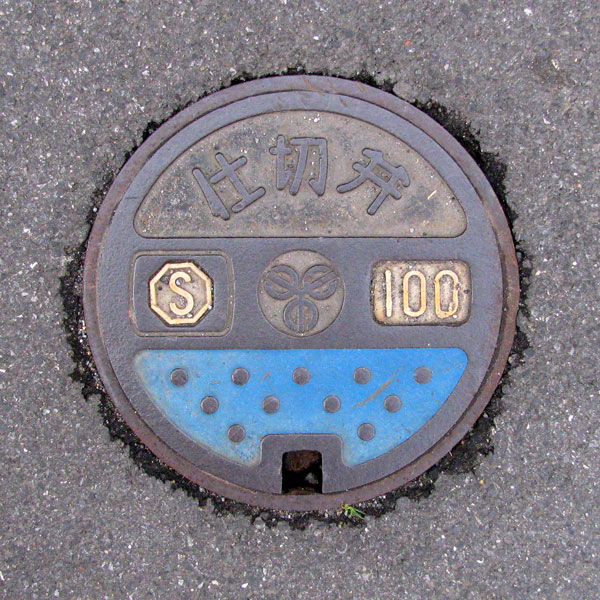
This is a gate valve with a pipe diameter of 100 mm.
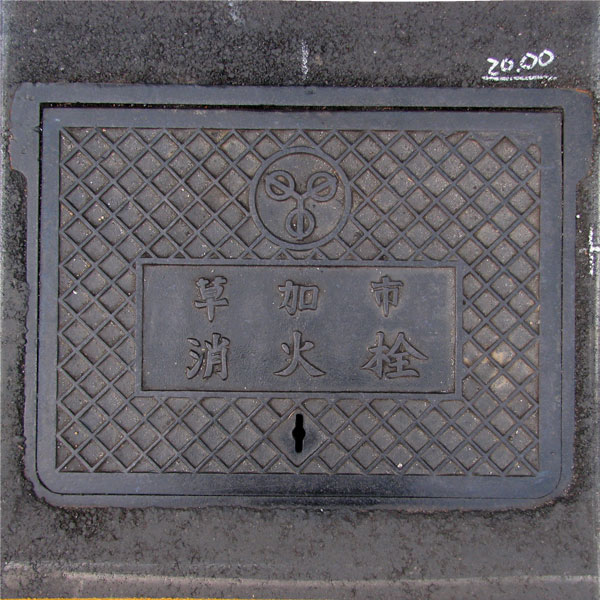
This is a square-shaped fire hydrant.
See Nakagawa Basin Sewerage System
Yashio 八潮市
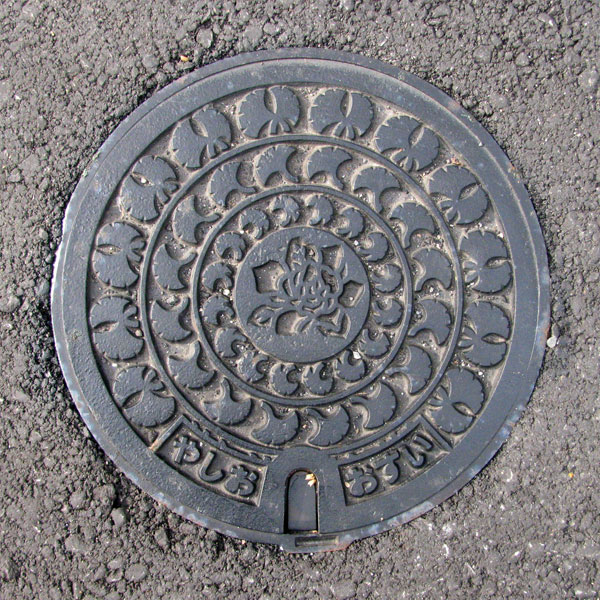
The city flower, the gardenia, is depicted in color in the center, surrounded by the leaves of the city tree, the ginkgo.
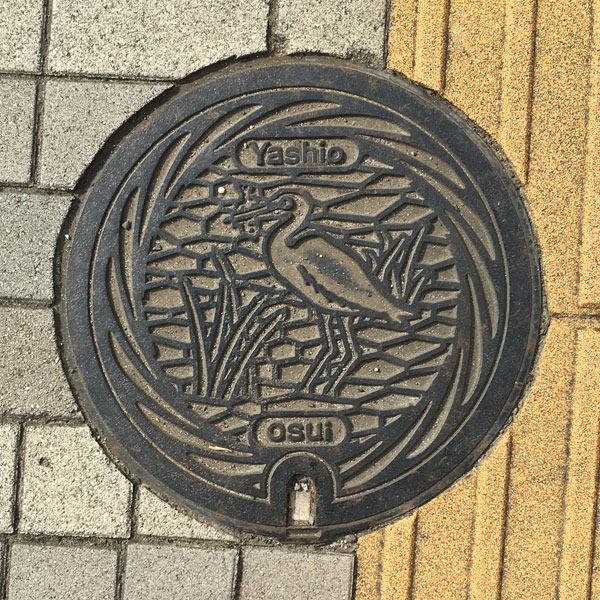
The official bird of Yashio City is the "white wagtail," so this doesn't depict the city bird. Also, "white egret" is a general term; there is no bird specifically named "white egret." In Japan, there are six species of white egrets: the great egret, intermediate egret, little egret, winter-plumaged cattle egret, southern white black heron, and the rarely seen Chinese egret. It's difficult to determine which species this egret is because no definitive features are shown.
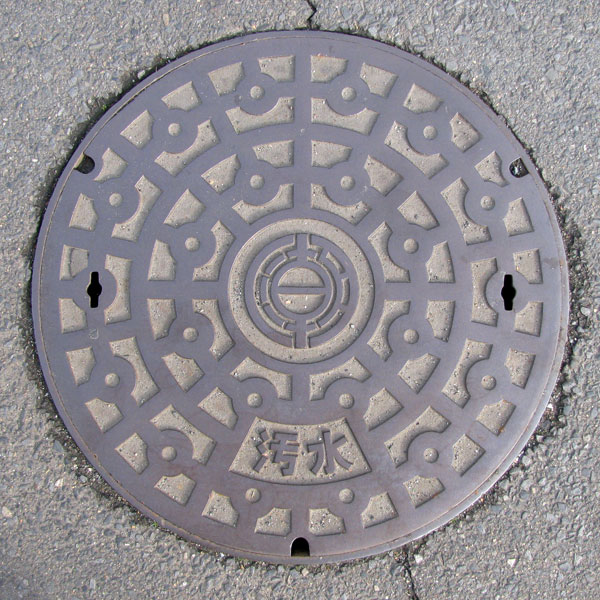
City emblem in the center.
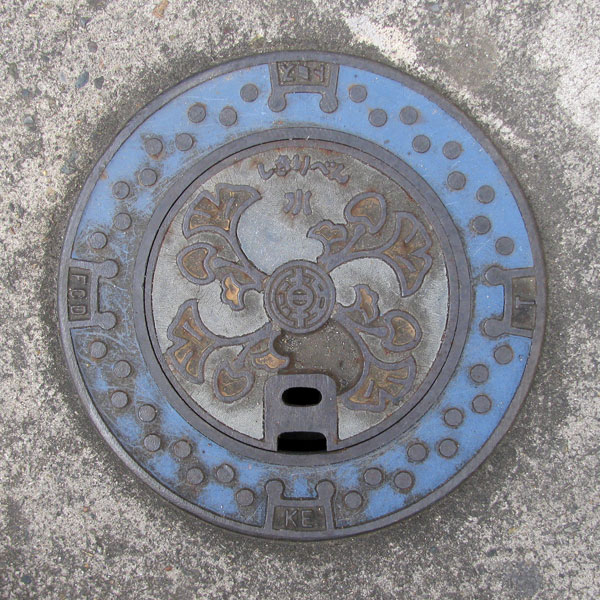
An original gate valve featuring the city's official tree, the ginkgo.
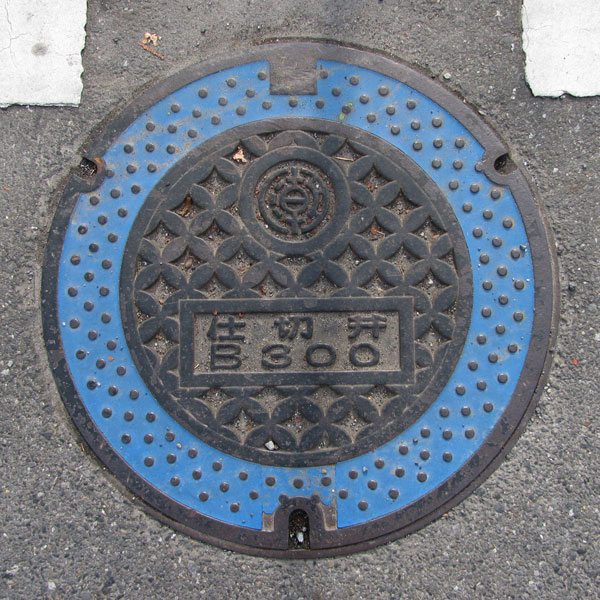
This is a gate valve labeled "B300" with the city emblem on top.
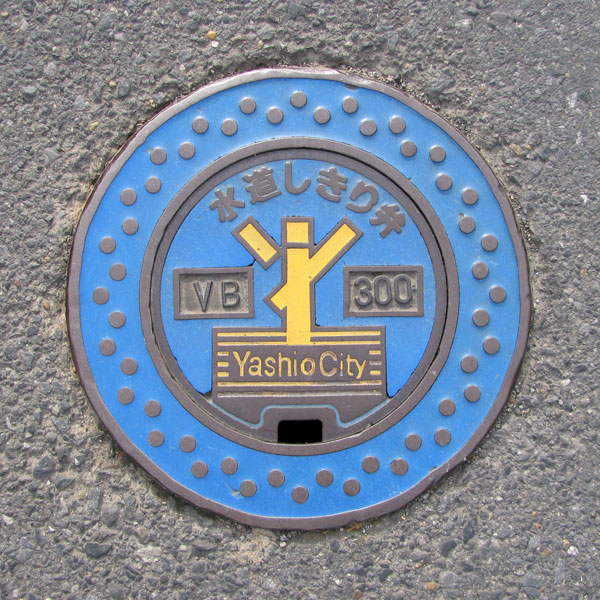
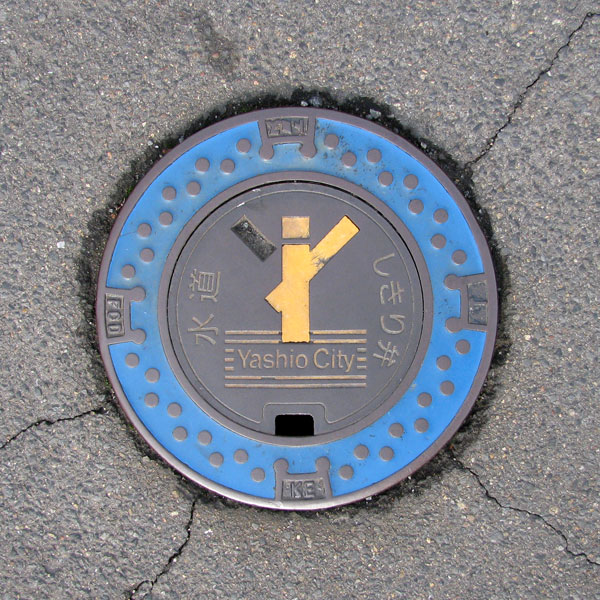
This is a gate valve featuring the "Yashio Tree," the symbol of Yashio City.

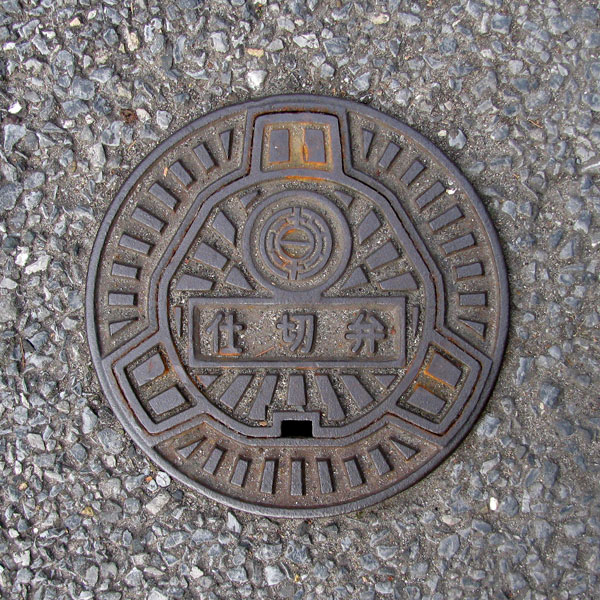
This is a fairly old, small gate valve with the city emblem on top.
See Nakagawa Basin Sewerage System
Misato 三郷市
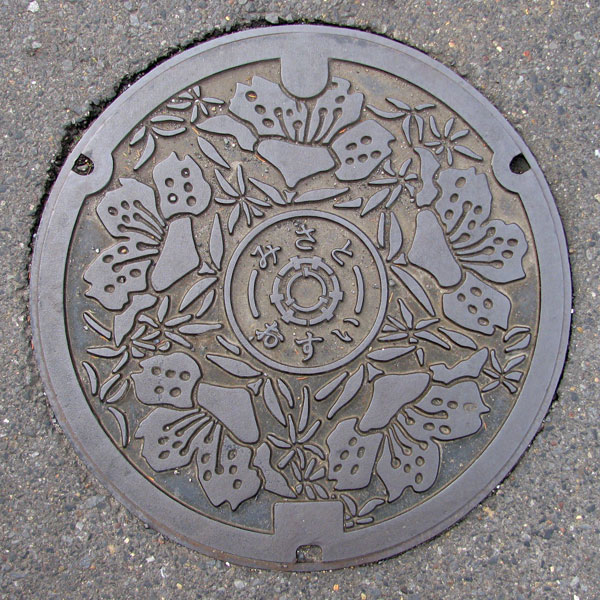
A cover featuring the city flower of Misato City, the azalea.
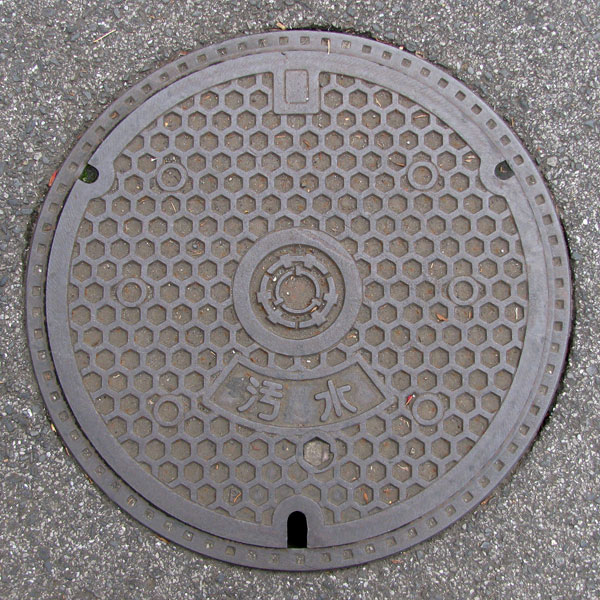
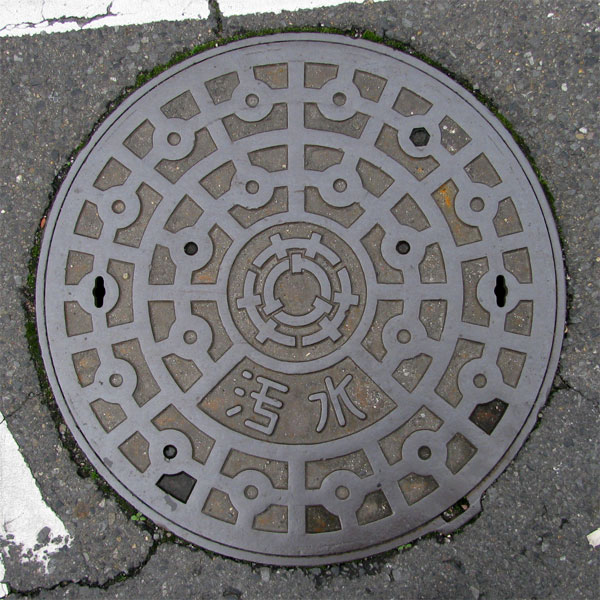
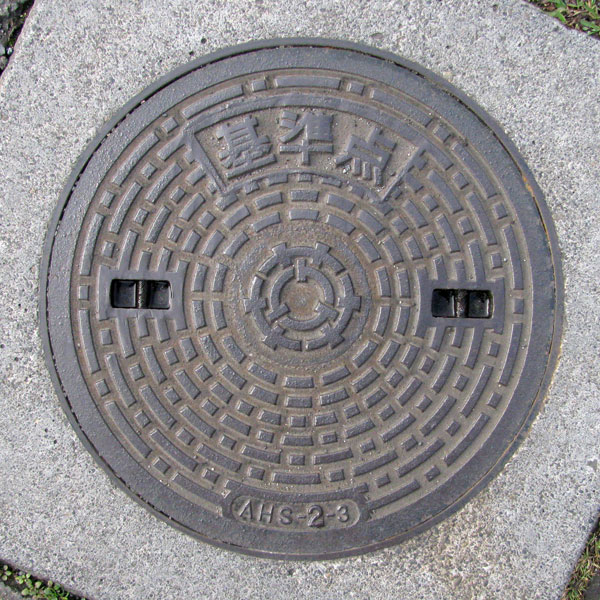
City emblem in the center.
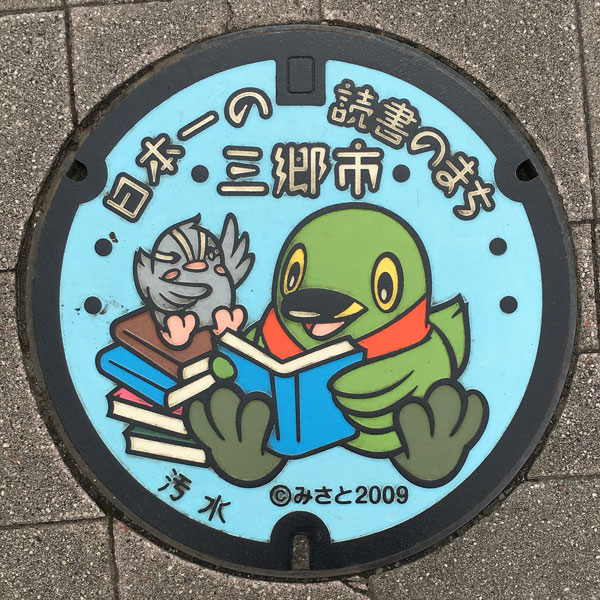
A manhole cover for sewage featuring "Kai-chan & Tsubu-chan," mascot characters based on the city's bird, the Little Grebe. The words "Japan's No. 1 Reading City" and "Misato City" are inscribed at the top. Installed in December 2018.
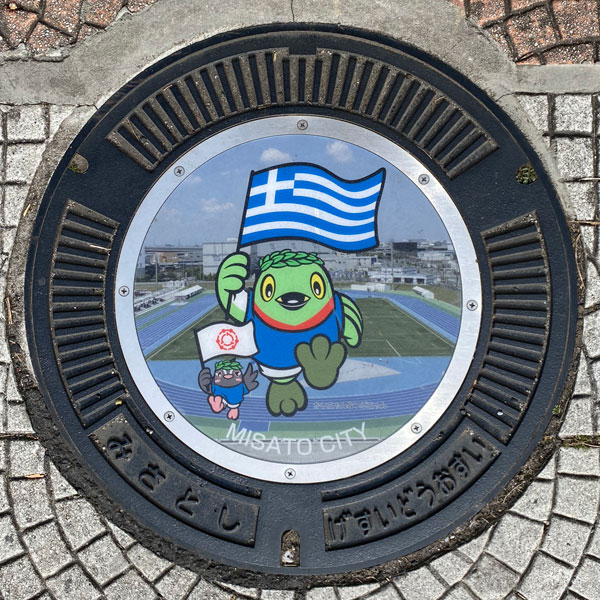
This panel-type manhole cover features a "Greece Supporter" design, created to commemorate Misato City's role as a host town for the Hellenic Republic during the 2020 Tokyo Olympic and Paralympic Games.
"Kai-chan" holds the Greek flag, and "Tsubu-chan" holds the Misato City flag.
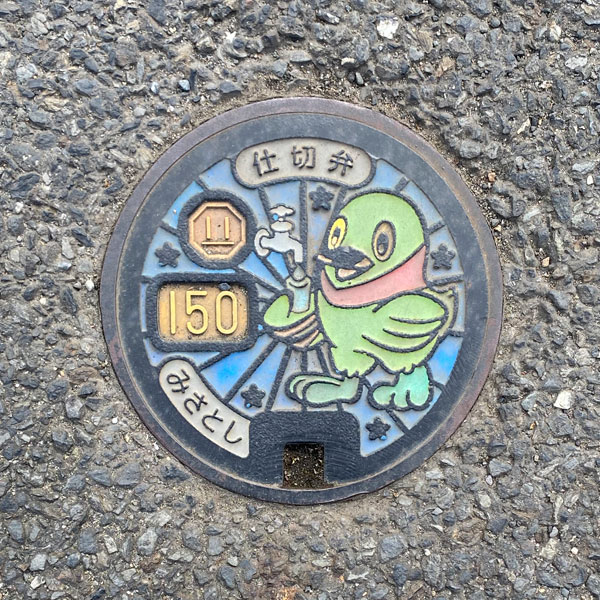
A gate valve cover with "Kai-chan" drawn on it.
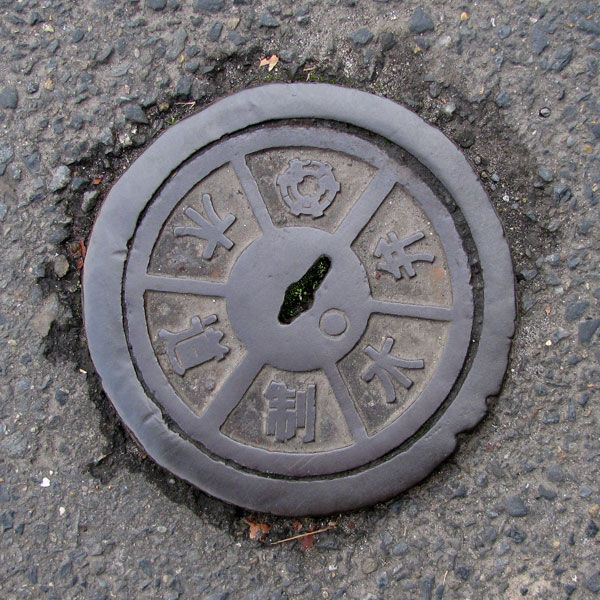
This is an older water control valve.
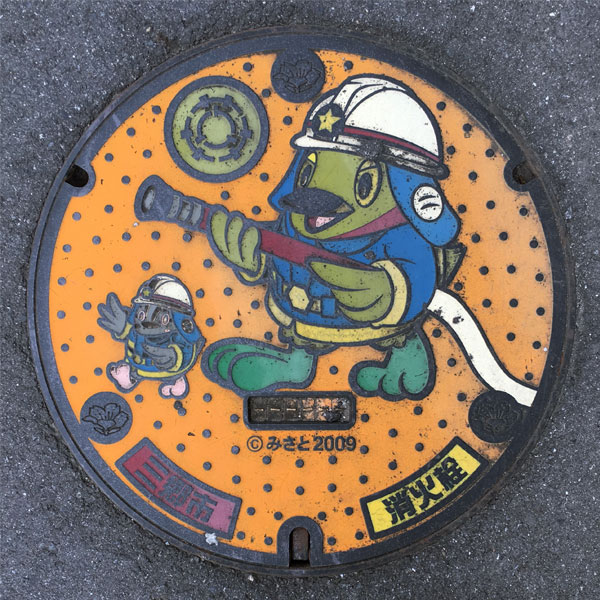
This fire hydrant cover features "Kai-chan & Tsubu-chan" dressed as firefighters. The city emblem is at the top, and the city flower, the azalea, is depicted within three black circles.
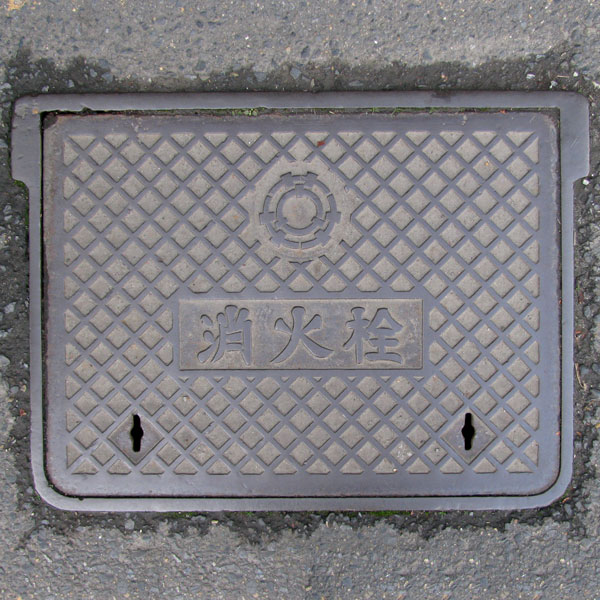
This is a square-shaped fire hydrant with the city emblem.
See Nakagawa Basin Sewerage System
Iruma 入間市
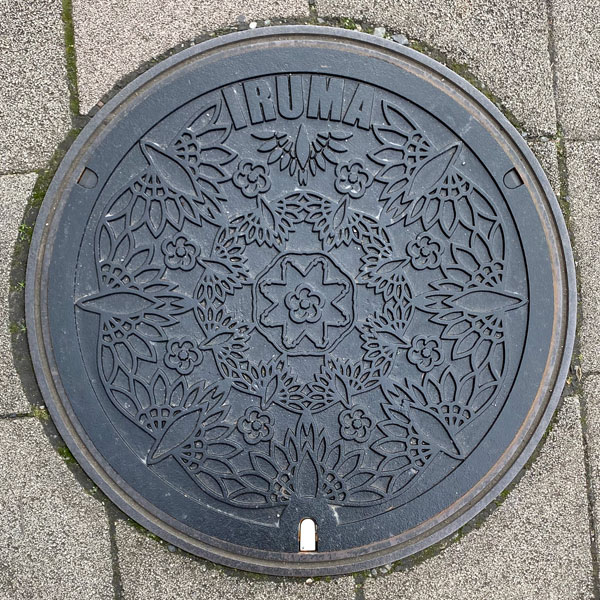
Designed by Yasuhito Nitta, a designer from Iruma City. The design incorporates the city's bird, the skylark, and the city's flower, the tea flower, as a motif. The word "IRUMA" is at the top.
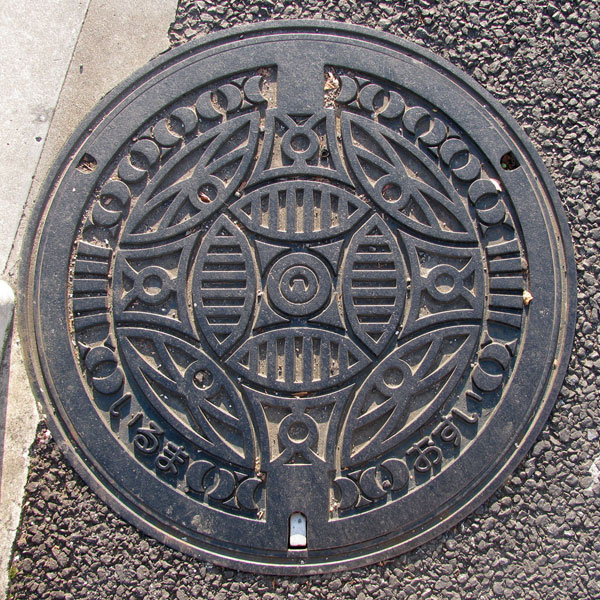
It resembles a person with outstretched arms, but since similar designs exist in other municipalities, it is thought that this is a semi-custom made item. In the center is the city emblem of Iruma City, which is the character "入" (iri) shaped like a young eagle.
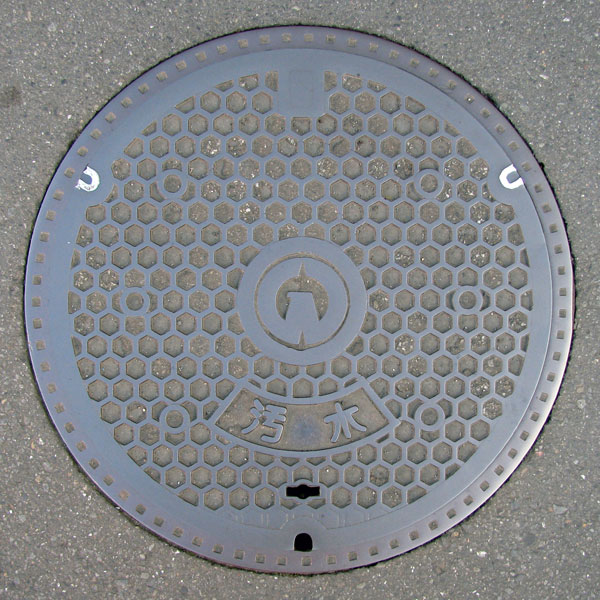
City emblem in the center.
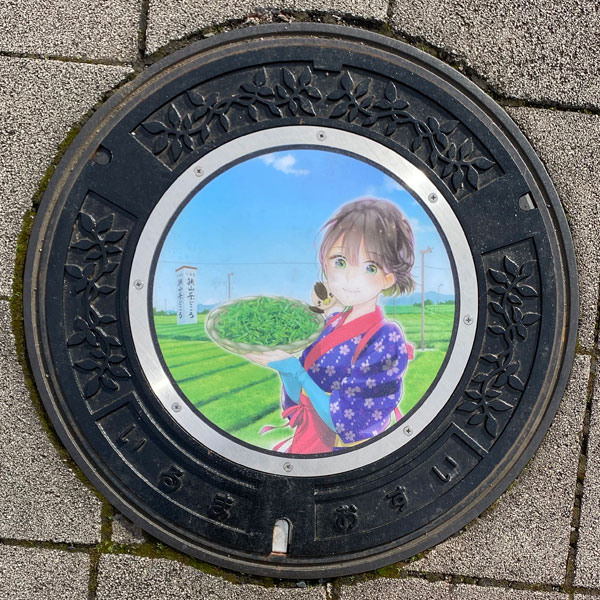
This is a plate-shaped manhole cover designed by Yamanaka Umebachi, a manga artist residing in Iruma City and currently serializing "This Love, Is It a Farce!?", a manga about a Sayama tea farmer. It depicts a tea girl holding picked tea leaves against a backdrop of a tea field. The tea girl's shoulder also features the word "Iru-Tea." Although small and difficult to see, an advertising tower in the tea field reads "Iruma, Sayama Tea Region."
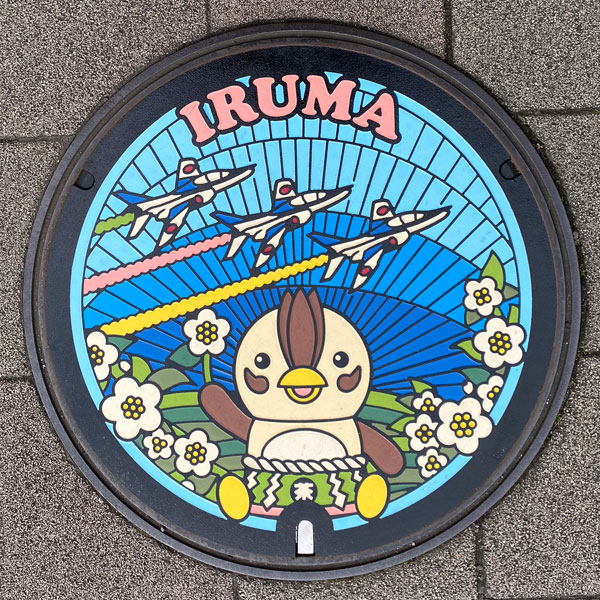
Designed by Yasuhito Nitta, a designer from Iruma City. The design features the city's character, "Iru-Tee," and tea blossoms against a backdrop of tea fields, with the Blue Impulse, familiar from the Iruma Air Festival, depicted in the sky. The word "IRUMA" is at the top.
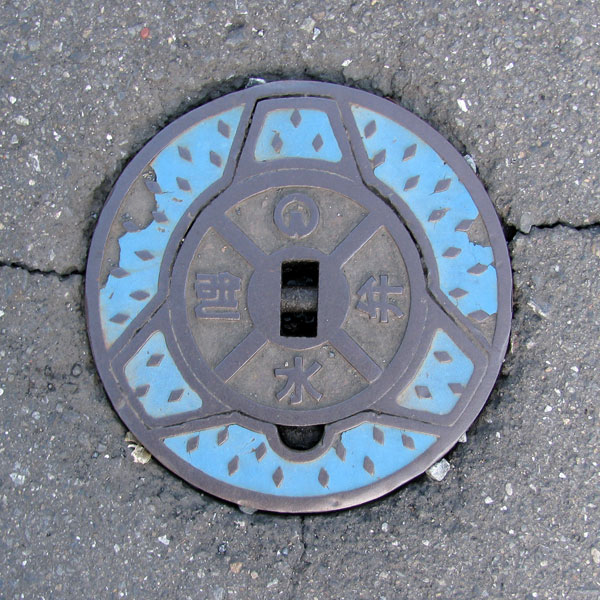
Water control valve.
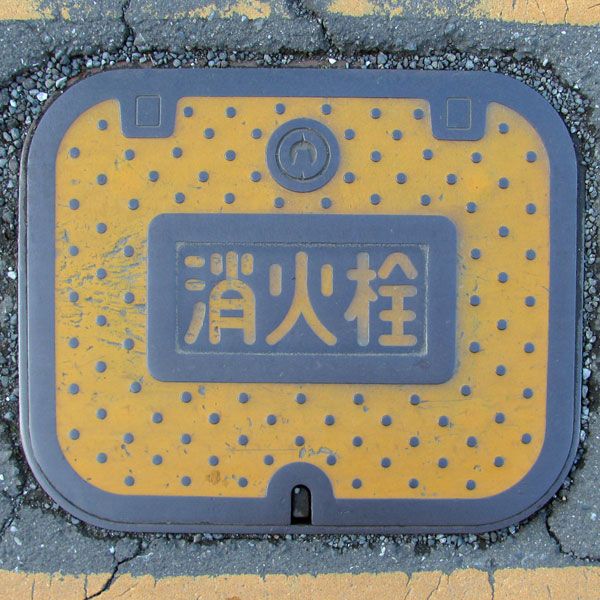
A common type of fire hydrant.
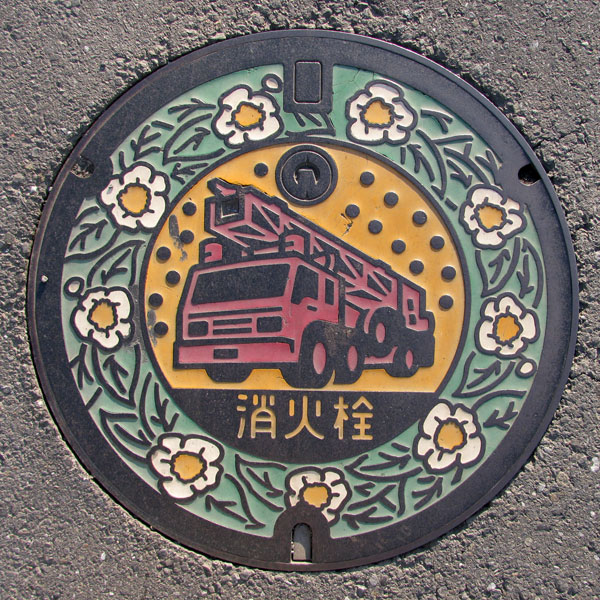
This type of fire hydrant is also commonly seen, but in Iruma City, it is decorated with the city flower, the tea flower.
See Arakawa Right Bank Basin Sewerage System
Tokorozawa 所沢市
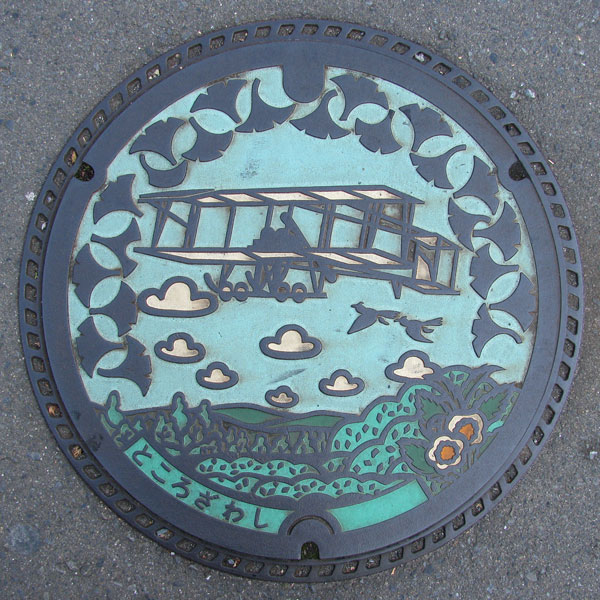
Known as the "birthplace of Japanese aviation," Sayama is where Japan's first airfield was built in 1911. The design depicts the first French-made biplane, the Henri Farman, flying over the lush Sayama Hills. In the lower right corner is the city flower, the tea blossom. Above it are the leaves of the city tree, the ginkgo.
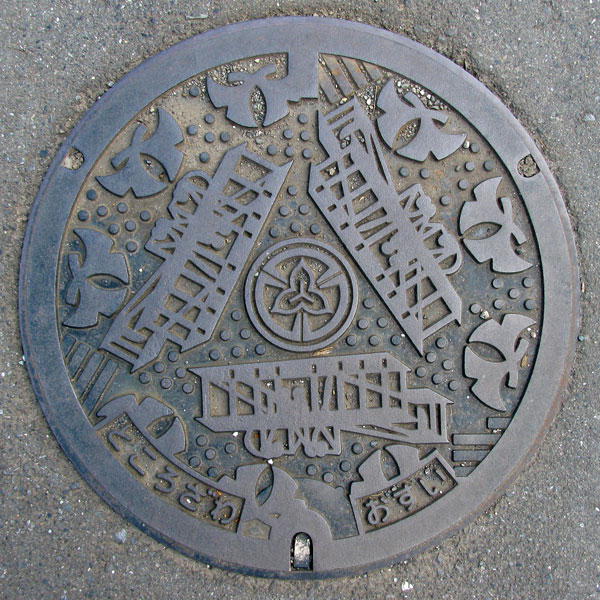
The design features the city emblem, a biplane, and a ginkgo leaf. The city emblem is a stylized representation of the leaf of the "Tokoro" plant, a perennial vine belonging to the yam family, surrounded by three katakana characters "ワ".
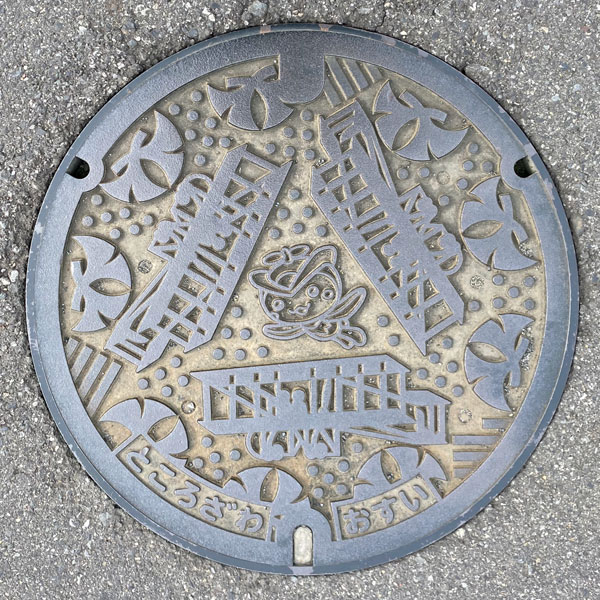
This manhole features the Tokorozawa City mascot, "Tokoron," instead of the city emblem. Tokoron is based on the city bird, the skylark, with a propeller on its head and a scarf.
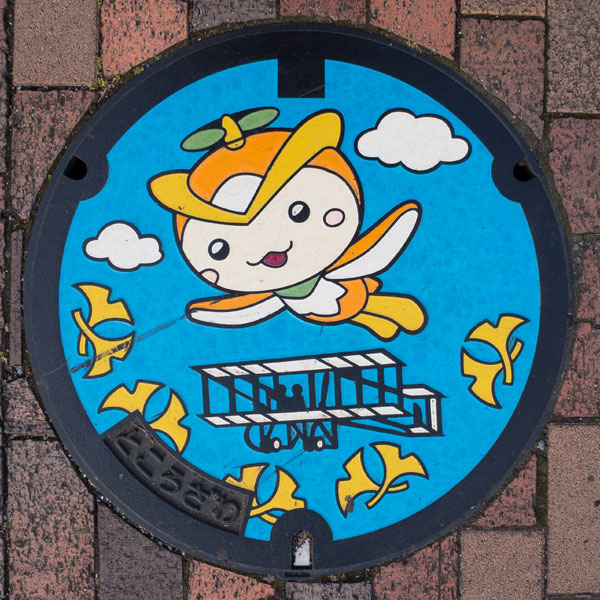
This manhole cover also depicts "Tokoron," a biplane, and the city's official tree, the ginkgo leaf, but Tokoron takes up a larger proportion.
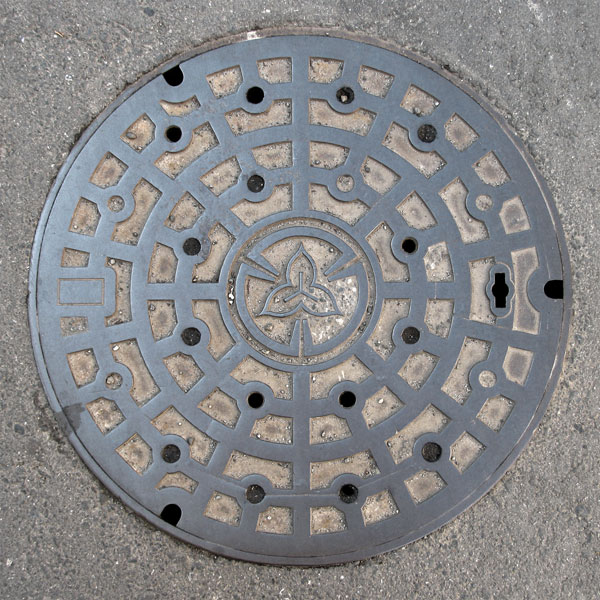
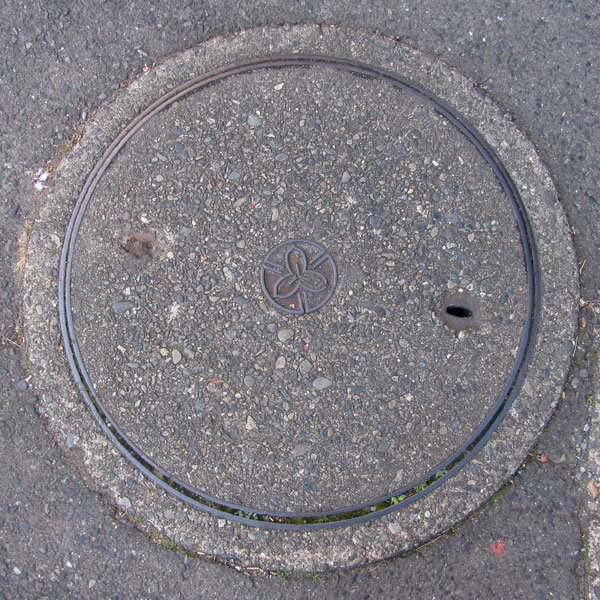
City emblem in the center.
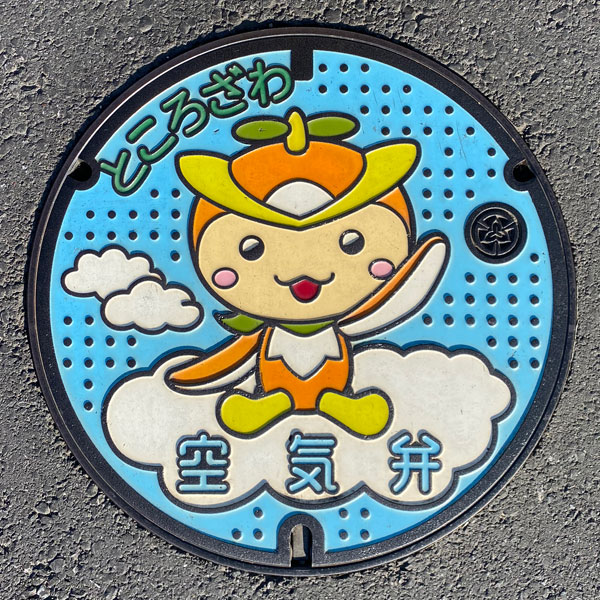
An air valve cover depicting "Tokoron" sitting on a cloud.
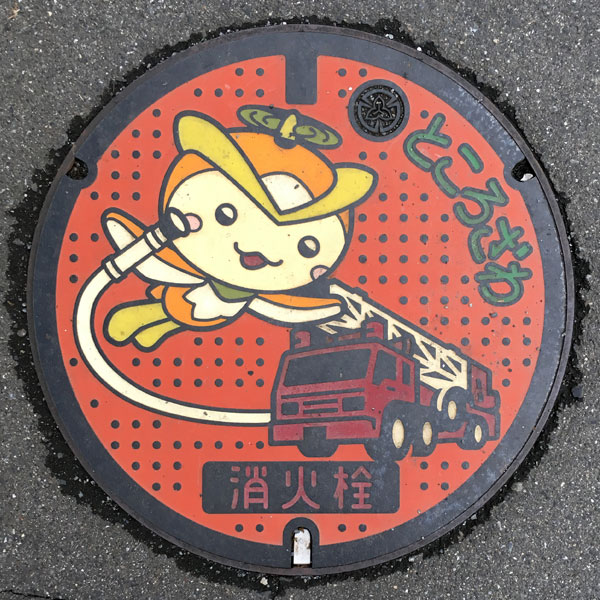
This is a fire hydrant cover featuring "Tokoron" and a fire truck. Compared to other Tokoron covers, there seem to be more of these installed. Also pictured is a sewage hydrant cover depicting a biplane flying over a tea field.
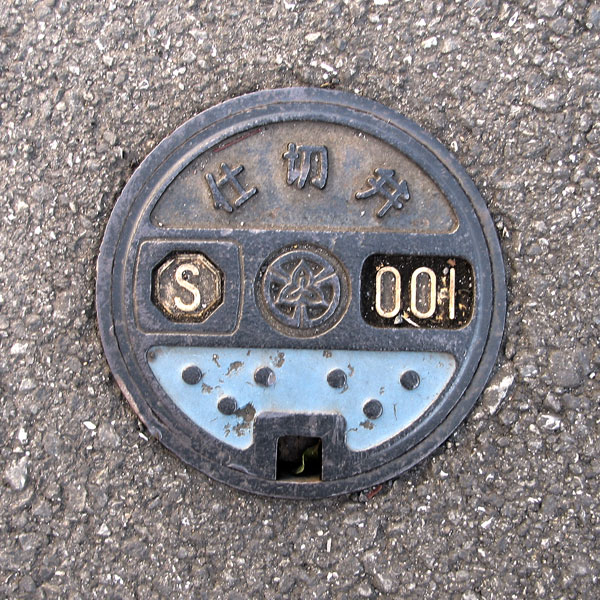
It's a gate valve with the city emblem on it, but the pipe diameter of 100 is reversed.
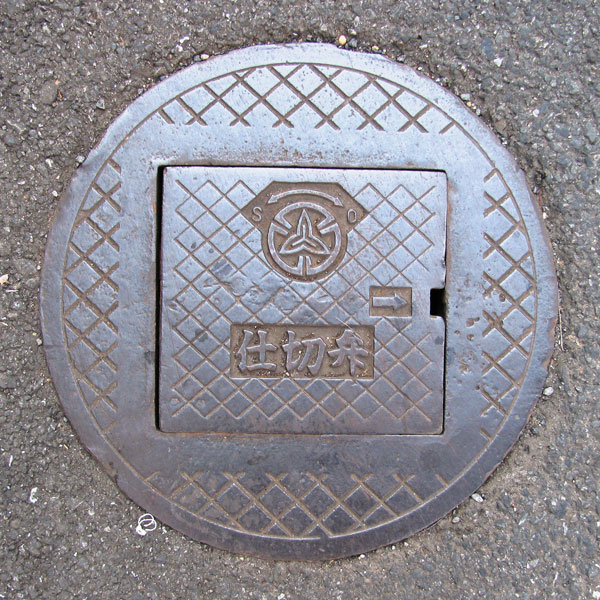
Old gate valve.
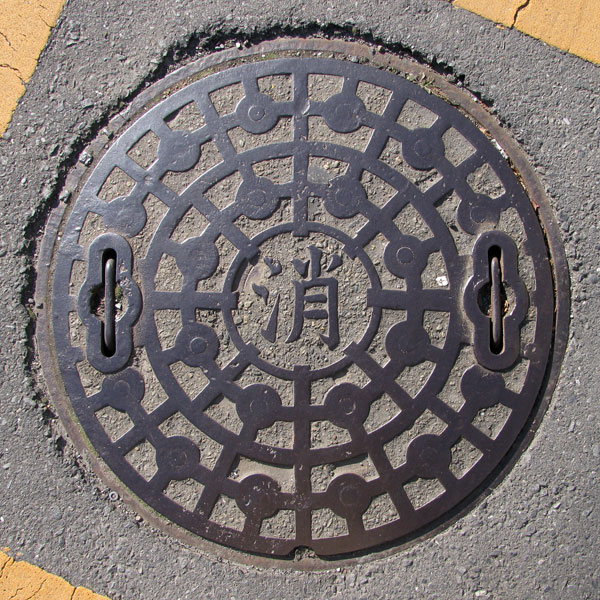
Old fire hydrant.
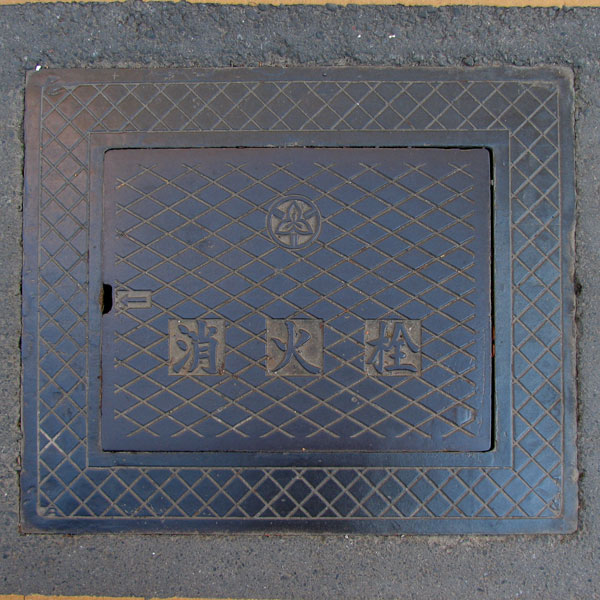
This is a square-shaped fire hydrant.
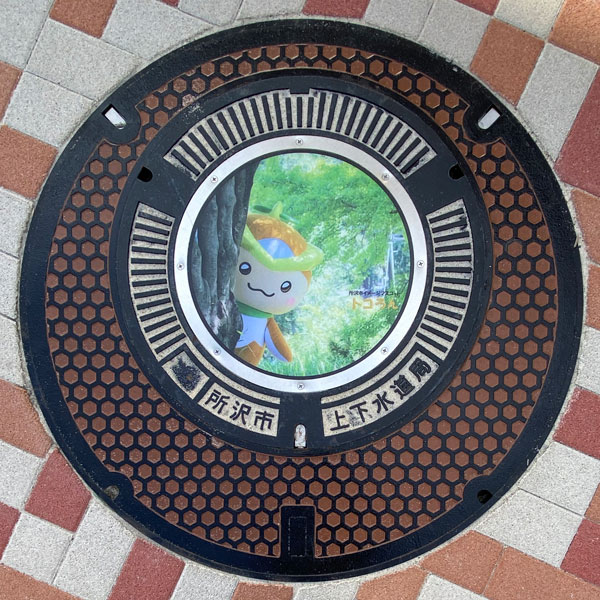
The smaller cover is a plate-shaped cover depicting "Tokoron" peeking out from behind a tree trunk in a forest. The words "Tokorozawa City Image Mascot / Tokoron" are written in small letters inside the plate. The larger cover has a brown tortoiseshell pattern.
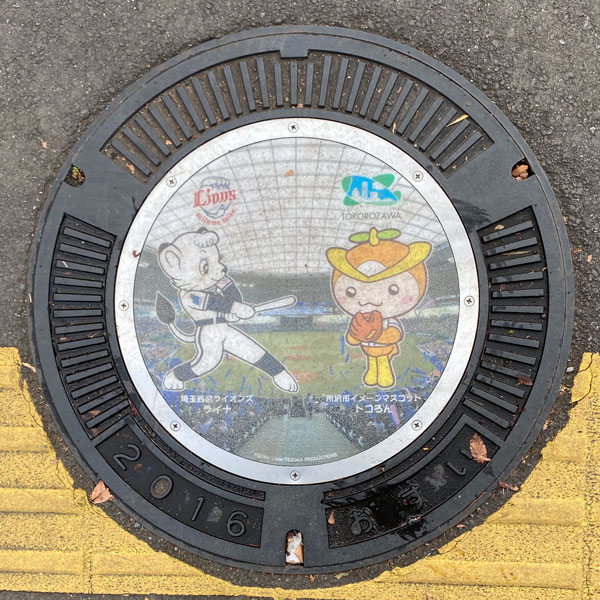
This plate-shaped manhole cover features Tokoron, the mascot of Tokorozawa City, and Raina (Leo's sister), the official mascot of the Saitama Seibu Lions, playing baseball against the backdrop of Seibu Dome Stadium. The Seibu Lions' symbol is depicted above Raina's head, and the Tokorozawa City symbol is depicted above Tokoron's head. The words "2016" and "Osui" (sewage) are written at the bottom.
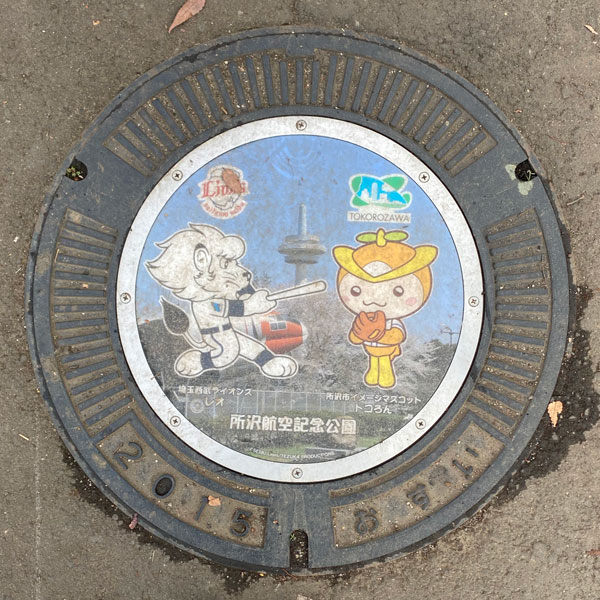
A plate-shaped manhole cover featuring Tokoron, the mascot of Tokorozawa City, and Leo, the mascot of the Saitama Seibu Lions, playing baseball against the backdrop of Tokorozawa Aviation Memorial Park. The words "2015" and "sewage" are written at the bottom.
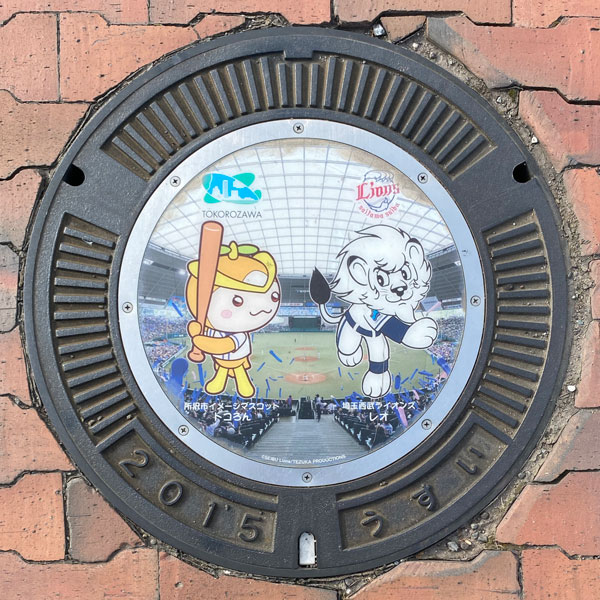
A plate-shaped manhole cover featuring Tokorozawa City's mascot, "Tokoron," and the Saitama Seibu Lions' mascot, "Leo," playing baseball with the Seibu Dome baseball stadium in the background. The words "2015" and "Usui" are inscribed at the bottom.
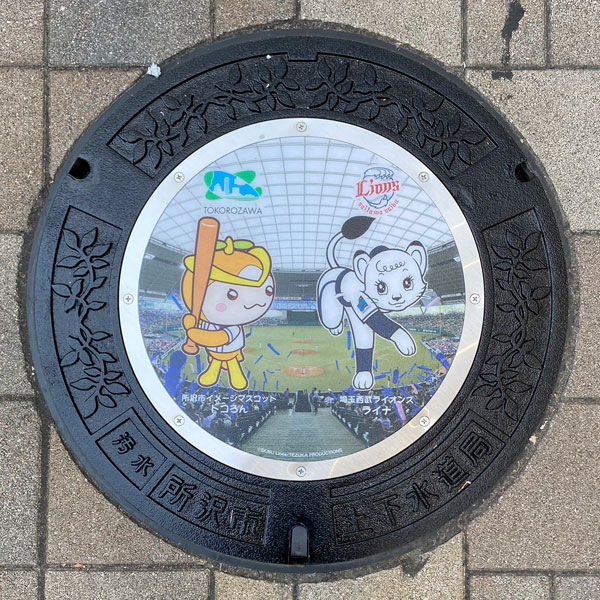
A plate-shaped manhole cover featuring Tokorozawa City's mascot "Tokoron" and the Saitama Seibu Lions' mascot "Raina" playing baseball with the Seibu Dome baseball stadium in the background. The words "Sewage" and "Tokorozawa City/Waterworks Bureau" are at the bottom.
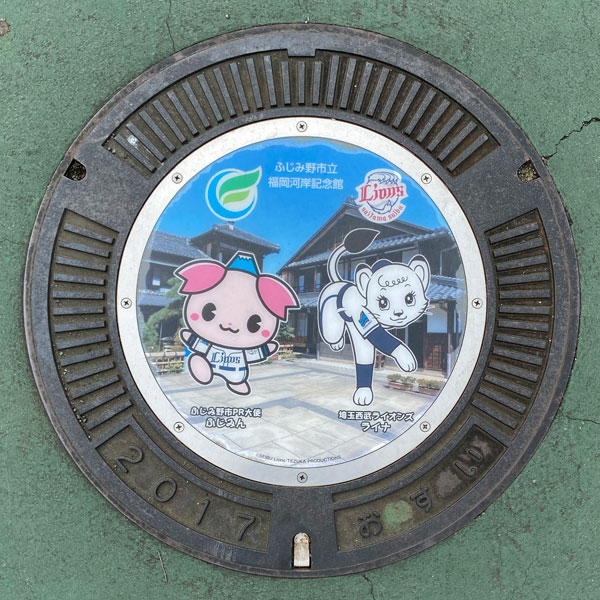
A plate-shaped manhole cover featuring Fujimino City's PR ambassador "Fujimin" and Saitama Seibu Lions' mascot "Lina," with the Fujimino City Fukuoka Riverside Memorial Hall in the background.
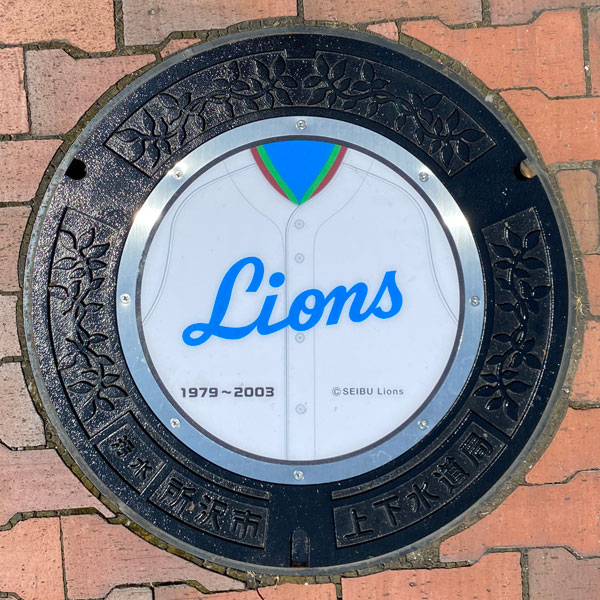
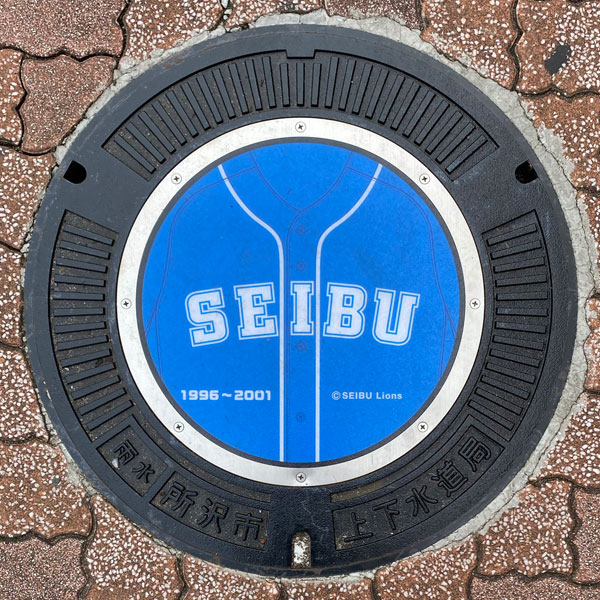
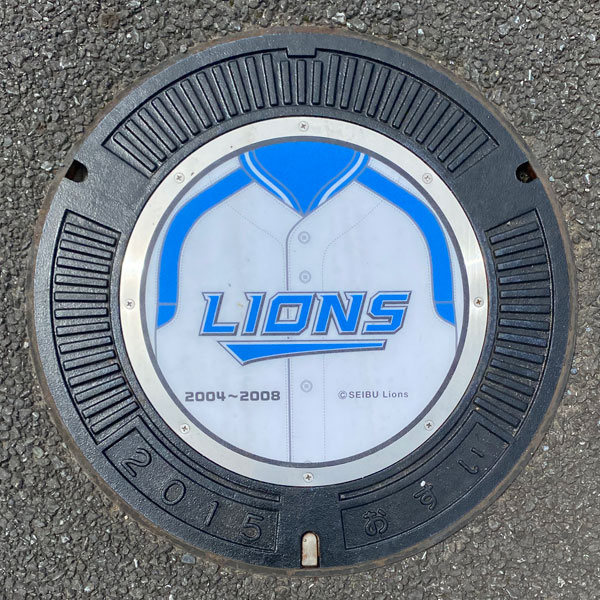
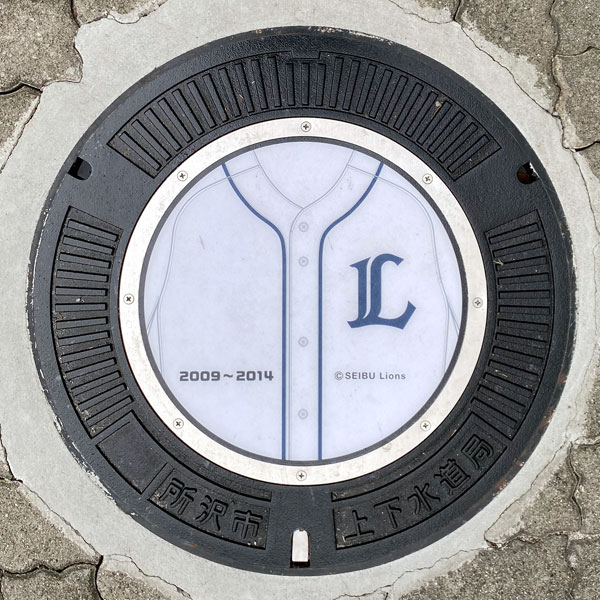
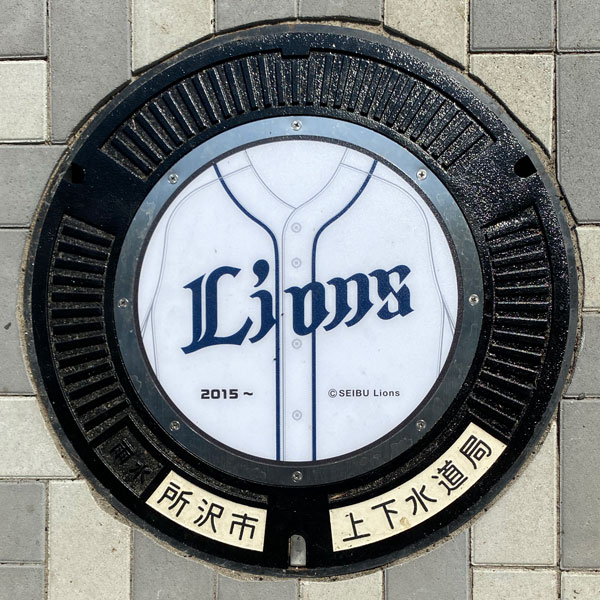
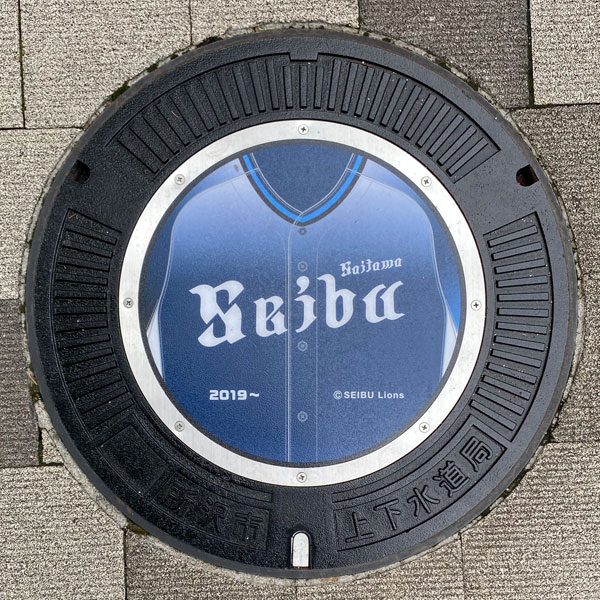
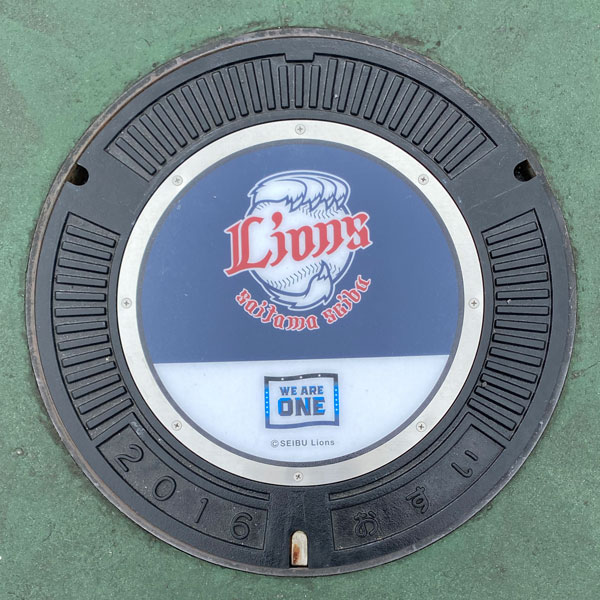
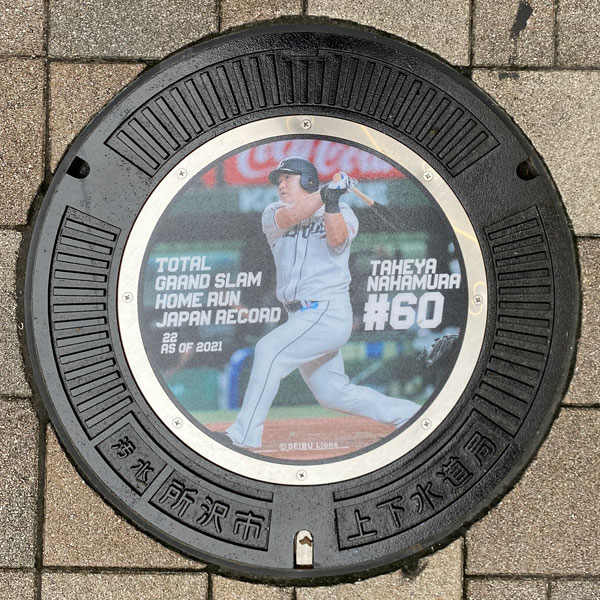
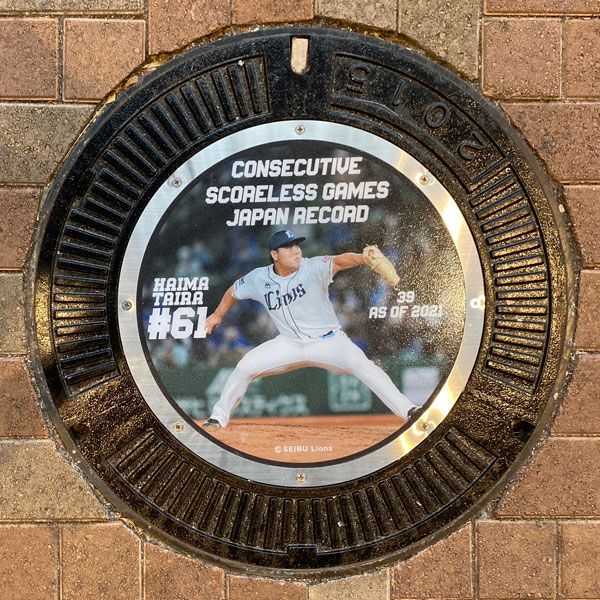
Manholes installed for the "Lions Support! Toko Shishi Summer"
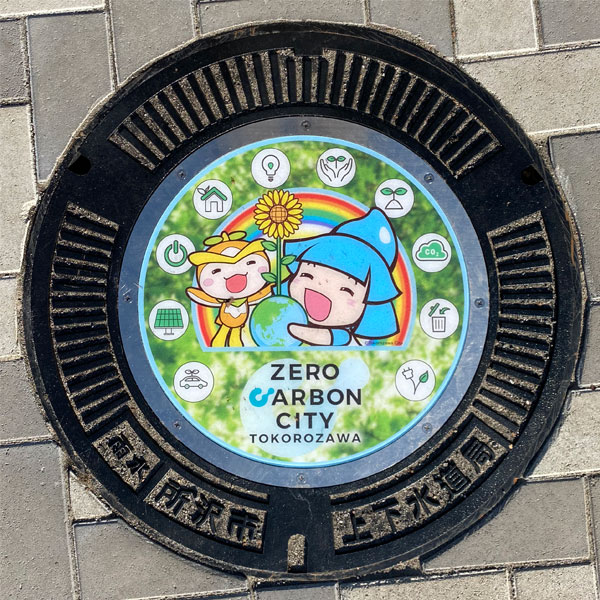
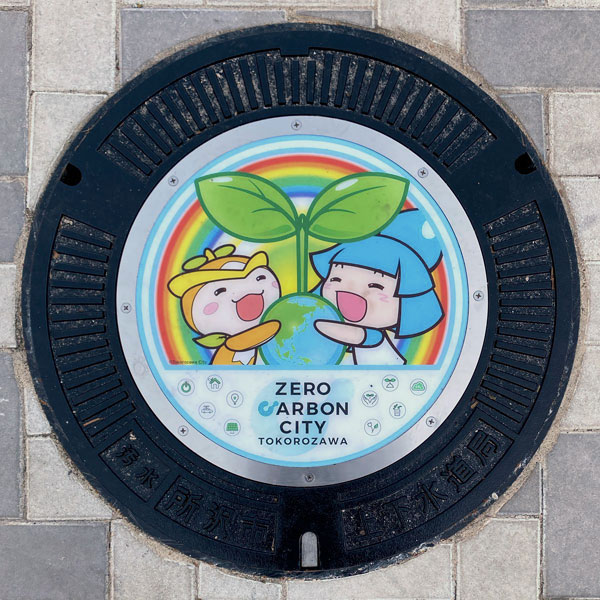
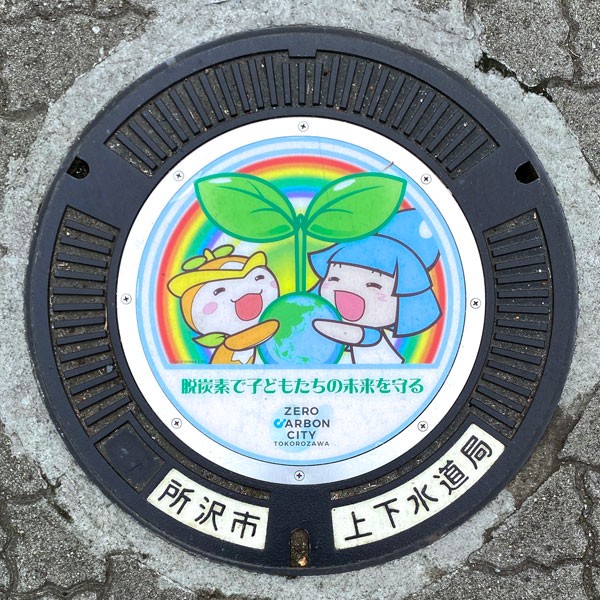
Tokorozawa City declared itself a "Zero Carbon City" on November 3, 2020. The city aims to achieve net-zero carbon dioxide emissions by 2050.
These are the plate-type manhole covers created to commemorate the one-year anniversary of the "Zero Carbon City Declaration." It was installed on November 26, 2021.
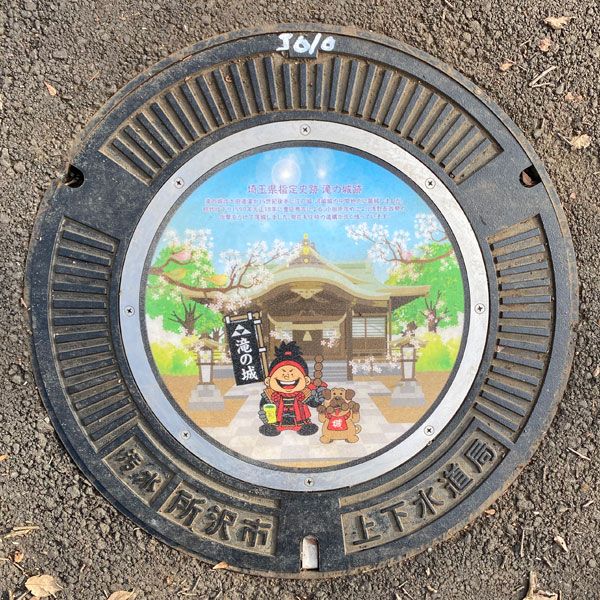
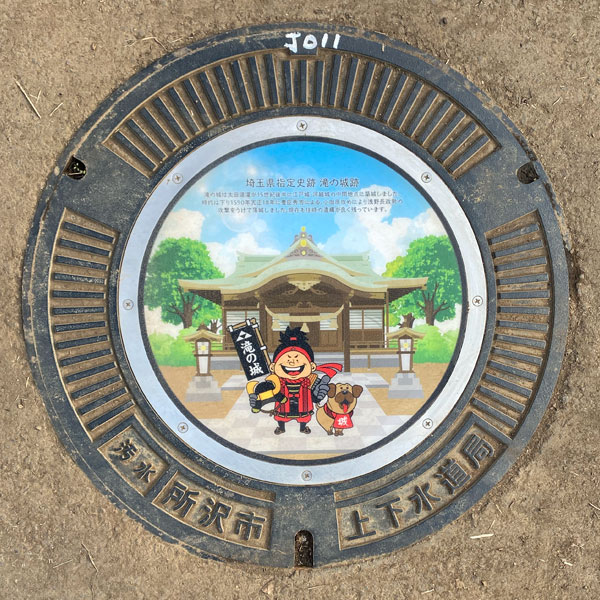
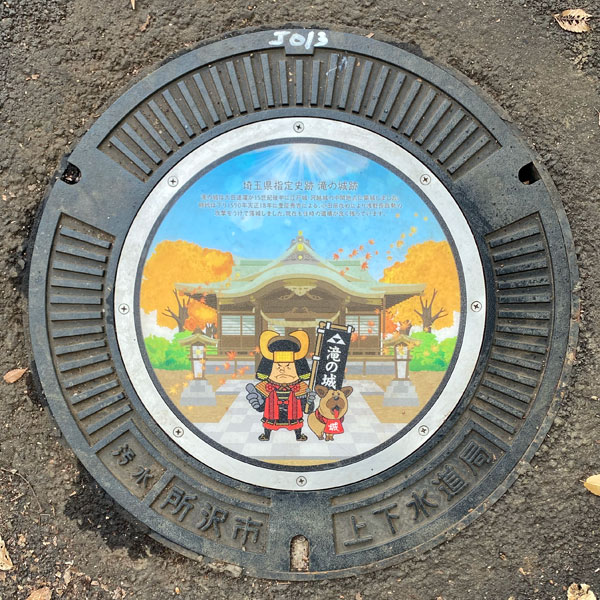
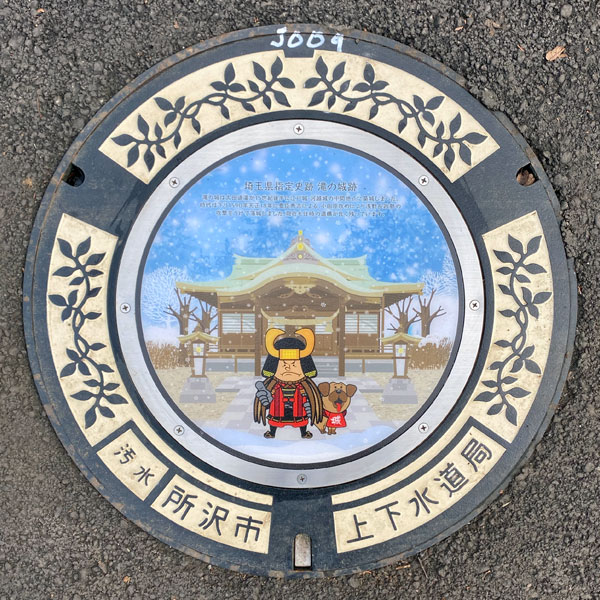
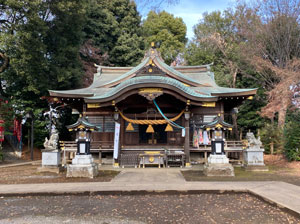
Sengoku Takino Castle Festival Series. With the Shiroyama Shrine located on the site of the main keep in the background, the image characters of the Sengoku Takinojo Festival, "Takijo-kun" and "Takimaru-kun," are depicted.
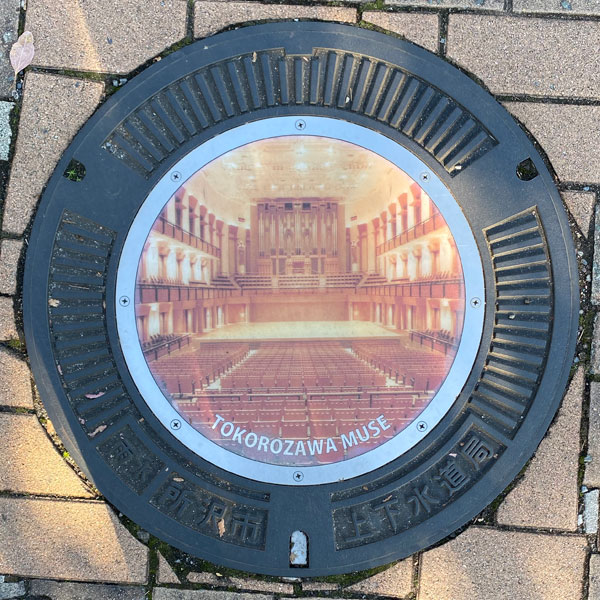
The cover depicts the "Ark Hall," the large hall with a pipe organ.
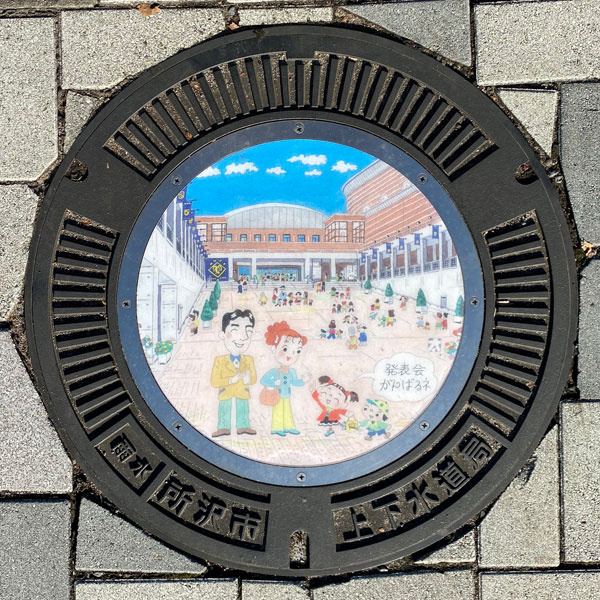
The cover shows a girl from a family of four in front of Muse saying, "I'll do my best at the recital!"
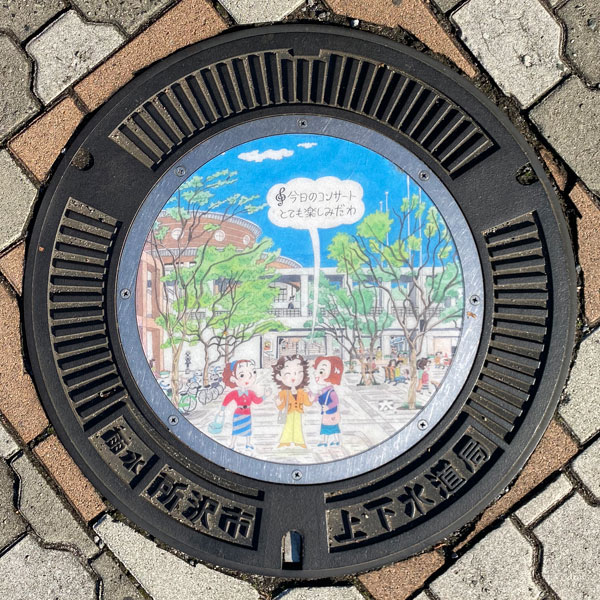
The cover shows three women chatting, saying, "We're really looking forward to today's concert!"
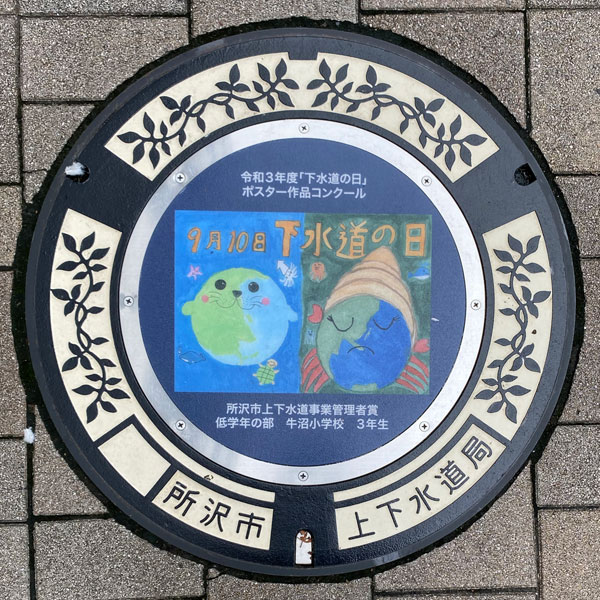
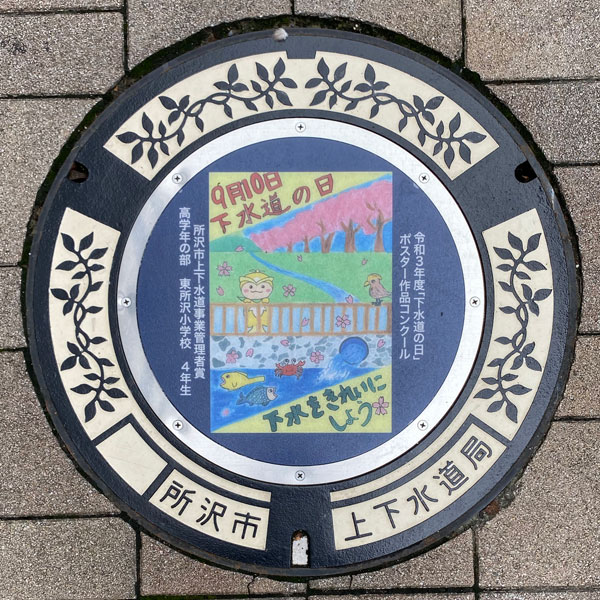
A plate-type manhole cover featuring the winning entries from the 2021 "Sewerage Day" Poster Design Contest.
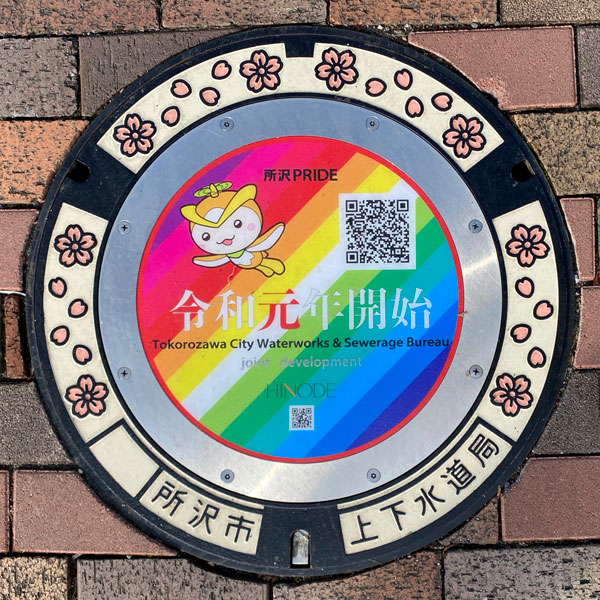
This is an advertising cover from the "Advertising Project Utilizing Manhole Covers," which began in fiscal year 2018. "Tokoron" is flying against a rainbow background. Cherry blossoms and the words "Tokorozawa City" and "Waterworks & Sewerage Bureau" surround it.
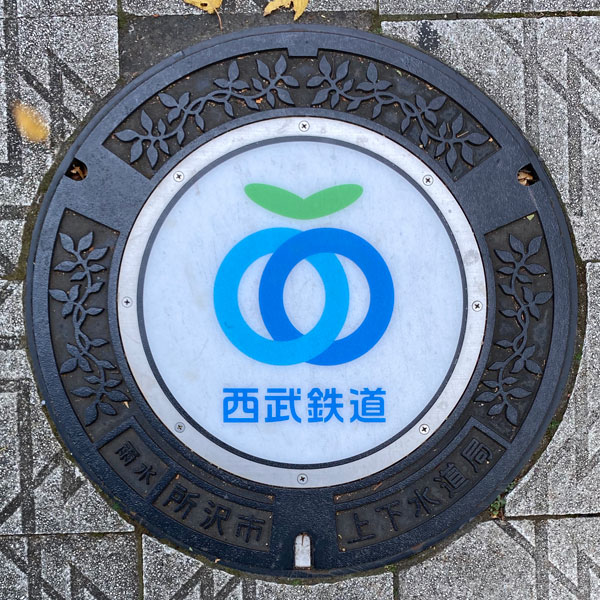
A plate-shaped lid with the Seibu Railway logo and text on it.
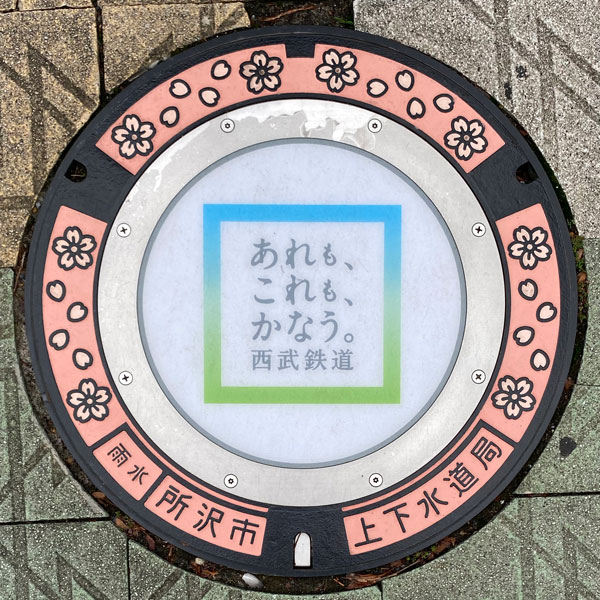
A plate-shaped rainwater drain cover bearing the words "Your wishes can come true. Seibu Railway." The outer circumference of the base cover is the same as the top cover.
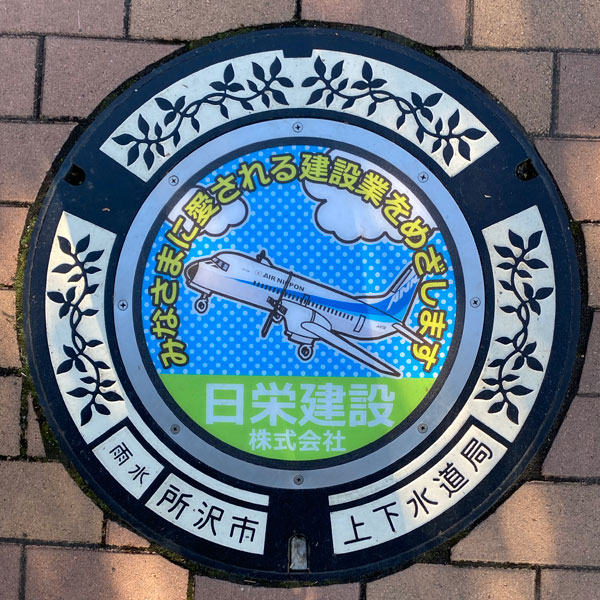
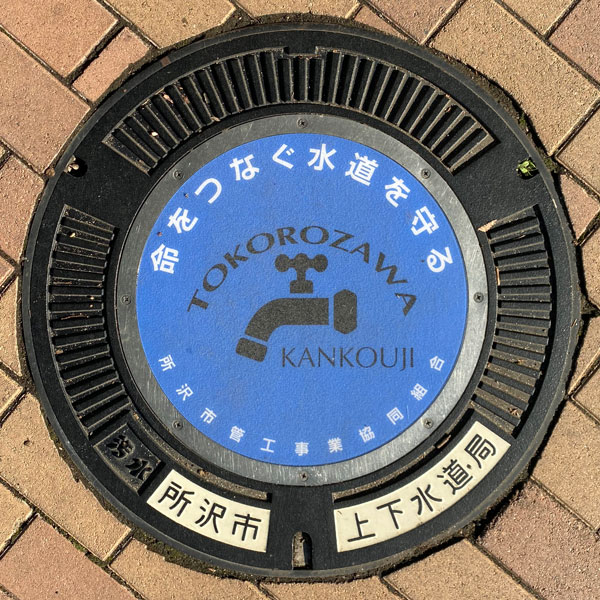
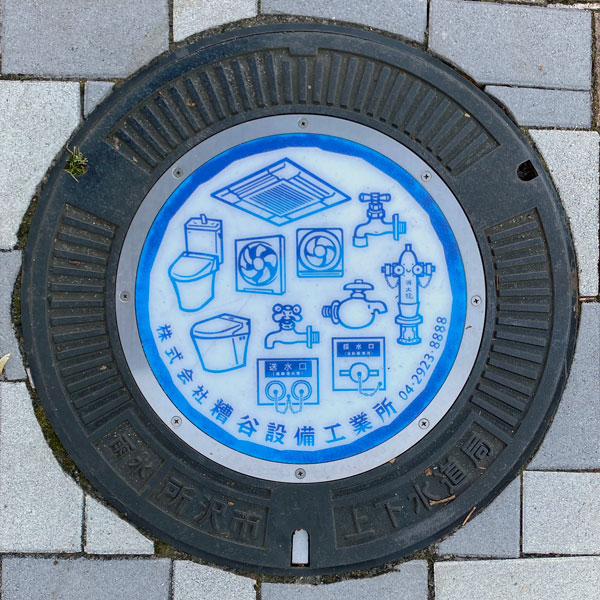
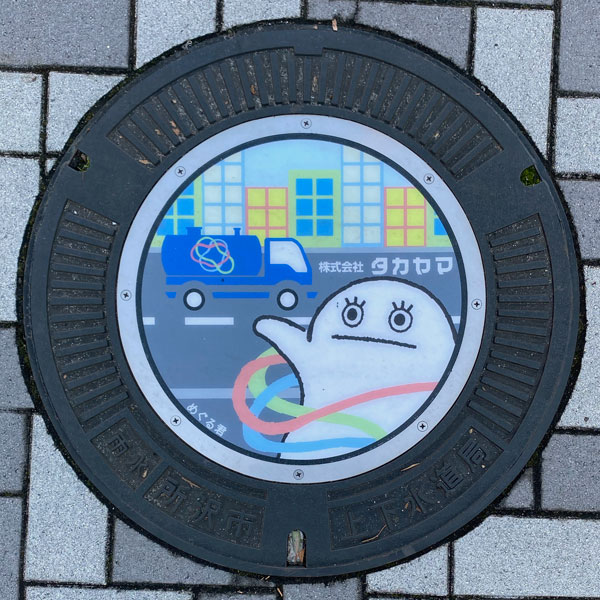
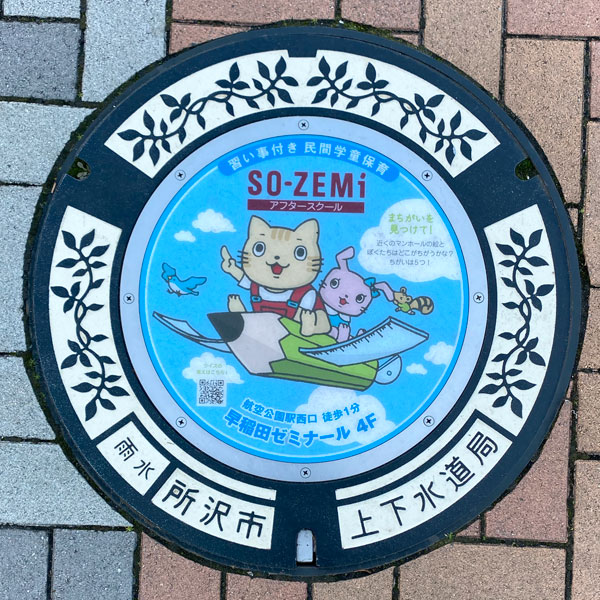
These are five manhole covers from the "Advertising Project Utilizing Manhole Covers," which began in fiscal year 2018. They were located at the east exit of Tokorozawa Aviation Park Station.
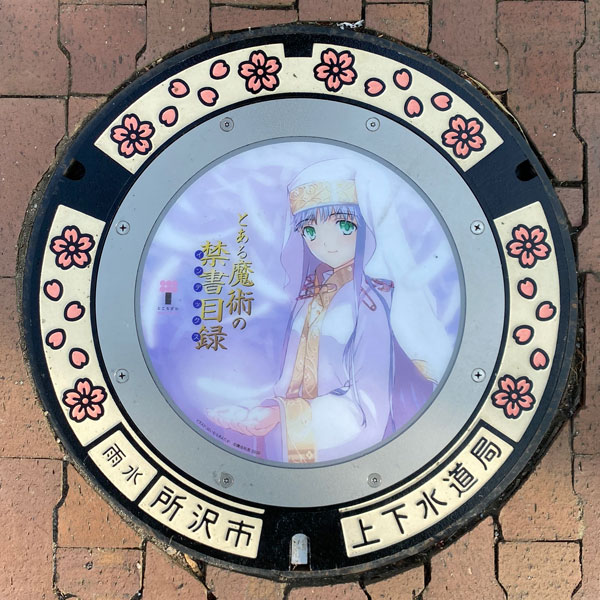
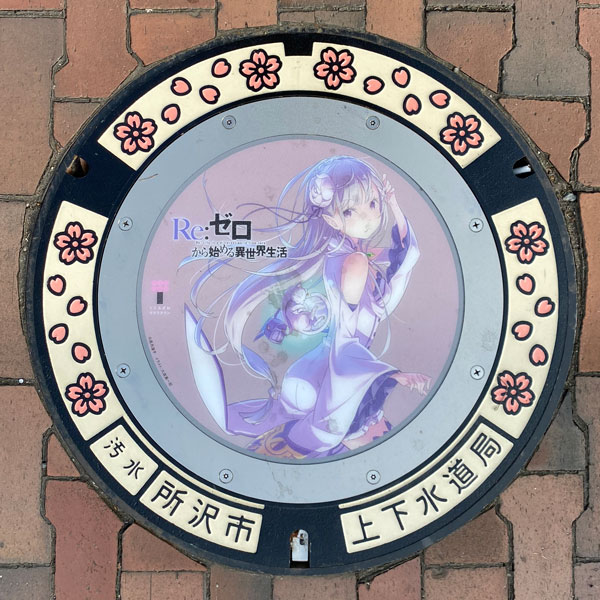
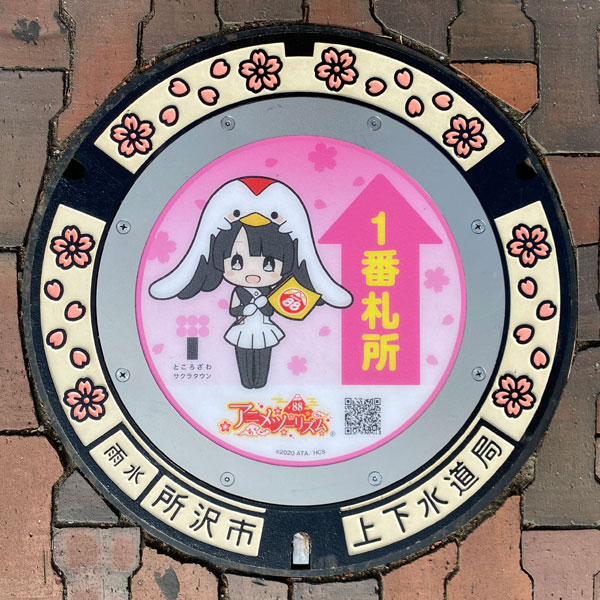
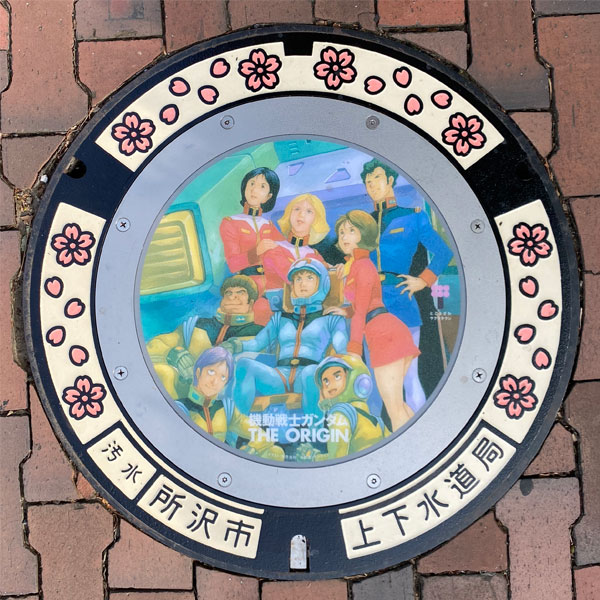
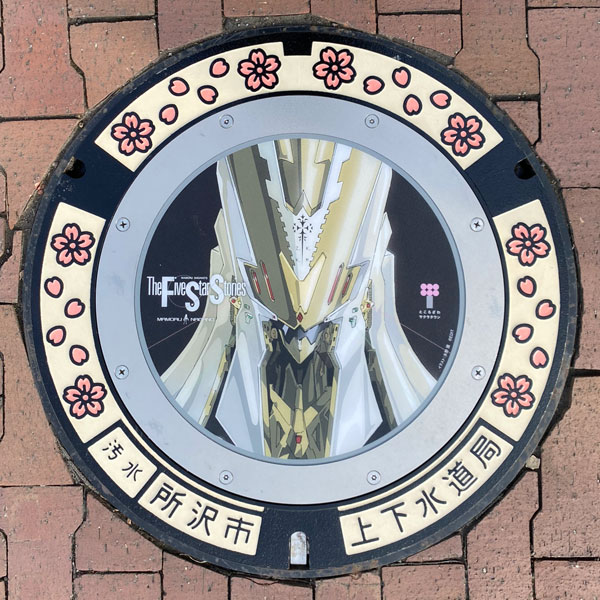
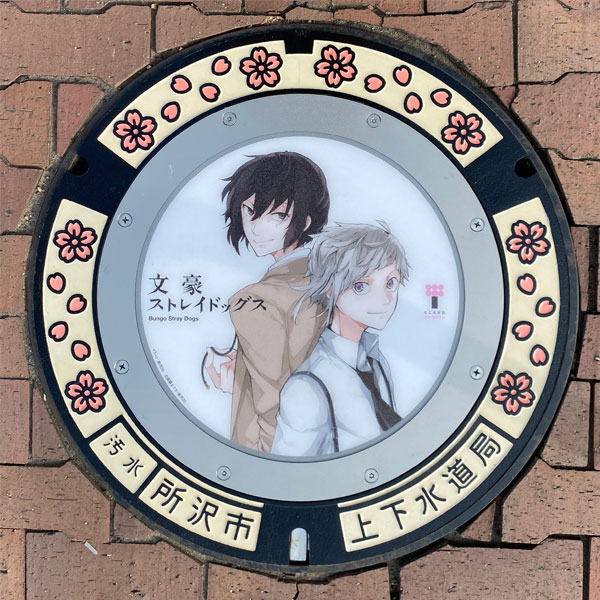
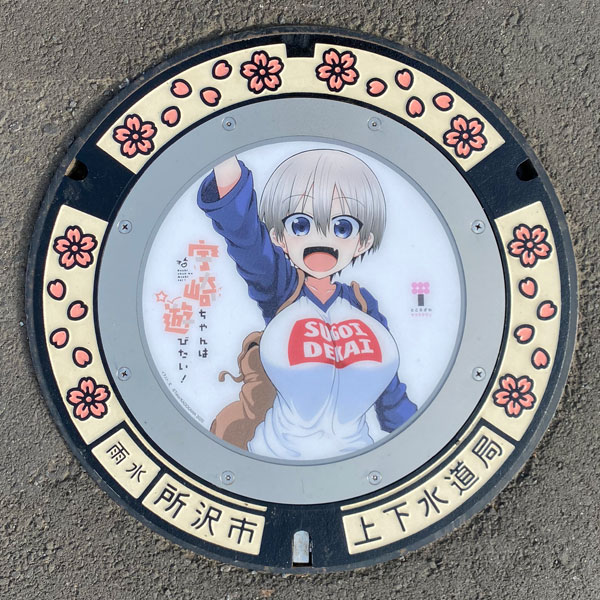
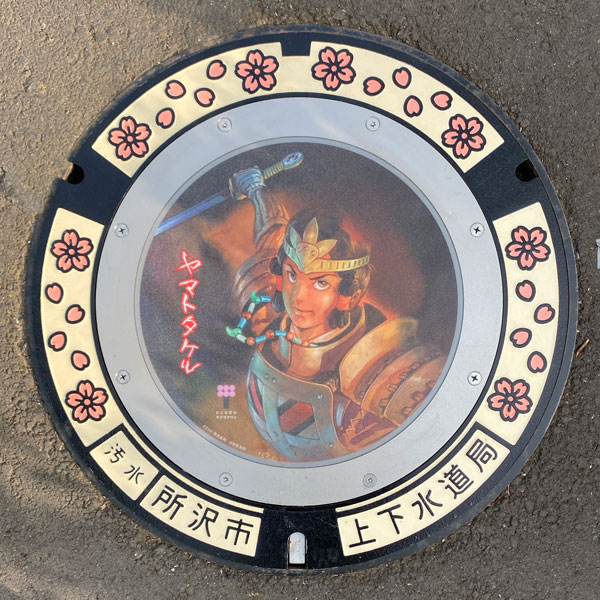
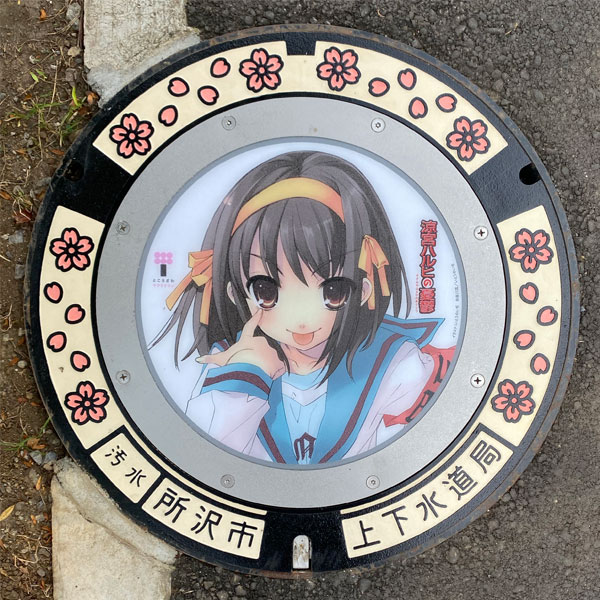
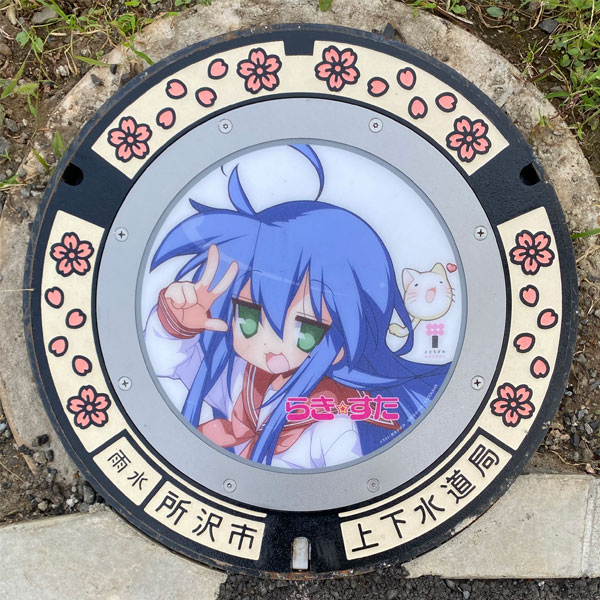
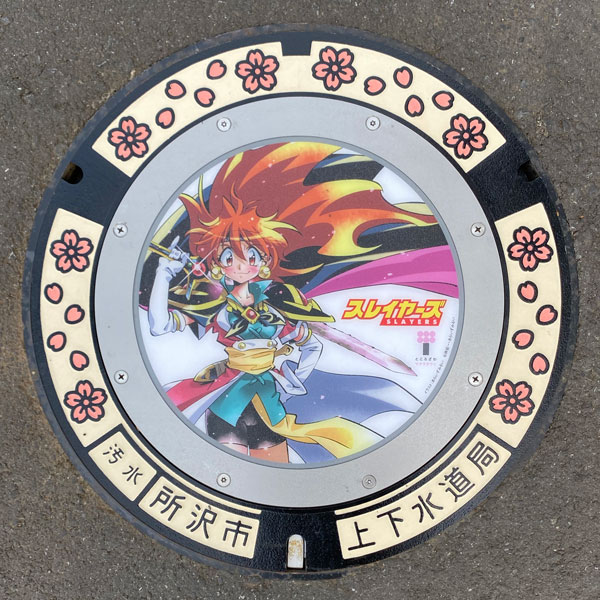
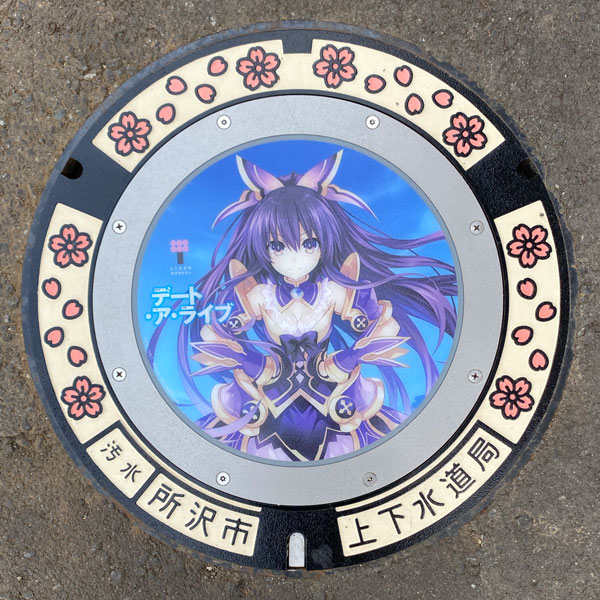
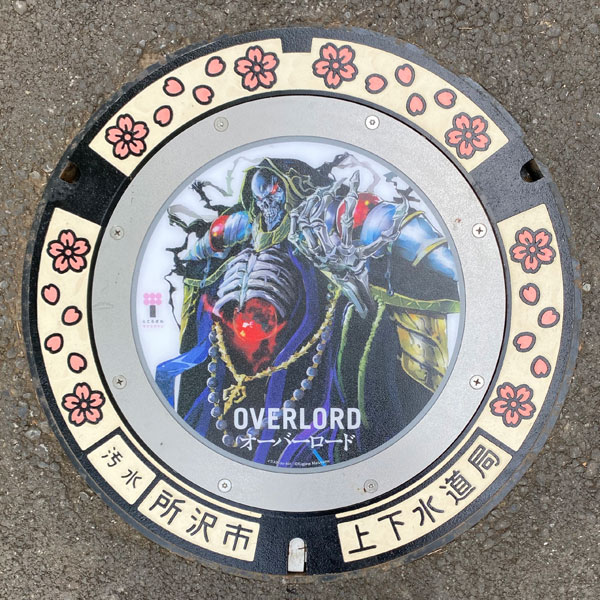
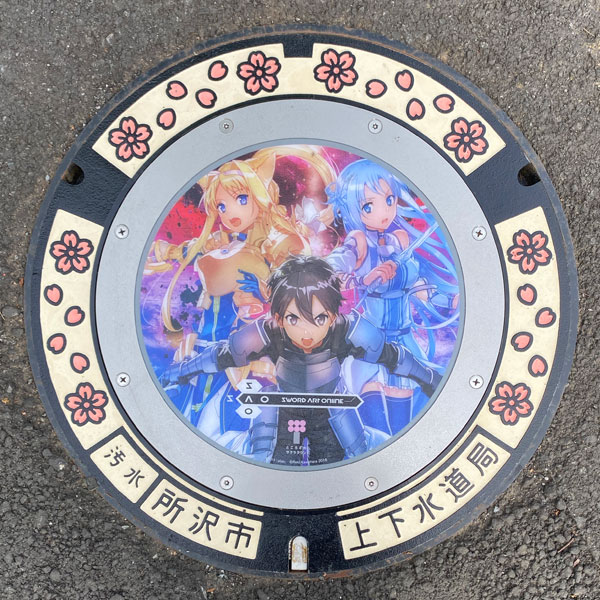
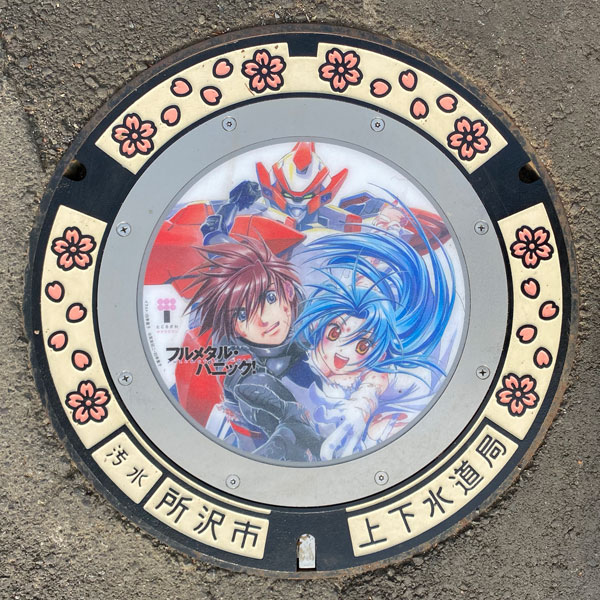
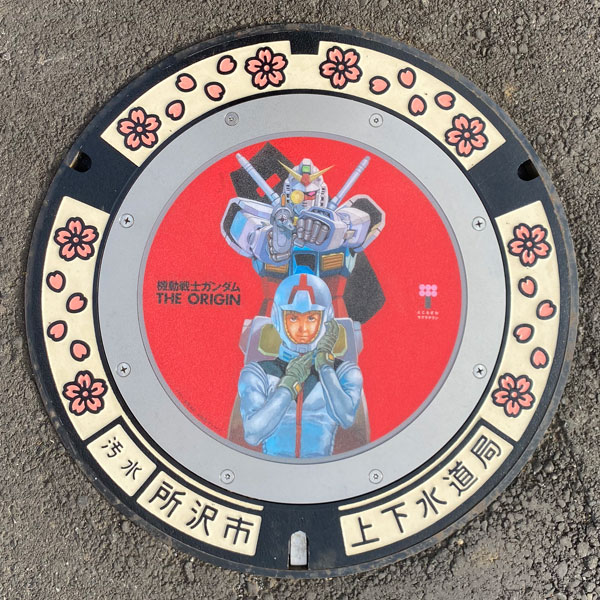
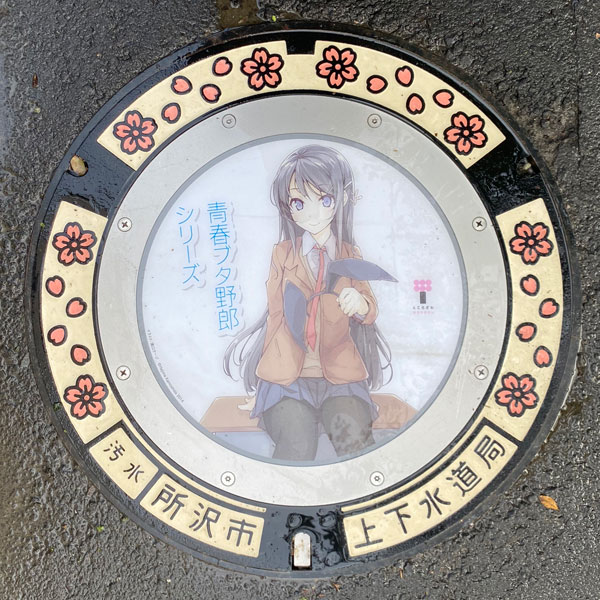
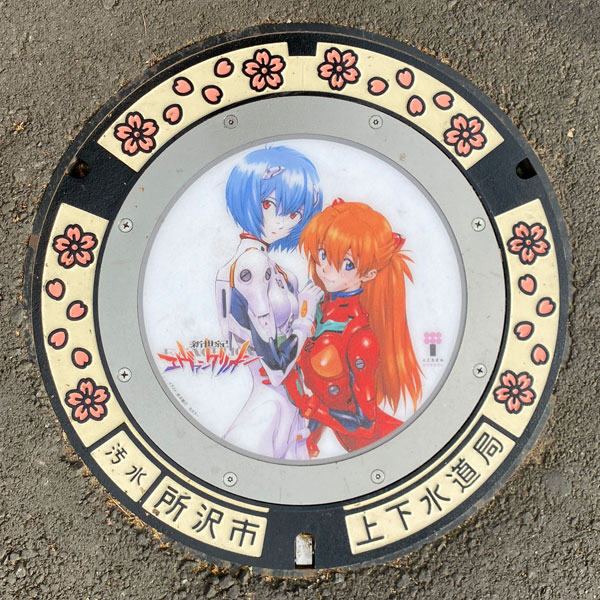
\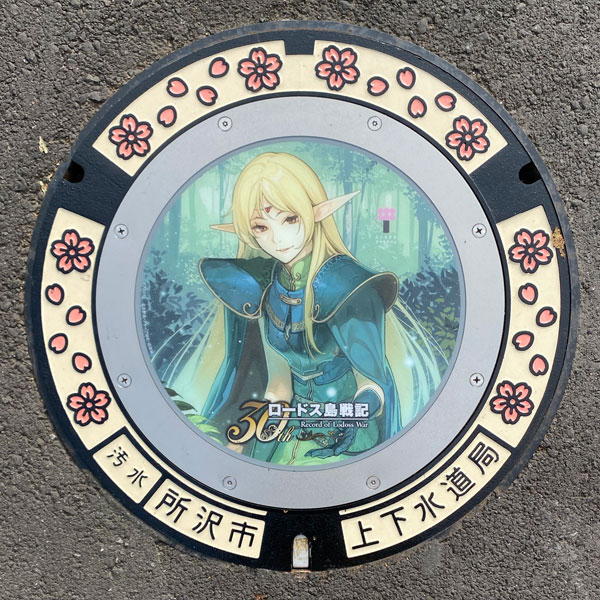
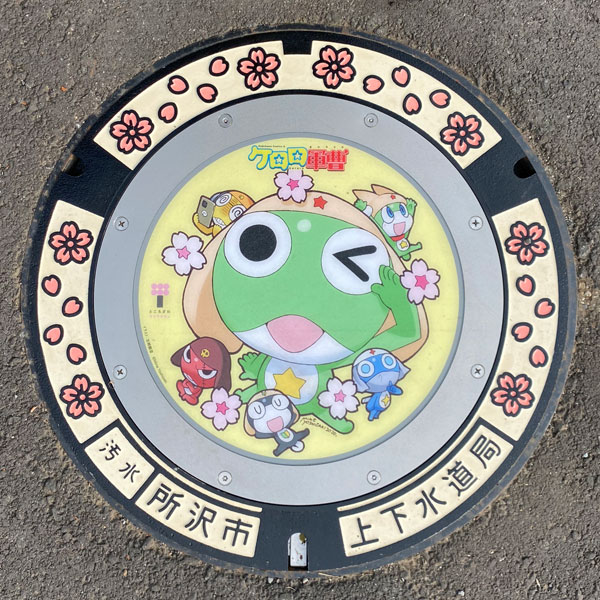
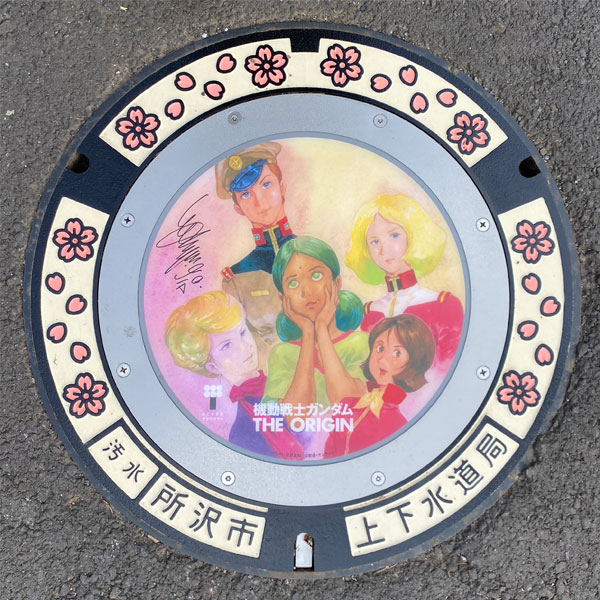
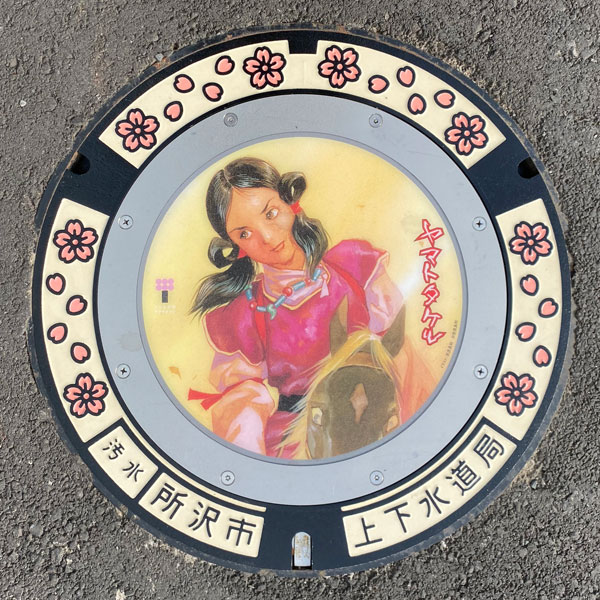
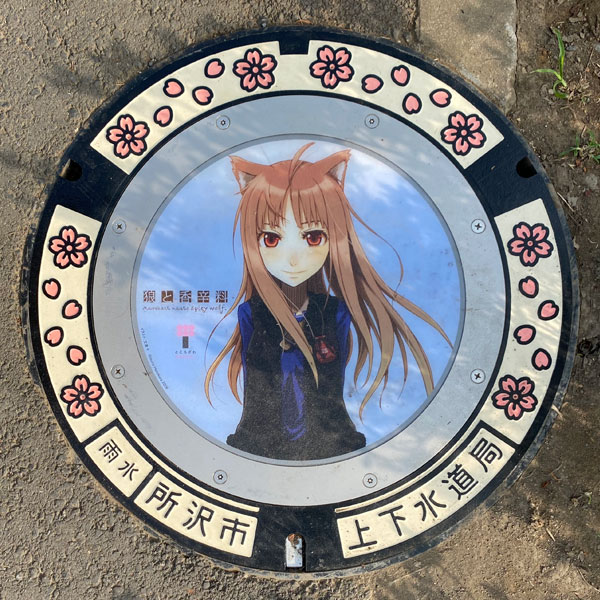
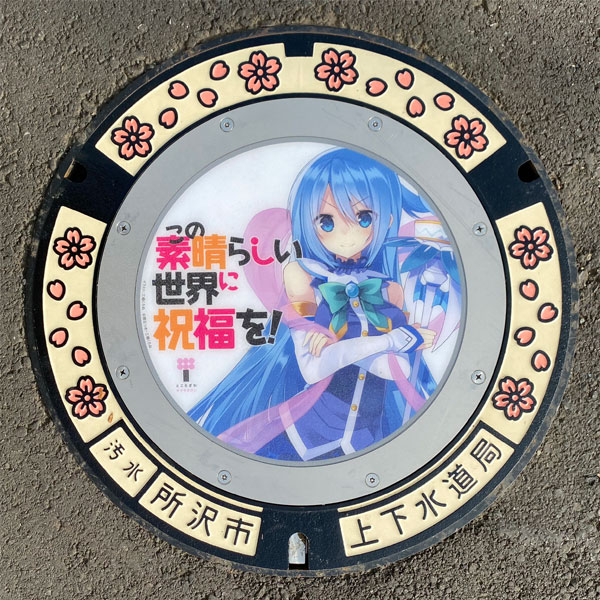
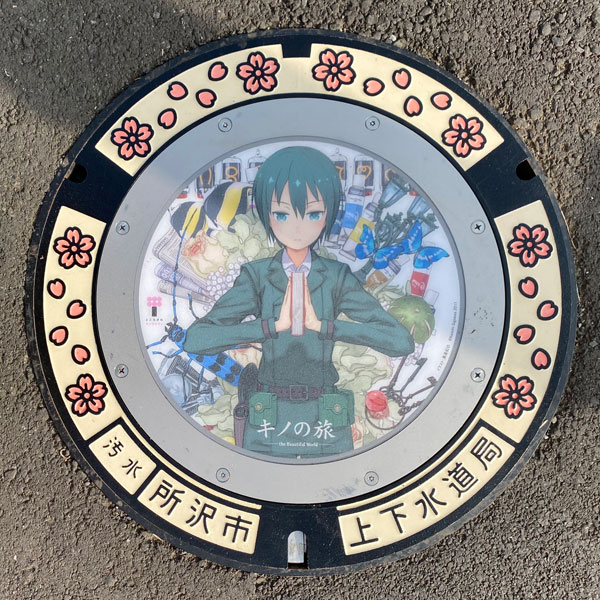
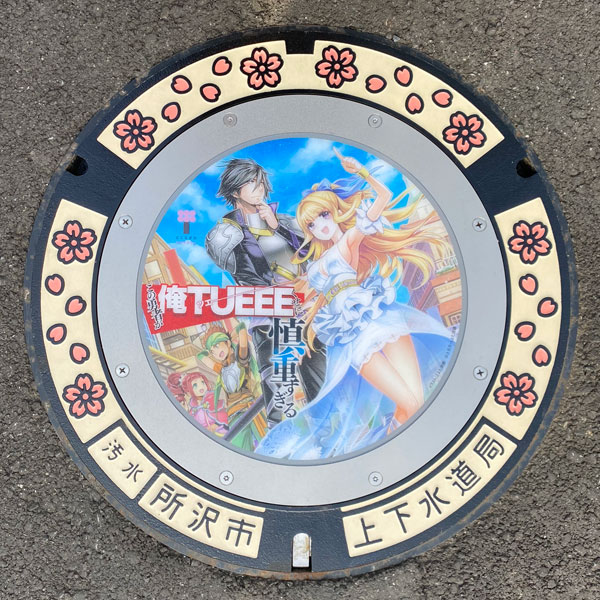
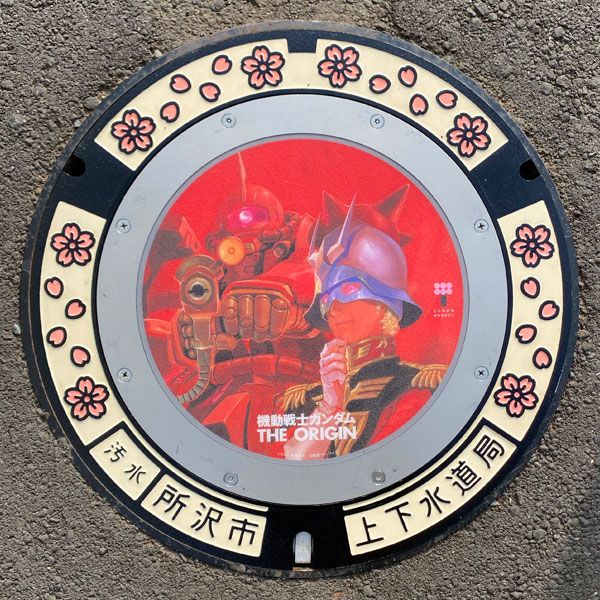
Newly installed illuminated manhole covers (LED manhole covers) for the opening of "Tokorozawa Sakura Town," a joint project between KADOKAWA Corporation and Tokorozawa City. The inside of the covers glows softly at night. 28 covers, featuring characters from KADOKAWA's anime and manga, have been installed along the pedestrian walkway leading from JR Higashi-Tokorozawa Station to "Tokorozawa Sakura Town." These are expected to guide visitors to Tokorozawa Sakura Town and enhance nighttime security in the surrounding area.
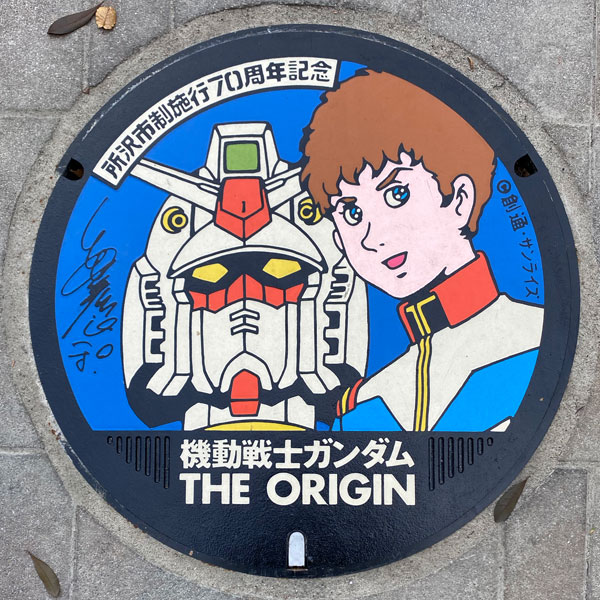
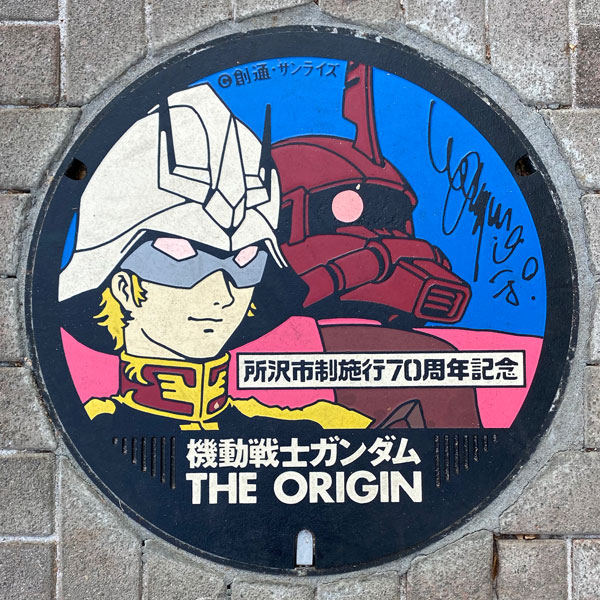
This is a manhole cover themed after "Mobile Suit Gundam THE ORIGIN," created to commemorate the 70th anniversary of Tokorozawa City's incorporation. It was commissioned from Yoshikazu Yasuhiko, a manga artist, animator, and anime director residing in the city.
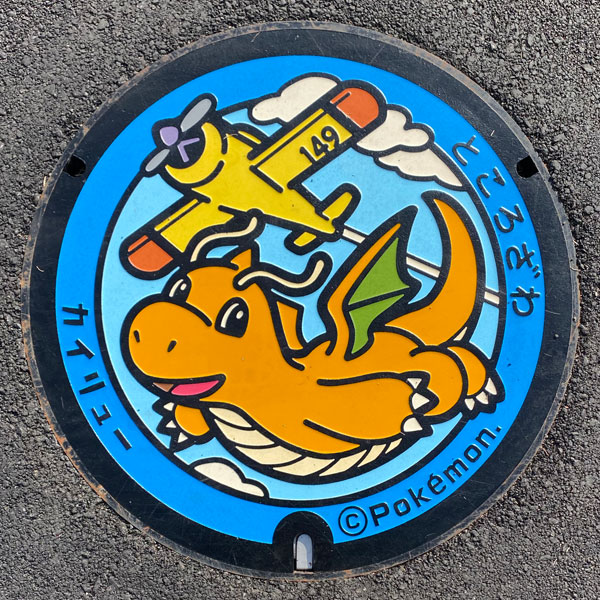
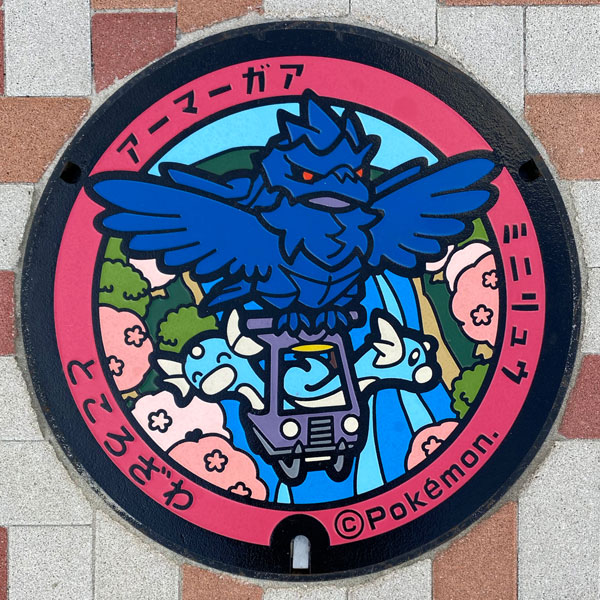
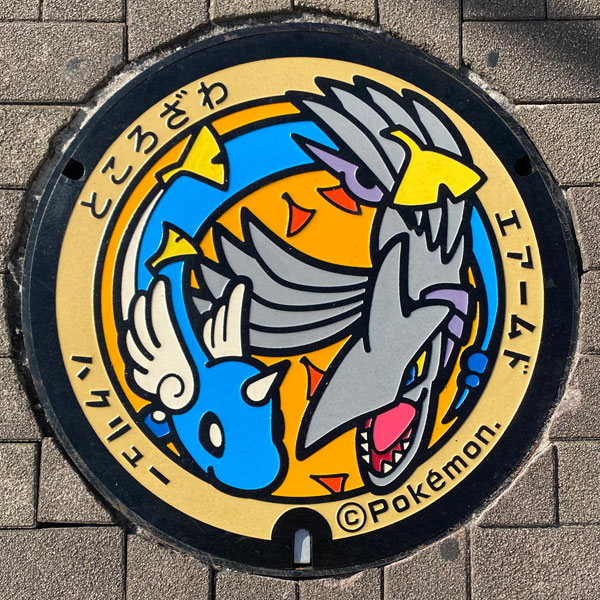
"Pokémon Manhole Cover (Poké-lid)" donated by The Pokémon Company.
See Arakawa Right Bank Basin Sewerage System
Niiza 新座市
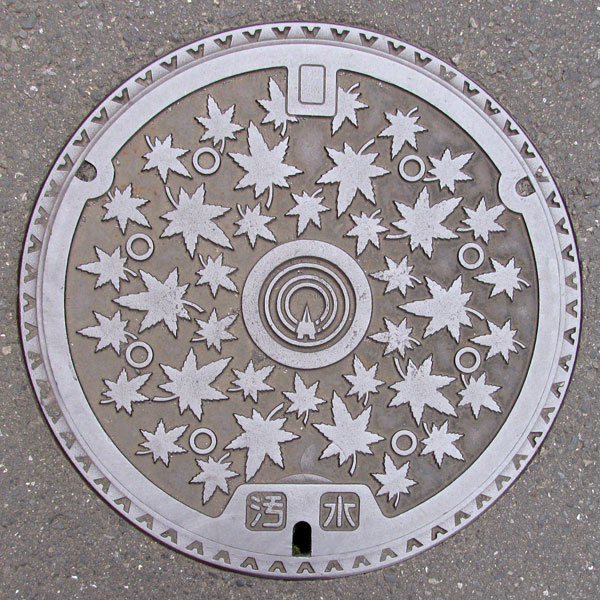
A manhole cover for sewage. The city emblem, a stylized representation of the Japanese katakana characters "二" (ni) and "ザ" (za), is in the center. Surrounding it are the city's official tree, the maple.
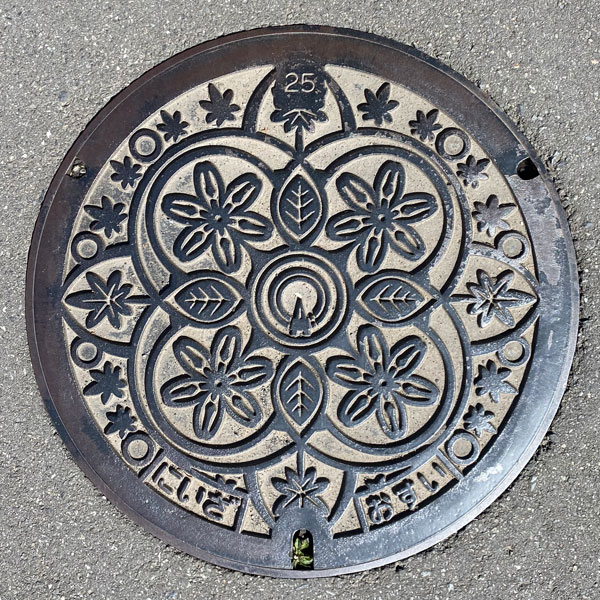
The city emblem is in the center. The flowers surrounding it are the city flower, the "kobushi" magnolia. The surrounding trees are the city tree, the "momiji" maple. This design is newer than the manhole covers featuring only the maple, and is being newly installed.
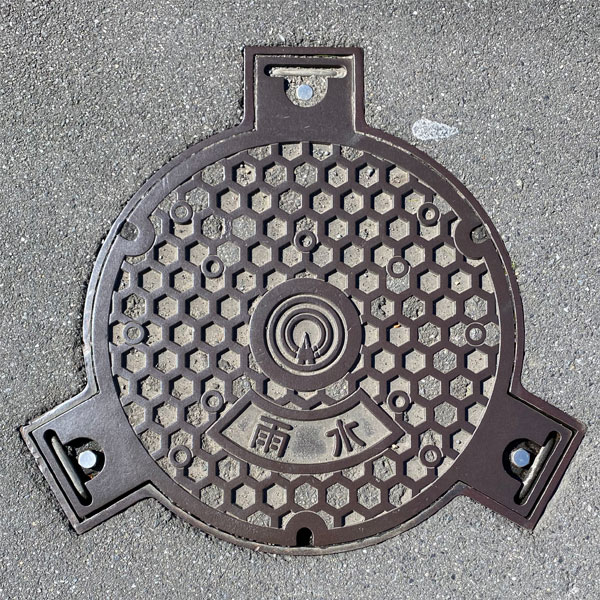
It's a rainwater drain with a tortoiseshell pattern, and its three arms are secured with bolts.
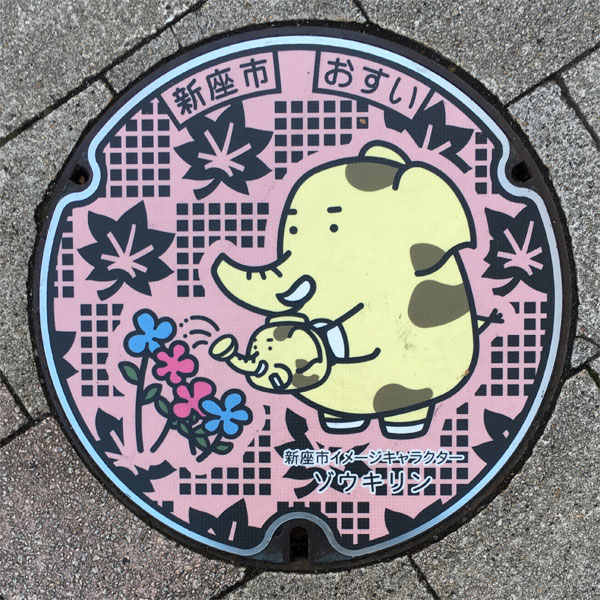
This is a manhole cover for sewage featuring Niiza City's mascot, "Zoukirin." It's a sticker type, depicting Zoukirin watering flowers with a Zoukirin-shaped watering can, with maple leaves (the city's official tree) scattered in the background. The words "Niiza City" and "Sewage" are at the top.
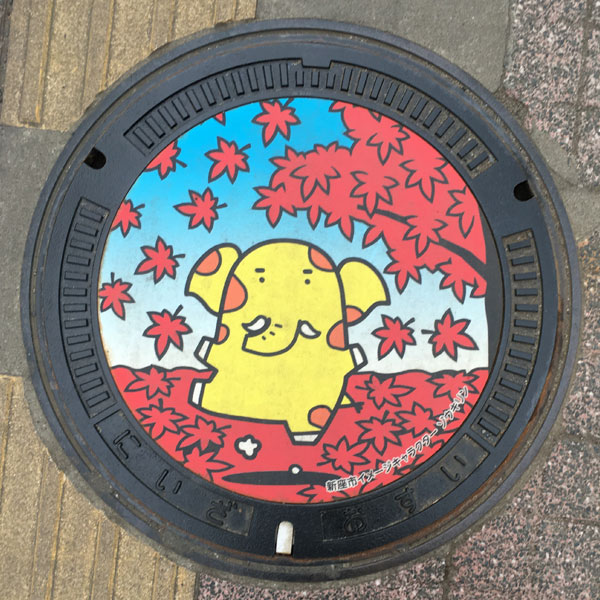
This is an autumn version of a manhole cover for sewage, featuring Niiza City's mascot character "Zoukirin" and the city tree "maple."
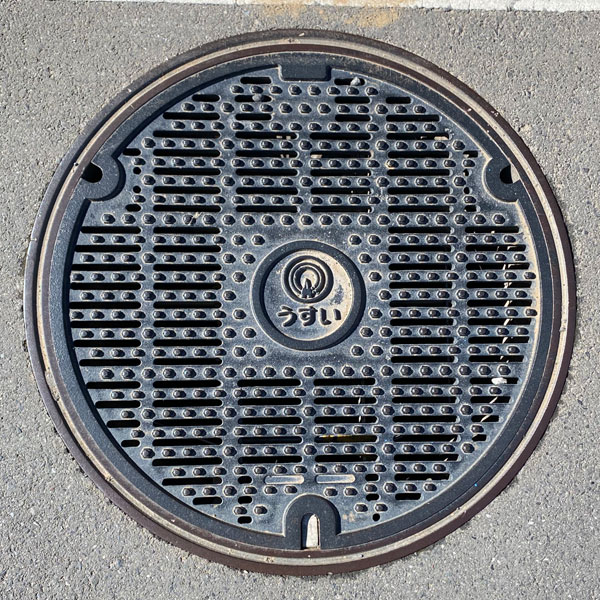
Rainwater manhole cover with anti-slip pattern.
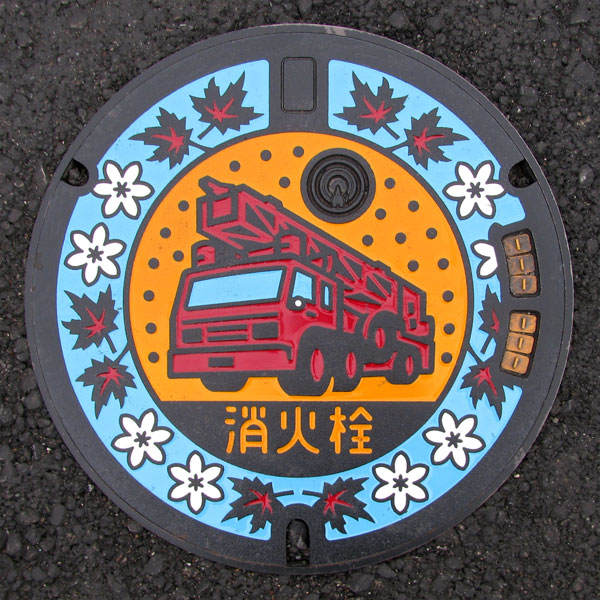
This is a fire hydrant. Surrounding it are the Niiza city tree, the Japanese maple, and the city flower, the magnolia.
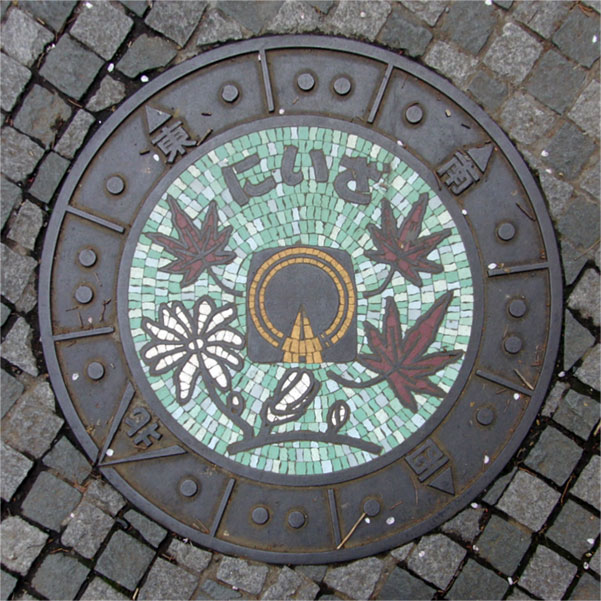
This isn't a manhole cover, but a compass rose. The city emblem, the city tree ("maple"), and the city flower ("magnolia") are depicted on the inside.
See Arakawa Right Bank Basin Sewerage System
Shiki 志木市
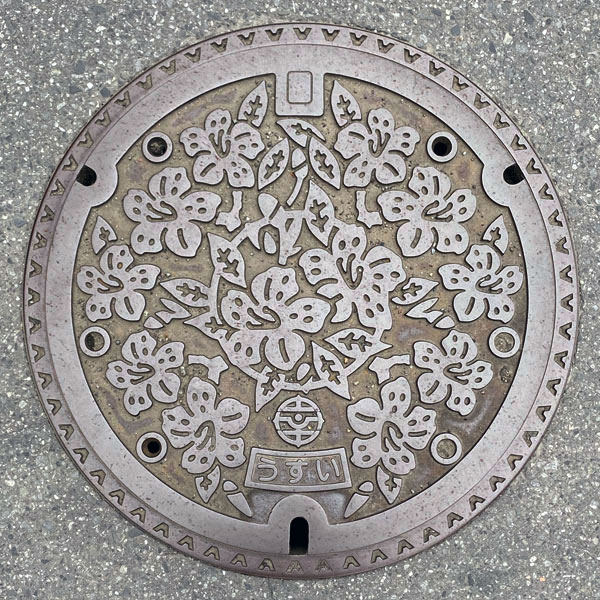
The design features the city flower, the azalea. The city emblem is at the bottom.
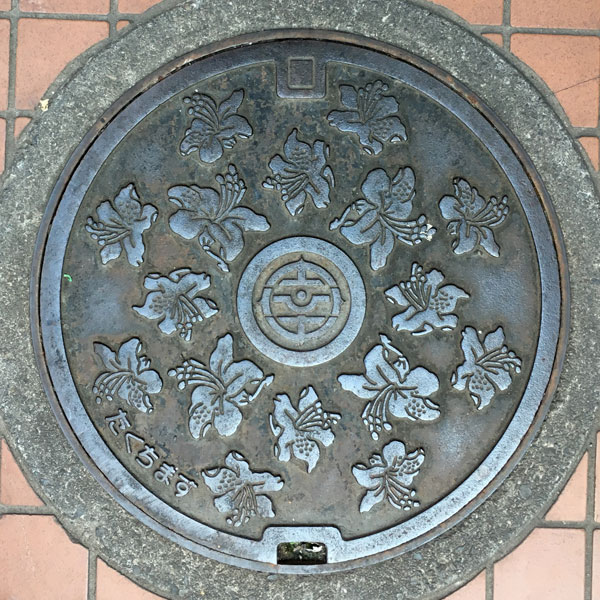
A manhole cover for sewage, featuring the city flower, the azalea, and the words "Takuchimasu" (sewage manhole cover).
This design is very similar to the manhole covers in neighboring Asaka City. In fact, it's practically identical, except for the city emblem.
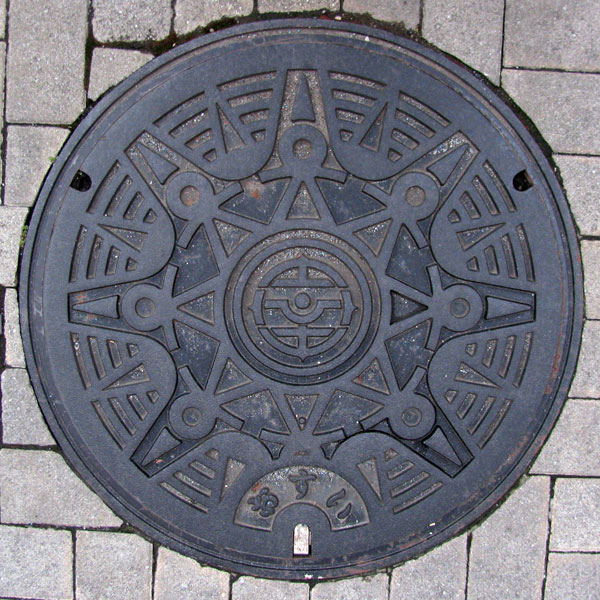
This one is also for wastewater. In the center is the city emblem, designed with the kanji characters for "Shiki." Surrounding it are what appear to be human figures (children) standing with their arms outstretched.
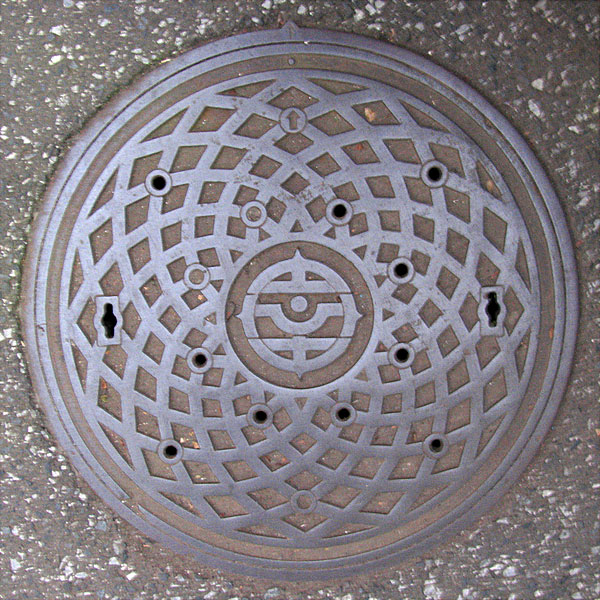
This one has a patterned design.
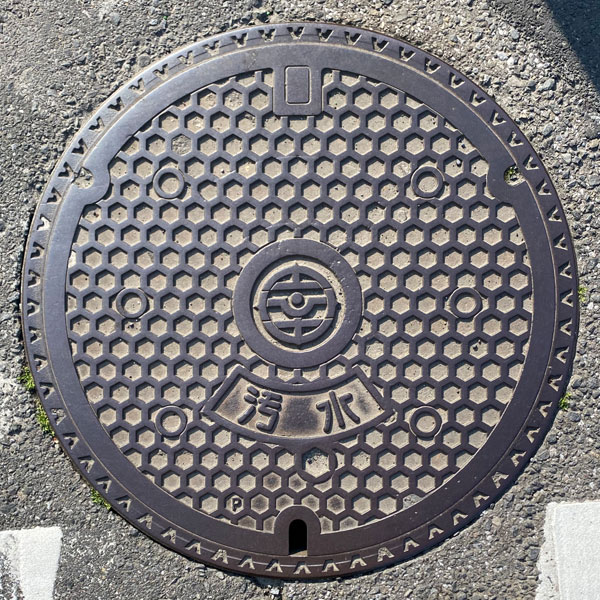
City emblem in the center.
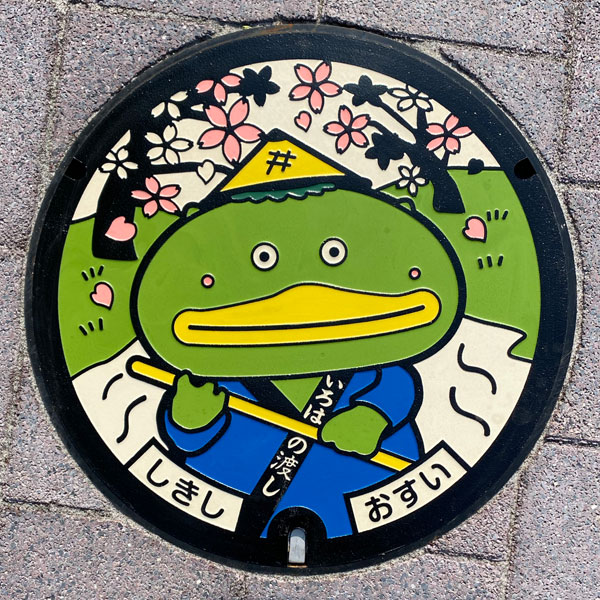
A manhole cover for sewage, depicting "Kaparu" as a boatman in a traditional Japanese boat against the backdrop of cherry blossoms at Iroha Waterfront Park. Coordinate cover.
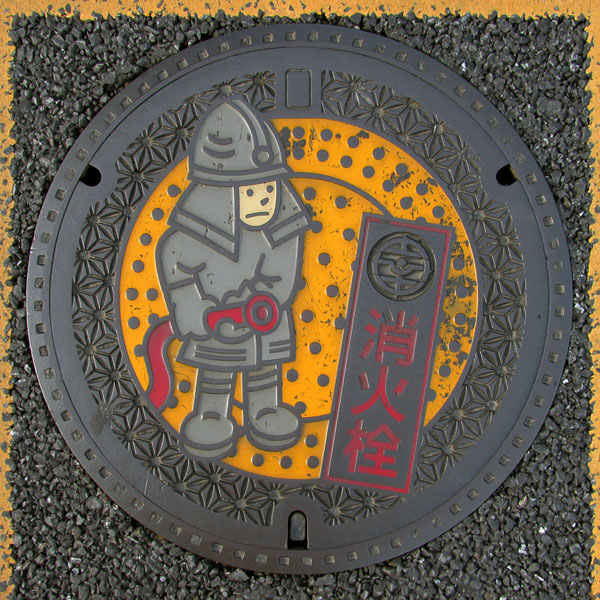
A fire hydrant cover found in various locations. The Shiki City emblem is above the words "Fire Hydrant".
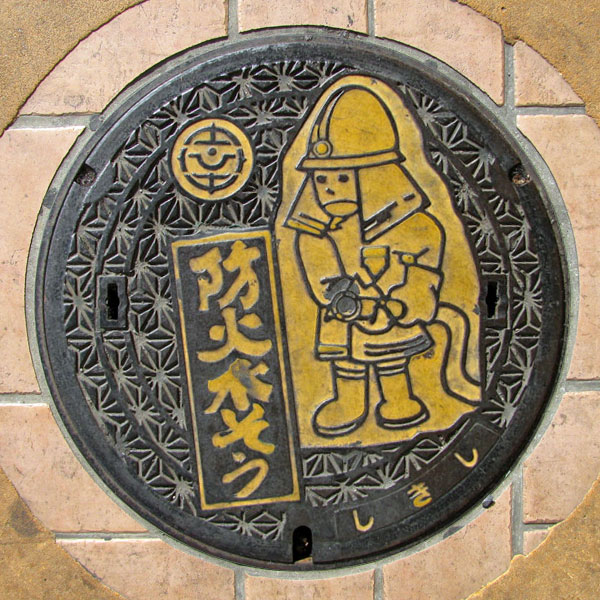
This is another fire hydrant cover that can be seen in various locations. The Shiki City emblem is above the words "Fire Hydrant".
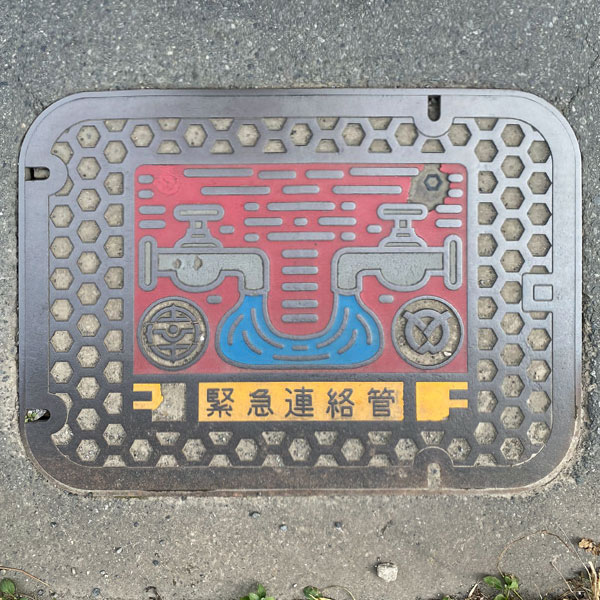
Two water taps connected by water (though it's probably the other way around...). The Shiki City emblem is on the left, and the Asaka City emblem is on the right. Below them are the words "Emergency Contact Pipe."
See Arakawa Right Bank Basin Sewerage System
Asaka 朝霞市
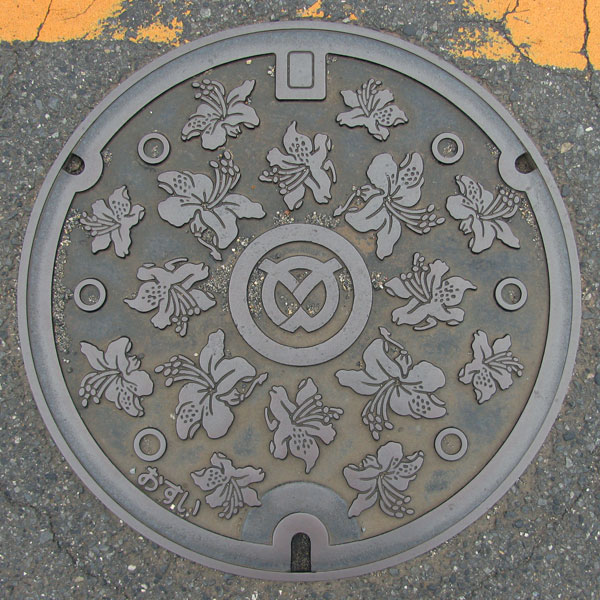
The design features the city flower, the azalea. The city emblem, consisting of the katakana characters "Asaka," is in the center. Perhaps because it's located on a sidewalk with little foot traffic, it's not polished and is quite dirty. The carvings are shallow and it looks like it could be slippery.
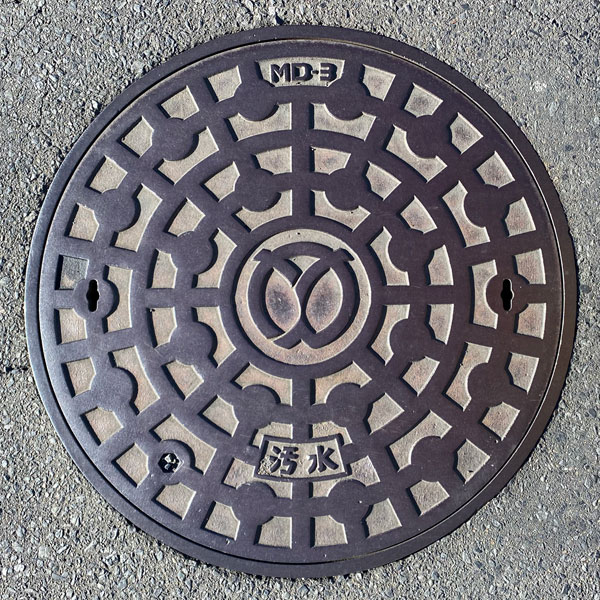
City emblem in the center.
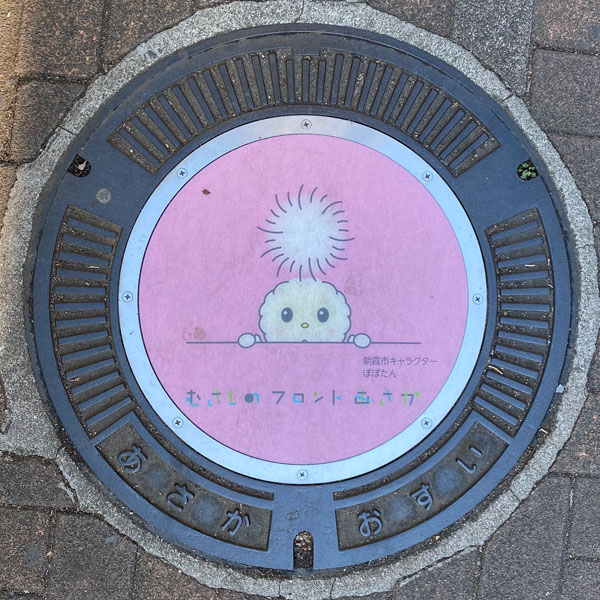
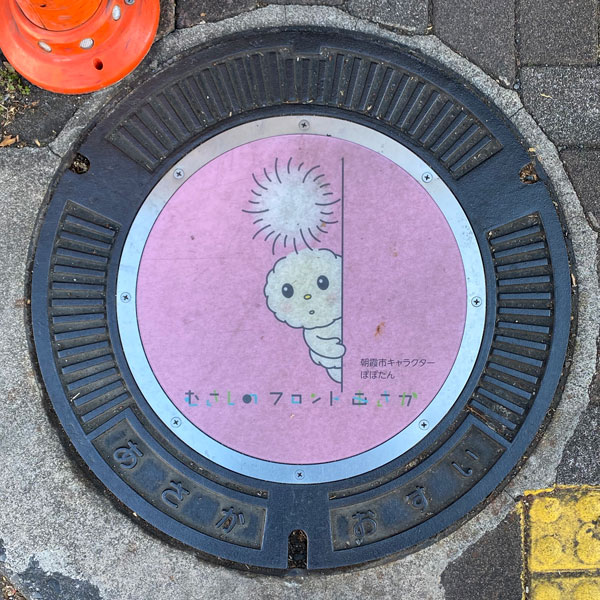
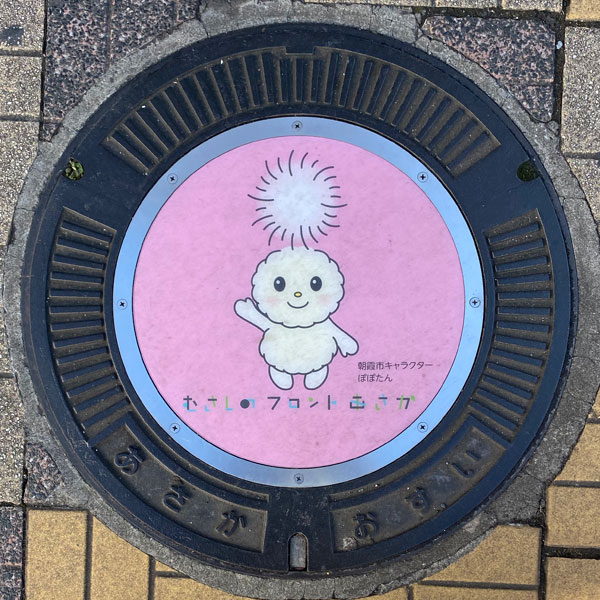
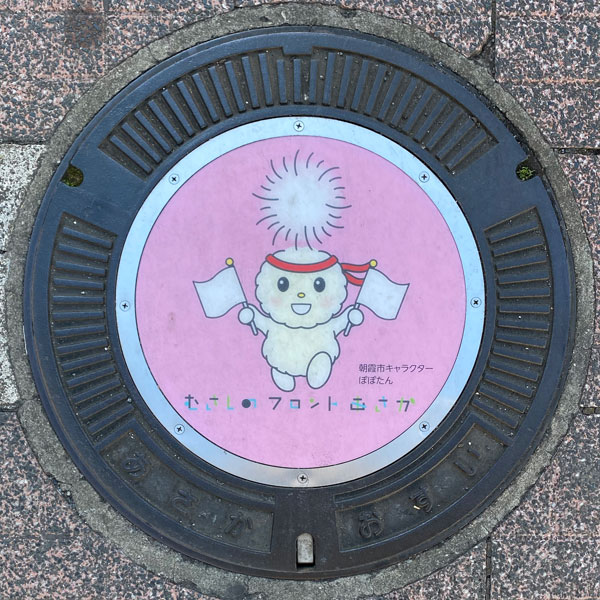
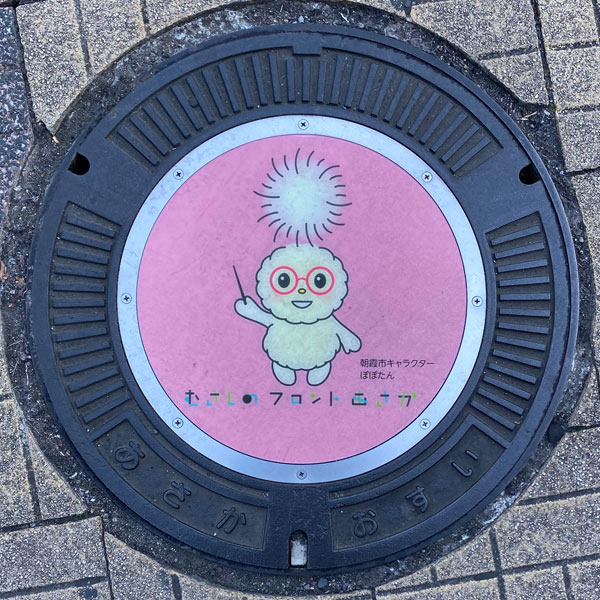
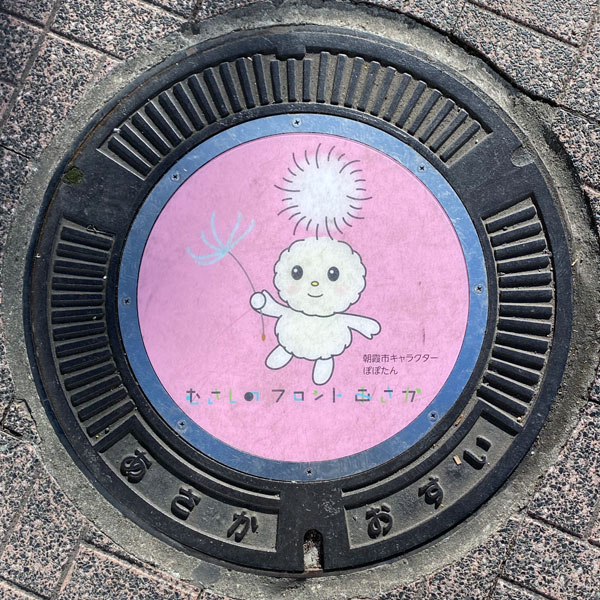
This is a plate-type manhole cover for sewage, installed in response to a proposal from the Children's Council in 2017. It depicts "Popotan," the Asaka City character.
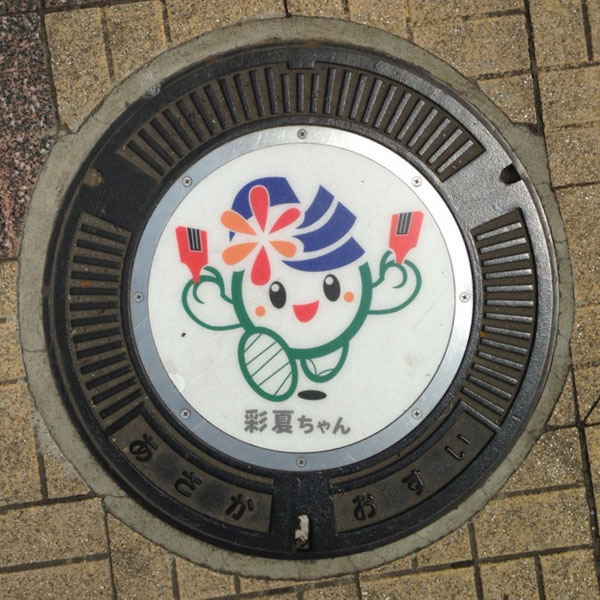
This is a plate-type manhole cover for sewage featuring "Ayaka-chan," the mascot character of the Asaka City summer festival, "Ayaka Festival."
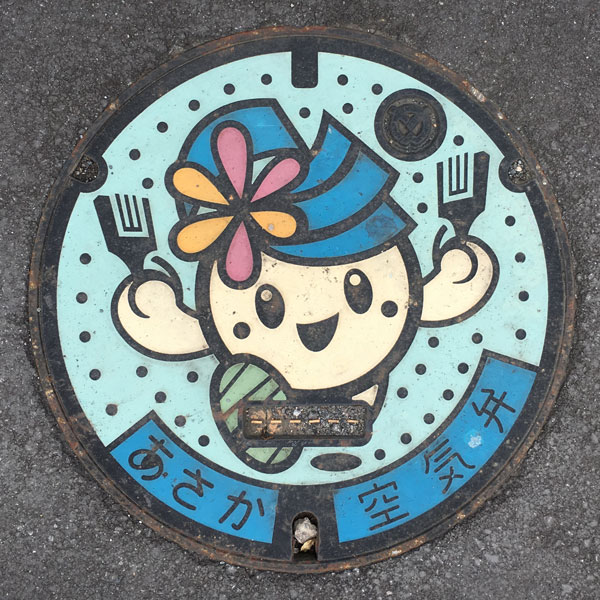
An air valve cover featuring "Ayaka-chan," the mascot character of the "Ayaka Festival." She's holding a naruko, a type of clapper used in dancing.
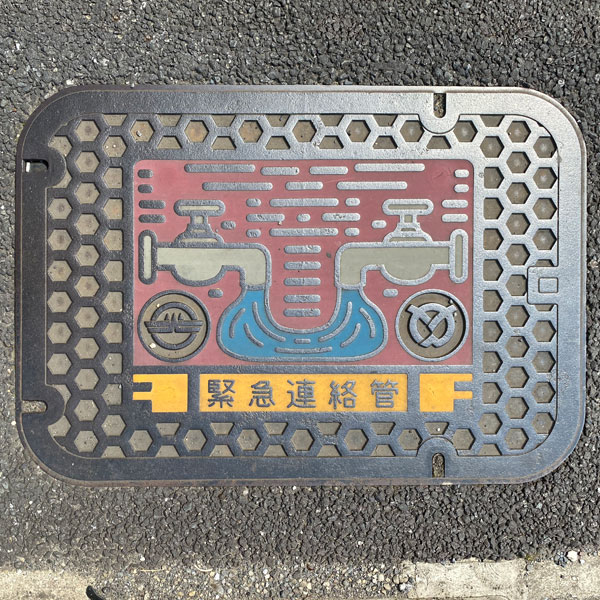
Two water taps connected by water (though it's probably the other way around...). The Wako City emblem is on the left, and the Asaka City emblem is on the right. Below them are the words "Emergency Contact Pipe."
See Arakawa Right Bank Basin Sewerage System
Wako 和光市
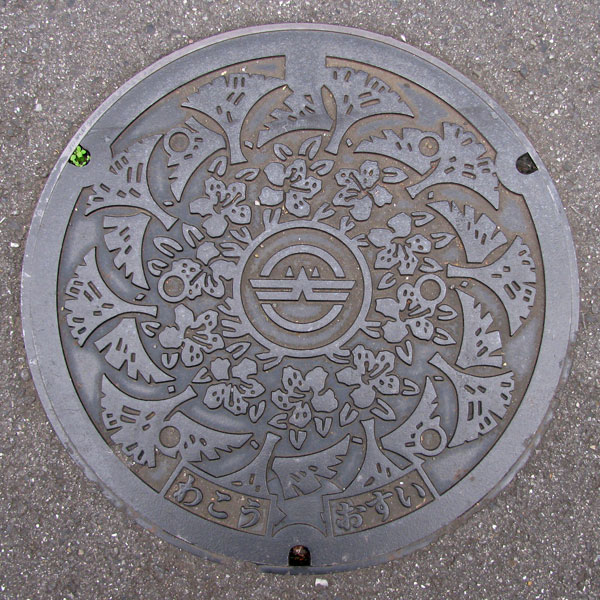
The design features the city's tree, the ginkgo, and its flower, the azalea. The city emblem is in the center. The circle and the character for "light" form the word "Wako" (harmony and light).
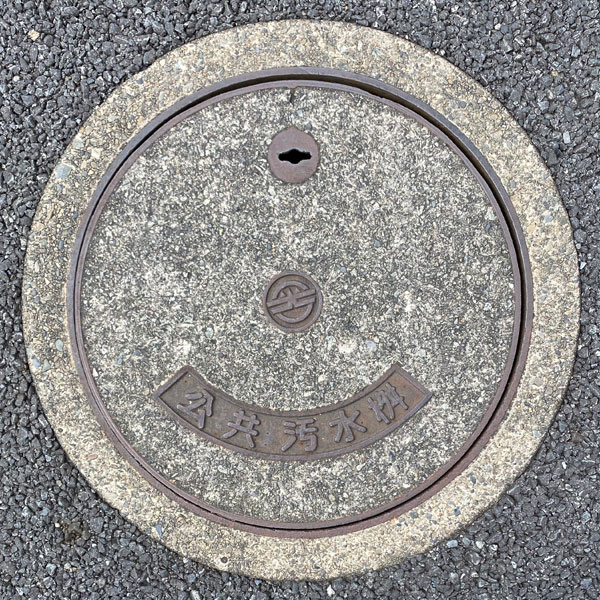
A concrete cover for a public sewage manhole.
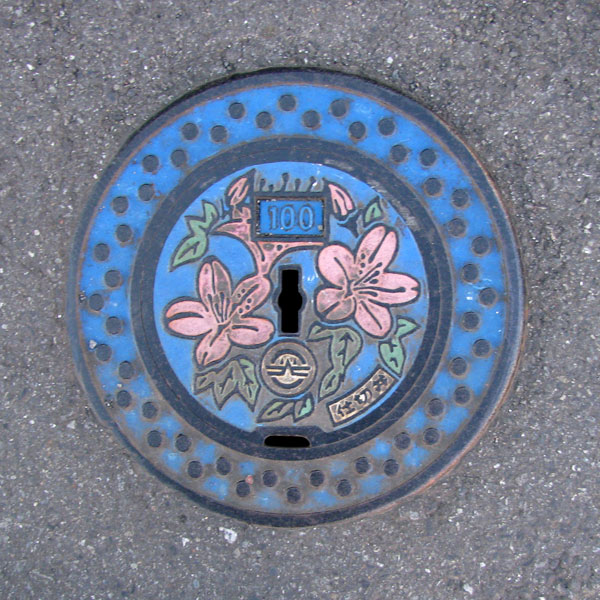
A valve cover featuring the city flower, the azalea.
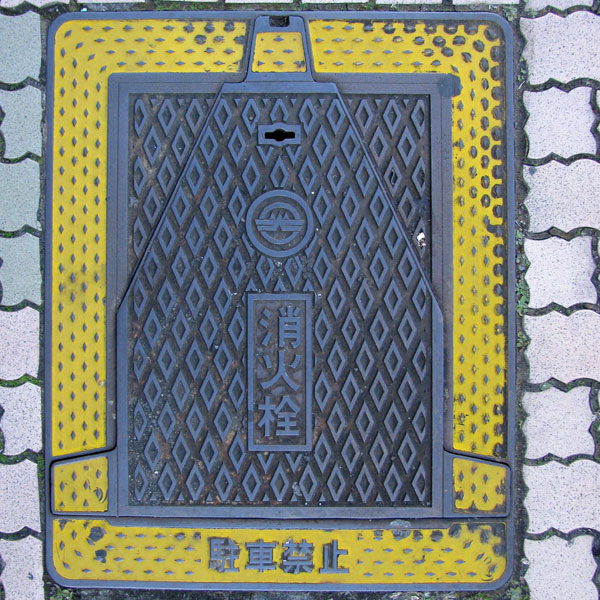
Normally, fire hydrants are long horizontally, but this one has a long vertical fire hydrant cover.
See Arakawa Right Bank Basin Sewerage System
Toda 戸田市
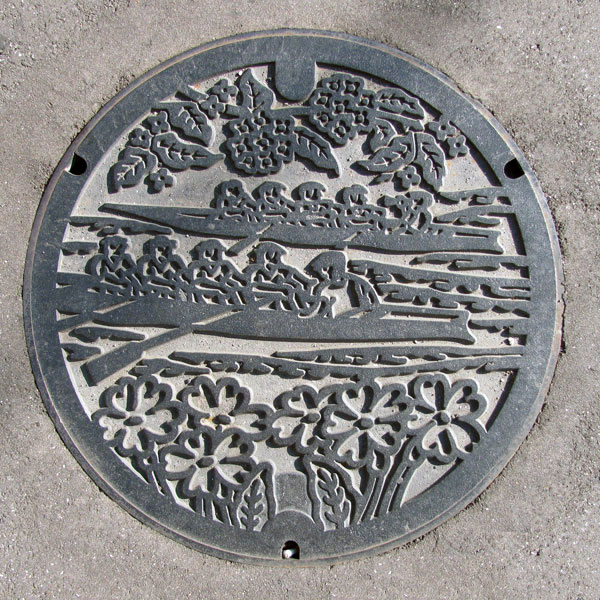
The design features the city tree, "Osmanthus," at the top, and the city flower, "Primrose," at the bottom. Toda City is home to the Toda Rowing Course, which was used as a venue for the Tokyo Olympics, and this manhole cover depicts two coxed four rowing boats.
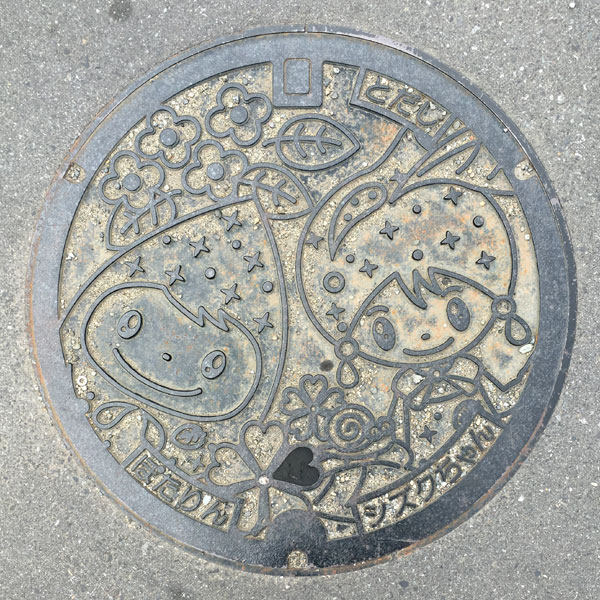
This manhole cover features "Potarin" and "Shizuku-chan," original characters from the Toda City Waterworks and Sewerage Department. Similar to the regatta manhole cover, it also depicts the city's tree, the osmanthus, at the top, and the city's flower, the primrose (with a snail), at the bottom.
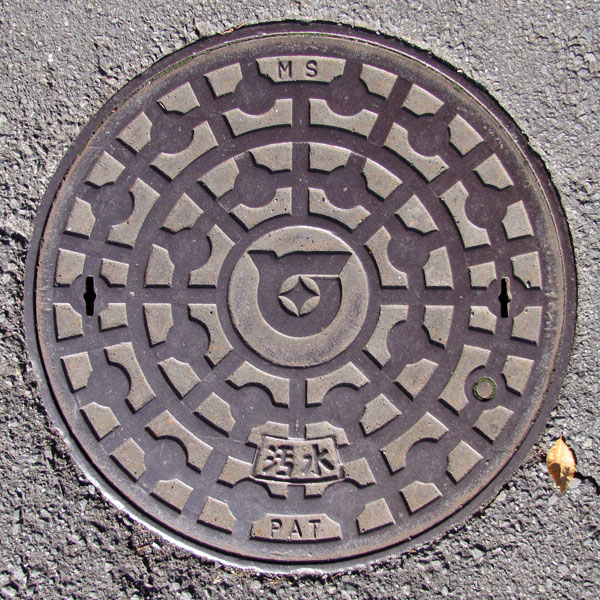
City emblem in the center.
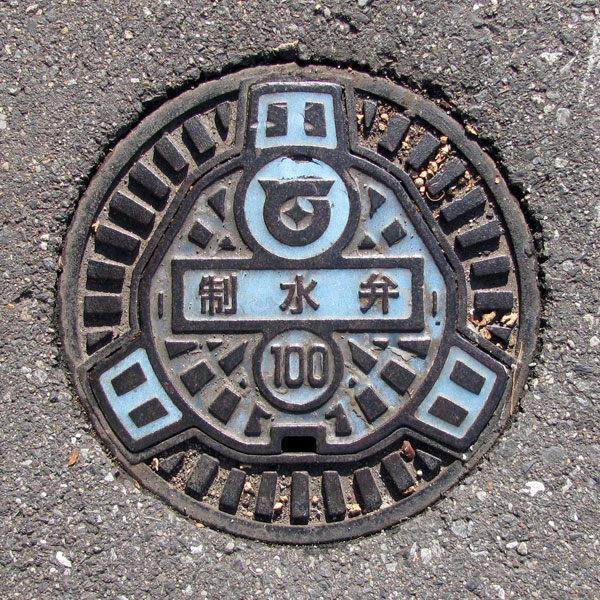
Water control valve. It features the city emblem, the words "Water Control Valve," and the number "100" representing the diameter of the pipe.
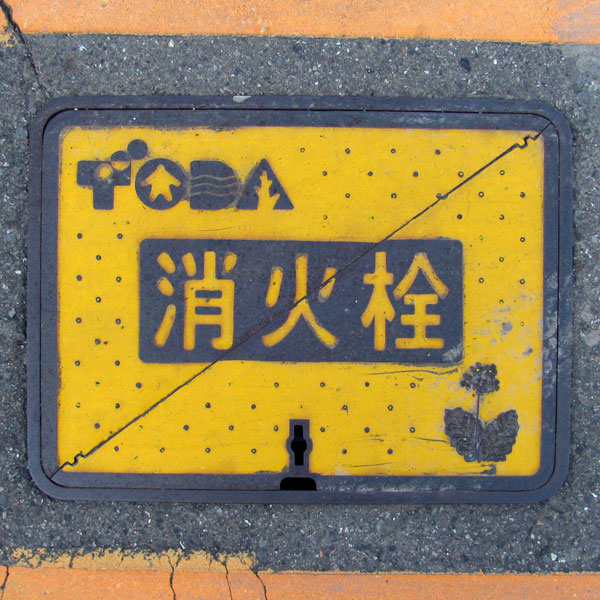
A fire hydrant. It features the "Harmonized Mark," established in 1993, and the city flower, the primrose.
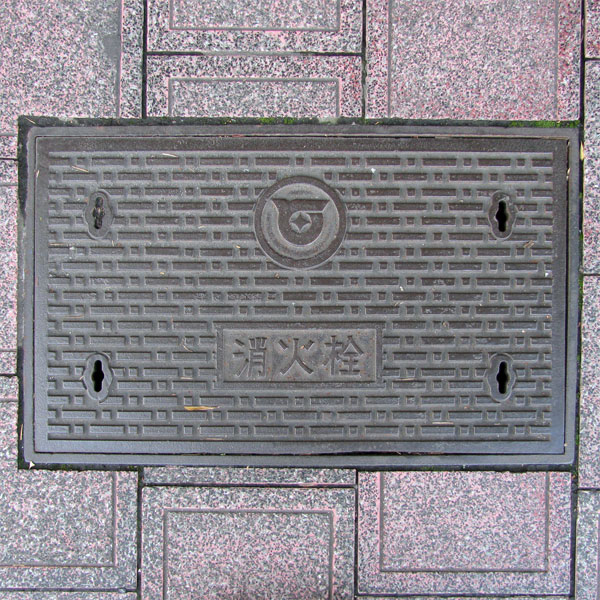
A fire hydrant bearing the city emblem.
See Arakawa Left Bank Southern Basin Sewerage System
Warabi 蕨市
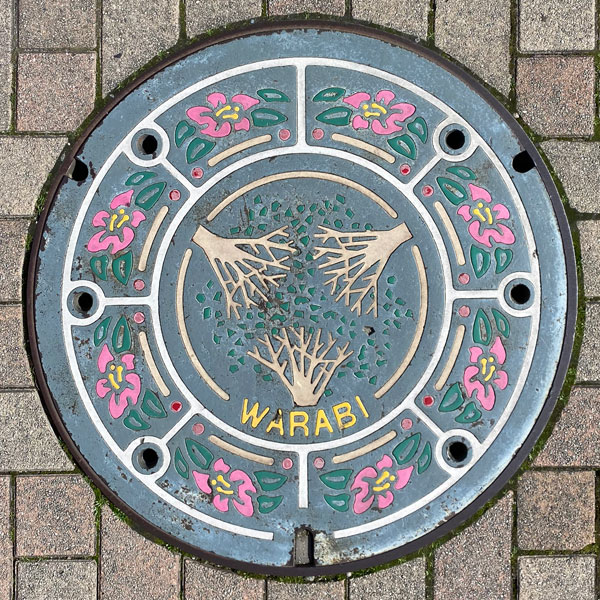
A manhole cover depicting the city's tree, the zelkova, and its flower, the periwinkle. Located in the Bugin-dori Shopping Arcade.
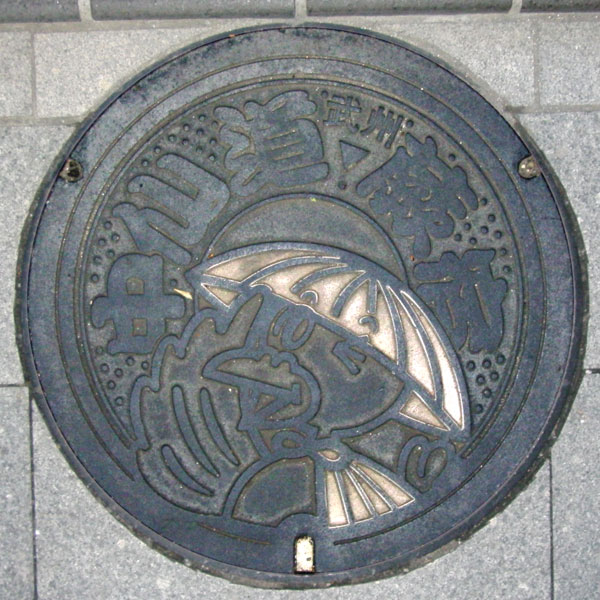
A manhole cover from the Nakasendo road, specifically at "Warabi-shuku." Is the figure wearing a straw hat a traveling raven? Below is the entrance to Warabi-shuku.
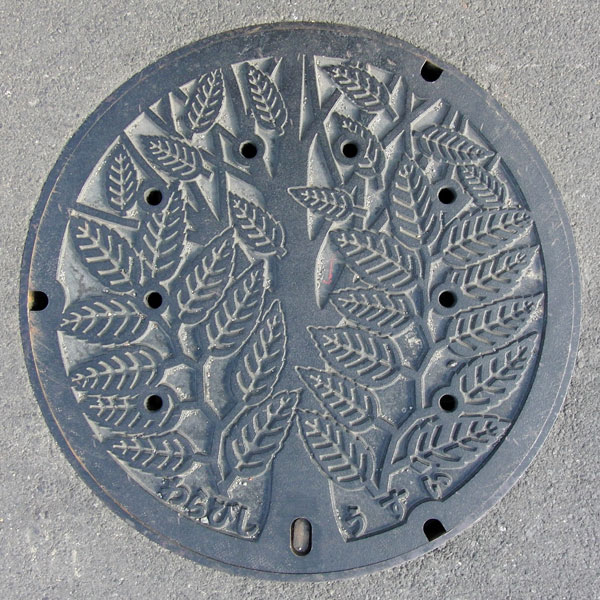
A rainwater drainage manhole cover depicting the city's official tree, the zelkova tree.
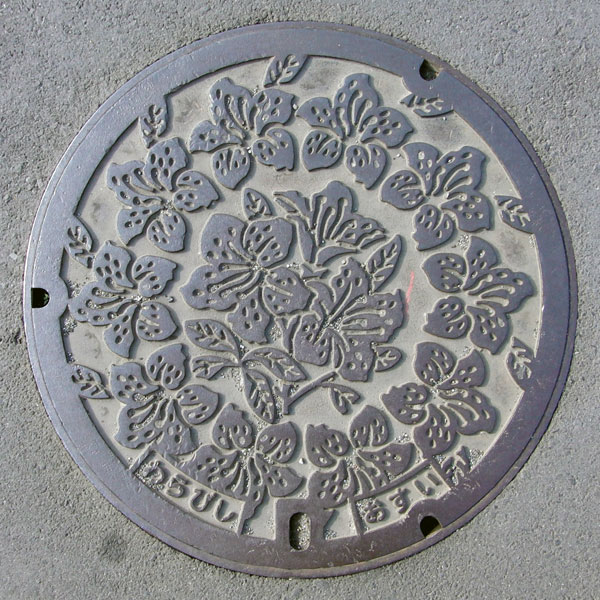
This manhole features a design of the city flower, the azalea.
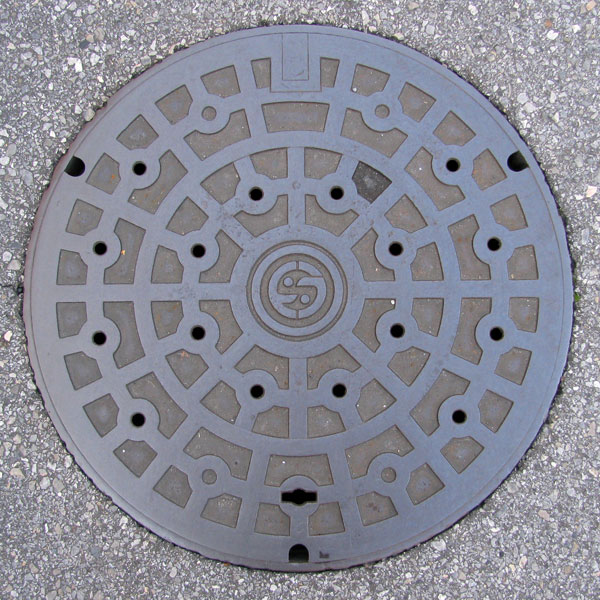
City emblem in the center.
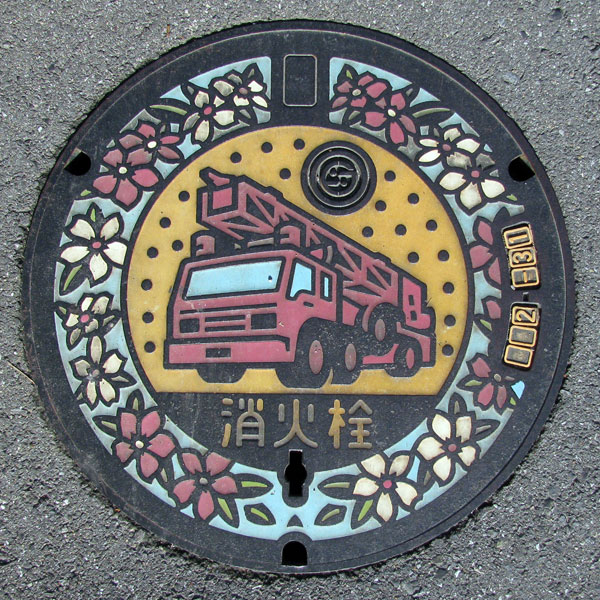
A common fire truck design for a fire hydrant. It features the Warabi City emblem and the city's official flower, the periwinkle (Catharanthus roseus), on the outside.
See Arakawa Left Bank Southern Basin Sewerage System
Kamisato 上里町
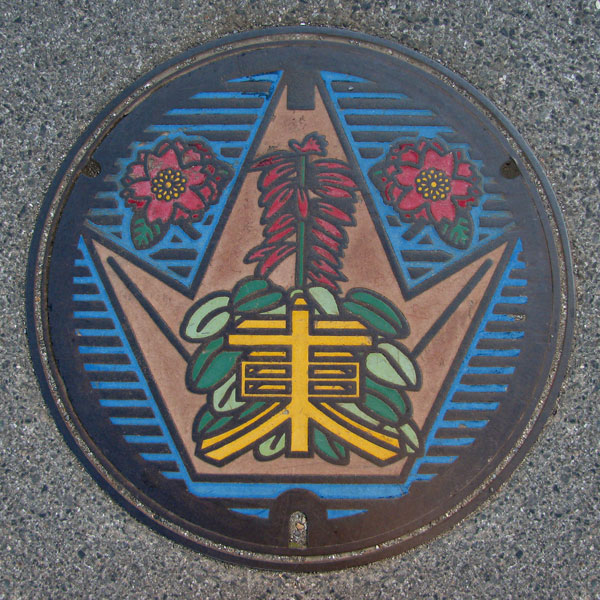
A manhole cover for sewage, depicting the town's tree, the double-flowered camellia, and the town's flower, the salvia. The town emblem, consisting of four "上" characters combined, is in the center.
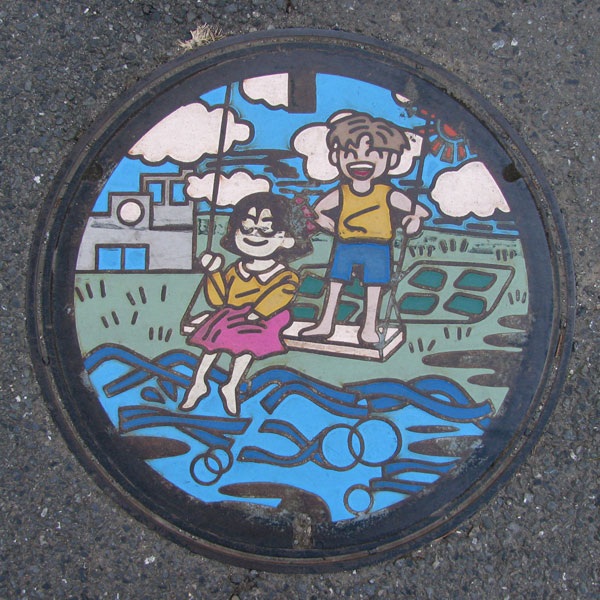
A manhole cover based on the elementary school's emblem. Since the opening for opening and closing is filled in, it's probably not actually used as a sewer cover, but rather something made as a graduation gift or something similar. It seems that there aren't any other similar covers from the other elementary schools in town.
These manhole covers were lined up alternately with the ones above.
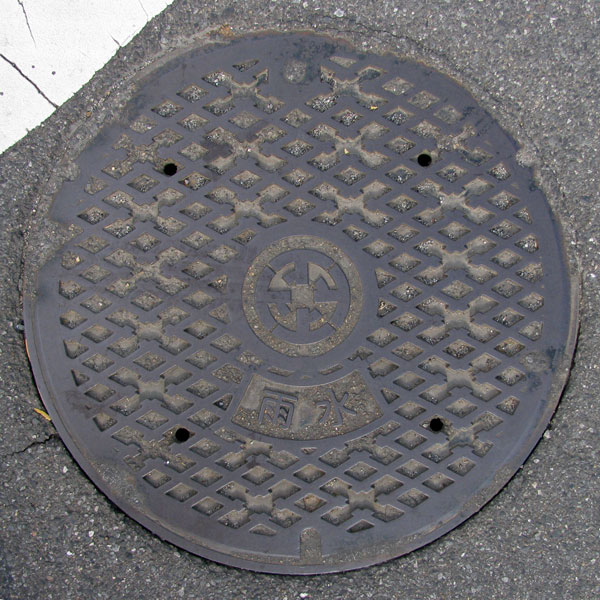
Town emblem in the center.
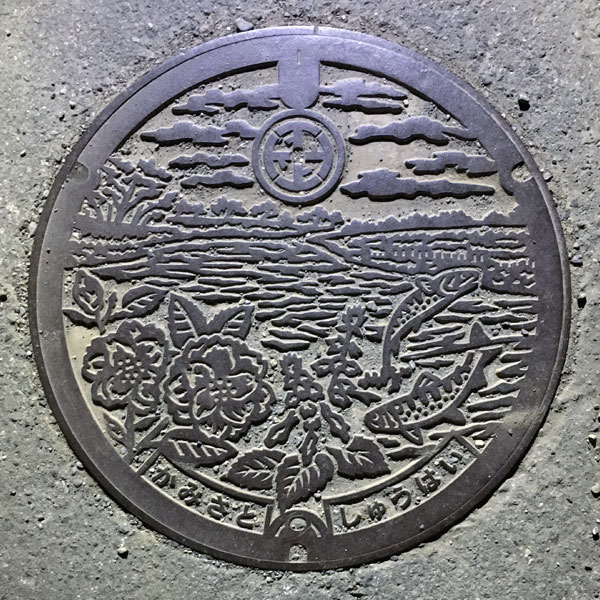
This is a manhole cover for the agricultural community drainage system in the Kamigo Kubo district.
The town emblem, consisting of four "上" characters combined, is located in the upper center. Against a backdrop of the Kanna River, which flows along the border with Gunma Prefecture, the town's tree, the double-flowered camellia, the town's flower, the salvia, and two lively leaping fish are depicted.
These fish appear to be cherry salmon (yamame) due to the parr marks (spots) and small dots on their sides. However, since the Kanna River within the town's area flows in its middle reaches, it's likely depicted to represent a clear stream. (Yamame and char can be caught in the upper reaches of the Kanna River.)
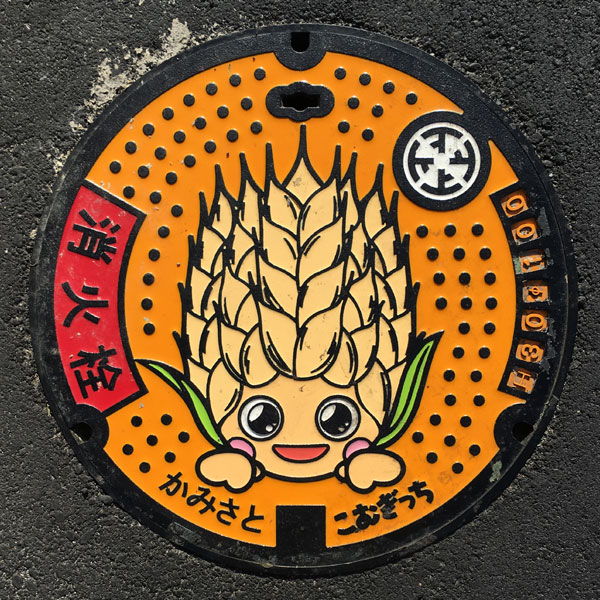
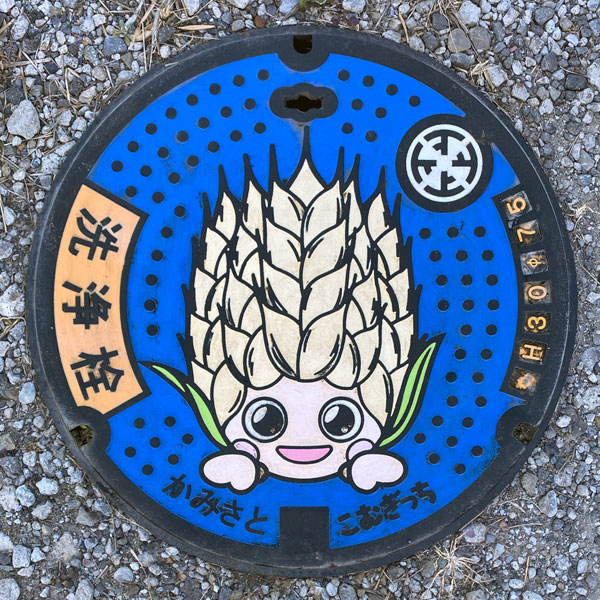
A fire hydrant cover featuring Komugicchi, the mascot character of Kamisato Town.
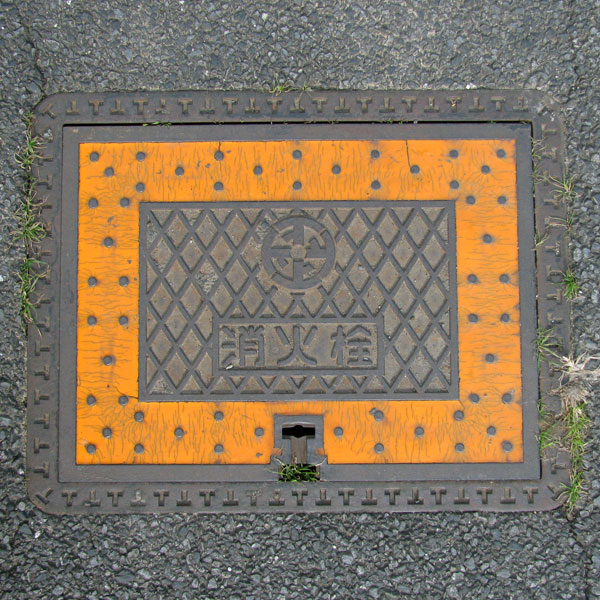
A square-shaped fire hydrant bearing the town's emblem.
Water control valve.
See Tone River Right Bank Basin Sewerage System
Kamikawa 神川町
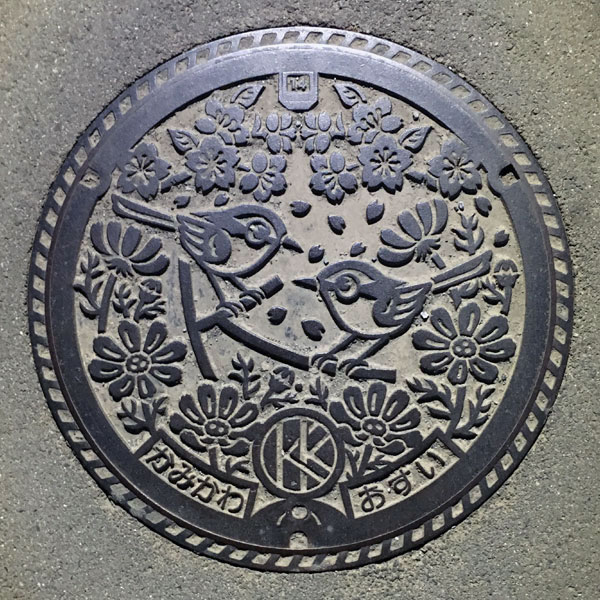
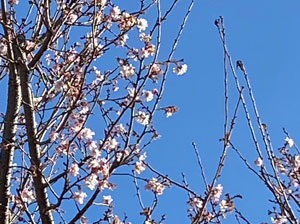
This sewage manhole cover features the town's tree, the "winter cherry blossom," the town's bird, the "Japanese bush warbler," and the town's flower, the "cosmos," depicted from the top of the cover. At the bottom are the new Kamikawa Town emblem, consisting of two overlapping "K"s, and the words "Kamikawa" and "Sewage."
See Tone River Right Bank Basin Sewerage System
Kamikawa 神川町
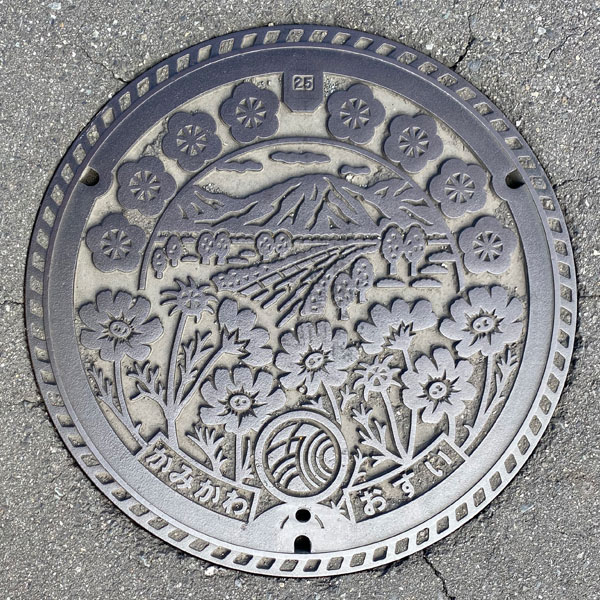
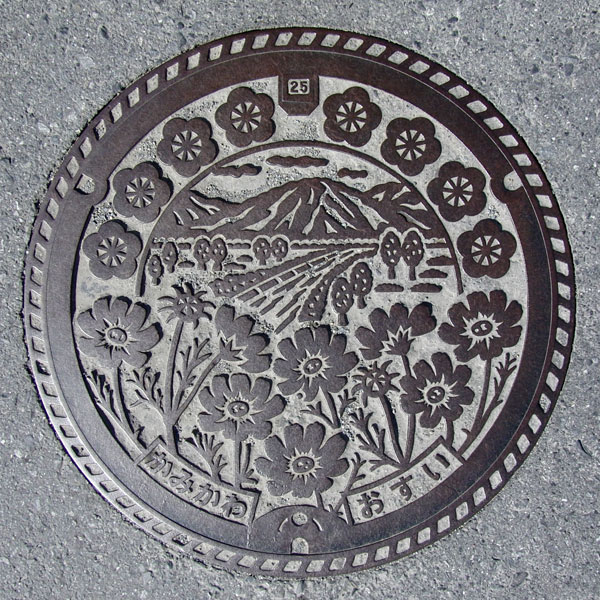
The scenery depicts the Kanna River, which flows along the border with Gunma Prefecture. The cosmos flowers at the bottom are the town's official flower. The flowers at the top are likely plum blossoms, as the tree of the former Kamikawa Village (the predecessor of the former Kamikawa Town) was the plum blossom (according to merger council documents). Incidentally, within the grounds of Muryoin Ishijuji Temple in the town, there is a pair of plum trees designated as a prefectural natural monument.
This is a manhole cover for sewage, featuring the design of the former Kamikawa Town, but the old town emblem that was at the bottom is missing.
Misato 美里町
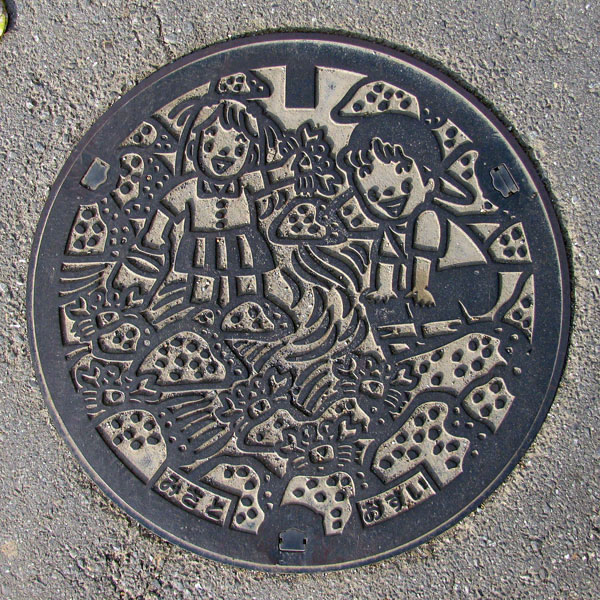
For sewage. A child playing with a freshwater crab in a babbling brook.
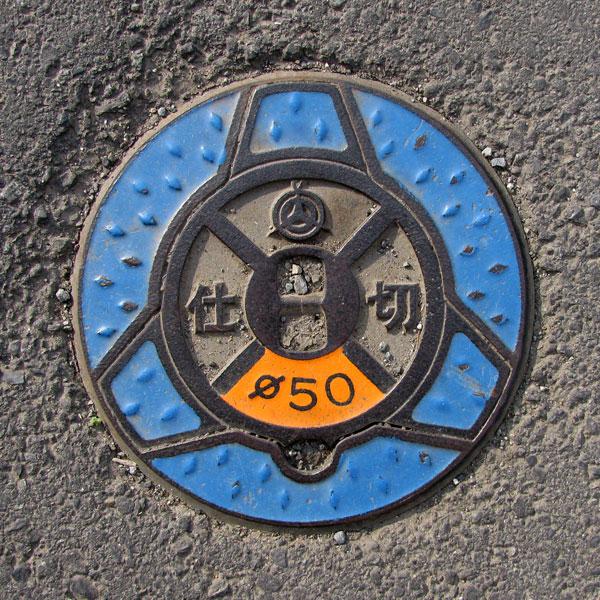
A gate valve with a pipe diameter of 50 mm. The town emblem is designed to resemble the character for "beauty."
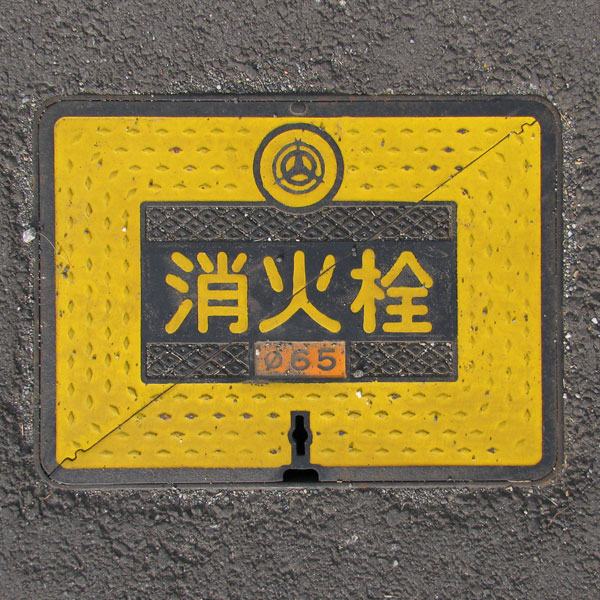
A square fire hydrant bearing the town emblem. It is marked with a pipe diameter of 65mm.
See Tone River Right Bank Basin Sewerage System
Nagatoro 長瀞町
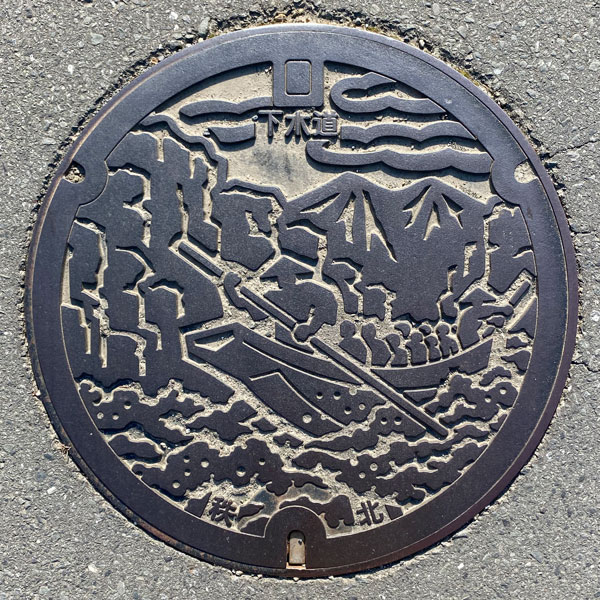
For wastewater. The words "Sewerage" are at the top and "Chichihoku" at the bottom. "Chichihoku" refers to the "Chichihoku Sanitation Sewerage Association." In the Saitama Prefecture Partial Administrative Association List from April 2008, it is listed as the "Minano-Nagatoro Sewerage Association." The design depicts the "Nagatoro River Rafting" scene. This is a manhole cover for a designated environmentally protected public sewerage system.
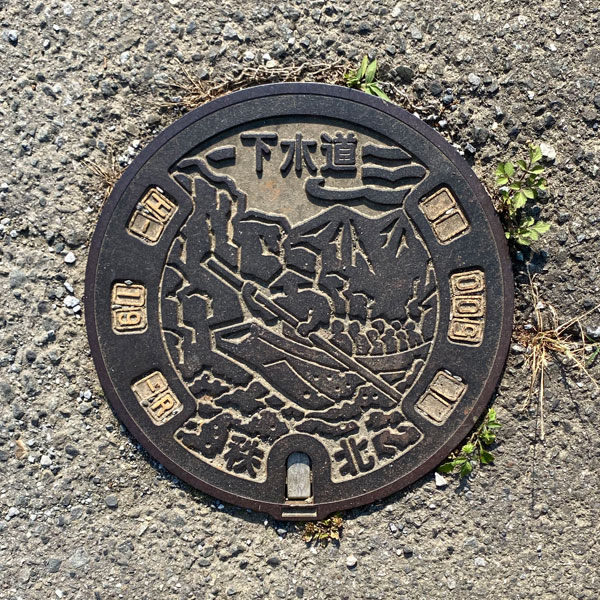
A handhole-sized cover with the same design as above. It has a number frame.
See Minano-Nagatoro Waterworks Association
Yorii 寄居町
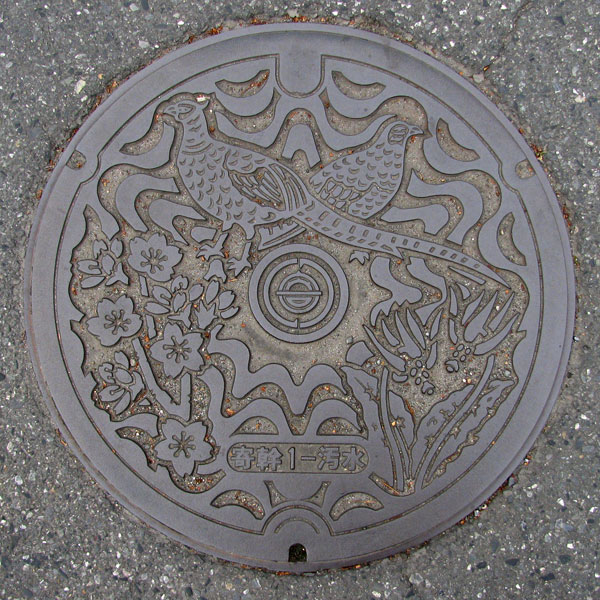
For wastewater. The town emblem, a stylized representation of the characters "寄" and "い," is in the center. The design features the town flower "Erythronium japonicum" and the town tree "Prunus jamasakura," along with two pheasants. The wave pattern likely represents the flow of the Arakawa River. The words "寄幹1-汚水" (Yorikan 1 - Wastewater) are at the bottom.
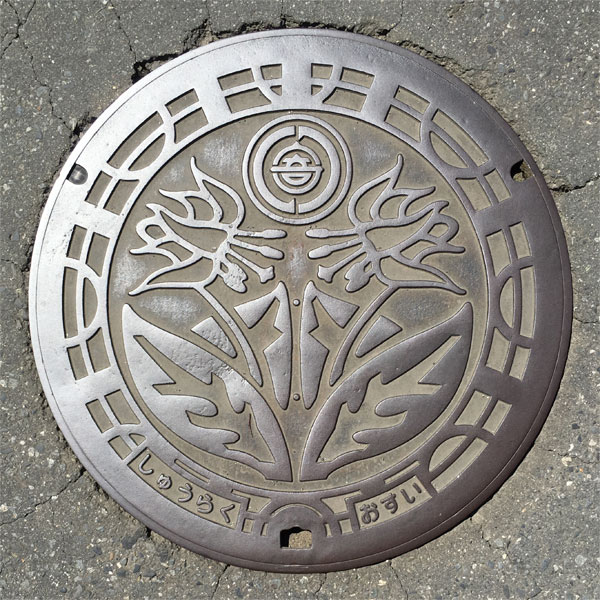
This manhole cover for agricultural community drainage in the Imaichi district features the town's official flower, the dogtooth violet, depicted symmetrically on either side.
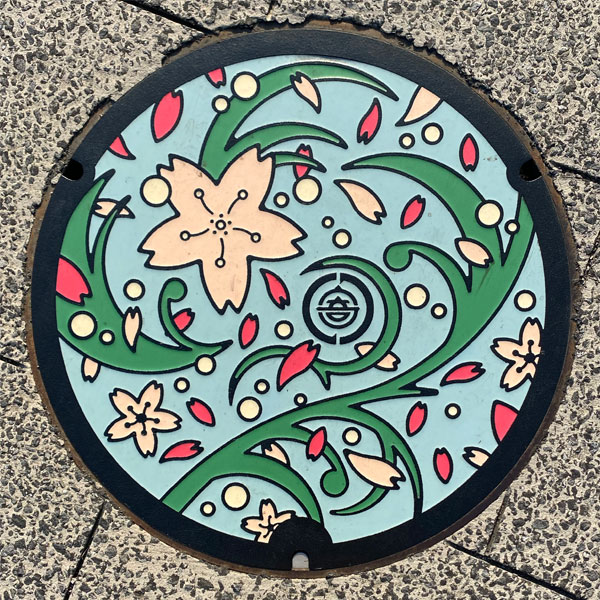
A manhole cover designed by the art club of Yorii Johoku High School, titled "Arakawa River and Cherry Blossoms, Yorii Town."
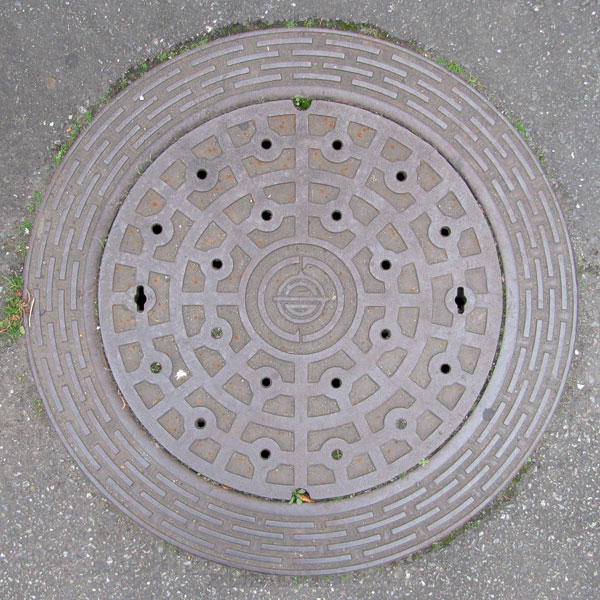
City emblem in the center.
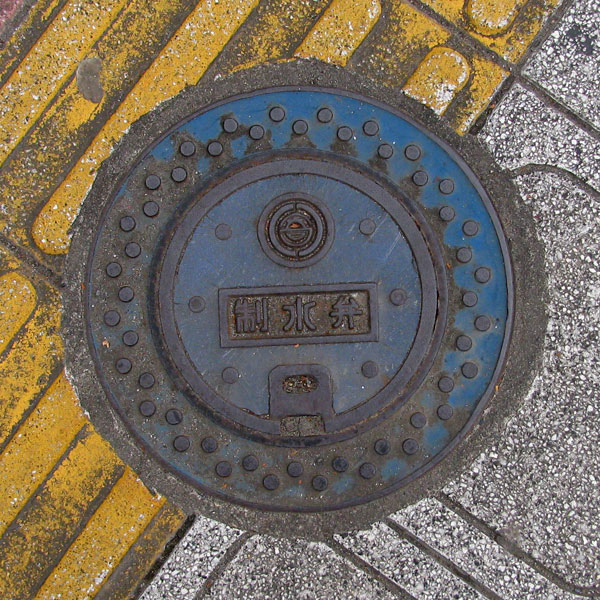
A water control valve bearing the town emblem.
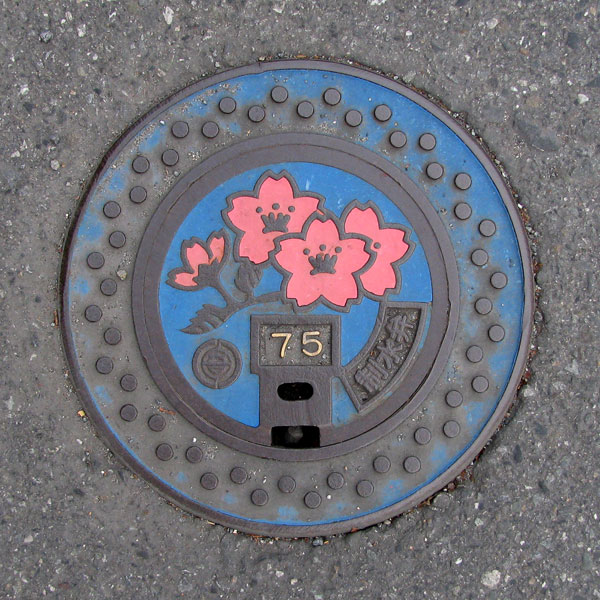
A water control valve with a pipe diameter of 75mm. It features a design of the town's flower, the "mountain cherry blossom." There were also the same design in 150mm and 50mm sizes nearby.
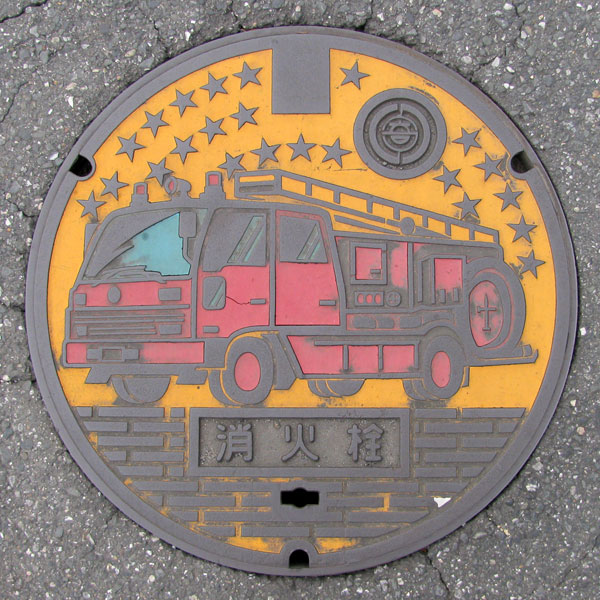
A fire hydrant with a fire truck design.
See Arakawa Upper Basin Sewerage System
Minano 皆野町
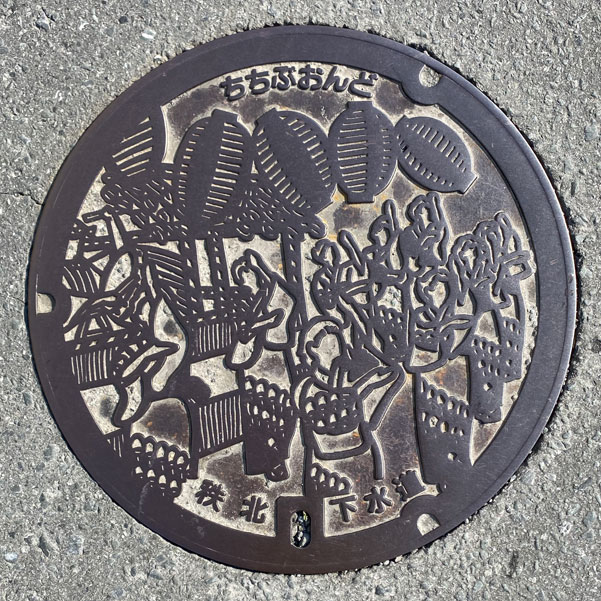
The design is based on the "Chichibu Ondo" folk dance. The words "Chichibu Ondo" are at the top, and "Chichihoku" and "Sewerage" are at the bottom. "Chichihoku" refers to the "Chichihoku Sanitation and Sewerage Association." In the Saitama Prefecture Partial Administrative Association List from April 2008, it is listed as the "Minano-Nagatoro Water and Sewerage Association." This is a manhole cover for a designated environmentally protected public sewerage system.
See Minano-Nagatoro Waterworks Association
Ogano 小鹿野町
Ogano 小鹿野町
A water control valve cover bearing the town emblem.
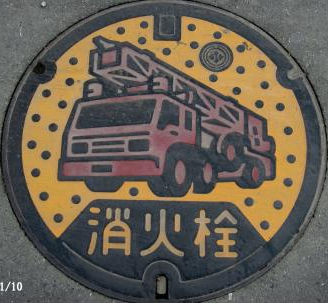
A fire hydrant cover bearing the town emblem.
Ryokami 両神村
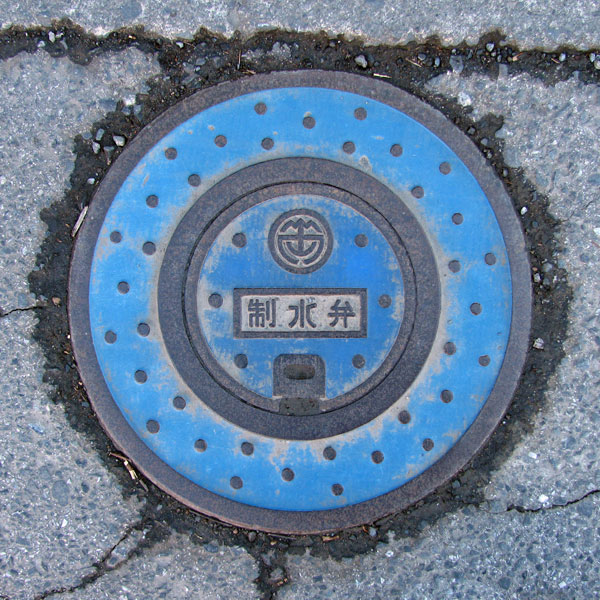
A water control valve cover bearing the village emblem.
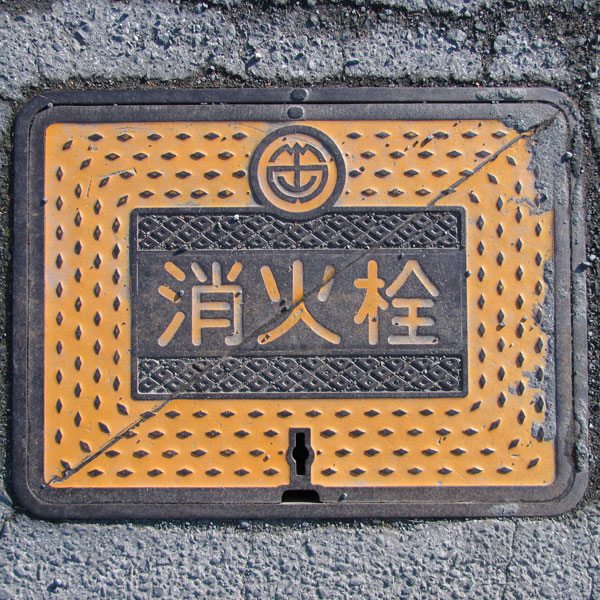
A fire hydrant cover bearing the village emblem.
Ogawa 小川町
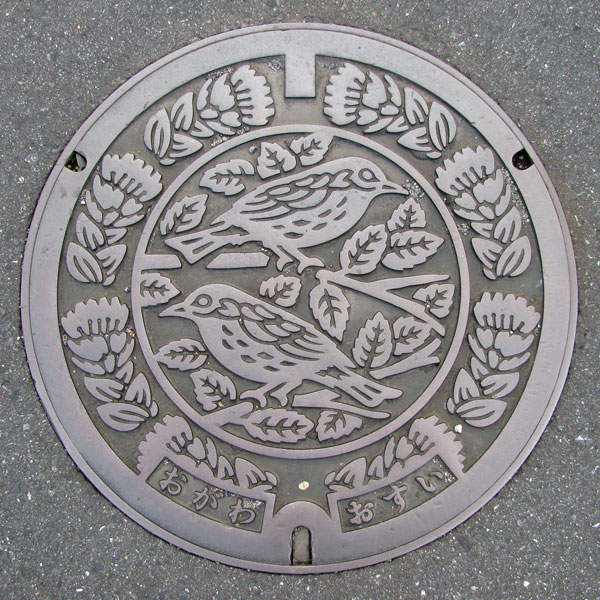
This manhole cover for sewage features the town's tree (Zelkova), town flower (Adonis amurensis), and town bird (Japanese White-eye).
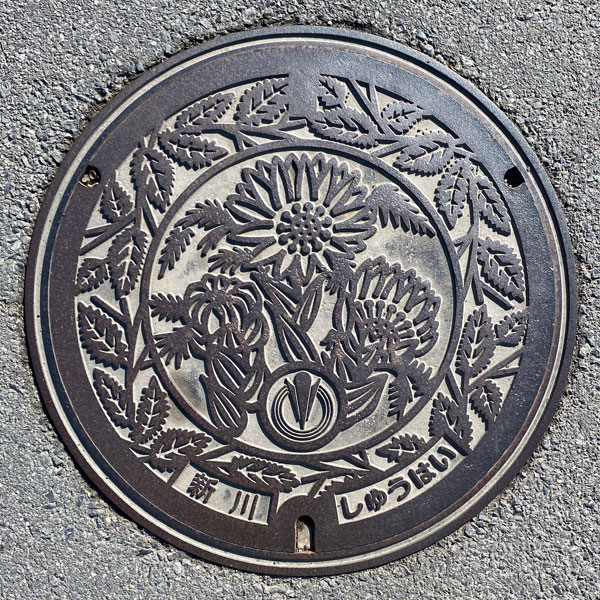
This is a manhole cover for agricultural community drainage in the Shinkawa district. The town's tree, the zelkova, is depicted around the outside, and the town's flower, the Adonis amurensis, is depicted inside. The words "Shinkawa" and "Shuhai" are inscribed on the lower outside, and the town emblem of Ogawa Town is on the lower inside.
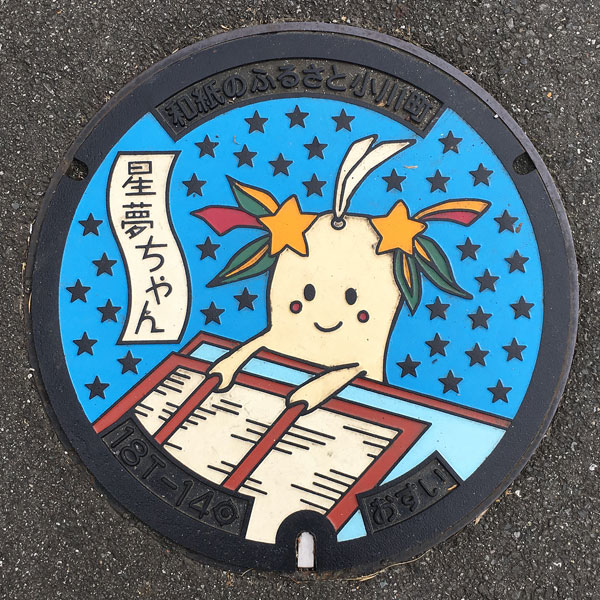
A manhole cover for sewage featuring "Sutamu-chan," the mascot character for the Ogawamachi Tanabata Festival, who is shown making paper.
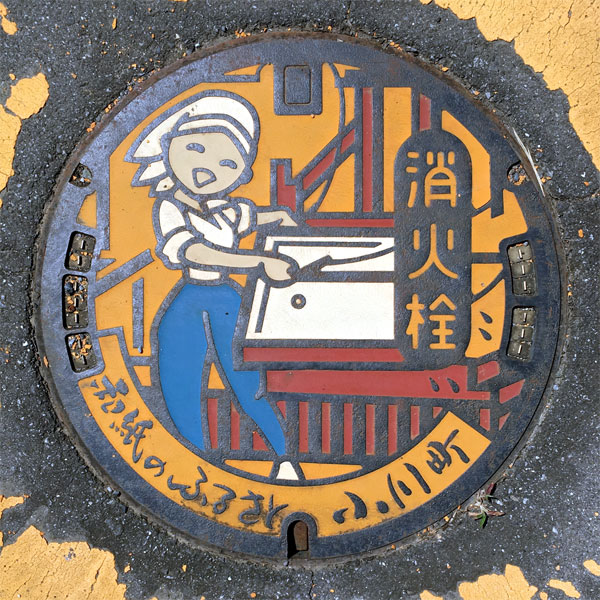
Ogawa Town is known as a village of washi (Japanese paper), with its handmade "Hosokawa paper" designated as a National Important Intangible Cultural Property. This fire hydrant cover depicts the process of making washi. The bright and strong atmosphere of the working women is appealing.
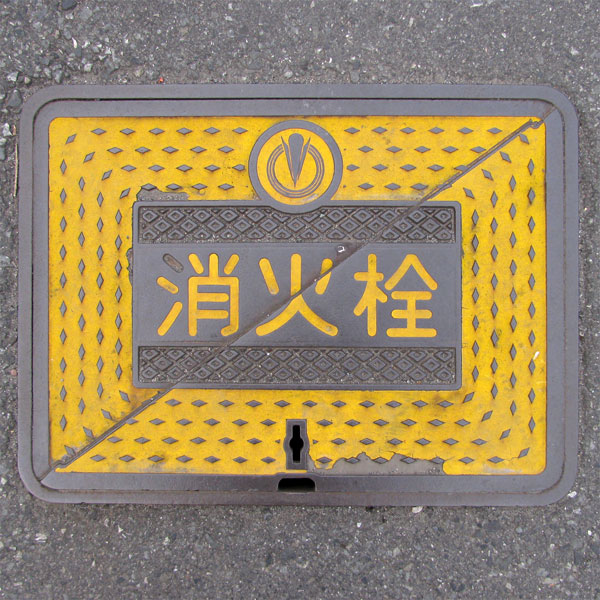
Fire hydrant.
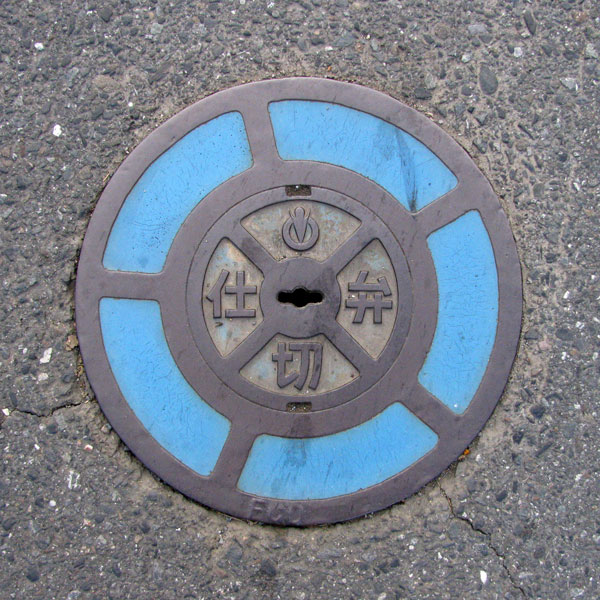
A gate valve bearing the town's emblem.
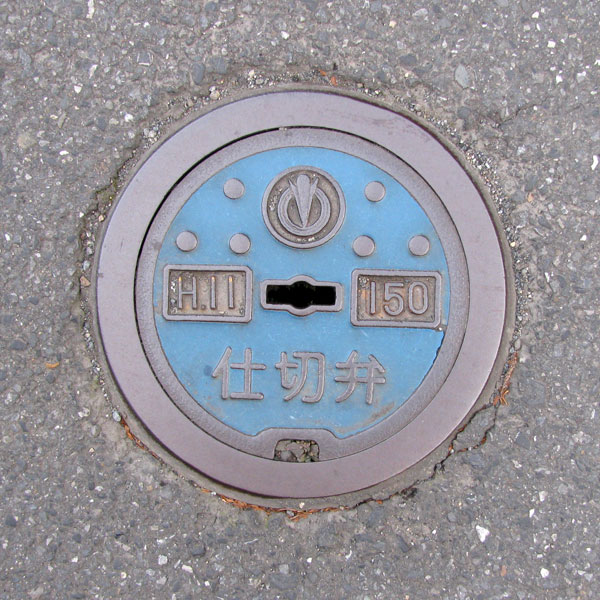
This is also a gate valve.
See Ichinogawa River Basin Sewerage System
Ranzan 嵐山町
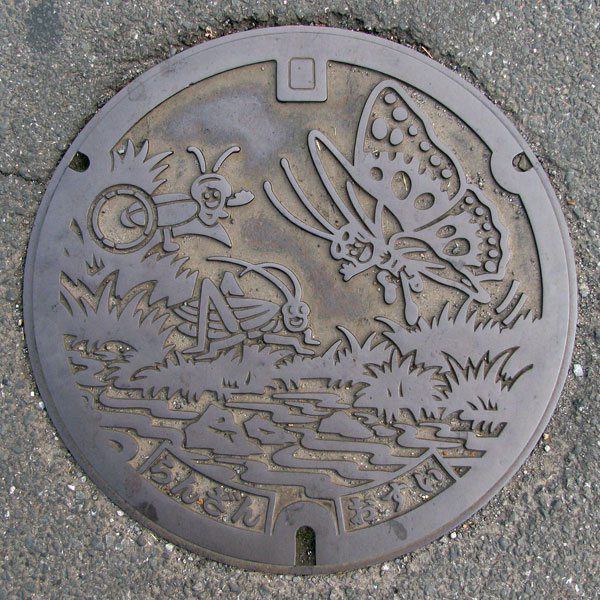
This manhole cover features a design depicting the flow of the Tokigawa River (named "Arashiyama Valley" because its scenery resembles Arashiyama in Kyoto), along with the Japanese national butterfly "Great Purple Emperor," a firefly, and a cricket.
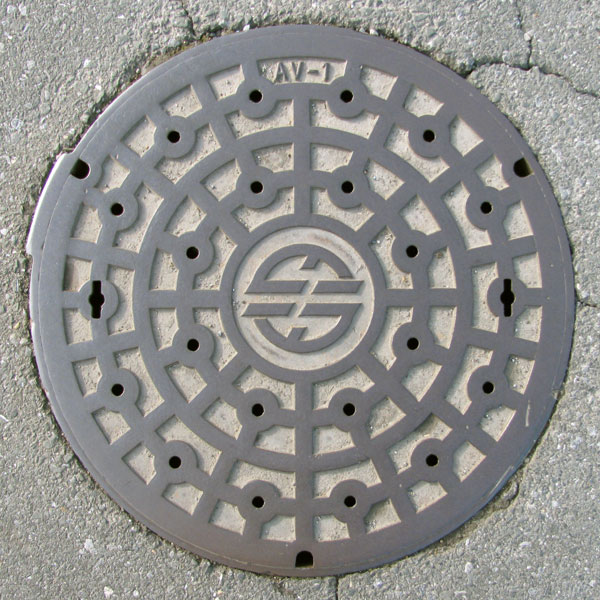
The town emblem is a design based on the JIS standard pattern, with "Ran-yama" (a mountain) placed above and below it.
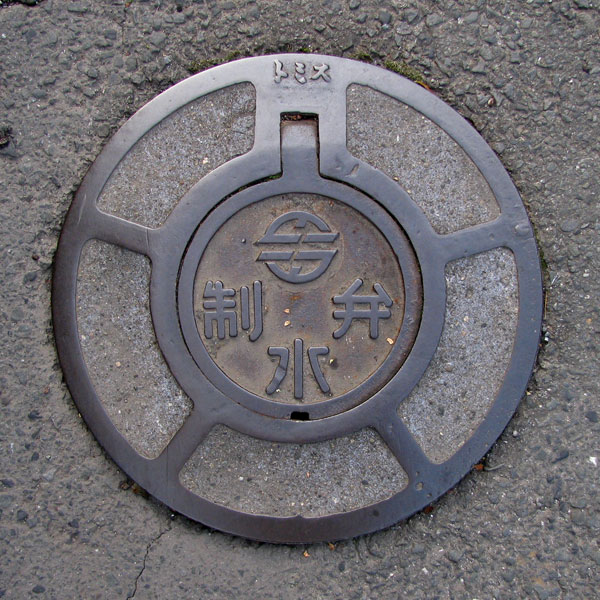
This is a cover for a water control valve.
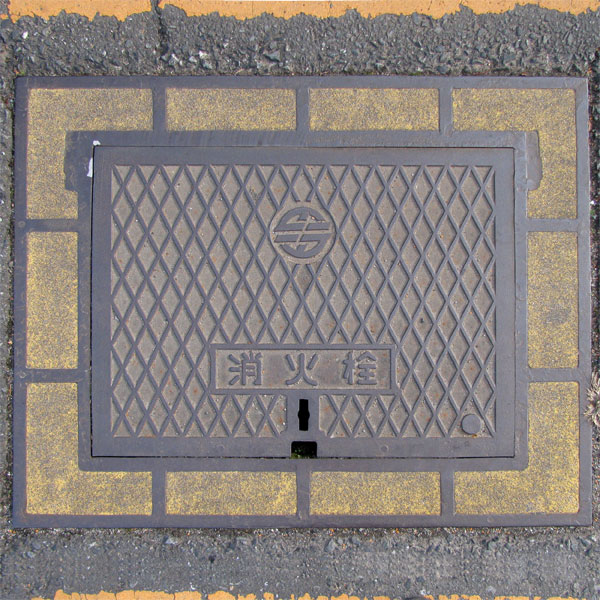
A fire hydrant cover with a diagonal grid pattern.
See Ichinogawa River Basin Sewerage System
Namegawa 滑川町
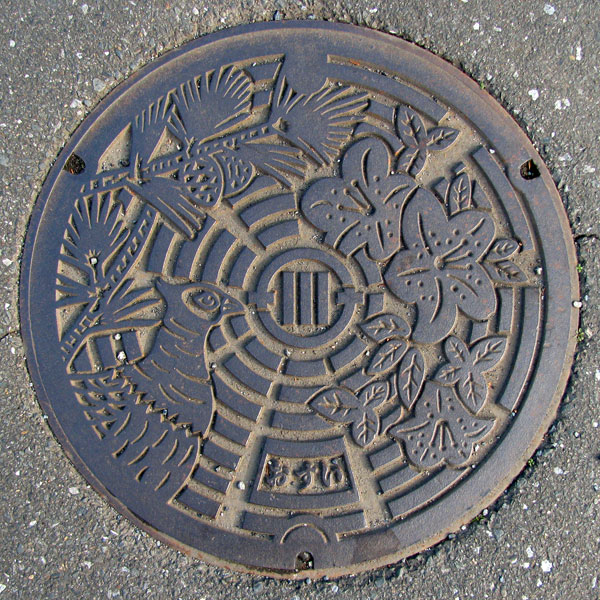
A manhole cover for sewage, depicting the town's tree (pine), town flower (azalea), and town bird (pheasant). The town emblem, a stylized representation of the Namegawa River, is in the center.
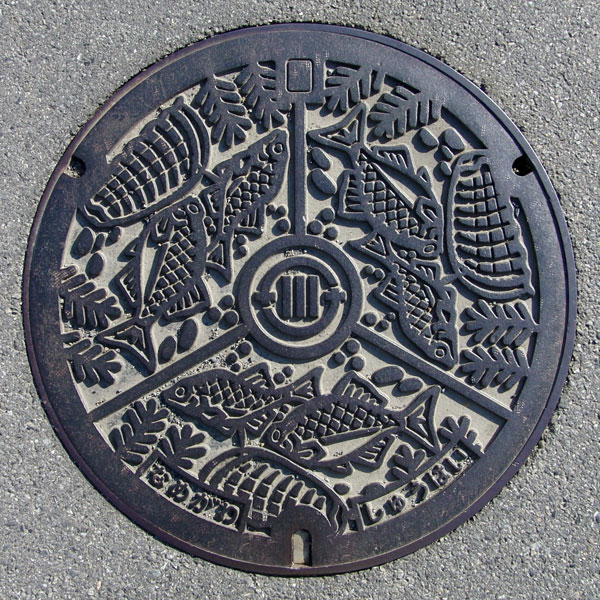
This manhole cover depicts a Miyako bitterling (Rhodeus ocellatus) discovered in an agricultural reservoir within the town, along with the spawning mother mussel, the Matsukasa mussel. It's a manhole cover for the agricultural settlement drainage system in the Izumi-Sugata-Ryohyo district.
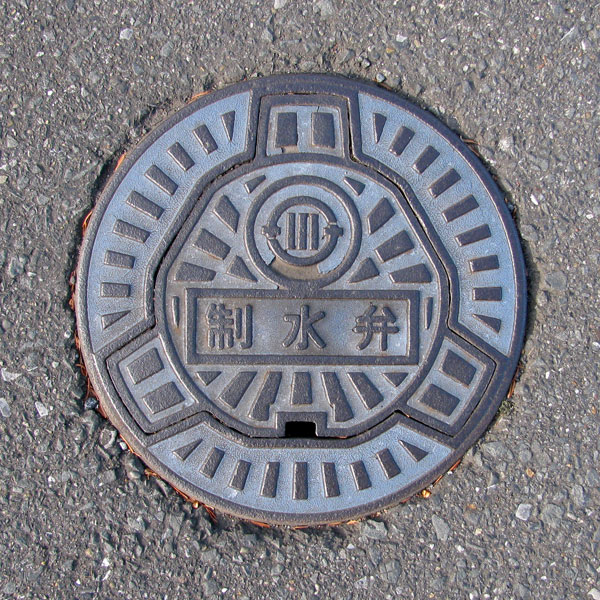
A water control valve bearing the town emblem.
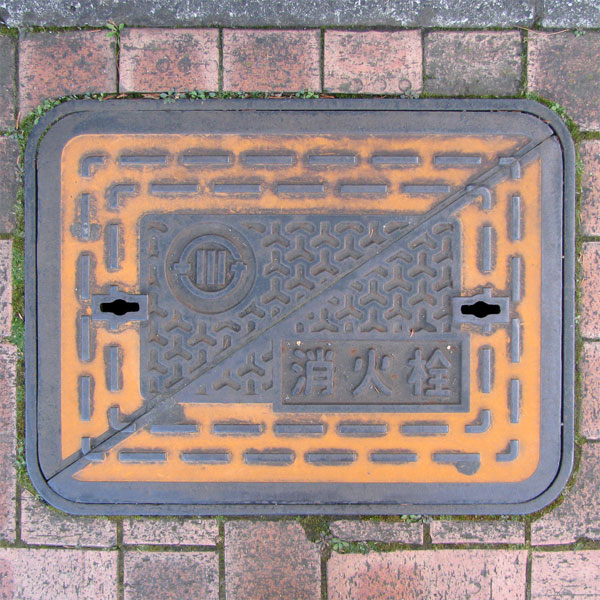
A two-part rectangular fire hydrant bearing the town emblem.
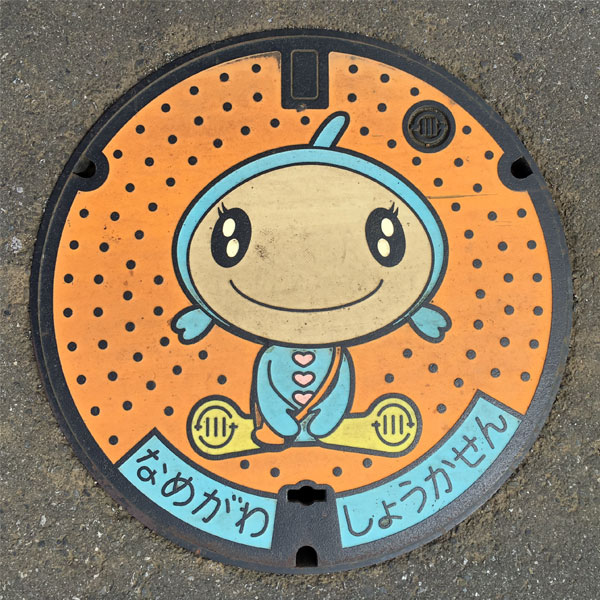
This is a fire hydrant cover featuring Namerikawa Town's mascot character, "Tana-chan."
"Tana-chan" is apparently a fairy of the Namerikawa town fish, the "Miyako tanago," which is also depicted on manhole covers for agricultural wastewater treatment plants. She was born in 2011.
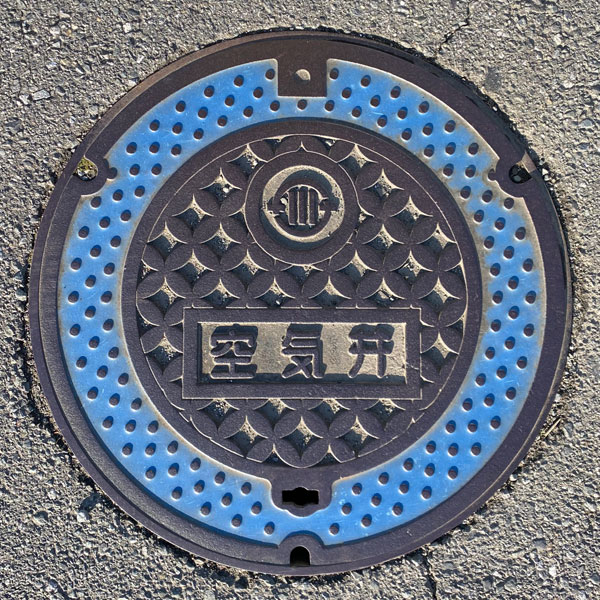
An air valve cover with the town emblem on it.
See Ichinogawa River Basin Sewerage System
Yoshimi 吉見町
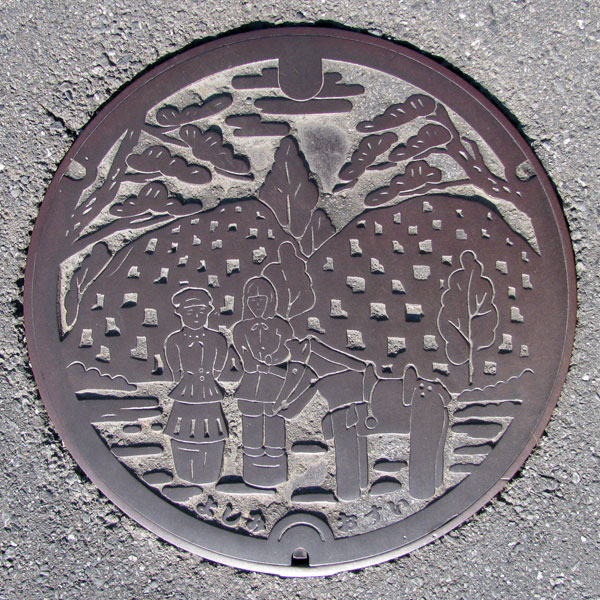
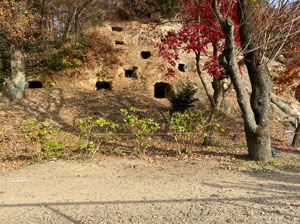
A manhole cover for wastewater featuring an illustration of the Yoshimi Hyakuana (Yoshimi Hundred Caves) burial mounds.
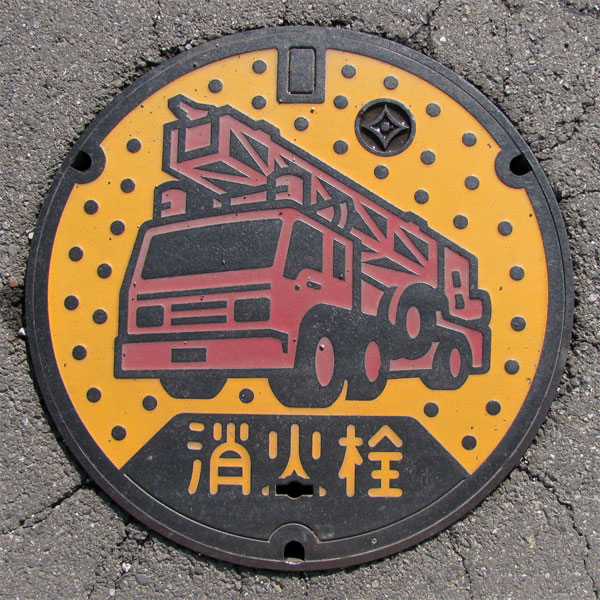
A fire hydrant bearing the town emblem.
See Arakawa Right Bank Basin Sewerage System
Sugito 杉戸町
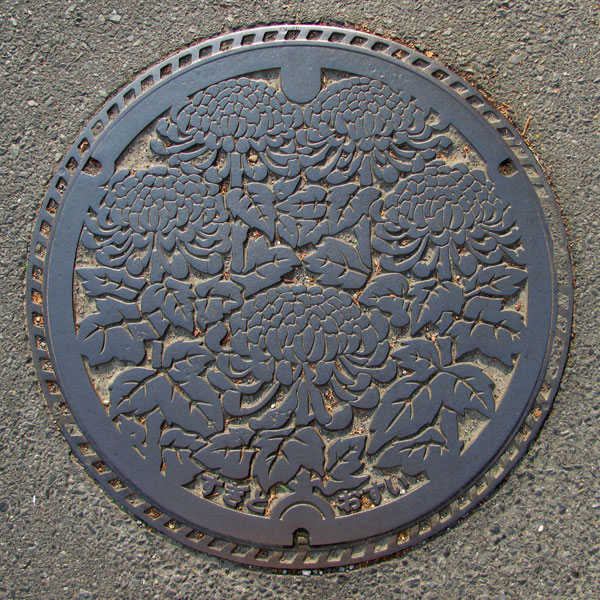
The design features the town's flower, the chrysanthemum.
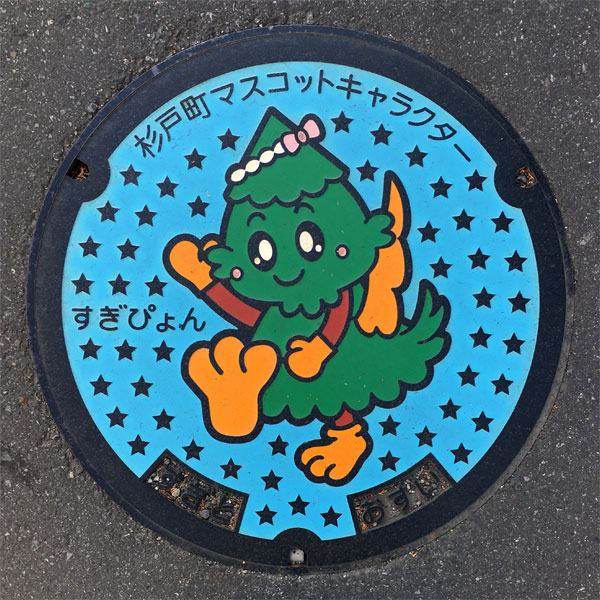
A manhole cover for sewage featuring Sugito Town's mascot character, "Sugipyon."
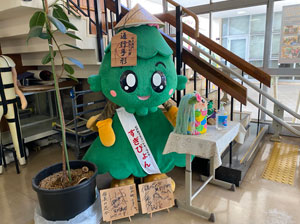
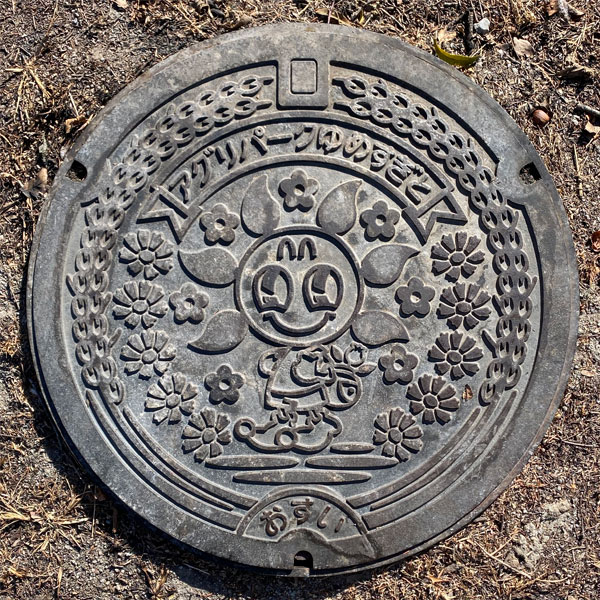
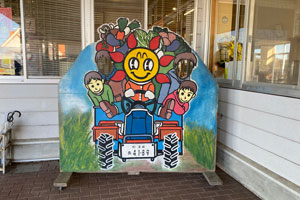
A manhole cover for sewage featuring "Pikaru," the mascot of Agri Park Yumesugito.
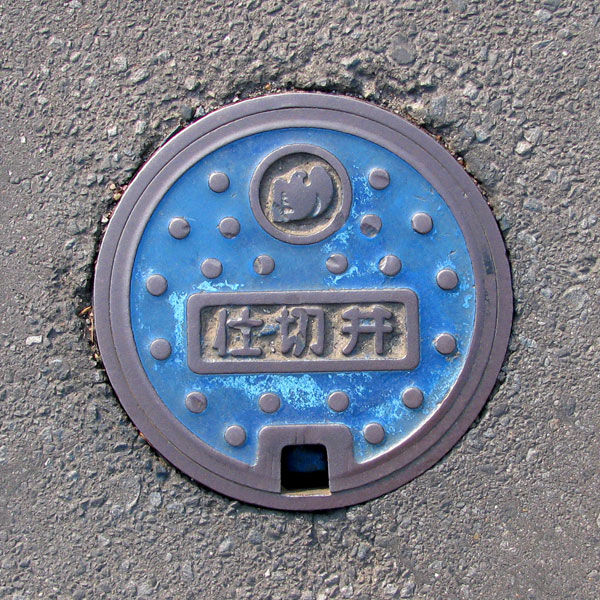
Gate valve.
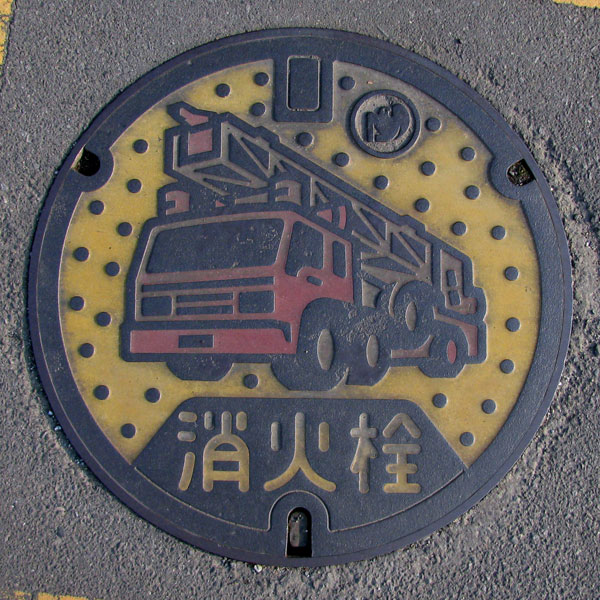
fire hydrant.
See Nakagawa Basin Sewerage System
Tokigawa ときがわ町
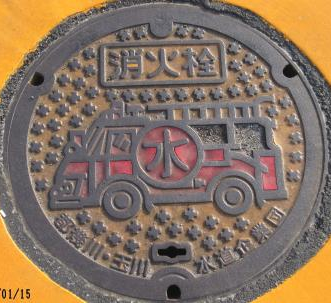
Tokigawa-Tamagawa Waterworks Association fire hydrant.
Yokoze 横瀬町
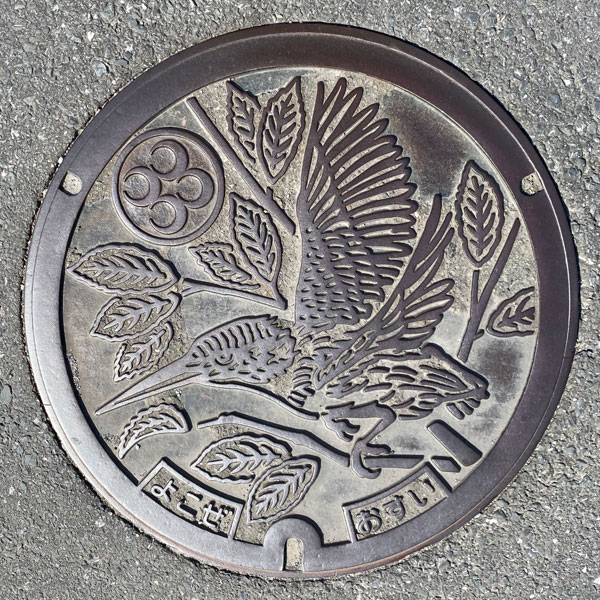
A sewage manhole cover depicts the town's bird, the kingfisher. It features the town emblem, consisting of four "コ" characters.
Old fire hydrant lid.
Hatoyama 鳩山町
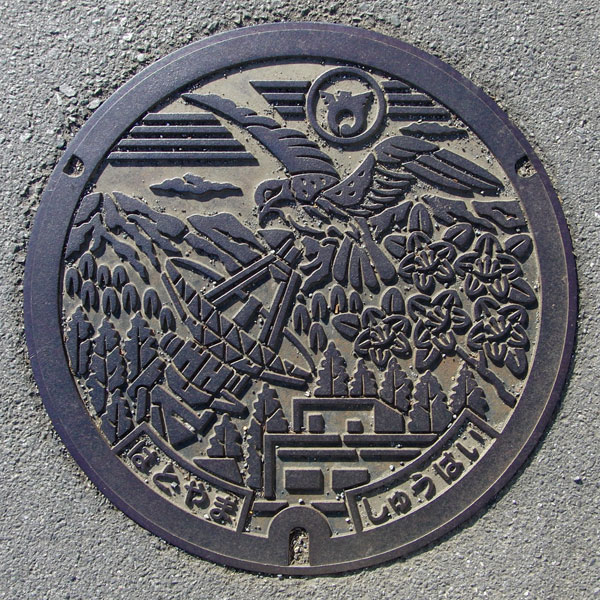
This manhole cover features a design depicting the town flower, the azalea, and the town bird, the dove, with the JAXA (Japan Aerospace Exploration Agency) Earth Observation Center in the background. The town emblem, a stylized dove-shaped version of the Japanese hiragana character "ha," is at the top.
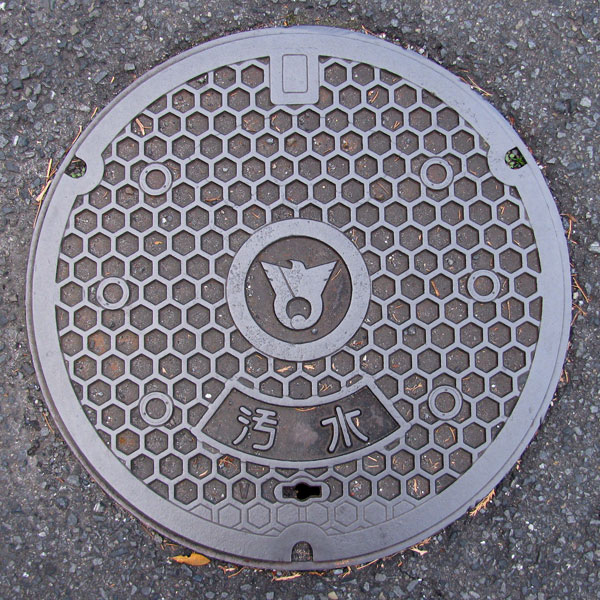
A manhole cover for sewage with a tortoiseshell pattern. The town emblem is in the center.
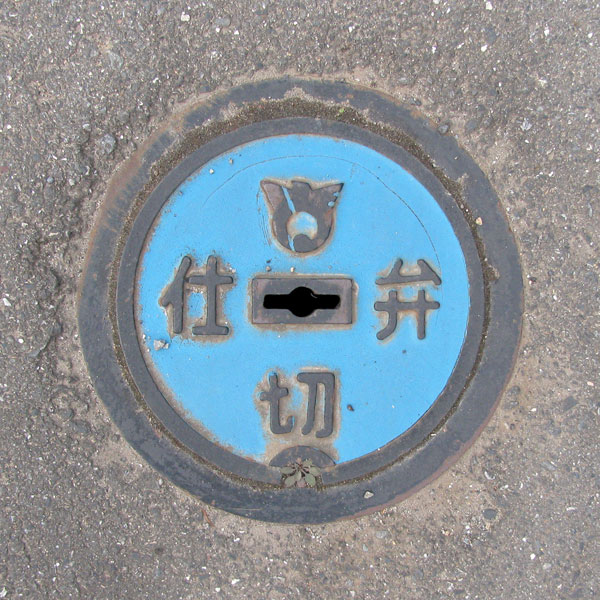
A gate valve with the town emblem on it.
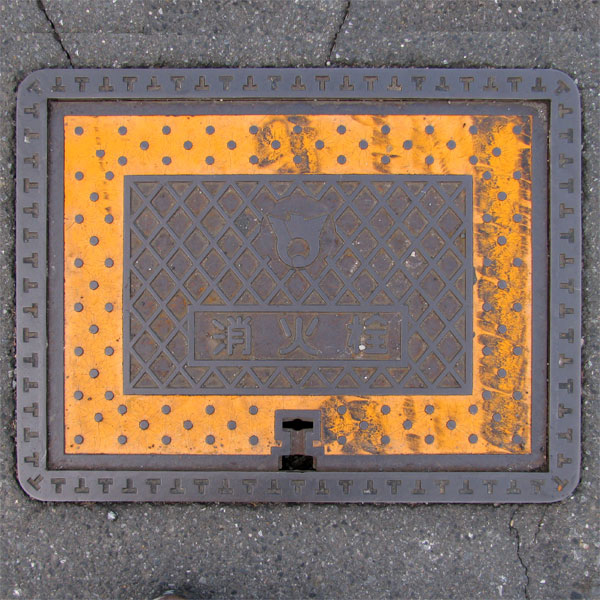
Fire Hydrant.
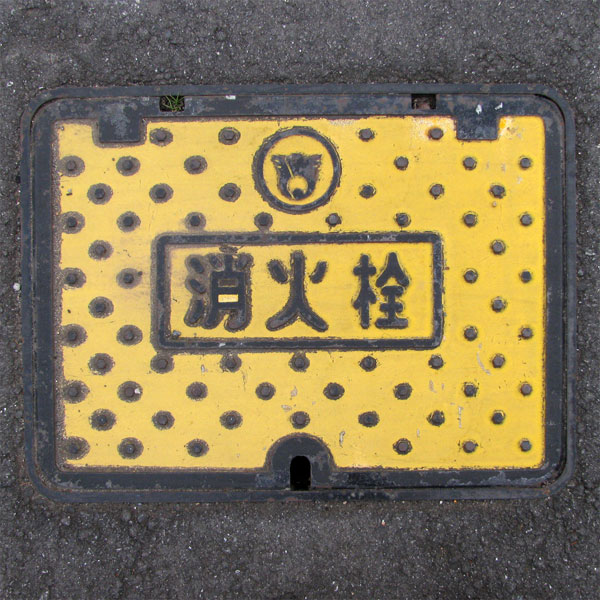
Fire Hydrant.
See Moroyama, Ogose, and Hatoyama Public Sewerage Association
Kawajima 川島町
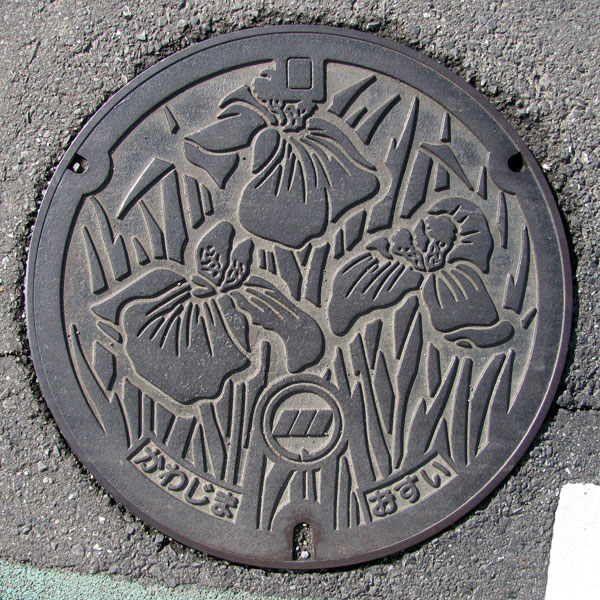
Features the town flower, the Japanese iris, and the town emblem.
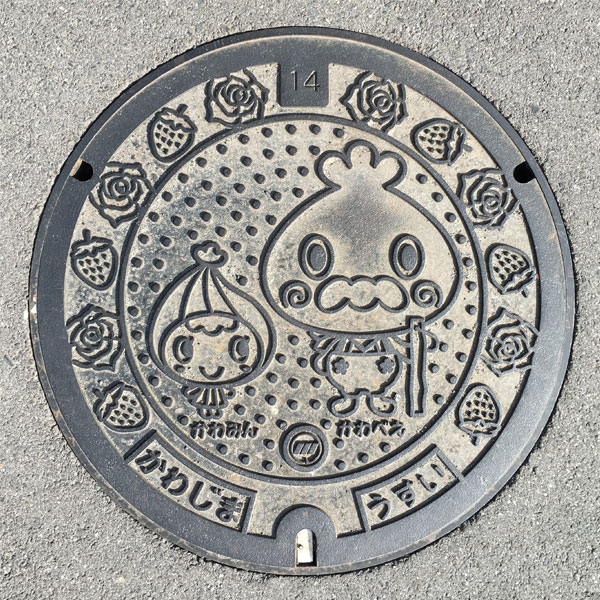
This is a rainwater manhole cover featuring Kawashima Town's mascot characters, "Kawabee" and "Kawamin," with alternating rose and strawberry (a local specialty) designs around the edges. The town emblem is at the bottom. "Kawabee" is an old man modeled after the town's specialty fig, and was introduced in 2010. "Kawamin" is his granddaughter, created in 2012 to commemorate the 40th anniversary of the town's establishment.

A yellow gate valve.
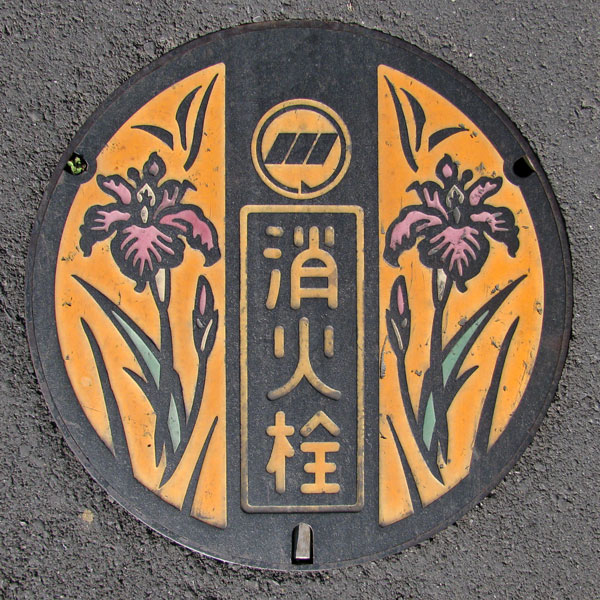
A fire hydrant featuring the town flower, the Japanese iris, and the town emblem. The layout is similar to that of the neighboring city of Kawagoe.
See Arakawa Right Bank Basin Sewerage System
Ina 伊奈町
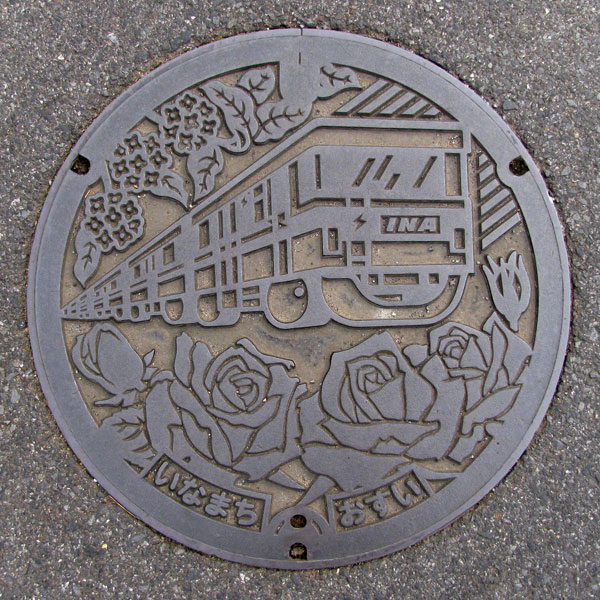
For sewage. The design features the town's tree, the osmanthus, and the town's flower, the rose, along with a train from the Saitama New Urban Transit Ina Line (New Shuttle), which connects Omiya Station to Uchijuku Station in Ina Town. The words "Ina-machi Osui" (Ina Town Sewage) are at the bottom.
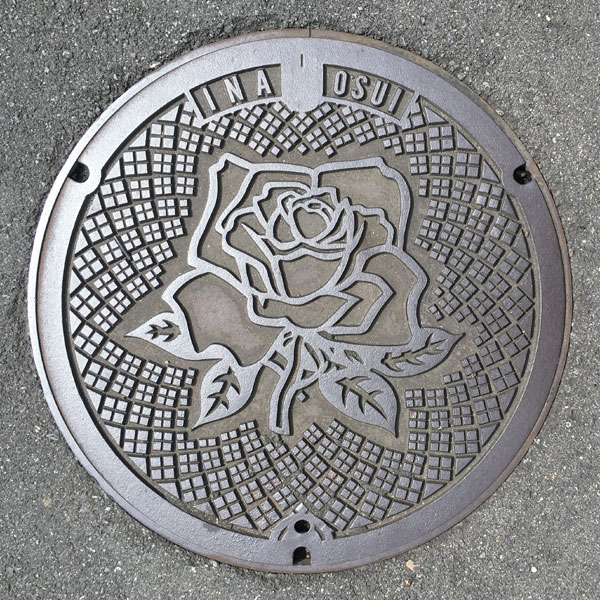
A sewage drain with a single rose, the town's official flower, prominently placed in the center. The words "INA OSUI" (Sewage Drain) are inscribed at the top.
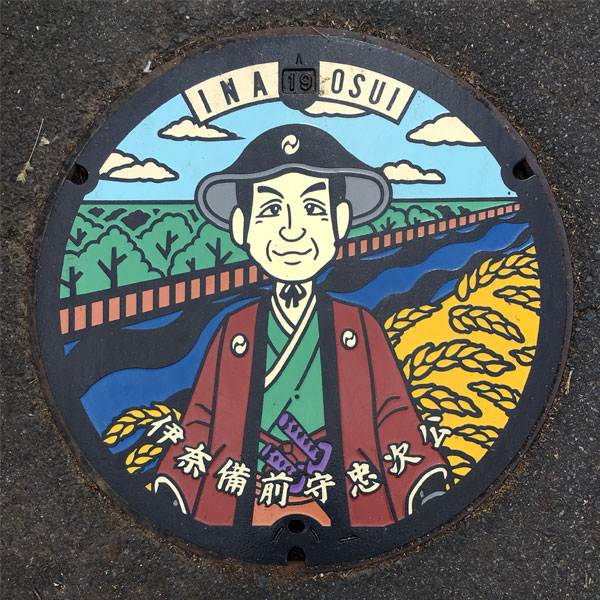
This is a manhole cover for sewage, depicting Ina Bizen-no-kami Tadatsugu (the first lord of the Musashi Komuro Domain), after whom Ina Town is named.
Ina Tadatsugu served as a magistrate in Suruga, Totomi, and Mikawa provinces before becoming the head of the Kanto region's magistrates. He contributed to establishing the financial foundation of the Edo shogunate through land surveys, new land development, and river improvements. He is particularly known for his work on the diversion of the Tone River and Arakawa River, and was respected by samurai, townspeople, and farmers alike.
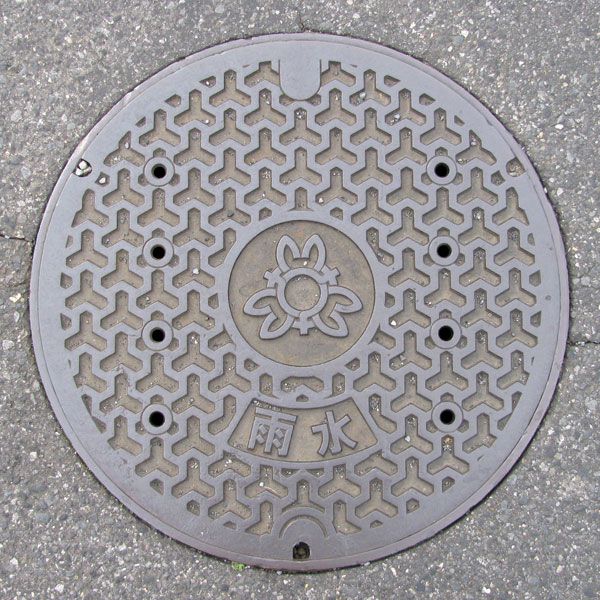
This is a rainwater drain featuring the town emblem and a Bishamon tortoise shell pattern. The town emblem is a combination of the hiragana character "i" and the katakana character "na" in the center.
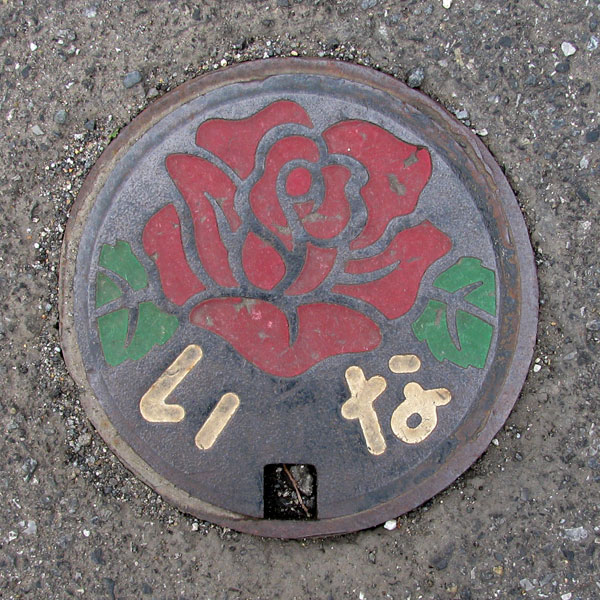
It has the town flower "rose" and the word "rice field" on it.
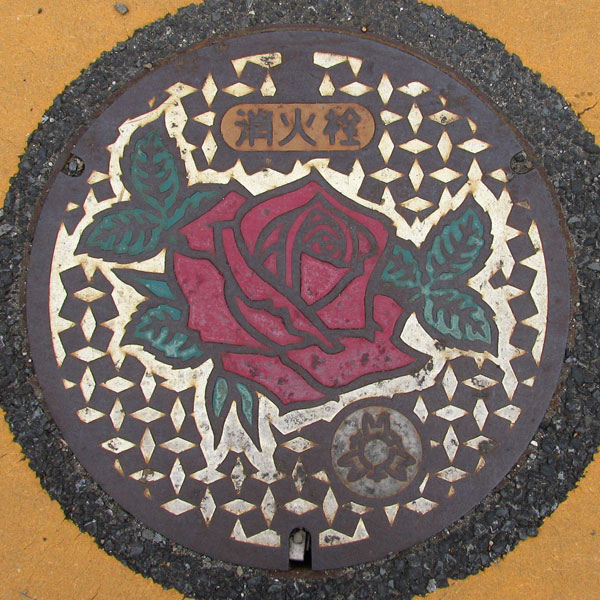
A fire hydrant decorated with the town's official flower, the rose.
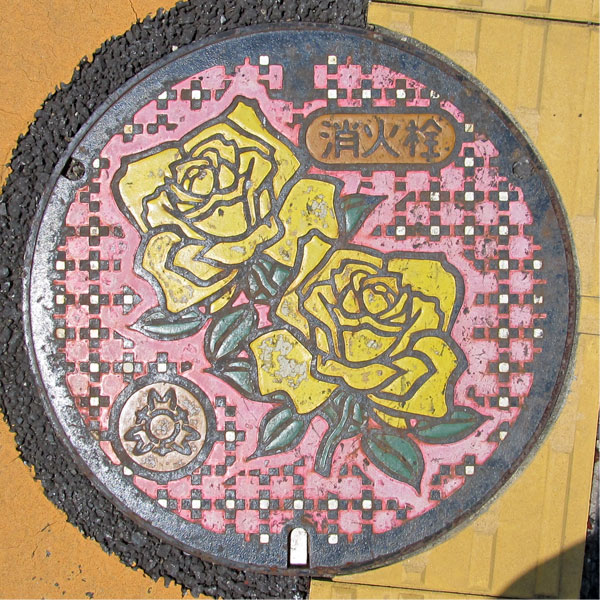
Another version of the fire hydrant featuring the town's flower, the rose.
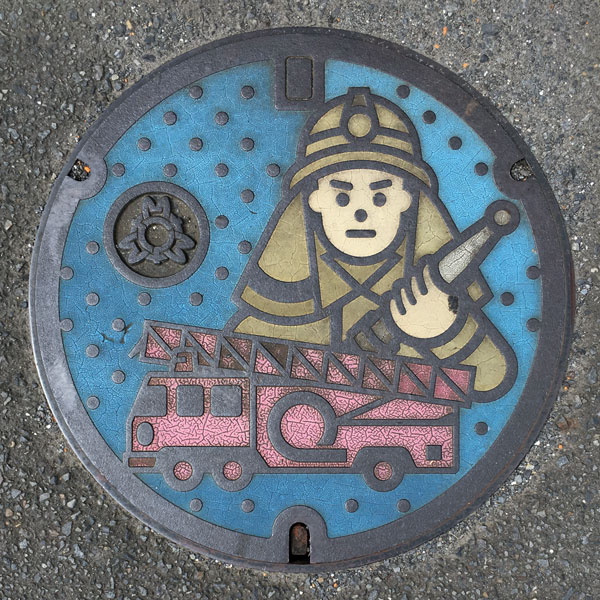
It's a common design for a fire hydrant cover, but the blue background is unusual.
See Nakagawa Basin Sewerage System
Miyashiro 宮代町
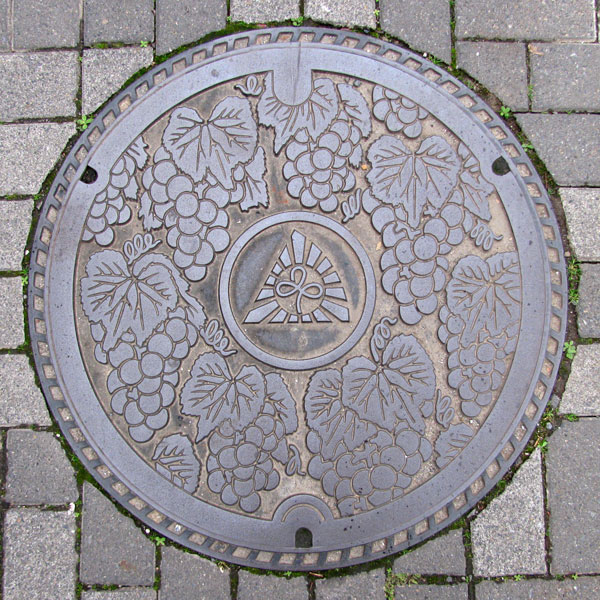
For wastewater. The design features grapes, a specialty product of Miyashiro Town. The town emblem depicts the Japanese hiragana character "mi" as a young sprout, the circle represents the sun, and the widening shape from the lower left symbolizes the town's youth, progress, and development.
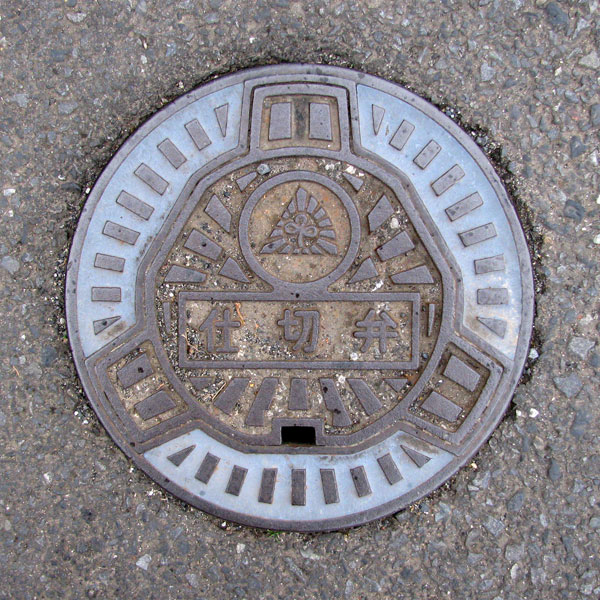
This is a gate valve.
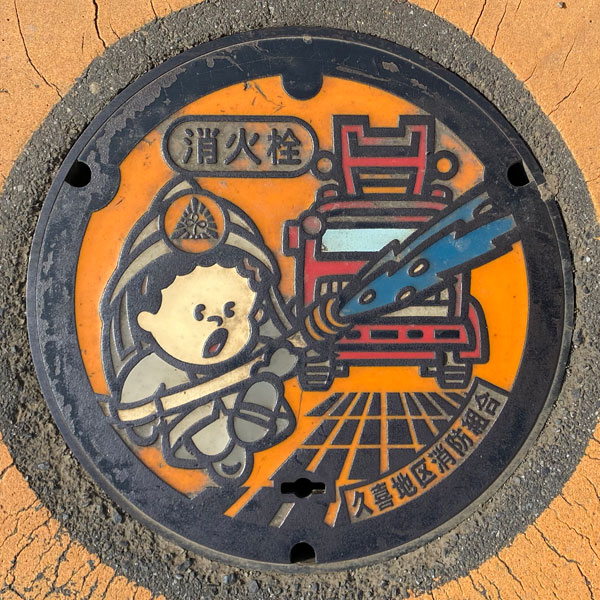
A round fire hydrant cover featuring a design of a young-looking firefighter spraying water. The town emblem is on the helmet.
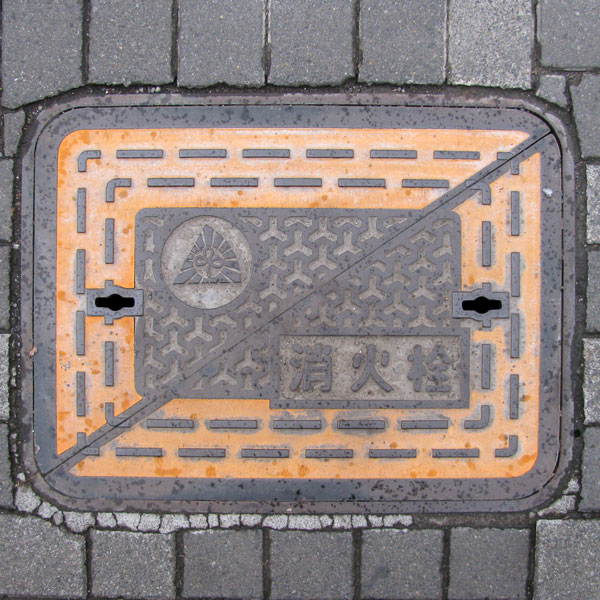
This is a square-shaped fire hydrant with the town emblem on it.
See Nakagawa Basin Sewerage System
Ogose 越生町
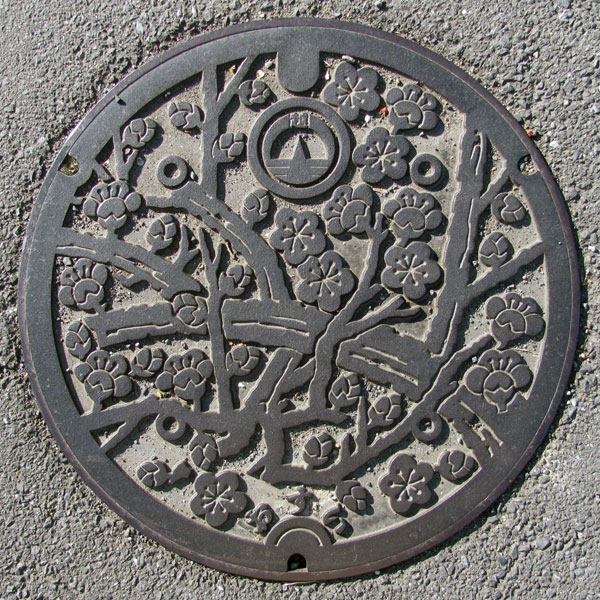
A manhole cover for agricultural wastewater treatment plants, depicting the town's tree, the plum blossom.
Ogose Plum Grove is said to be one of the three major plum groves in the Kanto region, so it's natural that the plum blossom is the town's tree. This cover was located on the road leading from Ogose Plum Grove to Kuroyama San-taki, another tourist spot in Ogose Town.
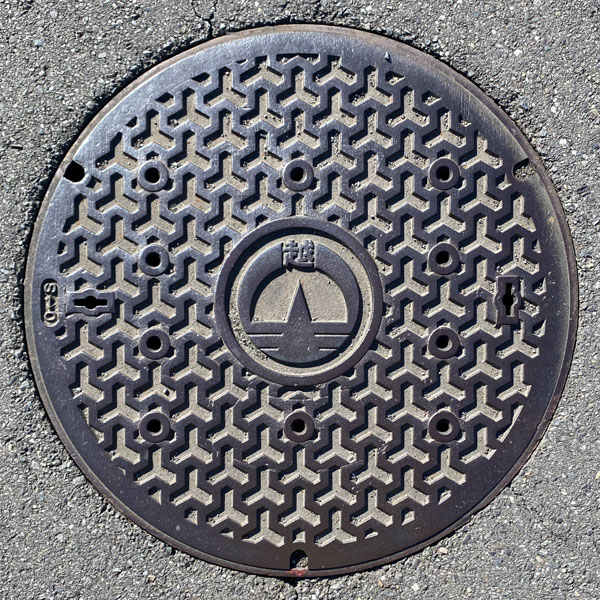
A manhole cover with a Bishamon tortoise shell pattern. The town emblem is in the center.
See Moroyama, Ogose, and Hatoyama Public Sewerage Association
Moroyama 毛呂山町
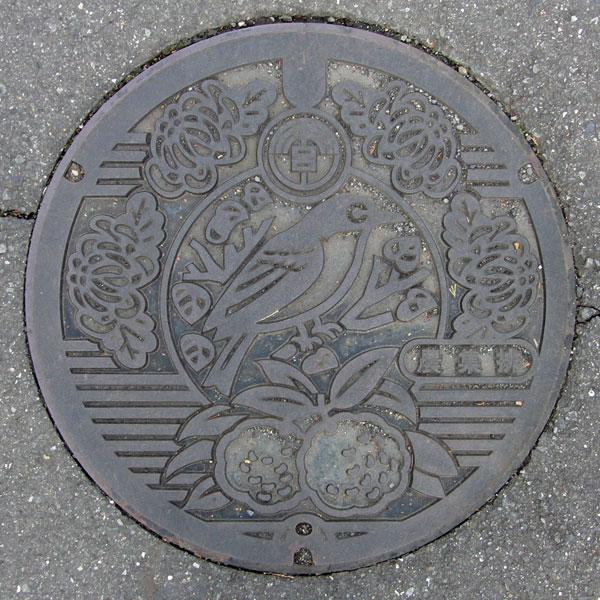
This is a manhole cover for agricultural wastewater in Moroyama Town. The town's bird, the Japanese white-eye, is depicted in the center, the town's flower, the chrysanthemum, is at the top, and the fruit of the town's tree, the yuzu, is at the bottom.
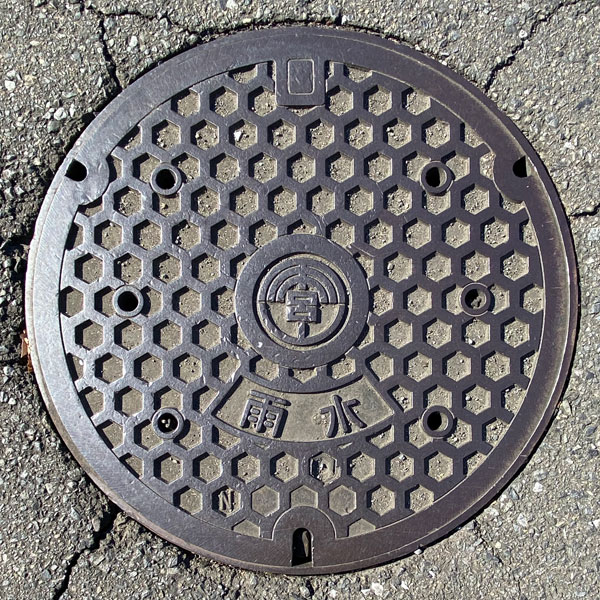
A tortoiseshell pattern design for rainwater drainage.
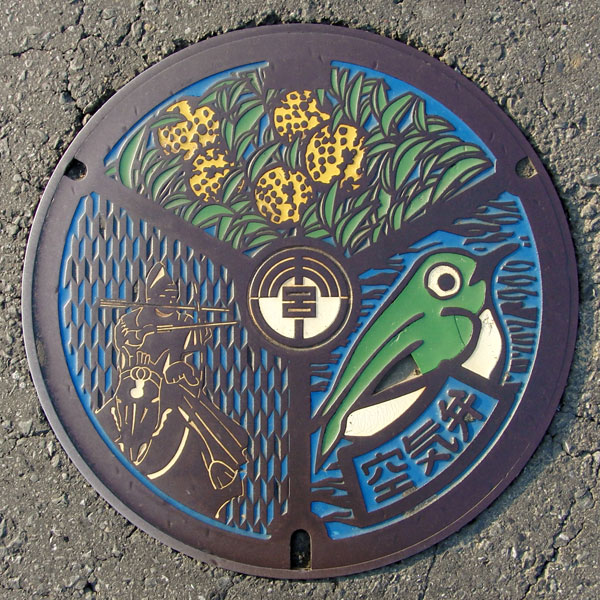
The town emblem, a stylized representation of "Moroyama," is at the center. Above it is the town's tree, the "yuzu," to the right is the town's bird, the "Japanese white-eye," and to the left is a depiction of Yabusame (mounted archery), a tradition with over 900 years of history, performed at Izumo Iwai Shrine.
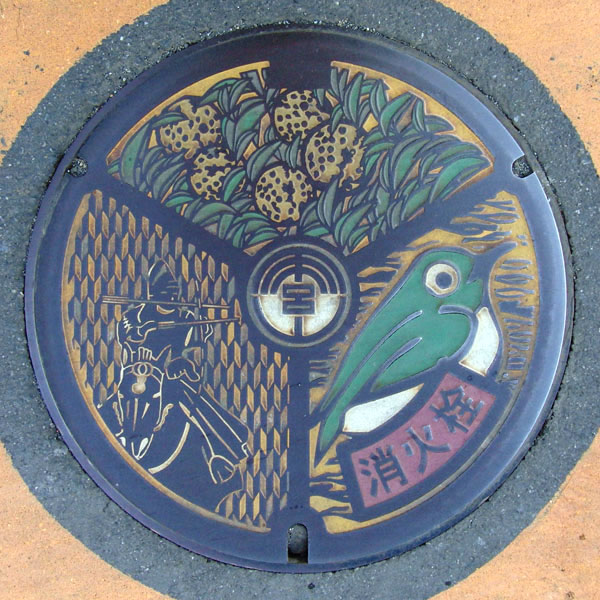
\This fire hydrant cover has the same design as the air valve shown above. However, the background is yellow, unlike the air valve, and the background for the "fire hydrant" lettering is red.
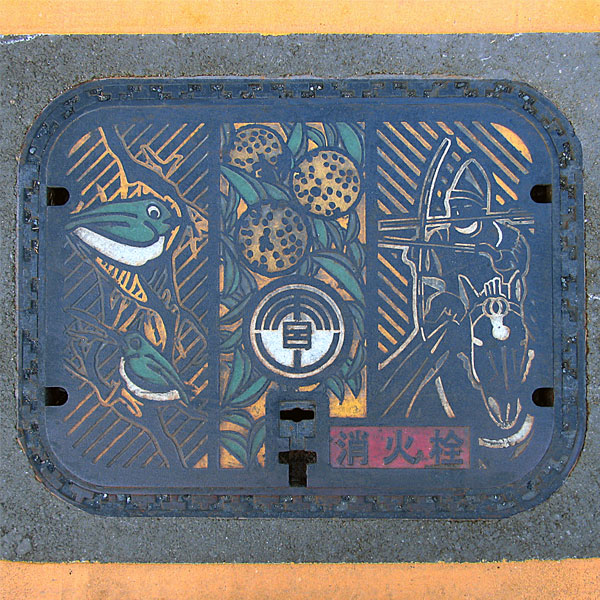
A square fire hydrant cover featuring the same motif as the round air valves and fire hydrants.
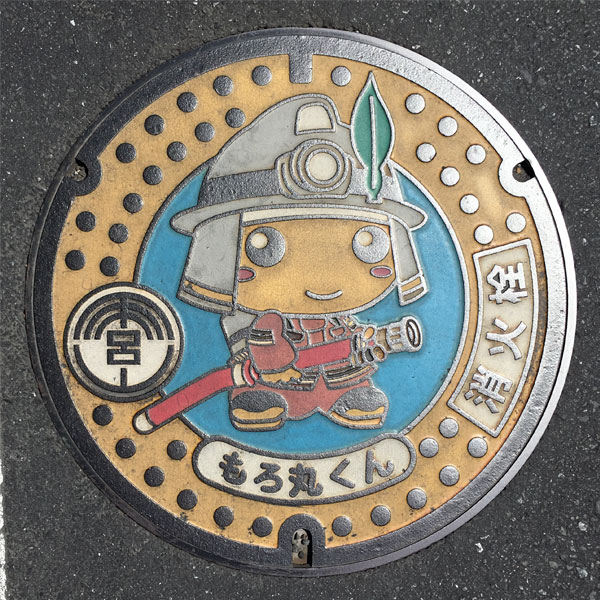
This fire hydrant cover features Moromaru-kun, the mascot character of Moroyama Town, dressed in a firefighter's uniform and holding a hose.
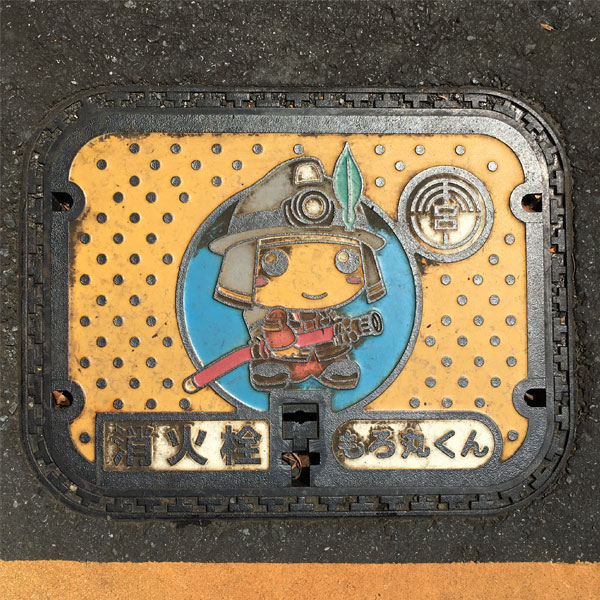
This square-shaped fire hydrant cover features Moromaru-kun, the mascot character of Moroyama Town, dressed in a firefighter's uniform and holding a hose.
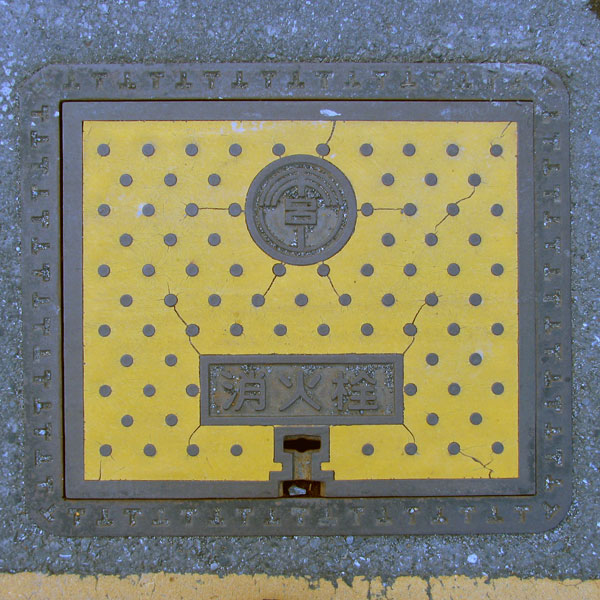
This is a square fire hydrant cover with a yellow background and polka dots.
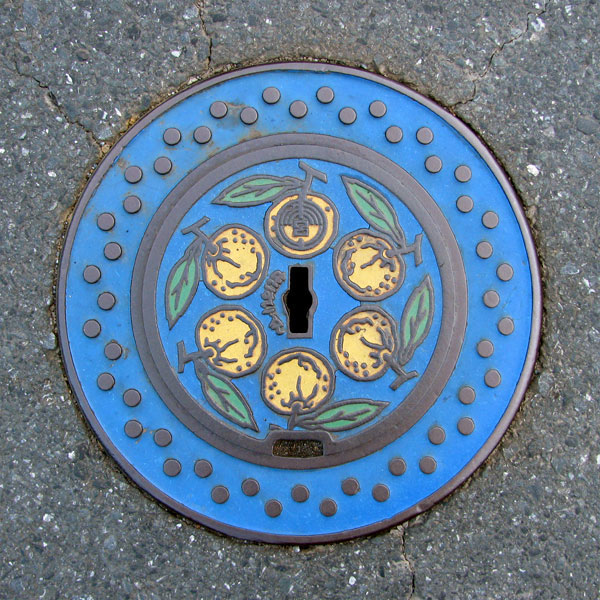
A water control valve cover featuring the town's official tree, the yuzu citrus fruit. The town emblem is inside the yuzu at the top. The words "seisui-ben" (water control valve) are written in small hiragana characters.
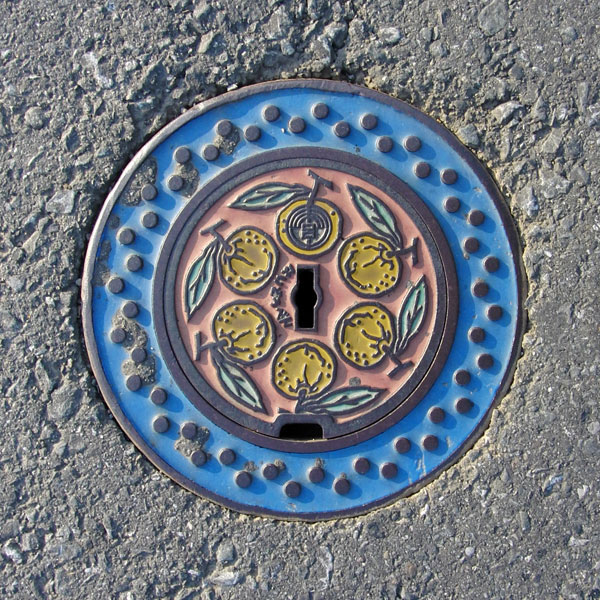
A water control valve cover depicting the town's official tree, the yuzu citrus fruit. The words "seisui-ben" (water control valve) are written in small hiragana characters. The background color is different from the one above.
See Moroyama, Ogose, and Hatoyama Public Sewerage Association
Matsubushi 松伏町
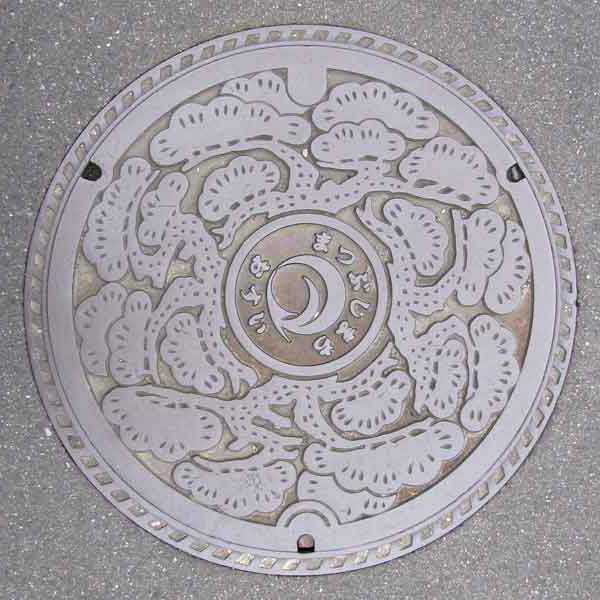
A manhole cover for sewage featuring the Matsubushi town tree, the pine tree. The town emblem, a stylized pine tree, is in the center.
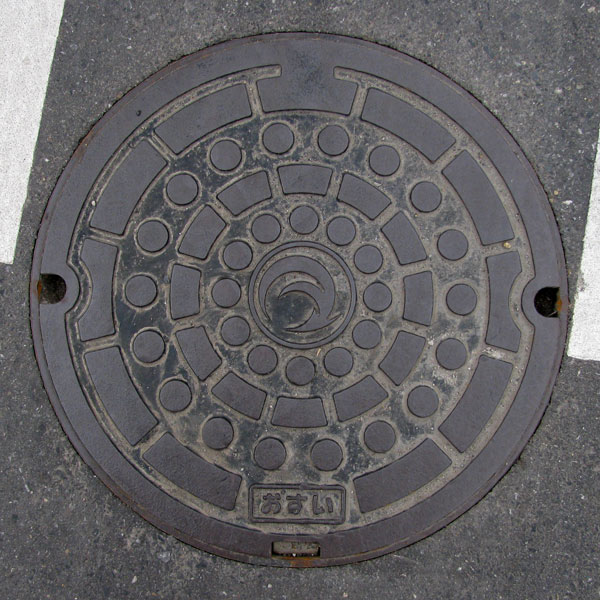
This is a mini-sized version for wastewater, featuring a patterned design.
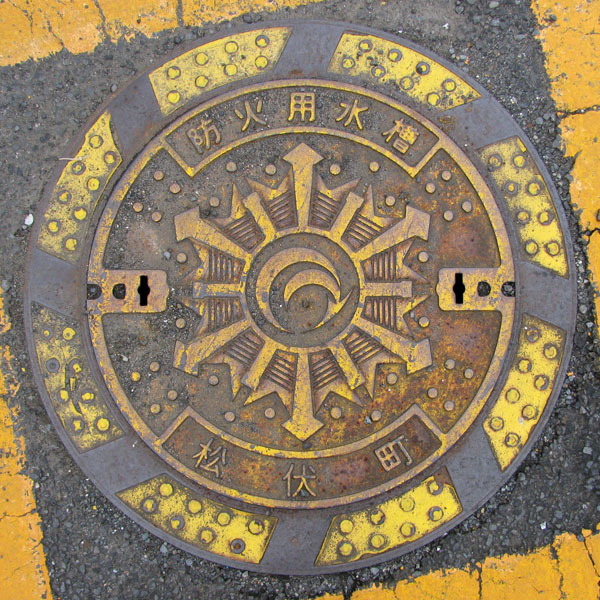
This is a fire-fighting water tank bearing the words "Matsubushi Town" and the town's emblem.
See Nakagawa Basin Sewerage System
See Koshigaya-Matsubushi Waterworks Association
Miyoshi 三芳町
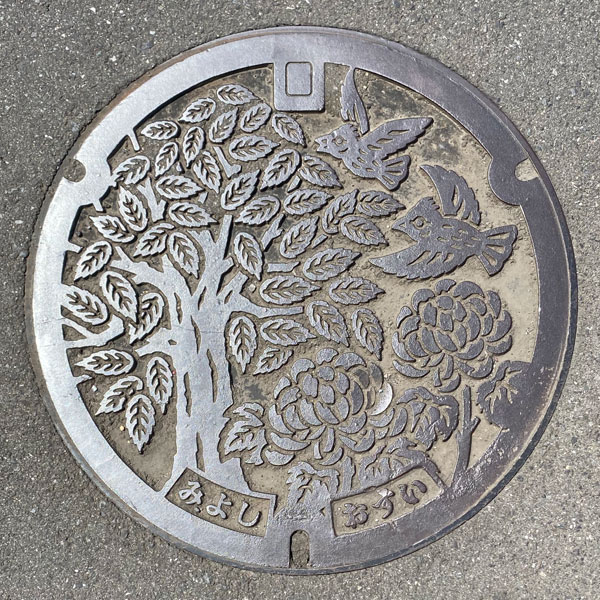
For wastewater. The design features the city tree "Zelkova," the city flower "Chrysanthemum," and the city bird "Skylark." The skylark's crest feathers are clearly visible, but its face is a little scary.
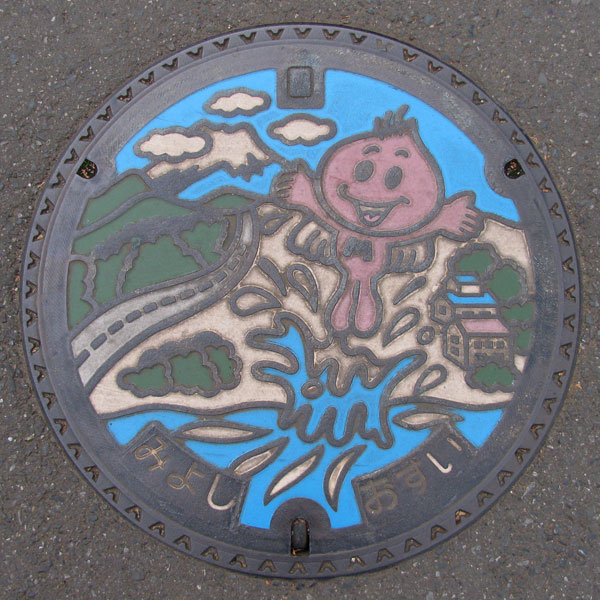
A manhole cover for sewage. The town's mascot, "Mirai-kun," is the main character. He was created in 1989 (Heisei 1), to commemorate the 100th anniversary of Miyoshi's founding. Mount Fuji is visible in the background. The road is either Kawagoe Road (National Route 254) or the Kan-Etsu Expressway (where the Miyoshi PA is located).
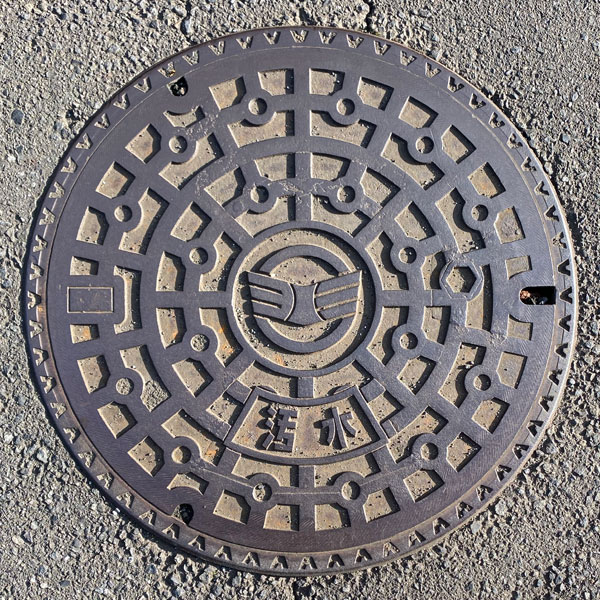
This is a manhole cover for sewage, featuring the Miyoshi town emblem in the center of a JIS standard pattern. The town emblem is a stylized representation of the katakana characters "Miyoshi." The circle represents harmony and unity, while the shape of the soaring bird symbolizes progress and development.
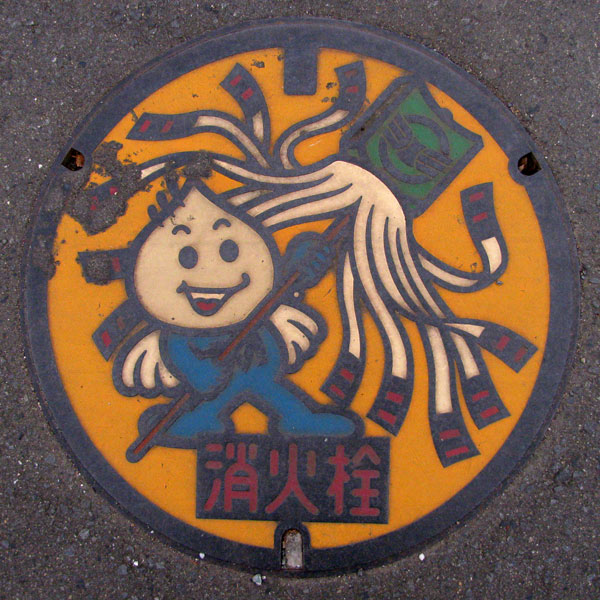
A fire hydrant. The town emblem is on the green top of the fire brigade's banner. "Mirai-kun" appears here too. With these colors, you might think it's a "turnip."
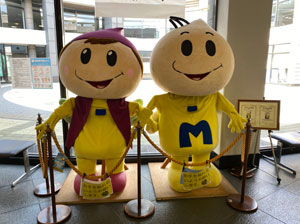
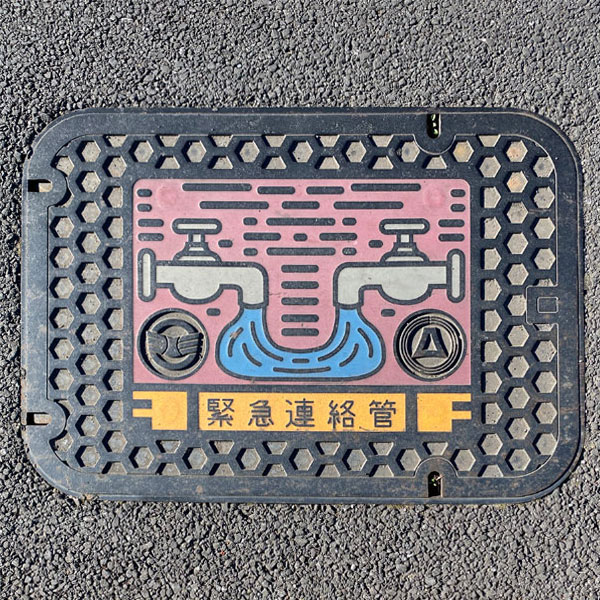
Two water taps connected by water (though it's probably the other way around...). The Miyoshi Town emblem is on the left, and the Fujimi City emblem is on the right. Below them are the words "Emergency Contact Pipe."
See Arakawa Right Bank Basin Sewerage System
Higashichichibu 東秩父村
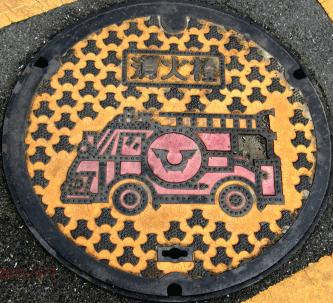
The central circle contains the village emblem.
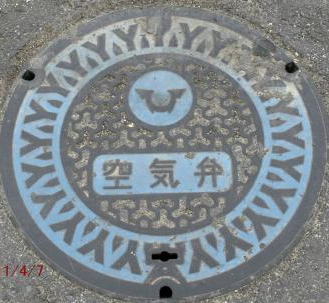
Higashichichibu Village emblem in the center.
Saitama Prefecture 埼玉県
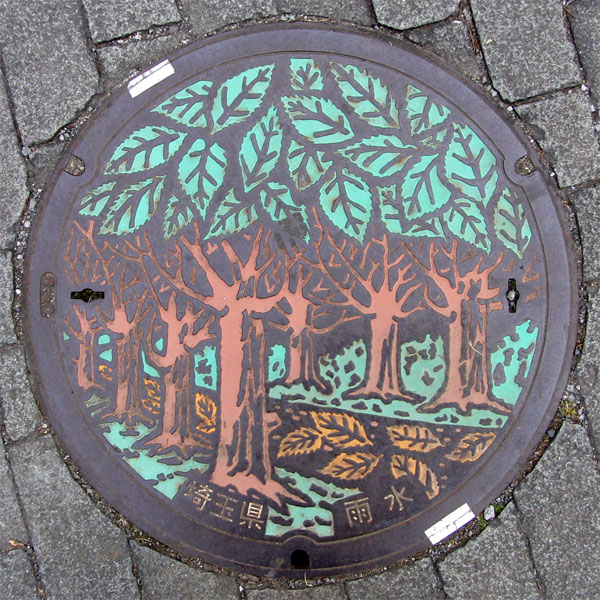
The manhole covers depict the prefecture's official tree, the zelkova tree.
Saitama City Waterworks Bureau さいたま市水道局
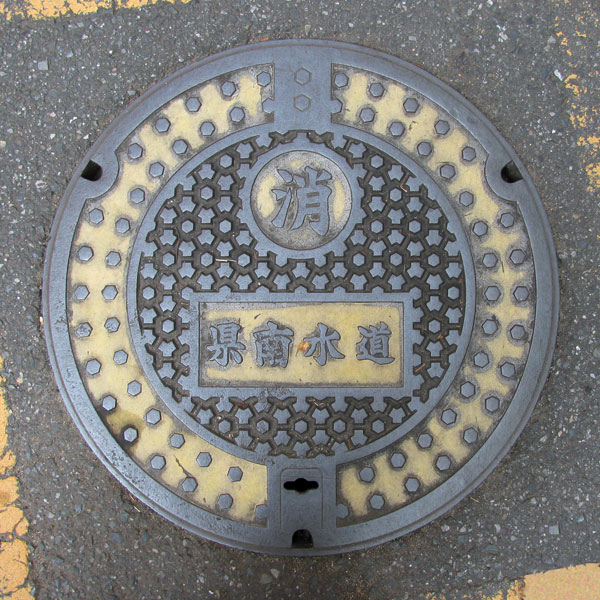
"Kennan Suido" refers to the "Saitama Prefecture Southern Waterworks Enterprise Association," which operated the water supply for the three former cities of Urawa, Omiya, and Yono. In May 2001, the three cities merged to form "Saitama City," and it became the "Saitama City Water Department." Later, in 2003, with the designation of Saitama as a government-ordinance-designated city, the organization was restructured into the "Saitama City Water Bureau." (For firefighting purposes.)
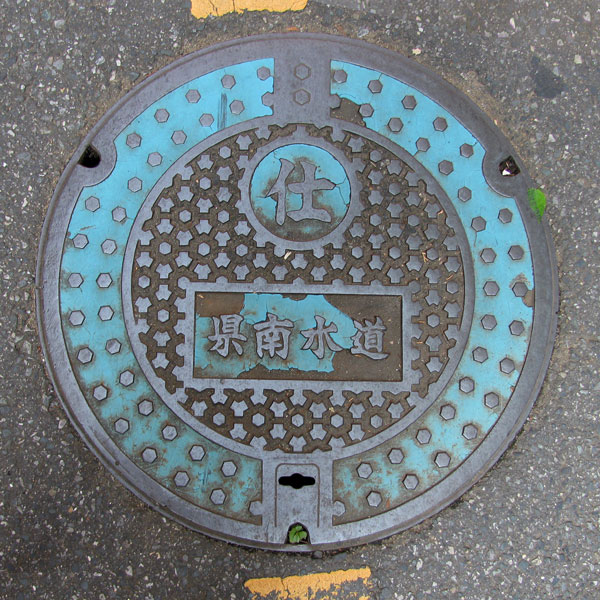
This is the same gate valve specification as above for the "Southern Prefectural Waterworks".
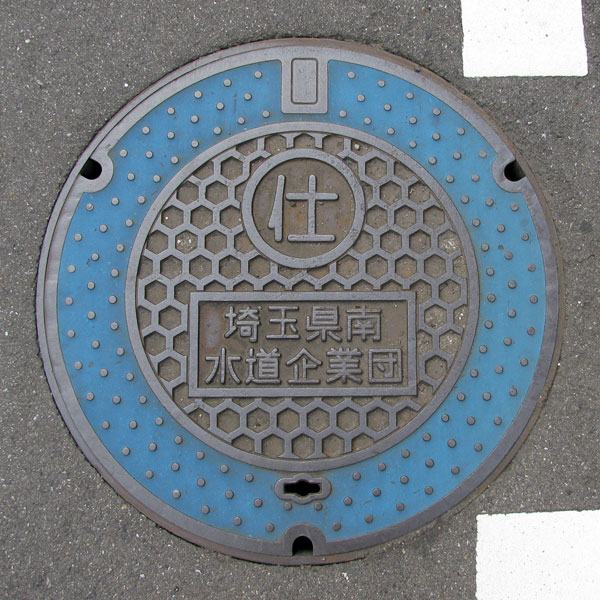
This gate valve bears the full name of the "Saitama Prefecture Southern Waterworks Enterprise Association," rather than the abbreviated "Southern Waterworks."
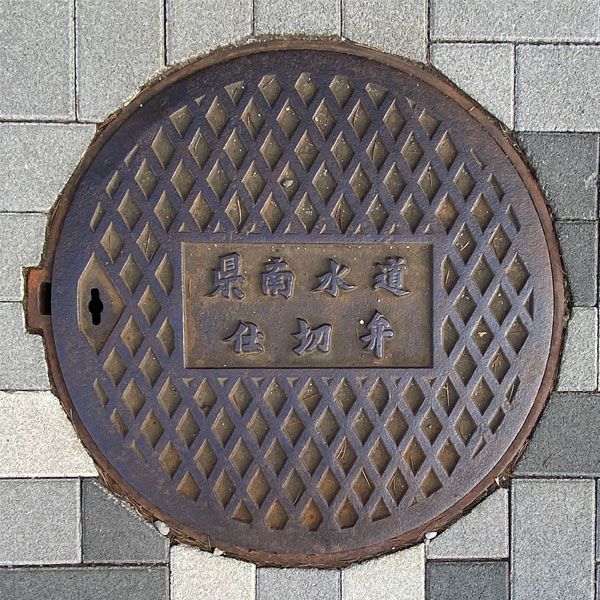
A cover for a shut-off valve in the southern part of the prefecture's water supply. Judging from the font, it looks like an old cover.
Saitama Prefectural Sewerage Corporation 埼玉県下水道公社
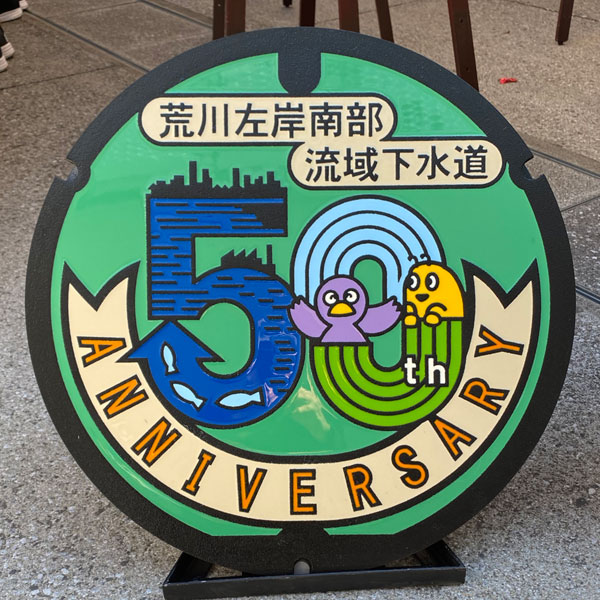
A manhole cover produced to commemorate the 50th anniversary of the opening of the Arakawa River Left Bank Southern Basin Sewerage System.
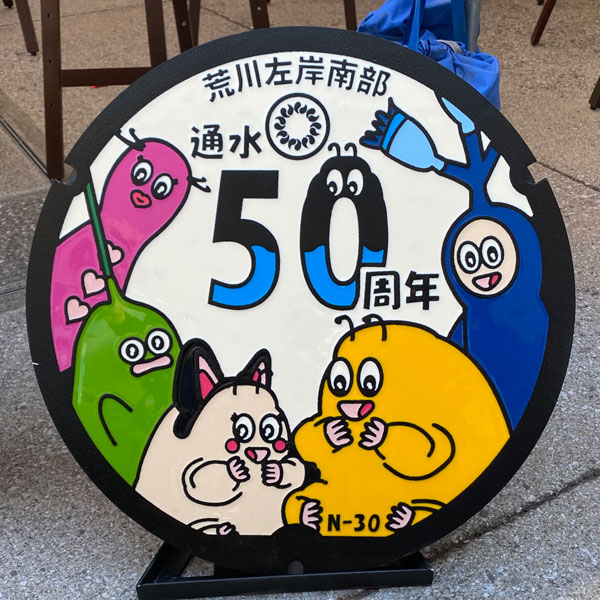
This is a manhole cover produced to commemorate the 50th anniversary of the opening of the Arakawa River Left Bank Southern Basin Sewerage System.
Saitama Prefecture - Underground Utility Conduit 埼玉県・電線共同溝
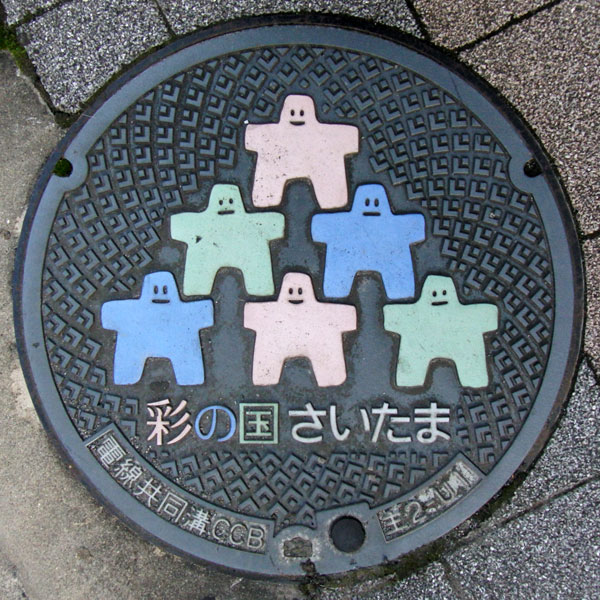
This is not a sewer manhole cover, but a cover for a shared utility conduit, also known as a CCBOX. The design is the "Saitama Prefecture Campaign Mark."
The first "C" in "CCBOX" stands for "Community," "Communication," and "Compact," the second "C" stands for "Cable," and "BOX" means box. It contains only electrical wires.
Arakawa Upper Basin Sewerage System 荒川上流流域下水道
The municipalities involved in the basin are Fukaya City (former Kawamoto and Hanazono town areas) and Yorii Town.
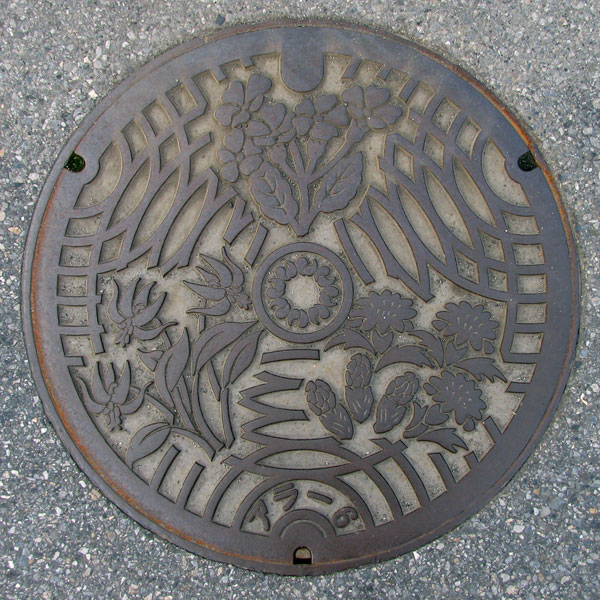
The Saitama Prefecture emblem is in the center. The flowers are "Primrose," "Erythronium," and "Adonis." Erythronium is the flower of Yorii Town, and Adonis is the flower of the former Kawamoto and Hanazono Towns. It is thought that the primrose, the Saitama Prefecture flower, was included because there are only two types of flowers.
Arakawa Left Bank Northern Basin Sewerage System 荒川左岸北部流域下水道
The Arakawa River Left Bank Northern Basin Sewerage System treats sewage generated in Kumagaya City, Gyoda City, Konosu City, Okegawa City, and Kitamoto City, and is processed at the "Motoarakawa Water Recycling Center" in Okegawa City.
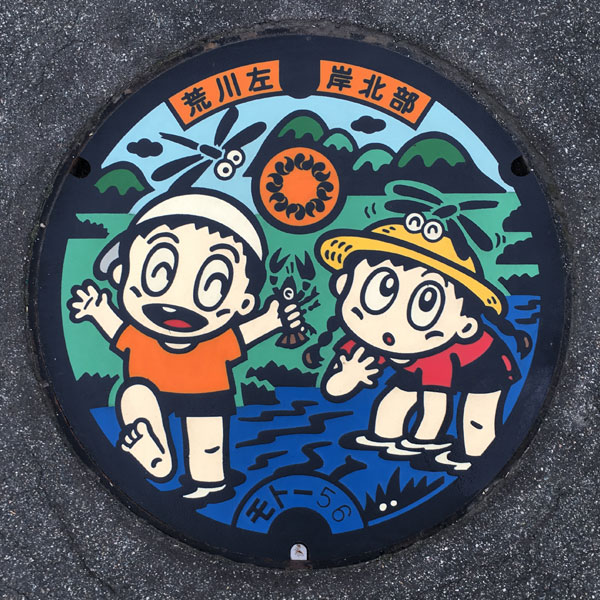
The design is a fun depiction of children playing with dragonflies and crayfish in a clear stream, but it's a luxurious version using 11 colors: red, orange, yellow, beige, brown, light green, green, light blue, blue, white, and black. However, I'm a little curious about what the two white dots on the lower right are.
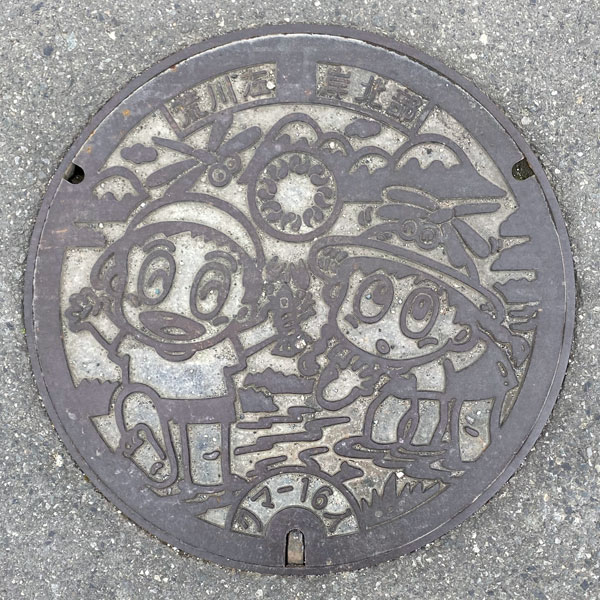
This cover, with "Kuma-16 Iri" at the bottom, appears to be from the Kumagaya Main Line.
Arakawa Left Bank Southern Basin Sewerage System 荒川左岸南部流域下水道
The Arakawa River Left Bank Southern Basin Sewerage System, covers six cities located on the left bank of the Arakawa River in the central south-southern part of Saitama Prefecture: Kawaguchi City, Saitama City, Ageo City, Warabi City, Toda City, and former Hatogaya City.
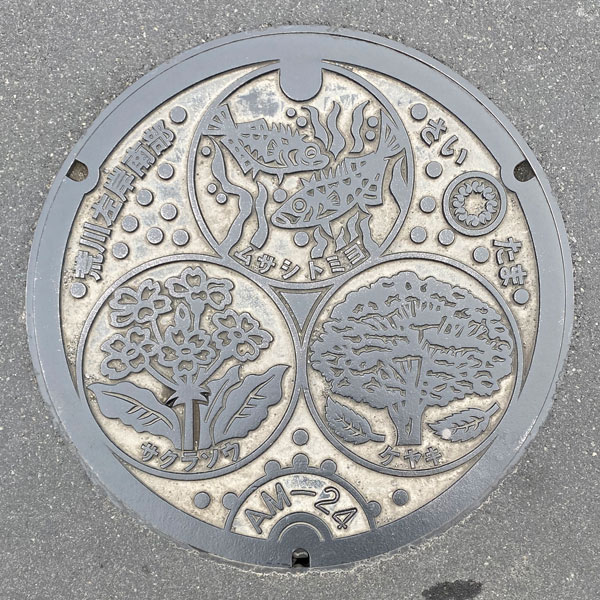
The design features the prefecture's fish, the Musashi Tomiyo (a type of stickleback), the prefecture's flower, the primrose, and the prefecture's tree, the zelkova. While the prefecture's bird, the Oriental Turtle Dove, might normally be included, the Musashi Tomiyo appears due to its water-related theme. The Musashi Tomiyo is designated as a Saitama Prefecture Natural Monument, but it is a critically endangered (CR) fish, only found in the headwaters of the Motoarakawa River in Kumagaya City, Saitama Prefecture. It seems to mean, "May the clear stream be revived."
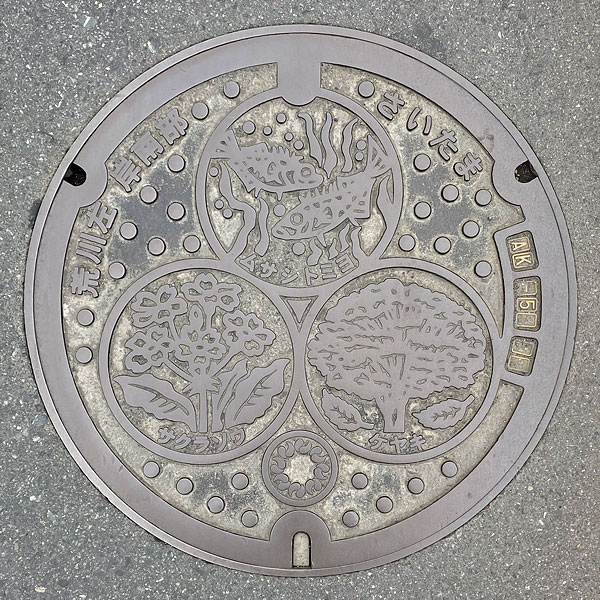
This type of manhole cover has the words "Arakawa Left Bank Southern" and "Saitama" at the top, with the Saitama Prefecture emblem in the circle at the bottom.
Arakawa Right Bank Basin Sewerage System 荒川右岸流域下水道
The planned service area for the Arakawa Right Bank Basin Sewerage System includes 10 cities and 1 town in the Shingashi River basin, a tributary of the Arakawa River: Kawagoe City, Tokorozawa City, Sayama City, Iruma City, Asaka City, Shiki City, Wako City, Niiza City, Fujimi City, Fujimino City (formed by the merger of the former Kamifukuoka City and the former Oi Town), and Miyoshi Town, plus two towns north of Kawagoe City: Kawashima Town and Yoshimi Town, making a total of 10 cities and 3 towns. Sewage from the Shingashi River North Main Line, Shingashi River Main Line, Kubogawa Main Line, Furōgawa Main Line, Furōgawa Discharge Main Line, Kawagoe Egawa Main Line, Sunagawabori Main Line, Sunagawabori Stormwater Main Line, Egawa Main Line, Yanasegawa Main Line, and Kuromegawa Main Line is treated at two facilities: the "Shingashi River Upstream Water Recycling Center (Kawagoe City)" and the "Shingashi River Water Recycling Center (Wako City)".
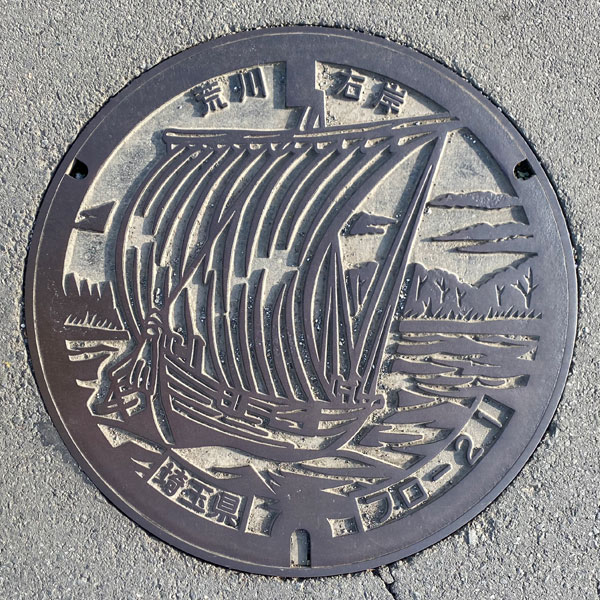
A manhole cover for the "Arakawa Right Bank Basin Sewerage System," depicting the "Takasebune," a sailing ship used for river transport on the Shingashi River.
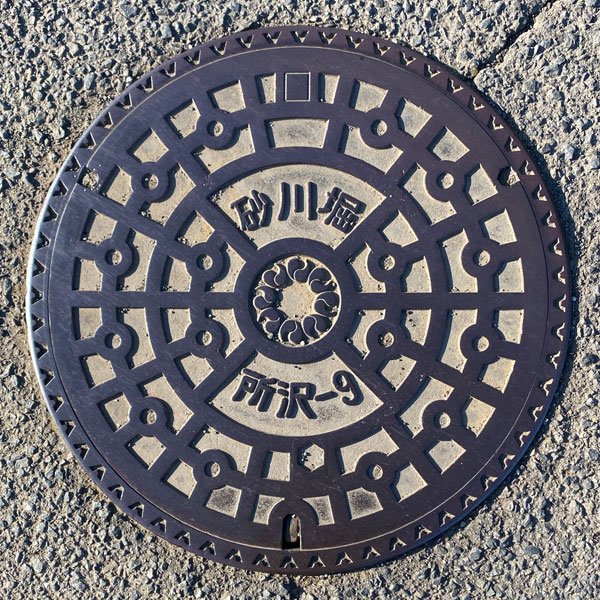
This manhole cover has the words "Sunagawa-bori" on it. The Saitama Prefecture emblem is in the center, with the number "Tokorozawa-9" below it.
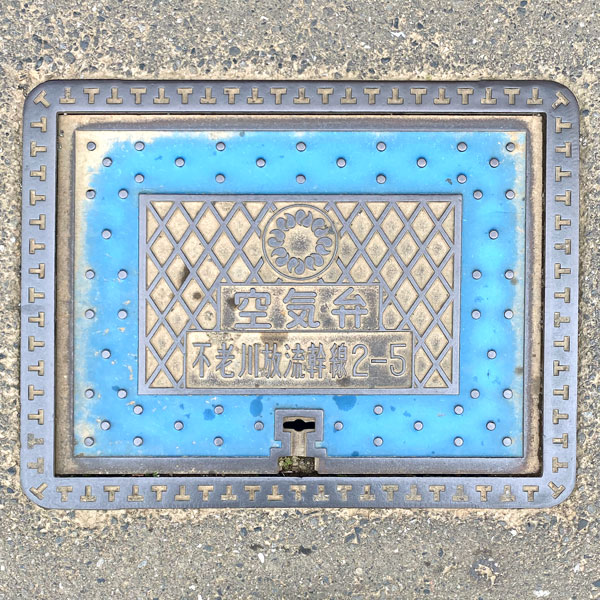
Unlike other manhole covers, this one doesn't depict a Takasebune boat, but it's a manhole cover for the Furōgawa River discharge main line of the Arakawa River right bank basin sewerage system. Below the Saitama Prefecture emblem are the words "Air Valve," and below that, "Furōgawa River Discharge Main Line 2-5."
Nakagawa Basin Sewerage System 中川流域下水道
The Nakagawa River Basin Sewerage System includes the Central Main Line (Phase 2), Nakagawa Main Line, Urawa Main Line, Miyashiro Main Line, Ina Main Line, Iwatsuki Main Line, Shiraoka Main Line, Misato Main Line, Kawaguchi Main Line, Sugito Main Line, and Chuo-Nishi Main Line. The total length of the pipelines is approximately 120 km, and the population served is approximately 1.4 million. The municipalities involved are Saitama City (part), Kawaguchi City (part), Kasukabe City, Soka City, Koshigaya City, Yashio City, Misato City, Hasuda City, Satte City, Yoshikawa City, Shiraoka City, Ina Town, Miyashiro Town, Sugito Town, Matsubushi Town.
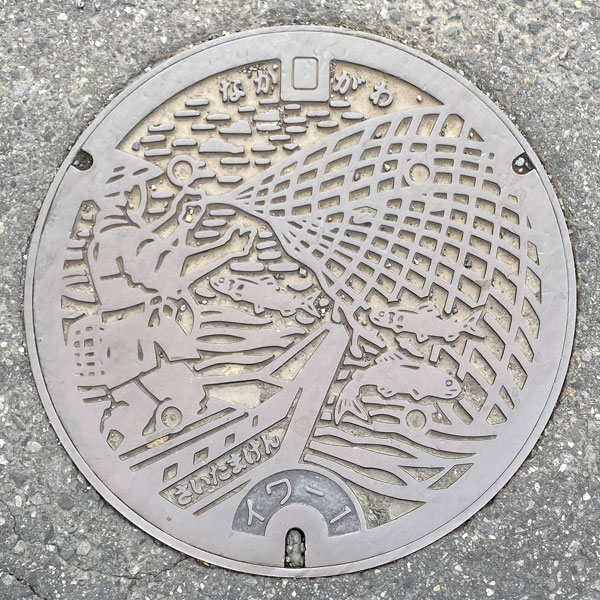
This is a manhole cover for the Nakagawa River Basin Sewerage System. The design depicts net fishing, with the words "Nakagawa" at the top and "Saitama Prefecture" on the side of the boat at the bottom.
Tone River Right Bank Basin Sewerage System 利根川右岸流域下水道
The municipalities involved in the Tonegawa Right Bank Basin Sewerage are Honjo City, Misato Town, Kamikawa Town, and Kamisato Town. Partial operation of the basin sewerage system began on April 1, 2009.
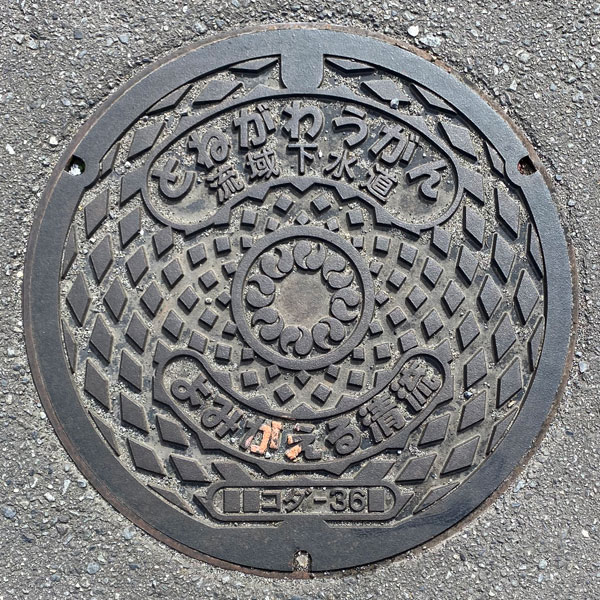
The manhole cover bears the words "Tonegawa Right Bank Basin Sewerage" and "Reviving the Clear Stream." The Saitama Prefecture emblem is in the center. The Kodama Main Sewerage Manhole Cover has "Koda-36" written at the bottom.
Furutonegawa River Basin Sewerage System 古利根川流域下水道
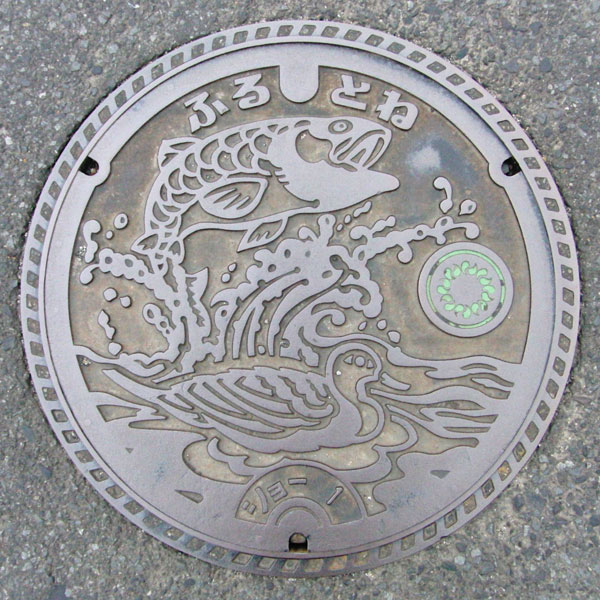
This is a manhole cover for the old Tone River basin sewer system. The design features a "silver carp" and a "duck." Only the Saitama Prefecture emblem on the right is painted green (the original emblem is red). The cover is for the Shobu No. 1 main line, with "Sho-1" at the bottom.
The Tone River is known for its flocks of silver carp jumping, which sometimes appear in the news. Based on the length of its tail and the roundness of its head, the duck appears to be a Northern Pintail.
Ichinogawa River Basin Sewerage System 市野川流域下水道
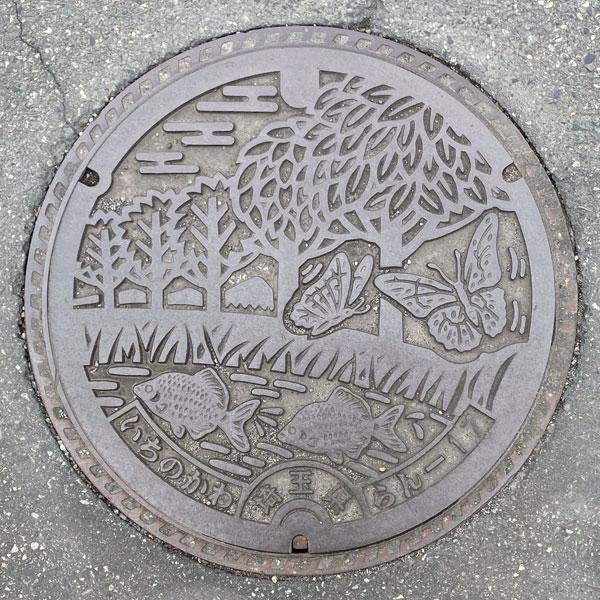
This is a manhole cover for the Ichinogawa River Basin Sewerage System. It depicts the flow of the Ichinogawa River, the Arashiyama Town butterfly ("Great Purple Emperor"), and the Namerikawa Town fish ("Miyako Bitterling").
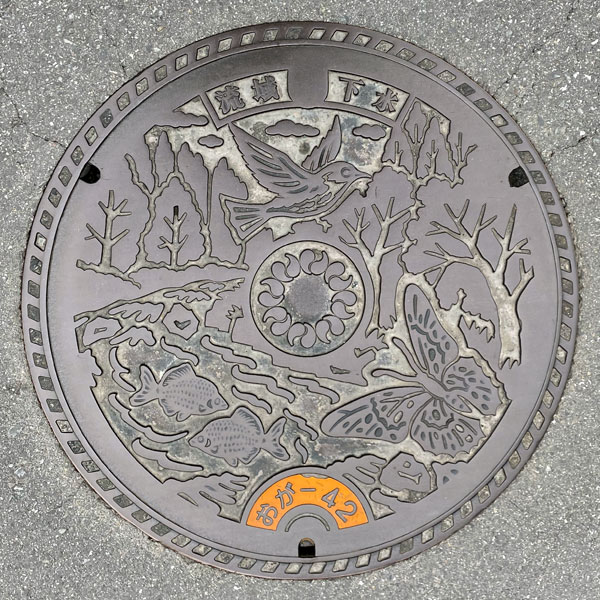
This is a manhole cover for the Ichinogawa River Basin Sewerage System. It depicts the flow of the Ichinogawa River, along with the Japanese White-eye (bird of Ogawa Town), the Great Purple Emperor (butterfly) of Arashiyama Town, and the Miyako Bitterling (fish of Namegawa Town). The Saitama Prefecture emblem, a magatama (comma-shaped bead) in a ring, is in the center.
Okegawa Kitamoto Waterworks Association 桶川北本水道企業団
The municipalities involved are Kitamoto and Okegawa city.
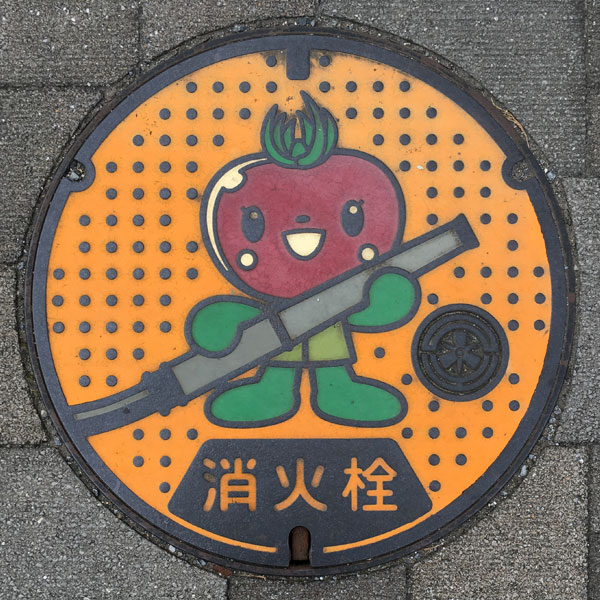
A fire hydrant cover featuring "Toma-chan," the Kitamoto tomato mascot. The mark on the right is that of the "Okegawa Kitamoto Waterworks Association."
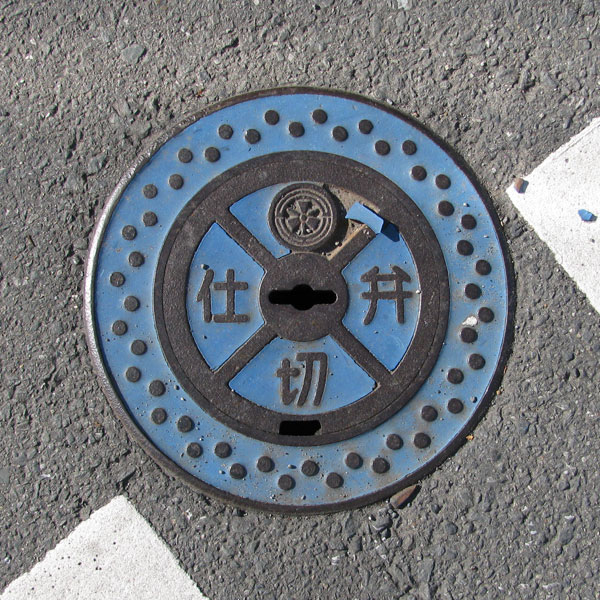
A gate valve cover bearing the mark of the "Okegawa Kitamoto Waterworks Enterprise Association".
Sakado and Tsurugashima Association 坂戸、鶴ヶ島組合
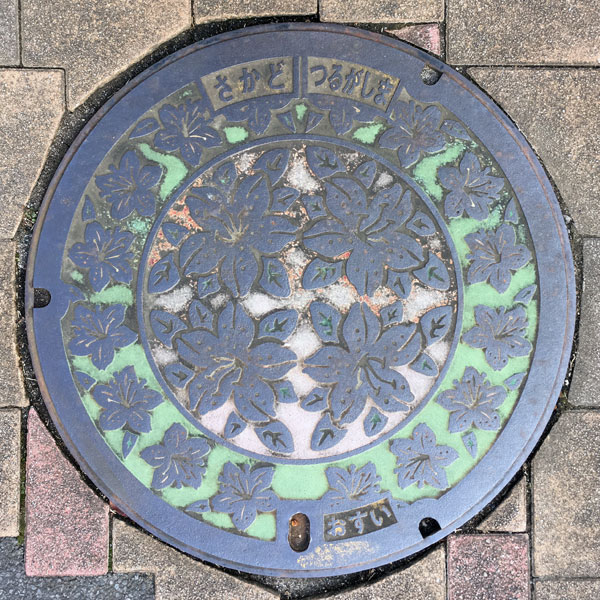
A manhole cover for wastewater belonging to the "Sakado and Tsurugashima Sewerage Association." Sakado City's flower is the "Satsuki azalea," and Tsurugashima City's flower is the "Azalea," but which one is this?
The words "Sakado" and "Tsurugashima" are at the top, and "Osui" (wastewater) is at the bottom.
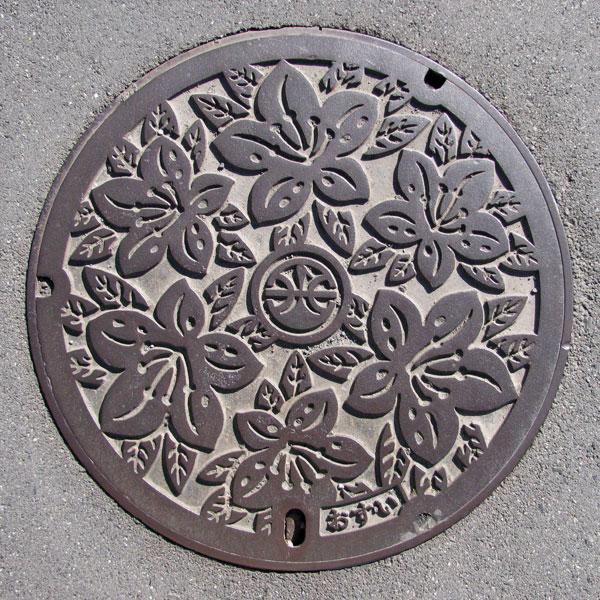
A different design of a manhole cover for sewage belonging to the "Sakado and Tsurugashima Sewerage Association." The association's emblem is in the center.
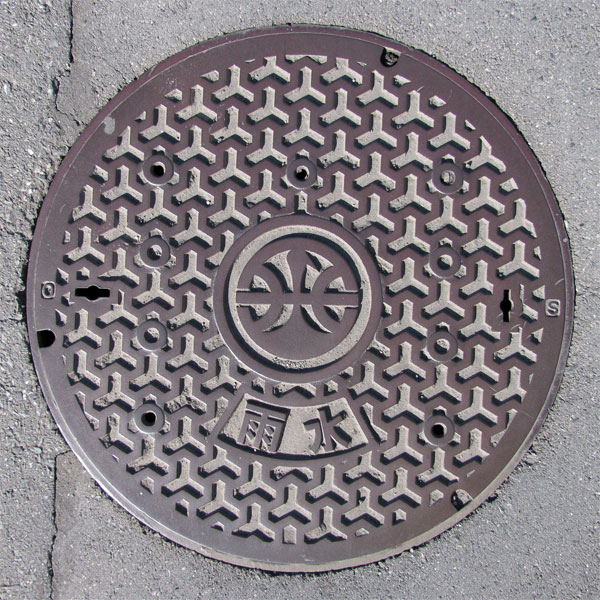
It's a rainwater drain with a Bishamon tortoise shell pattern, but it doesn't have the Sakado city emblem; instead, it has the mark of the "Sakado, Tsurugashima Sewerage Association."
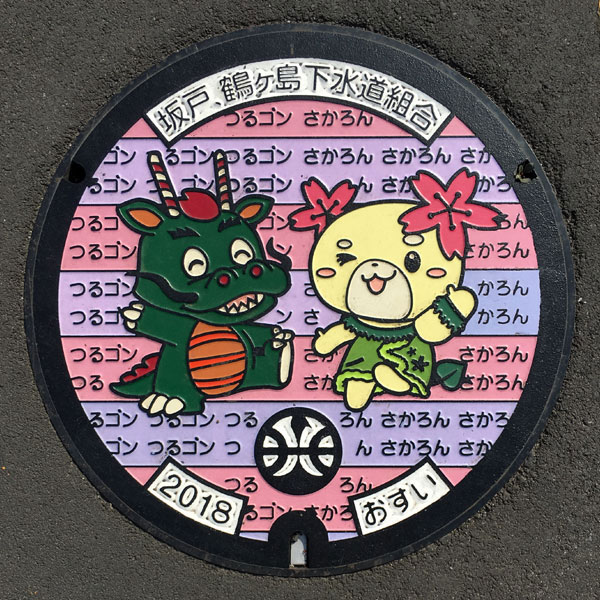
This is a manhole cover design featured on the Sakado and Tsurugashima Sewerage Association's manhole card, depicting Sakado City's mascot "Sakaron" and Tsurugashima City's mascot "Tsurugon."
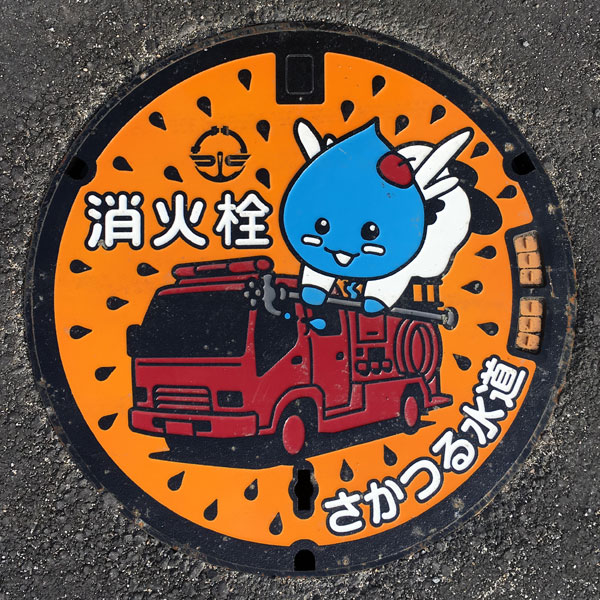
A fire hydrant cover featuring "Sakatsuru-chan," the mascot character of the "Sakado and Tsurugashima Waterworks Association," known as the "Water Angel."
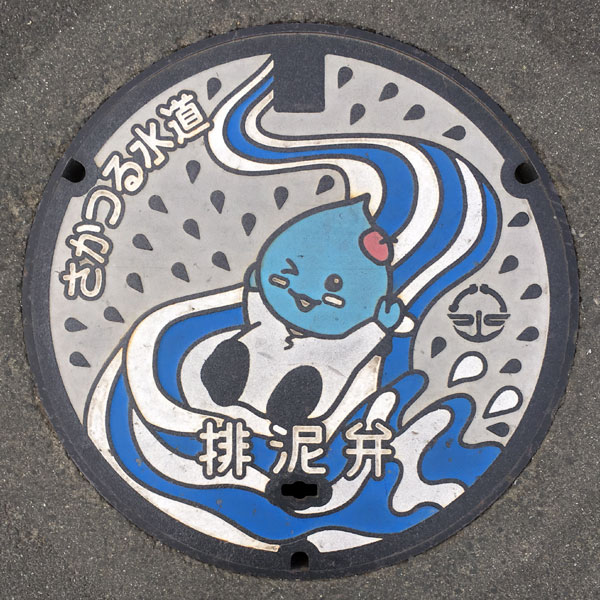
A sludge valve cover featuring "Sakatsuru-chan," the mascot character of the Sakado and Tsurugashima Waterworks Association, known as the "Water Angel."
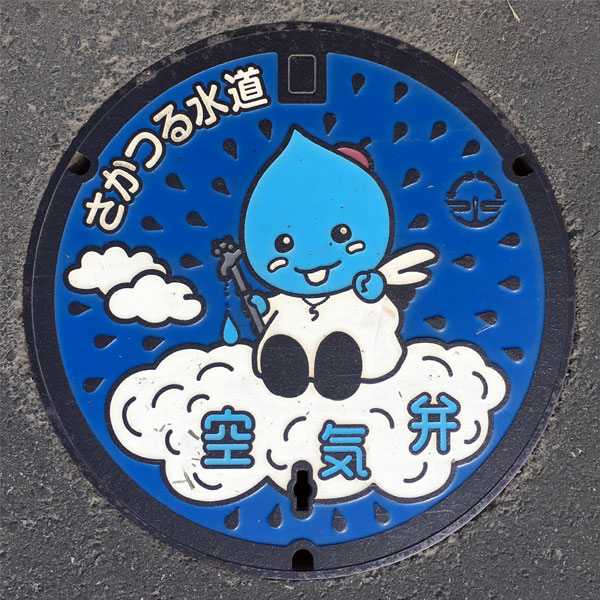
The manhole for the air valve featuring "Sakatsuru-chan" was located in Tsurugashima City.
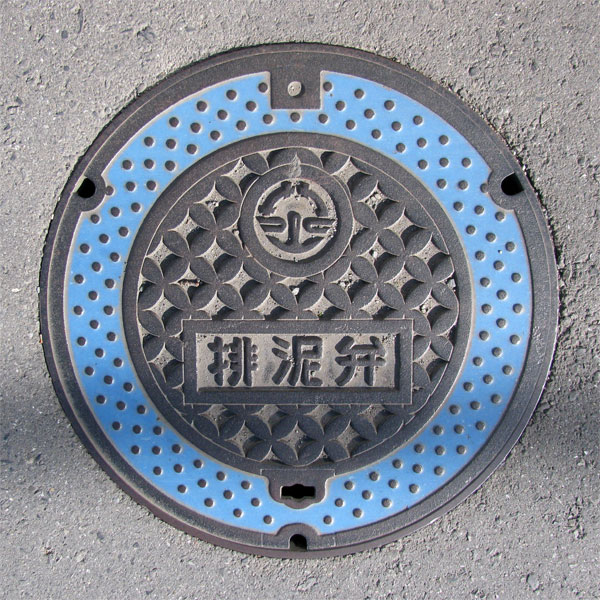
Sludge discharge valve. The mark belongs to the "Sakado and Tsurugashima Waterworks Association".
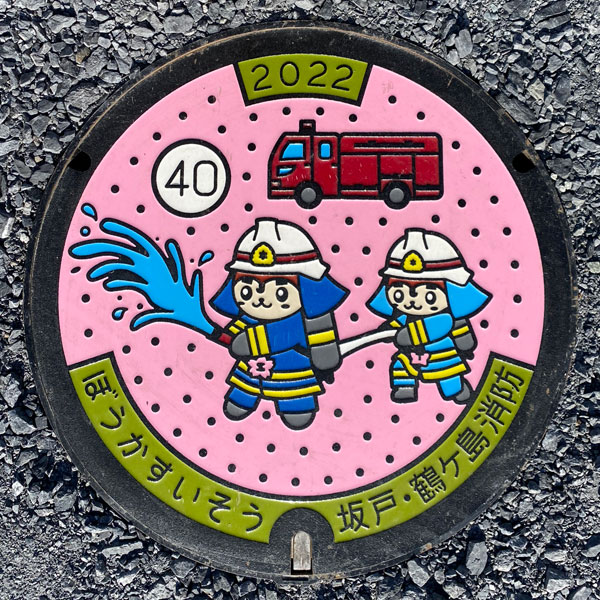
A fire hydrant cover featuring the Sakado-Tsurugashima Fire Department's mascots, "Sakabou" and "Tsurubou."
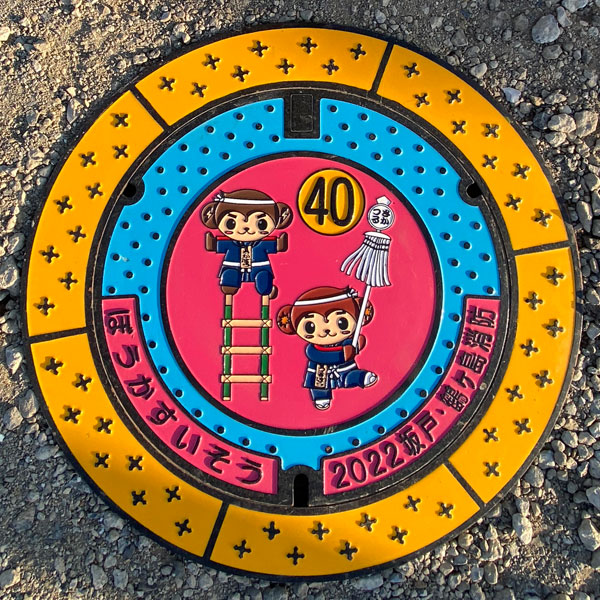
This is a fire hydrant cover featuring "Sakabou" and "Tsurubou," the mascots of the Sakado-Tsurugashima Fire Department. This one has a yellow background with a cross-shaped border.
Koshigaya-Matsubushi Waterworks Association 越谷・松伏水道企業団
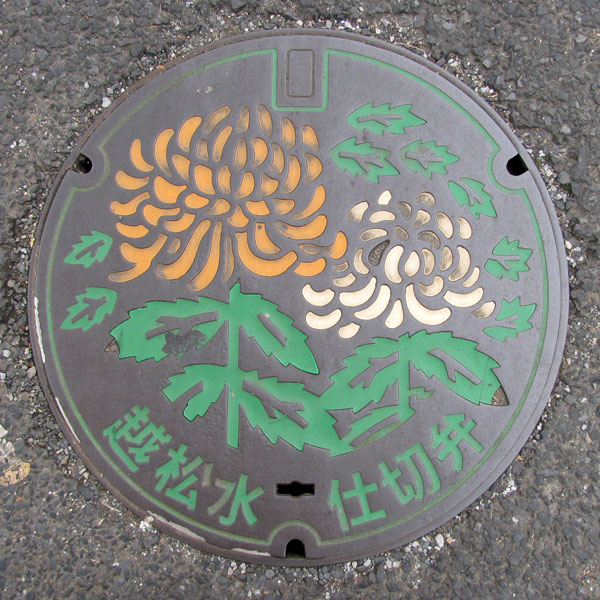
This is a gate valve belonging to the Koshigaya-Matsubushi Waterworks Association. The chrysanthemum is the official flower of both Koshigaya City and Matsubushi Town. While gate valves are usually predominantly light blue, this one is notably green.
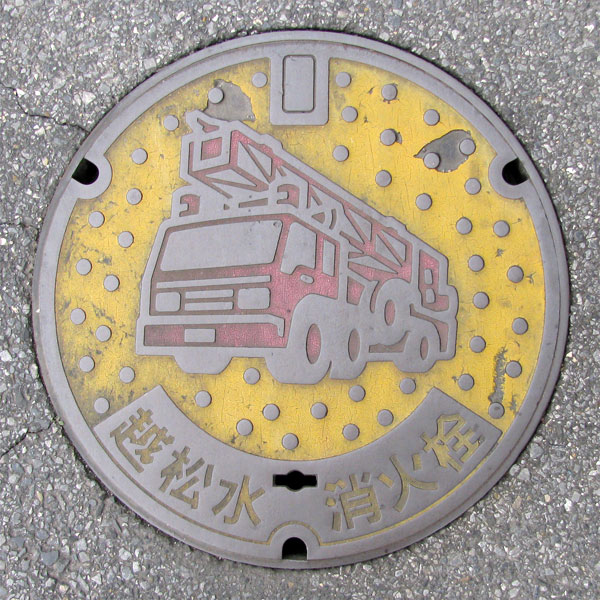
A fire hydrant belonging to the Koshigaya-Matsubushi Waterworks Association.
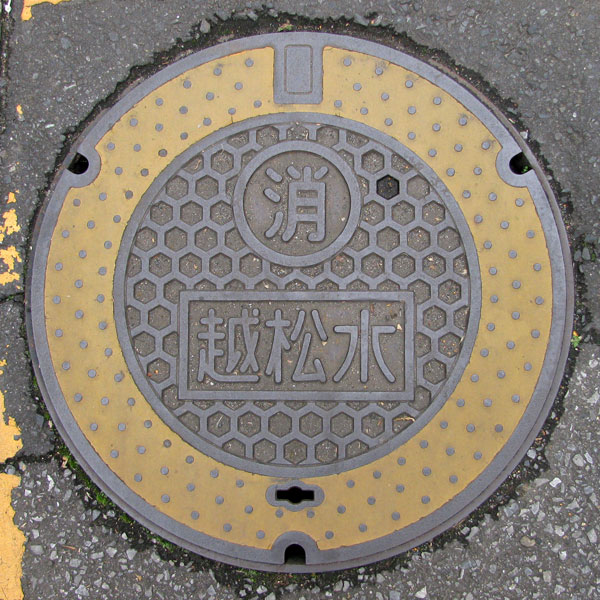
A fire hydrant belonging to the Koshigaya-Matsubushi Waterworks Association.
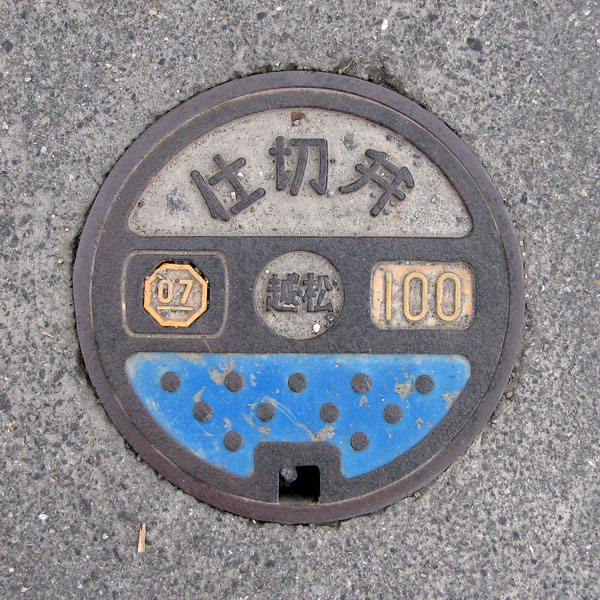
This is a gate valve with the characters "Koshimatsu" on it.
Minano-Nagatoro Waterworks Association 皆野・長瀞水道企業団
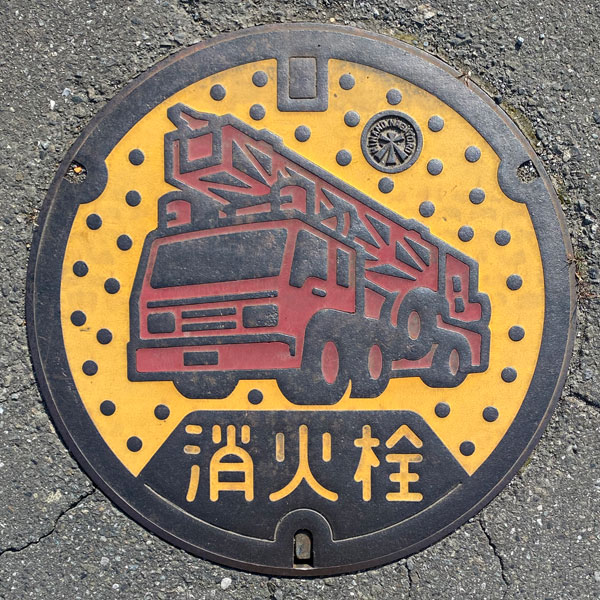
This is a fire hydrant.
The mark in the upper right corner shows the words "MINANO.NAGATORO". It appears to be the mark of the Minano-Nagatoro Waterworks Association.
Moroyama, Ogose, and Hatoyama Public Sewerage Association 毛呂山・越生・鳩山公共下水道組合
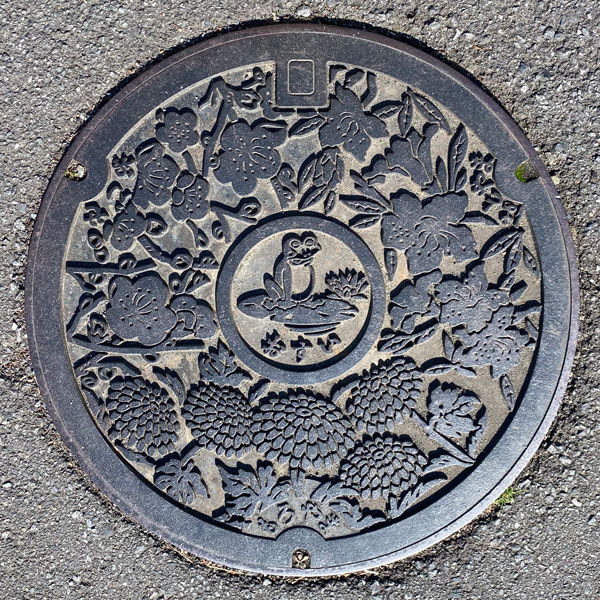
A frog is depicted in the center, along with the characters for "Moroyama" and the town flower "chrysanthemum," the characters for "Ogose" and the town tree "plum," and the characters for "Hatoyama" and the town flower "azalea" on three sides.
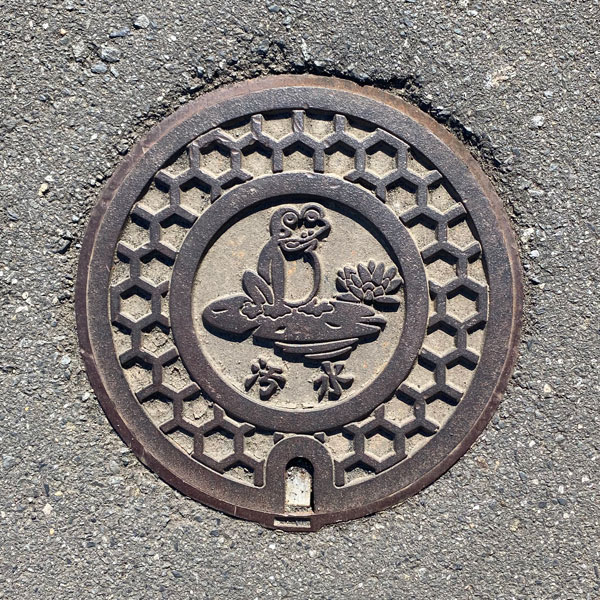
The symbol mark of the "Moroyama, Ogose, and Hatoyama Public Sewerage Association" is in the center.