Iwate 岩手県
Iwate 岩手県
Morioka 盛岡市
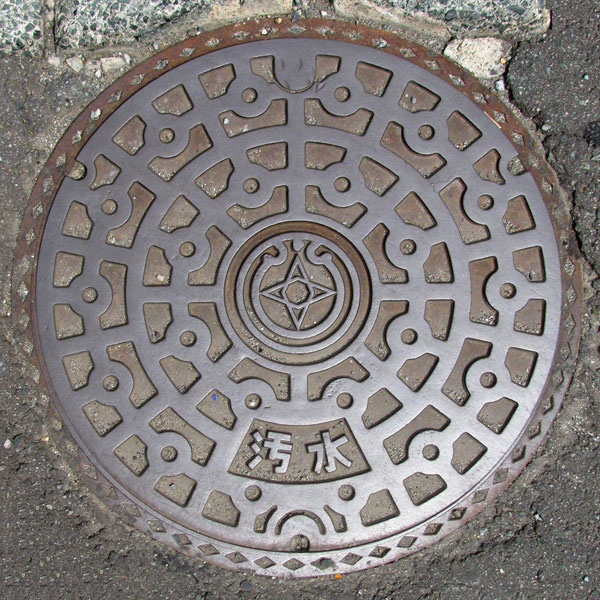
The city emblem of Morioka City is a standard JIS standard anti-slip pattern with two diamonds crossed at right angles in the center.
Tonan 都南村
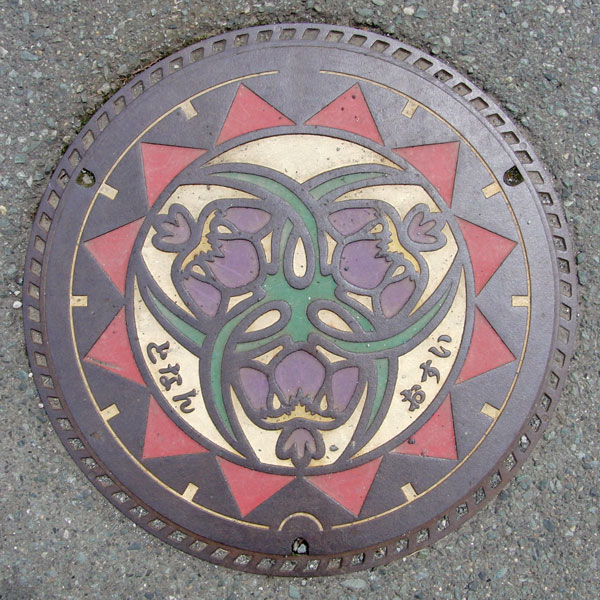
The village flower, the iris, is depicted.
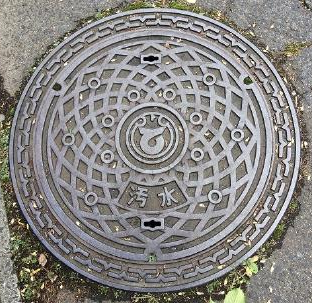
Former Tonan village emblem in the center.
Tamayama 玉山村
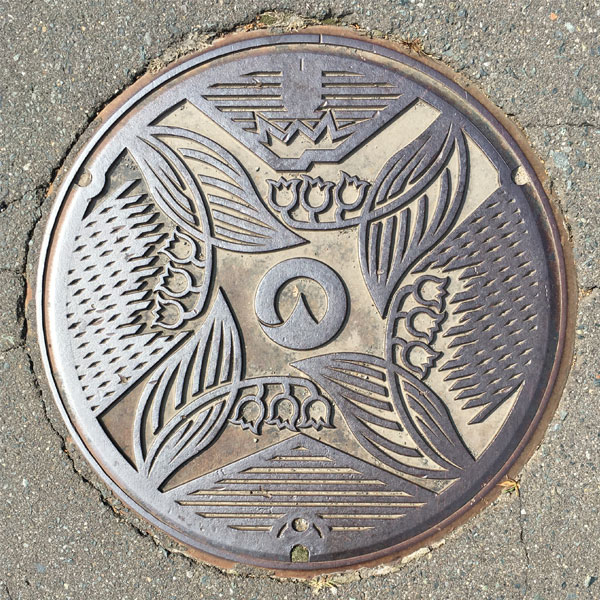
The village flower, lily of the valley, is depicted on the lid. The Takuboku Ishikawa Memorial Museum is located in the Shibutani area where this lid was once located.
Ninohe 二戸市
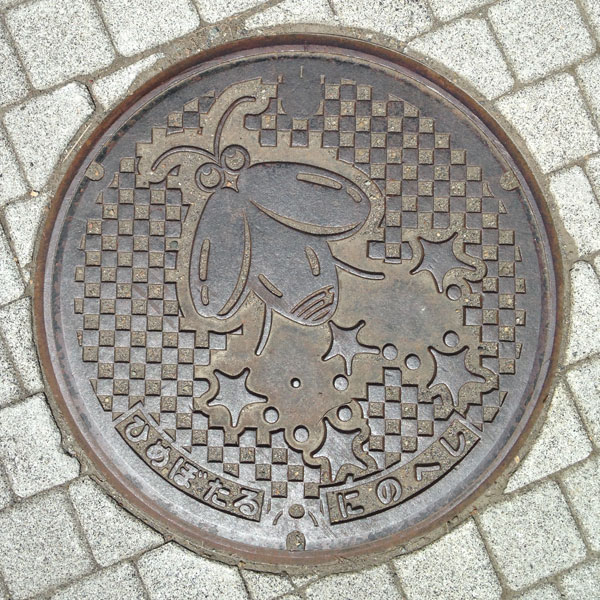
Manhole cover depicting the fireflies that live on Orizume-dake.
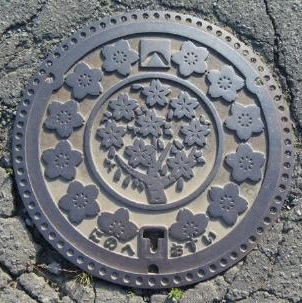
The city's flower, a mountain cherry tree, blooms in the center circle, surrounded by five mountain cherry blossom petals. The city emblem is at the top, and the characters "Ninohe" and "Osui" are written at the bottom.
Kuji 久慈市
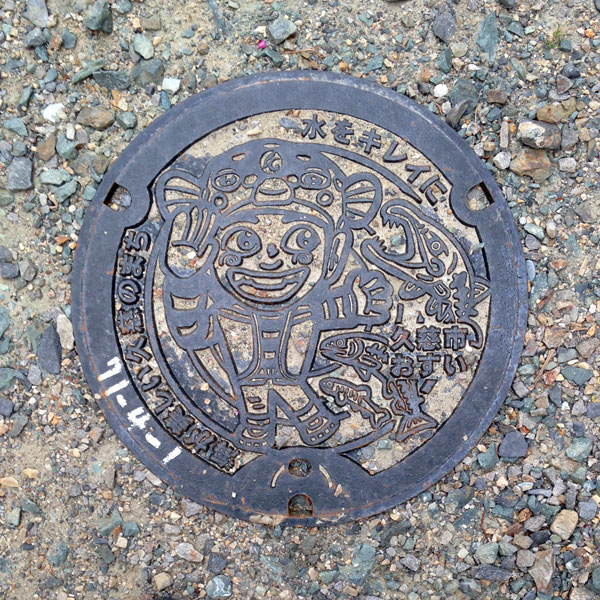
The familiar TV character "Sakan-kun" is depicted inside the words "Kuji City, with its Beautiful Sea" and "Clean the Water.
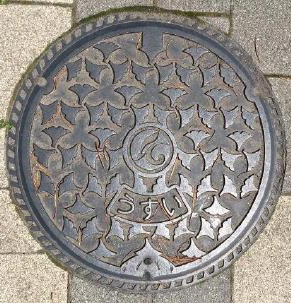
A manhole cover for sewage featuring the leaves of the city's tree, the ginkgo biloba with the new city emblem.
Kuji 久慈市
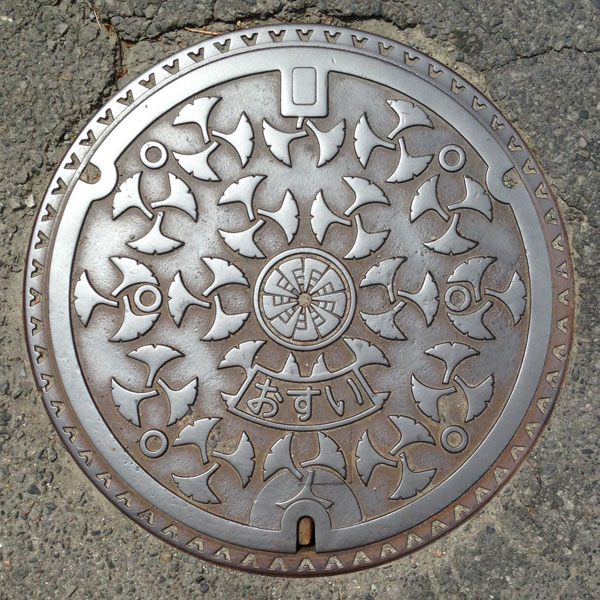
A manhole cover for sewage featuring the leaves of the city's tree, the ginkgo biloba.
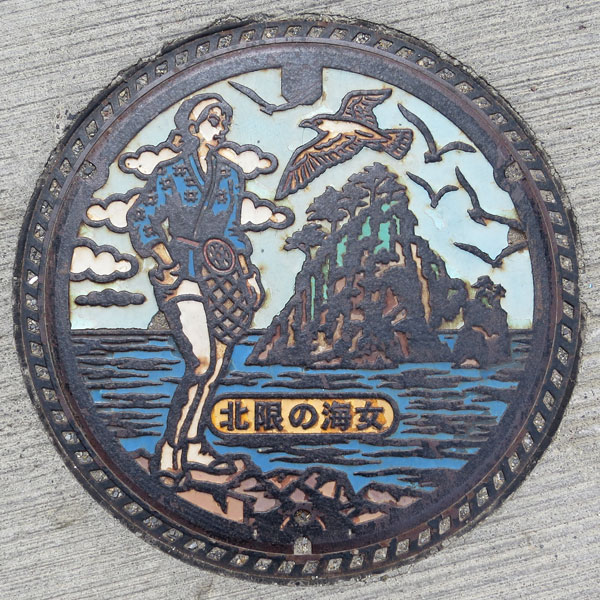
This Kosode area fishing port cover depicts the northernmost female diver standing on a rocky outcrop with the "Tsurigane Cave" caves of Kosode Coast in the background.
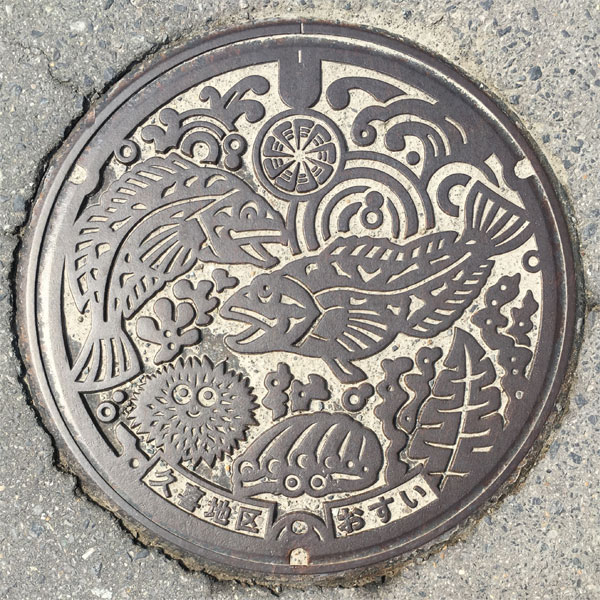
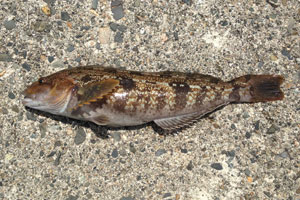
A fish collection and disposal lid in the Kuki district shows what appears to be a rockfish, as well as sea urchins and abalone.
Hachimantai 八幡平市
Nishine 西根町
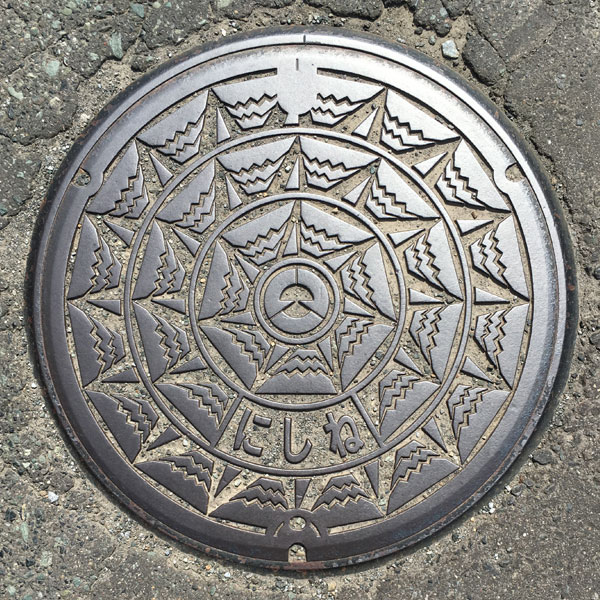
The design is based on Mt. Iwate, with three mountains arranged in a circle. It is said to be intended to prevent slipping. The town emblem is in the center.
Matsuo 松尾村
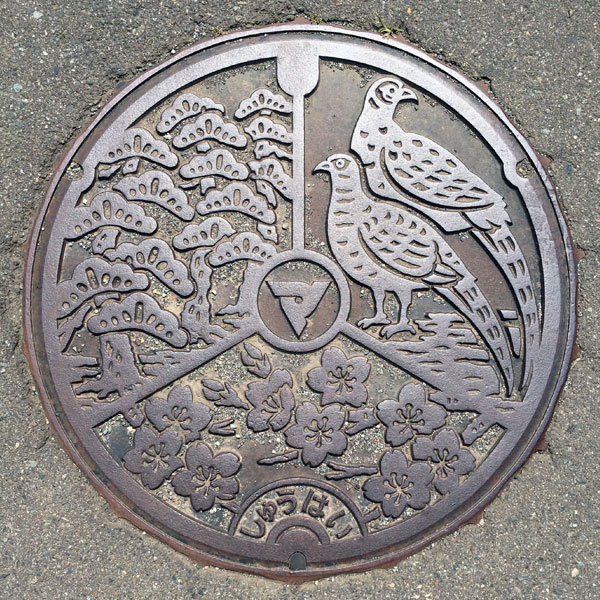
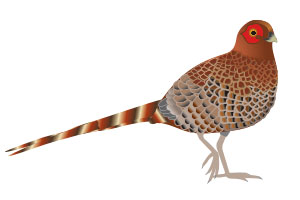
Clockwise from the top right: the village bird, the Copper Pheasant, the village flower, the cherry blossom, the village tree, the Japanese pine, and the village emblem in the center. This is a drainage cover for agricultural communities in the Noda district.
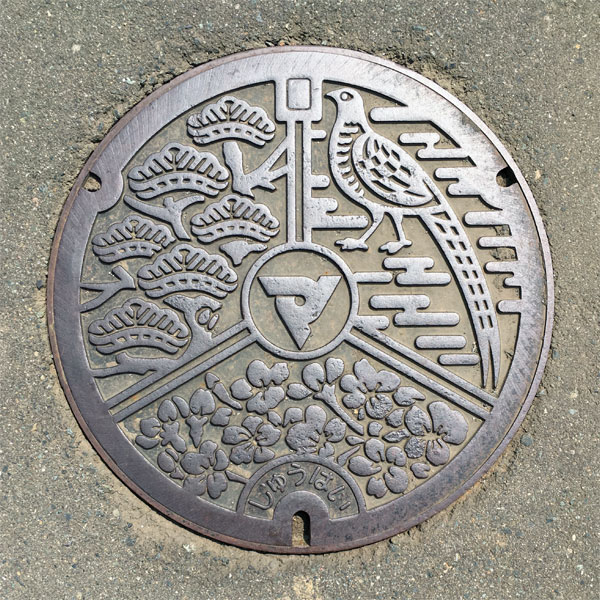
This lid is slightly smaller than the top lid. The lines dividing the lid into thirds have been reduced to two, and the designs of Yamadori, Sakura and Himekomatsu have been simplified slightly.
Ashiro 安代町
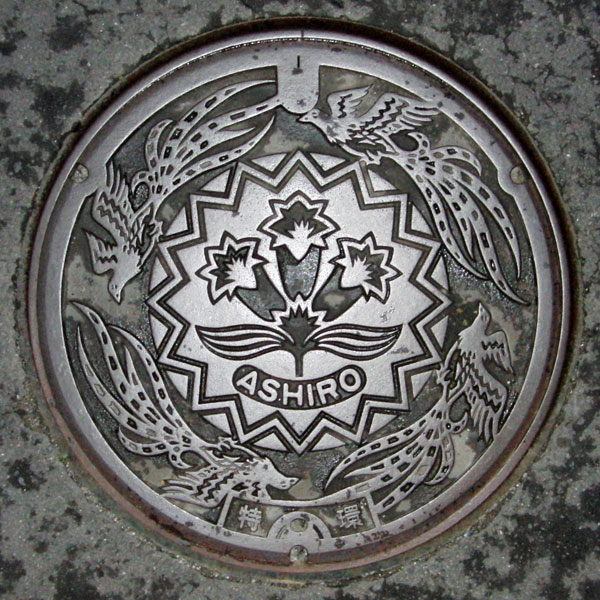
The lid features the town flower, the gentian, in the center and the village bird, the copper pheasant, around it.
Takizawa 滝沢市
Takizawa 滝沢村
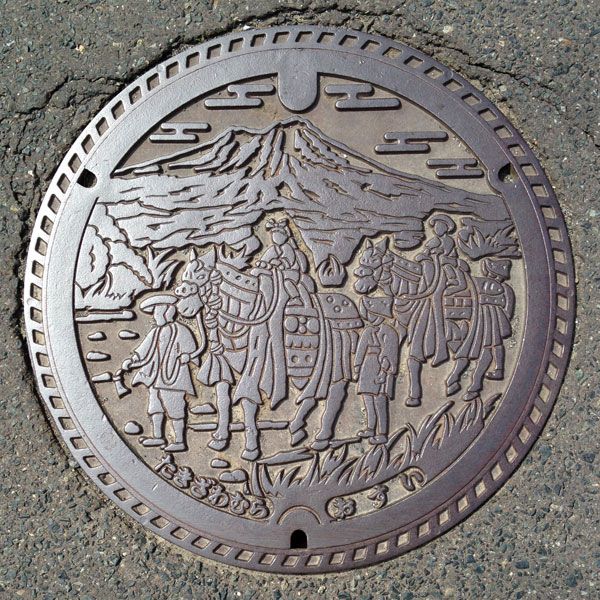
This sewage lid features a painting of "Chagu Chagu Umakko" with Mt. Iwate in the background. It dates back to the Takizawa Village era and has the words "Takizawa Village" written on the bottom.
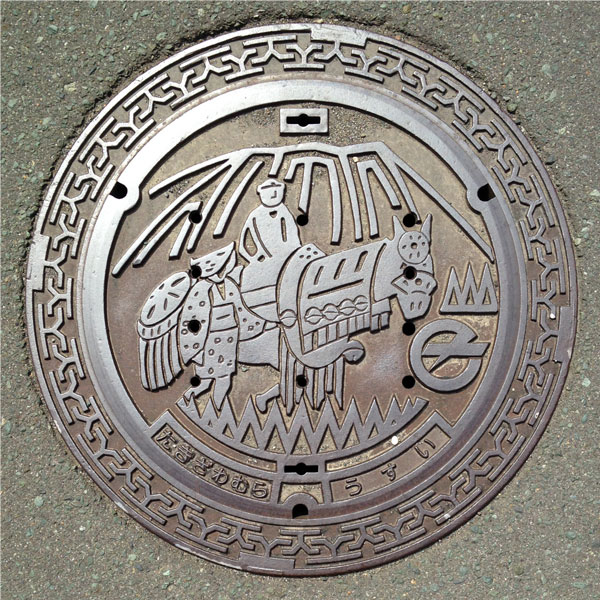
Like the one above, this rainwater cover depicts the "Chagu Chagu Umakko" with Mt. Iwate in the background, but the design is simplified. The Takizawa village emblem is on the right.
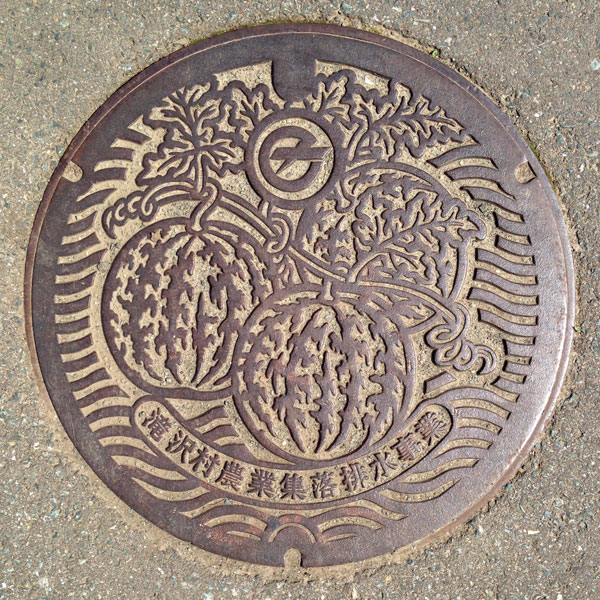
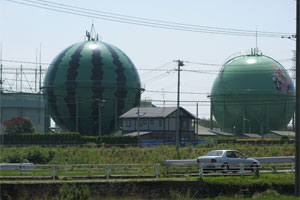
The lid of the agricultural drainage system (integrated into the public sewerage system in April 2015) features a watermelon. The village emblem (later inherited as the city emblem) is on top.
Miyako 宮古市
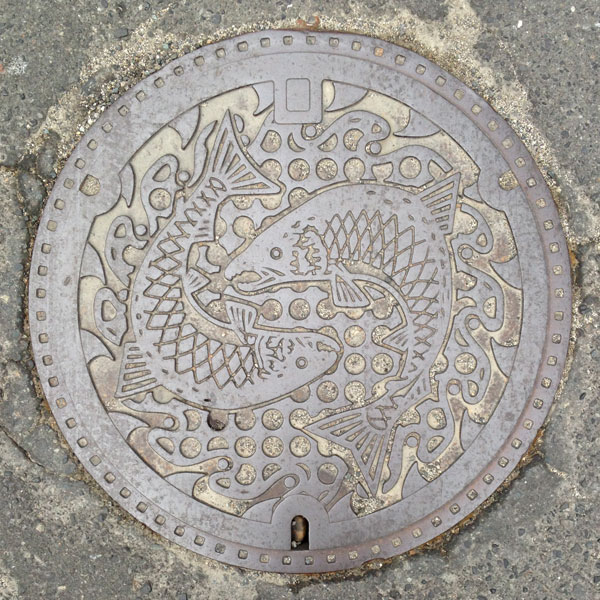
A sewage manhole cover with a salmon design.
Taro 田老町
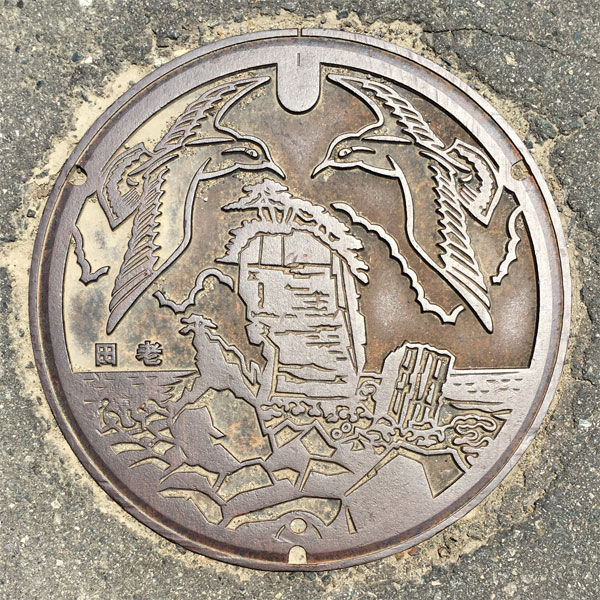
It depicts the Sannoiwa Rocks to the east of Taro Fishing Port and the town's bird, the black-tailed gull (characterized by the black band on its tail).
Niisato 新里村
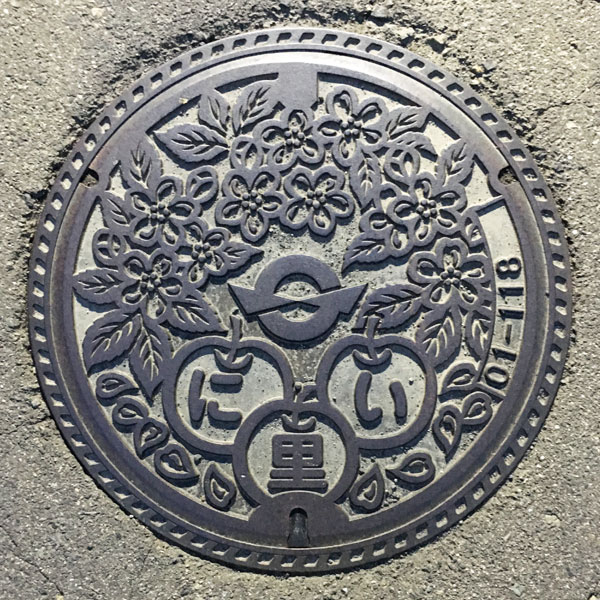
Agricultural collection and drainage lid in the Kameme district.
The village tree is the "Nambu Paulownia," the village flower is the "Fukujuso," and the town bird is the "uguisu" (Japanese bush warbler), so the flower depicted is likely an apple blossom. The village emblem is in the center, and below it are three apples with the word "Nii-sato" written inside. It is unclear whether the petals on either side are apple blossoms or something else.
Hanamaki 花巻市
Hanamaki 花巻市
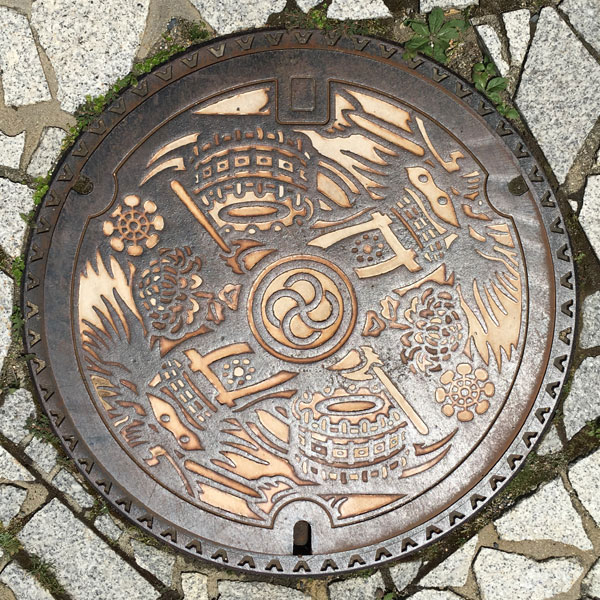
The manhole features the deer dance and chrysanthemum, two folk arts representative of the Hanamaki region. In the center is the old Hanamaki city emblem.
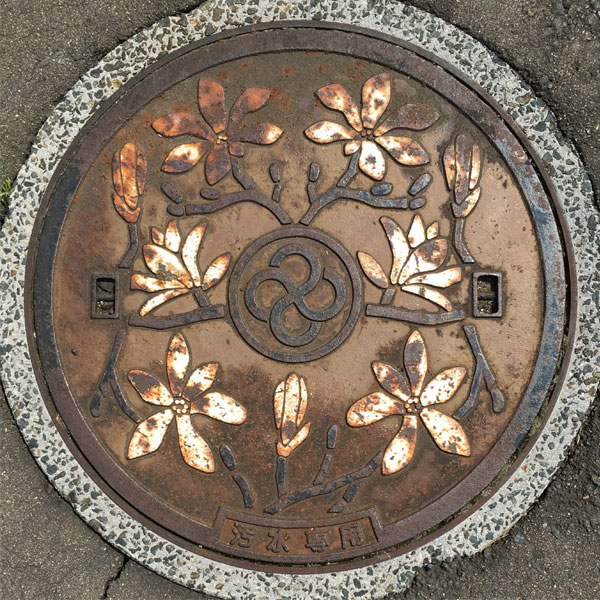
The former Hanamaki City emblem is in the center. It features a magnolia flower. The words "For wastewater only" are written at the bottom.
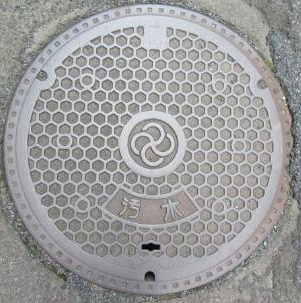
City emblem in the center of the manhole.
Ishidoriya 石鳥谷町
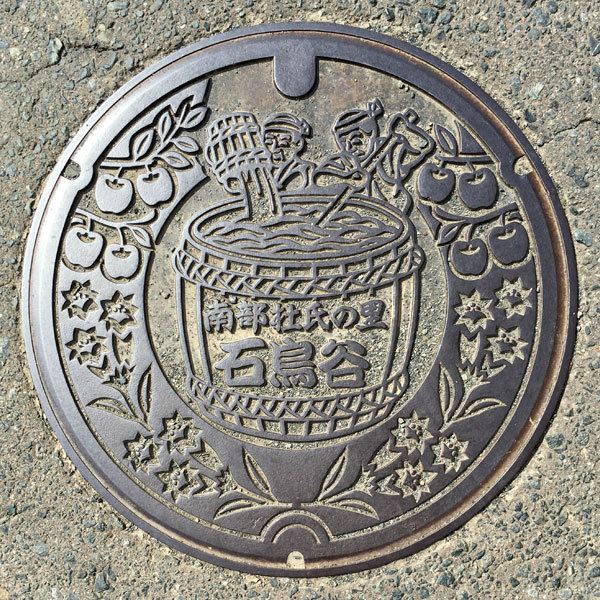
The sake barrel in the center is inscribed with the words "Ishidoriya, Home of the Nanbu Toji Brewers." The town is home to the Historical and Ethnic Museum and the Nanbu Toji Tradition Museum, which apparently have exhibits on sake brewing techniques. At the top is an image of an apple, a local specialty, and at the bottom is a gentian flower.
Ohasama 大迫町
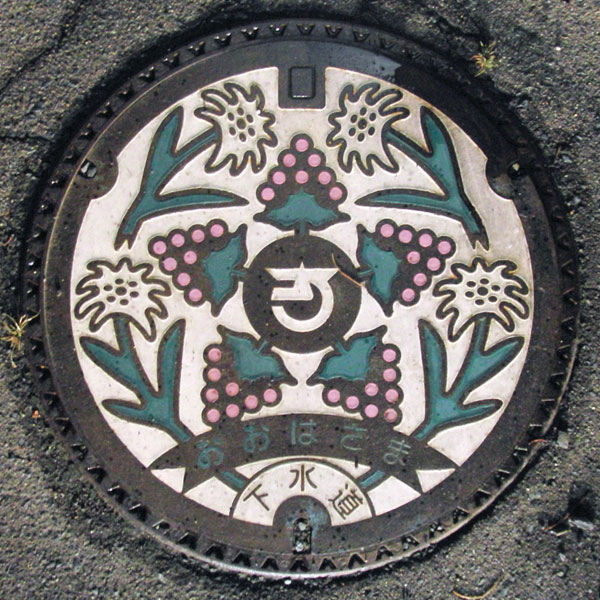
A colorful manhole cover featuring the town's flower, the Hayachine Usukisou, and the town's local specialty, grapes.
Towa 東和町
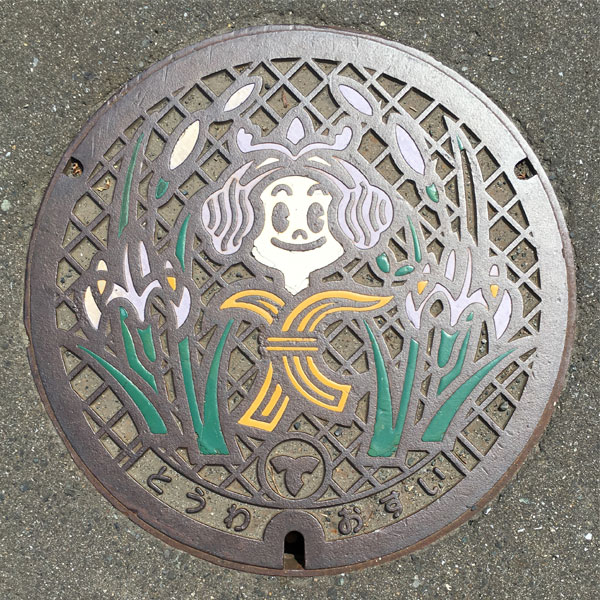
"Ayame-chan" is a character based on the iris.
Tono 遠野市
Tono 遠野市
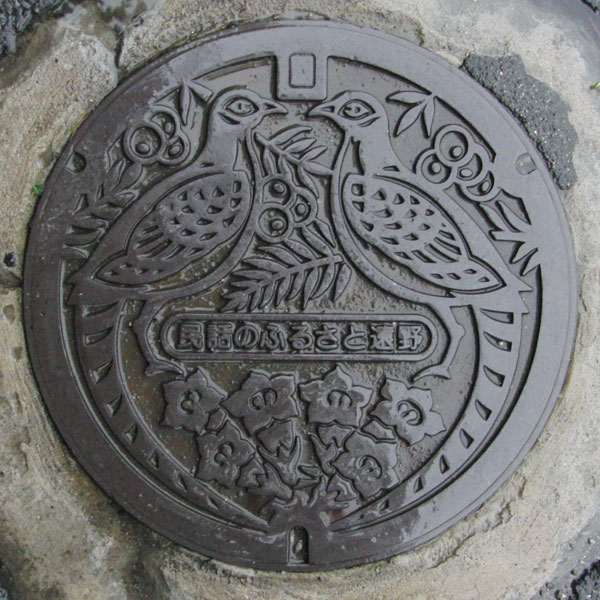
The bird is a "Copper Pheasant." The current symbols of Tono City are the yew tree and the mountain lily flower, but since the flower on this lid is a bellflower, it is likely to be a lid from the old Tono City. The words "民話のふるさと遠野" or "Tono, the Hometown of Folktales" are written on it.
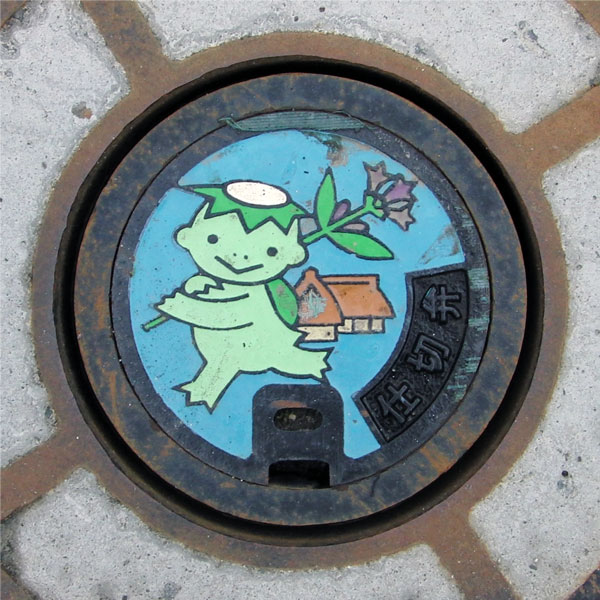
Karin-chan, the city's mascot, used to carry a gentian in front of Nanbu Magariya, but after the merger, she appears to be carrying a mountain lily in front of Miyamori's Meganebashi Bridge, as seen on the kappa capture permit below.
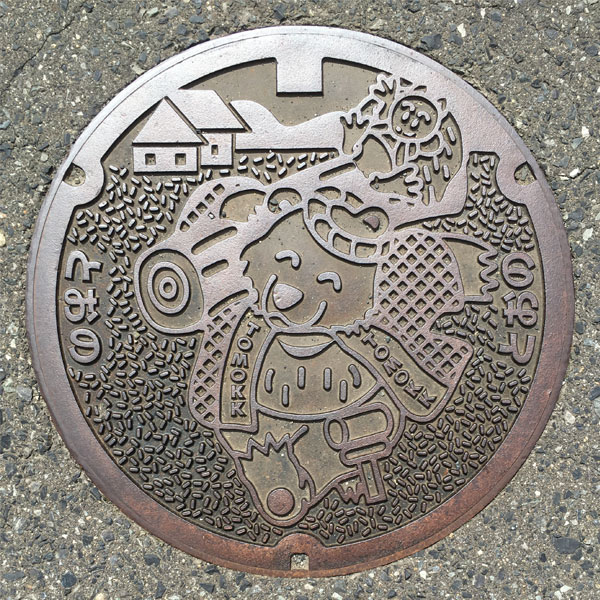
A smiling bear wearing a carpenter's coat and a headband with the word "TOMOKK" printed on its collar is carrying a log. Is it a squirrel or a flying squirrel lying on the log? In the distance are mountains and a building that looks like a Nambu Magariya. The surface of the board is covered with a floral pattern that appears to have a non-slip effect. The character "Tono" appears on both sides.
Miyamori 宮守村
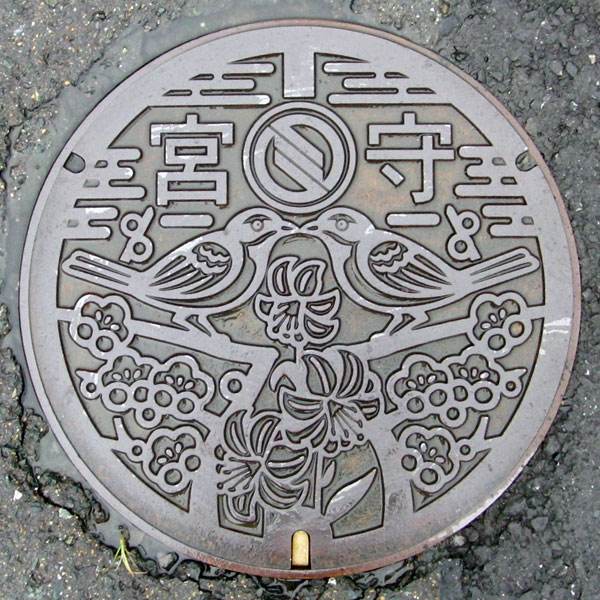
The village bird, the Japanese bush warbler, and the village flower, the mountain lily, are depicted on the wall. At the top, the village emblem is sandwiched between the characters "Miyamori" and "Miyamori" written in large letters.
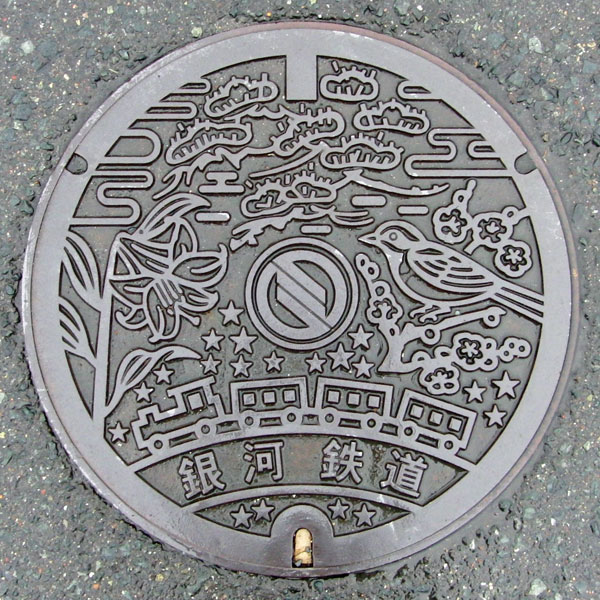
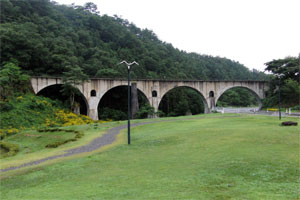
In addition to the village tree, the red pine, the village flower, the mountain lily, and the village bird, the Japanese bush warbler, the words "Galaxy Railroad" and a train are drawn at the bottom. Below is the Megane Bridge.
Kitakami 北上市
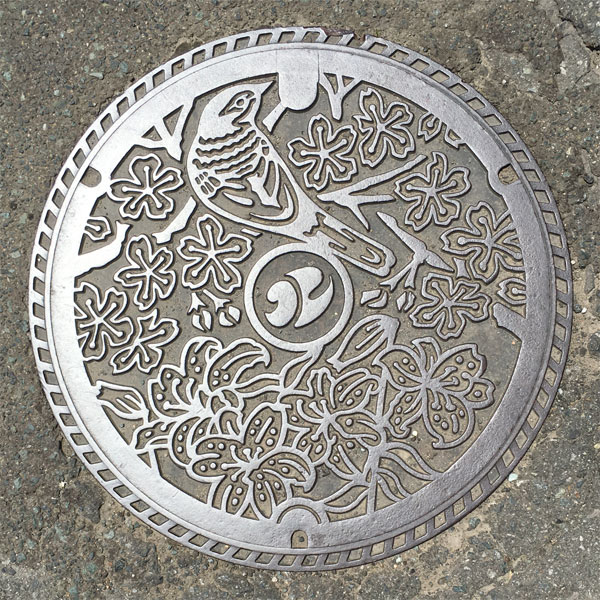
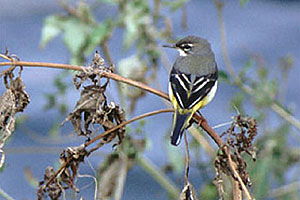
A version of the manhole cover for sewage, featuring the city tree "Sakura", the city flower "White lily (mountain lily)", and the city bird "Grey wagtail". In the center is the city emblem of the new Kitakami city after the merger.
Ezuriko 江釣子村
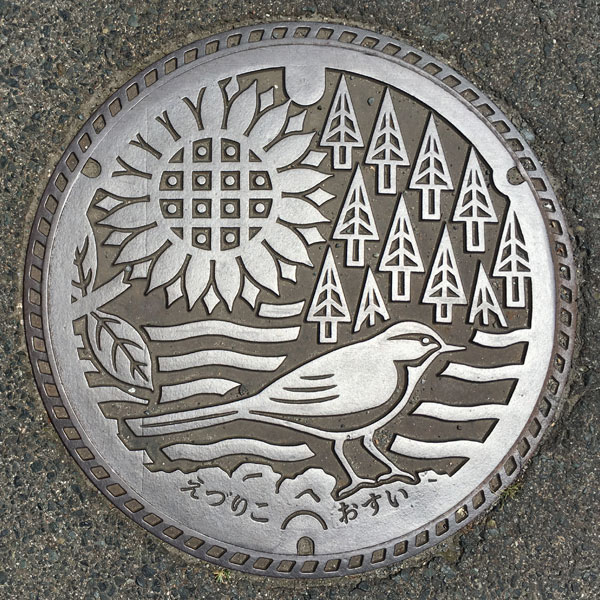
A manhole cover for wastewater treatment facilities depicts the village tree (cedar), village flower (sunflower), village bird (grey wagtail), and the flow of the Kitakami River.
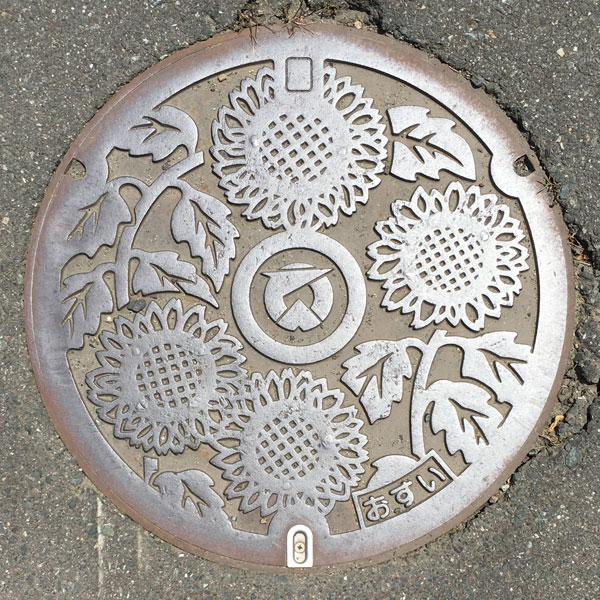
A manhole cover for sewage facilities featuring the village flower, the sunflower, with the old village emblem in the center.
Kamaishi 釜石市
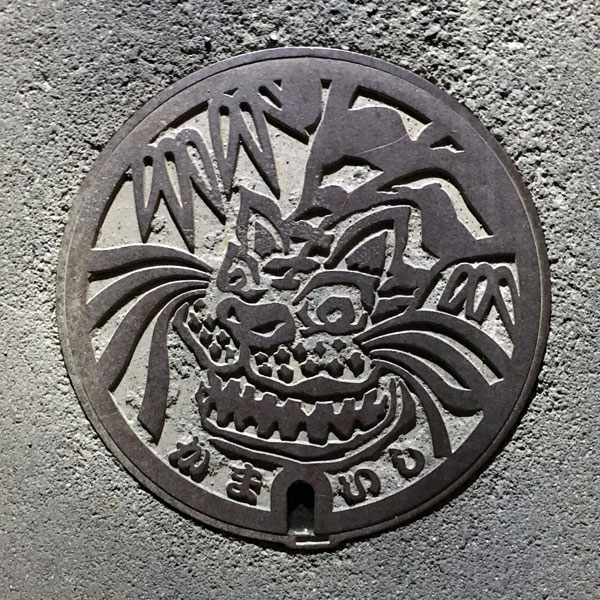
The manhole covers for sewage treatment depicts the traditional "Tiger Dance" dance.
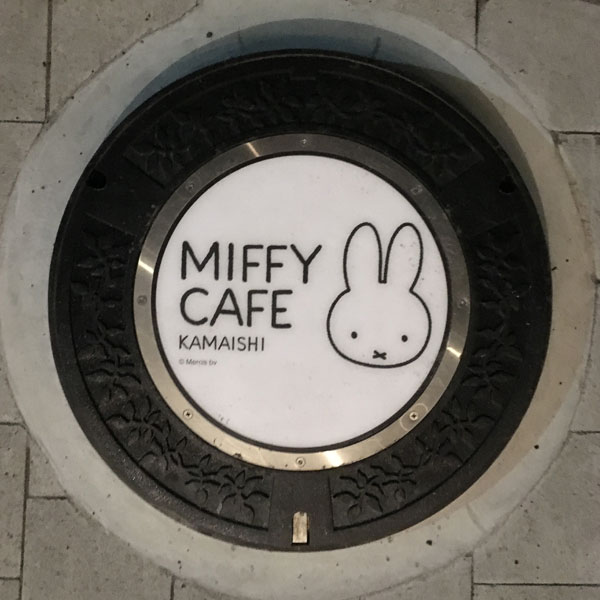
This one-of-a-kind sticker-type manhole cover features the Dutch-born character "Miffy" and the "Miffy Cafe Kamaishi" logo, "MIFFY CAFE" and "KAMAISHI."
Oshu 奥州市
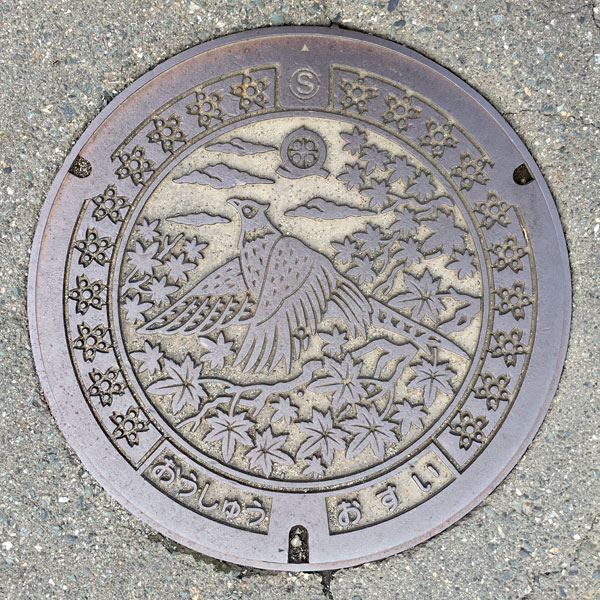
A sewage manhole cover after the merger features the city's flowers, trees, and birds: "cherry blossoms," "maple trees," and "pheasants." The city emblem is on the top, and the characters "Oshu" and "Osui" are written on the bottom.
Mizusawa 水沢市
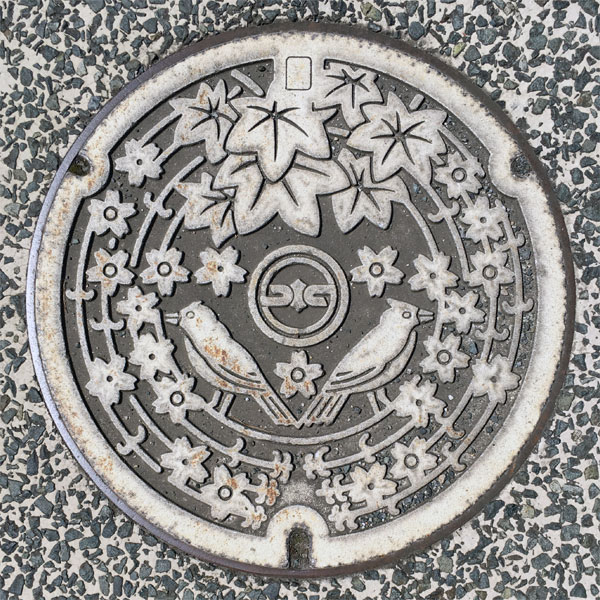
These manhole covers for sewage combine the city's tree, the maple, the city's flower, the weeping cherry, and the city's bird, the skylark.
Esashi 江刺市
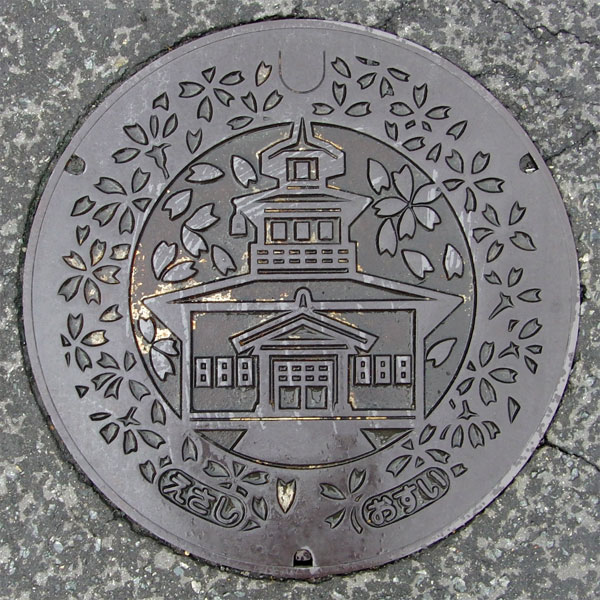
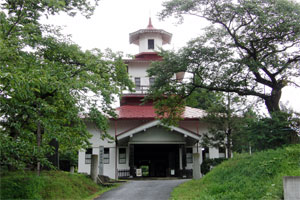
The building in the center is the Meiji Memorial Hall, a designated tangible cultural property of the prefecture. The signpost at the entrance to the Meiji Memorial Hall reads, "This building was the motif for 'The Hill Where the Bells Ring.'"
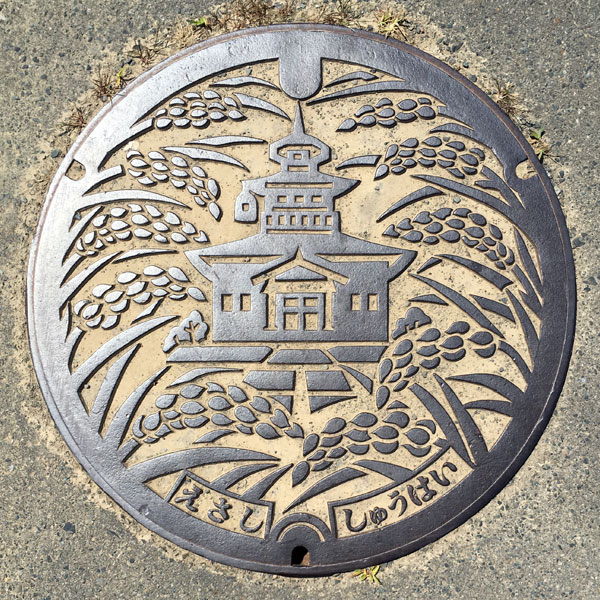
The drainage lid for the agricultural village of Futagomachi. The area around the Meiji Memorial Hall is decorated with rice plants instead of cherry blossoms.
Maesawa 前沢町
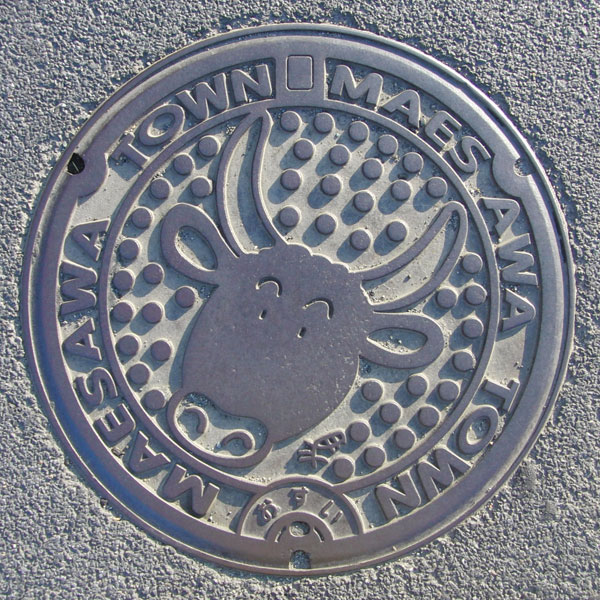
It's unclear whether the character is for Maezawa beef or Maezawa town, but its name is "Maezawa Gyuta." It appears to have been designed by Noboru Baba, and you can see his signature underneath "Gyuta." The words "MAESAWA TOWN" are written on both sides, and "Osui" at the bottom.
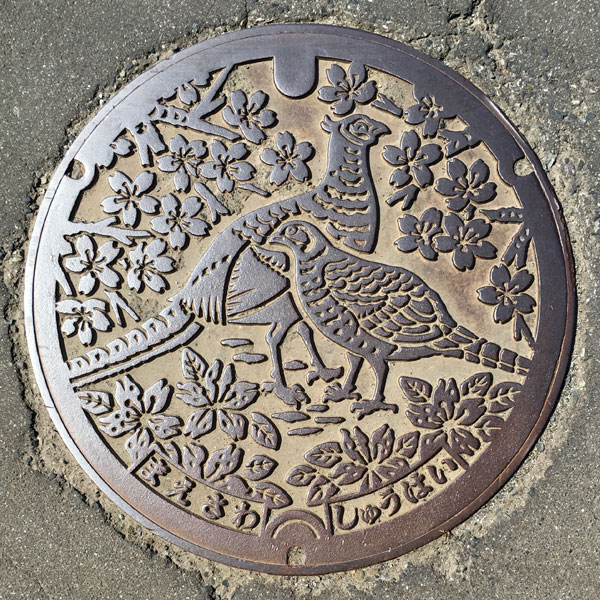
This is a drainage cover for an agricultural settlement in the Furushiro district. In the center is a pair of pheasants, the town's bird, while the upper half depicts a cherry blossom, the town's tree, and the lower half depicts an azalea, the town's flower.
Isawa 胆沢町
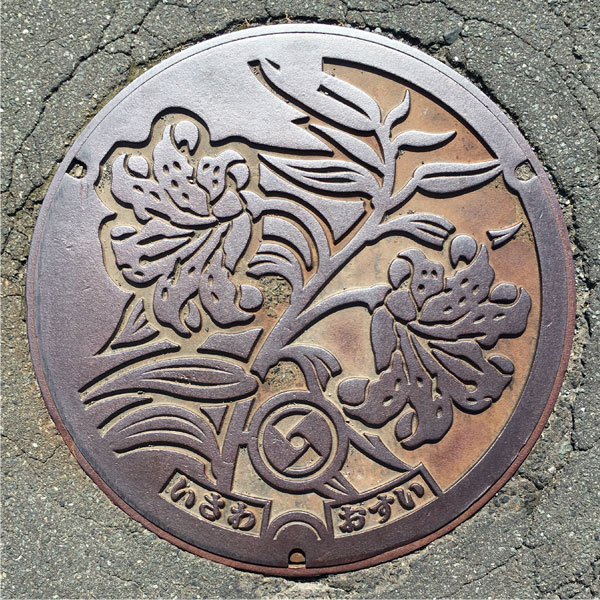
A sewage manhole cover decorated with the town flower, the mountain lily.
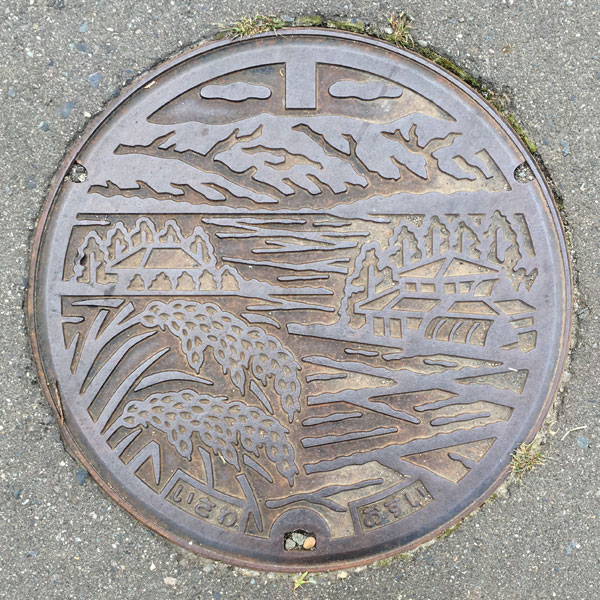
With Mount Yakeishi (1,547.7 m) in the background, rice fields and scattered settlements are depicted, with ears of rice in the foreground. The characters "Isawa" and "Osui" are written at the bottom.
Koromogawa 衣川村
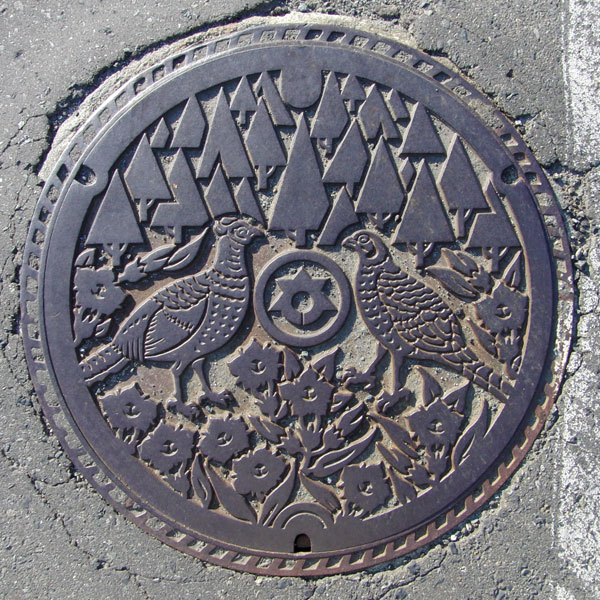
It features the village tree, the Japanese cedar, the village bird, the pheasant, and the village flower, the gentian.
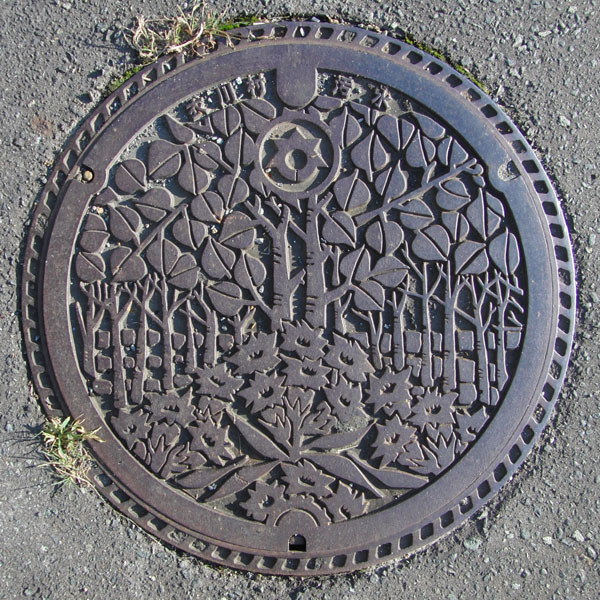
There were many of these lids near the general branch office. They feature the village tree, the cedar, the village bird, the pheasant, and the village flower, the gentian.
Ofunato 大船渡市
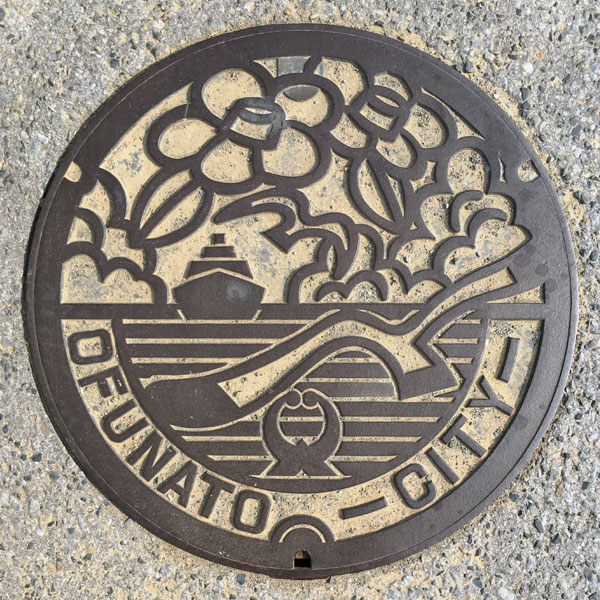
The city's flower is the camellia, the city's bird is the black-tailed gull, and a big ship
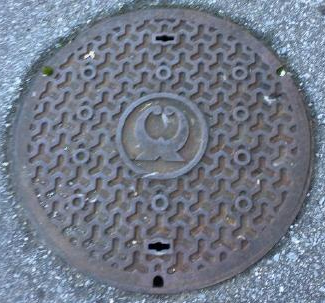
City emblem in the center.
Sanriku 三陸町
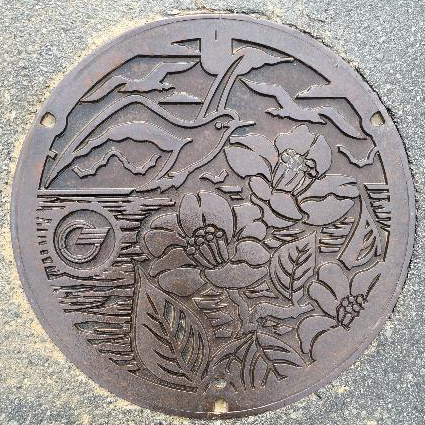
This is a cover for the Koishihama fishing village drainage system in the former Sanriku Town (Ofunato City). It features the town flower, a camellia, and the town bird, a seagull, with the Pacific Ocean in the background.
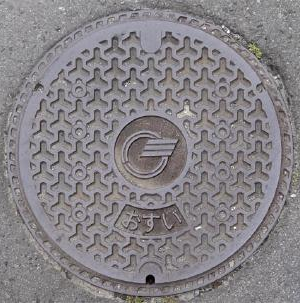
Former town emblem in the center.
Rikuzentakata 陸前高田市
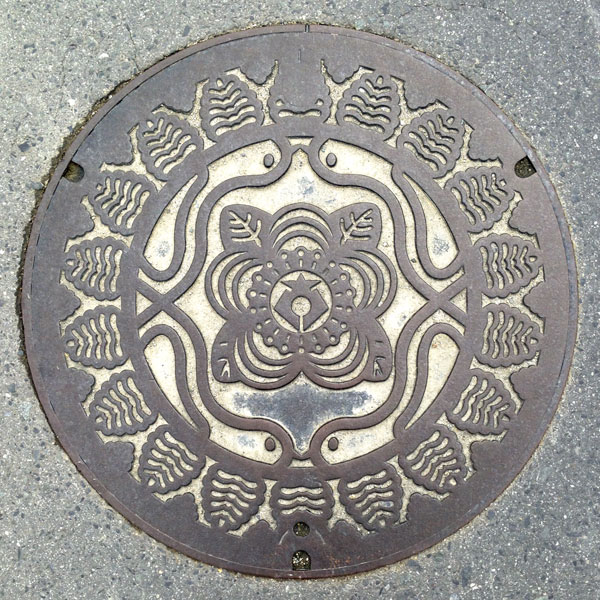
It depicts the city's tree, the cedar, the city's flower, the camellia, and the city's bird, the seagull.
Ichinoseki 一関市
Ichinoseki 一関市
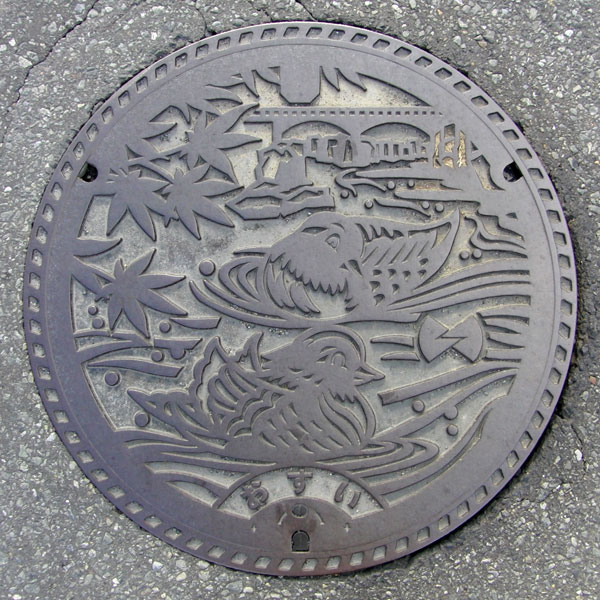
A view of Genbikei Gorge. The city's bird, the mandarin duck, and the city's tree, the maple tree, are depicted.
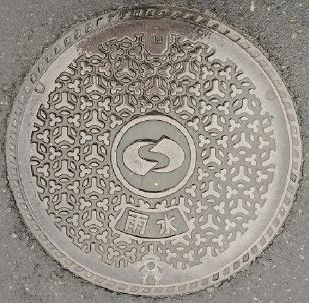
The manhole features the city emblem in the center.
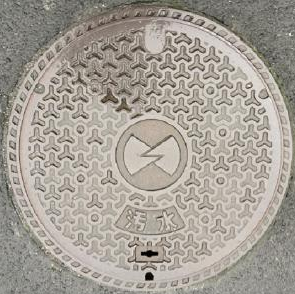
City emblem in the center, and the word "Osui" (sewage) written below.
Hanaizumi 花泉町
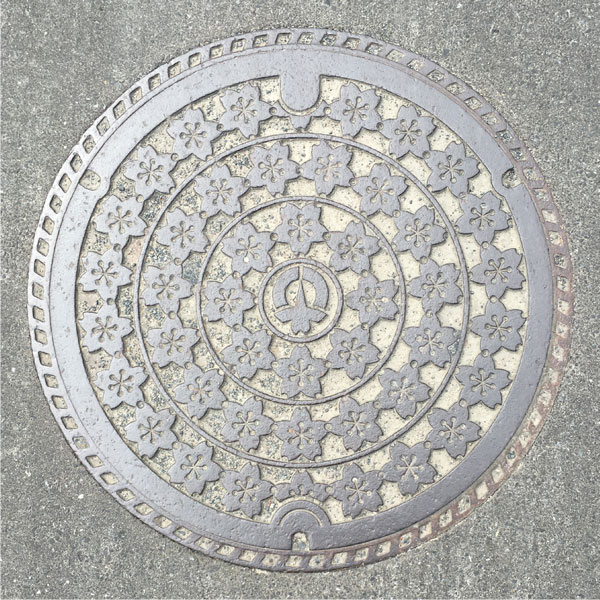
A manhole cover for sewage treatment, decorated with concentric circles of cherry blossoms, the town's flower.
Daito 大東町
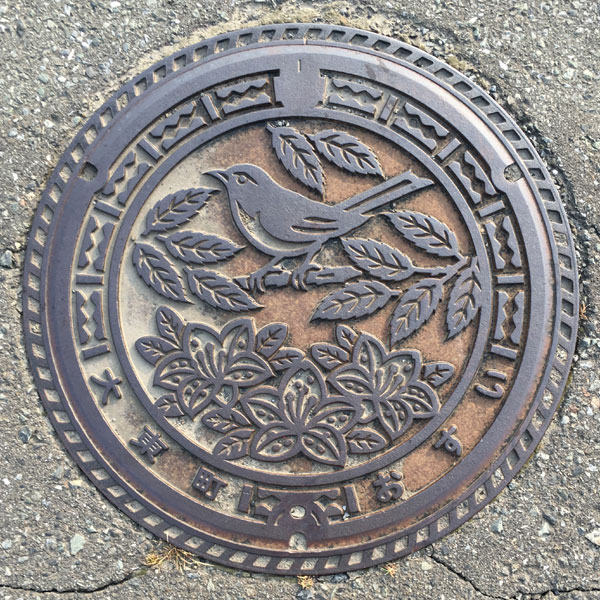
A sewage manhole cover featuring the town's tree, the zelkova tree, the town's flower, the azalea, and the town's bird, the Japanese bush warbler.
Senmaya 千厩町
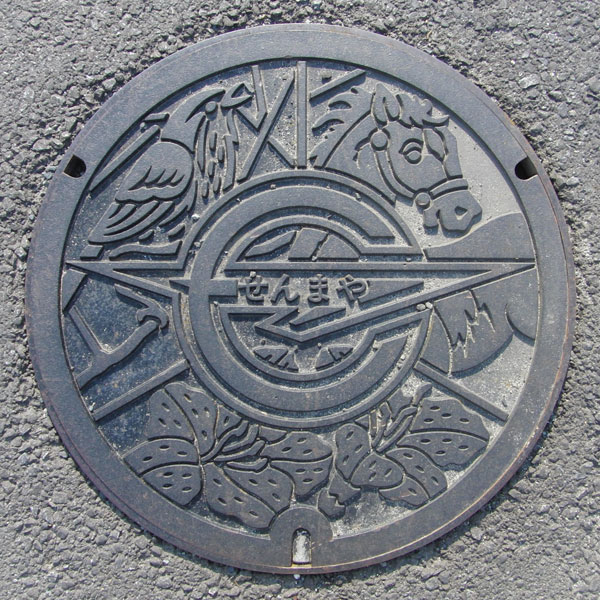
The painting depicts the town's bird, the Japanese bush warbler, the town's flower, the mountain lily, and a horse.
Higashiyama 東山町
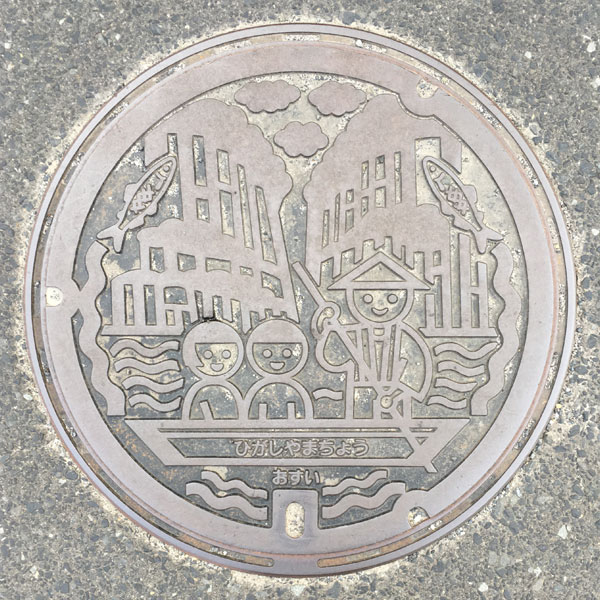
A sewage manhole cover depicting "Geibikei Gorge Boat Ride."
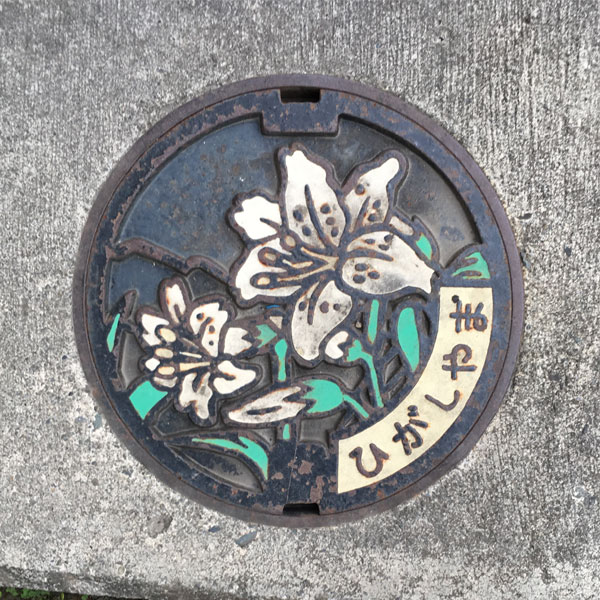
The lid of a household sewage manhole is decorated with the town flower, the mountain lily.
Kawasaki 川崎村
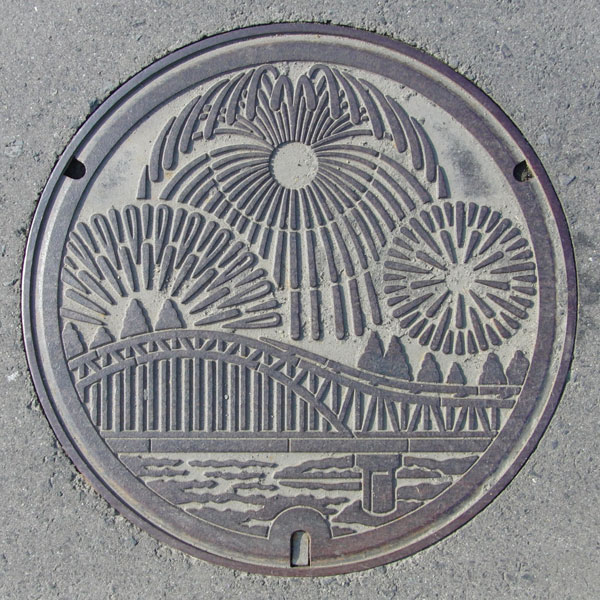
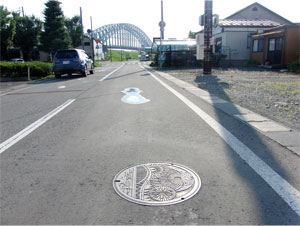
The lid of the special ring features a picture of Kitakami Bridge and fireworks.
Fujisawa 藤沢町
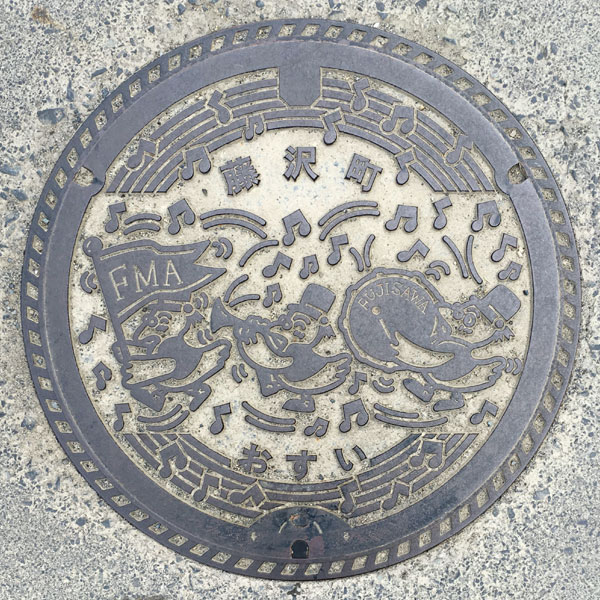
The three birds playing music are likely the town's bird, the Oriental Turtle Dove.
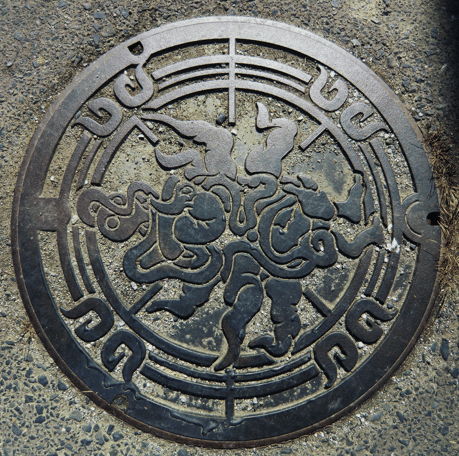
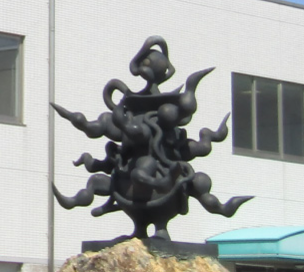
Jomon Monument in front of Fujisawa Civic Center
Hirono 洋野町
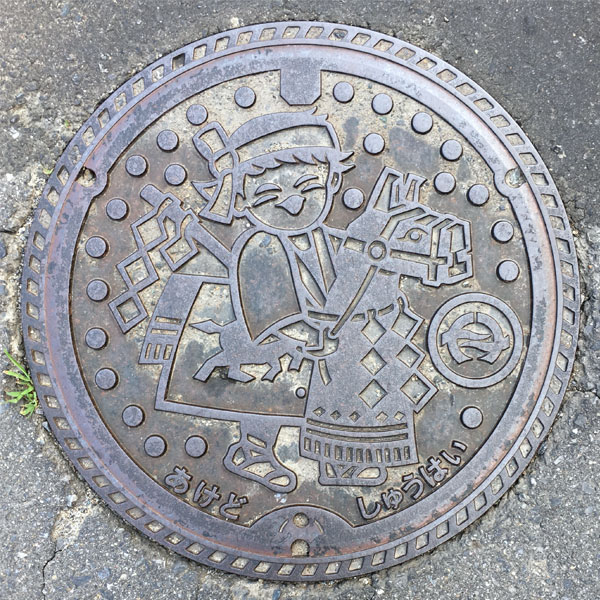
A drainage lid in the Akedo agricultural community depicts the "Oono Koma Dance."
The "Oono Koma Dance" is said to have originated during the Bunka and Bunsei eras, when wealthy farmers from Akedo brought the Edo-period popular game of stilts with horse heads to Ono during trade with Edo. Seven horses parade behind the leader, bobbing their heads in unison, preserving the Nanbu-style group horse training style known as "Seven Heads, One Rein."
Taneichi 種市町
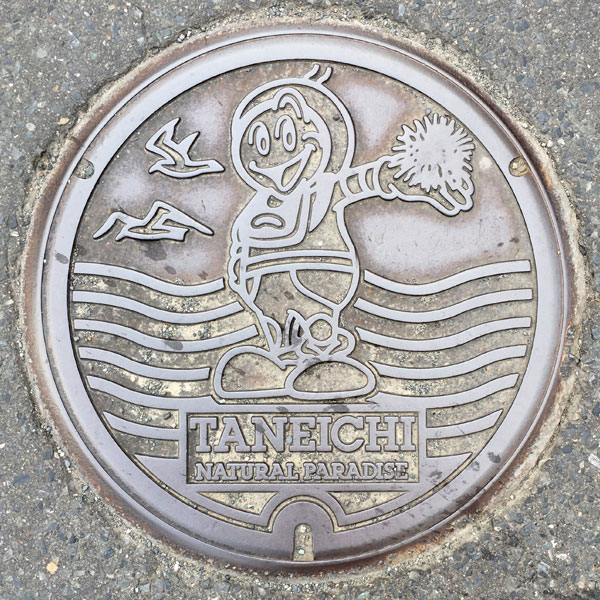
Standing with a sea urchin on his left hand is the town's mascot, "Dai-chan," a Nanbu dive diver.
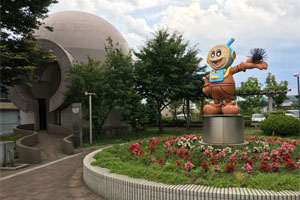
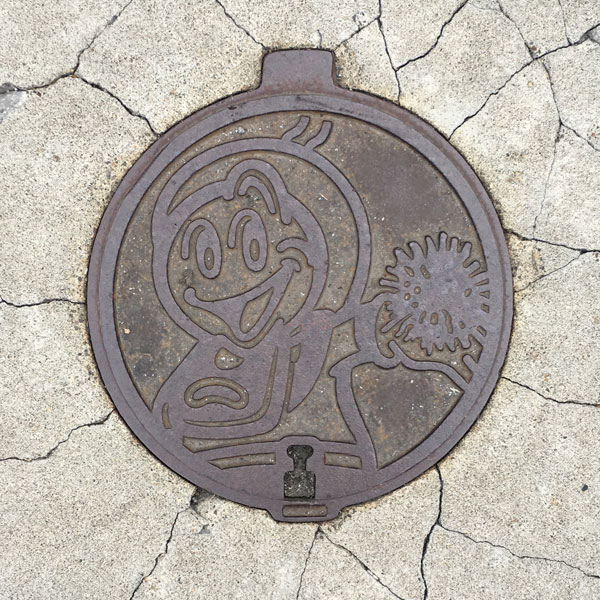
This hand-hole cover features only Dai-chan's upper body. It was located in the plaza at Taneichi Station, where blue, light blue, and white bricks create a beachy look.
Ohno 大野村
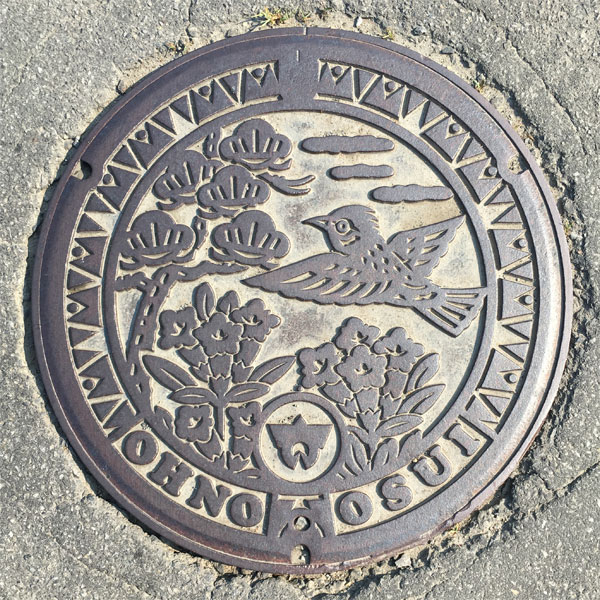
This sewage manhole cover features the letters "OHNO" and "OSUI" at the bottom of the surrounding pattern, the village tree "Japanese red pine" on the inside left, the village flower "gentian" below, and the village bird "skylark" on the right.
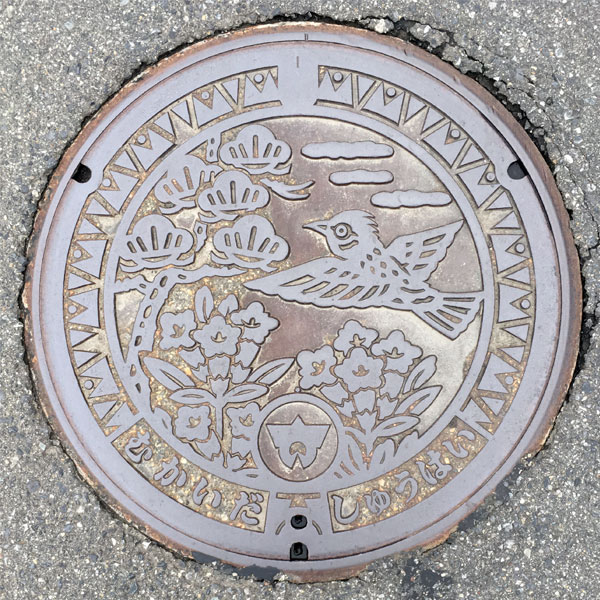
This agricultural wastewater collection and drainage cover in the Mukaida area has the same design as the public sewer, with the characters "Mukaida" and "Shuhai" written at the bottom.
Karumai 軽米町
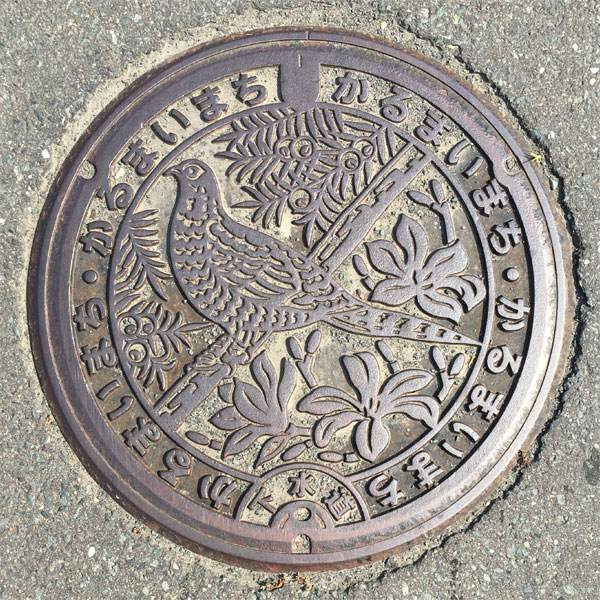
The sewage manhole cover is surrounded by the words "Karumaimachi" (light town), and on the inside it features the town's tree, the yew, the town's flower, the magnolia, and the town's bird, the pheasant.
Ichinohe 一戸町
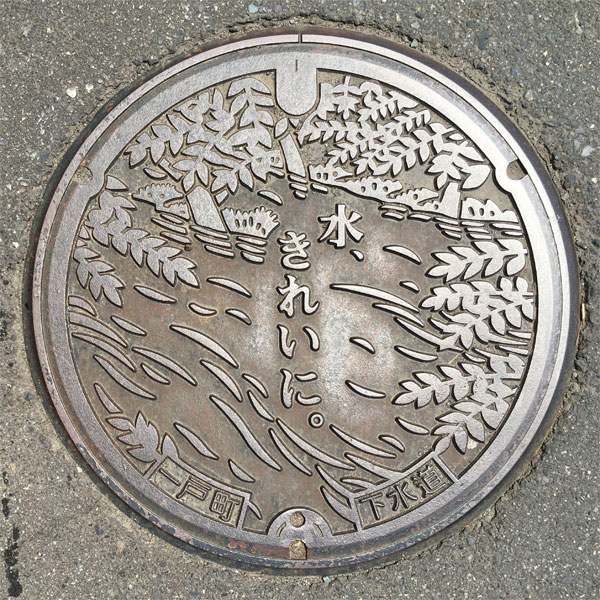
The phrase "Clean Water", "きれいに", is written against the background of an image of a clear stream. The words "Ichinohe Town" and "Sewerage" are written at the bottom.
Kuzumaki 葛巻町
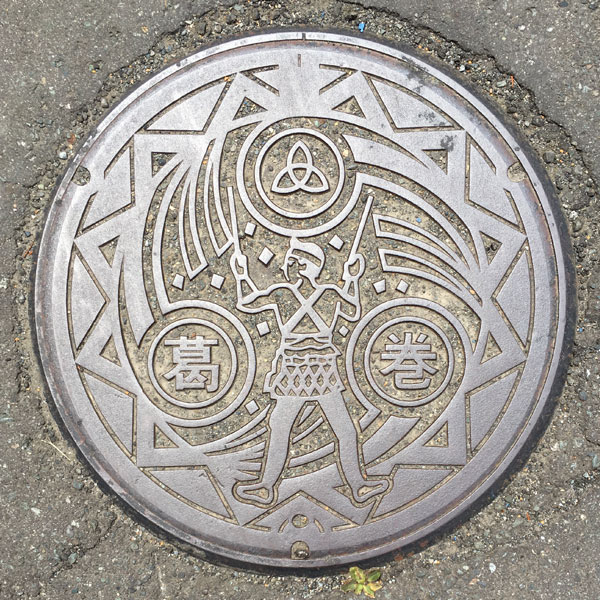
The town emblem, "Kuzu" and "Maki" are written on a drum. The manhole cover has the theme of the Mabechi River source drum.
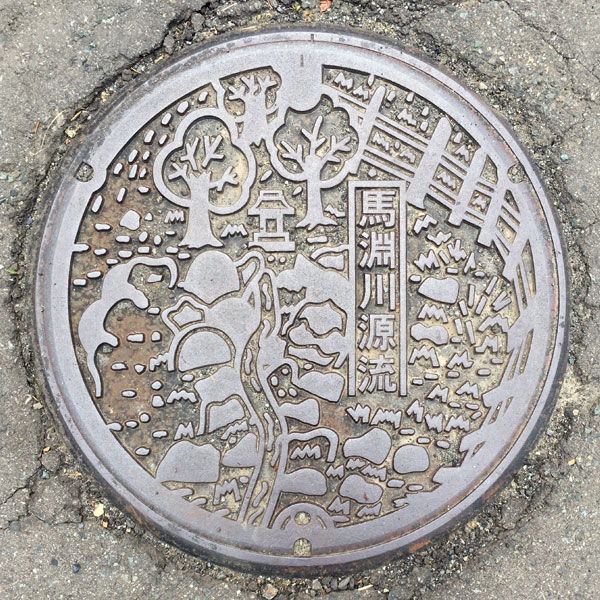
The source of the Mabechi River, which flows into the Pacific Ocean in Hachinohe City, Aomori Prefecture, is Kuzumaki Town. The lid features a picture of the source of the Mabechi River.
Iwate 岩手町
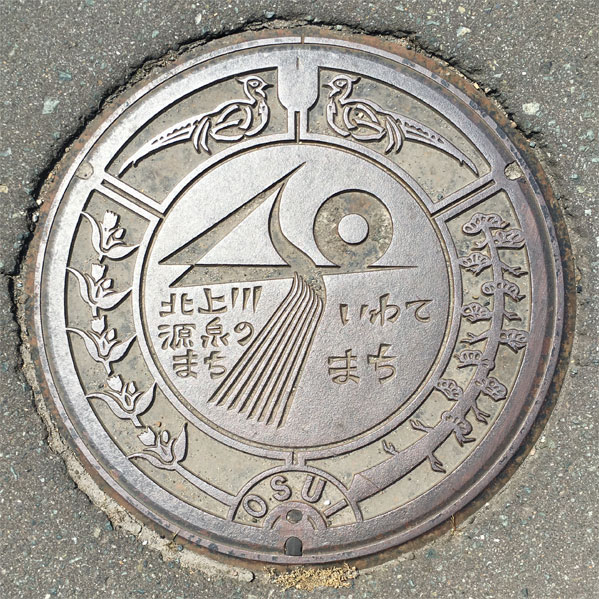
The bird at the top is the town's bird, the "pheasant," the town tree, the "Midomatsu" pine, and the town flower, the "gentian," on the left. The words "Kitakami River Source Town" and "Iwate Town" are also visible in the circle in the center. I wondered what the bird's profile looked like at first glance, so I searched for it. Apparently, it's a design of the 40th parallel north and the flow of the Kitakami River. I see.
Iwaizumi 岩泉町
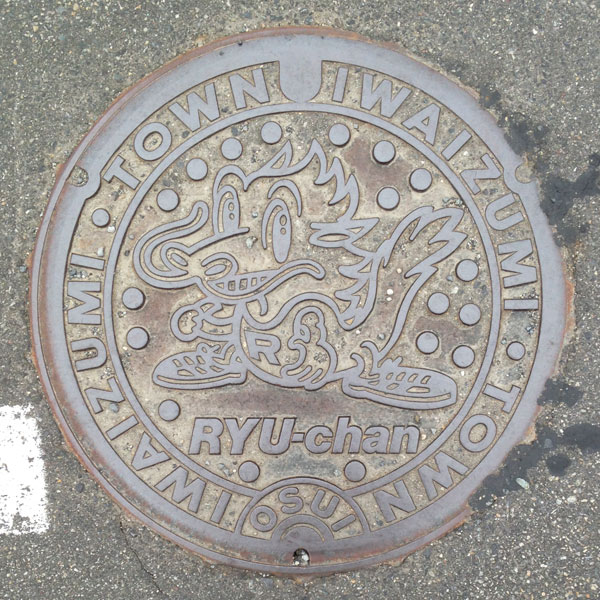
A manhole cover for sewage featuring Iwaizumi Town's mascot character, "Ryu-chan."
Shizukuishi 雫石町
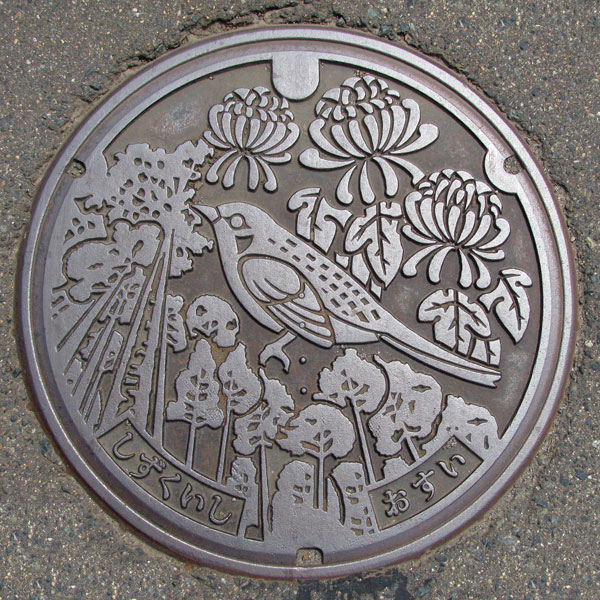
The design features the town's tree, the cedar, its flower, the chrysanthemum, and its bird, the Japanese bush warbler.
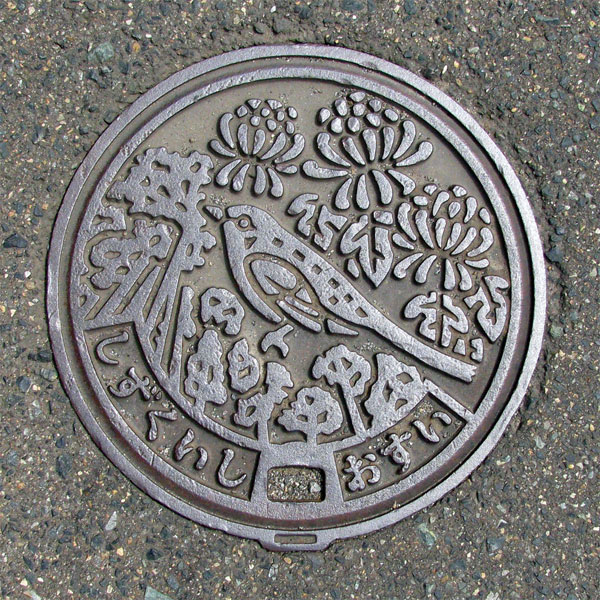
A mini version with a diameter of about 30cm. The design is almost the same as the regular size.
Yahaba 矢巾町
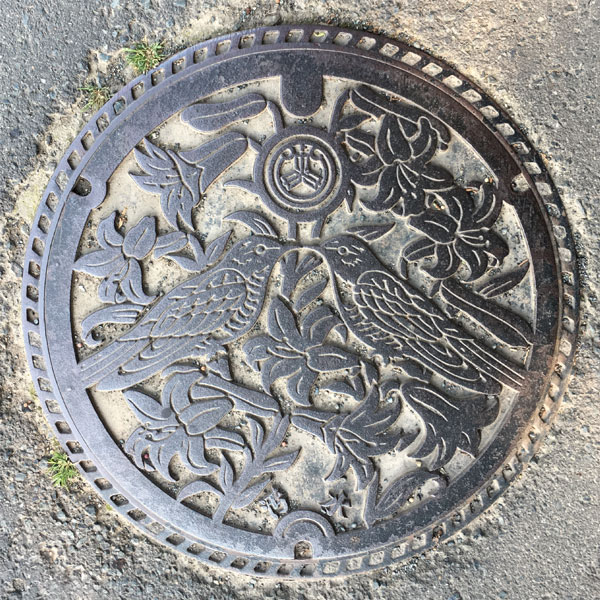
A sewage manhole cover decorated with the town's flower, the lily, and the town's bird, the cuckoo.
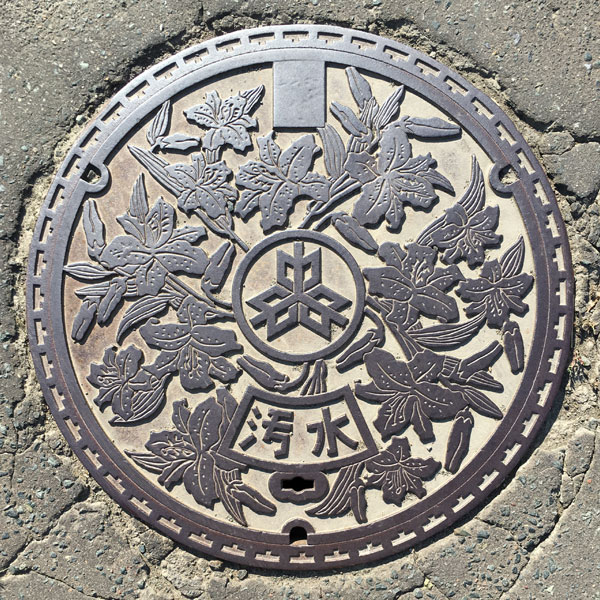
A sewage manhole cover featuring only the town flower, the lily.
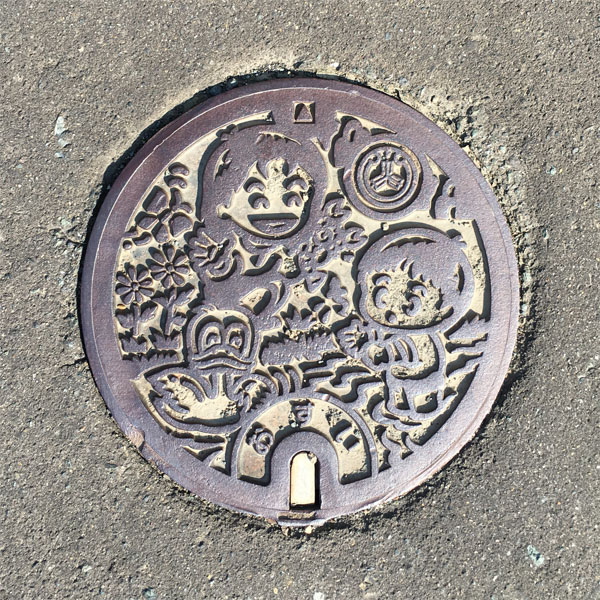
A small cover depicting children playing in a river.
Shiwa 紫波町
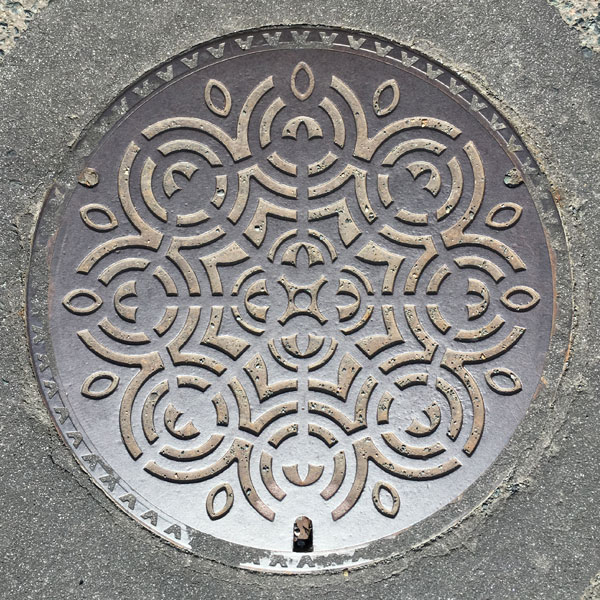
This is a sewage manhole cover with a pattern that looks like looking through a kaleidoscope.
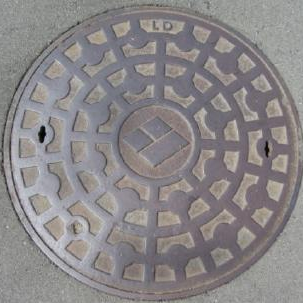
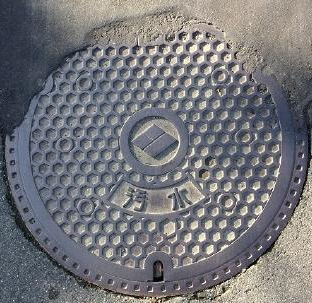
New city emblem on a manhole cover.
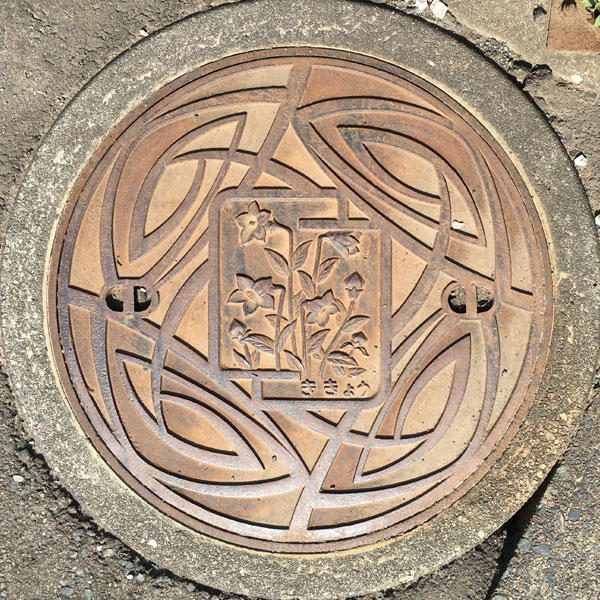
The town flower, a bellflower, is painted in the center.
Yamada 山田町
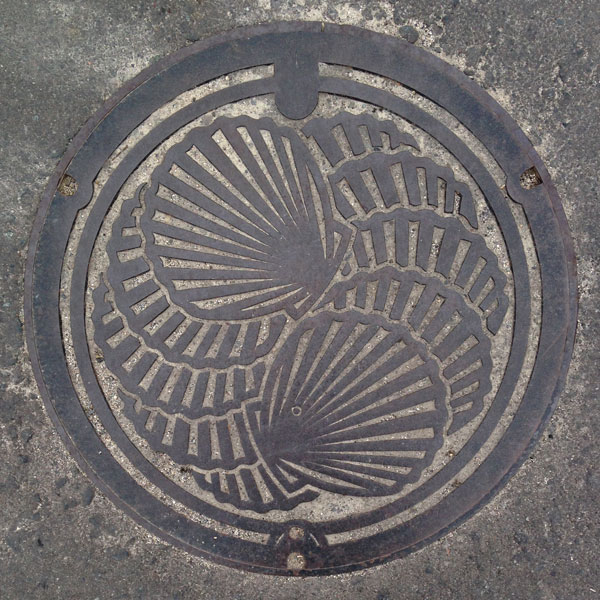
A sewage manhole cover with a scallop design.
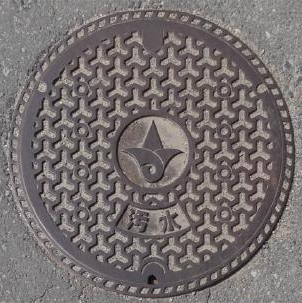
The town emblem is in the center of the Bishamon tortoiseshell pattern, and the character for "sewage" is written in a fan-shaped box below.
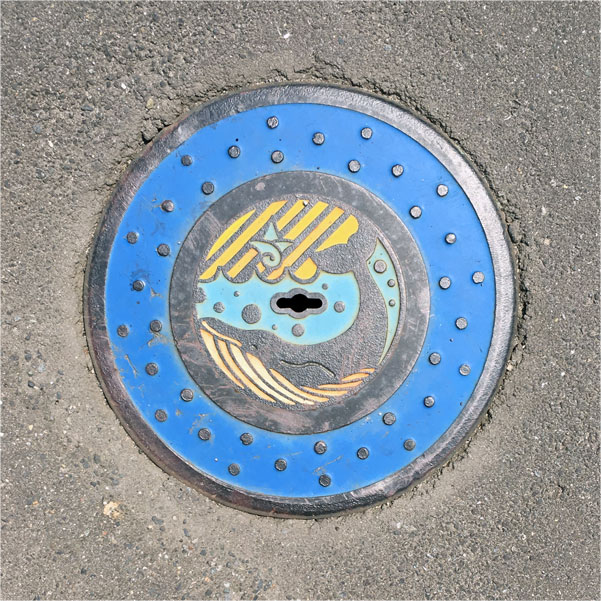
A handhole cover featuring a whale and the town emblem.
Otsuchi 大槌町
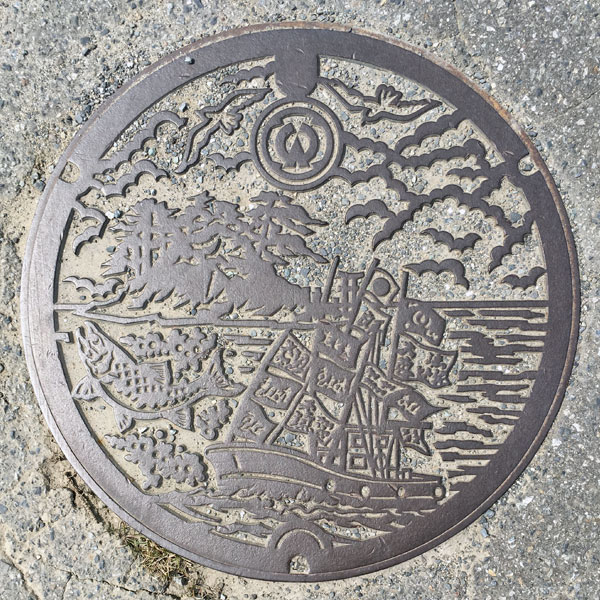
The top depicts "Horai Island" with the town's bird, the seagull, flying above it. Below, the town's fish, the salmon, and a fishing boat with a large catch flag are depicted.
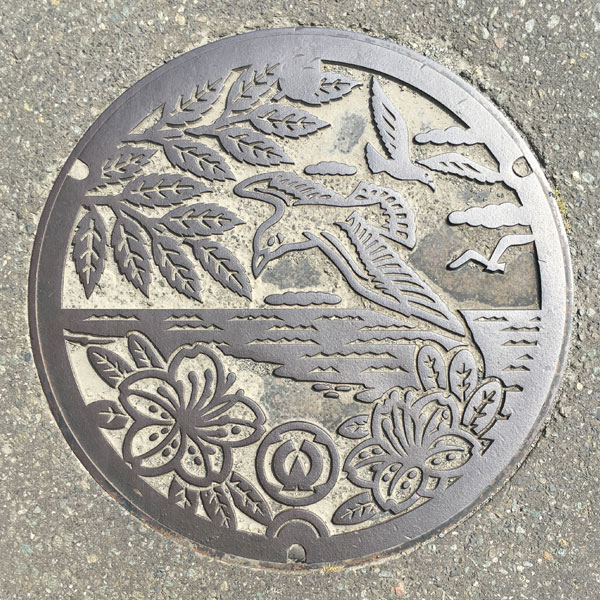
It depicts the town's bird, the seagull, the town's tree, the zelkova tree, and the town's flower, the Niyama azalea.
Nishiwaga 西和賀町
Yuda 湯田町
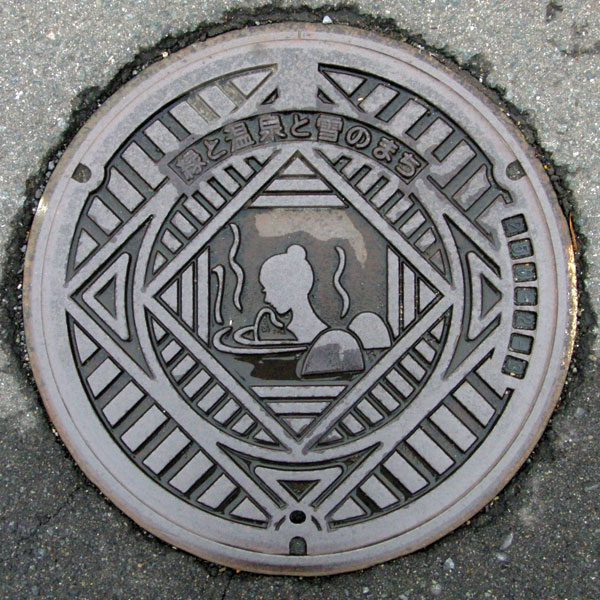
The words "Town of Greenery, Hot Springs, and Snow" are written on the wall with a silhouette of a woman bathing in a hot spring.
Sawauchi 沢内村
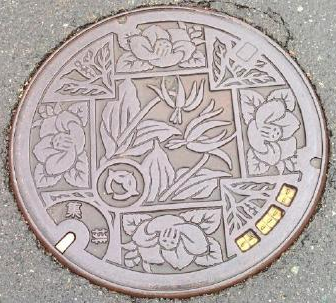
A design featuring the village flowers, dogtooth violets and camellias, and the former village emblem.
Kanegasaki 金ヶ崎町
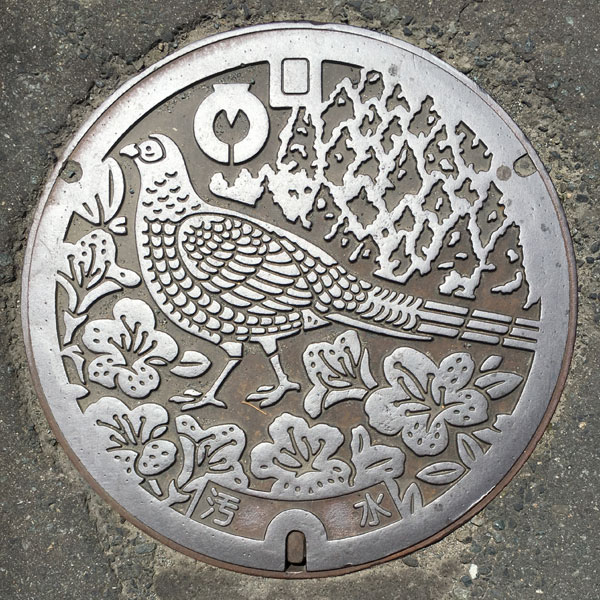
A manhole with the town's tree, the cedar, the town's flower, the azalea, and the town's bird, the copper pheasant.
Sumita 住田町
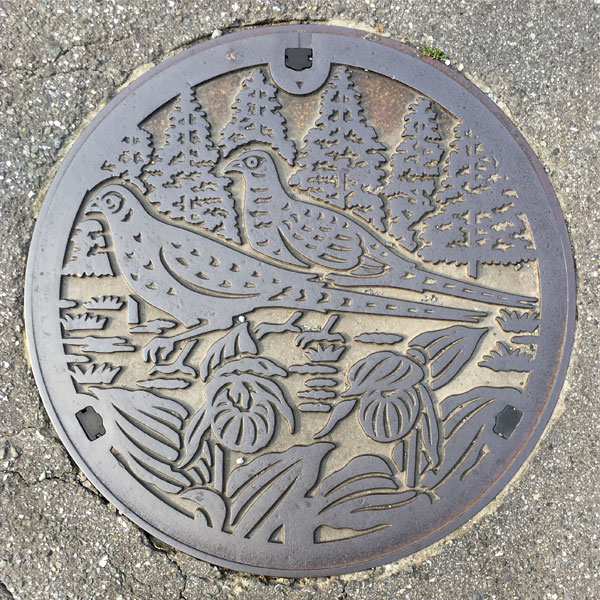
The manhole cover for sewage facilities depicts the town's tree, the cedar, the town's bird, the copper pheasant, and the town's flower, the lady's slipper.
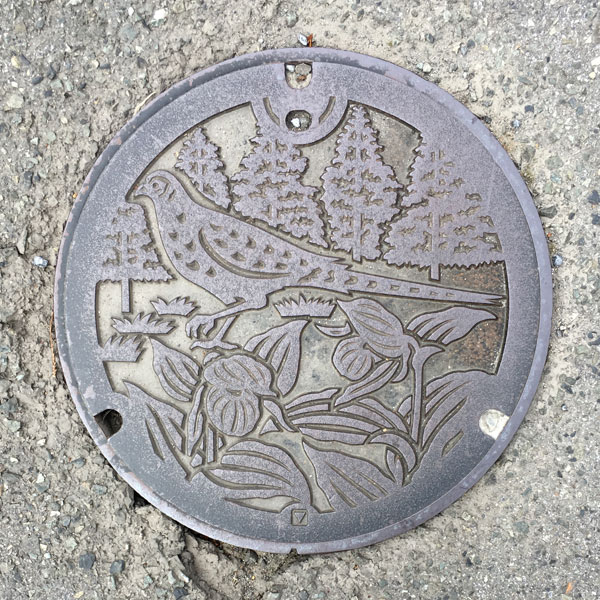
This is a smaller version with the same design as above, but with only one pheasant.
Hiraizumi 平泉町
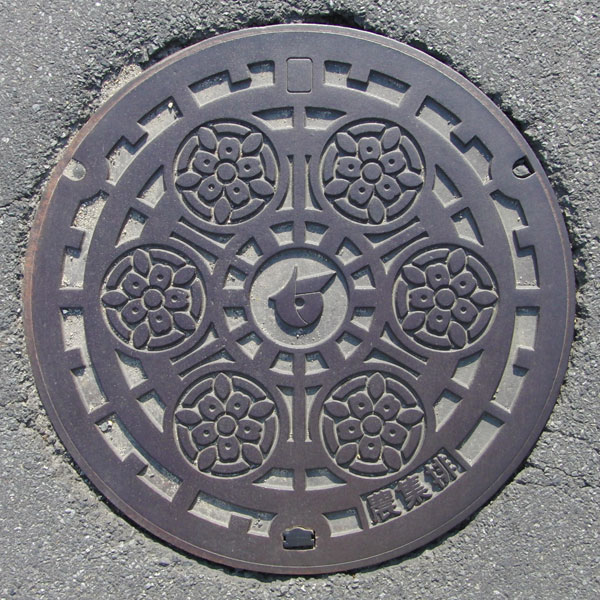
Agricultural village drainage cover.
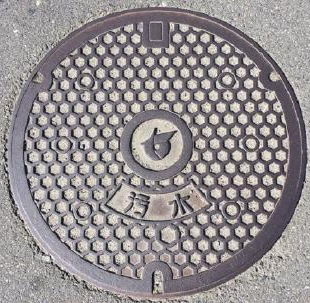
Town emblem in the center.
Kunohe 九戸村
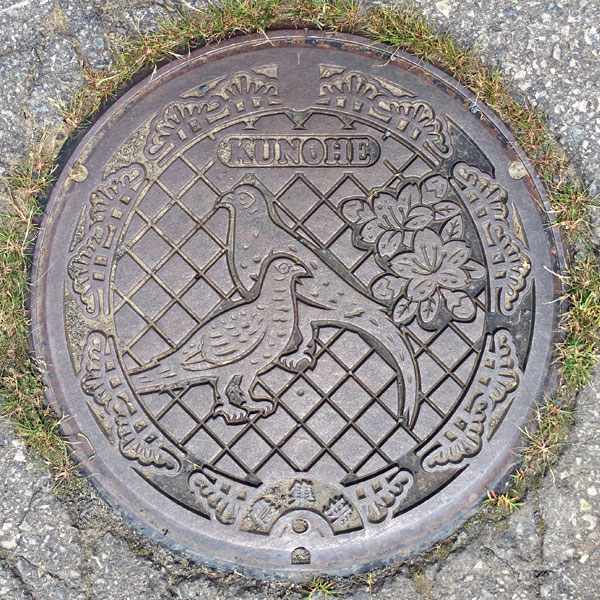
The manhole cover for the Toda district agricultural settlement drainage system features the village tree, the red pine, on the outside, and the village flower, the azalea, and the village bird, the copper pheasant, on the inside.
Noda 野田村
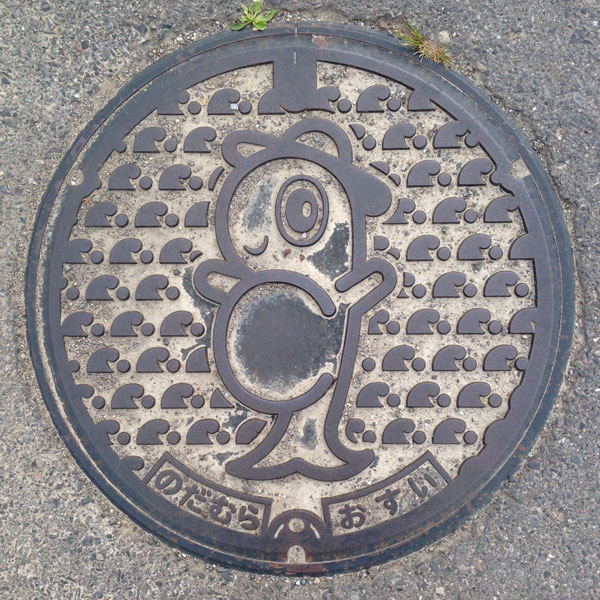
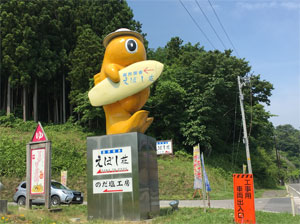
The lid features the village's mascot, a young salmon called "Non-chan."

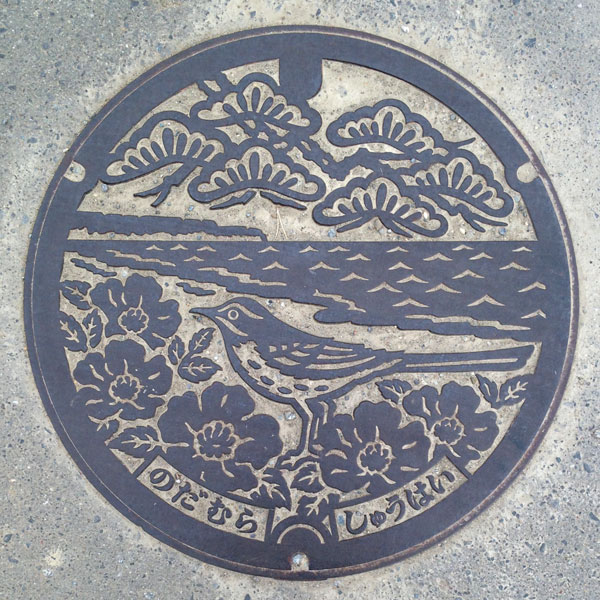
The manhole cover depicts a pine tree, a rosehip rugosa, and a grey wagtail. This is a sewage lid for the village.
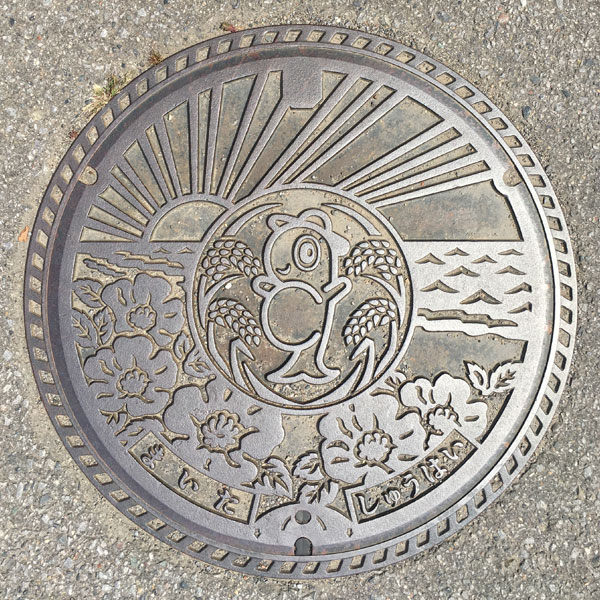
The manhole cover for the drainage of the agricultural village of Yoneda (Maita) district features a morning sun rising from the sea and a rose bush on the outside, and "Non-chan" and ears of rice in the inner circle.
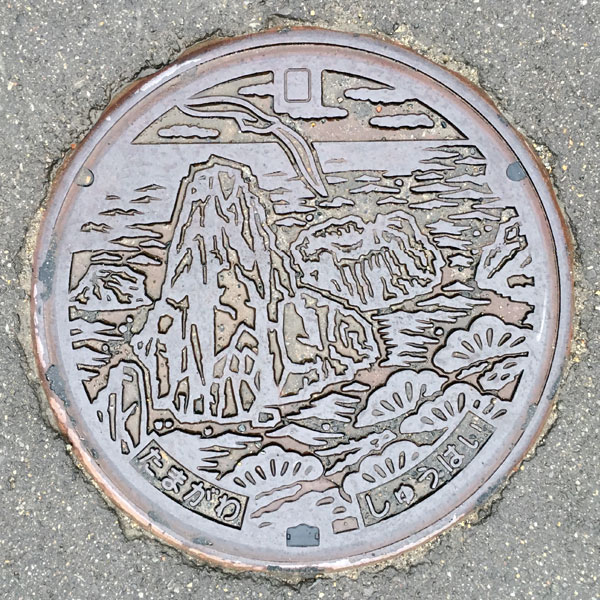
This is a drainage cover for the agricultural settlement in the Tamagawa district. The characters "Tamagawa" and "Shuhai" are written at the bottom.
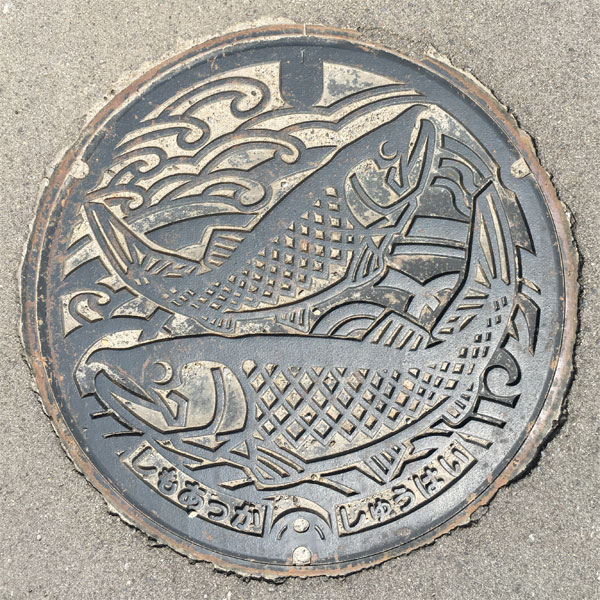
A fishing catch lid from the Shimoyasu area with a salmon design.
Fudai 普代村
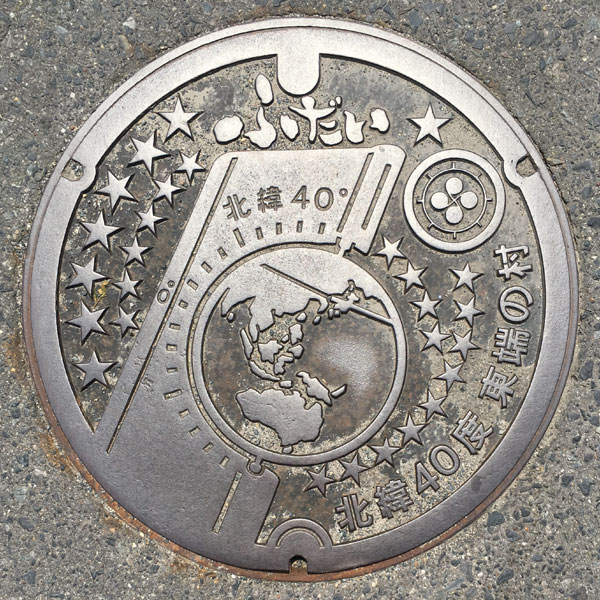
The symbolic tower at 40 degrees north latitude within Kurosaki Park is centered around the words "Fudai" and "The village at the eastern end of 40 degrees north latitude," along with a star and the village emblem.
Tanohata 田野畑村
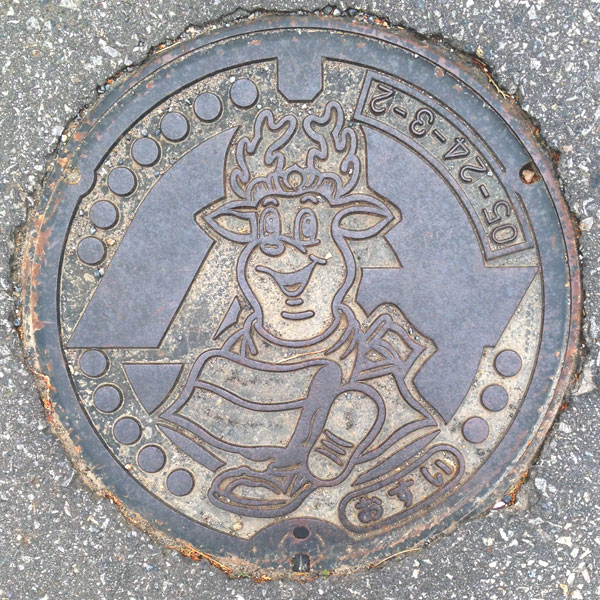
The Suge-Kubo Shishi Dance (Suge-Kubo Shishi Dance) is performed by performers wearing deer heads resembling real deer and mimicking the heroic movements of wild deer. This sewage manhole cover features a character based on the dance, "Tano-kun," with the village emblem in the background.
Iwate Prefecture 岩手県
Iwate Prefectural Central Hospital 岩手県立中央病院
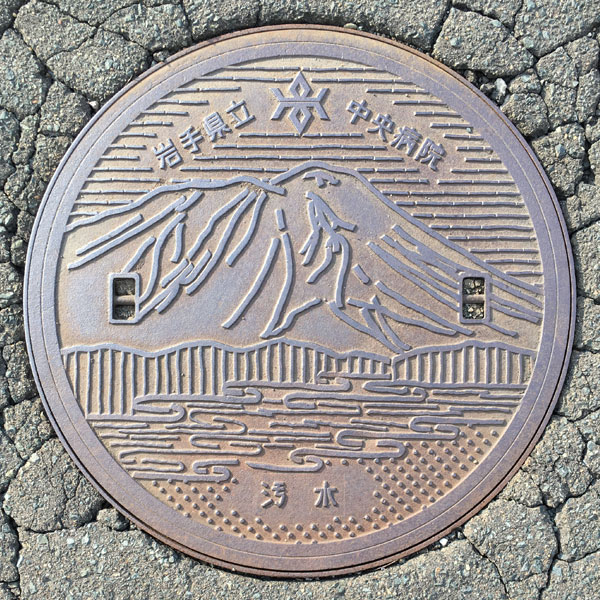
A sewage lid exclusively for the hospital, depicting Mount Iwate and the flowing Kitakami River. At the top are the words "Iwate Prefectural Central Hospital" with the Iwate Prefecture emblem in between.