Yamagata 山形県
Yamagata 山形県
Yamagata 山形市
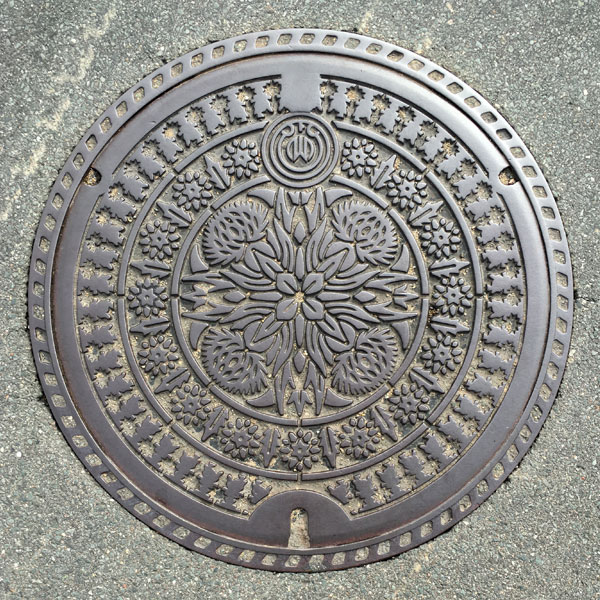
A manhole cover depicting the city's flower, safflower.
Sakata 酒田市
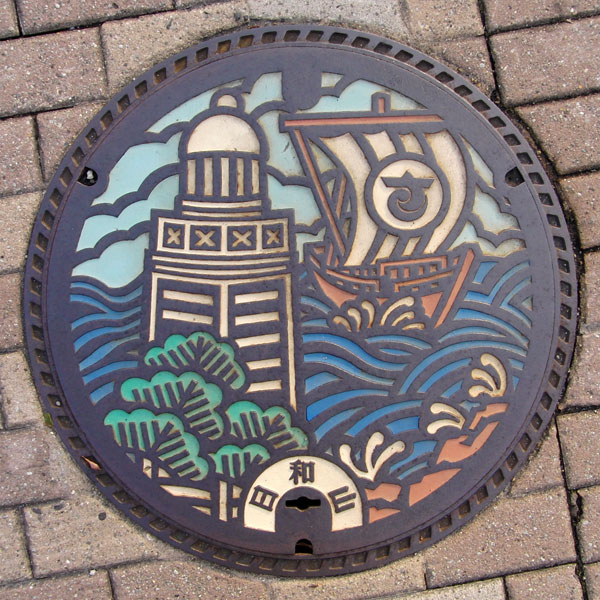
The lid depicts the "Hiyoriyama Lighthouse" and the "Sengokubune" ships on the north side of Sakata Port.
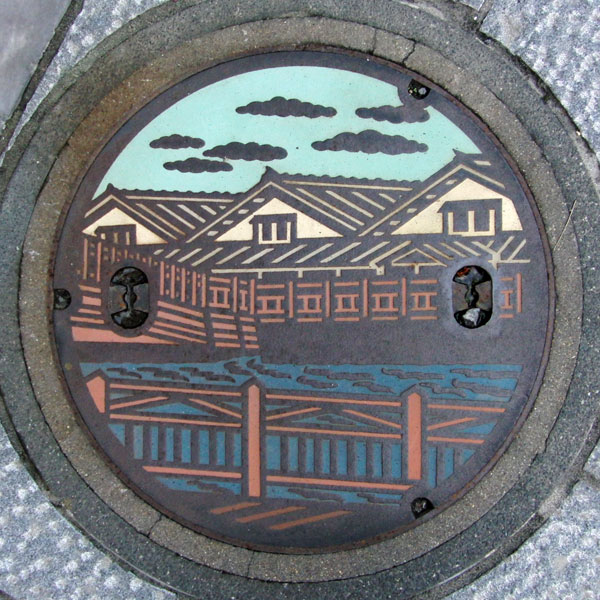
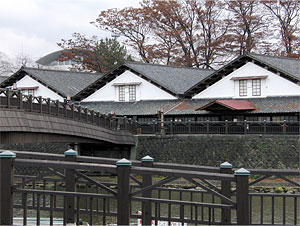
Sankyo Warehouse is a tourist attraction in Sakata and is still in use today.
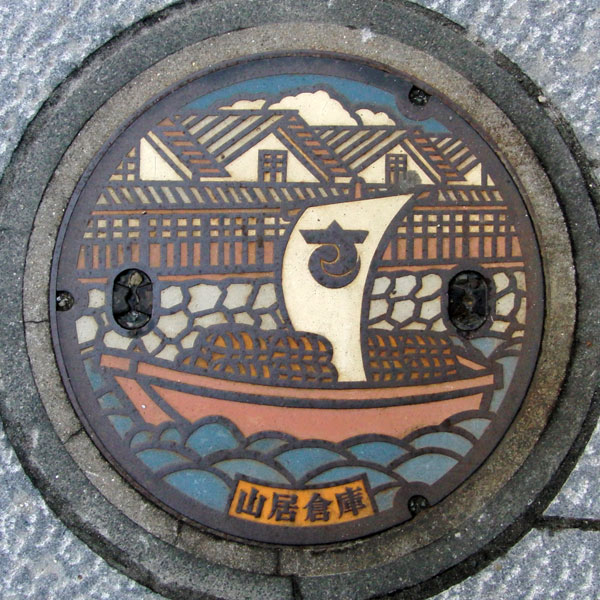
It depicts the "Yamai Warehouse" and a loaded "Sengoku ship."
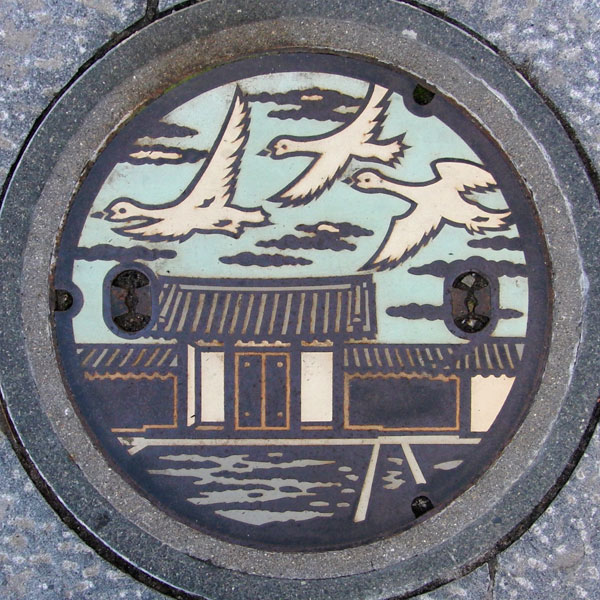
The restored east gate of the nationally designated historic site, Kinowa Fence Ruins, is seen above a swan.
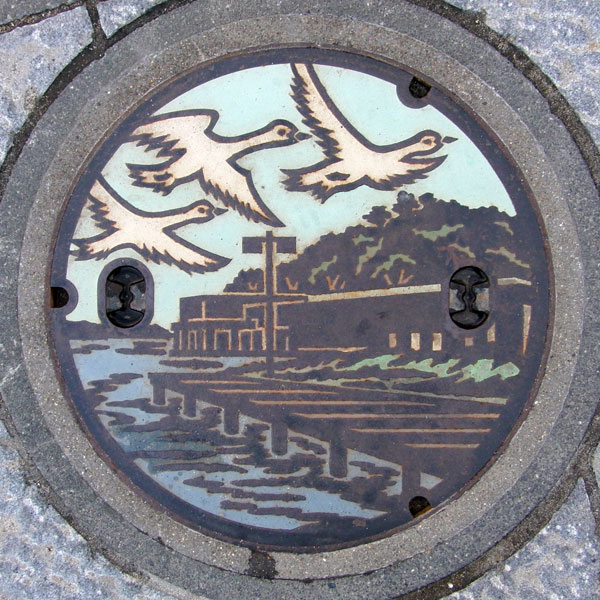
The cover depicts the Ken Domon Memorial Museum in Iimoriyama Park with a swan flying above it.
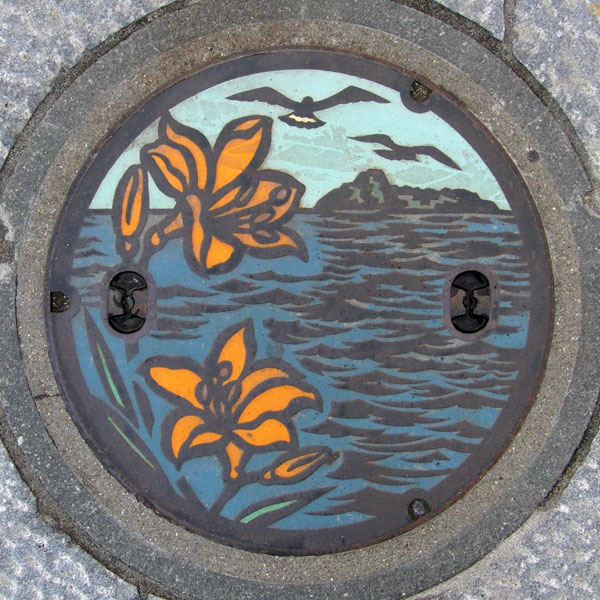
The design features Tobishima, located about 40km offshore from Sakata Port, and the Tobishima daylily, the city's flower.
Yawata 八幡町
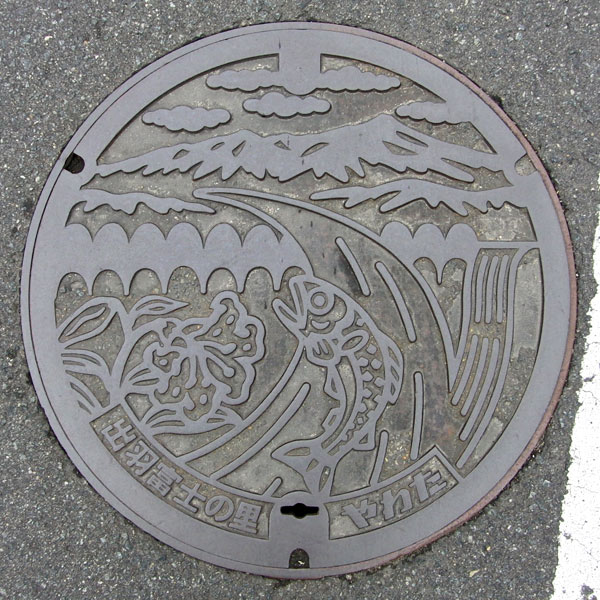
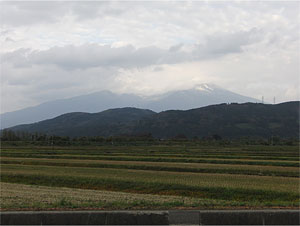
Being "Yawata," the "Home of Dewa Fuji," the landscape naturally features Mt. Chokai. The Hyuga River (Nikkogawa) and its tributary, the Arase River, flow from Mt. Chokai, and splashing about in the river are salmon, char, Yamame trout, and sweetfish. The town's flower, the mountain lily, is also depicted.
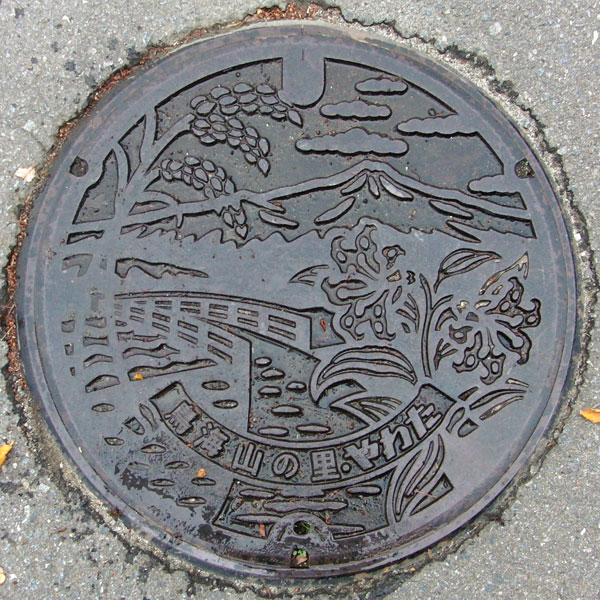
It depicts Mount Chokai, rice ears, and mountain lilies.
Matsuyama 松山町
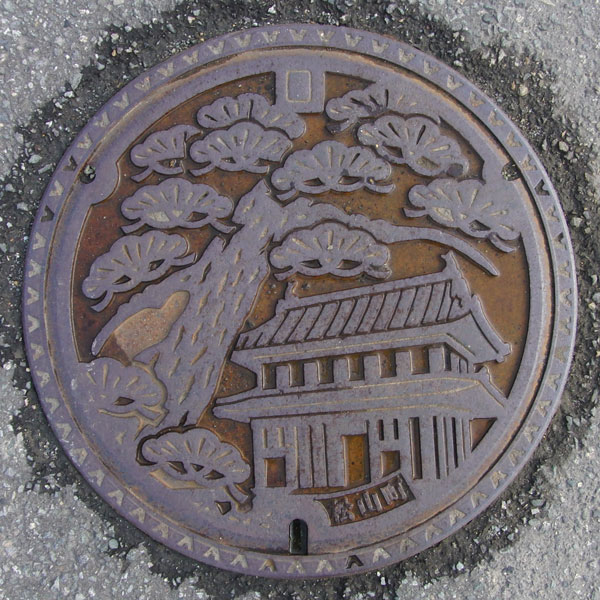
Matsuyama Castle's Otemon Gate is the only castle building remaining in Yamagata Prefecture and is designated as an Important Cultural Property of the prefecture. The lid features a depiction of Matsuyama Castle's Higashi Otemon Gate and the town's tree, the red pine.
Hirata 平田町
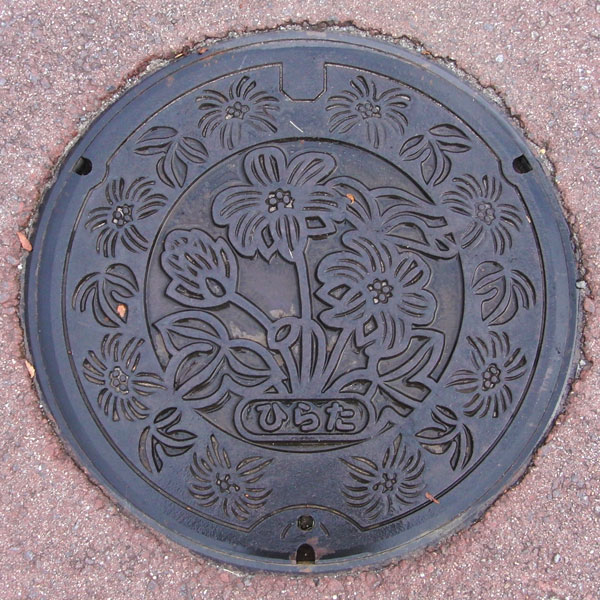
A manhole cover featuring the town's flower, the Hemerocallis angustifolium.
Shinjo 新庄市
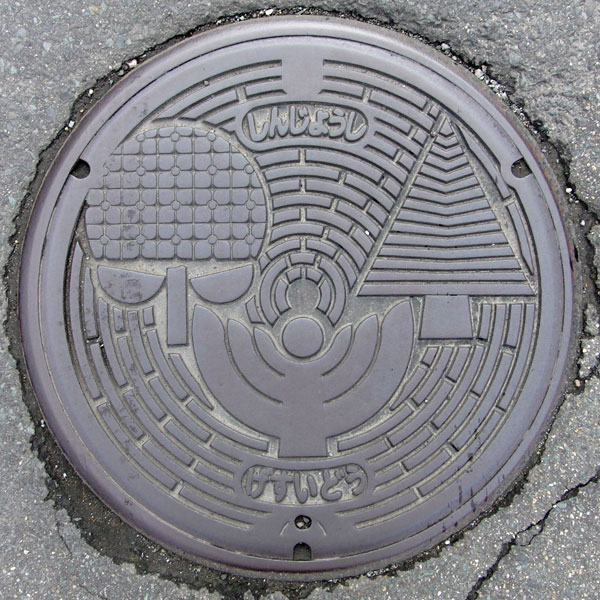
It depicts the city's tree, the fir tree, and the city's flower, the hydrangea.
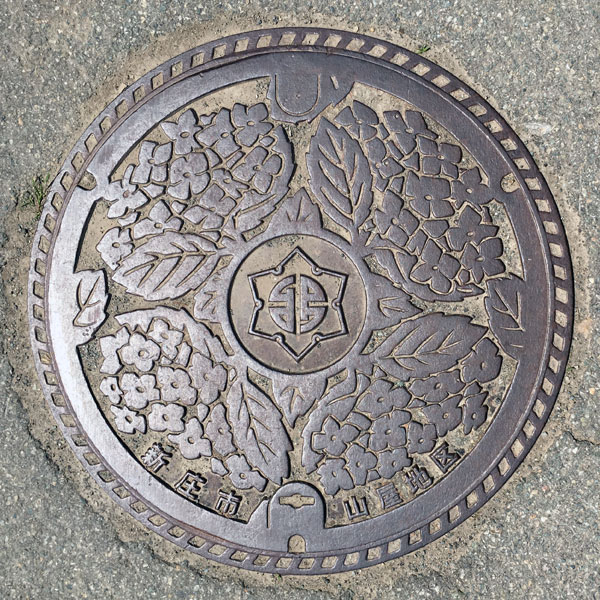
This agricultural waste collection and disposal cover in the Yamaya district features the city's flower, the hydrangea. The same cover also exists in Shiono district and Showa district.
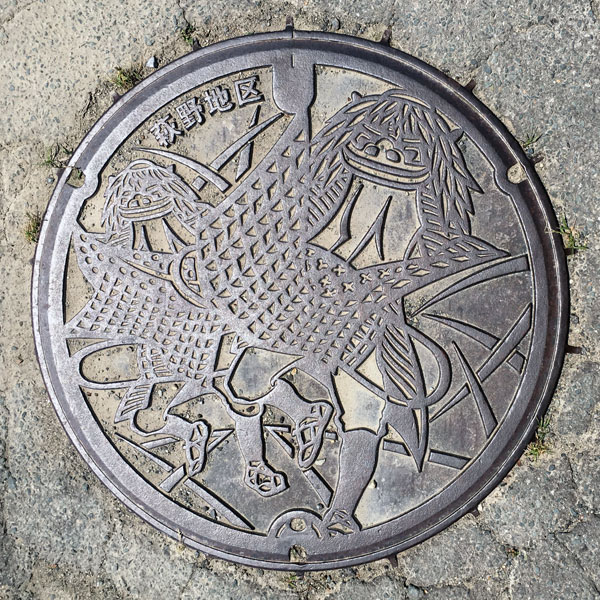
This agricultural waste collection lid from the Hagino region depicts the Hagino Shishiodori dance, a traditional dance from the Hagino region.
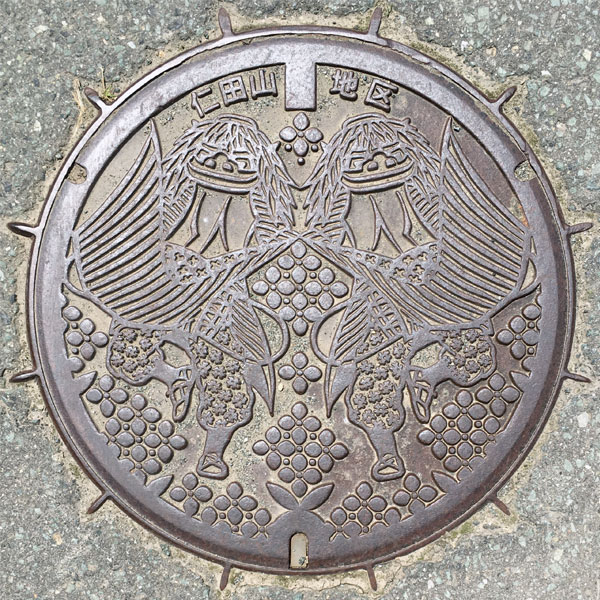
A lid from the Nitayama agricultural collection and disposal area depicts the "Nitayama Shishiodori" dance, a traditional Nitayama tradition.
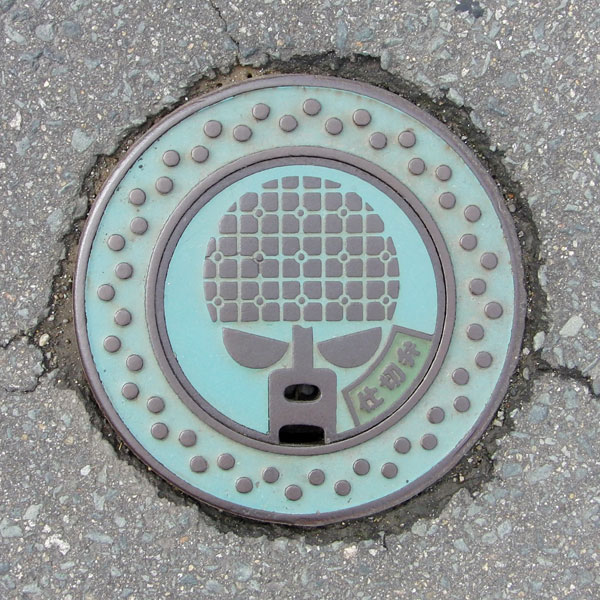
The cover features the city's flower, the hydrangea.
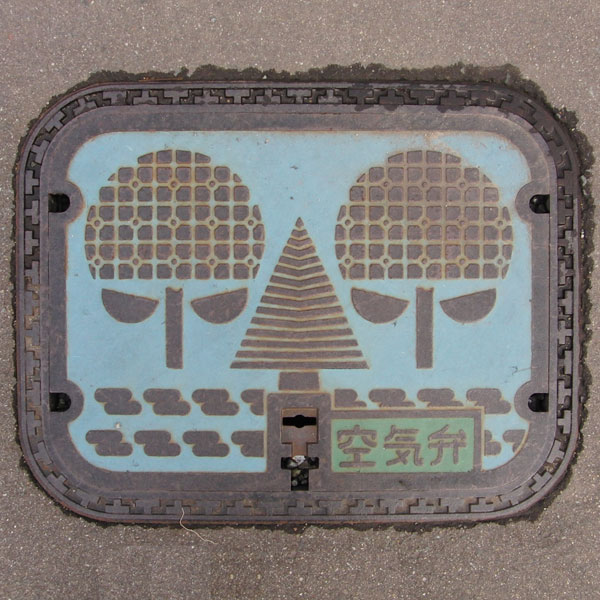
An air valve with a picture of the city's tree, the fir tree, and the city's flower, the hydrangea.
Tsuruoka 鶴岡市
Tsuruoka 鶴岡市
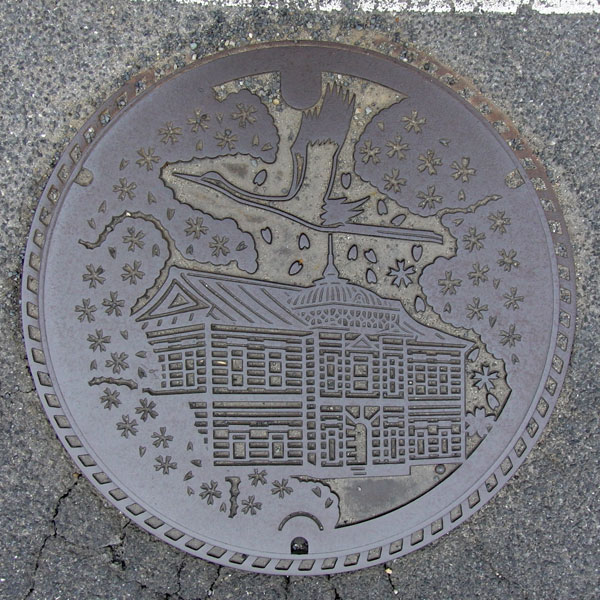
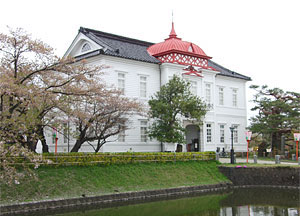
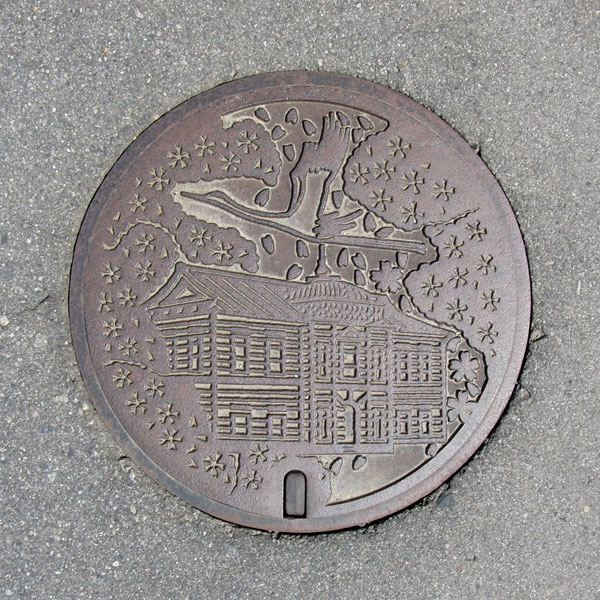
A manhole cover depicting the city's flower, the cherry blossom, a crane, and the Daihokan building.
Small version of the one above.
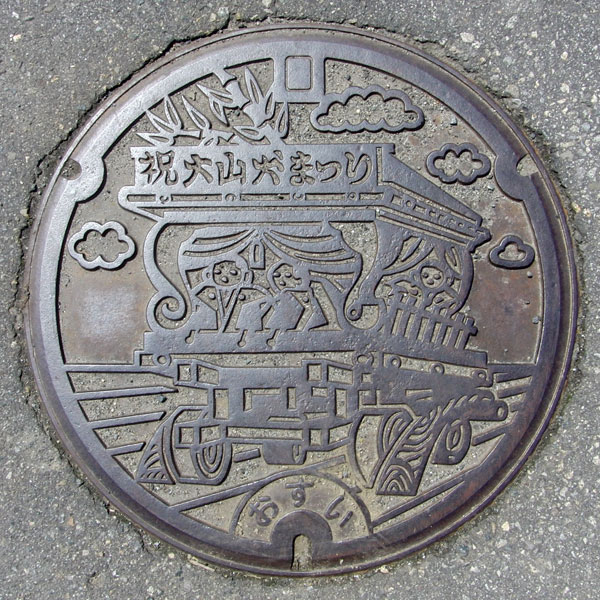
This lid from the Oyama area features a depiction of the karakuri floats from the Oyama Dog Festival, one of the three major festivals in the Shonai region.
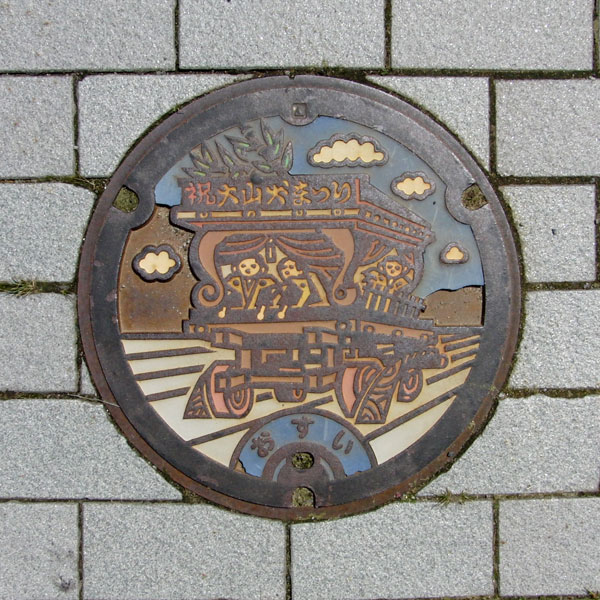
Small version of the one above.
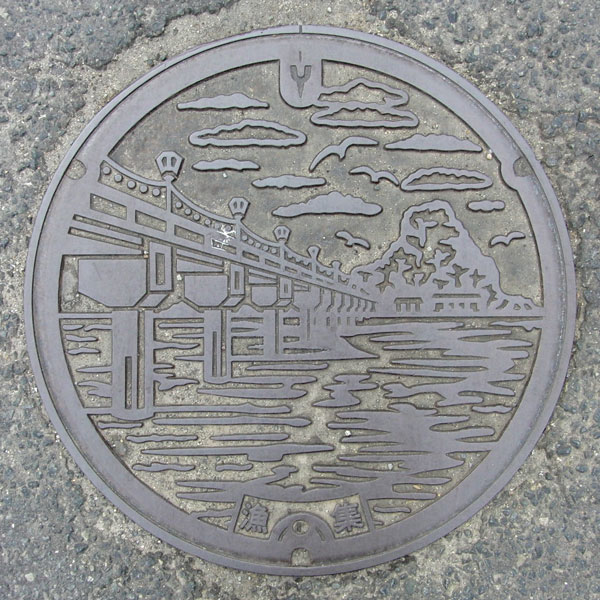
This is a drainage cover for the Yura District fishing community.
The illustration depicts a bridge spanning Hakusan Island, located about 100 meters off the coast of Yura.
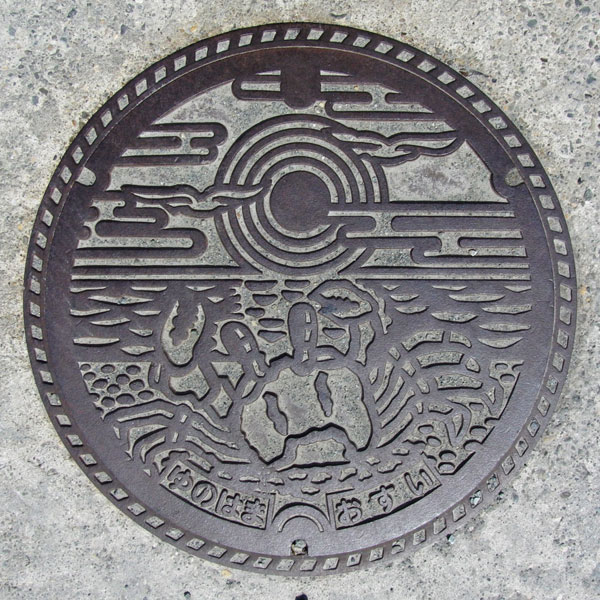
A crab admiring the sunset over the Sea of Japan.
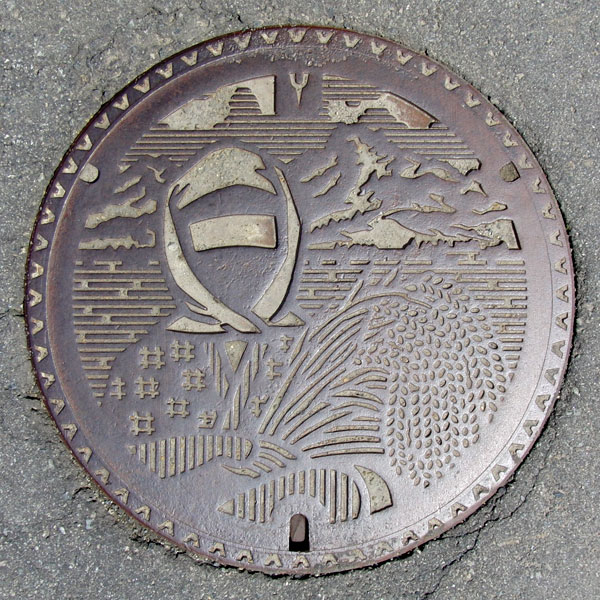
This agricultural waste collection and disposal cover in the Nishime area features a design of a farmer woman wearing a "hankotanna" (stamp) and holding a sheaf of rice.
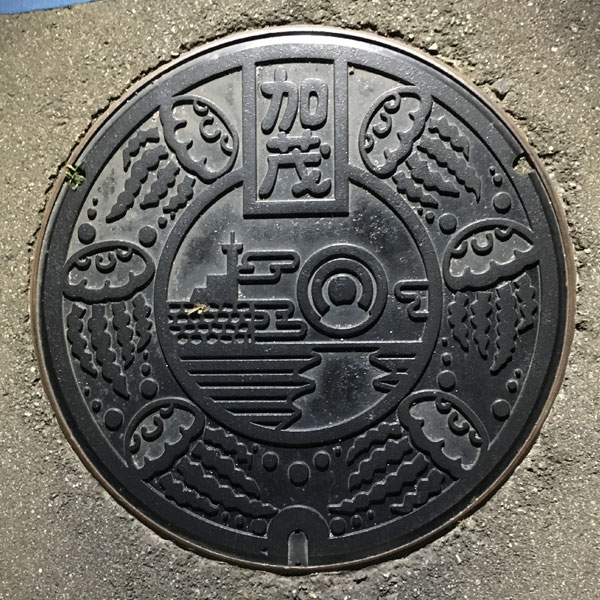
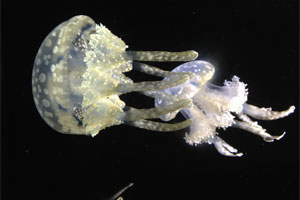
The large "Kamo" character is printed at the top, surrounded by jellyfish from the Kamo Aquarium, and the red lighthouse of Kamo Fishing Port with a sunset in the background on the inside.
Fujishima 藤島町
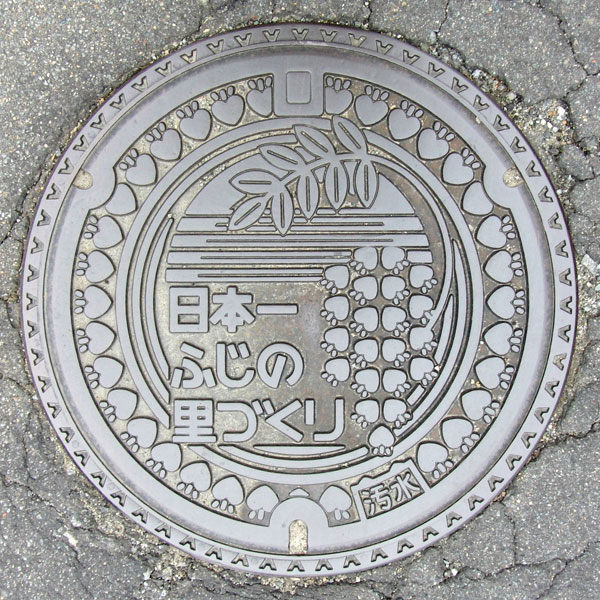
A manhole cover with a picture of the town's flower, wisteria, and the words "日本一ふじの里づくり", "Creating the best wisteria village in Japan."
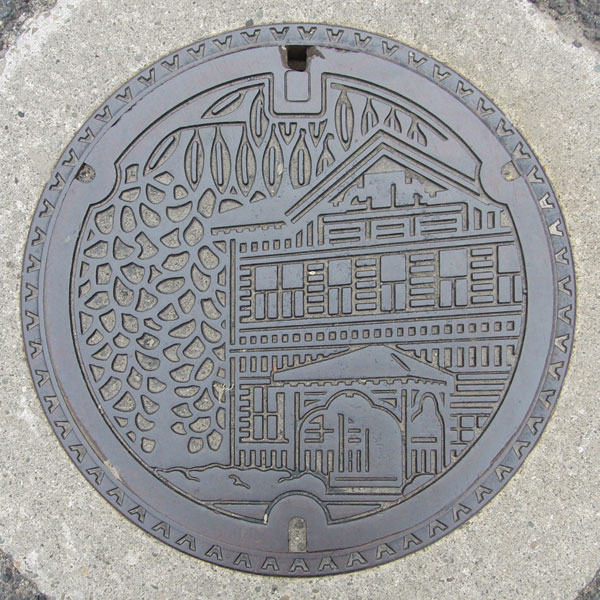
The "Former Higashitagawa County Assembly Hall," designated a tangible cultural property of Yamagata Prefecture, and the Watamae agricultural village drainage cover depicting wisteria.
Haguro 羽黒町
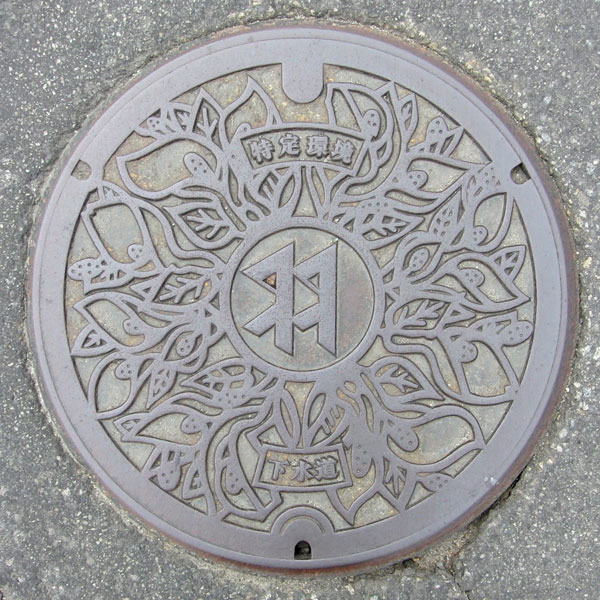
This manhole cover features the town emblem in the center of the former Haguro Town flower, the "skunk cabbage." The words "sewer" and "branch line" are also included.
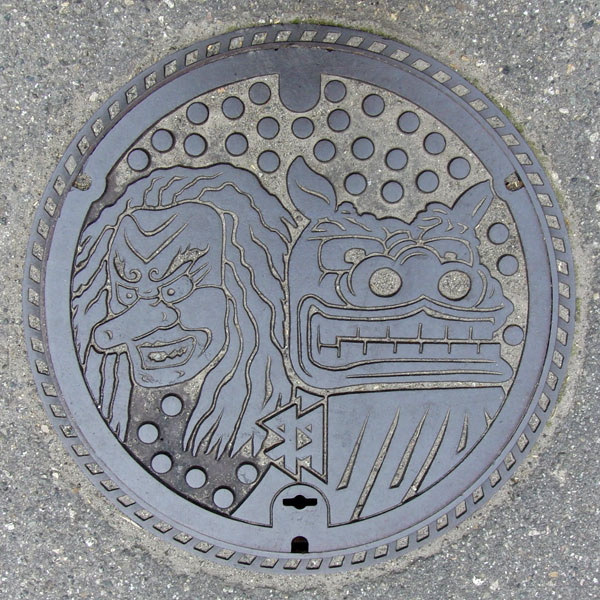
The lion's head and Tengu's face are from a lion dance. The old Haguro town emblem is at the bottom.
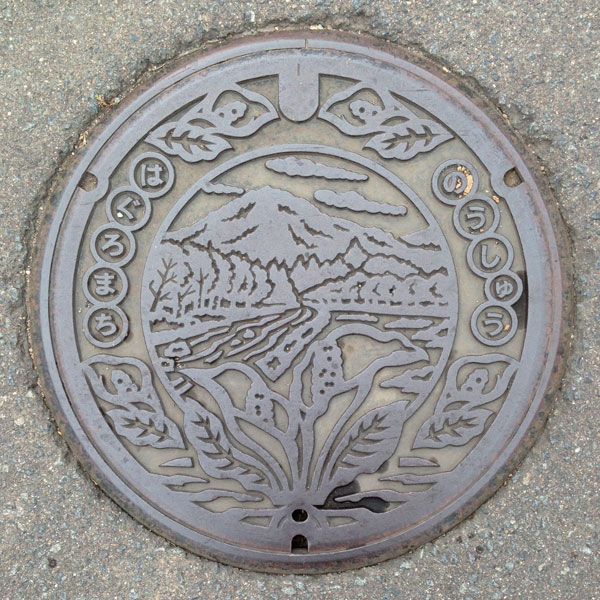
A lid for agricultural collection and discharge in the central Haguro district, depicting the scenery of Mt. Haguro and Asian skunk cabbage. The lid, from before the merger, has the word "Haguromachi" written on the left.
Kushibiki 櫛引町
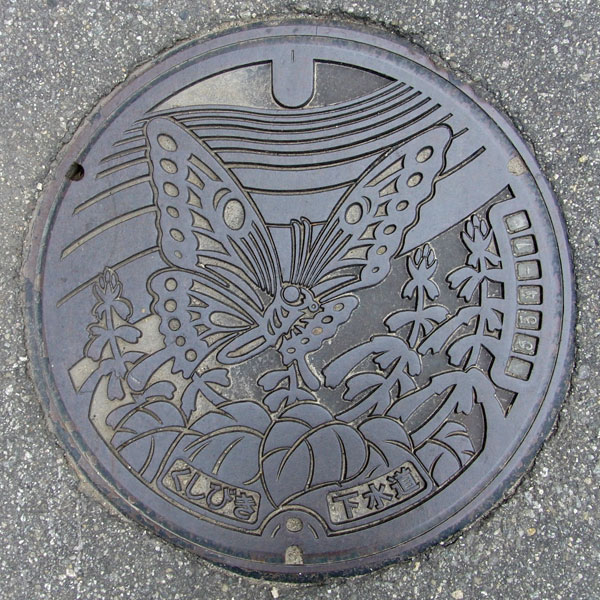
A manhole cover featuring the town's flower, salvia, and a swallowtail butterfly.
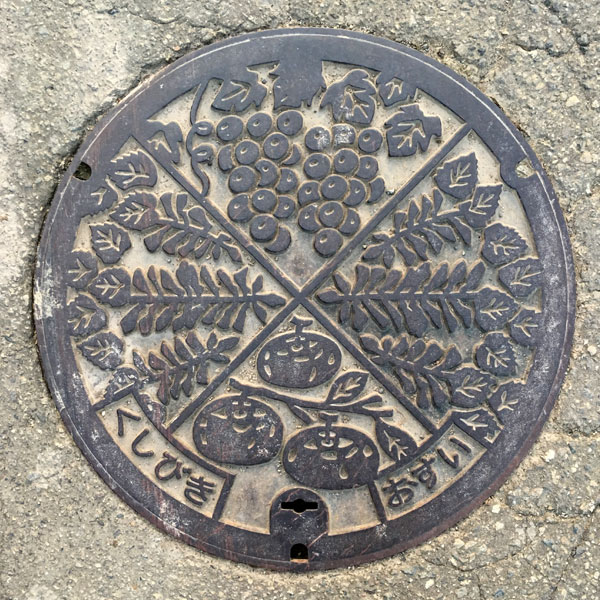
The Tashiro District Agricultural Community Sewer Cover features the town flower, salvia, on the left and right sides of the X-shaped quadrant, and grapes and persimmons (the town tree) on the top and bottom.
Atsumi 温海町
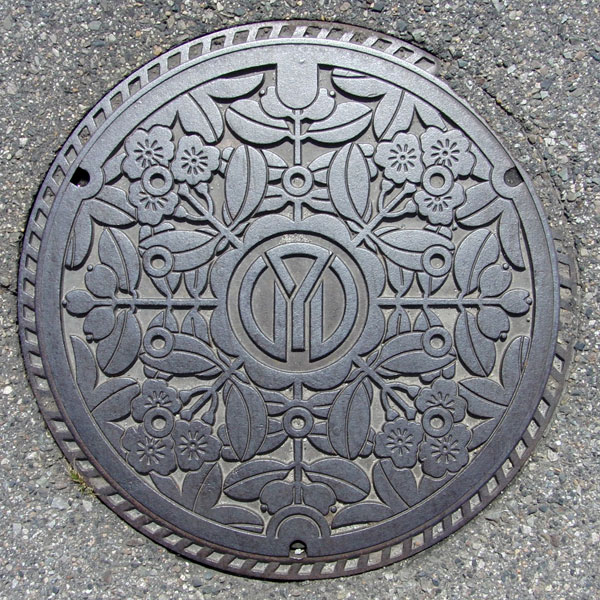
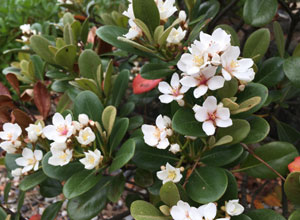
A manhole cover featuring the town's flower, the Maruba Sharinbai.
Asahi 朝日村
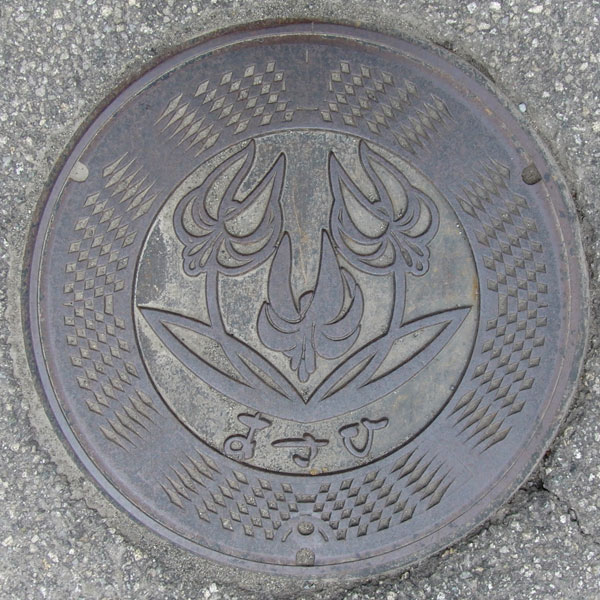
A manhole cover featuring the town's flower, the dogtooth violet.
Obanazawa 尾花沢市
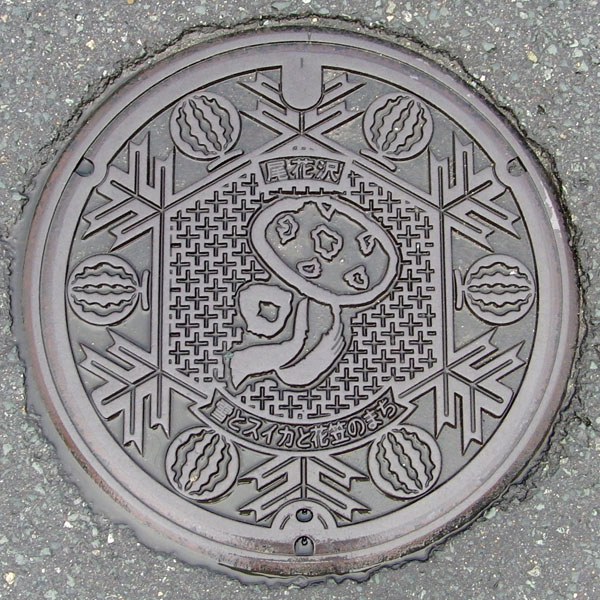
A Town of Snow, Watermelons, and Flower Hats
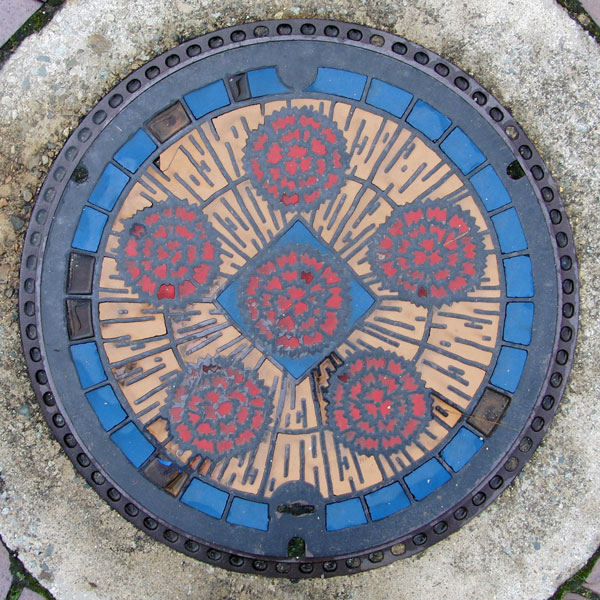
This design is just the flower hat.
Murayama 村山市
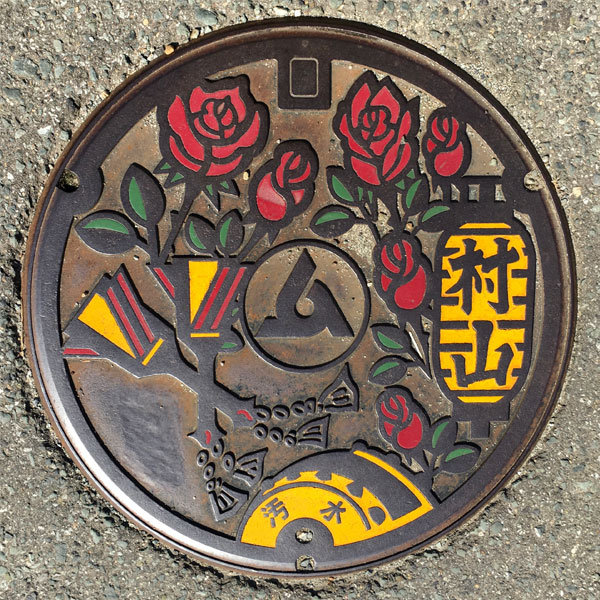
This manhole cover features the city's flower, the rose, as well as the lanterns, clappers, and drums of the Tokunai Festival.
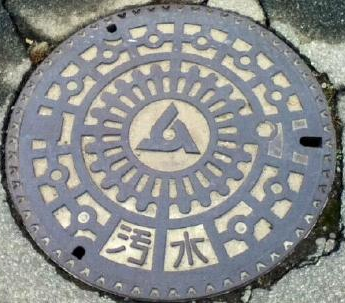
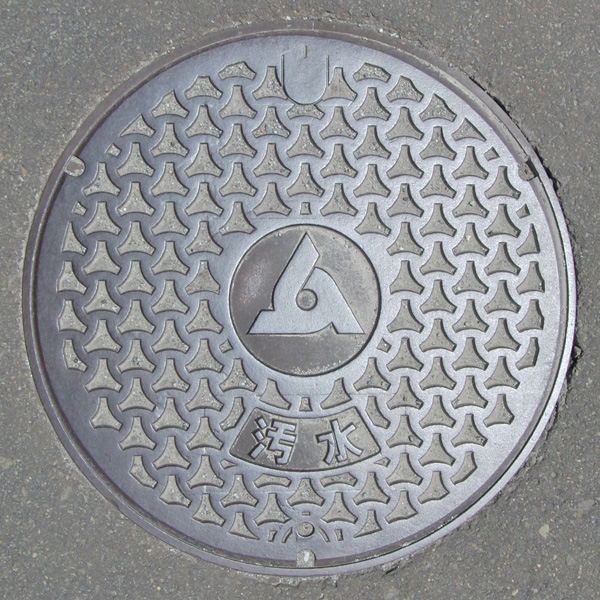
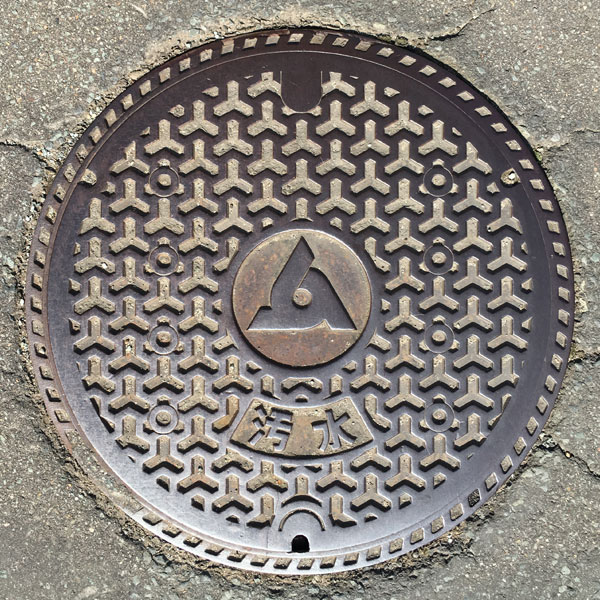
Manhole cover with the city emblem in the center.
Higashine 東根市
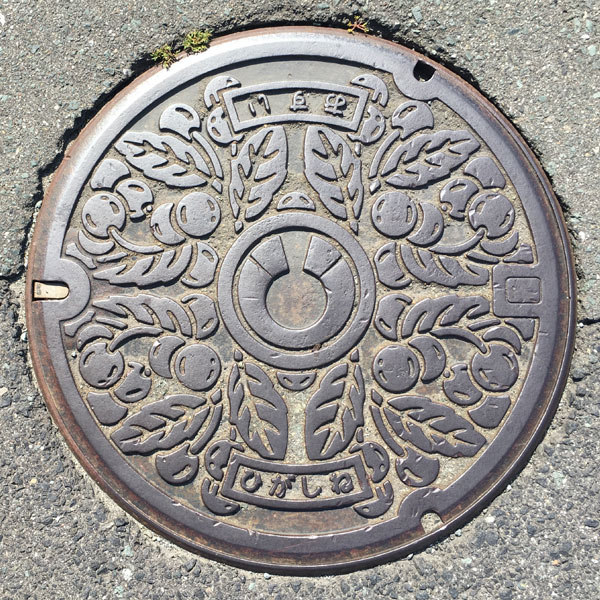
It depicts the local specialty, cherries.
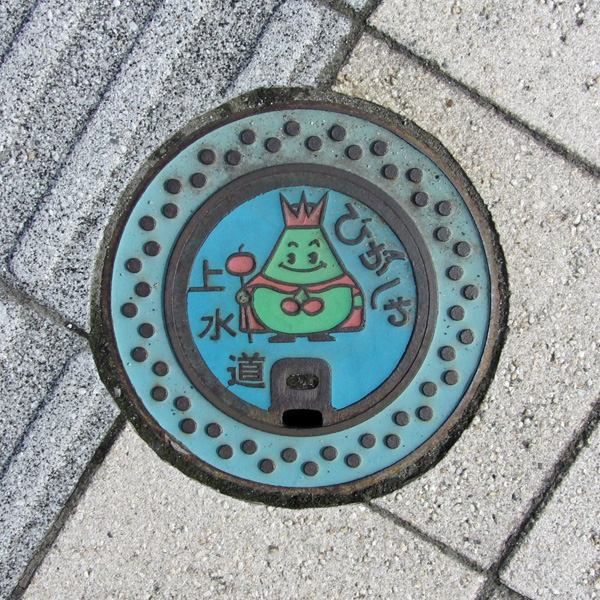
This appears to be a valve.
Sagae 寒河江市
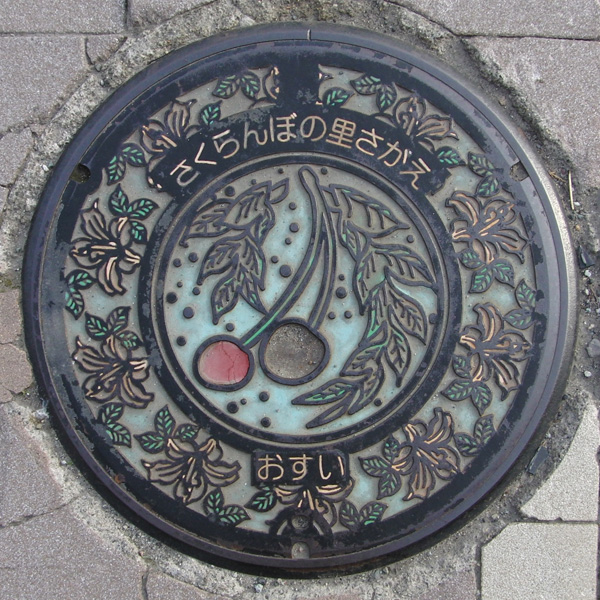
This manhole cover for sewage features the city's flower, azalea, surrounded by the city's cherry tree. This design is listed on the Sagae City manhole cover card, and the words "Sagae, the Village of Cherries" and "Osui" (Water Supply) are written above and below the cherry.
Tendo 天童市
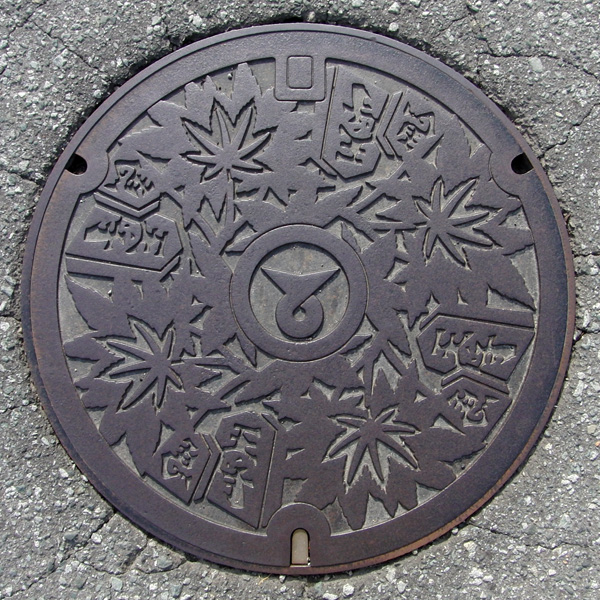
A manhole cover featuring the city's tree, the maple, and the city's specialty, shogi pieces.
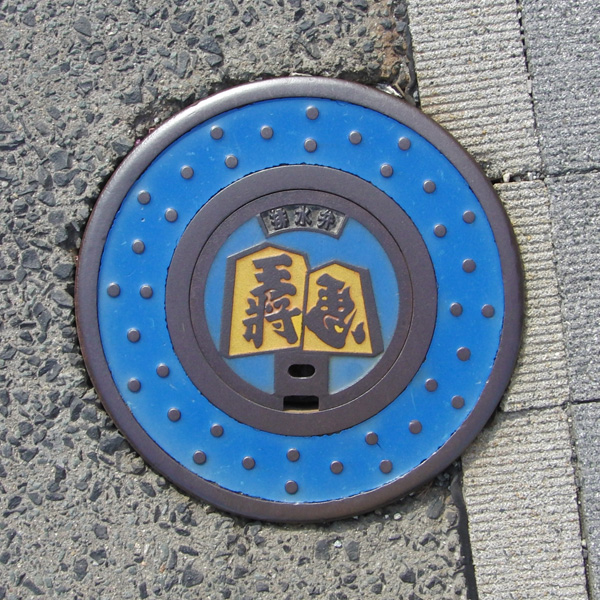
This is a drain valve cover with a picture of a shogi piece.
Kaminoyama 上山市
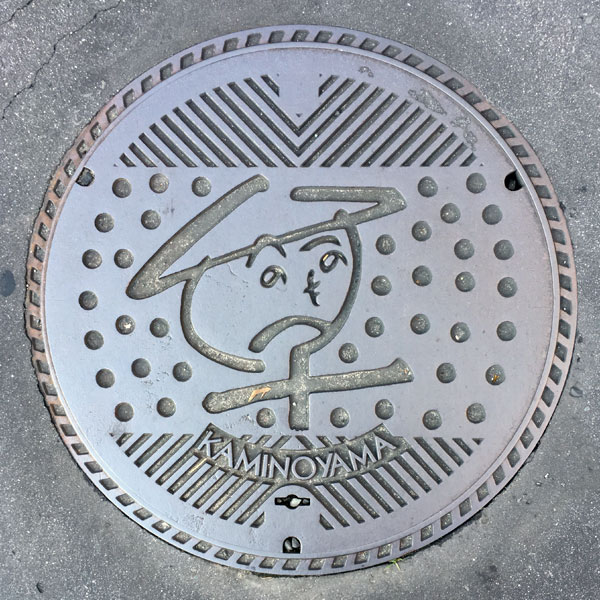
Apparently there is a festival called the "National Scarecrow Festival" in Kaminoyama.
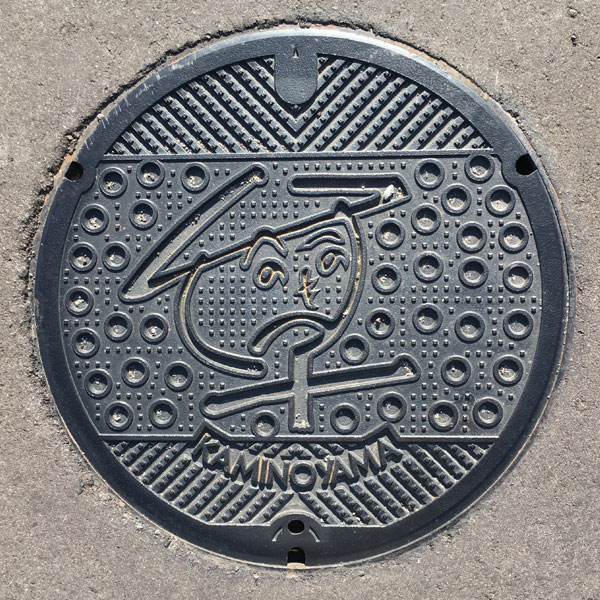
This lid has the same design as the top lid, but has small protrusions added to the base to provide an anti-slip effect.
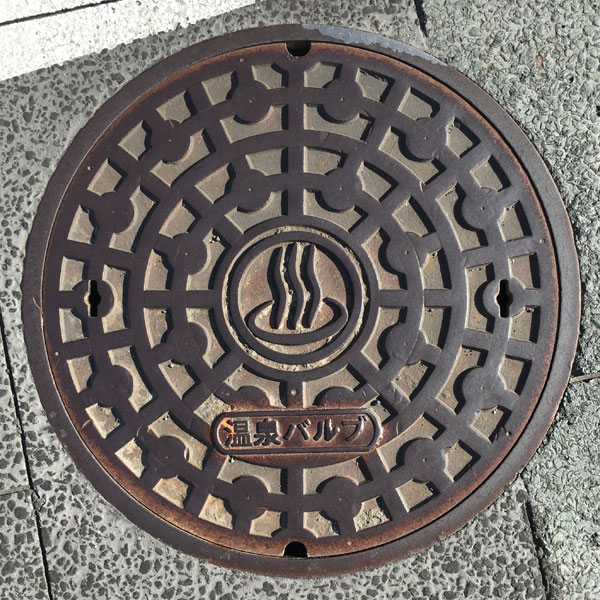
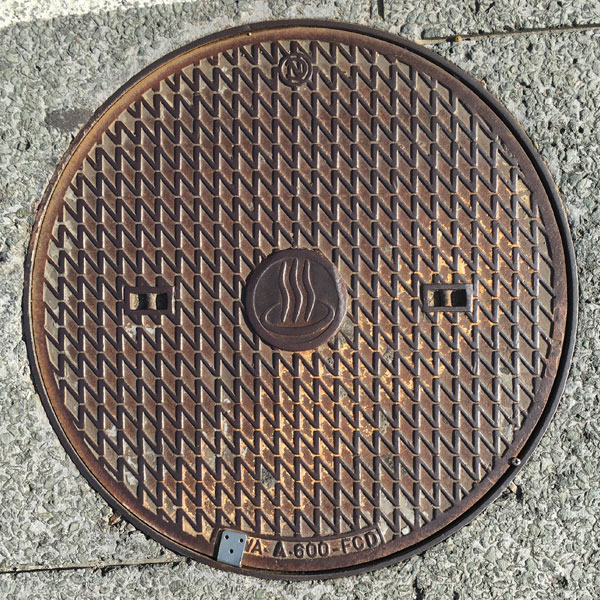
A manhole cover for a hot spring valve with a hot spring mark in the center.
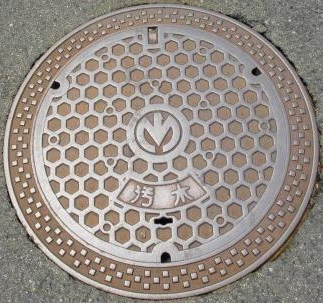
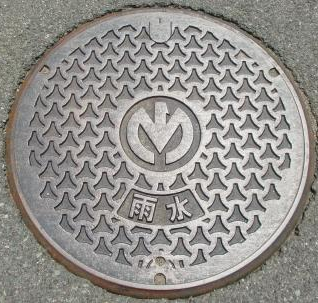
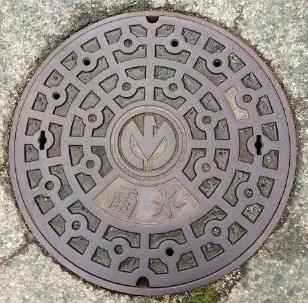
The manhole cover features the city emblem and the character for "sewage."
Nagai 長井市
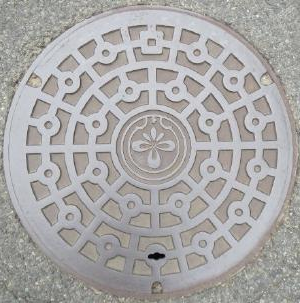
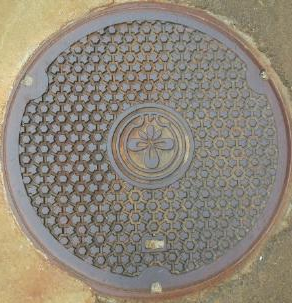
City emblem in the center.
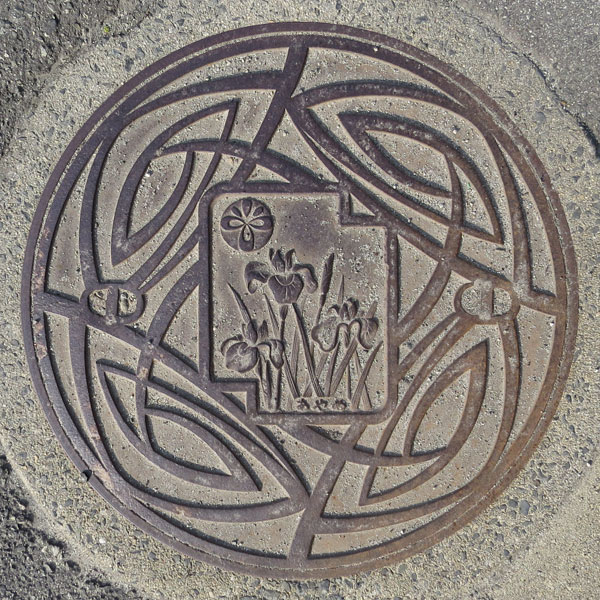
The lid features a design of iris, a Nagai City specialty. The city emblem is also shaped like an iris flower.
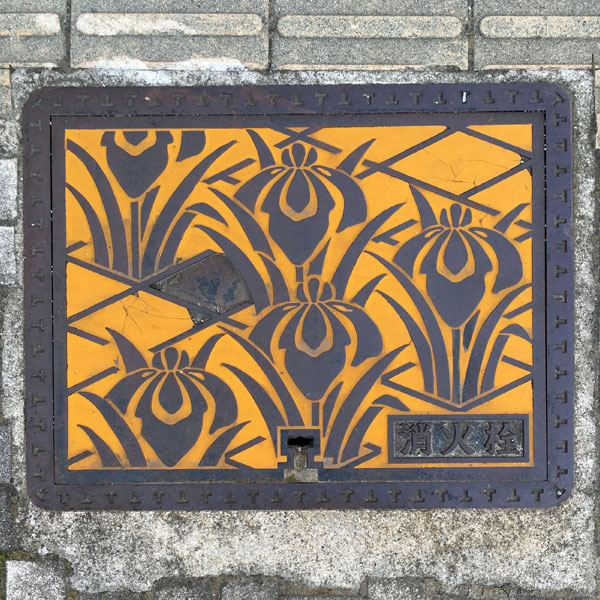
A fire hydrant cover decorated with irises, a specialty of Nagai City.
Nanyo 南陽市
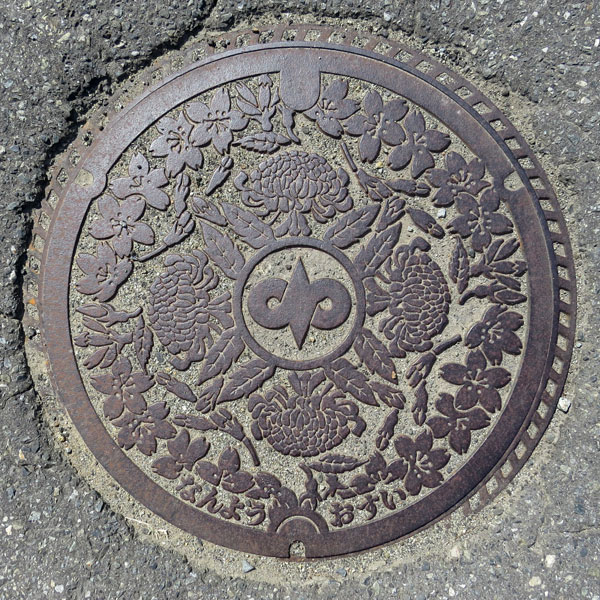
This manhole cover features the Nanyo City tree, the cherry blossom, and the city flower, the chrysanthemum. The city emblem is in the center.
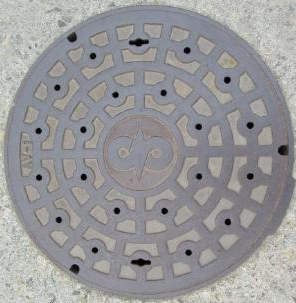
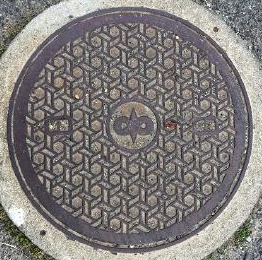
City emblem in the center.
Yonezawa 米沢市
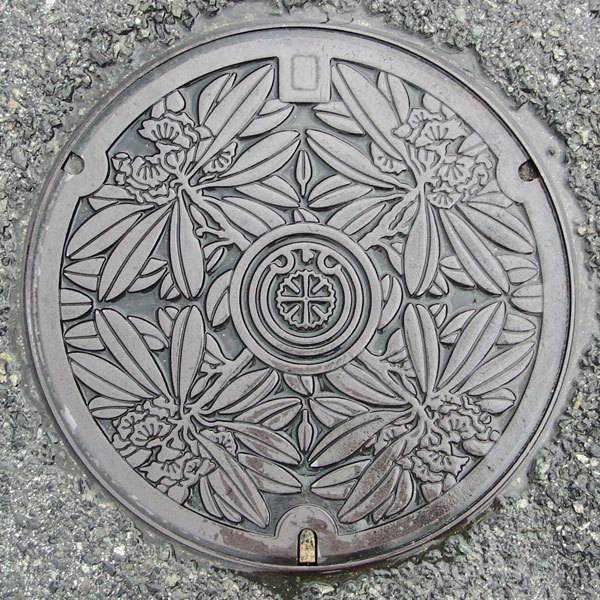
A monochromatic manhole cover depicting the town's flower, the Ezo rhododendron. City emblem in the middle.
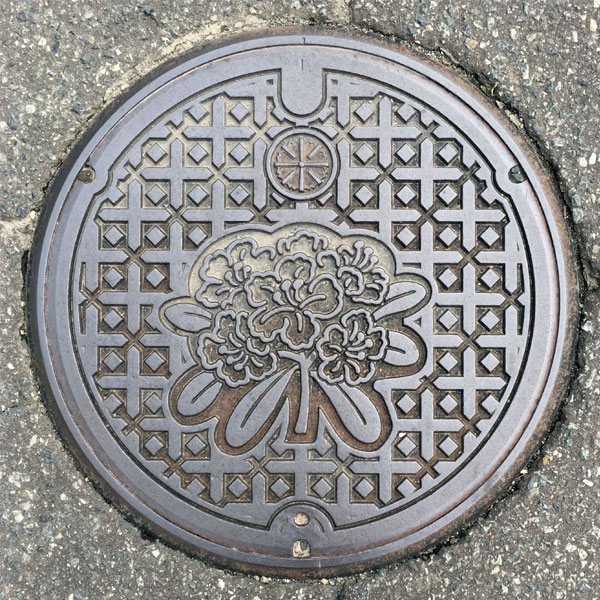
The Narushima District agricultural wastewater manhole cover features the town's flower, the Siberian rhododendron, on a rice-patterned background.
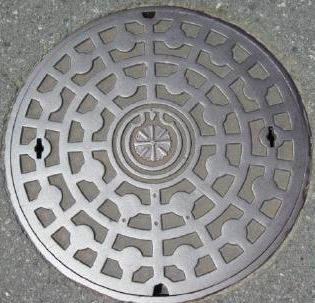
City emblem in the middle.
Yuza 遊佐町
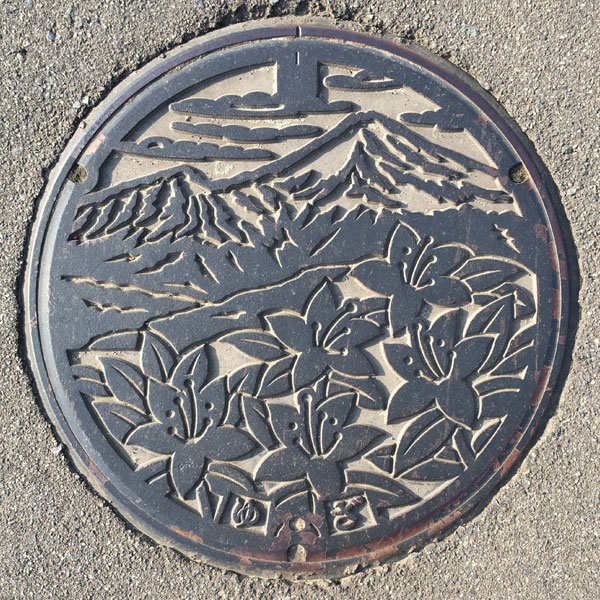
A colorful manhole cover featuring Mount Chokai and the town's flower, Arenaria merckioides var. chokaiensis (チョウカイフスマ).
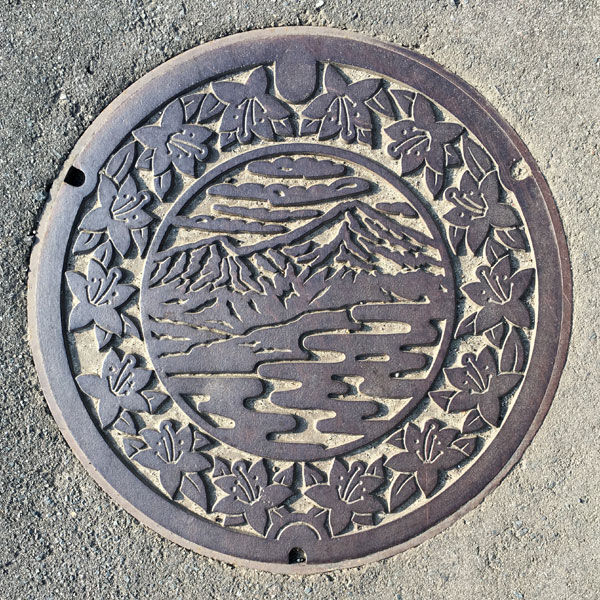
Like the one above, this manhole cover features Mt. Chokai and the town's flower, the Arenaria merckioides var. chokaiensis (チョウカイフスマ).
Mamurogawa 真室川町
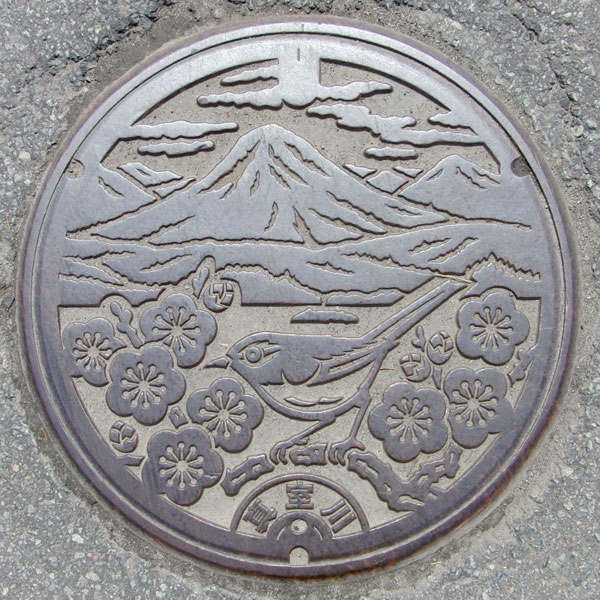
A manhole cover depicts the town's flower and tree, the plum tree, and its bird, the Japanese bush warbler, with the Kamuro Mountain Range in the background.
Kaneyama 金山町
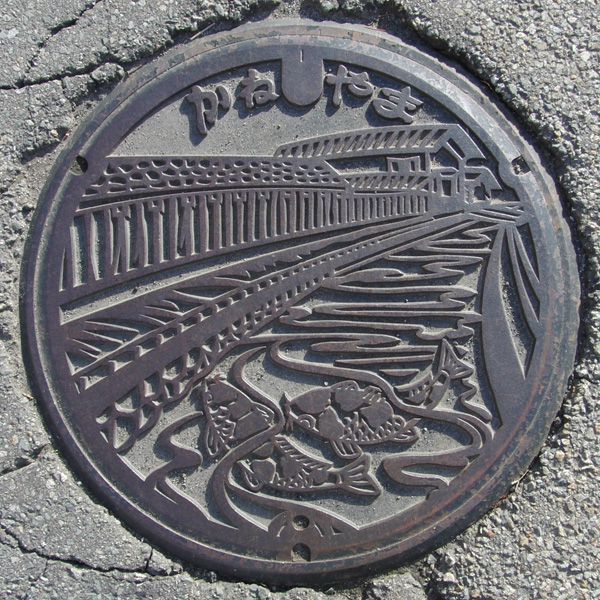
This manhole features a carp and the Kanayama Ozeki, an agricultural irrigation canal that flows behind Kanayama Town Hall.
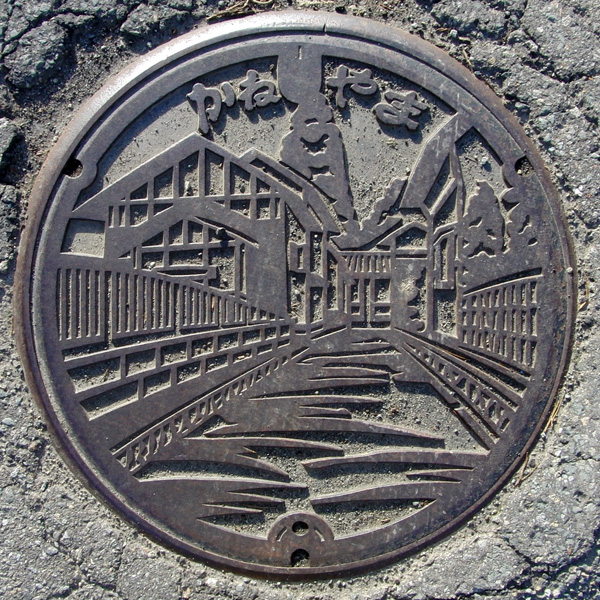
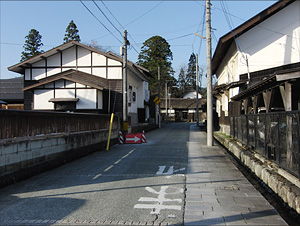
A Kanayama-style house and a Nagayamon gate are depicted.
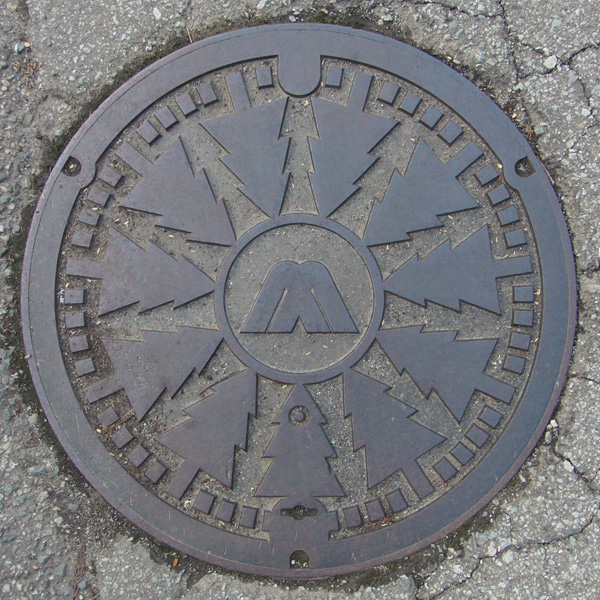
The lid is designed with the town's specialty, cedar, and the town emblem is in the center.
Shonai 庄内町
Amarume 余目町
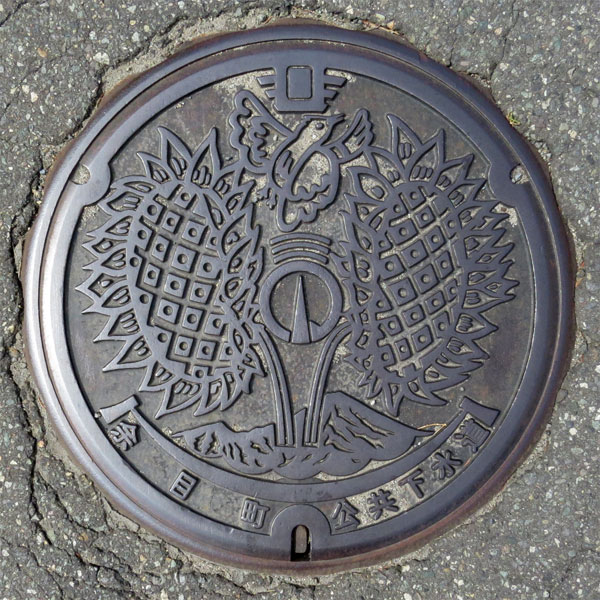
This public sewer manhole cover prominently features the town's flower, the sunflower.
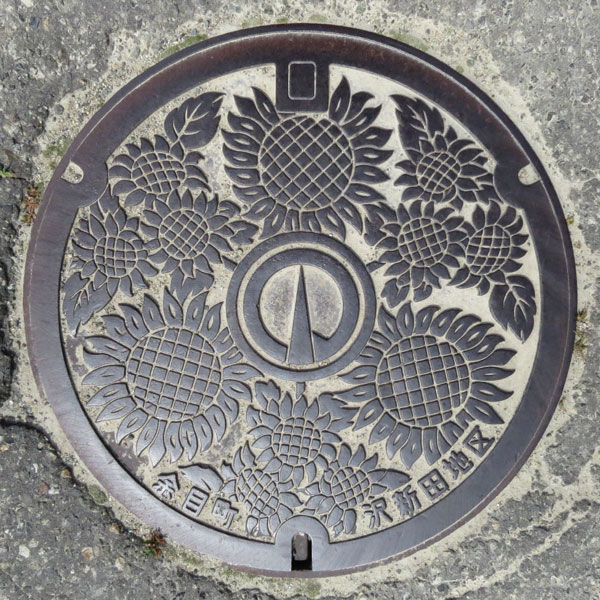
A manhole cover for agricultural waste collection and drainage in the Sawashinden area depicts the town's flower, the sunflower.
Tachikawa 立川町
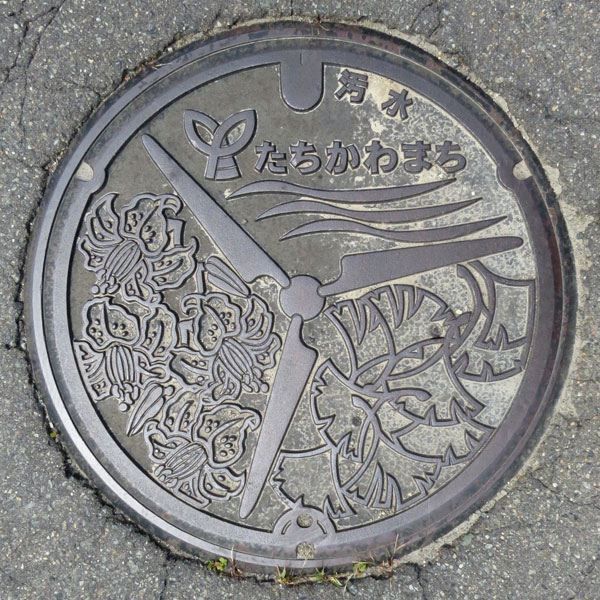
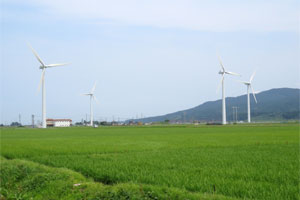
The manhole cover depicts the town's tree, the ginkgo tree, the town's flower, the mountain lily, and a wind turbine.
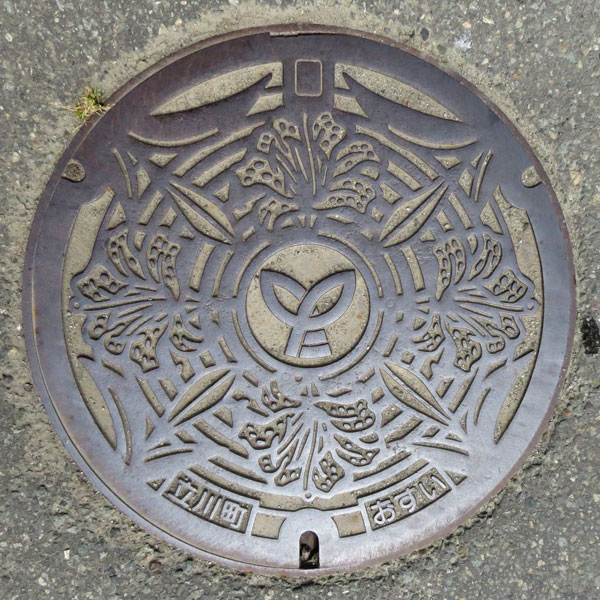
A manhole cover featuring the town's flower, the mountain lily.
Mikawa 三川町
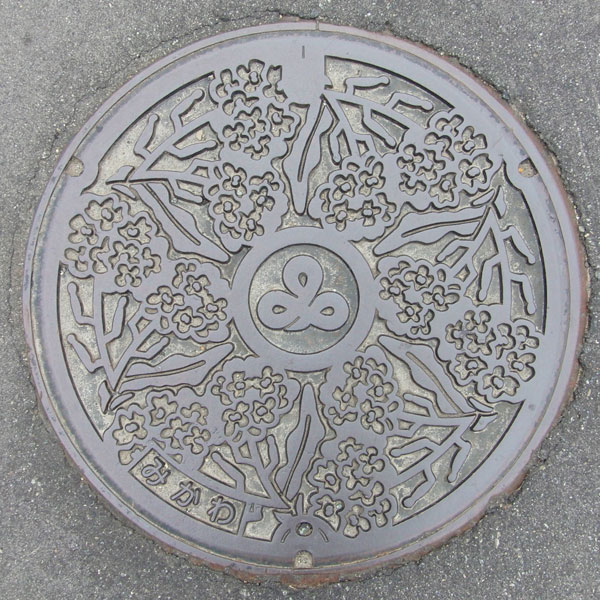
A manhole cover featuring the town's flower, "Nanohana."
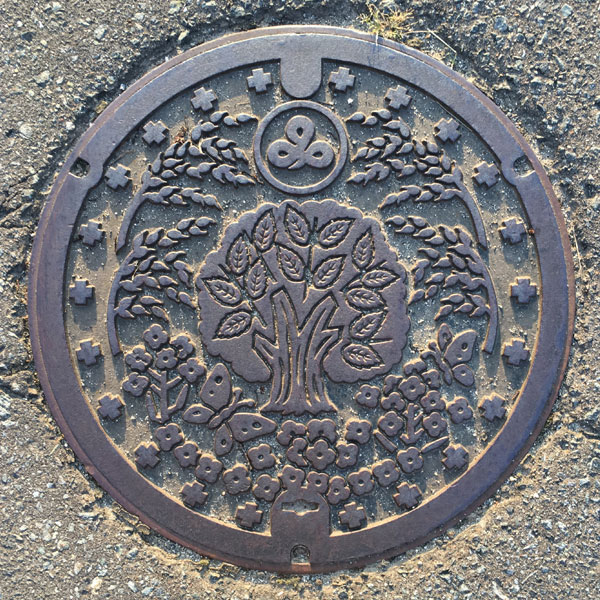
In the center is the town tree, a zelkova tree, with ears of rice on either side, and below it is the town flower, a nanohana, and butterflies.
Mogami 最上町
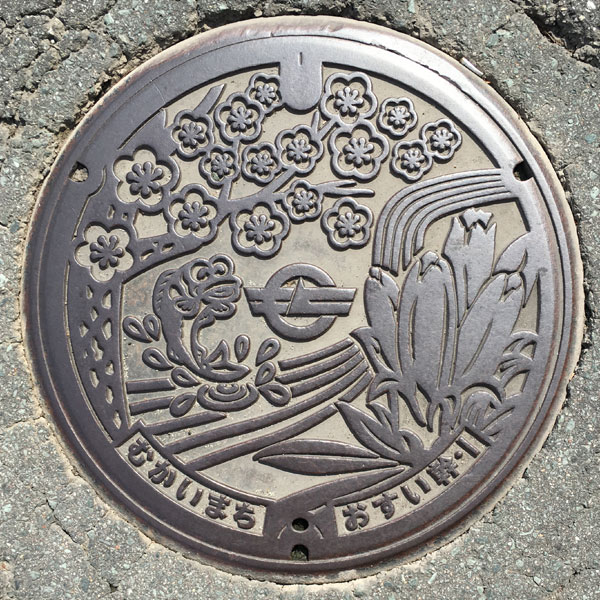
The public sewer cover in the Mukaimachi treatment district. The town's tree, the plum, and its flower, the gentian, are visible. Flowing through the center is the Oguni River, perhaps its tributary, the Kinude River. Fish are jumping.
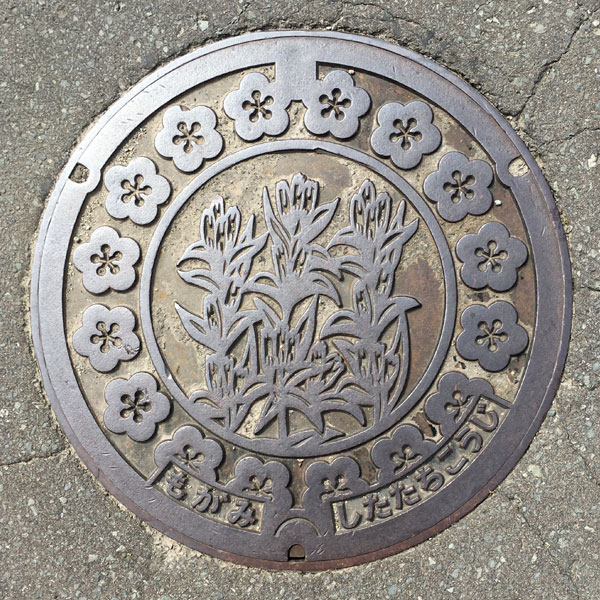
The cover of the agricultural waste collection culvert in the Shitatachikoji area is decorated with the town tree, the plum, on the outside and the town flower, the gentian, on the inside.
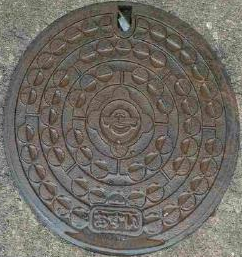
A sewage manhole cover bearing the town emblem.
Funagata 舟形町
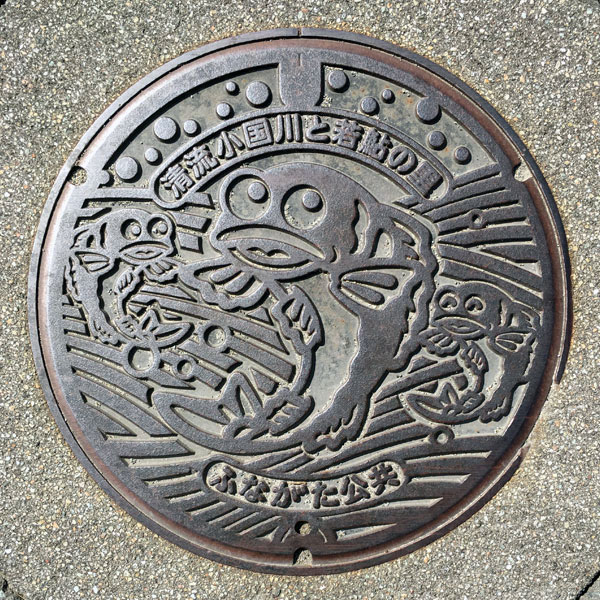
The manhole reads "The Home of the Clear Oguni River and Young Ayu (Sweetfish),"
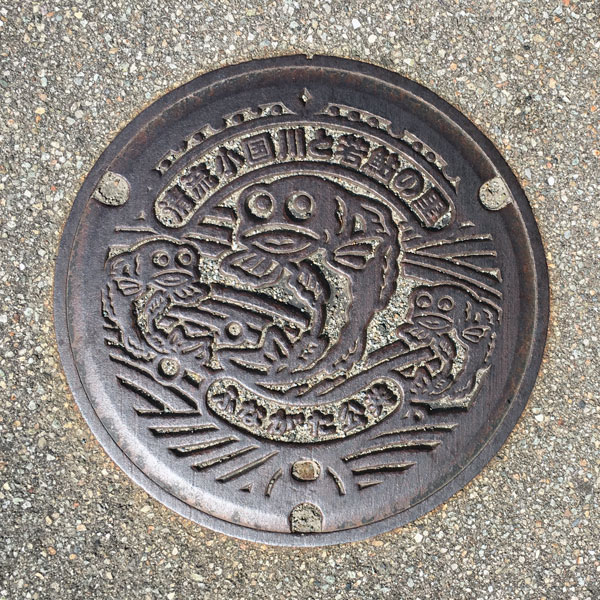
A smaller version of the same design as above. The fish in the center of the top lid is looking away, but this fish is looking straight at us.
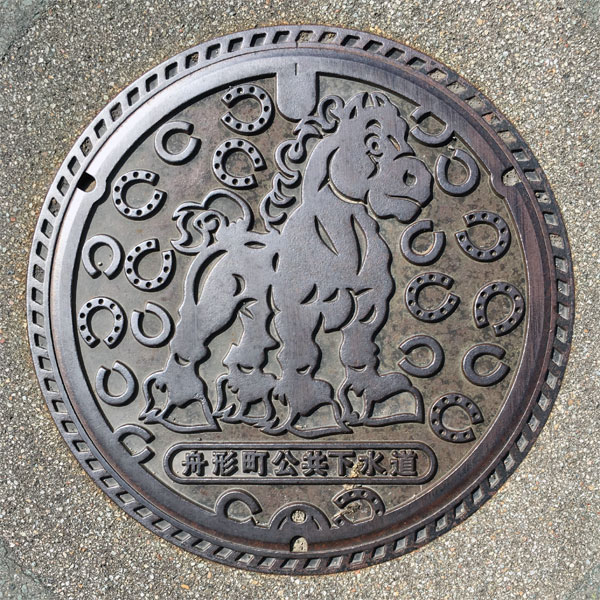
The painting depicts a horse and a horseshoe. I thought the horse looked unusually sturdy, and it turns out it's a draft horse. In Funagata, lumber cut from the forest was transported by sleds pulled by sturdy horses, weighing twice the weight of a thoroughbred. Apparently, this tradition is now celebrated as a draft horse race. I see.
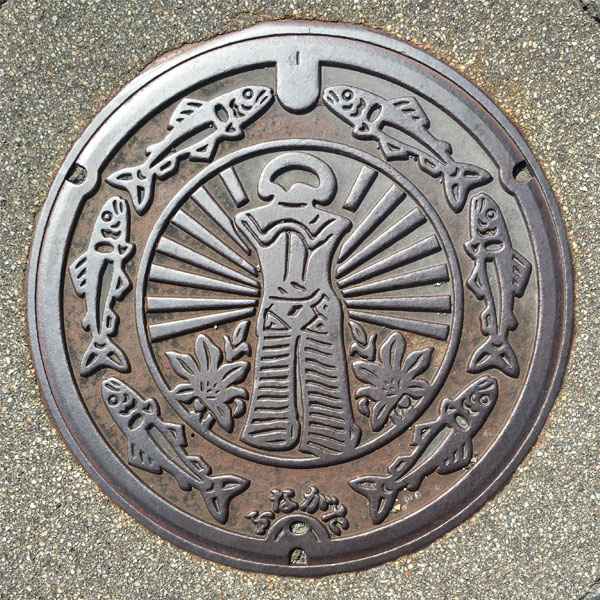
This 45cm tall clay figurine, the largest in Japan, was excavated from the Nishinomae ruins. It depicts the "Jomon Goddess," the town's flower, the foxglove, and the town's fish, the Ayu.
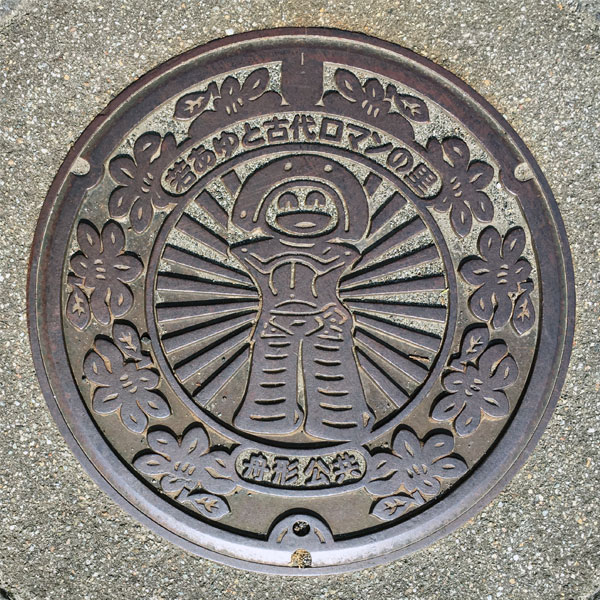
Like the cover above, this one features a "Jomon Goddess" motif, but the biggest difference is the face it has. Of course, the real thing has no face. Perhaps they thought it necessary to create a character with eyes and a nose. Even more anime-like "Jomon Goddess" images were used at bus stops and other locations.
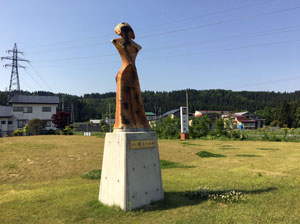
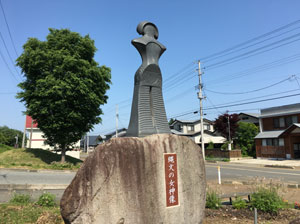
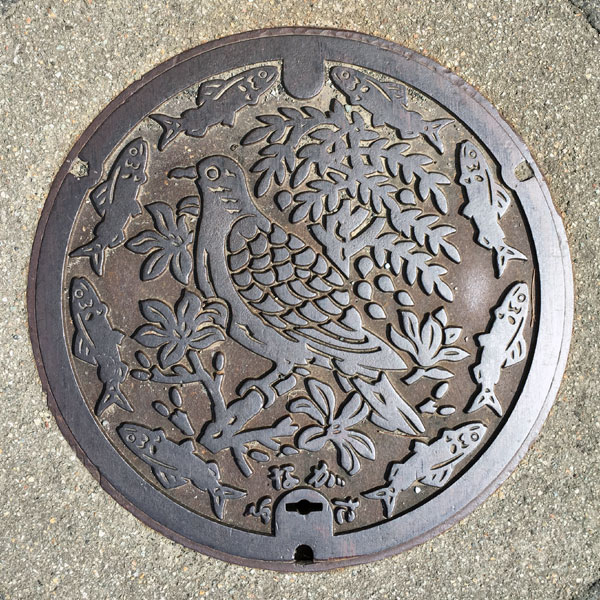
The lid depicts the town's bird, the Oriental Turtle Dove, the town's tree, the Japanese pagoda tree, the town's flower, the Magnolia magnolia, and the town's fish, the Ayu. The word "Funagata" is written at the bottom.
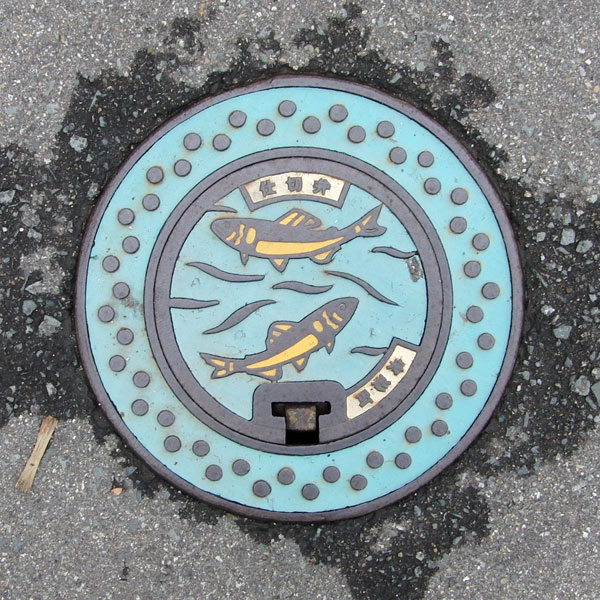
A sluice box with a picture of the town's fish, the Ayu.
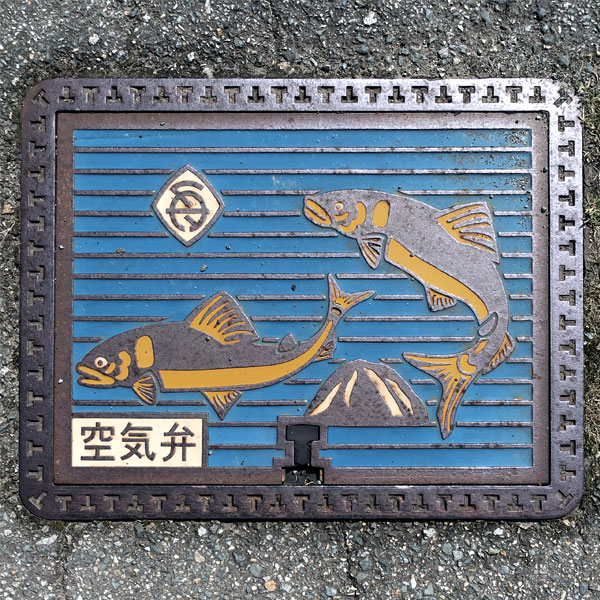
An air valve with a picture of the town's fish, the Ayu.
Oishida 大石田町
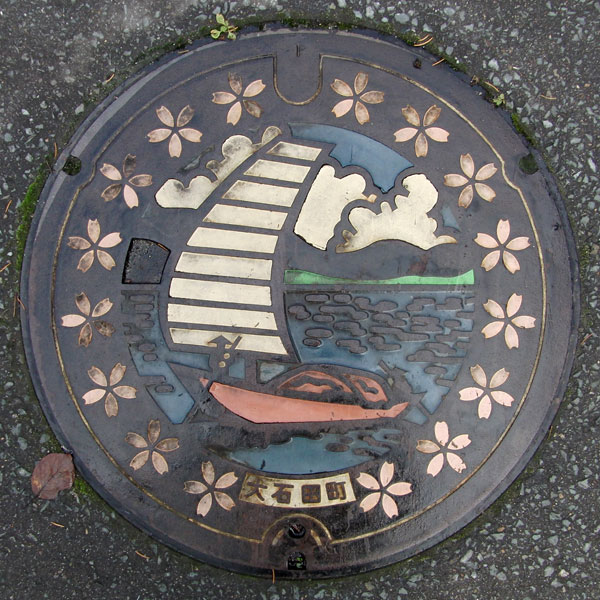
Oishida, once a prosperous town thanks to its shipping on the Mogami River, features a design of a riverboat carrying goods to Sakata Port and the town's flower, the cherry blossom. Because the Mogami River upstream of Oishida poses difficult obstacles, cargo transported from Sakata Port was unloaded at Oishida and transported not only to the Murayama and Okitama regions, but also to the Sendai domain east of the Ou Mountains.
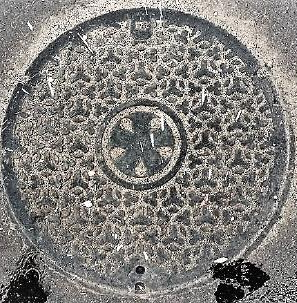
The town emblem in the center.
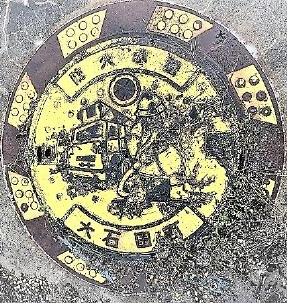
The design features a ladder truck and a firefighter spraying water, the town emblem on top, the words "Fire Water Tank" at the top, and "Oishida Town" at the bottom. The lid is yellow with polka dots, and the metal cover and the base color alternate around it, resembling a windmill.
Nishikawa 西川町
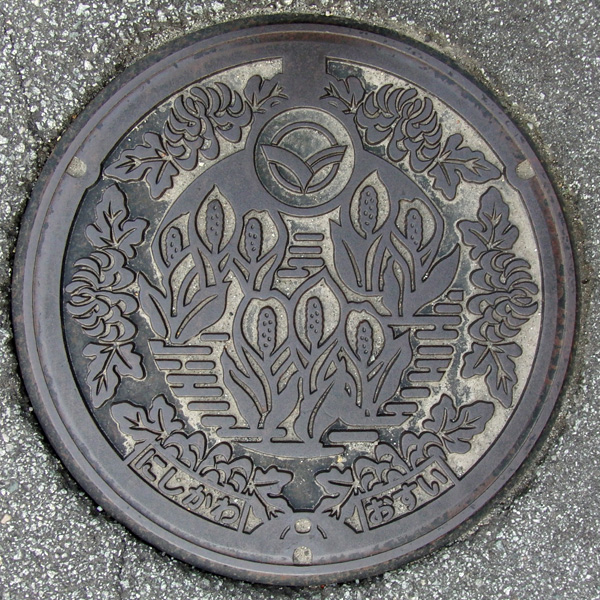
A manhole cover featuring the town's flowers, the skunk cabbage and the chrysanthemum.
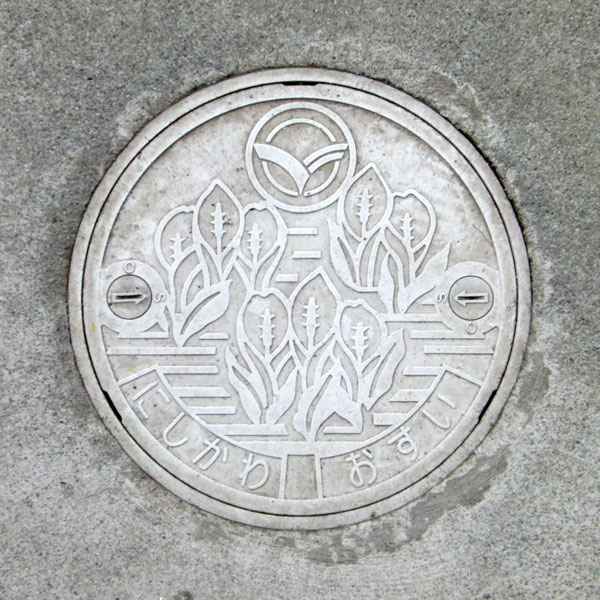
A plastic sewage manhole cover that looks like it has only the Asian skunk cabbage removed from the top lid.
Kahoku 河北町
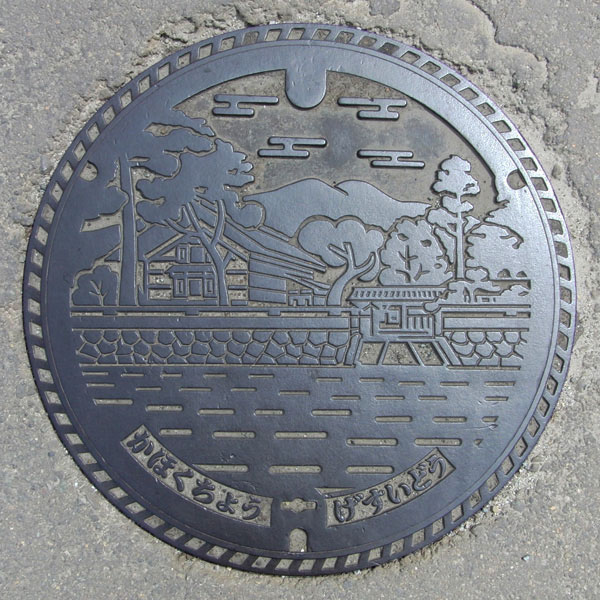
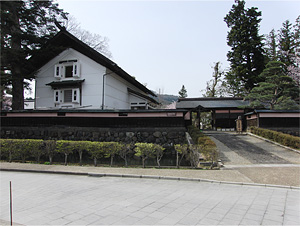
The lid features a picture of the Safflower Museum in Kahoku Town.
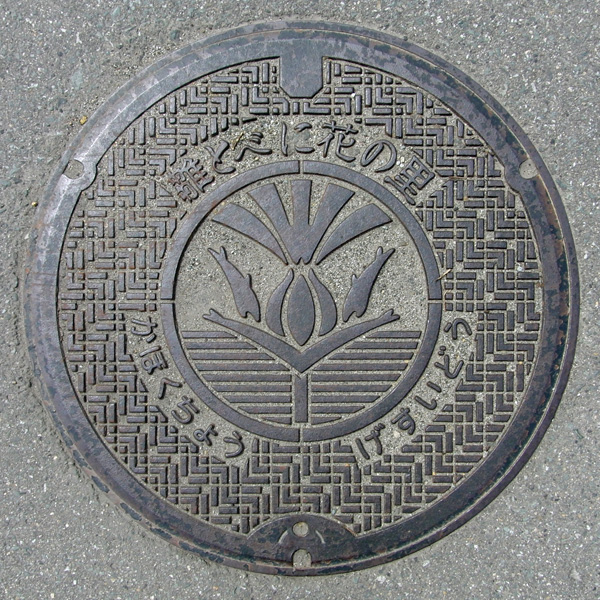
A manhole cover with a picture of the town's flower, the safflower. The words "Hina and Safflower Village" are written on the top.
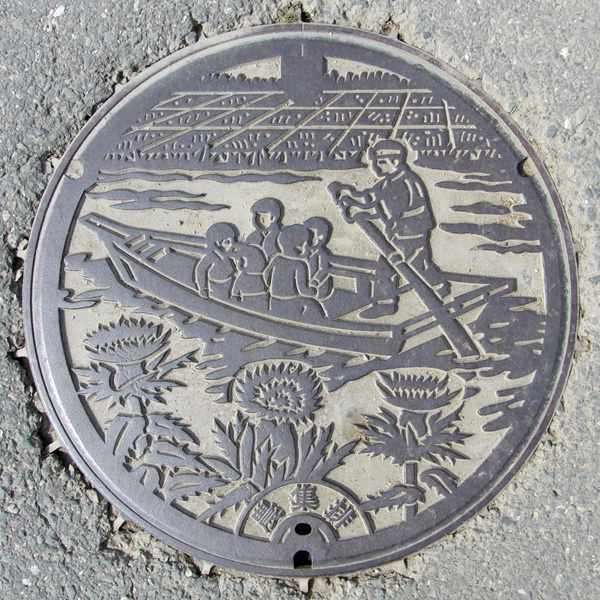
A lid for agricultural waste collection depicting the town flower, safflower, and a ferryboat.
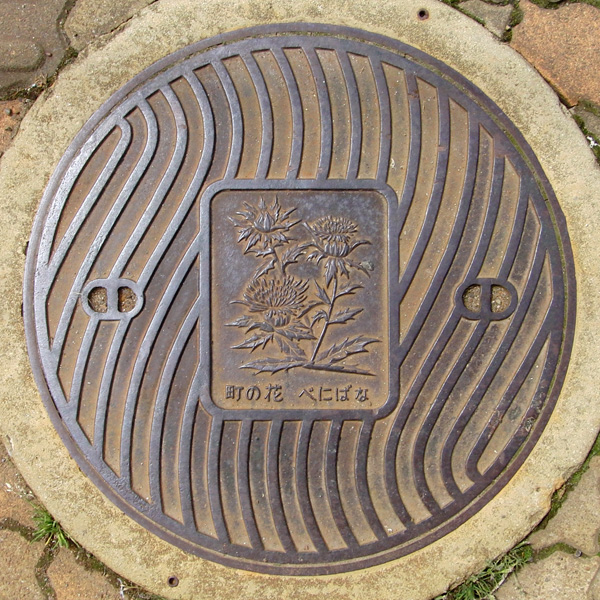
This sewage manhole cover features the town's flower, safflower. The words "safflower" and "Town Flower: Safflower" are written inside a square in the center.
This lid is very similar to a sewage manhole cover in Aizuwakamatsu City, Fukushima Prefecture, that features a hollyhock.
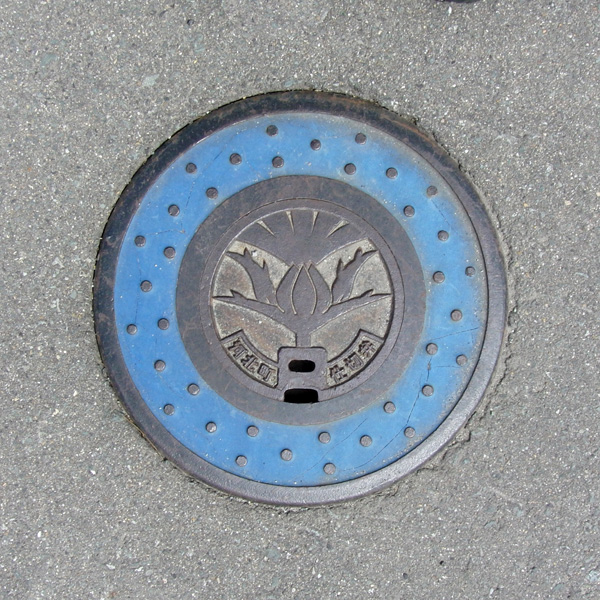
The valve cover features a picture of the town's flower, safflower.
Oe 大江町
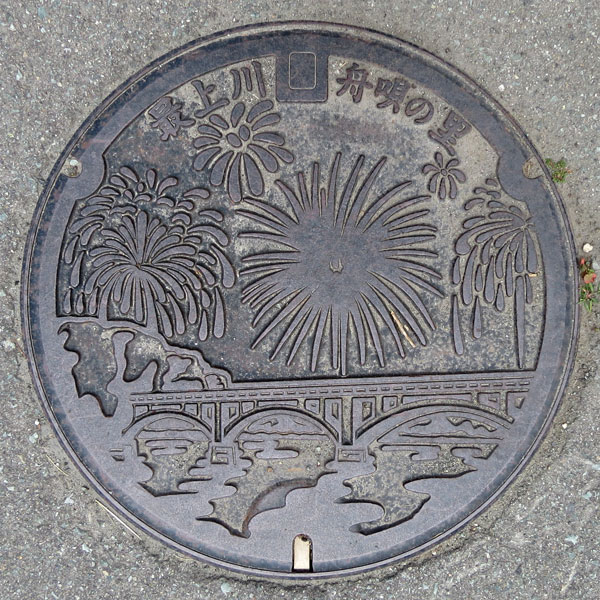
Fireworks rising above the old Mogami Bridge over the Mogami River and the words "Mogami River Boat Song Village."
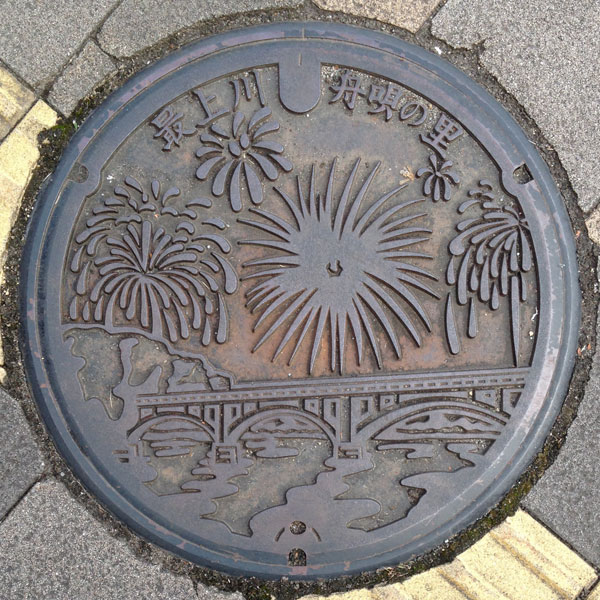
Same design as above, but with different specifications.
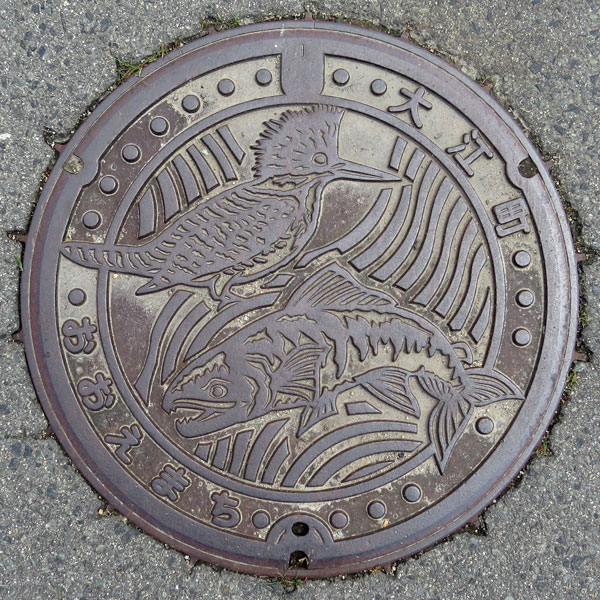
A cover for agricultural wastewater collection in the Narayama district, with a picture of a kingfisher and a cherry salmon. It is installed in front of an agricultural village wastewater treatment facility, so it may not actually be used as a cover.
Nakayama 中山町
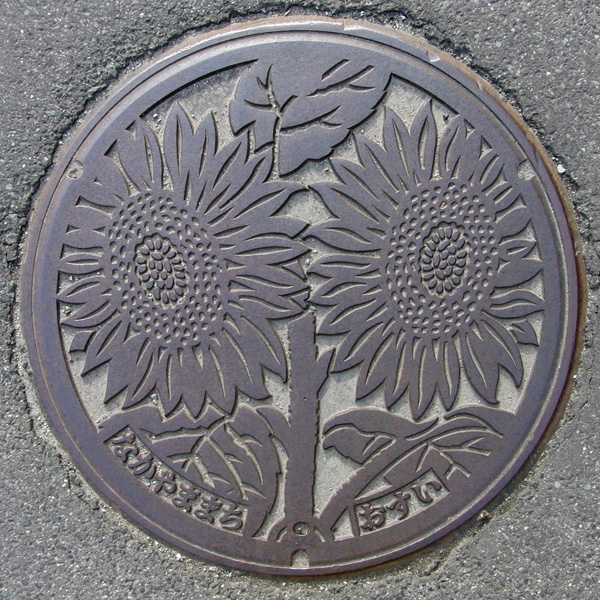
A manhole cover featuring the town's flower, the sunflower.
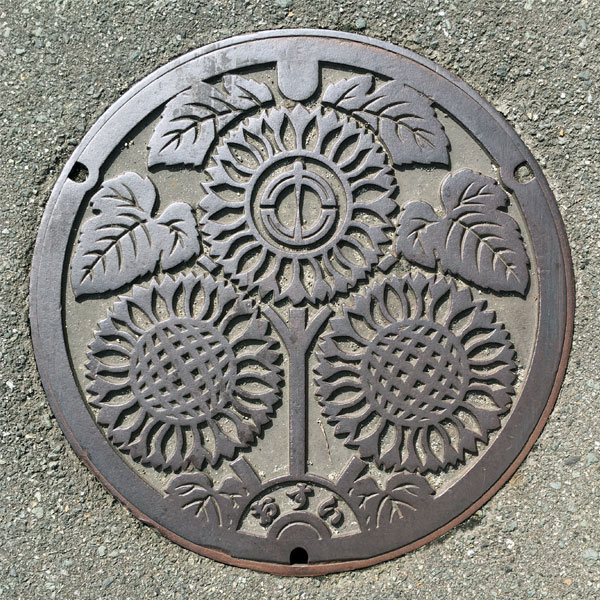
A manhole cover for the agricultural collection and drainage system in the Kanazawa treatment district depicts three sunflowers, the town flower. The town emblem is inside the flowers on top.
Asahi 朝日町
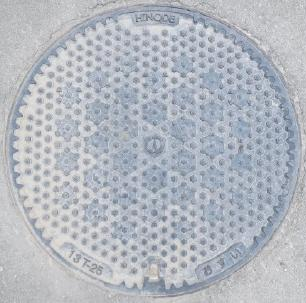
A cover with a small town emblem in the center and the words "Osui" (Osui) at the bottom.
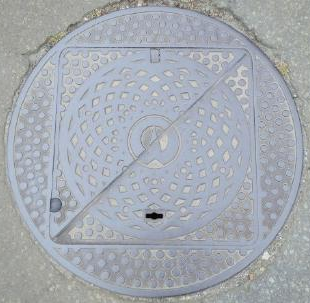
The lid features a ball-like design with the town emblem and a diagonally divided square lid set in a polka-dot frame.
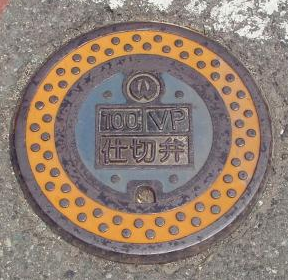
The lid features a blue background with polka dots and the town emblem and the words "100 VP" and "Shut-off Valve." The frame is yellow with polka dots.
Yamanobe 山辺町
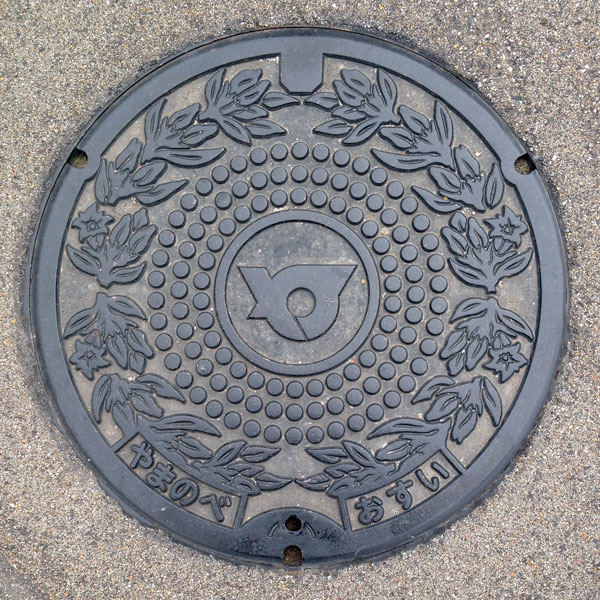
The lid features the Yamanobe Town emblem and the town flower, the gentian.
Shirataka 白鷹町
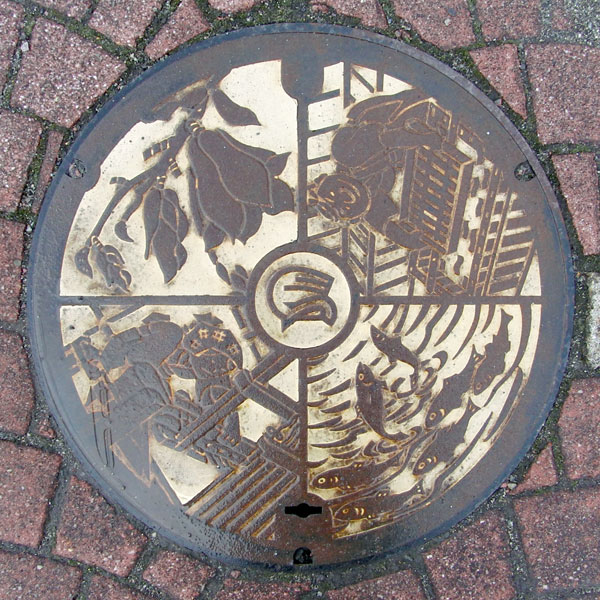
Clockwise from the top right, the design depicts the Miyama washi papermaking process, the town's fish, the sweetfish, Shirataka tsumugi silk, and the town's flower, the magnolia.
Oguni 小国町
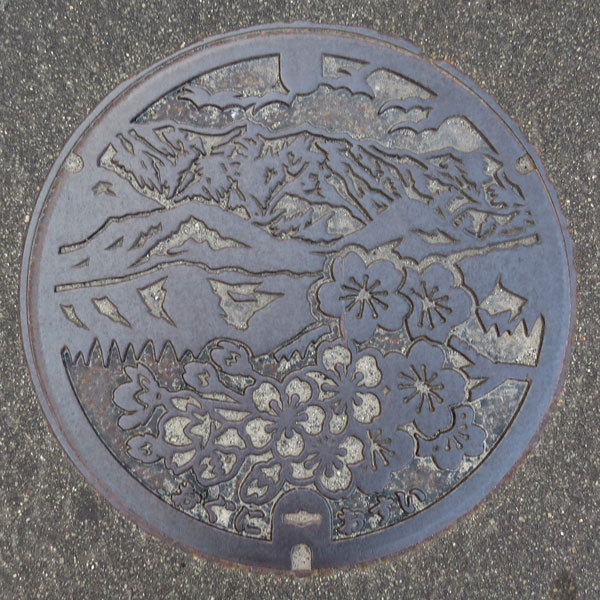
The lid features a picture of a large mountain cherry blossom with the Iide mountain range in the background.
Iide 飯豊町
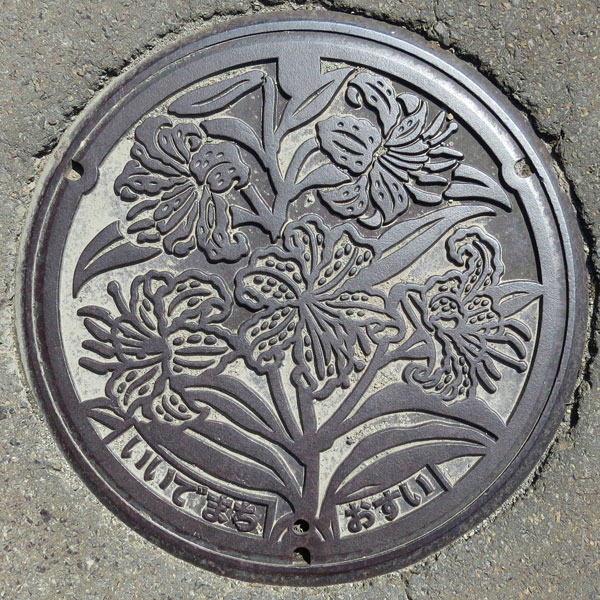
The town's flower, the lily, is depicted.
Kawanishi 川西町
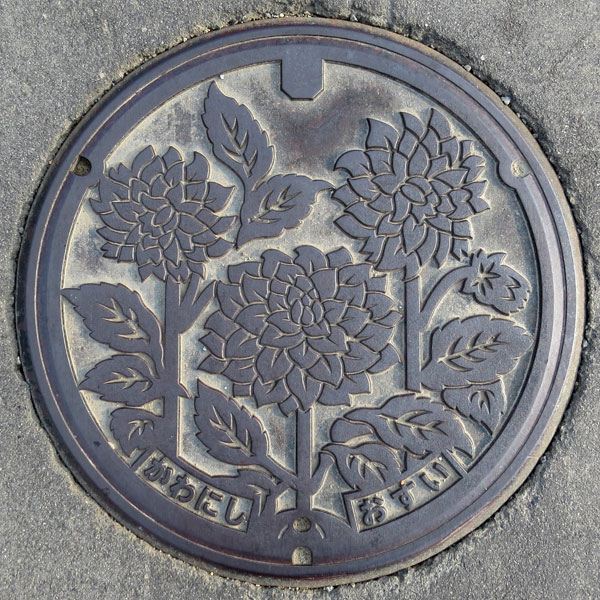
The lid features a picture of Kawanishi Town's flower, the dahlia.
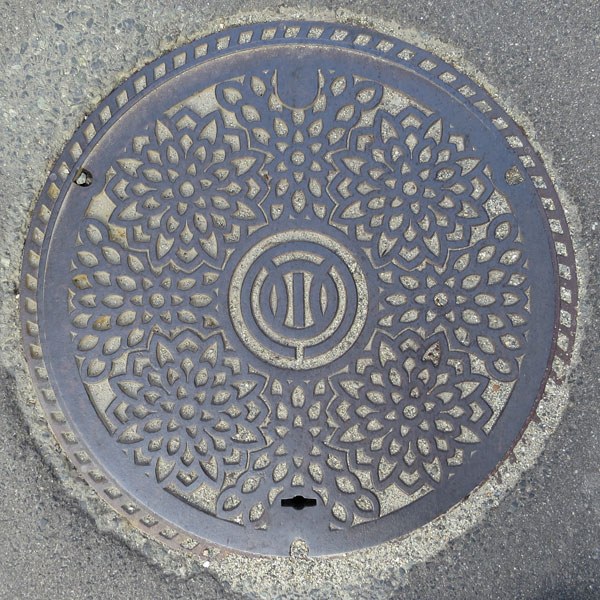
A manhole cover with a pattern of the town's flower, the dahlia, and the town emblem in the center.
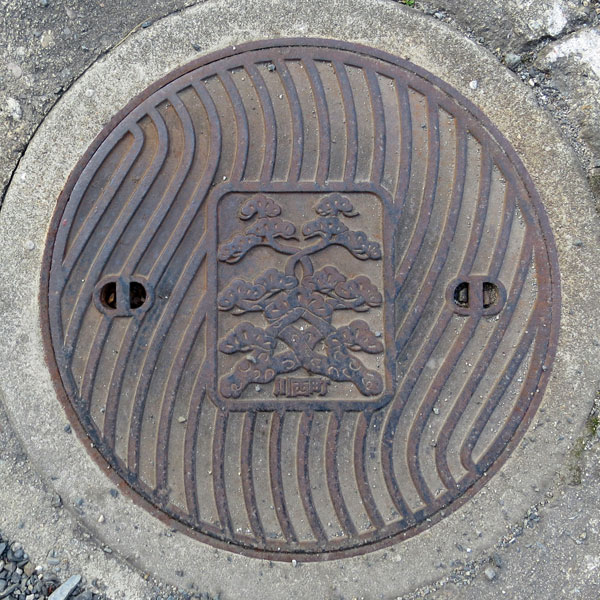
A sewage manhole cover with the town's tree, a pine tree, painted in the center.
Takahata 高畠町
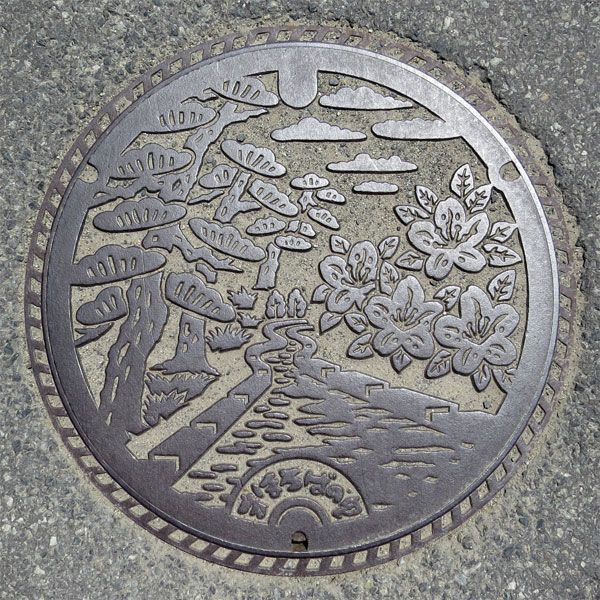
The manhole cover depicts the town's tree, the red pine, its flower, the azalea, and the Mahoroba Greenway.
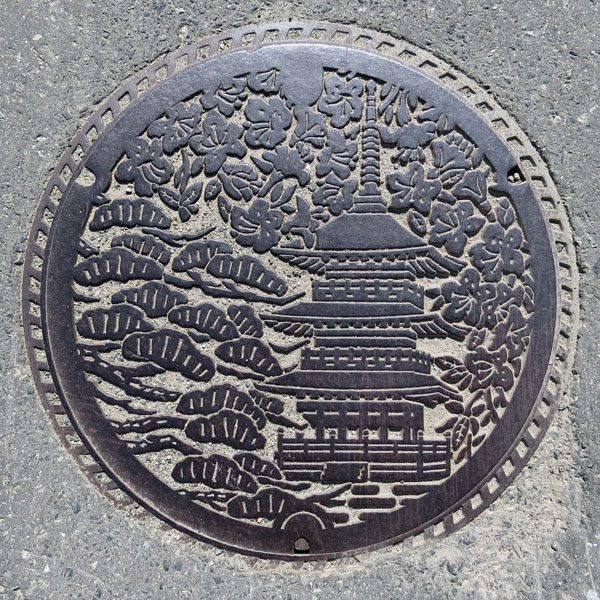
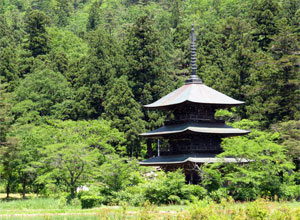
The manhole cover depicts the town's tree, the red pine, its flower, the azalea, and the three-story pagoda of Yasukutsu Hachiman Shrine.
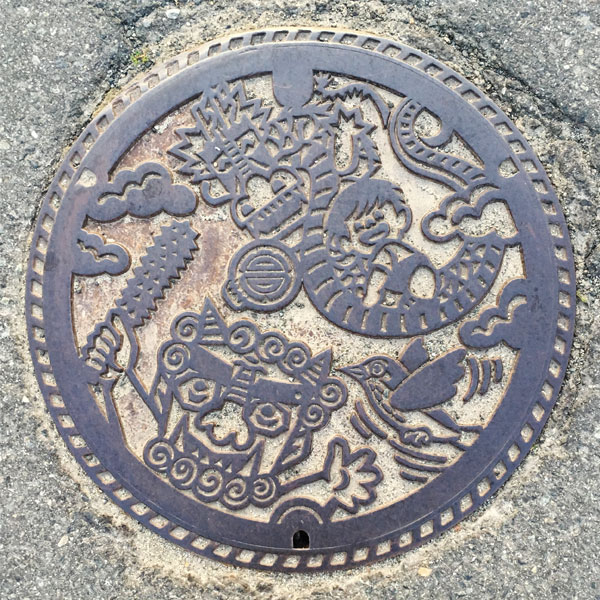
National Route 113, which runs from Nanyo City, Yamagata Prefecture, through Takahata Town, Shichikashuku Town, Miyagi Prefecture, and on to Shiroishi City, is labeled Shichikashuku Highway on maps, but it's also known as the Michinoku Fairy Tale Highway. It's apparently home to many folk tales, legends, and old stories.
Takahata Town, in particular, is the birthplace of Hirosuke Hamada, author of the fairy tale "The Red Ogre Who Cried," and the town is home to the Hirosuke Hamada Memorial Museum. Known as the Japanese Andersen, Hirosuke Hamada's signature work includes "Tears in the Dragon's Eye," which may be connected to the demon and dragon on this manhole. If so, perhaps the bird in the lower right is a starling from his debut work, "The Starling's Dream." It's a fun design.
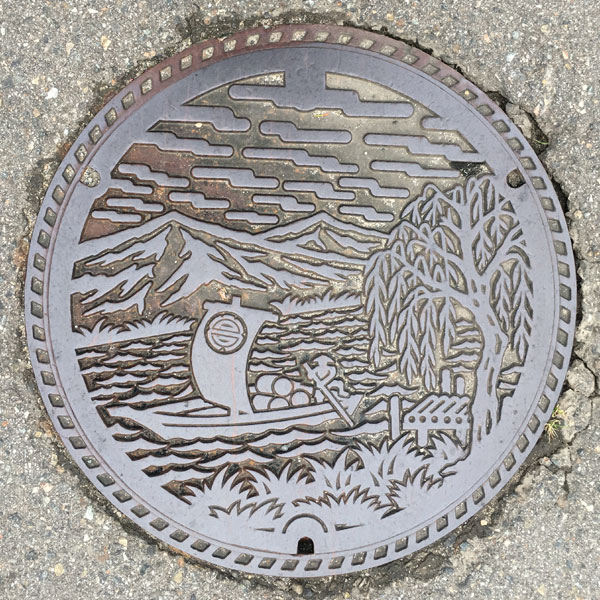
Naval shipping on the Mogami River flourished from the Edo period through the Meiji period. Nukanome, where this manhole cover was located, likely had a riverbank, and a small dock is depicted beneath the willow tree to the right of the cover. The boat is likely carrying rice as tax. The Takahata Town emblem is painted on the boat's sail.
Sakegawa 鮭川村
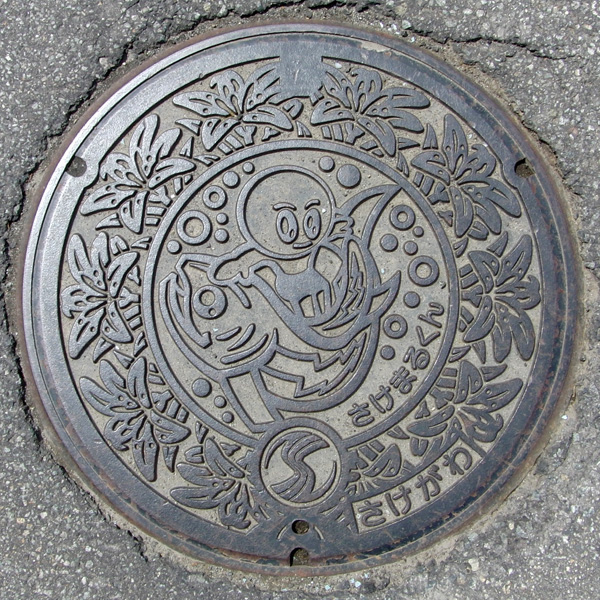
The manhole cover features the village flower, the "Michinoku Hime-yuri," and an illustration of "Sakemaru-kun" riding a salmon on the inside.
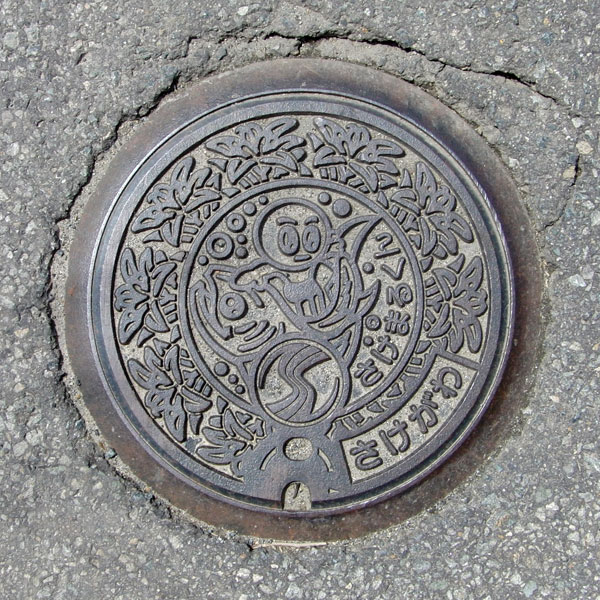
A smaller version of the same design as above. The number of Michinoku Hime-Yuri has been reduced to accommodate the size.
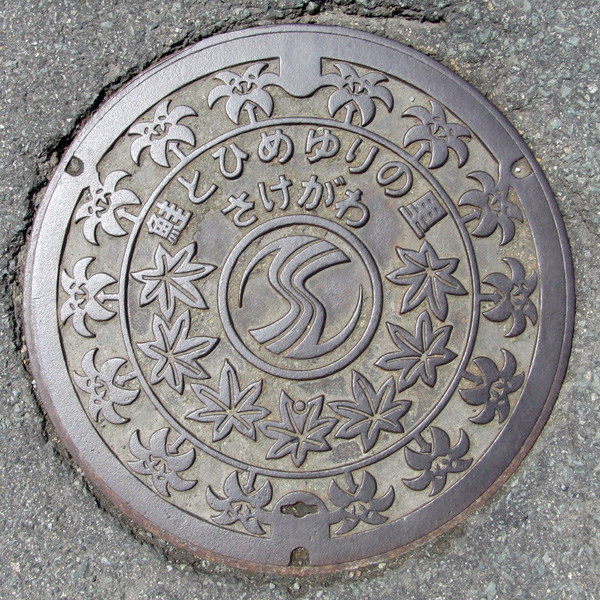
The manhole cover features the village flower, the Michinoku Hime-yuri, and the village tree, the maple.
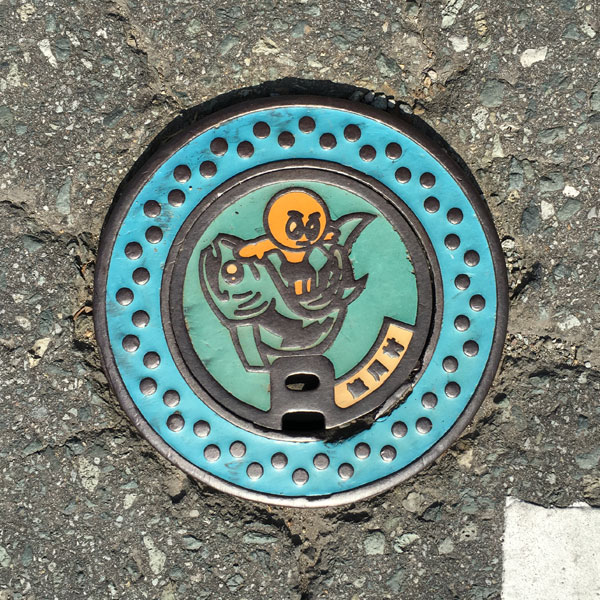
The hand-hole lid has dots around it and "Sakemaru-kun" riding a salmon on the inside.
Tozawa 戸沢村
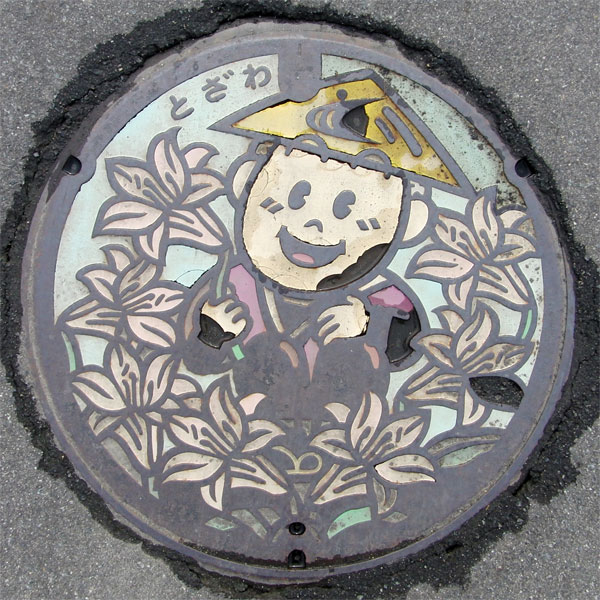
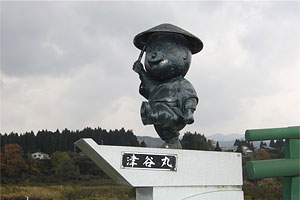
Surrounded by the town's flower, the Hime Sayuri, is a character dressed as a boatman from a Mogami River boat trip. He appears not only on manholes but also on country signs, and his name is "Boatman-kun."
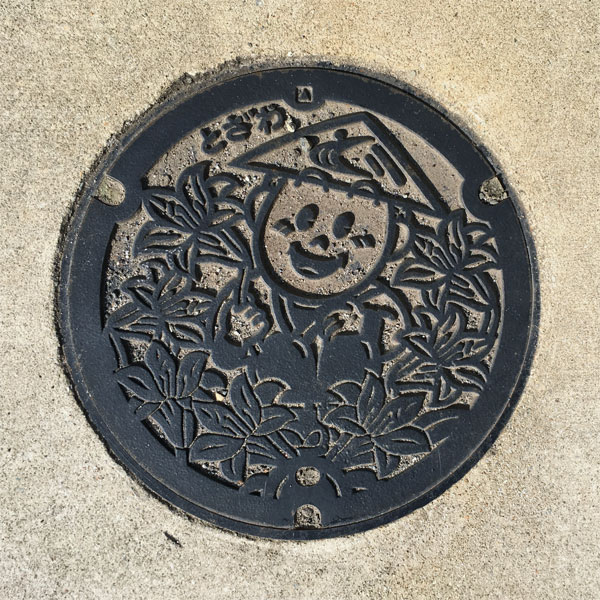
A smaller version of the same design as above.
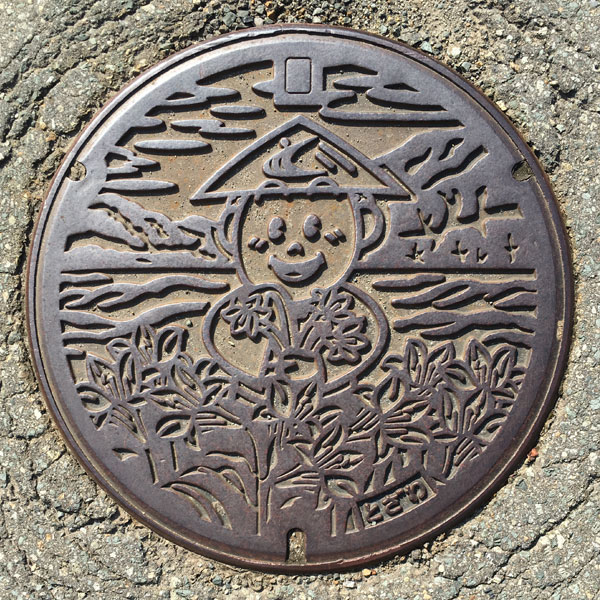
The lid is decorated with a picture of the boatman holding the town flower, the Hime Sayuri, with the Mogami River in the background.
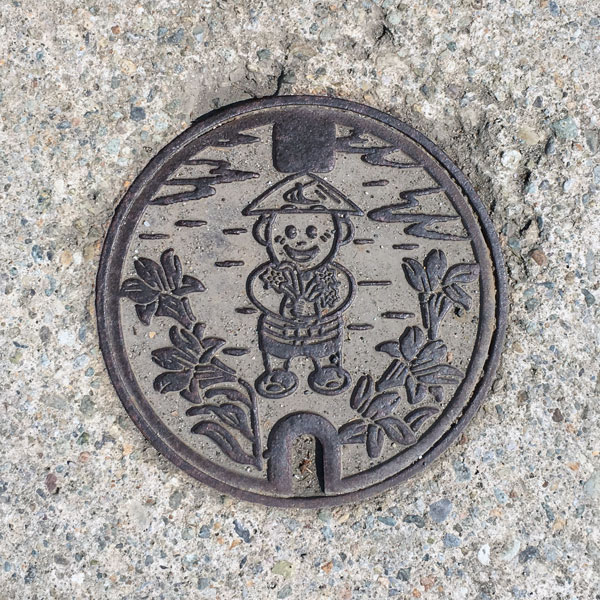
The hand-hole cover features a painting of the boatman holding the town flower, the Hime Sayuri, with the surface of the Mogami River in the background. It has the same motif as the cover above, but the design is different.
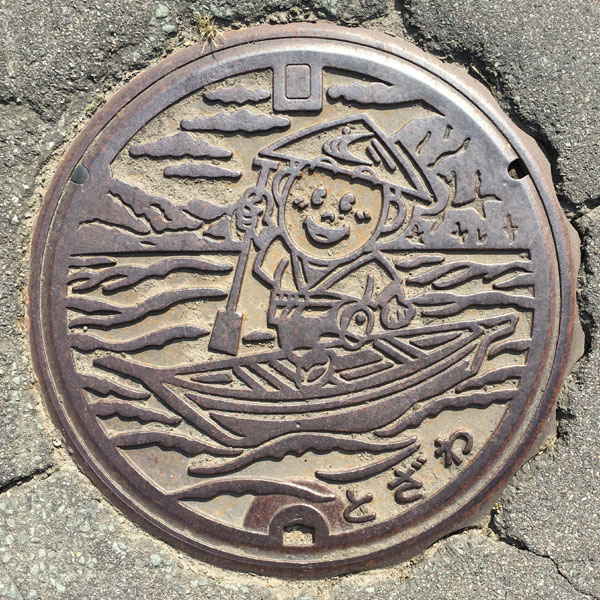
"Boatman" is standing on one leg, holding the oar, on a boat floating on the Mogami River (he'll fall off someday). The resin is badly peeling.
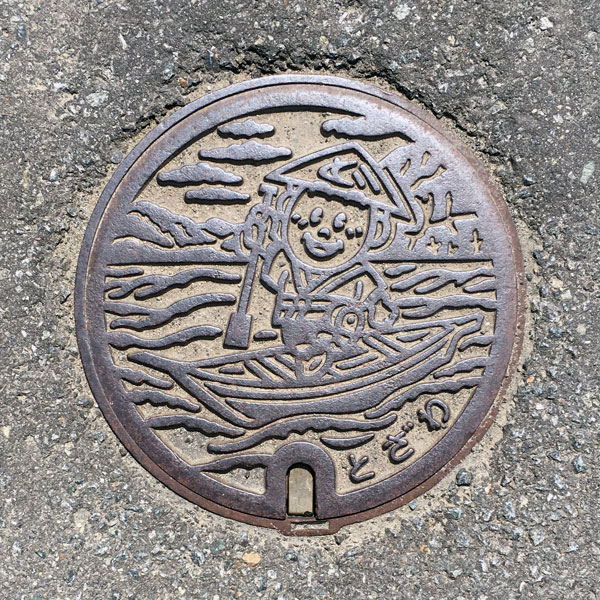
A handhole lid with the same design as the top lid.
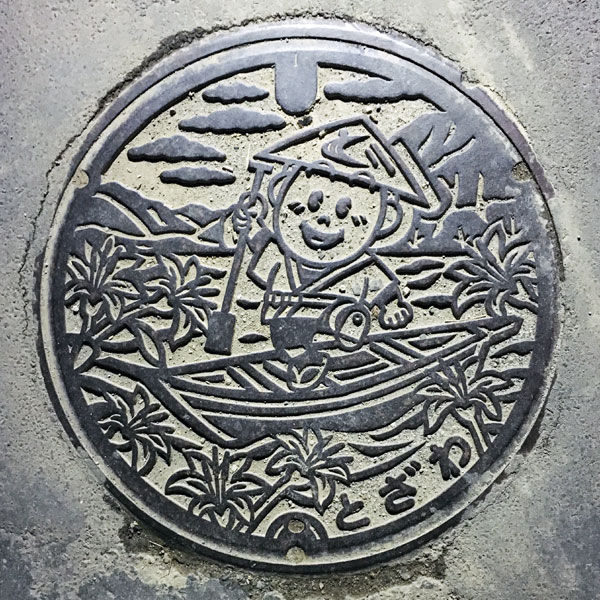
It has almost the same design as the top lid, but the village flower, the Himesayuri, has been added.
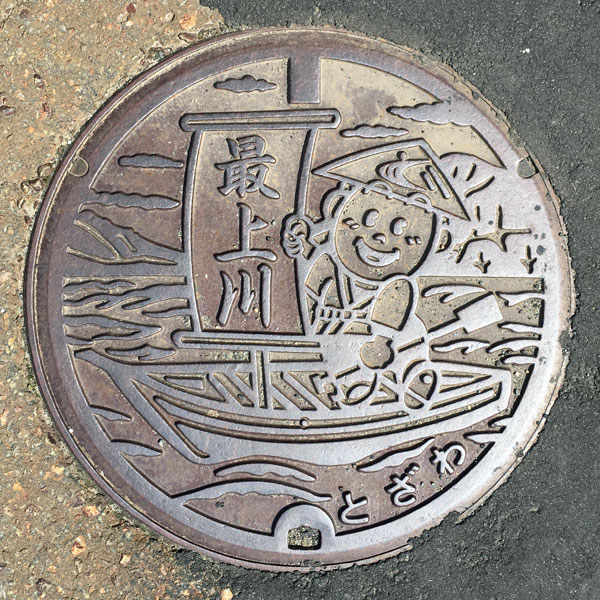
The lid features a design of "Boatman-kun," who is standing on one leg while holding a flag that reads "Mogami River" and has his oar in his left hand on a boat floating on the Mogami River. While holding the flag seems stable, his left foot is already outside the boat.
Okura 大蔵村
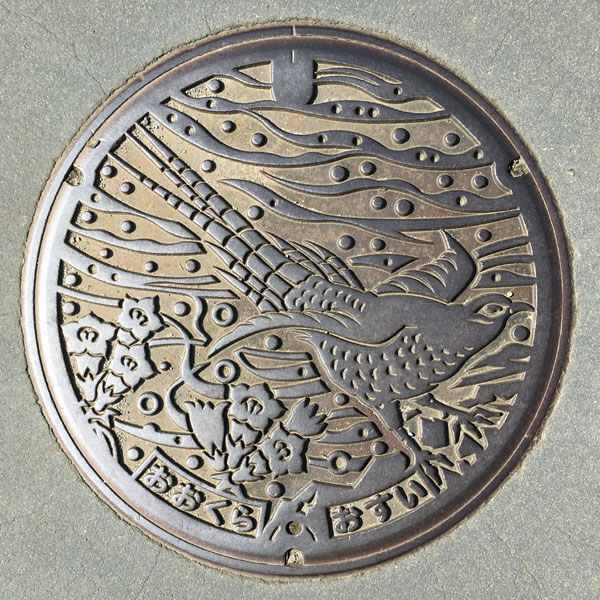
It depicts the village bird, the pheasant, and the village flower, the gentian.
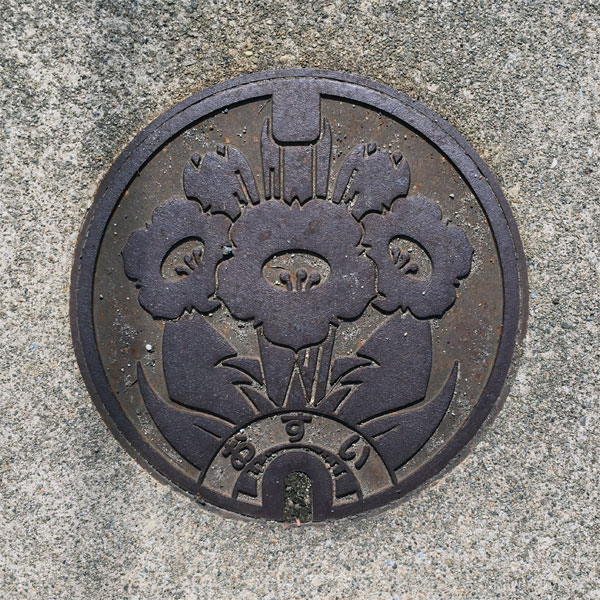
A sewage manhole decorated with the village flower, the gentian.
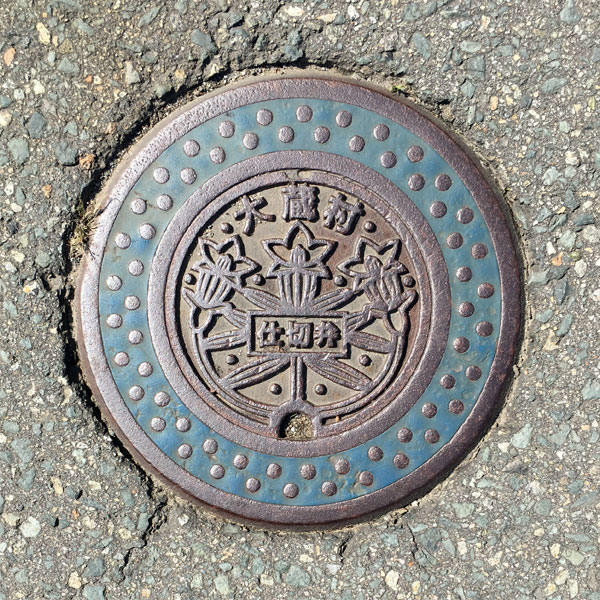
A handhole cover decorated with the village flower, the gentian.
Yamagata Prefecture 山形県
Mogami River Lower Basin Sewerage System 最上川下流流域下水道
The municipalities associated with the Mogami River Lower Basin Sewerage System are Tsuruoka City (formerly Fujishima Town), Sakata City, Mikawa Town, and Shonai Town.
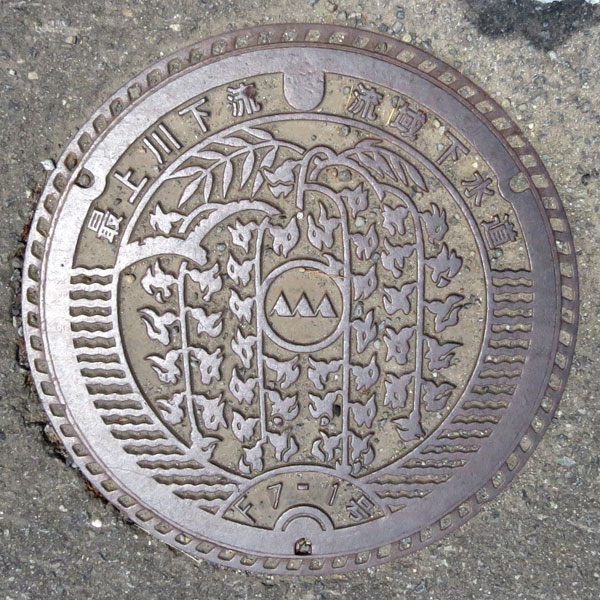
A manhole cover for the river-basin sewerage system features a wisteria, the flower of the former Fujishima Town.
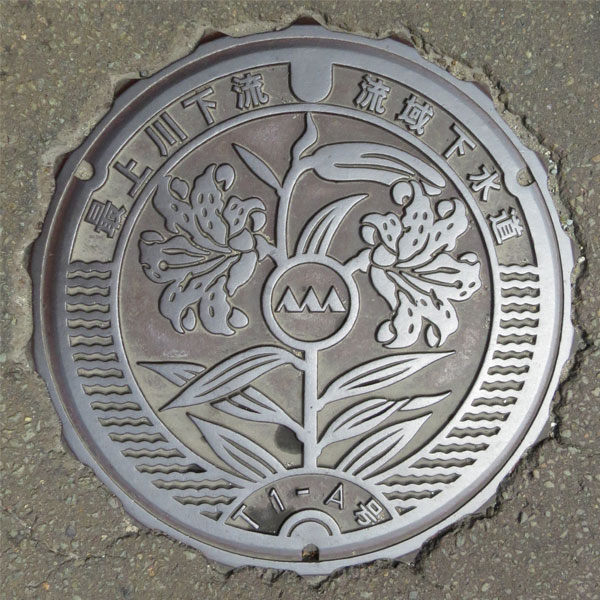
The Mogami River Lower Basin Sewerage System cover features the mountain lily, the town flower of the former Tachikawa Town. The Yamagata Prefecture emblem is in the center.
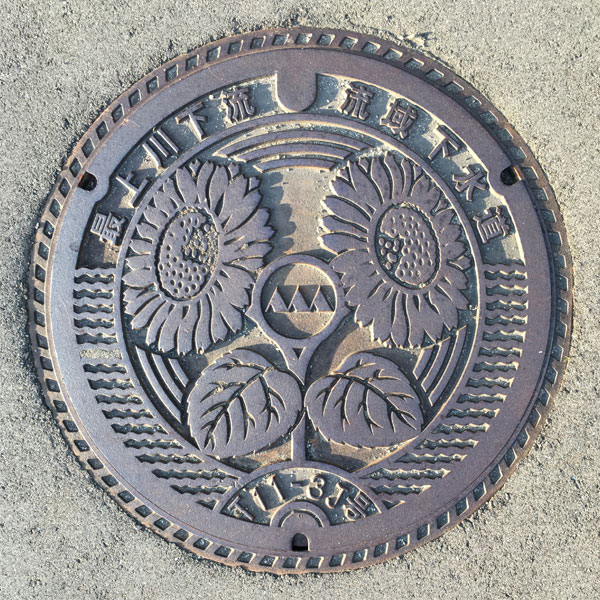
The cover of the Mogami River downstream sewer system features a sunflower, the town flower of the former Amarume town. The Yamagata prefecture emblem is in the center.
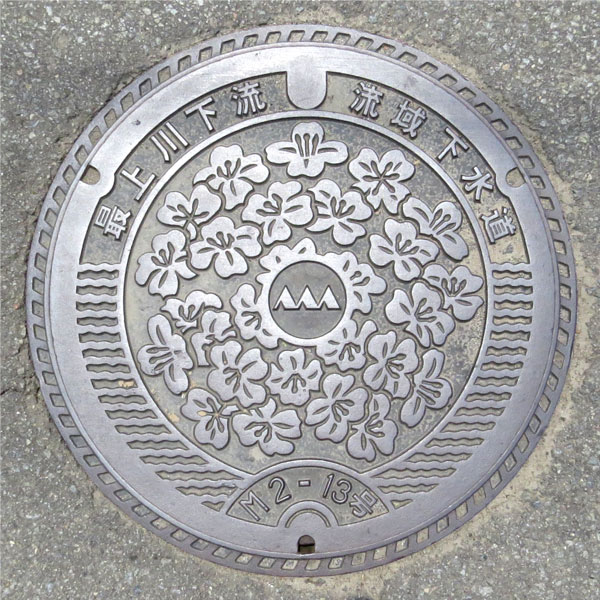
A manhole cover for the river-basin sewerage system features Mikawa town's flower, the "nanohana" (nanohana).
Murayama Sewerage Treatment Area of the Mogami River Basin 最上川流域下水道
The municipalities associated with the Murayama Sewerage Treatment Area of the Mogami River Basin are Murayama City, Higashine City, Obanazawa City, Kahoku Town, Oishida Town, and Tendo City.
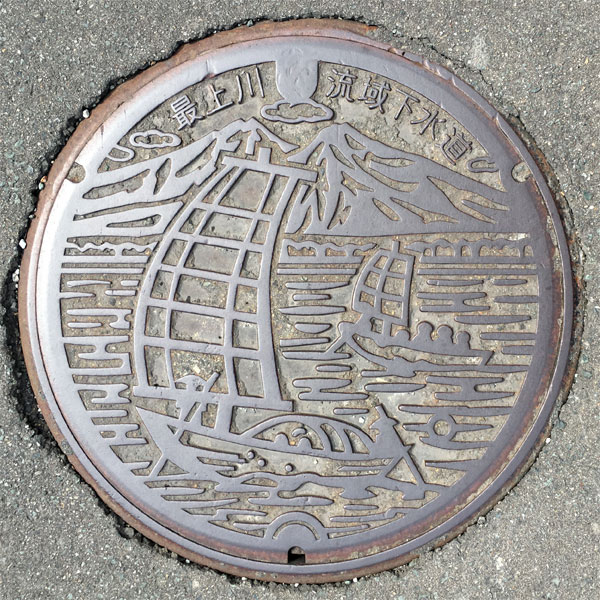
The cover depicts a "small cormorant fishing boat," a small Edo-period boat that was said to be able to navigate the rapids of the Mogami River.