Oita 大分県
Oita 大分県
Oita 大分市
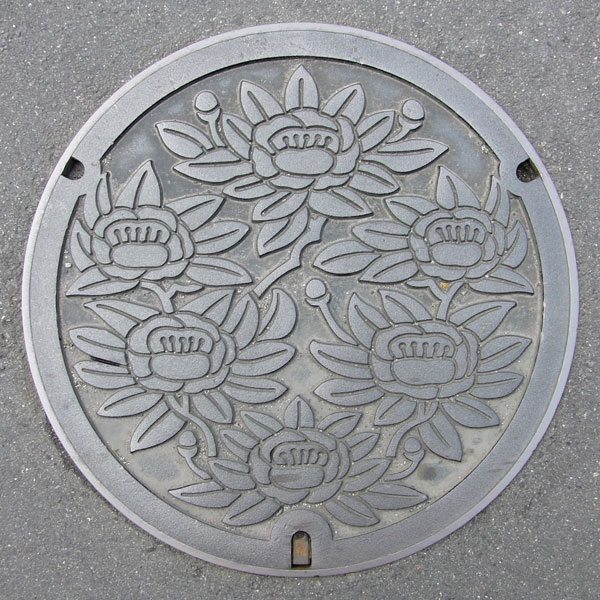
A lid depicting a camellia flower.
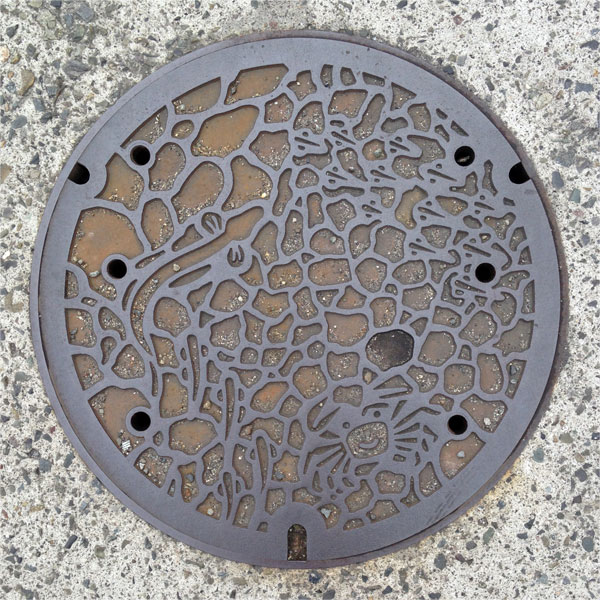
Manhole cover featuring illustrations of eels, medaka fish, crucian carp, and crabs.
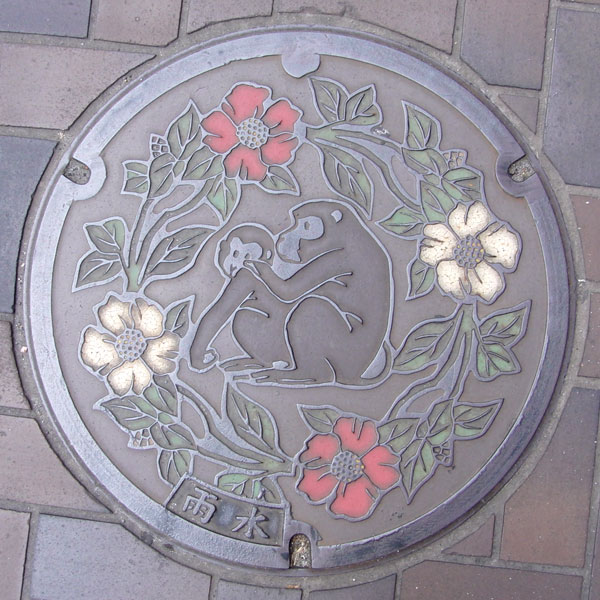
In the center, monkeys from Takasakiyama Natural Zoological Garden are grooming themselves, surrounded by the city's official flower, the camellia.
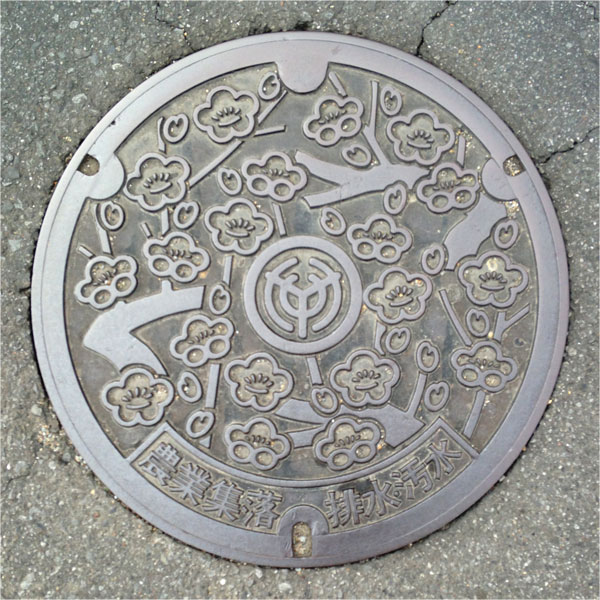
A manhole cover for agricultural drainage in the Yoshino district, depicting plum blossoms from Yoshino Plum Garden.
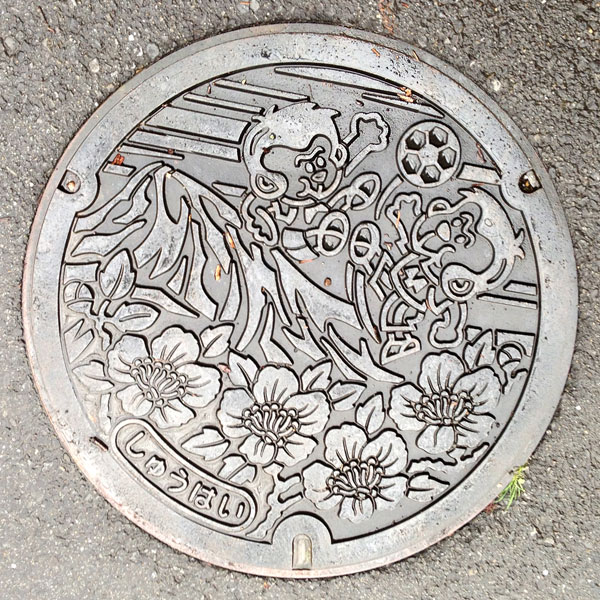
This manhole cover for the agricultural drainage system in the Ichio district depicts monkeys playing soccer, perhaps mimicking Oita Trinita football, on top of camellias, the city's official flower, with Mount Takasaki in the background.
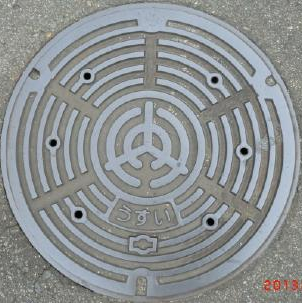
A concentric-circle-style design featuring the city emblem and the characters for "rainwater" (雨水) in the center.
Nakatsu 中津市
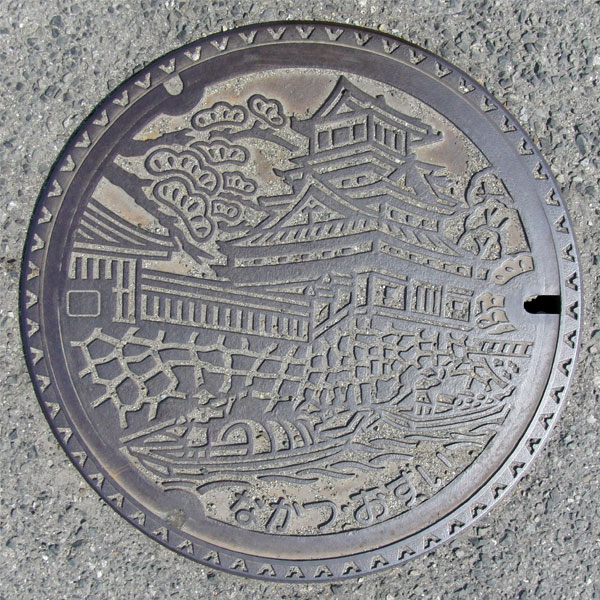
A manhole cover for sewage featuring an illustration of Nakatsu Castle.
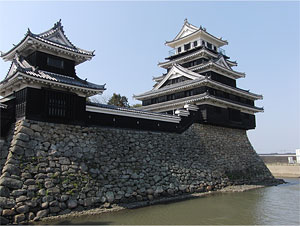
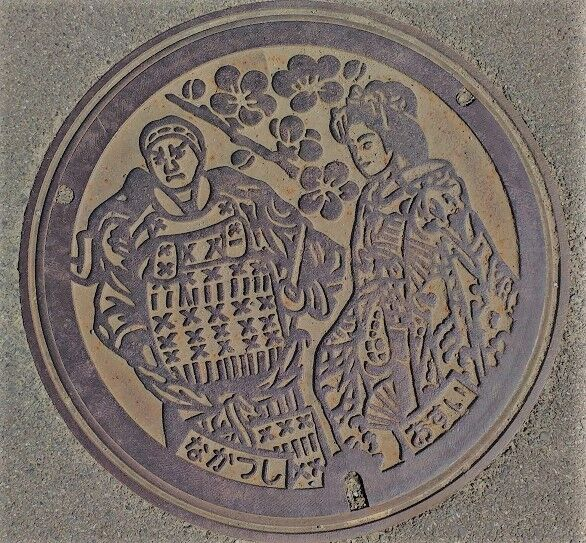
This manhole features a design based on the Kitabaru Puppet Theater. It is a 700-year-old traditional folk performing art in the Kitabaru district.
Honyabakei 本耶馬溪町
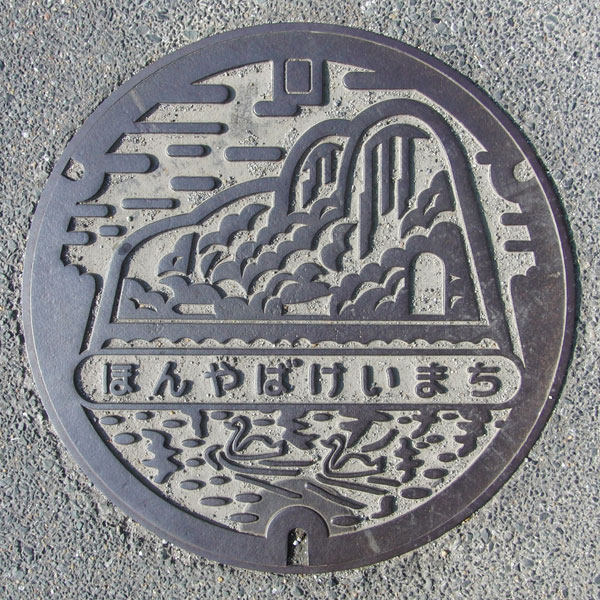
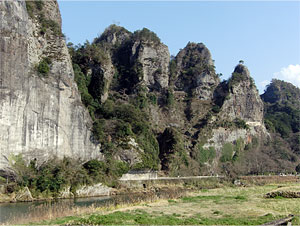
The Ao no Domon (Blue Cave Gate) is depicted.
Yabakei 耶馬溪町
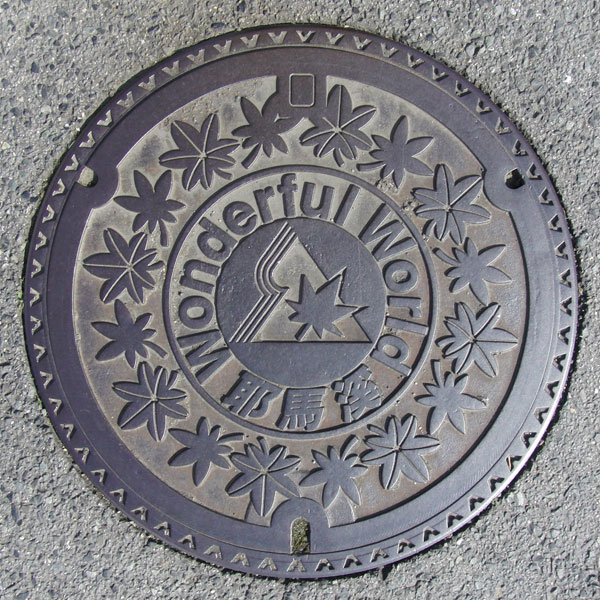
The words "Wonderful World Yabakei" and a Japanese maple leaf.
Yamakuni 山国町
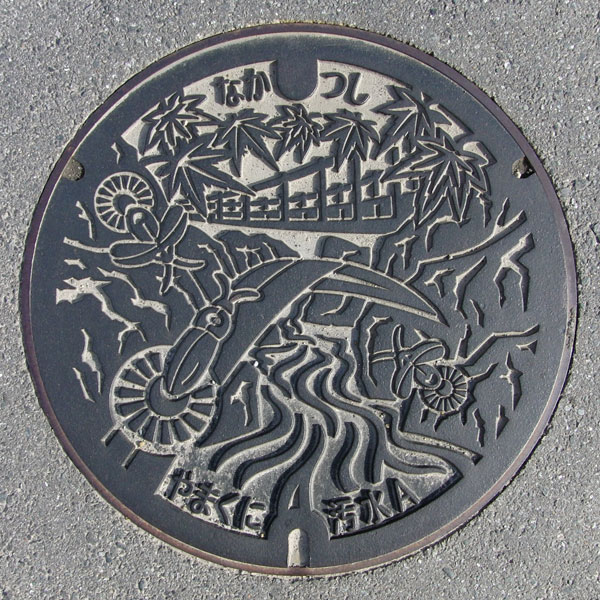
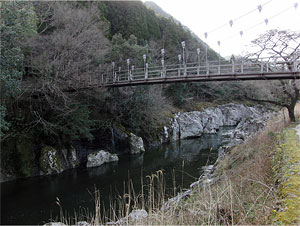
The suspension bridge at Sarutobi Gorge and fireflies are depicted.
Sanko 三光村
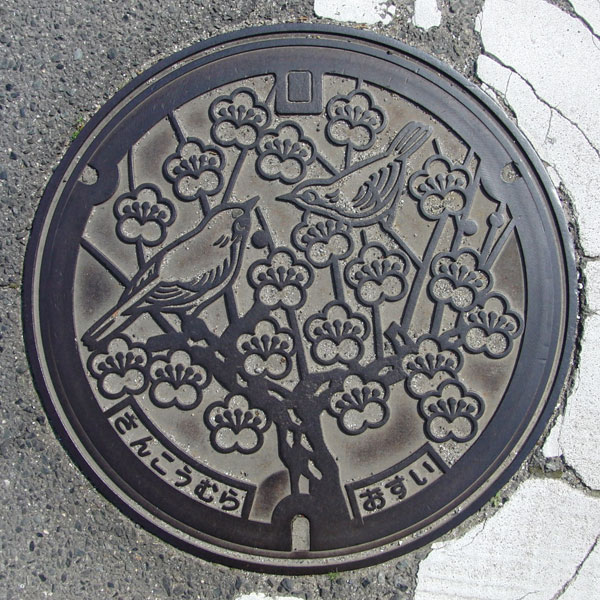
A design featuring Japanese plum blossoms and a Japanese bush warbler.
Usa 宇佐市
Usa 宇佐市
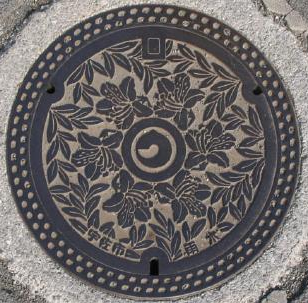
Design featuring the former city emblem and the city flower (azalea).
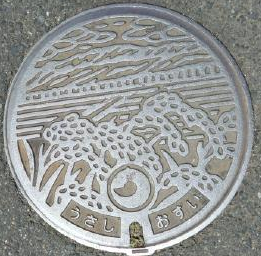
The design incorporates the Usa City emblem, ears of rice, a paddy field, mountains, and the sky. Regarding the ears of rice: Usa City is one of Oita Prefecture's leading grain-producing regions, leveraging its expansive plains.
Innai 院内町
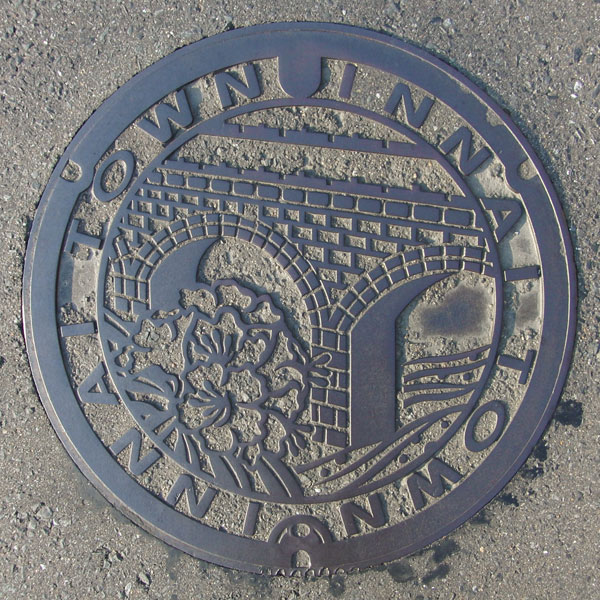
A manhole cover featuring the stone bridges abundant in the Innai area and the town's flower, the rhododendron. The words "INNAI TOWN" appear on the left and right sides.
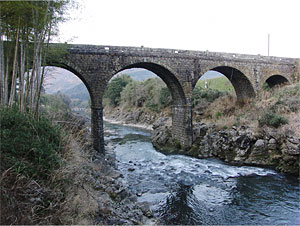
Known as the "Town of Stone Bridges," Innai is said to be home to as many as 74 stone bridges.
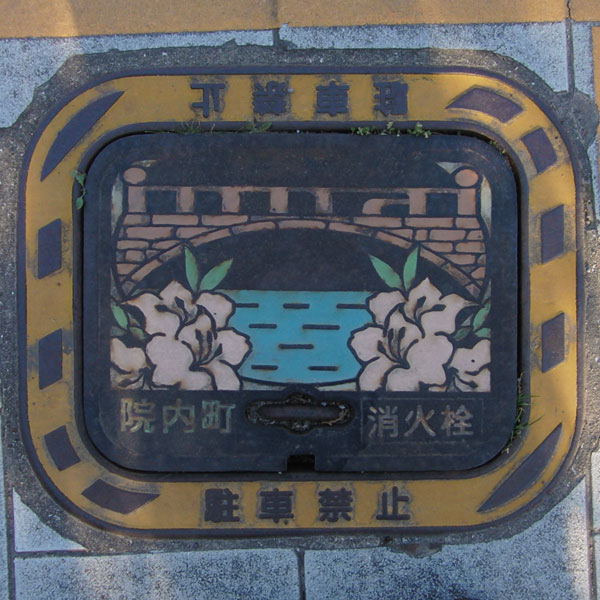
A fire hydrant cover featuring the same motif as the one above, though the shape of the stone bridge differs.
Ajimu 安心院町
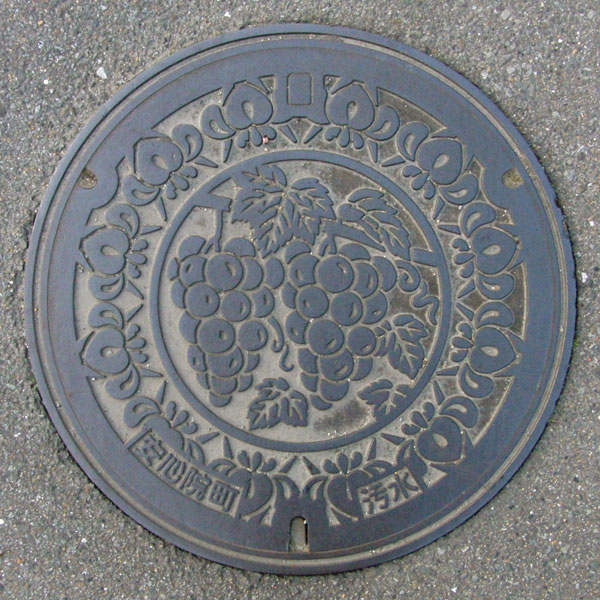
Grapes, a local specialty. The plants surrounding them might be Japanese irises.
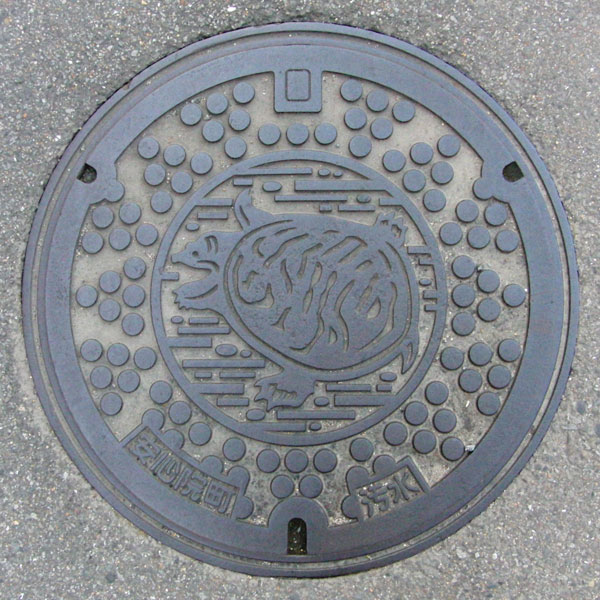
A manhole featuring a *suppon* (soft-shelled turtle)—a local specialty. It is surrounded by what looks like grapes.
Bungotakada 豊後高田市
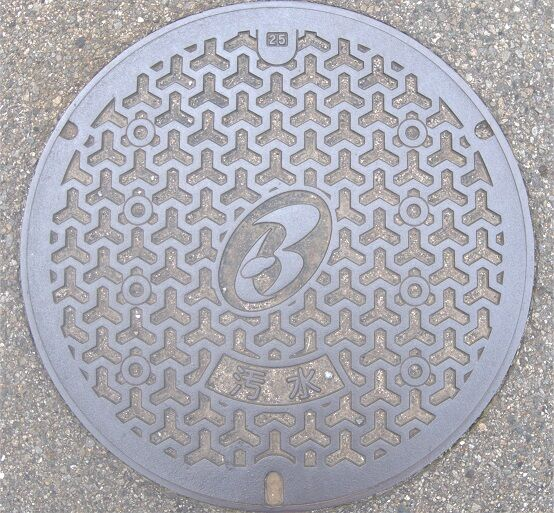
It features the city emblem.
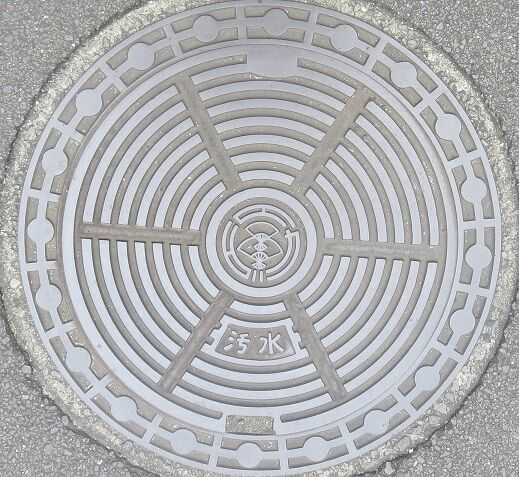
It features the design of the former city emblem.
Matama 真玉町
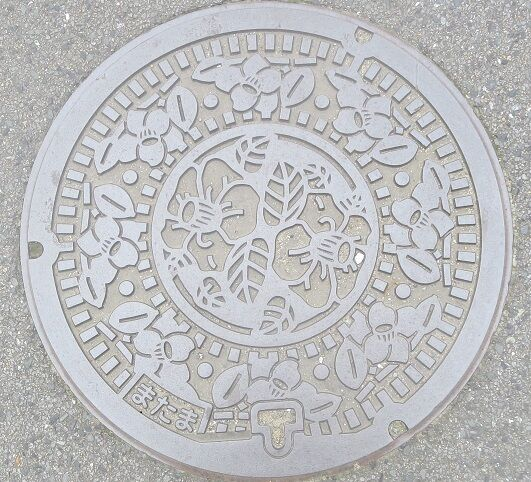
It features a design of the town flower, the camellia.
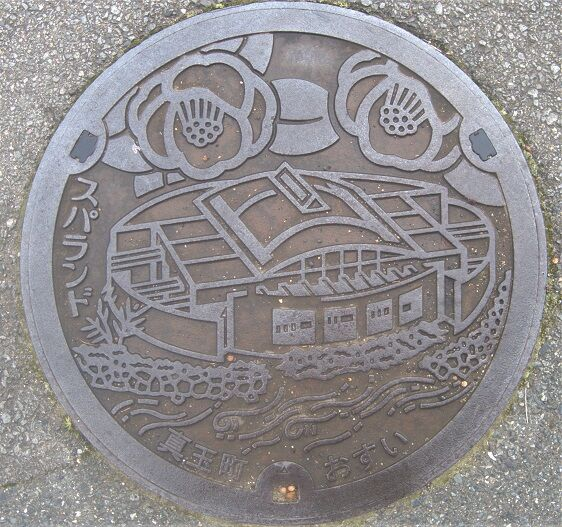
It features a design incorporating camellias and "Spa Land Matama."
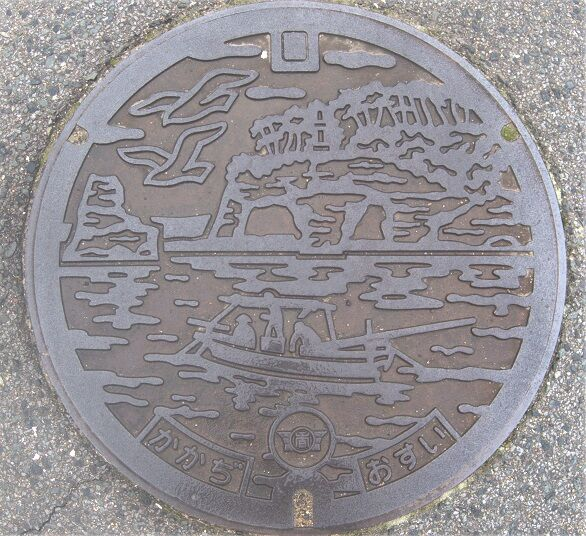
This manhole cover from the former town of Kakaji features a design incorporating the town emblem, the sea caves of Kakaji-Nagasakibana, and a scene of fishing activity.
Kunisaki 国東市
Kunisaki 国東町
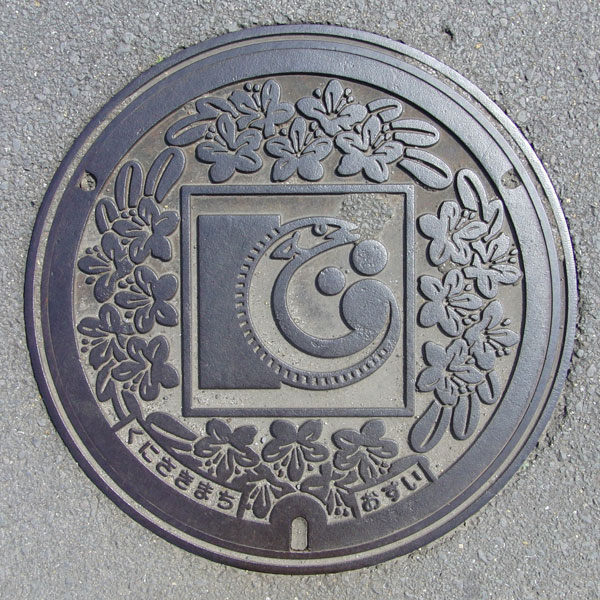
The fish in the center is a *tachi-uo* (largehead hairtail)—a local specialty—while the surrounding flowers appear to be *shakunage* (rhododendrons).
*Tachi-uo* caught in the Bungo Channel are reportedly harvested using hand-lines or longlines rather than nets, a method that prevents damage to the fish's body. The roadside station also offered a wide variety of *tachi-uo* products for sale.
Musashi 武蔵町
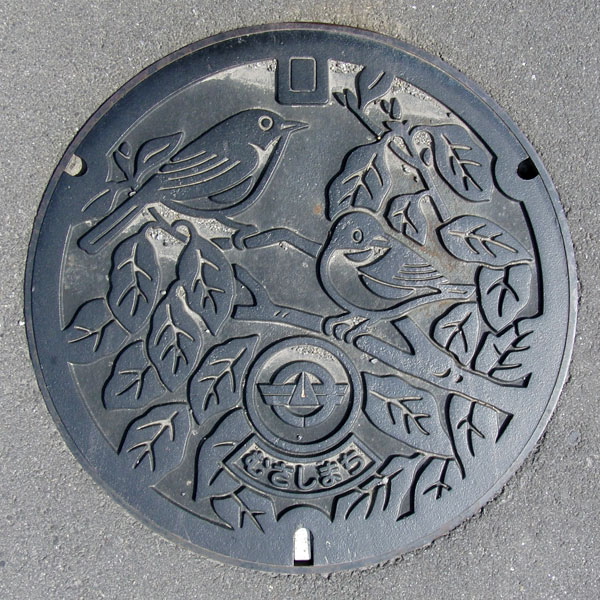
Two birds on top of branches. The bird seems to be a Japanese white-eye.
Aki 安岐町
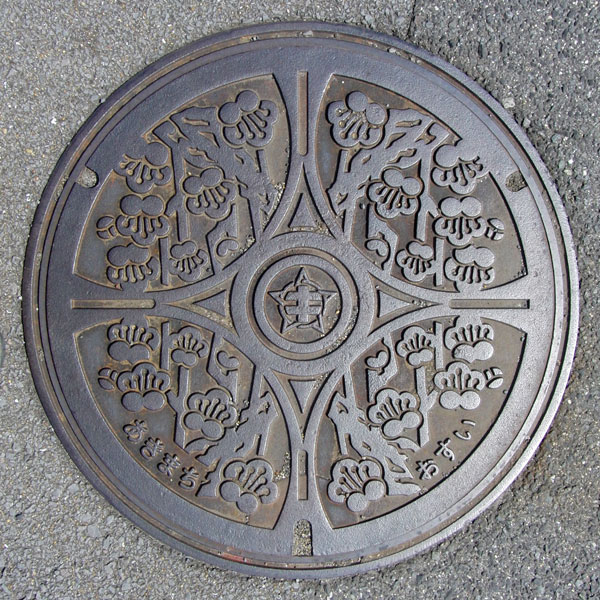
This is a manhole cover that clearly depicts the "ume" (Japanese plum blossom)—the town's official flower.
Kitsuki 杵築市
Kitsuki 杵築市
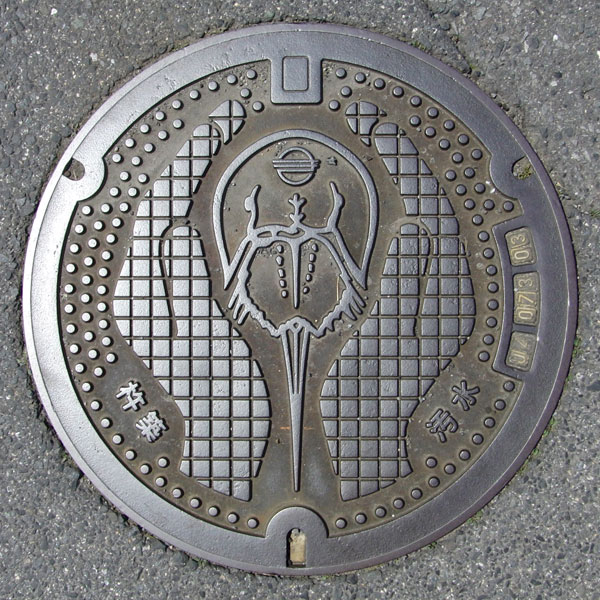
The hands depicted as if they are gently enveloping the horseshoe crab.
Yamaga 山香町
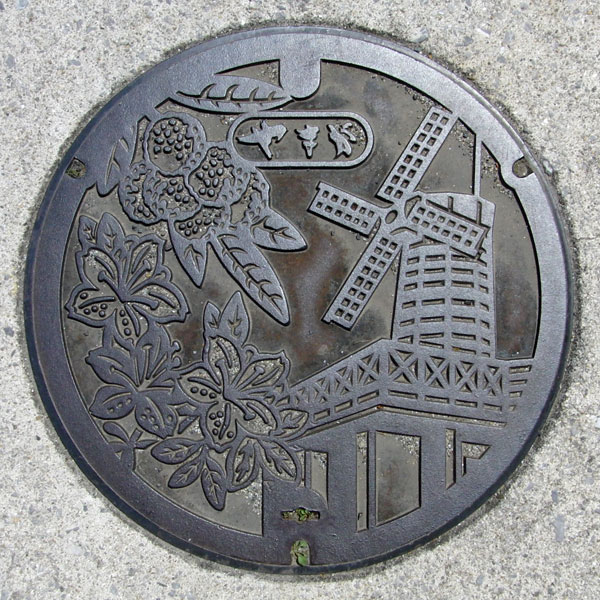
The design features the "windmill" atop Mount Ko-o—located in the center of the town—as a backdrop, along with the town's official flower, the *satsuki* (azalea), and a local specialty product, the *yuzu* (citron).
Ota 大田村
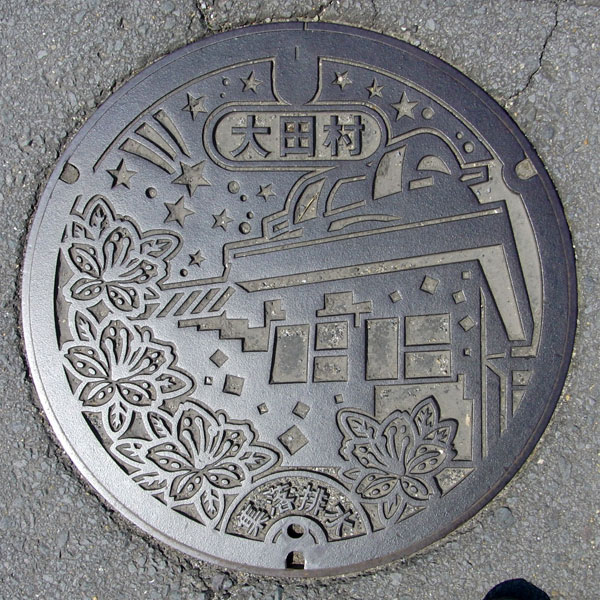
A manhole cover for the local sewage system, featuring the village flower/tree—the azalea—and the "Yokodake Kirara-kan" astronomical observatory.
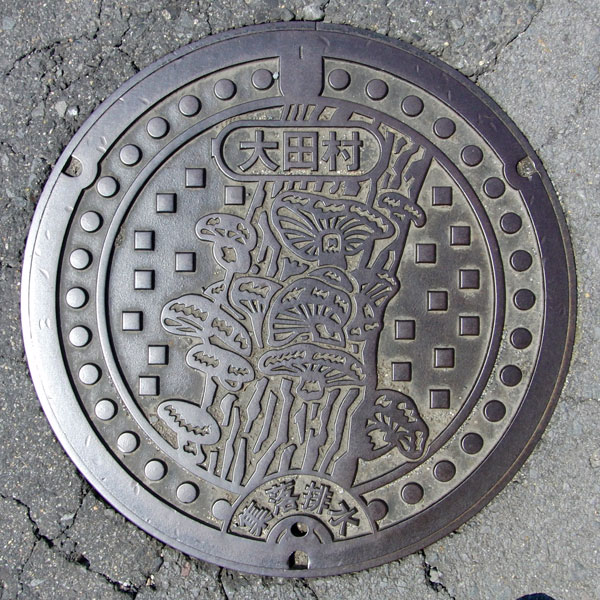
A manhole cover for the village’s wastewater system, featuring a design of the local specialty: shiitake mushrooms.
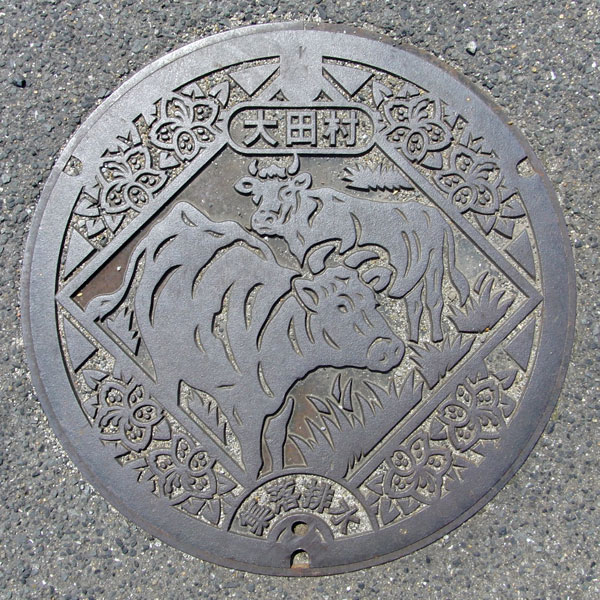
A colorful manhole cover featuring the "azalea"—the village's designated flower and tree—along with "Bungo beef," a local specialty product.
Hita 日田市
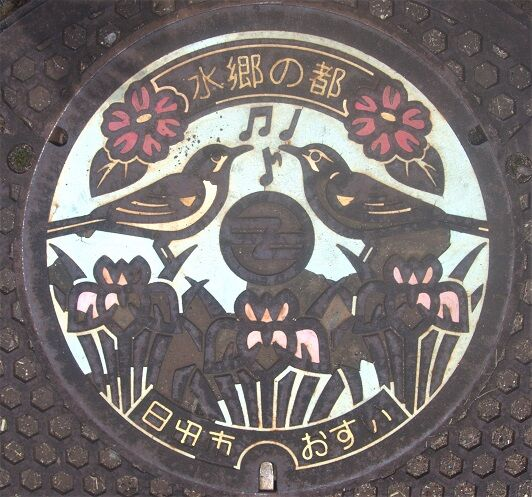
It features a design incorporating the city emblem, the city flower (iris), and the city bird (wagtail).
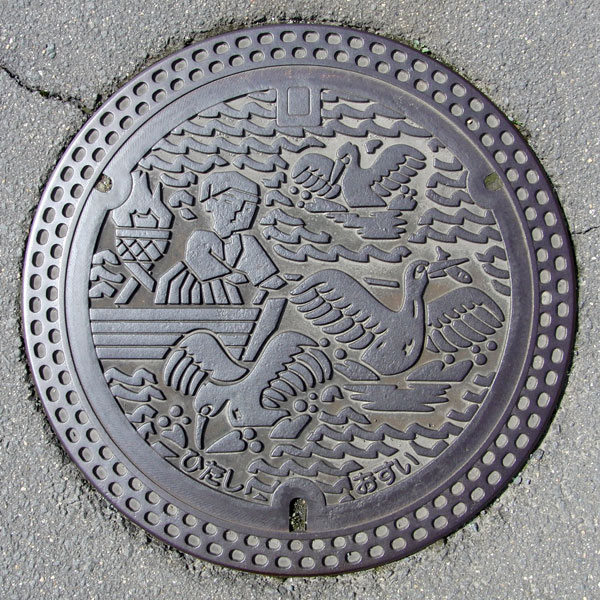
It depicts cormorant fishing, a famous attraction in Hita.
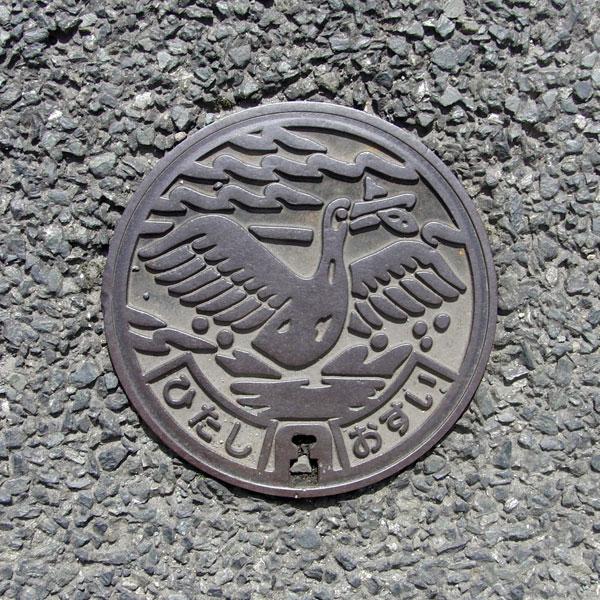
A tiny manhole cover featuring only the cormorant used in cormorant fishing.
Oyama 大山町
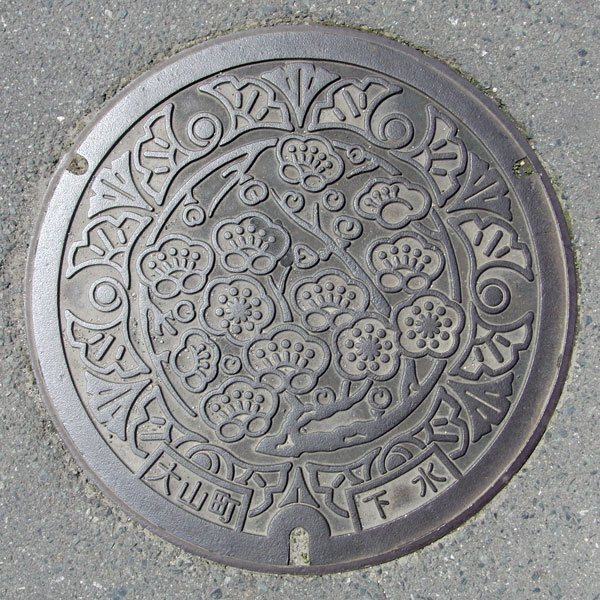
It features the town tree, the ginkgo, and the town flower, the Japanese plum (ume).
Beppu 別府市
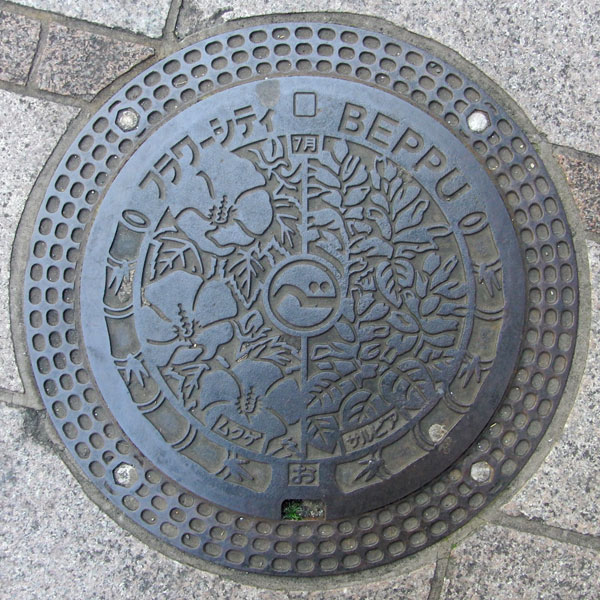
A manhole cover featuring the words "Flower City BEPPU" and bamboo designs around the perimeter, with azalea flowers and the Beppu City emblem depicted in the center.
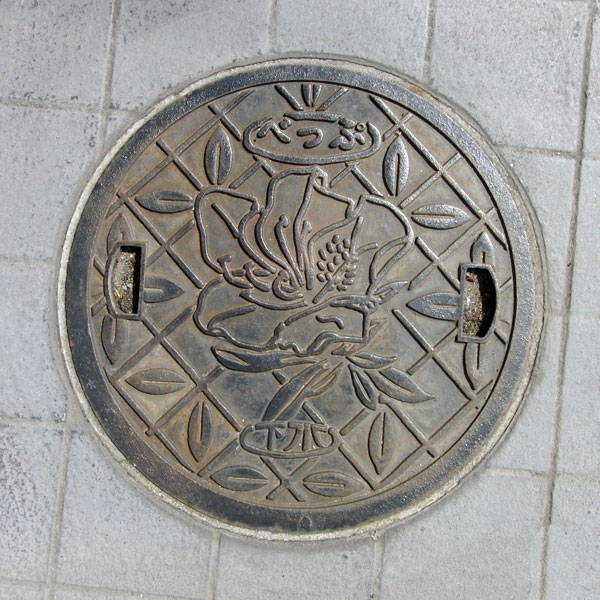
A manhole cover featuring a Great Purple Emperor butterfly.
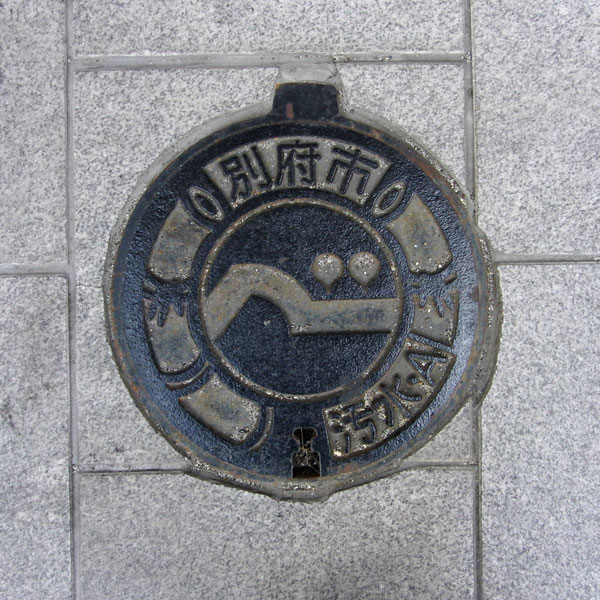
A tiny sewage manhole cover featuring the Beppu City emblem. Bamboo stalks are clearly depicted on both the left and right sides.
Yufu 由布市
Hasama 挾間町
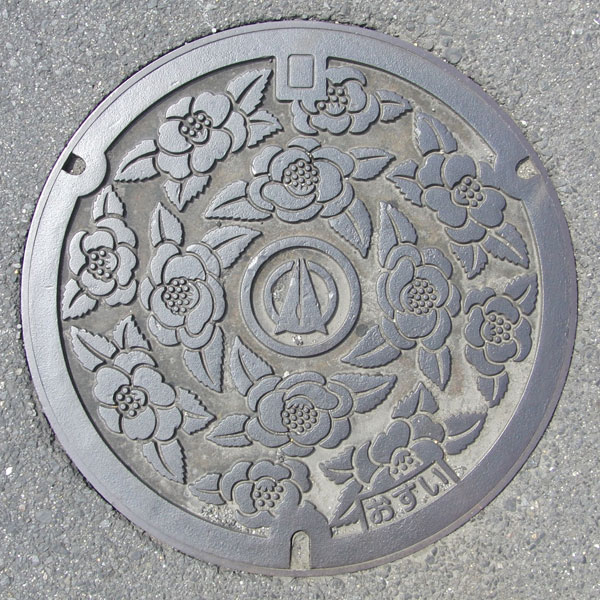
It features the *sazanka* (Sasanqua camellia), which serves as both the town’s official tree and its official flower.
Shonai 庄内町
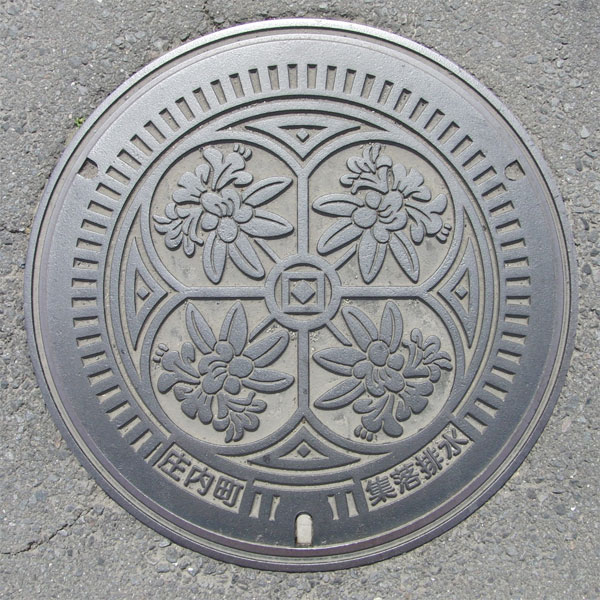
A manhole cover for the local sewage system, featuring an illustration of the *Tsukushi-shakunage* (a native rhododendron)—the town’s official flower.
Usuki 臼杵市
Usuki 臼杵市
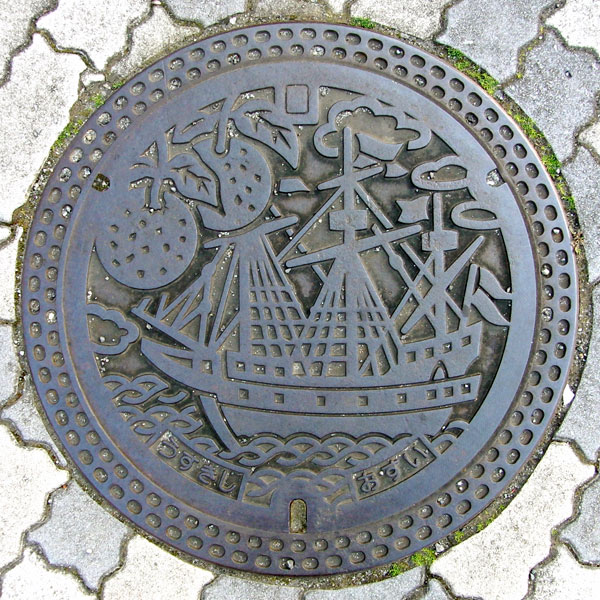
The design features the Dutch merchant ship *Liefde* and *kabosu* (a local citrus specialty).
The *Liefde* was a Dutch merchant ship that drifted ashore in Usuki, Bungo Province, on March 16, 1600 (the 5th year of the Keichō era). Of the approximately 110 crew members, only 24 survived—a group that included Jan Joosten and William Adams (Miura Anjin), both of whom went on to serve as diplomatic advisors to the Edo Shogunate.
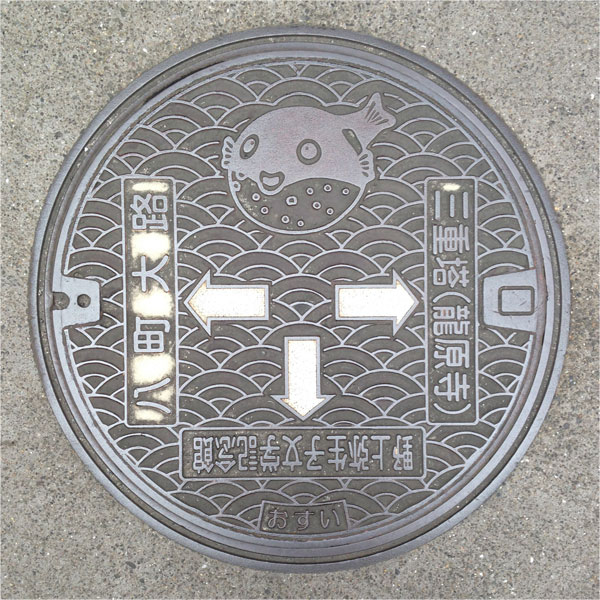
A sewer manhole cover featuring an illustration of a pufferfish set against a *seigaiha* (stylized wave) pattern, along with a guide to the local townscape.
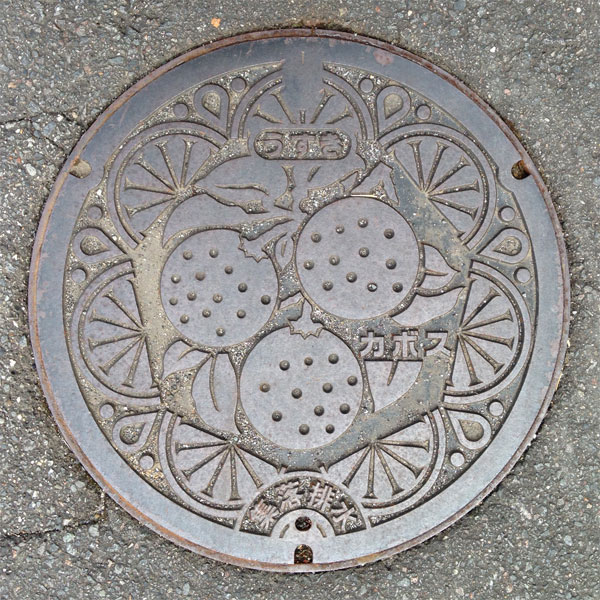
A manhole cover for the Fukada district’s agricultural village drainage system, featuring the local specialty, the kabosu citrus fruit.
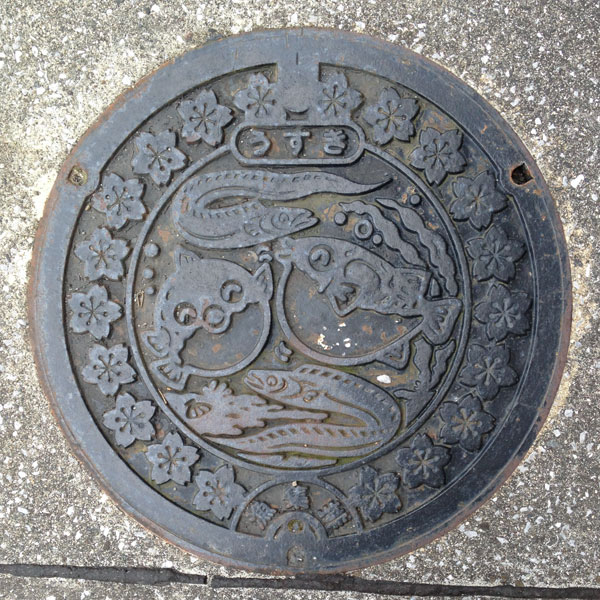
A manhole cover for the Tomarinai district’s fisheries-related wastewater system, featuring illustrations of a pufferfish and a cutlassfish. The flowers surrounding them appear to be cherry blossoms.
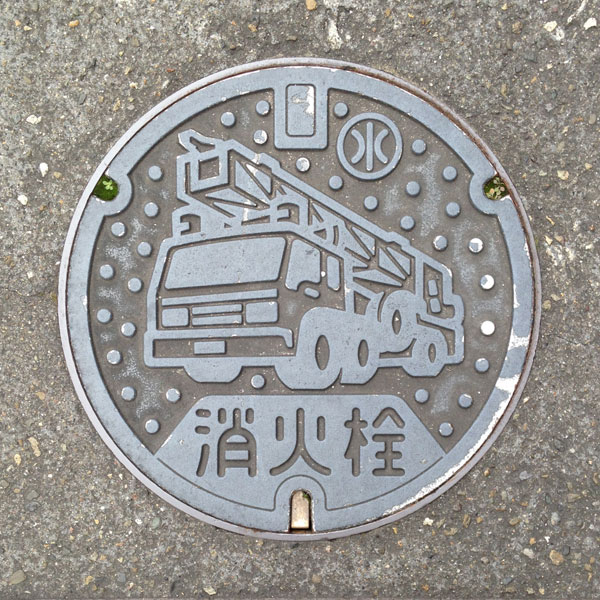
Perhaps to ensure harmony with the surrounding townscape, even the fire hydrant covers are colored this way.
Notsu 野津町
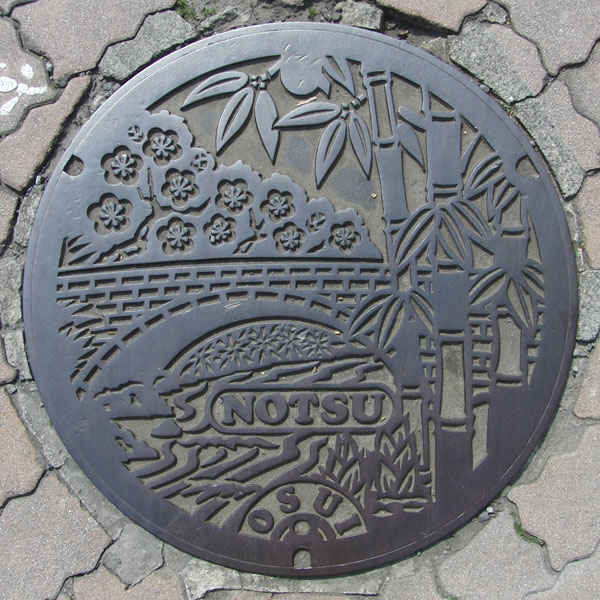
This sanitary sewer manhole cover features the "Kokan-kyo" (Rainbow Ravine Bridge)—a stone bridge designated as a National Important Cultural Property—along with *Kinmei-mosochiku* (a variety of bamboo designated as a Prefectural Natural Monument).
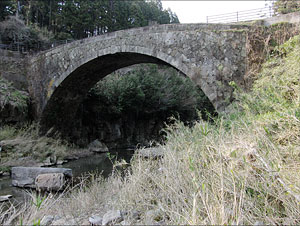
The Kokan-kyo is a single-arch stone bridge built in 1824 (the 7th year of the Bunsei era) over the Mie River, a tributary of the Ono River. It was constructed to facilitate the transport of tax rice from the Mie district—part of the Usuki Domain—to the castle town. The project was funded by three wealthy merchants from within the domain and took three and a half years to complete. With a span of 25.1 meters—the largest of any stone bridge at the time—and its location spanning a deep ravine, it is considered the pinnacle of stone arch bridge construction from the early modern period.
Taketa 竹田市
Taketa 竹田市
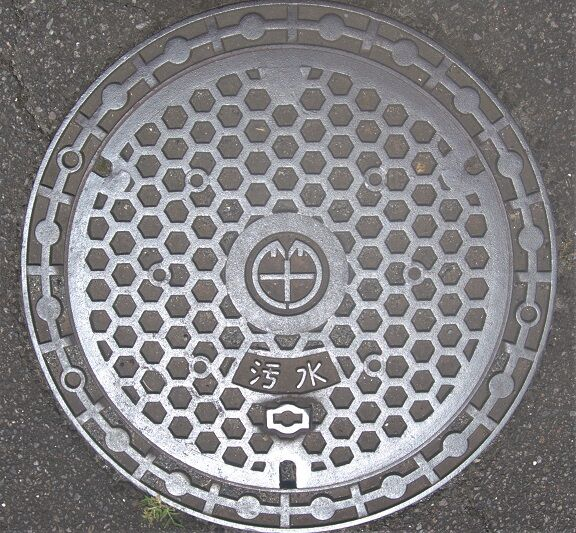
City emblem in the center.
Ogi 荻町
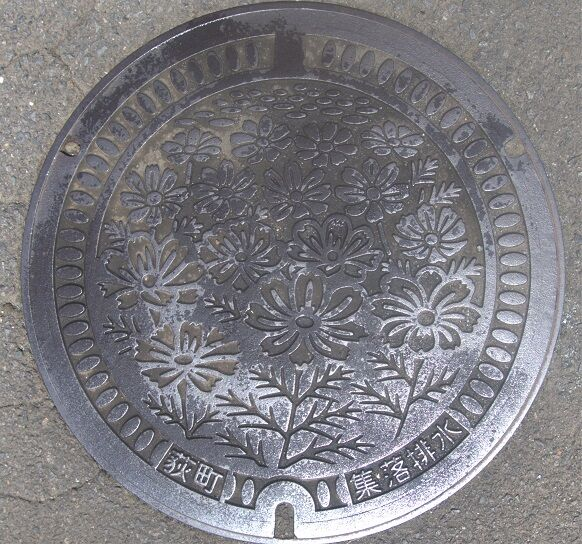
Design featuring the cosmos, the town flower.
Kuju 久住町
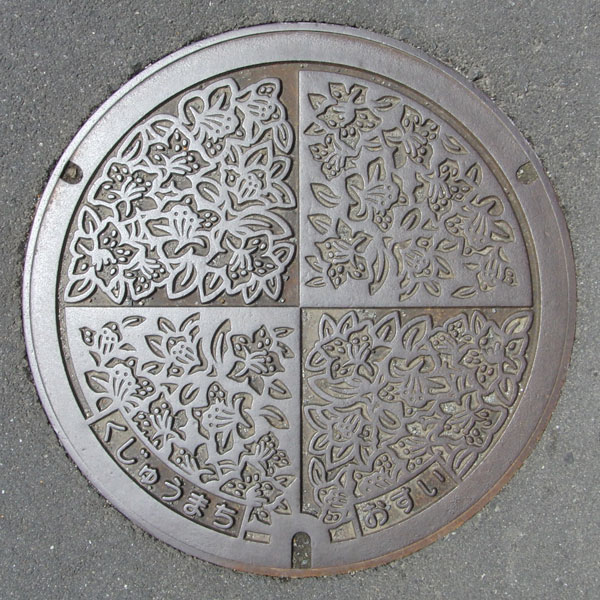
The town flower, "Miyama-kirishima," is depicted.
Bungoono 豊後大野市
Ono 大野町
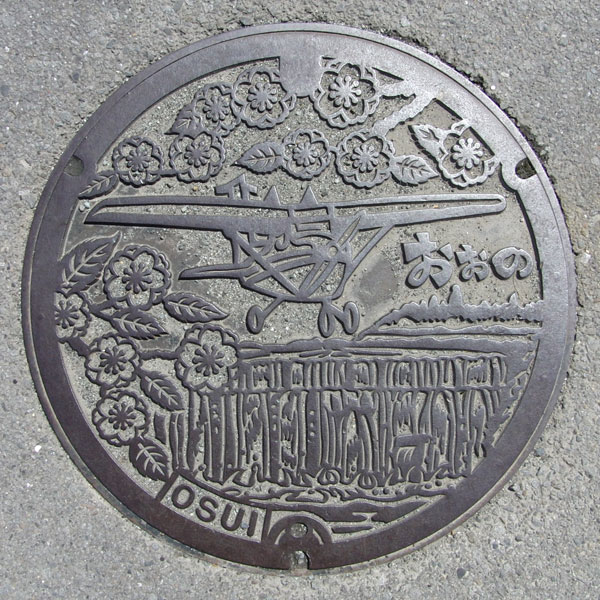
A light aircraft flying over Chinda Falls—also known as the "Niagara of Bungo" or the "Niagara of Ono."
Mie 三重町
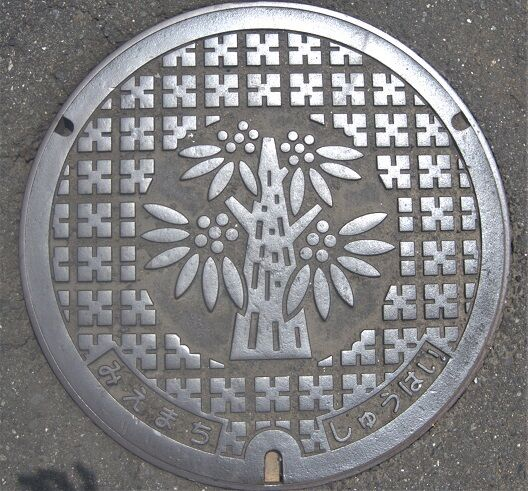
This manhole cover from the former town of Mie features a design incorporating a *nagi* tree—a prefectural-designated natural monument located at Mitarai Shrine in Kamitahara, Mie-cho—along with small hydrangea blossoms.
Ogata 緒方町
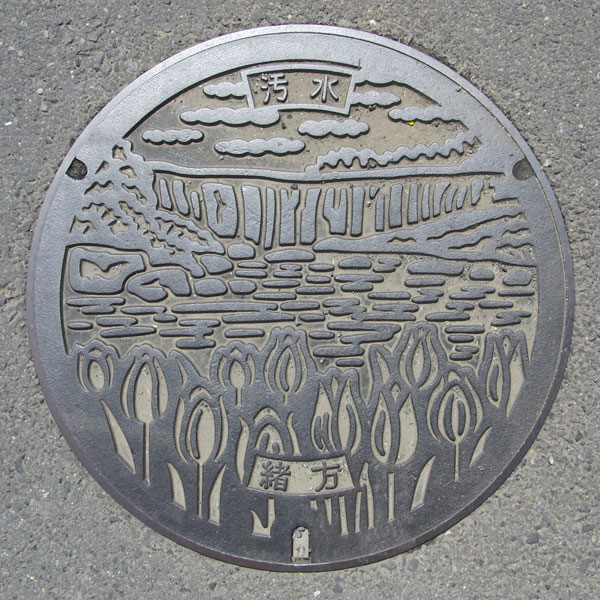
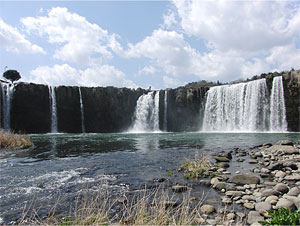
This manhole cover for a sewage system features an illustration of "Harajiri Falls"—often referred to as the "Niagara of the Orient"—along with the town’s official flower, the tulip.
Kiyokawa 清川村
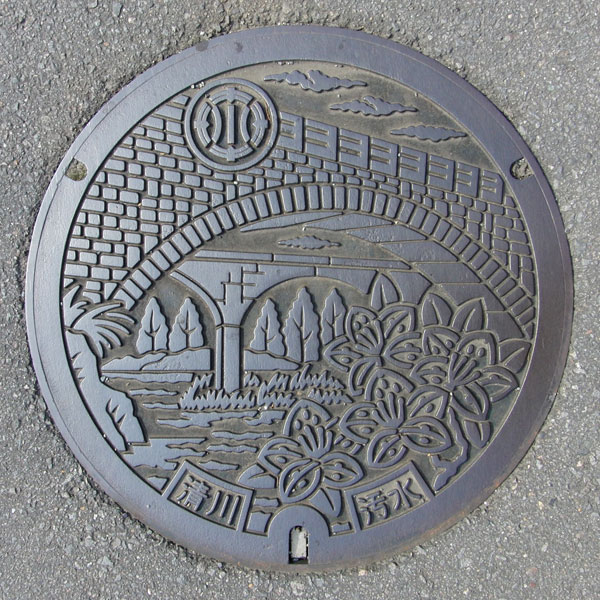
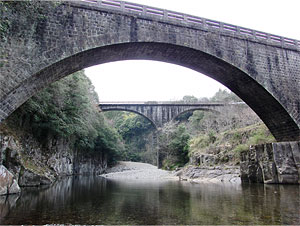
The design features two stone bridges—"Todoro-bashi" and "Deai-bashi"—which span the Okudake River in Sayuchi, Kiyokawa-mura.
The bridge in the background is Todor-bashi; it is a double-arched structure with spans of 31.6 meters and 26.2 meters, and a height of over 27 meters. It is said to be the largest stone bridge in Japan in terms of both span and height.
In the foreground is Deai-bashi, a single-arched bridge with a span of 28.7 meters—the second-largest span for a stone bridge in Japan. These two bridges stand about 80 meters apart.
Tsukumi 津久見市
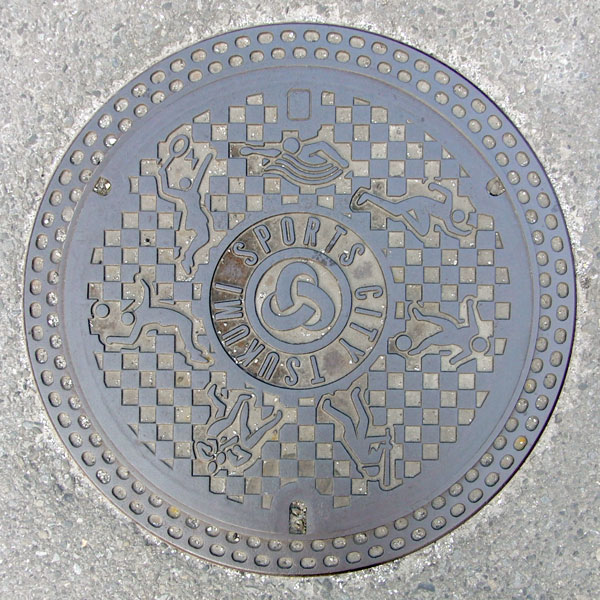
Although it’s a bit hard to see, various sports are depicted (starting from the top and moving clockwise: swimming, track and field, soccer, baseball, boxing, volleyball, and tennis).
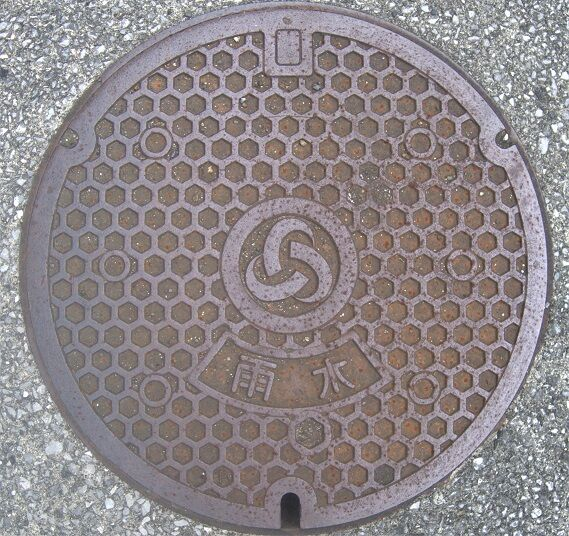
City emblem in the center.
Saiki 佐伯市
Saiki 佐伯市
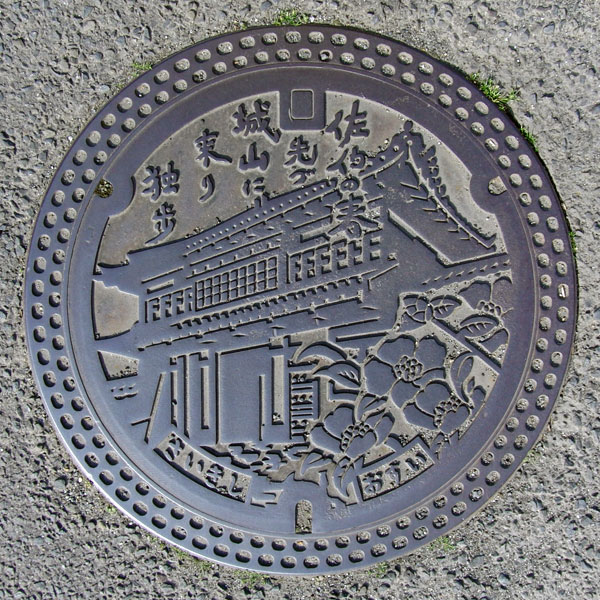
The design features the Sannomaru Yaguramon (a castle gate), accompanied by a line from Kunikida Doppo’s work *Bungo no Kuni Saiki* (Saiki in the Land of Bungo): "Spring in Saiki first arrives at Shiroyama (Castle Mountain)."
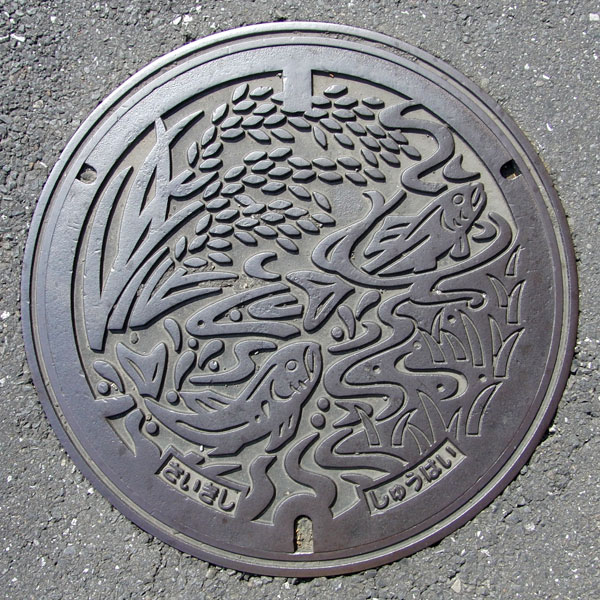
A manhole cover for the agricultural village drainage system in the Onoya area.
The characters "Saiki-shi" (Saiki City) and "Shuhai" (short for *shuraku haisui*, or "agricultural village drainage") are clearly visible at the bottom.
Kamae 蒲江町
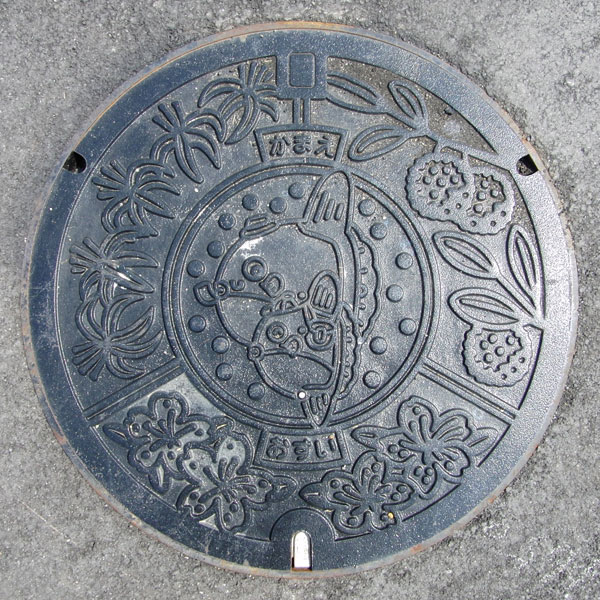
This sewage manhole cover features the town’s tree—the *yamamomo* (Japanese bayberry)—and the town’s flower—the *hamayu* (crinum lily)—around the perimeter, with an ocean sunfish (*manbou*) depicted in the center.
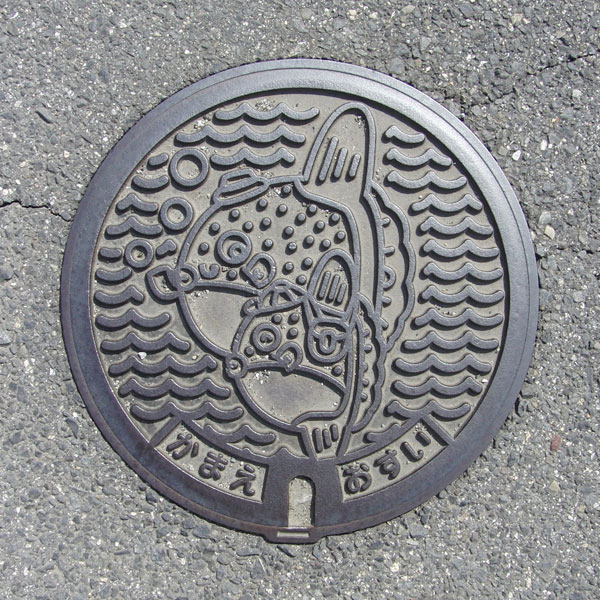
A small-sized disc featuring a sunfish (mola) designed in the same style as the one above; the sunfish’s body is covered in small protrusions—likely to provide a non-slip grip—and the background consists of a wave pattern.
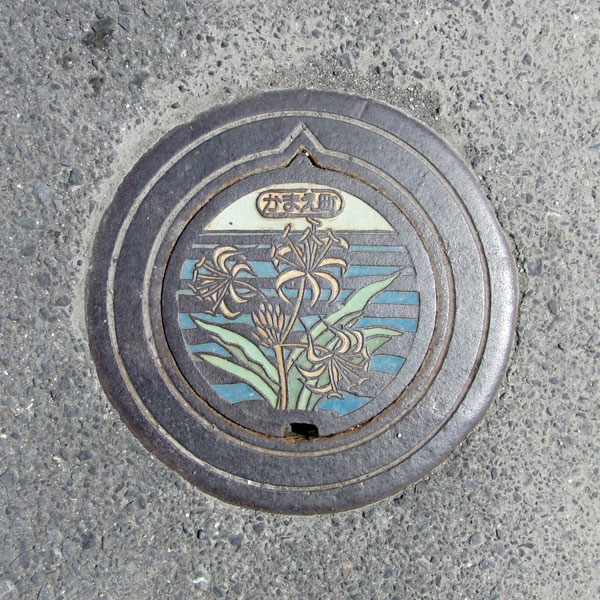
Water utility covers featuring the town flower, the *hamayu* (crinum lily).
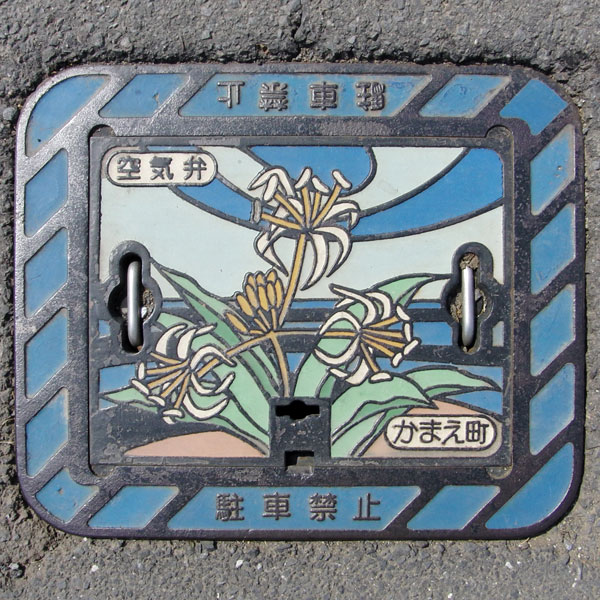
An air valve featuring the town flower, the "hamayu" (crinum lily).
Tsurumi 鶴見町
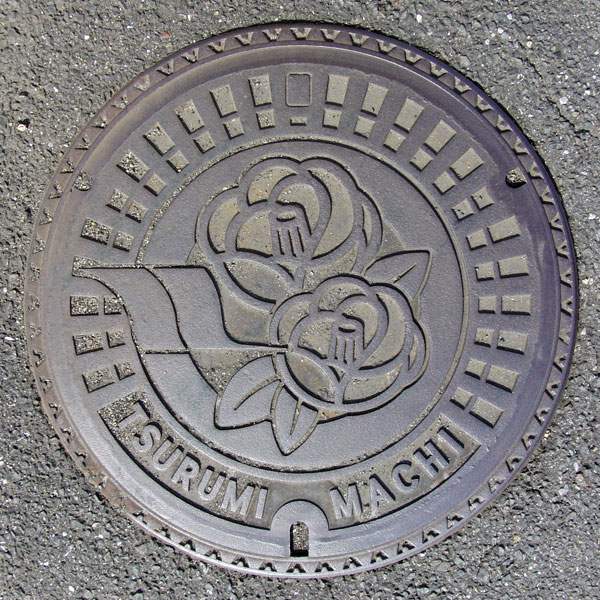
The town flower, the camellia, is depicted.
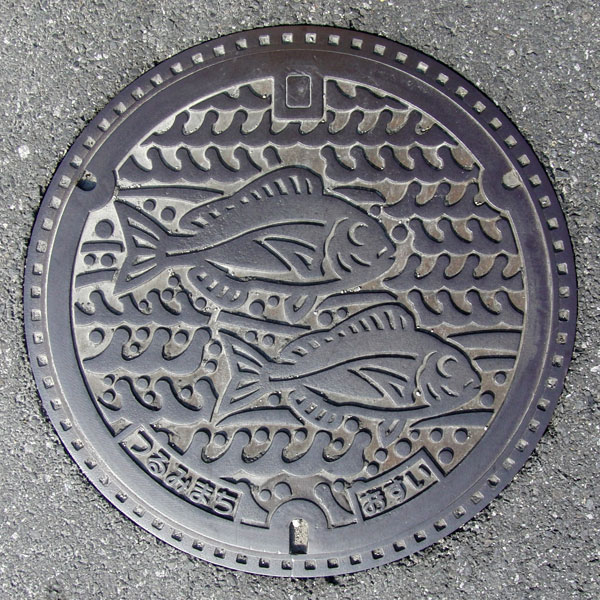
2 yellowtails swimming.
Kusu 玖珠町
No unique manholes.
Hiji 日出町
Features a design of the local specialty, "castle-town flounder" (jōka-karei).
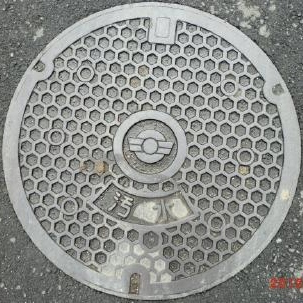
Town emblem in the center.
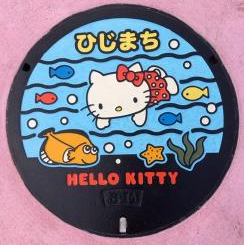
The manhole features Hello Kitty, a nod to the nearby Sanrio-themed amusement park, Harmony Land. Also depicted is the "Shiroshita Karei" (a local specialty flatfish), for which the town of Hiji is famous—it appears to be swimming alongside her. The ground surrounding the cover is bordered in pink, fitting for the adorable Hello Kitty. The text "Hiji-machi" (Hiji Town), "HELLO KITTY," and "Osui" (sewage/wastewater) is inscribed on it.
Kokonoe 九重町
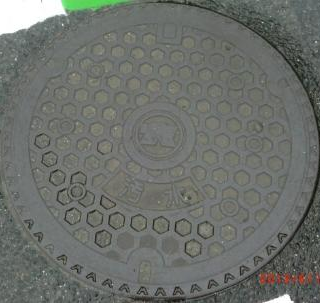
Town emblem in the center.
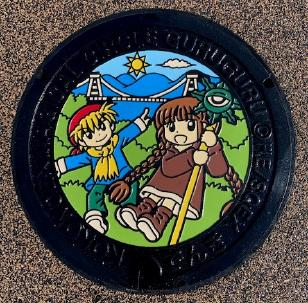
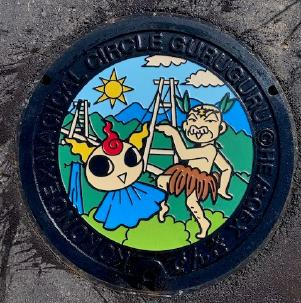
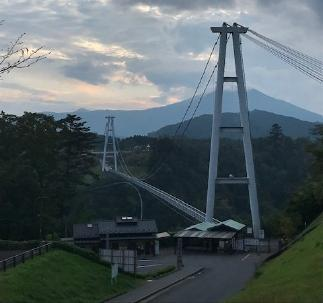
To commemorate the 15th anniversary of the opening of the Kokonoe "Yume" Grand Suspension Bridge, two types of colorful manhole covers featuring designs from the manga series *Magical Circle Guru Guru*—the work of Oita Prefecture-born manga artist Hiroyuki Eto—were installed on October 30, 2021. This particular design depicts the protagonists, Nike and Kukuri, alongside the Yume Grand Suspension Bridge.
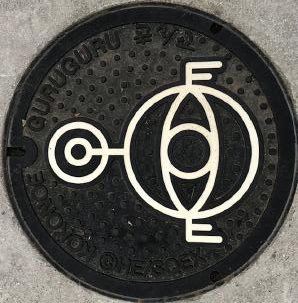
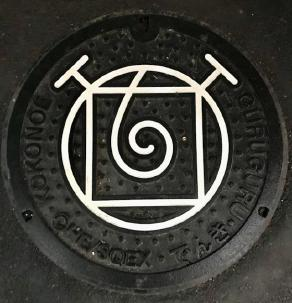
Designs featuring "Yon-Yon Summoning" (Yon-Yon Shōkan) and "Migu-Migu Gekijo" (Migu-Migu Theater), with the kanji for "electricity" (denki) included.
Himeshima 姫島村
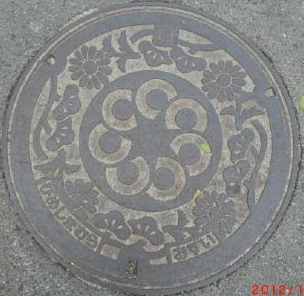
The design features the village emblem in the center, the village tree (Japanese black pine), and the village flower (*Chrysanthemum japonense*).