Aomori 青森県
Aomori 青森県
Aomori 青森市
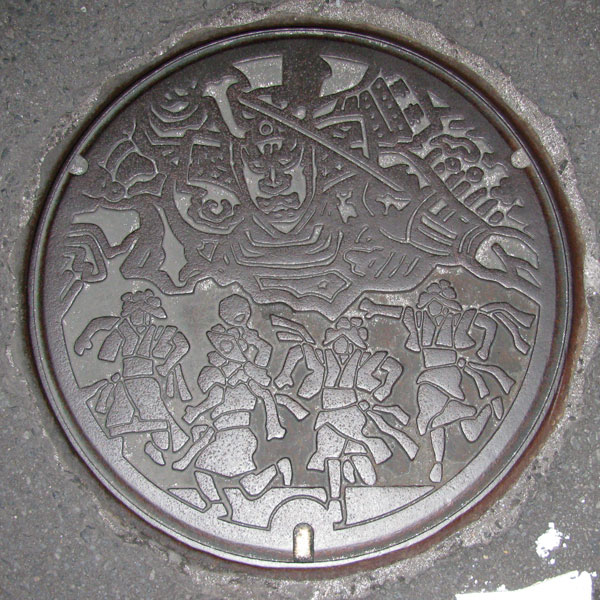
The design features "Nebuta" and "Haneto."
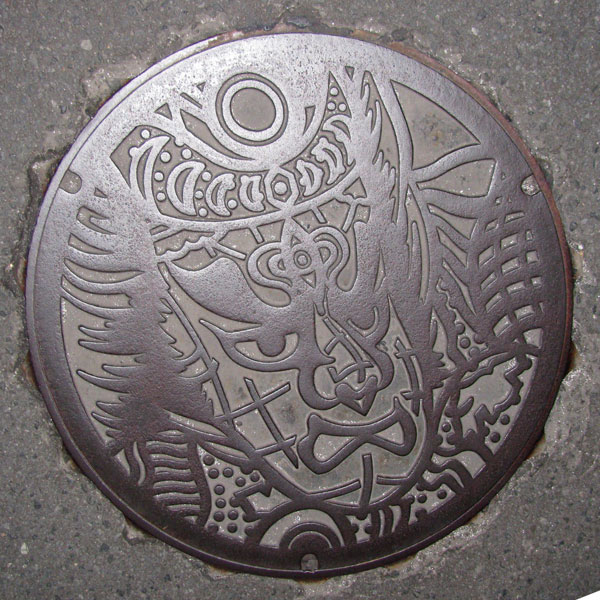
This photo shows only the face of the "Nebuta."
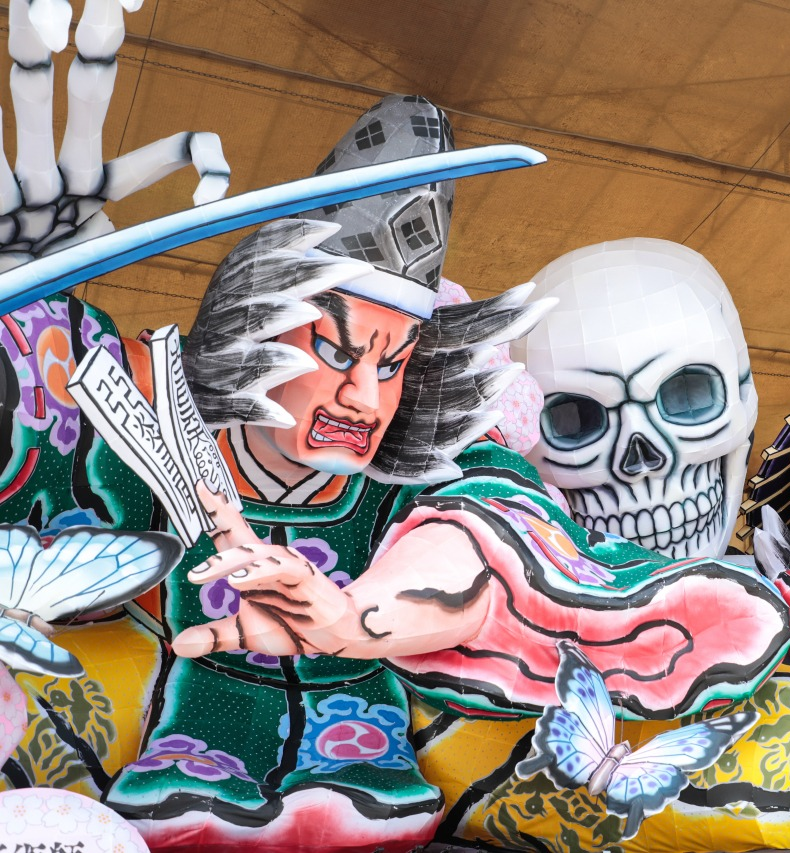
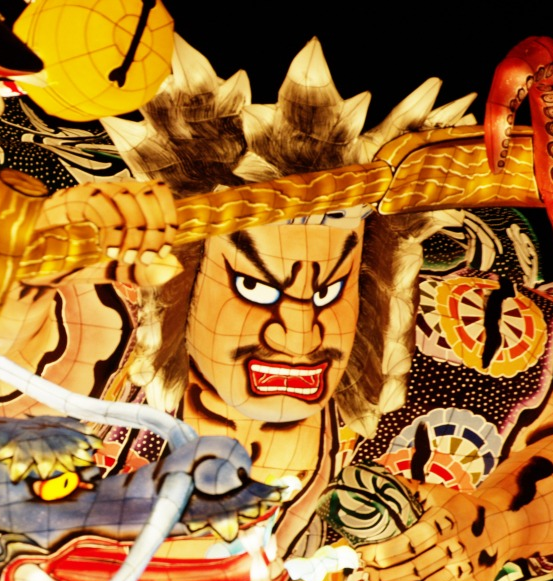
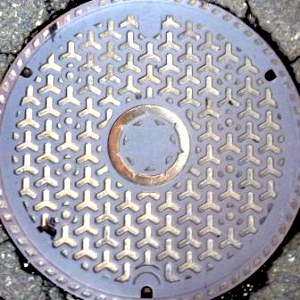
City emblem in middle
Namioka 浪岡町
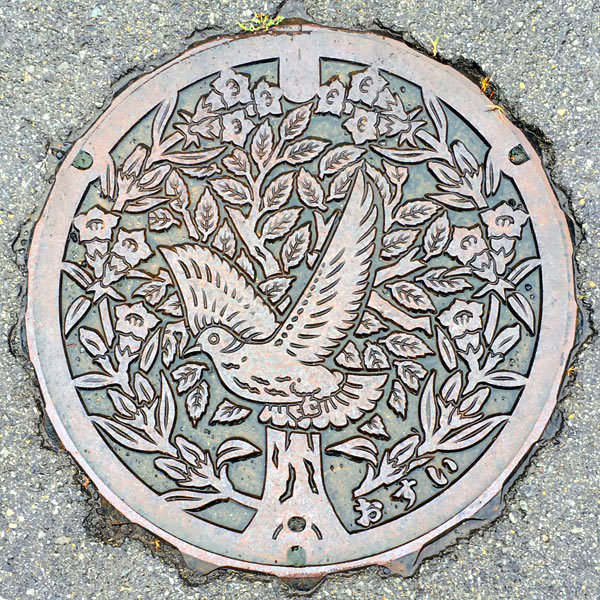
A sewage manhole cover featuring the town's tree, the zelkova tree, the town's flower, the gentian, and the town's bird, the turtle dove (Oriental Turtle Dove).
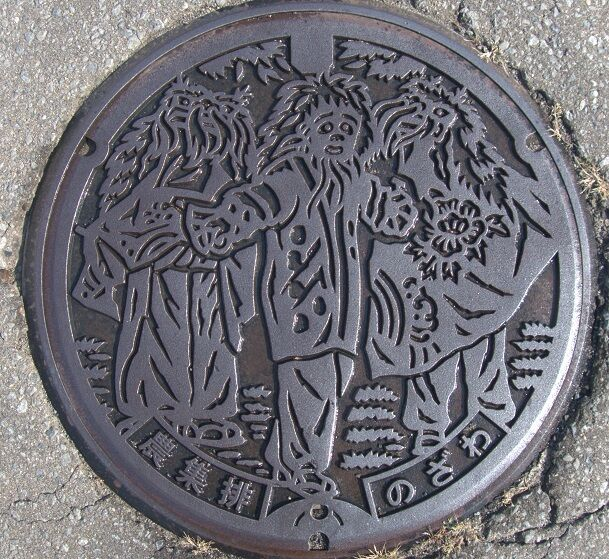
The design of the "lion dance" that is handed down in the Nozawa area, along with the next lid, was on the street in front of the main gate of Nozawa Elementary School.
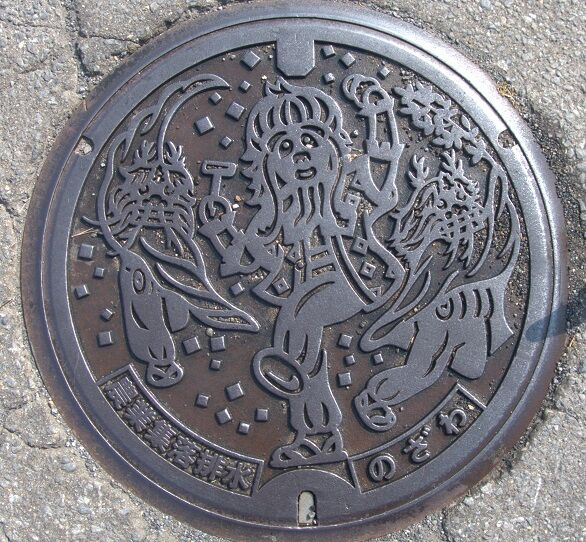
It was on the street near Namioka Sumire Kindergarten.
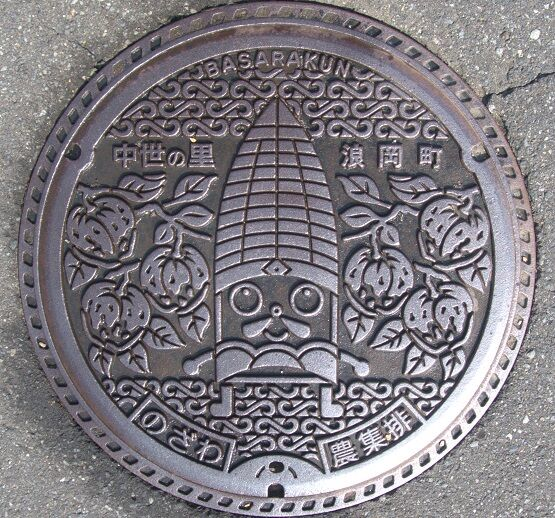
It features the town's mascot character, "Basara-kun," and apples, a local specialty.
Hachinohe 八戸市
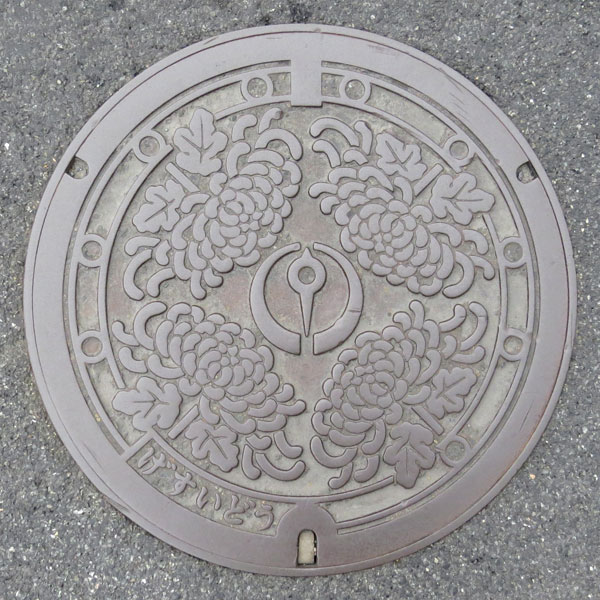
The lid features a design of the city's flower, the chrysanthemum.
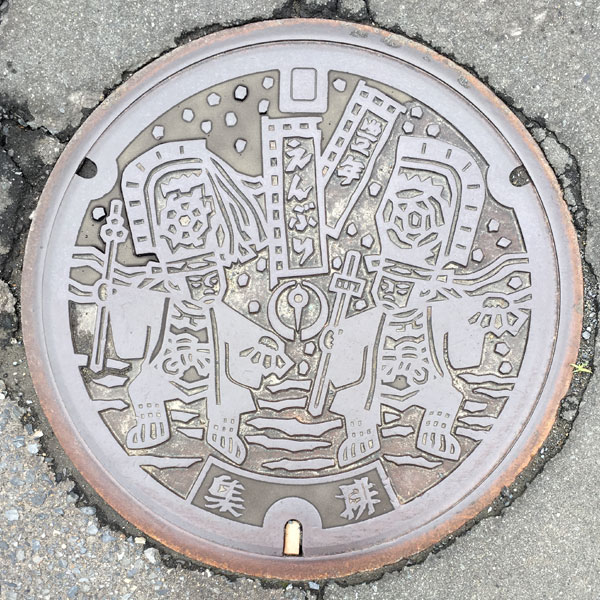
A drainage lid for agricultural communities in the Toyosaki district.
The Enburi (rice planting dance) is depicted. The flag bears the words "Enburi" and "Good Harvest." The city emblem is in the center, and the characters "shuhai" (collection and drainage) are at the bottom.
Nango 南郷村
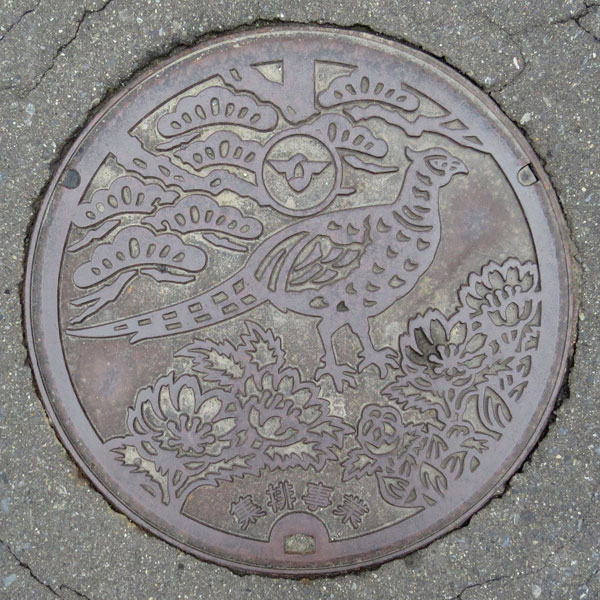
The Ichinozawa district's agricultural waste collection and disposal lid features the village tree, the red pine, the village bird, the pheasant, and the village flower, the ambrosia.
Hirosaki 弘前市
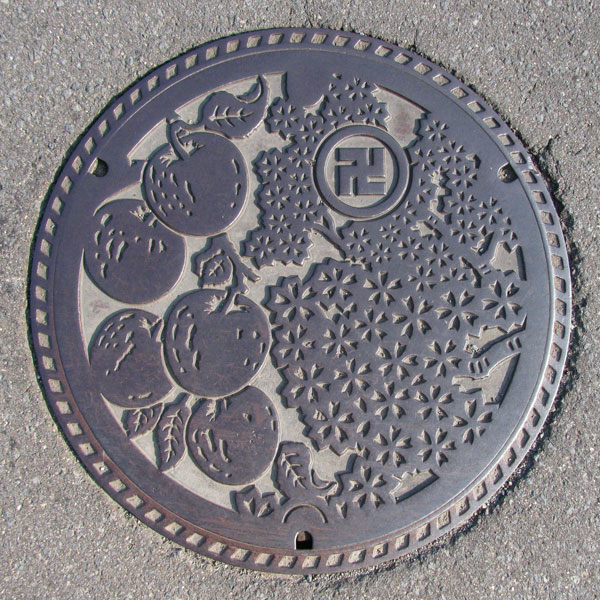
The design features the apple, Hirosaki City's tree, and the cherry blossom, its flower. The swastika is the city's emblem and was originally the flag of the Tsugaru clan of the Hirosaki domain.
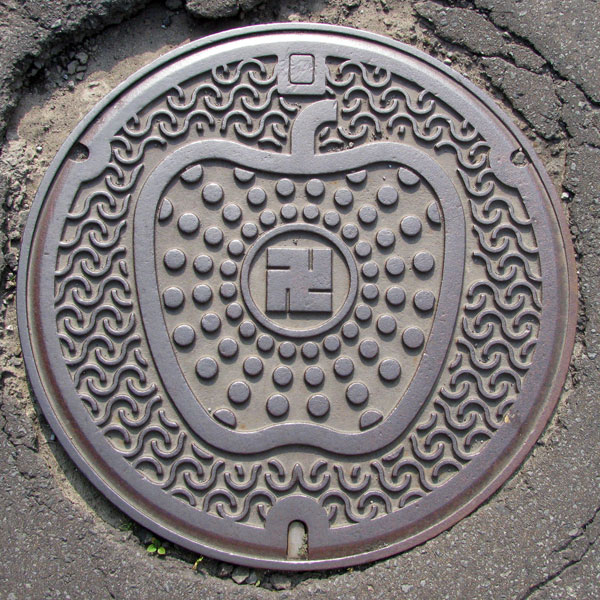
This is an abstract design of an apple. The city's emblem, the "manji," is depicted in the center.
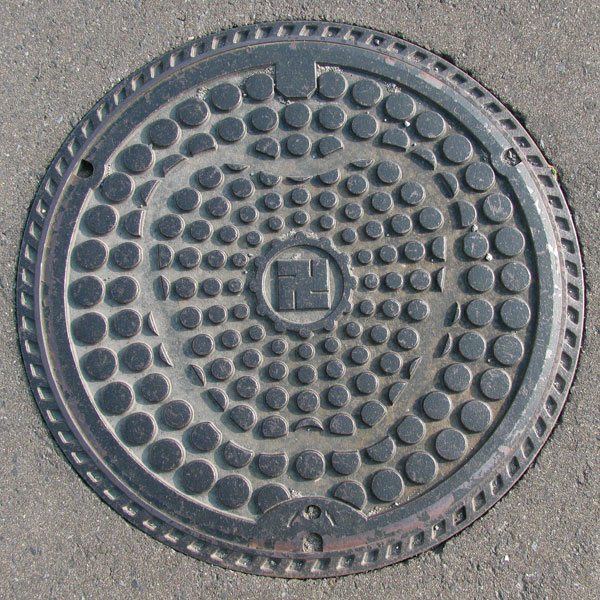
This design is even more abstract. The outline of the "apple" is expressed as a concave shape.
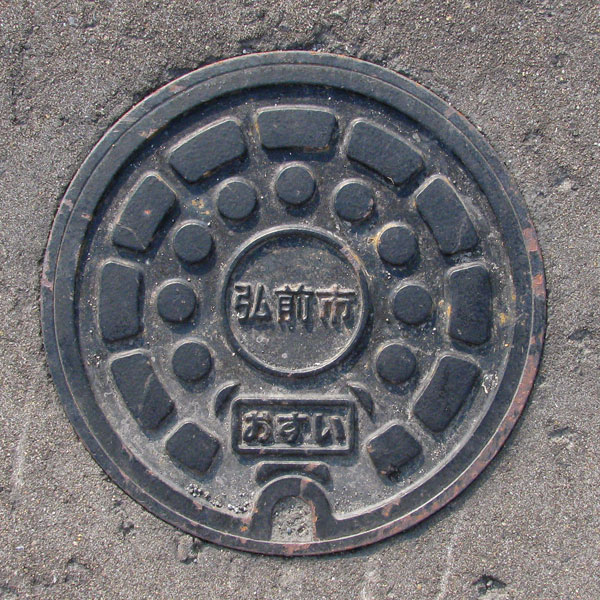
This is a mini-mini version. There's no "apple" or "manji" (swastika), just the words "Hirosaki City."
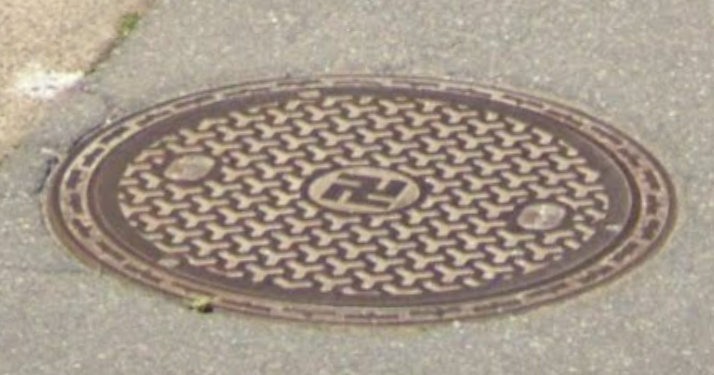
Hirosaki emblem in middle
Iwaki 岩木町
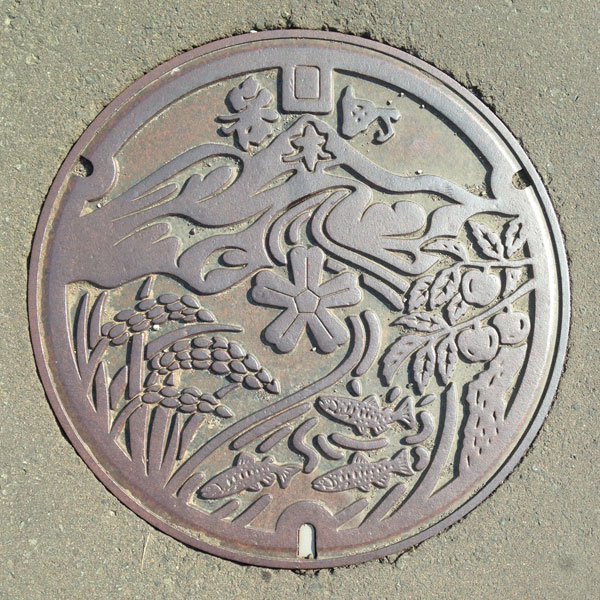
The design features Mt. Iwaki and the Iwaki River, apples and rice, and a fish swimming in the river.
Soma 相馬村
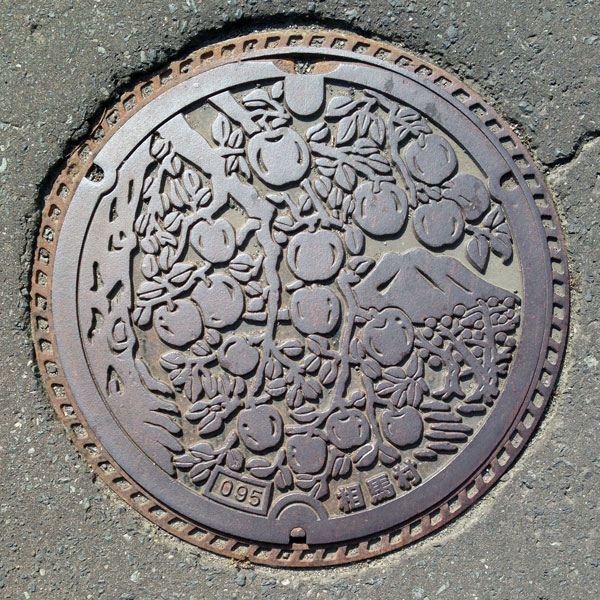
The painting depicts an apple orchard with Mount Iwaki in the distance.
Kuroishi 黒石市
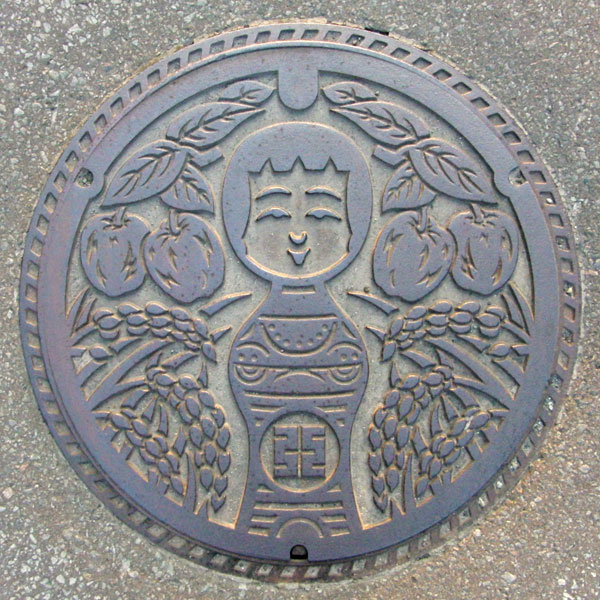
A traditional Tsugaru kokeshi doll, "Onyu Kokeshi," and a colorful manhole cover depicting the city's tree, the apple, and rice.
Tsugaru つがる市
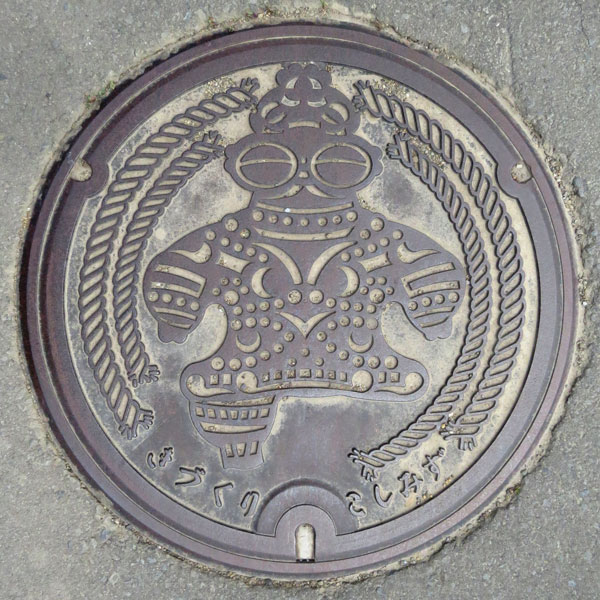
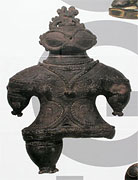
The Kamegaoka Ruins, where the "Shaker Clay Figurine," a nationally designated Important Cultural Property, was excavated, are featured on the manhole cover. To the left of the clay figurine is the town's tree, the black pine.
Kashiwa 柏村
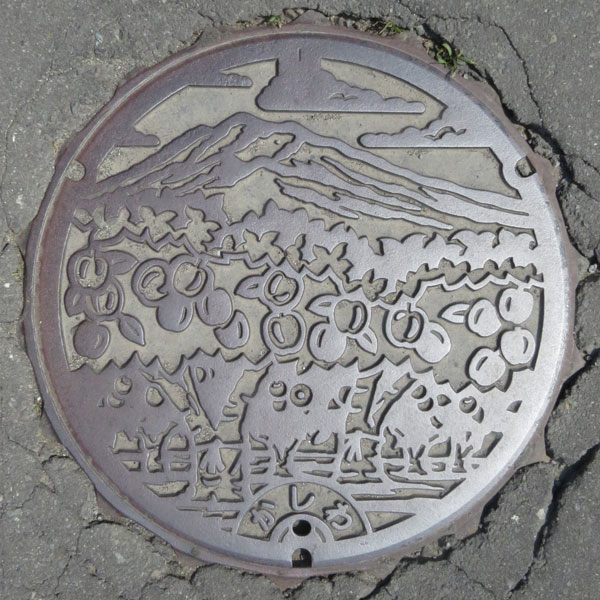
The image depicts Mt. Iwaki and an apple orchard.
Inagaki 稲垣町
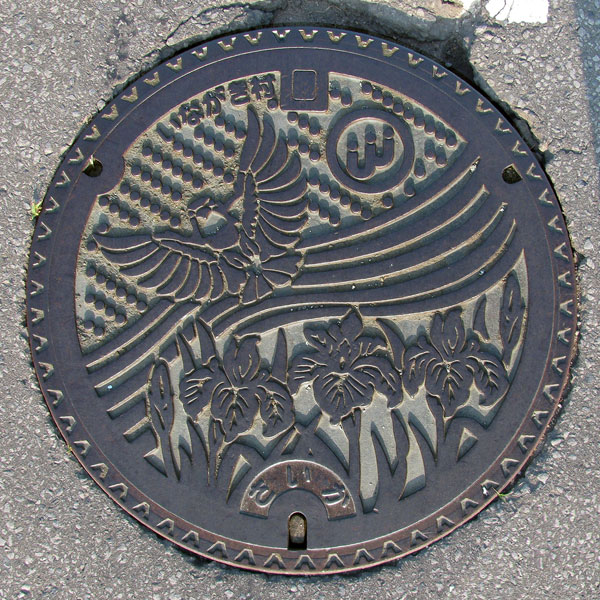
The lid for the Saika treatment area. The design features the village flower, the Japanese iris, and the village bird, the Japanese green thrush. The five curves in between are likely to represent the Iwaki River.
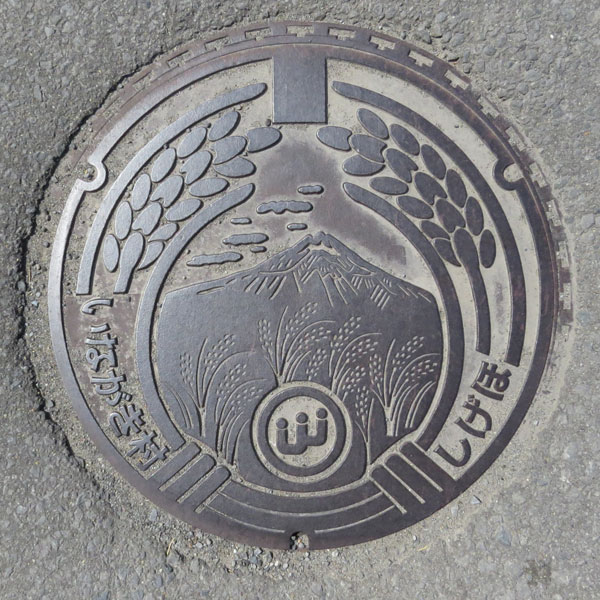
The lid for the Shigeho treatment area. Mount Iwaki is depicted among the rice ears.
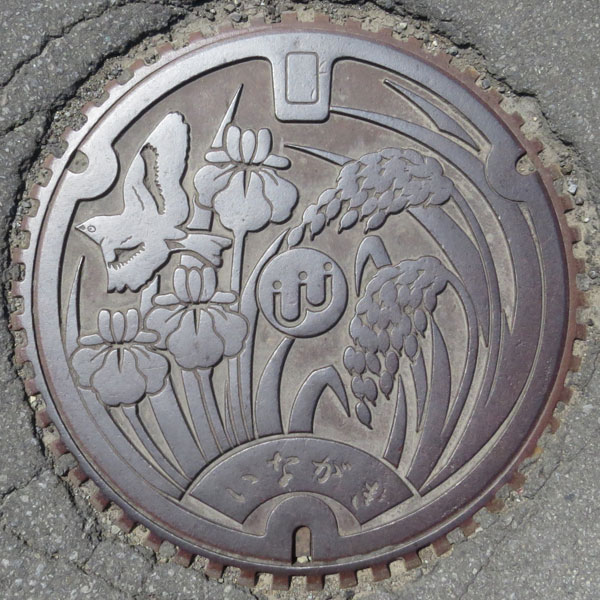
The lid of the "Inagaki Processing Area" features an image of the village flower, the Japanese iris, the village bird, the Japanese greenfinch, and ears of rice.
Shariki 車力村
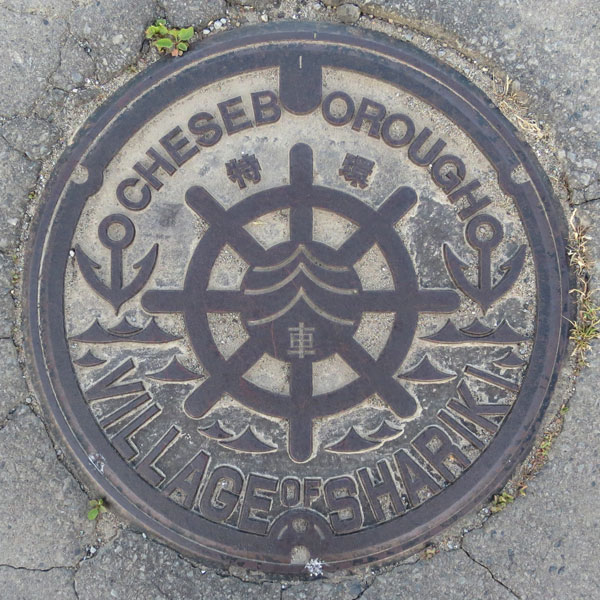
The design depicts the steering wheel and anchor of the "Sailing Ship Cheseborough." The circle inside the central steering wheel is the village emblem. From top to bottom, the ship's name, "CHESEBOROUGH," "Tokukan," and "VILLAGE OF SHARIKI" are written.
Goshogawara 五所川原市
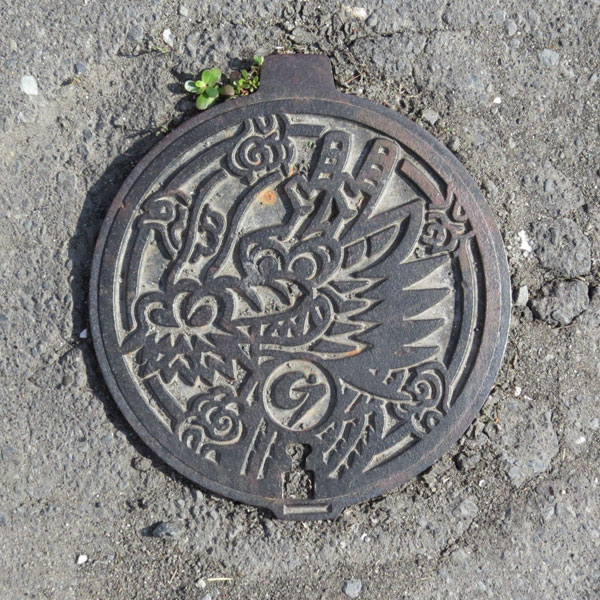
The design depicts the "Mushi-okuri (insects)" used for sending off insects. The "Mushi-okuri" (insect sending off) custom, passed down to protect rice plants from pests and diseases, is a folk custom handed down in the northwestern Tsugaru region. The dragon-shaped "Mushi" has a wooden head and a straw body.
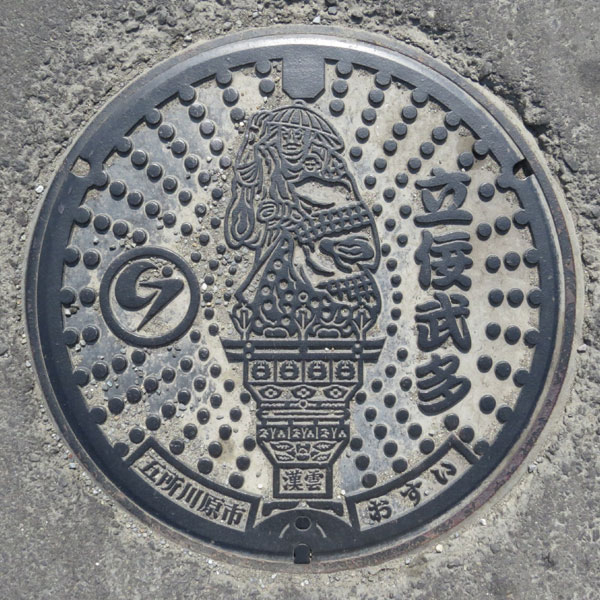
This painting depicts a Tachineputa float restored in 1998. There are apparently about 15 Tachineputa floats, but the one depicted on the lid appears to be the one originally named "Parent and Child Departure" at the time of the restoration.
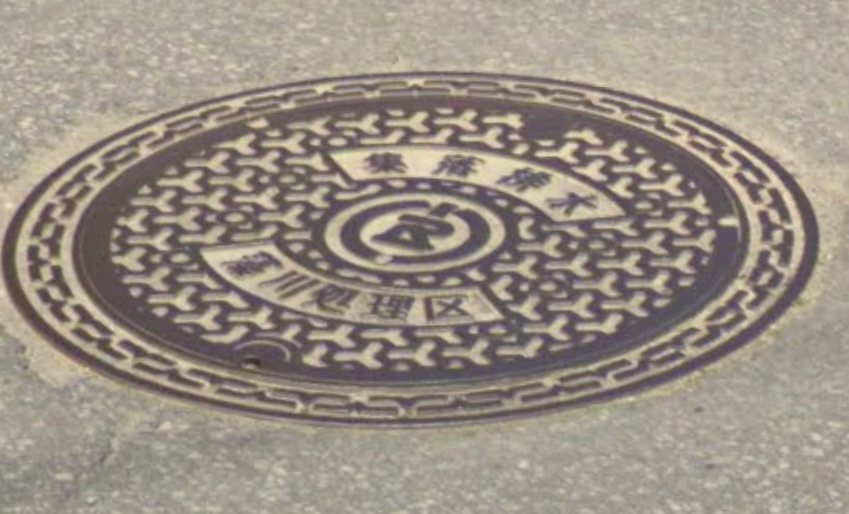
Goshogawara emblem
Shiura 市浦村
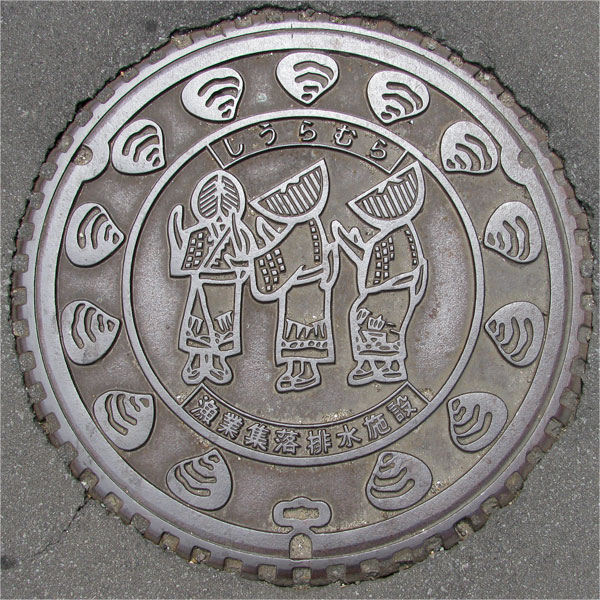
This is a fishing lid from the Juso District. The design features a Bon dance performance of the "Thirteen Sand Mountains" in the center, surrounded by thirteen clams caught in Lake Jusan. The Tosa Sand Mountain Festival is held annually in the Juso District from August 14th to August 15th.
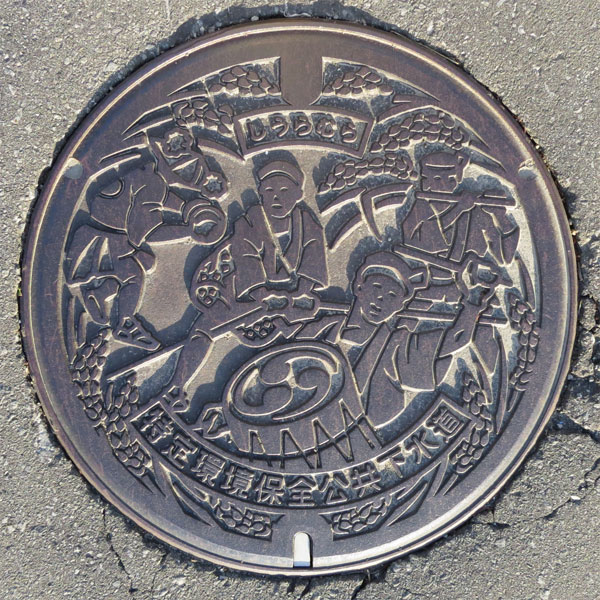
The lid of a special bell depicts the Aiuchi Mushi Okuri Festival (held annually on the second Saturday of June).
Mutsu むつ市
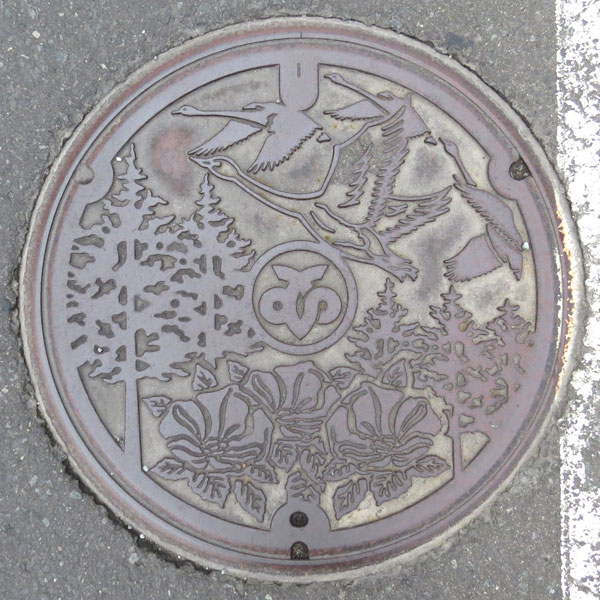
From top to bottom, the city bird is the whooper swan, the city tree is the Japanese cypress, and the city flower is the rosehip. The city emblem is in the center.
Kawauchi 川内町
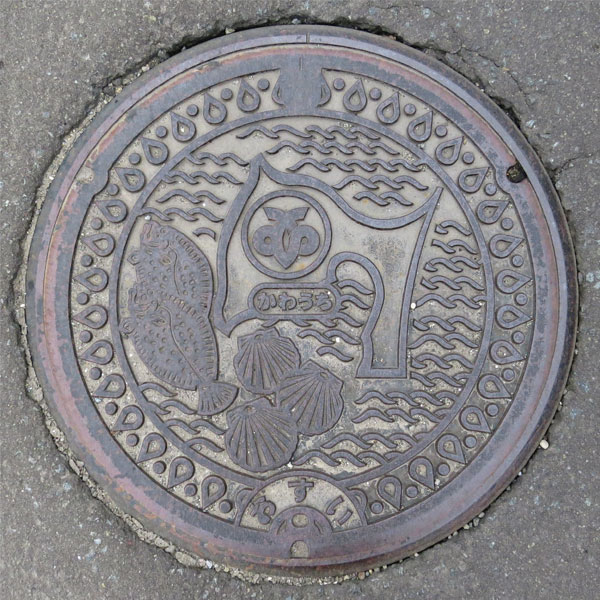
The Shimokita Peninsula, shaped like a scythe, depicts the town's location and its local specialties, flatfish and scallops.
Wakinosawa 脇野沢村
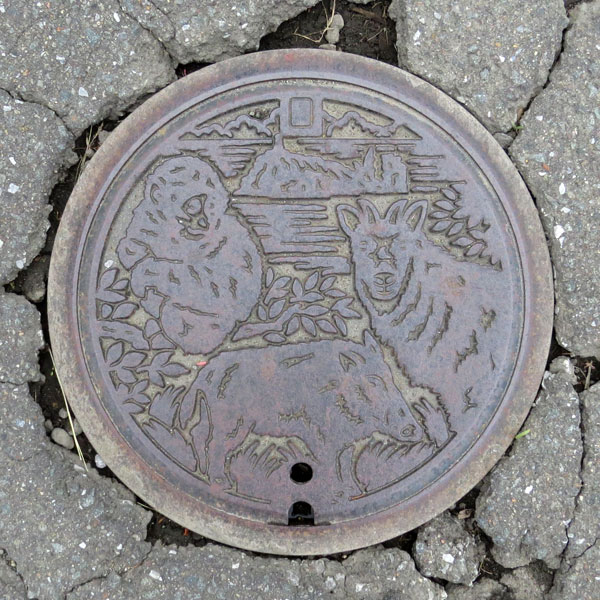
The artwork depicts wild animals such as wild boars, serows, and monkeys. In the background are Taijima Island and Tateiwa Rock, located about 800m off the coast of Ushinokubi Cape.
Ohata 大畑町
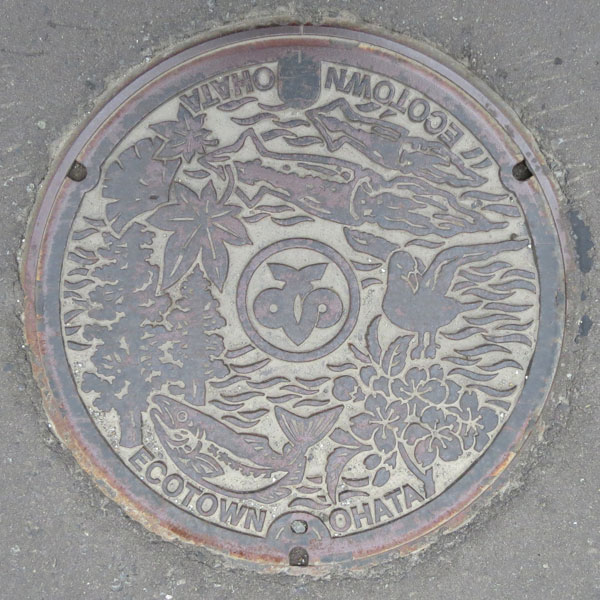
The town's three symbols are cypress, cherry blossoms, and seagulls. Other designs include strait salmon, maple leaves, and squid.
Towada 十和田市
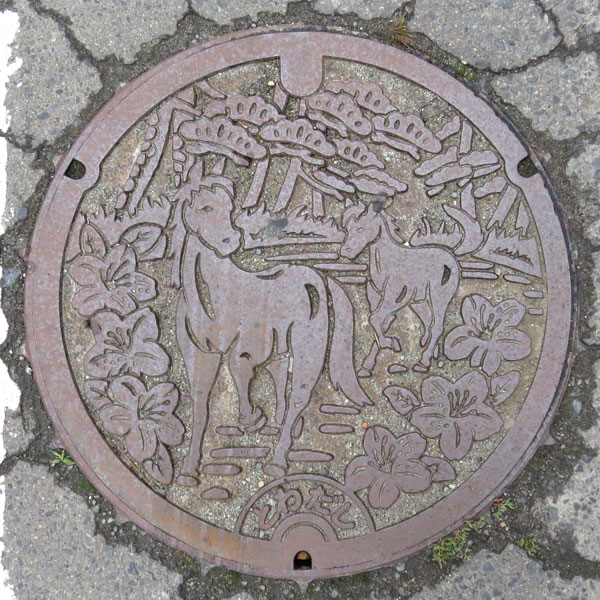
The image depicts the city's tree, the red pine, the city's flower, the azalea, and a mother and child horse.
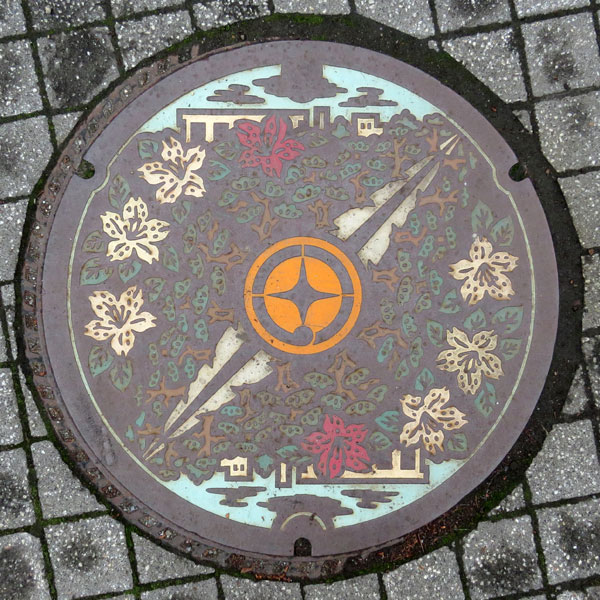
The lid features the city's tree, the red pine, and the city's flower, the azalea. The former Towada City emblem is in the center.
New Towada City emblem
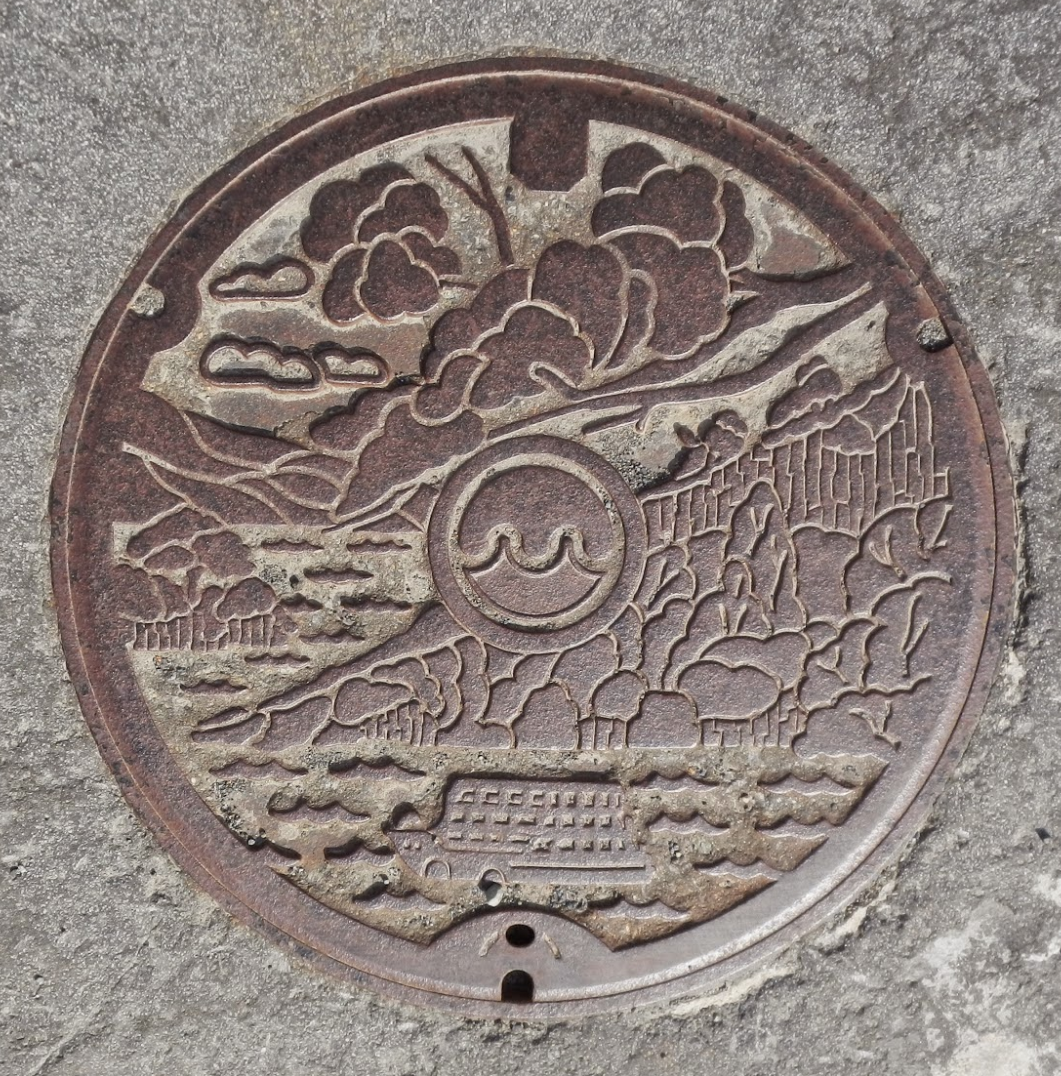
Manhole depicting new Towada City emblem with Lake Towada in the background
Towadako 十和田湖町
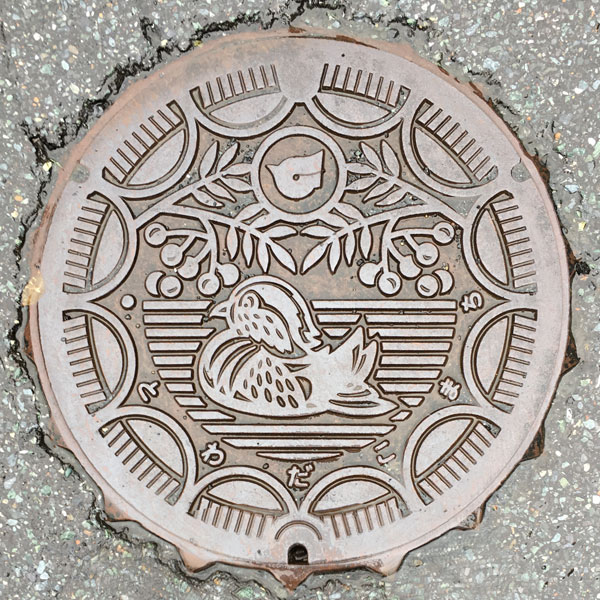
It features the town's tree, the rowan, and its bird, the mandarin duck. The town emblem is at the top, and the words "Towada Komachi" (Towada Komachi) are written at the bottom.
Misawa 三沢市
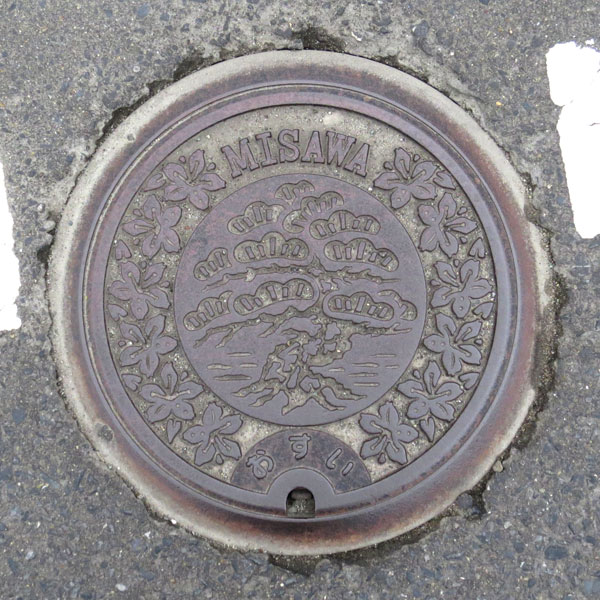
The lid features the city's tree, the pine, and the city's flower, the azalea.
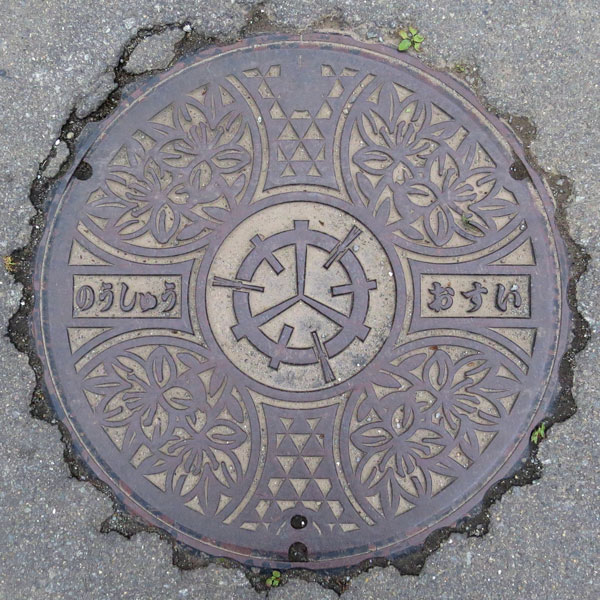
A farm waste disposal cover in the eastern part of Misawa City, featuring the city's flower, the azalea.
Hirakawa 平川市
Onoe 尾上町
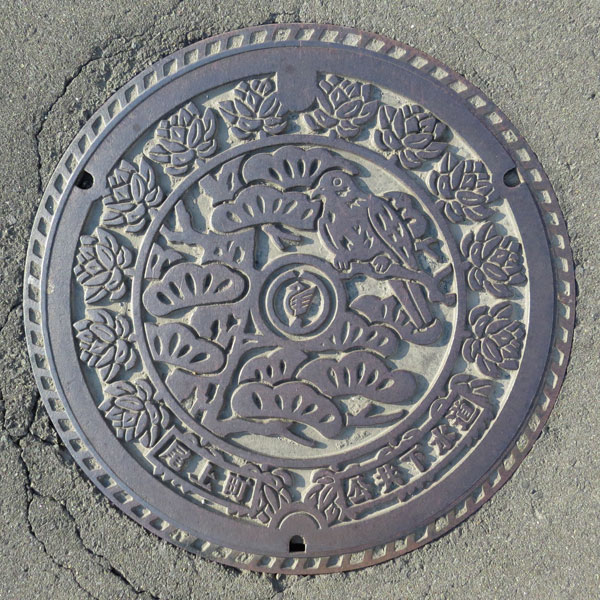
The lid features a depiction of the town's flower, the lotus, its tree, the Japanese black pine, and its bird, the oriental turtle dove.
Hiraka 平賀町
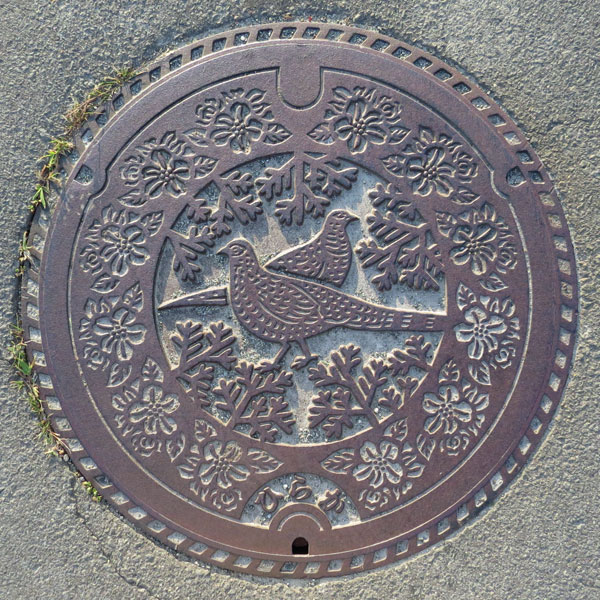
The lid features the town's flower, an apple, inside, and the town's bird, a pheasant, and the town's tree, a sawara.
Ikarigaseki 碇ヶ関村
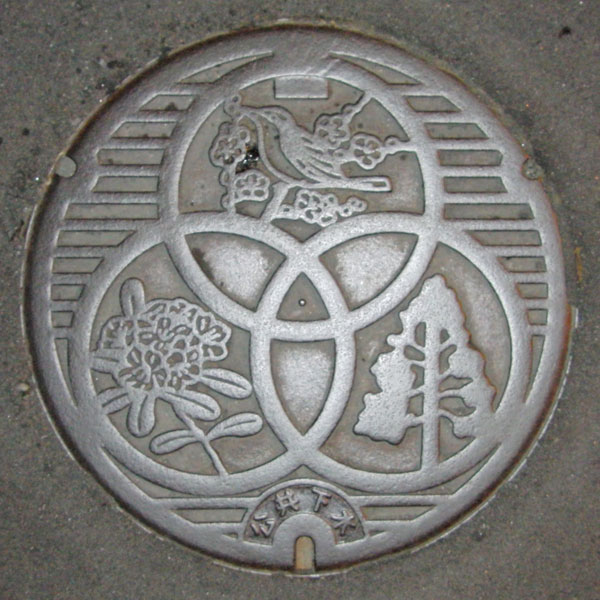
The lid features the village's bird, the Japanese bush warbler, the village's flower, the apple blossom, and the village's tree, the Japanese black pine, all within the village emblem.
Imabetsu 今別町
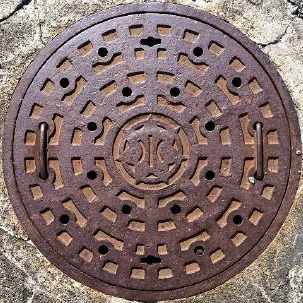
This is a standard perforated manhole cover with the Aomori City emblem. It has handles on both sides. Firefighting operations in Sotogahama Town are managed by the "Aomori Regional Wide-Area Administrative Association," which consists of five municipalities: Aomori City, Hiranai Town, Sotogahama Town, Imabetsu Town, and Yomogita Village. Therefore, this is likely a manhole cover for a fire-fighting water storage tank and not a cross-border cover.
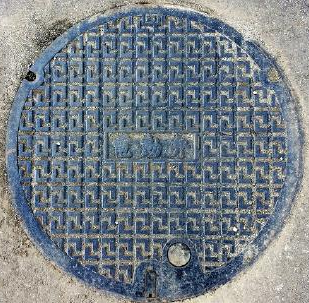
This manhole cover has a pattern of brackets and the words "Electric Valve" in the center.
Hiranai 平内町
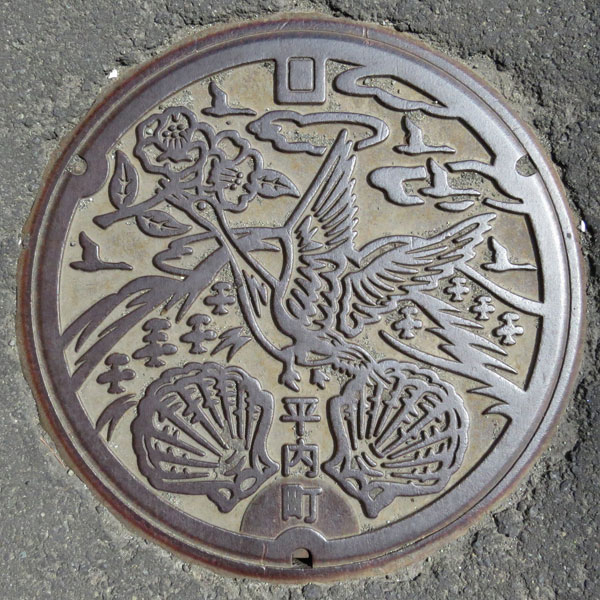
The arrangement is a bit unusual, with the town's bird, a swan, in the center (including a swan in flight), the town's flower, a camellia, in the upper left (perhaps held in the swan's mouth), the town's tree, a pine, on the mountainside in the background, and the town's local product, scallops, at the bottom.
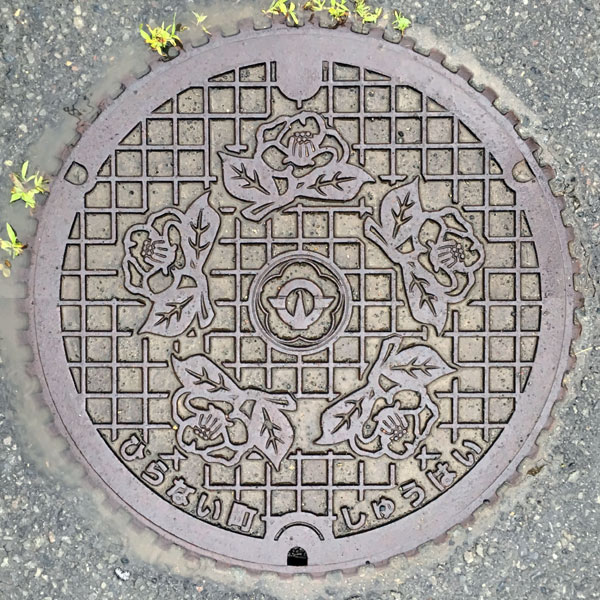
A farm waste collection and disposal lid from the Nishihiranai district features the town flower, the camellia, and the town emblem in the center.
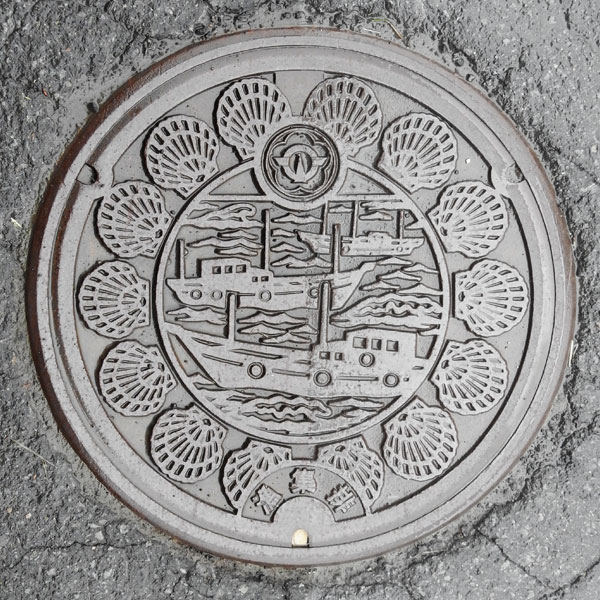
This is the cover of a fishing port in the Shimizugawa area, with a fishing boat painted on the inside and a scallop painted on the outside. The town emblem is on top, and the words "fishing port" (fishing port) are written on the bottom.
Oirase おいらせ町
Shimoda 下田町
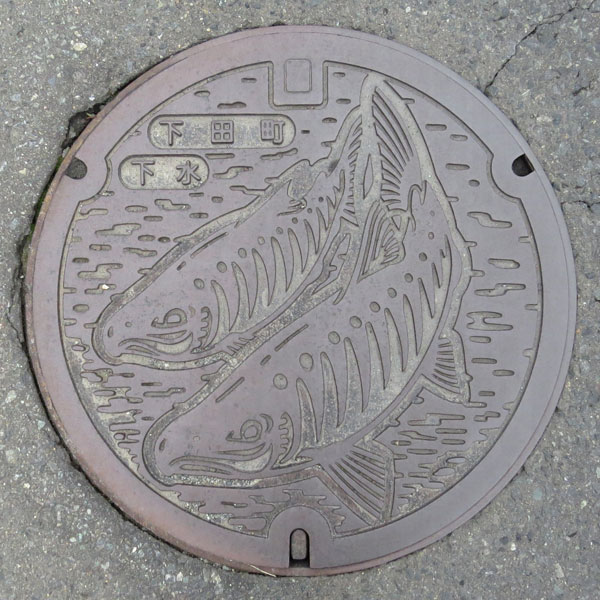
Salmon are depicted. The Oirase River flows through the southern part of the town.
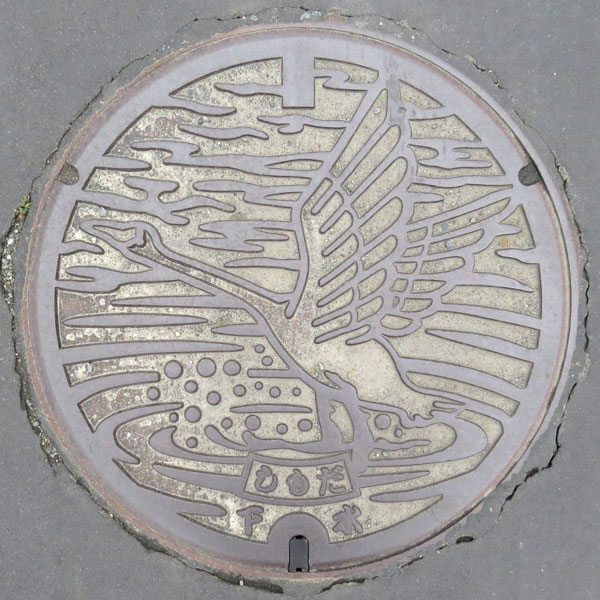
Maki-tsutsumi was once one of the prefecture's leading swan migration sites. The reason for this is that, at the request of the prefecture, feeding was halted, leading to a sharp decline in the number of swans. The halt was apparently due to concerns about avian influenza, but it's sad to see not only an important tourist resource, but also a winter tradition, disappear.
Momoishi 百石町
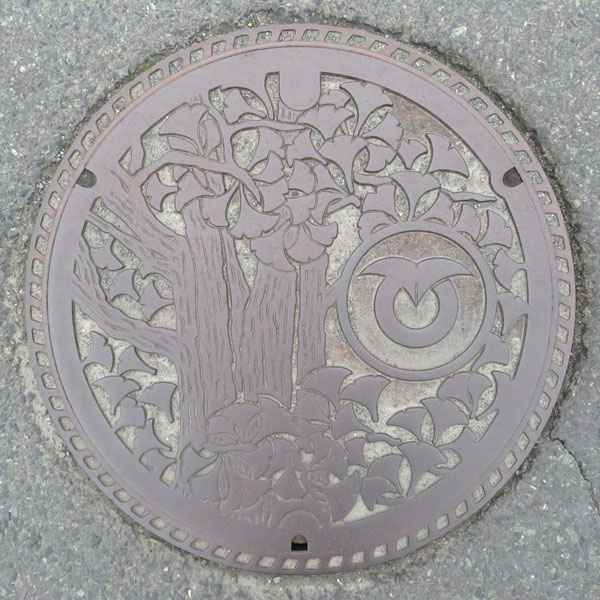
The design features the town's tree, the ginkgo tree.
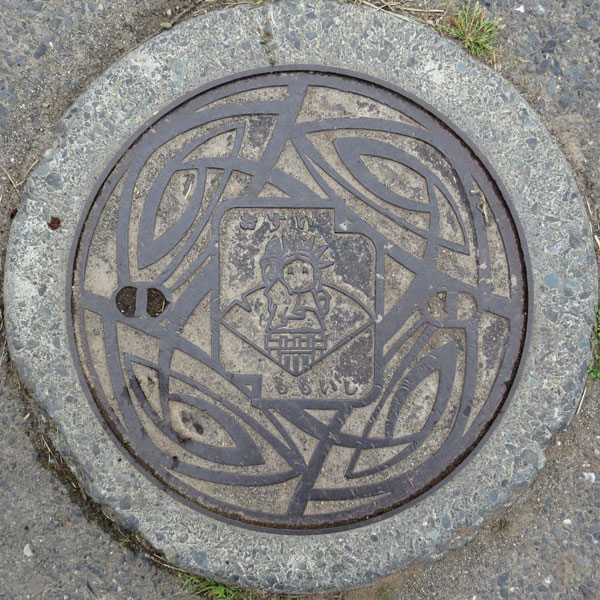
The design is of the Statue of Liberty. Since Hyakusekicho is located at the same latitude as New York, a quarter-size statue was apparently created using funds from the Hometown Revitalization Fund.
Tohoku 東北町
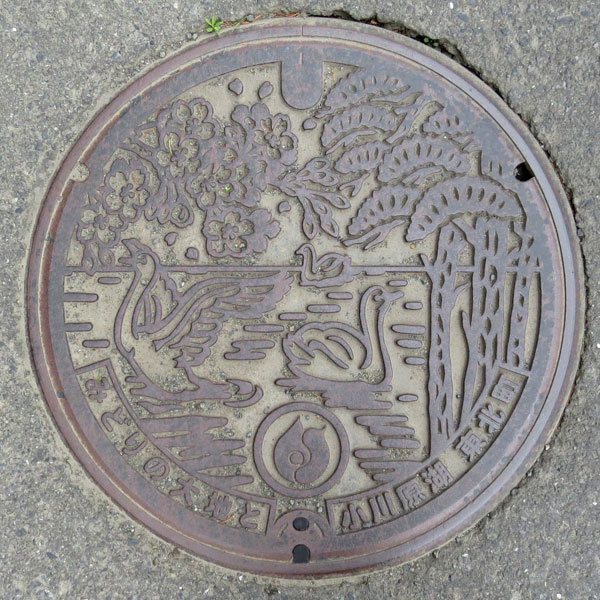
The new town's symbolism, a red pine, cherry blossoms, and swans, is depicted. At the bottom is the new town emblem and the words "Tohoku Town: Green Land and Lake Ogawara."
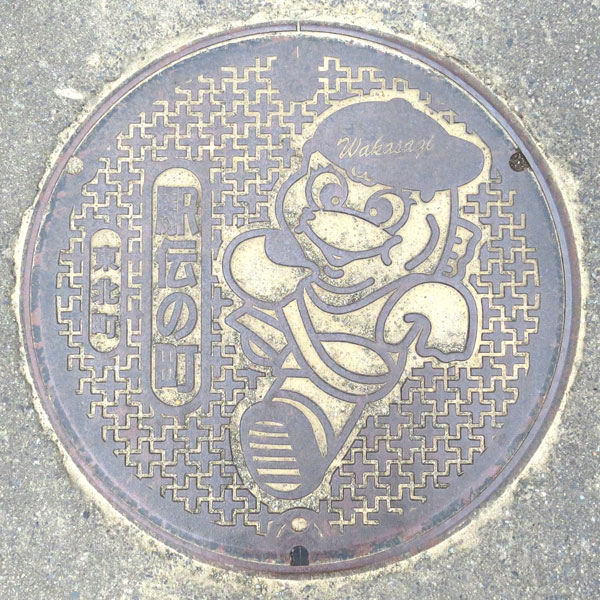
The character "Idaten-kun" is wearing a cap with the word "Wakasagi" (smelt) on it, along with the words "Ekiden Town" and "Tohoku Town." The "Smelt Marathon" is held every year in late July. Since they hold a marathon in the middle of summer, they must be in great training. Apparently, they've won the town division of the Aomori Prefectural Ekiden Race, which is attended by all cities, towns, and villages in the prefecture, 16 out of 19 times.
Tohoku 東北町
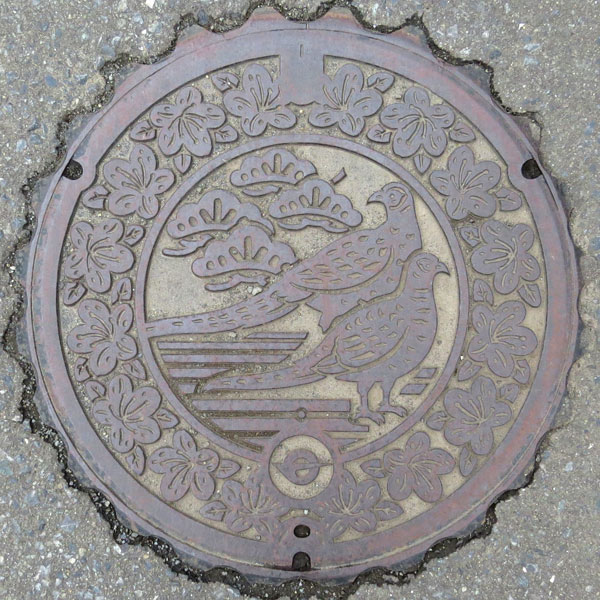
The town's tree, the "Koji Akamatsu" (Japanese red pine), its flower, the "Yama Azalea," and its bird, the "Yamadori" (copper pheasant), are depicted. The former Tohoku Town emblem is at the bottom.
Kamikita 上北町
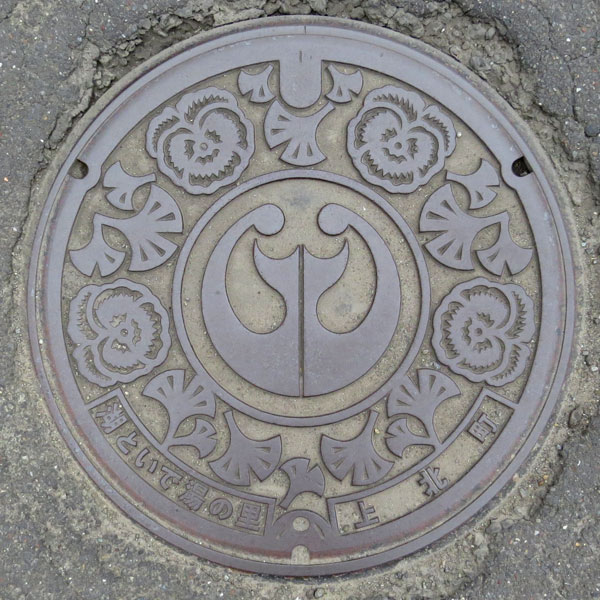
The town emblem is depicted in the center, surrounded by leaves of the town's tree, the ginkgo biloba, and the town's flower, the three-colored violet.
Yokohama 横浜町
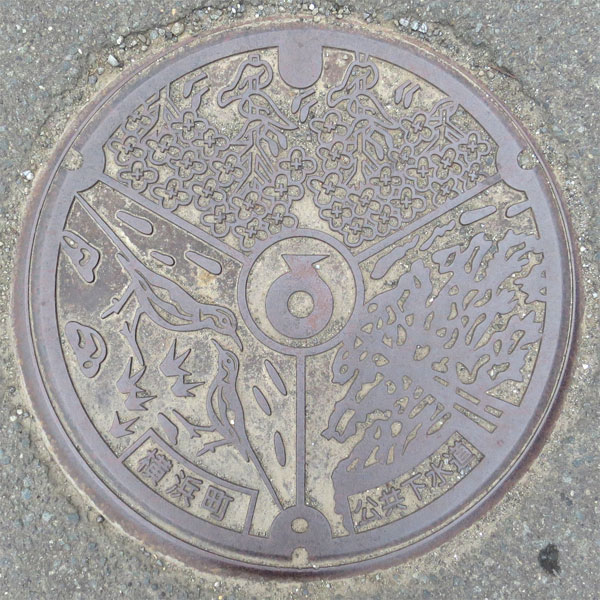
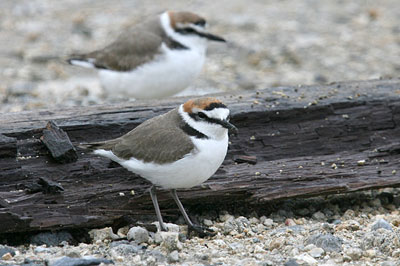
The town's tree, the "Tsukikeyaki" (Japanese zelkova), the town's flower, the "Nanohana" (Japanese zelkova), and the town's bird, the "Hamachidori" (Japanese sandpiper) are depicted.
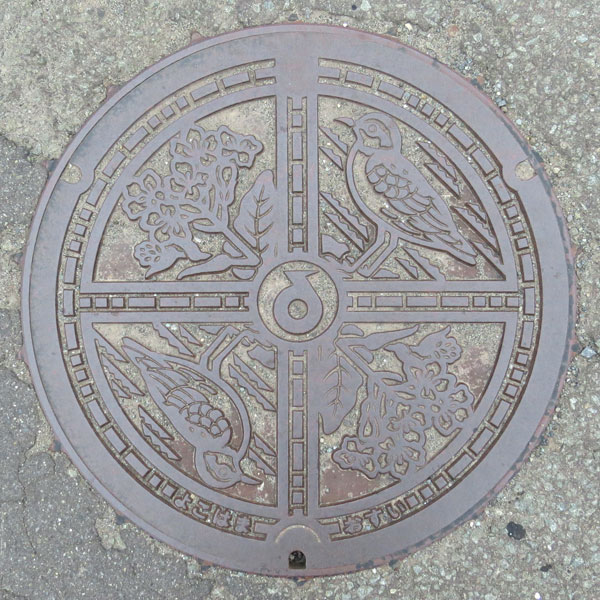
The agricultural wastewater lid in Domeki area is home to only the Japanese bush warbler and the Japanese sandpiper.
Sotogahama 外ヶ浜町
Kanita 蟹田町
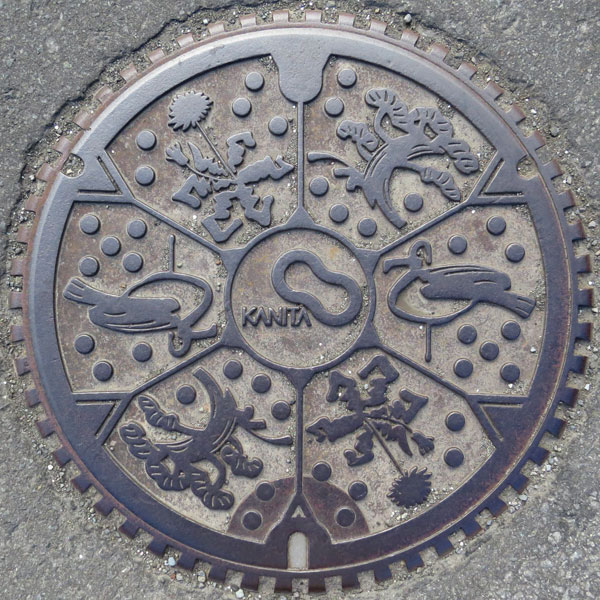
From the top right, the town's tree, the black pine, the town's bird, the seagull, and the town's flower, the dandelion, are depicted twice in point symmetry on this public sewer manhole cover. The illustration is quite stylish.
Tairadate 平舘村
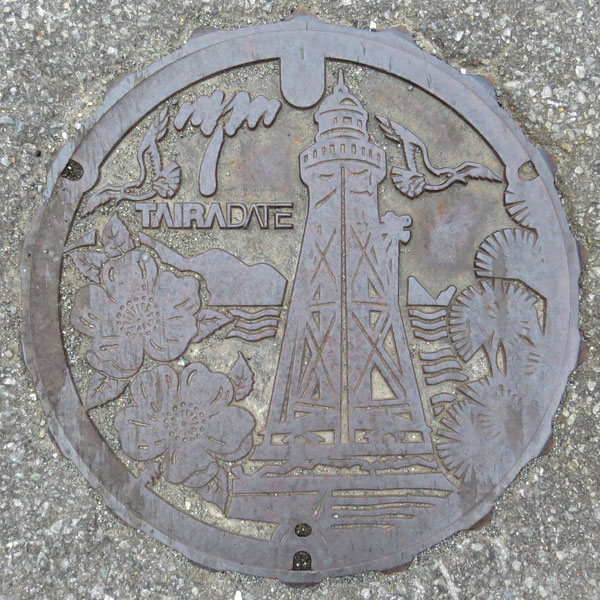
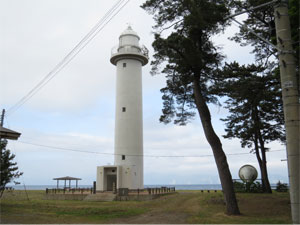
The Hiradate Treatment District's designated environmental conservation public sewer cover depicts the village tree (black pine), the village bird (black-tailed gull), and the village flower (rose rugosa), with Hiradate Lighthouse in the background and the Shimokita Peninsula in the background.
Minmaya 三厩村
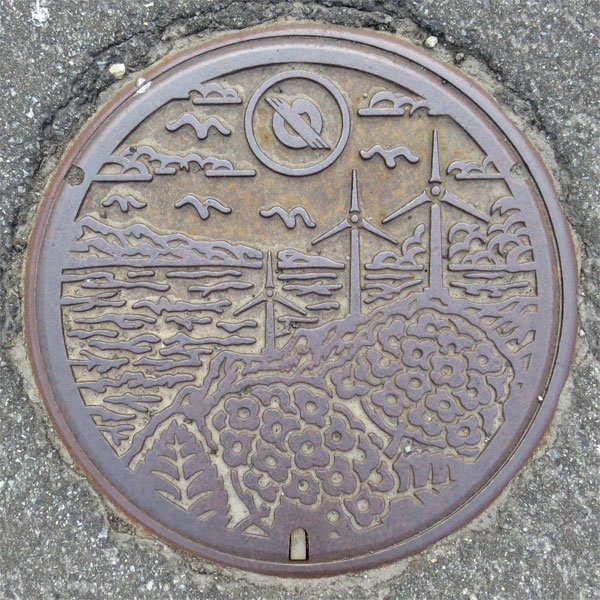
Beyond the windmills at Cape Tappi, Hokkaido's Matsumae Peninsula can be seen. The Sanmaya Sewerage District's designated environmental conservation public sewer cover also features the village flower, the hydrangea, and the village bird, the seagull.
Noheji 野辺地町
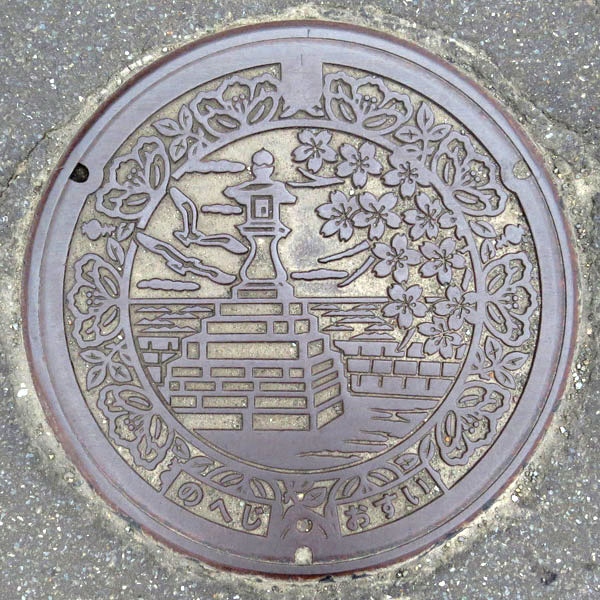
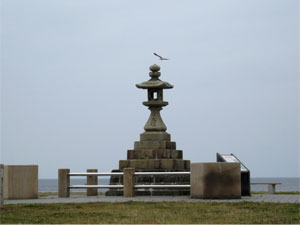
The town's flower, the Rugosa rose, is depicted around the perimeter, and on the inside is the Joyoto lighthouse, said to be the oldest in the country, the town's tree, the cherry blossom, and the town's bird, the seagull.
Nakadomari 中泊町
Nakasato 中里町
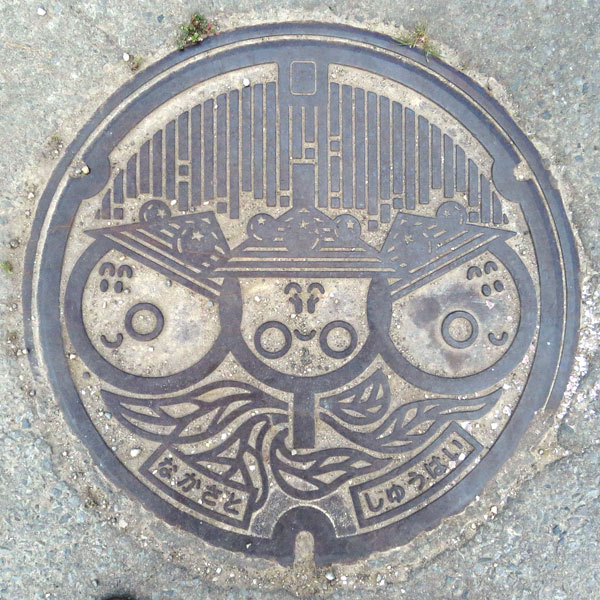
The face wearing the flower hat in the "Nanmo Sasa Dance" appears to be based on the Nakazato Town emblem.
Kodomari 小泊村
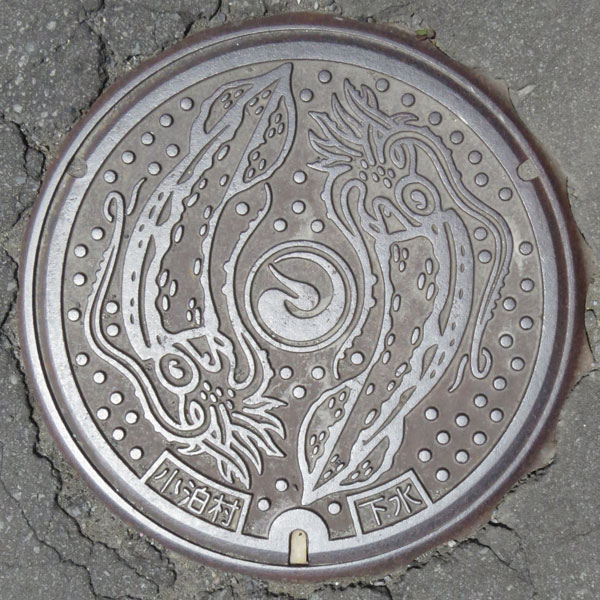
This is a sewage cover for the fishing village of Shimozen district, featuring a squid design. Kodomari Village is a fishing village, and squid accounts for 70% of its fishery.
Tsuruta 鶴田町
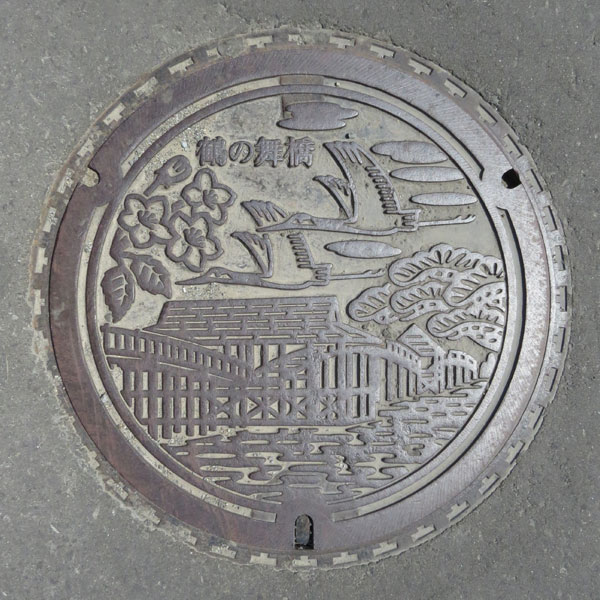
The "Tsuru-no-Mai Bridge," a triple-arched bridge at Lake Fujimi in Tsugaru, is the longest wooden bridge in Japan. It features a red-crowned crane flying over it, along with the town's tree, the Japanese black pine, and its flower, the apple.
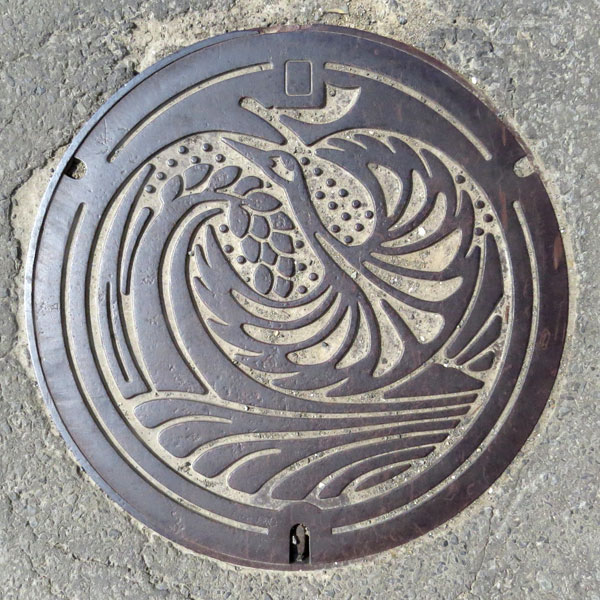
A lid for agricultural collection and disposal in the Shobugawa area. It features a stylized crane and ears of rice, but a closer look reveals that the outside is shaped like an apple. While rice and apples are both core agricultural crops in the town, Tsuruta Town is said to be the top producer of "Steuben" grapes in Japan, even though their production value is less than the other two.
Fujisaki 藤崎町
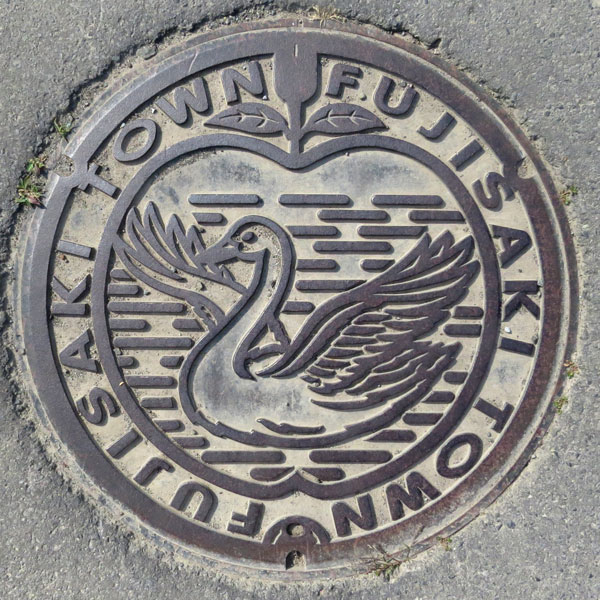
The town's bird, a swan, is depicted inside a Fuji apple, the town's tree. The words "FUJISAKI TOWN" are written on both sides.
Town emblem manhole
Tokiwa 常盤村
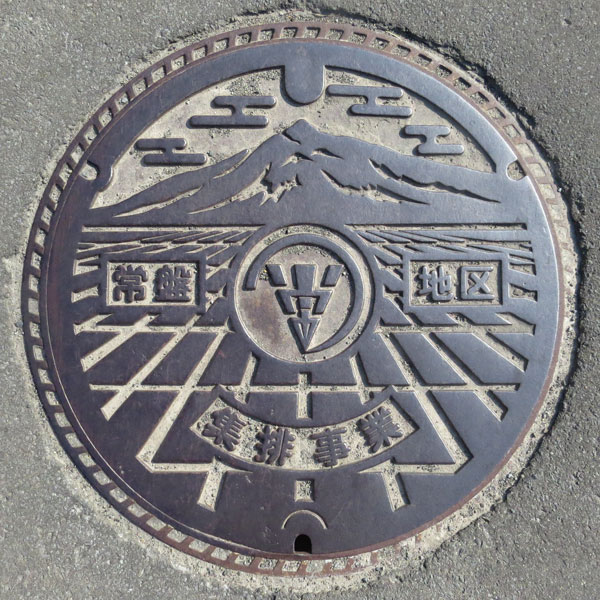
The Tokiwa District drainage lid features a design of Mt. Iwaki and rice fields. The village emblem is in the center.
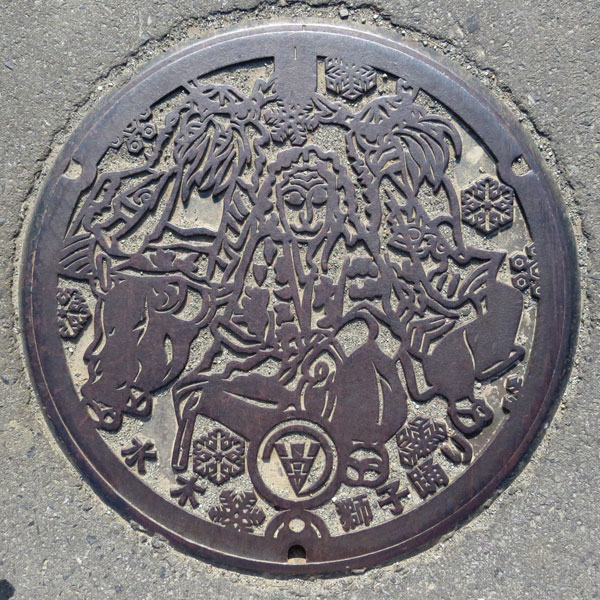
A Mizuki District agricultural collection and waste disposal lid.
The "Mizuki Lion Dance," designated an intangible folk cultural asset of Aomori Prefecture, is depicted on the lid. The village emblem and the words "Mizuki" and "Lion Dance" are inscribed at the bottom.
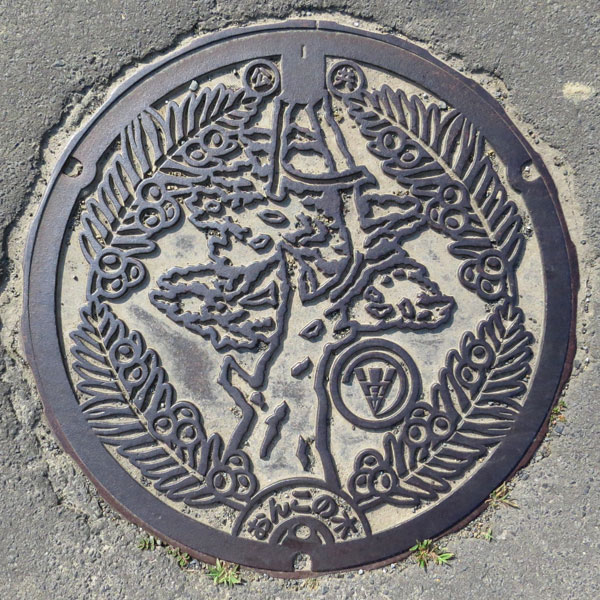
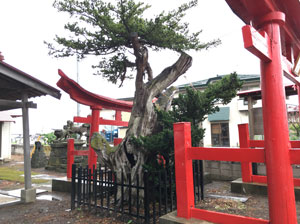
The "Onko Tree" at Tokushita Hachimangu Shrine is estimated to be over 500 years old and has a circumference of over 2 meters. The image depicts four fruit-bearing branches centered around the "Onko Tree." The village emblem is at the bottom right. The characters "public" are written at the top and "Onko Tree" at the bottom.
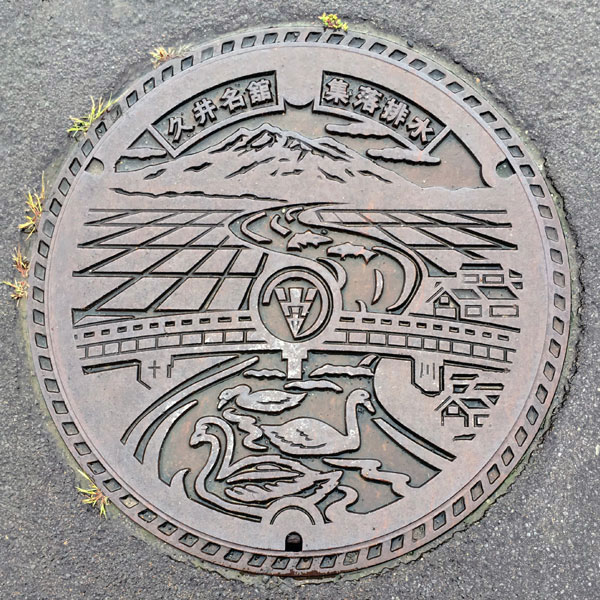
Agricultural drainage lid in the Kuinadate area.
Similar to the lid in the Tokiwa area, it depicts Mt. Iwaki and rice fields, with a river flowing, a bridge spanning the river, and swans swimming. The village emblem is in the center. The words "Kuinadate" and "Village Drainage" are written at the top.
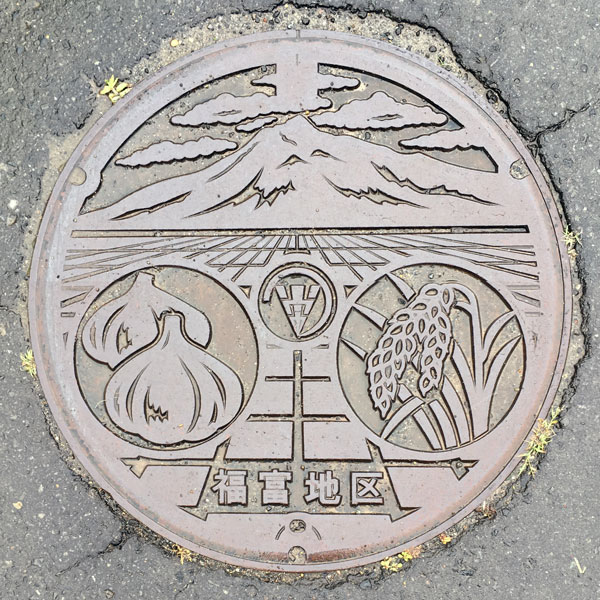
Agricultural collection and discharge lid in the Fukutomi district.
Similar to the Tokiwa district lid, it depicts Mount Iwaki and a rice field, with the village emblem in the center and the village's specialty "garlic" and "ears of rice" in circles on the left and right. The words "Fukutomi District" are written at the bottom.
Ajigasawa 鰺ヶ沢町
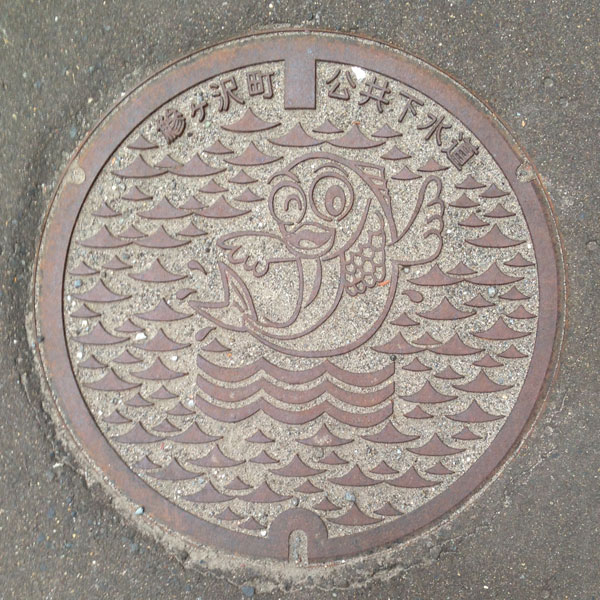
Ajigasawa Town was founded in 1889 with the enactment of the Town and Village Act. This project commemorates the 100th anniversary of the town's establishment, so perhaps the mascot "Ajimaru" was born in 1989.
Fukaura 深浦町
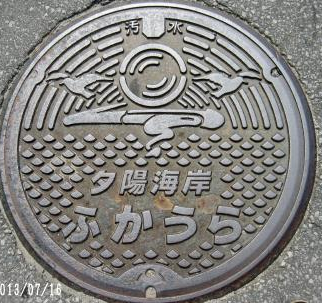
Written “ふかうら” on the bottom with town emblem on top.
Iwasaki 岩崎村
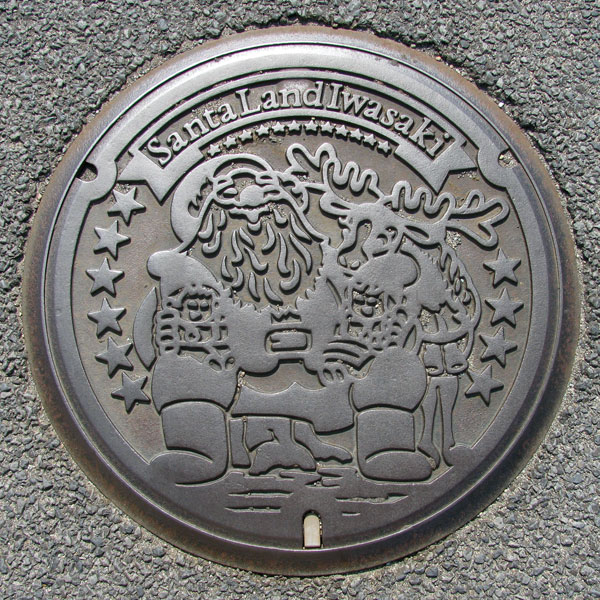
The design features Santa Claus holding a child and a reindeer. Iwasaki Village used to have a facility called "Santaland Shirakami," but in October 2008, the name was changed to "Aone Shirakami Juniko." It seems that "Santaland" was created because the former Iwasaki Village had a sister city relationship with Ranua County, Finland, the home of Santa Claus, and this manhole cover is a remnant of that name.
Sannohe 三戸町
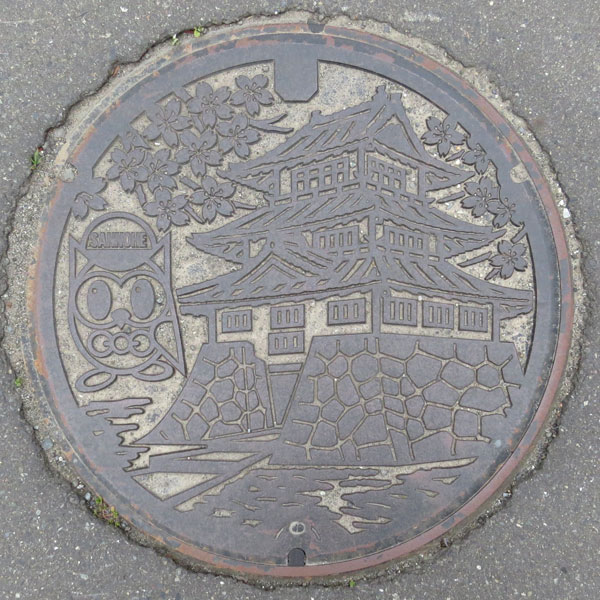
The "Mitohe Castle Museum," modeled after the castle's corner turret, features cherry blossoms and a character depicting the town's bird, the "Scops Owl."
Gonohe 五戸町
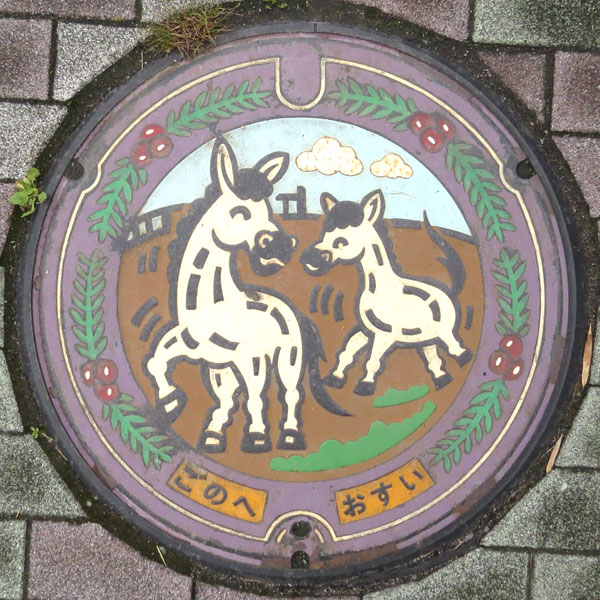
The town's tree, the "Onko" (Japanese yew), is depicted around the perimeter, and a mother and her calf are depicted inside.
Kuraishi 倉石村
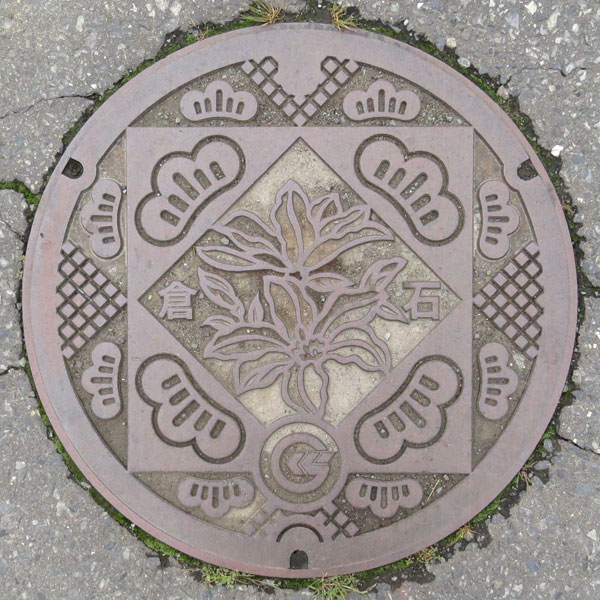
The village tree, the red pine, and the village flower, the magnolia, are depicted.
Rokunohe 六戸町
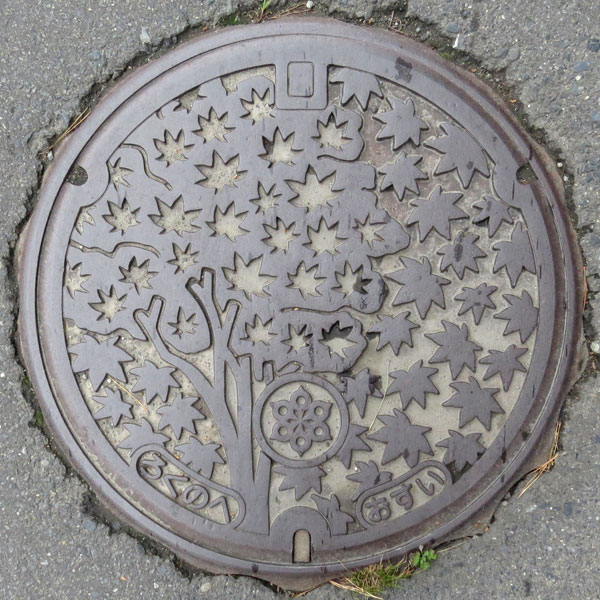
The lid features a design of the town's tree, the maple.
Shichinohe 七戸町
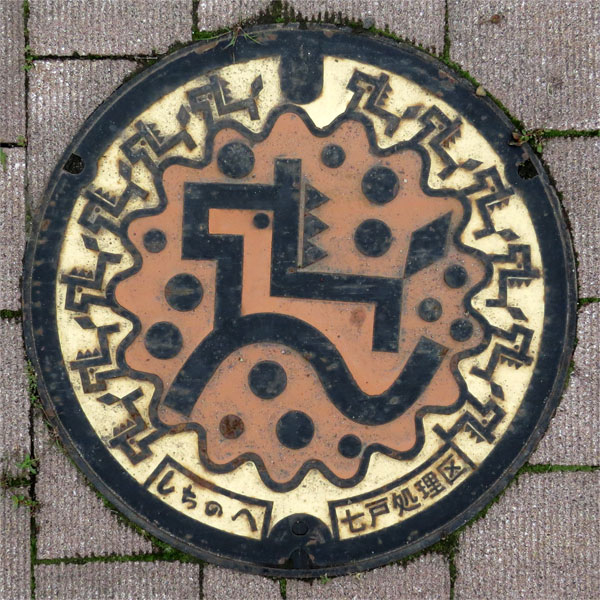
The Nanbu Ko Ema is apparently designed with the characters "shi-chi-no-he," but I wonder if the tail is actually "no."
Tenmabayashi 天間林村
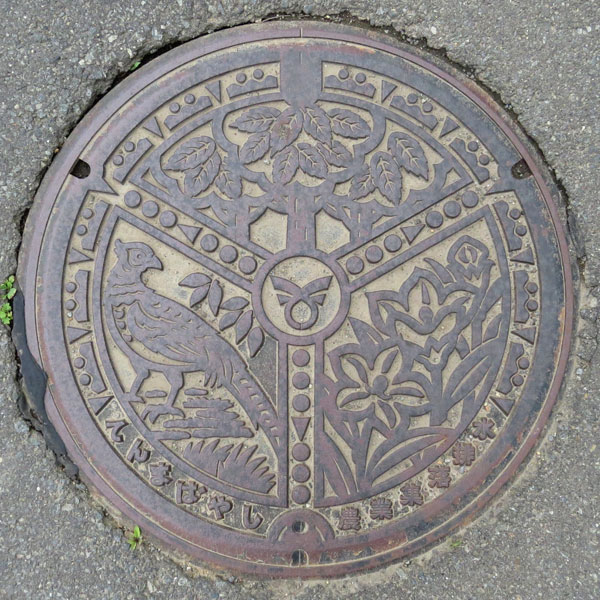
The village tree, the zelkova, the village flower, the bellflower, and the village bird, the pheasant, are depicted.
Nambu 南部町
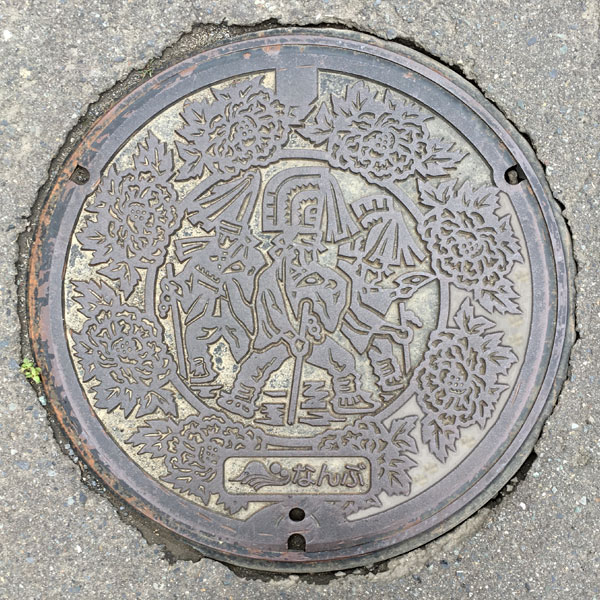
The lid features the town flower, the "peony," around the outside and an "Enburi" (rice planting dance) on the inside. The bottom features the Nanbu Town emblem after the merger and the character "Nanbu."
Nagawa 名川町
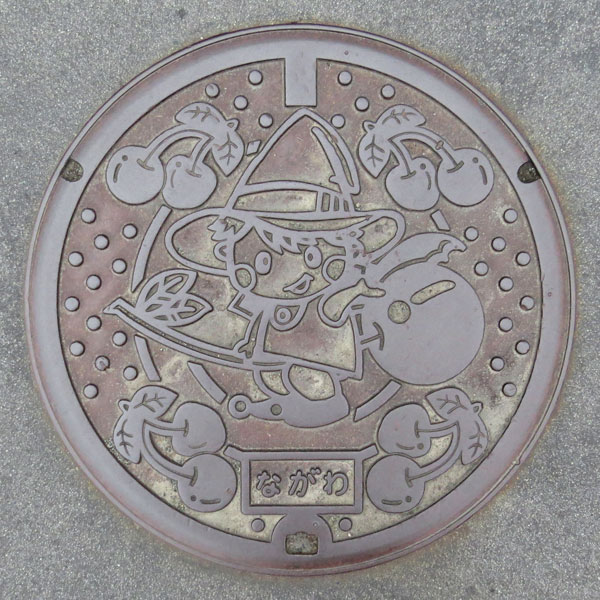
The town's mascot, "Cherry-chan," flies through the sky on a cherry. Her hat certainly looks like something a wizard or witch would wear…
Fukuchi 福地村
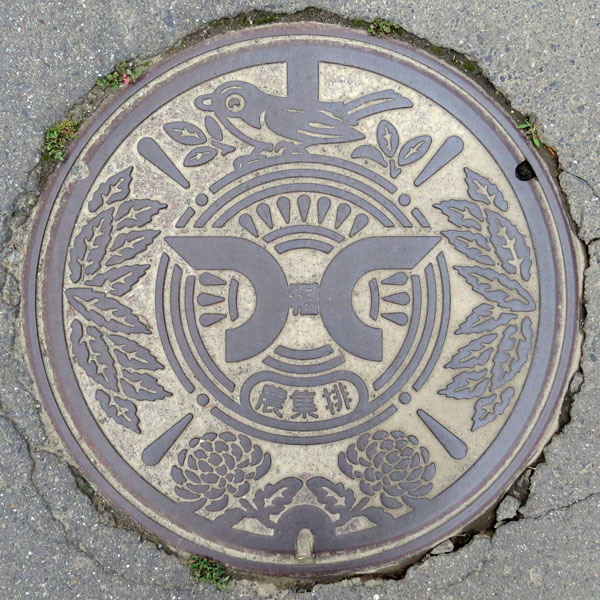
The village emblem is in the center. Surrounding the lid of the agricultural waste collection and disposal bin in the Tomabechi district are, from top to bottom, the village bird, the Japanese bush warbler, the town tree, the zelkova tree, and the town flower, the chrysanthemum.
Hashikami 階上町
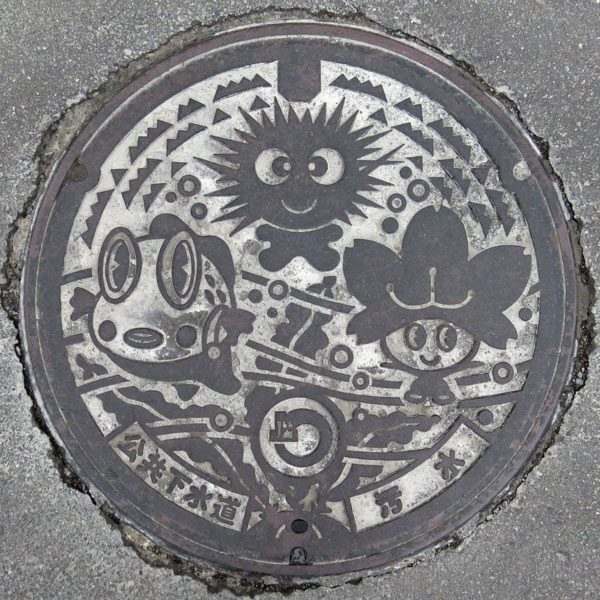
The "Hashikami Kids" are named after the town's specialty sea urchins, azaleas, and Aburame, with the characters "Kazemaru" (sea urchin \= wind), "Azalea Princess," and "Aburame-kun" as motifs.
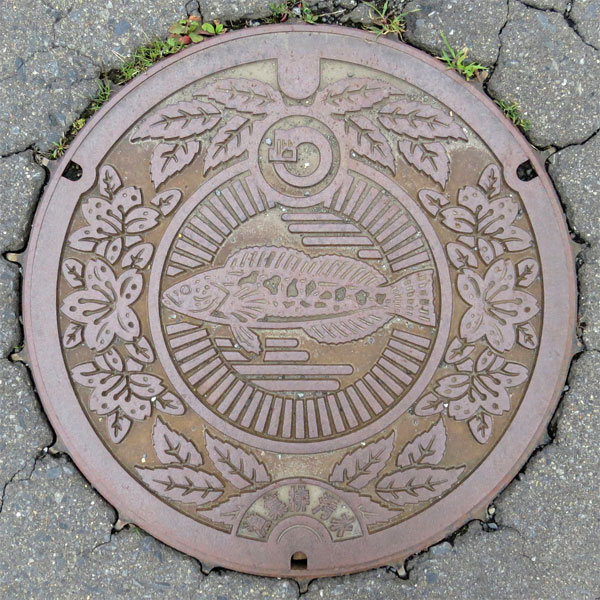
This is a fishing village drainage lid, decorated with the leaves of the town's tree, the zelkova, and the town's flower, the azalea, and in the center is the town's fish, the aburame. Aburame refers to rockfish.
Itayanagi 板柳町
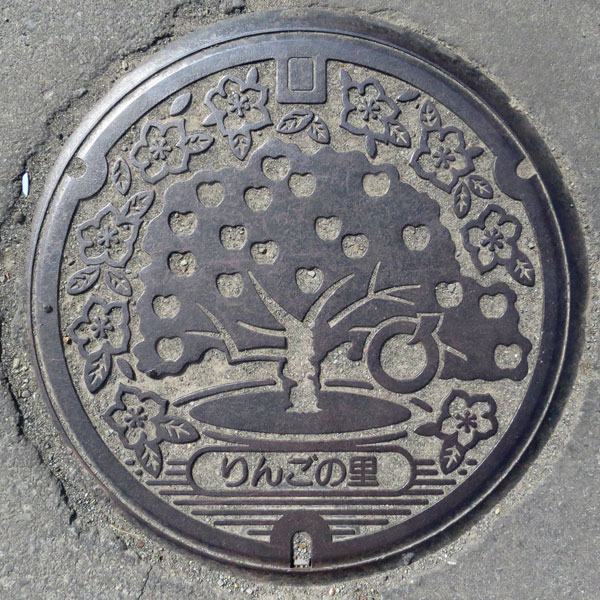
Apple trees, apple blossoms, and apples. While the name "Apple Village" is written on the wall, Itayanagi Town ranks fifth in Aomori Prefecture in terms of apple cultivation area and production value, accounting for just under 60% of the national production.
Oma 大間町
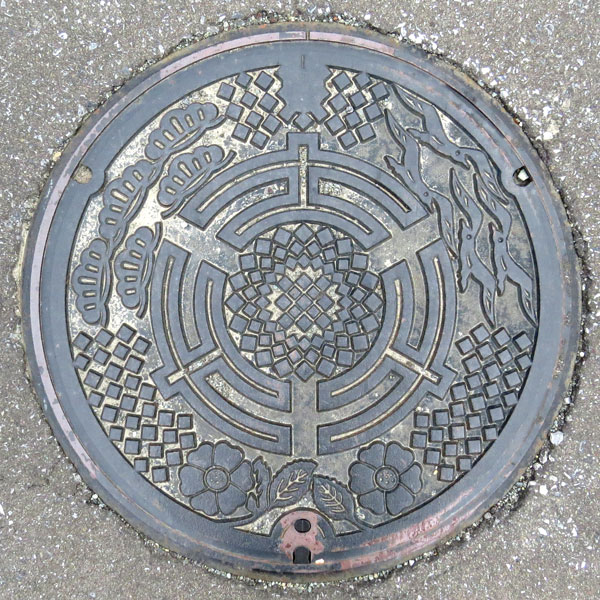
The town's tree, the black pine, is depicted in the upper left, the town's bird, the seagull, in the upper right, and the town's flower, the rosehip, at the bottom.
Owani 大鰐町
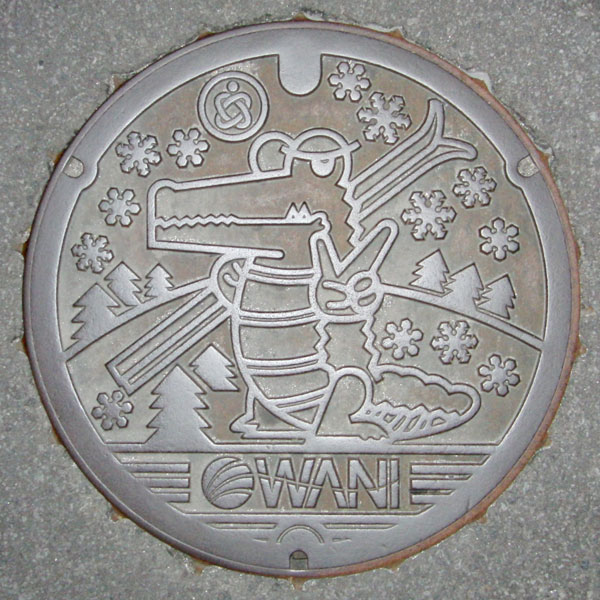
The "crocodile," the town's official animal, as listed on the Owani Town website, is carrying skis and making a V sign. The setting, of course, is Owani Onsen Ski Resort. The town's symbol is on top of the crocodile's head.
Sai 佐井村
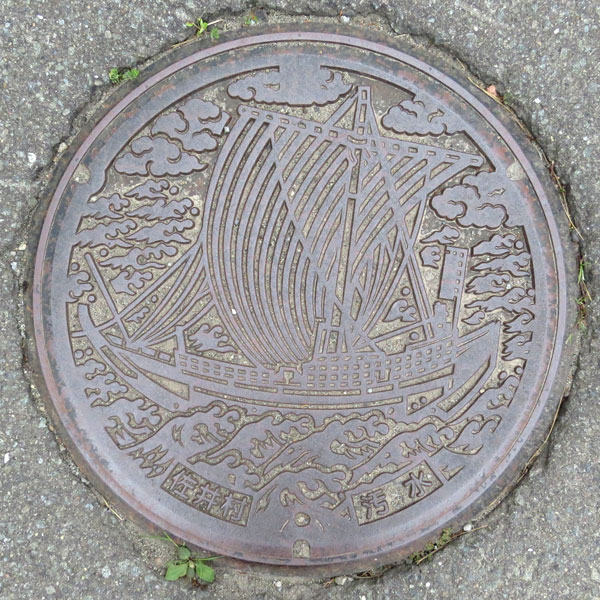
This lid for the Sai Treatment Area, part of the Specific Environmental Conservation Public Sewerage Project, depicts a Kitamae-bune ship sailing through rough seas.
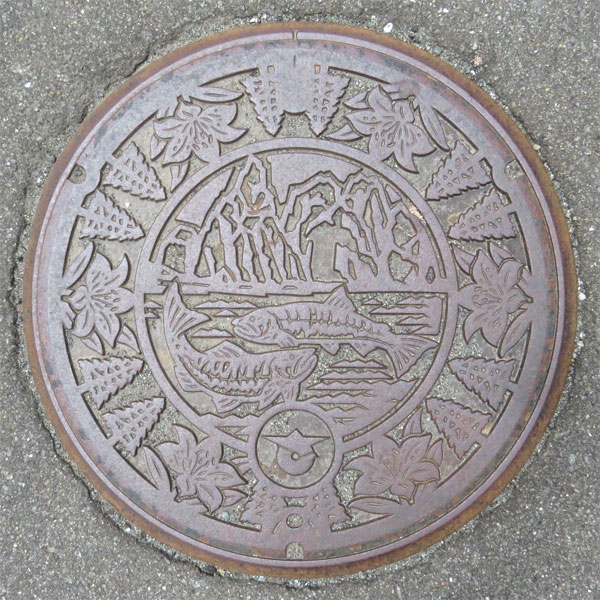
The Fukuura Treatment District fish collection and disposal lid features the village flower, the "Sukashi lily," and the village tree, the "Hiba" (Japanese cypress), and in the center is a picture of a landscape of "Hotokegaura" and a salmon. Below is a view of "Hotokegaura" from the observation deck along the way.
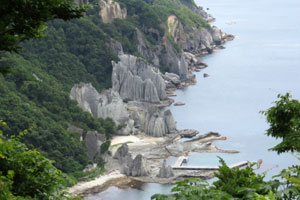
Higashidori 東通村
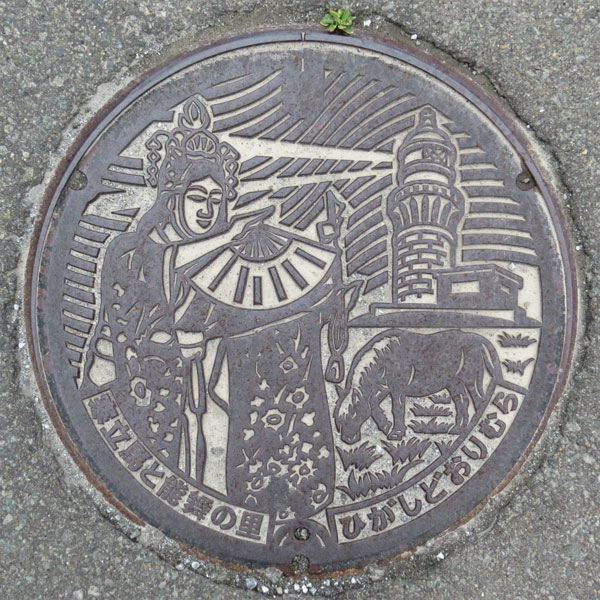
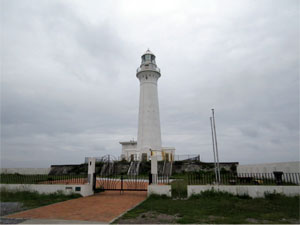
The inscription reads, "Home of Kandachime Horses and Noh Dance." Noh dance is said to have been introduced to the area by mountain ascetics about 500 years ago. The Shiriyasaki Lighthouse was the first lighthouse in the Tohoku region and is one of Japan's 50 best lighthouses.
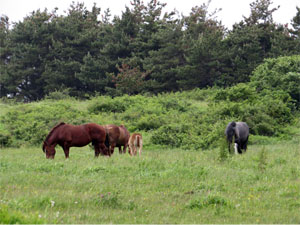
The Kandachime horse is depicted in front of the lighthouse. Kandachime horses and their habitat are designated natural monuments of Aomori Prefecture.
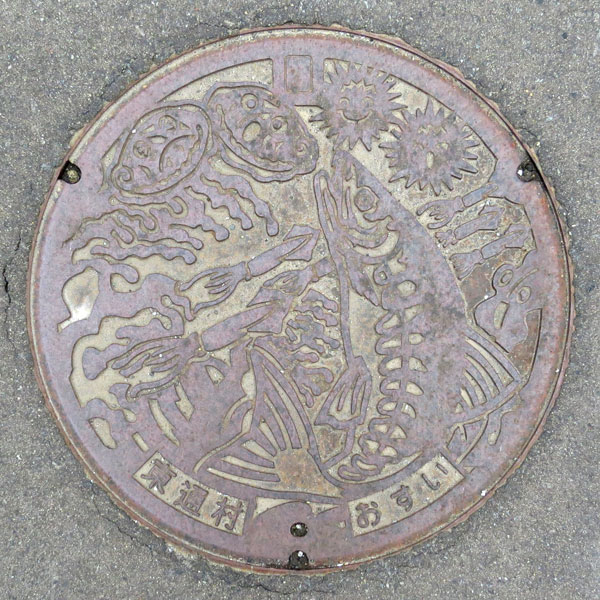
It depicts Higashidori Village's seafood, including salmon, abalone, sea urchin, kelp, wakame seaweed, and squid.
Rokkasho 六ヶ所村
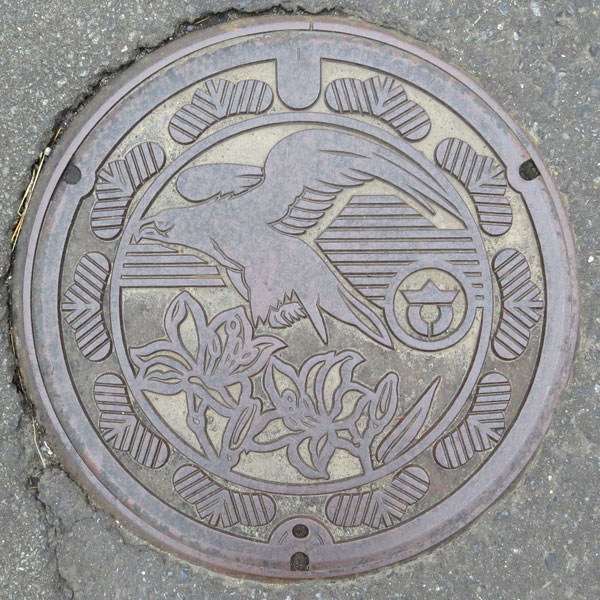
The surrounding trees are black pines, the bird is a white-tailed eagle, and the flower is a Japanese lily.
Inakadate 田舎館村
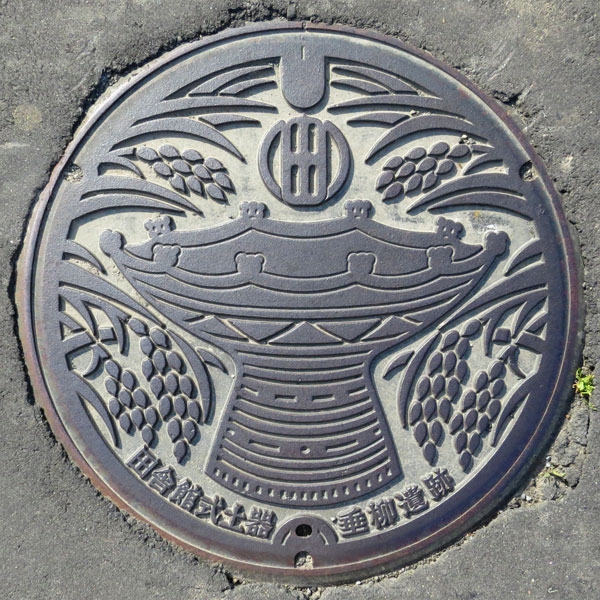
A public sewer cover featuring Yayoi pottery and rice ears. The words "Inakadate Pottery" and "Tareyanagi Ruins" are written at the bottom, and the village emblem is in the center at the top.
Shingo 新郷村
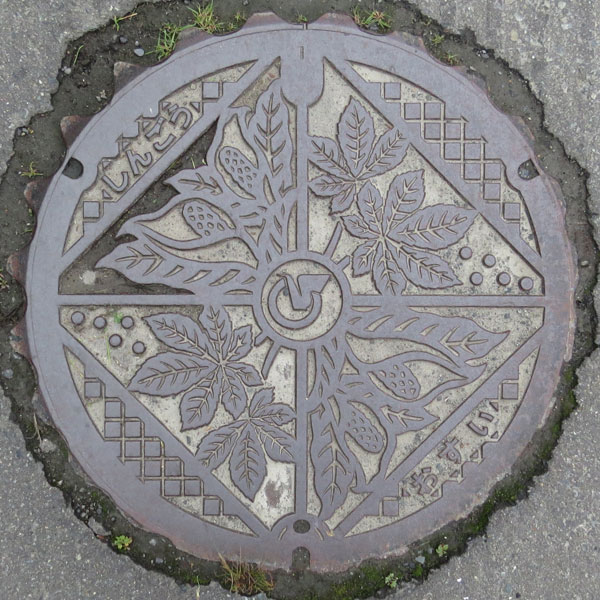
The village flower, the Asian skunk cabbage, and the leaves of the village tree, the horse chestnut, are depicted. The village emblem is in the center.
Nishimeya 西目屋村
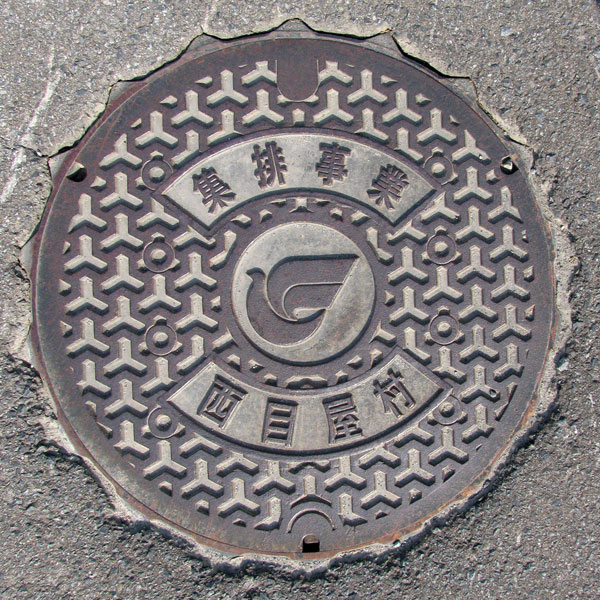
In the center is the village emblem, which is likely a stylized design of the village's bird, a dove. It also resembles the hiragana character "ni," but the details are unknown.
Aomori Prefecture 青森県
Mabechi River Basin Sewerage System 馬淵川流域下水道
The Mabechi River Basin Sewerage System is associated with one city and three towns: Hachinohe City, Rokunohe Town, Oirase Town, and Gonohe Town.
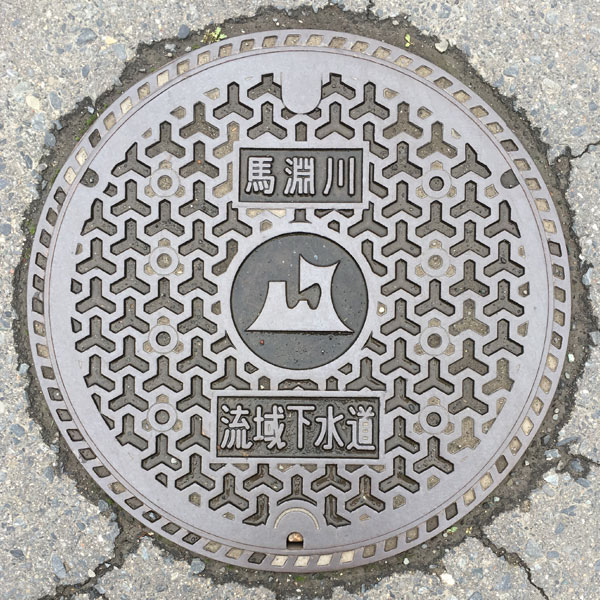
The Aomori Prefecture emblem is in the center.